
Ramps ( Wild Leek ) Seeds
Useful gardening information
As one of the first plants to emerge in the spring, ramps were traditionally consumed as the season's first "greens". They were considered a tonic because they provided necessary vitamins and minerals following long winter months without any fresh vegetables. Traditions evolved around the annual gathering and preparation of this pungent plant. Throughout the mountains of the eastern U.S., including many western North Carolina counties, annual spring ramps festivals are held.
Ramps grow naturally under a forest canopy of beech, birch, sugar maple, and/or poplar.
Other forest trees under which ramps will grow include buckeye, linden (basswood),
hickory, and oak. A forested area with any of these trees present provides an ideal
location for planting a ramp crop. Areas that host trillium, toothwort, nettle, black
cohosh, ginseng, bloodroot, trout lily, bellwort, and mayapple should be suitable for
growing ramps. If there is not a wooded area available to grow ramps, a shade
structure can be erected over the planting site.
Hardy for zones 3-8.
Here is an excellent webapge about How to Forage and Eat Wild Leeks that has a lot of useful information.
Sowing Instructions
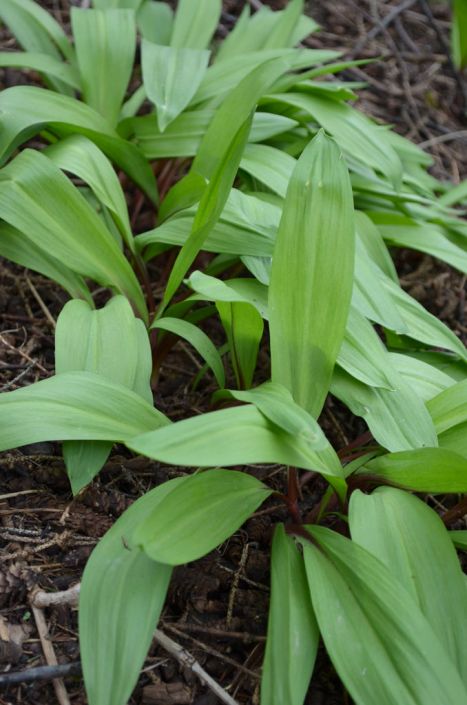
( Allium tricoccum )Considered by many to be the best tasting member of the onion family.
The leaves are are very tender early in the Spring and the bulb is edible year round, though they can toughen up in the summer.
Broad, smooth, light green leaves, often with deep purple or burgundy tints on the lower stems begin arriving in small troops as soon as the snow disappears.
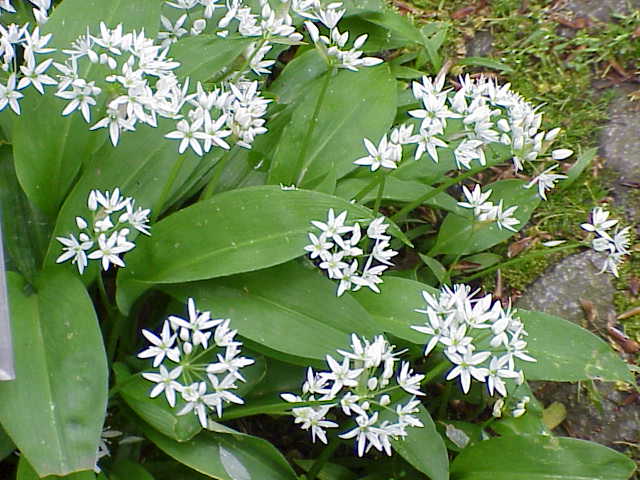
The stem is triangular in shape and the leaves are similar to those of the lily of the valley. Unlike the related crow garlic and field garlic, the flower-head contains no bulbils, only flowers. Ramsons leaves are edible; they can be used as salad, spice, boiled as a vegetable, in soup, or as an ingredient for pesto in lieu of basil.
The stems are preserved by salting and eaten as a salad in Russia. The bulbs and flowers are also very tasty. Ramsons leaves are also used as fodder. Cows that have fed on ramsons give milk that tastes slightly of garlic, and butter made from this milk used to be very popular in 19th century Switzerland.
This native garlic grows to be about 18" tall and boasts gorgeous white blooms. Wild Garlic is extremely easy to grow and thrives in almost any sun and soil type, making it a versatile choice for any meadow or garden. Allium ursinum attracts bees, hummingbirds and butterflies, but its strong onion scent makes it unappealing to deer and rabbits.
Easily grown in rich, moist but well-drained loams in full sun to part shade. This is a woodland plant that is more tolerant of part shade conditions than most members of the genus. Add sand to clay soils as needed to improve drainage. This species spreads invasively by rhizomes and self-seeding, and over time can carpet large areas.
Zone: 5 to 9.
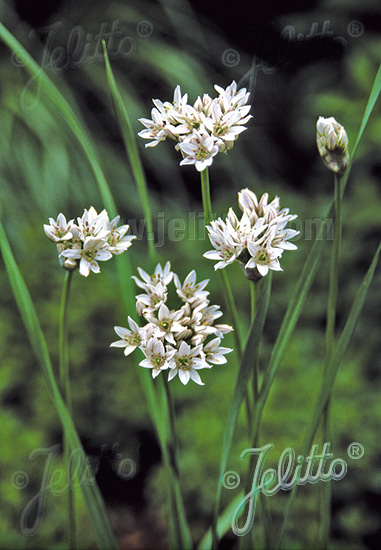
The small bulbs are about 1/2 inch in diameter. Leaves can be eaten raw or cooked. The flavor of leaves and bulbs is somewhat between that of garlic and chives. An excellent taste, a pleasant sweetness mixed with a strong onion flavour. Flowers can be eaten raw. Used as a garnish on salads.
The species is hermaphrodite (has both male and female organs) and are pollinated by Bees, insects. Suitable for: light (sandy) and medium (loamy) soils and prefers well-drained soil. Suitable pH: acid, neutral and basic (alkaline) soils. It cannot grow in the shade. It prefers dry or moist soil.
Zone: 5 to 9.

Contact Us | Privacy Policy | About Us
Serving gardeners since 1992
State of Mississippi Seedmen's Permit #C-391, Ohio 90152, Minnesota 20086777