Apricot Peach Everlasting Seeds
Helichrysum bracteatum — Apricot Peach Everlasting produces papery strawflower blooms in warm apricot and peach tones for fresh cutting, dried flowers, and craft arrangements.
This guide covers growing conditions, seed-starting basics, garden uses, and ordering information for Seedman customers.
Order Seeds from Seedman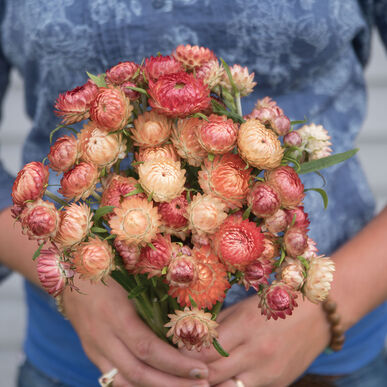
Plant Profile
Helichrysum bracteatum
Apricot Peach Everlasting
Everlasting flower seeds
Warm-season annual
Often 24–36 inches
Full sun
Why Grow Apricot Peach Everlasting?
Apricot Peach Everlasting produces papery strawflower blooms in warm apricot and peach tones for fresh cutting, dried flowers, and craft arrangements. It is a useful addition for gardeners looking for distinctive seed-grown plants with ornamental, edible, ecological, or collection value.
- Dried flowers
- Cut flowers
- Craft arrangements
- Cottage gardens
Seed Germination Guide
Start indoors or direct sow after frost. Cover lightly, keep moist, and harvest blooms before fully open for drying.
Seed germination can vary by freshness, storage, temperature, and growing conditions. Use clean containers and a well-drained seed-starting medium.
Garden & Landscape Uses
Apricot Peach Everlasting can be used where its mature size, sunlight needs, and moisture preferences are matched to the site. For best performance, provide full sun and average moisture; well-drained soil.
Order Apricot Peach Everlasting Seeds
Visit the original Seedman product page for current availability, package sizes, and ordering details.
View Seedman Product PageFrequently Asked Questions
What is Apricot Peach Everlasting best for?
Apricot Peach Everlasting is useful for everlasting flower seeds, garden displays, and specialty seed growing.
When should the seed be planted?
Plant according to the crop type, using warm conditions for summer plants and cooler or stratified conditions for many perennials.
Does it need full sun?
Most varieties perform best in full sun, though some tolerate partial shade depending on climate.
Can it be grown in containers?
Many ornamental varieties can be grown in containers if given proper soil, light, and moisture.