
Anise Seeds
Anise is a low spreading bright green bushy plant that grows 12 to 24 inches tall and almost as wide. Anise flowers in midsummer, small yellowish-white flowers in umbrella shaped clusters.
Anise is warm-season annual herb. Sow anise in the garden as early as 2 weeks after the average last frost date in spring. Anise requires a long, frost-free growing season of about 120 days.
Plant anise in full sun. Anise grows best in well-drained soil rich in organic matter. Anise will grow in poor soil. It prefers a soil pH of 6.0 to 6.7.
Sow anise seeds 1/4 inch deep; when seedlings are 6 weeks old thin to 12 inches apart. Space rows 18 to 24 inches apart.
Sow anise in the garden as early as 2 weeks after the average last frost date in spring. Anise requires a long, frost-free growing season of about 120 days.
Keep anise regularly and evenly watered through out the growing season and particularly just before harvest. Anise requires no special feeding; side dress plants with age compost at midseason.
Companion plants. Cabbage, grapes; avoid planting with carrots, radishes.
Harvest. Snip anise leaves for fresh use as needed. Seeds require more than 100 frost-free days to reach harvest. Collect seed heads while they are still green. Hang them in a warm, dry place to dry; thresh when dry or pasteurize them in an oven at 100°F for 15 minutes. Complete the harvest before the first frost in fall.
Storing and preserving. Dried anise seeds can be stored for several months in an airtight container.
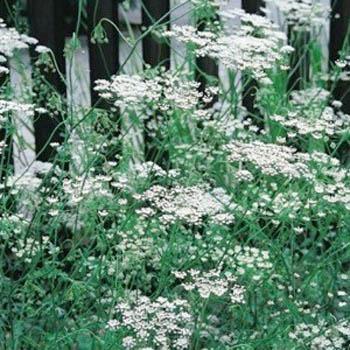
Anise is a fragrant annual herb prized for its sweet licorice-like flavor, delicate ferny foliage, and clusters of attractive white flowers. For centuries, Anise has been cultivated throughout Europe, Asia, and the Mediterranean region as a culinary herb, medicinal plant, pollinator attractor, and ornamental garden favorite.
The aromatic seeds are the most famous part of the plant, widely used to flavor breads, cookies, cakes, candies, teas, liqueurs, and traditional recipes from around the world. The pleasant licorice flavor makes Anise a favorite ingredient for home bakers, herbalists, and culinary enthusiasts alike.
In the garden, Anise serves many purposes beyond the kitchen. The delicate white flower umbels attract a wide variety of beneficial insects, including bees, butterflies, hoverflies, and parasitic wasps that help support a healthy garden ecosystem. As a result, Anise is often grown as a companion plant near vegetables, herbs, and fruit crops.
The attractive foliage and airy flowers also make Anise an excellent addition to herb gardens, cottage gardens, pollinator gardens, and ornamental borders. Plants perform well in containers, raised beds, and traditional garden plots.
Uses and Benefits:- Produces highly aromatic seeds with a sweet licorice flavor.
- Popular for breads, cookies, cakes, candies, and pastries.
- Excellent ingredient for herbal teas and traditional beverages.
- Widely used in flavoring liqueurs and specialty drinks.
- Attracts bees, butterflies, and beneficial insects.
- Useful companion plant in vegetable and herb gardens.
- Provides nectar for pollinators throughout the growing season.
- Beautiful fern-like foliage adds ornamental value.
- Excellent for herb gardens, cottage gardens, and containers.
- Historically grown for culinary, aromatic, and traditional herbal uses.
- Easy to grow from seed and rewarding for beginning gardeners.
Anise is grown as an annual in all USDA Zones. Plants complete their life cycle in a single growing season and produce abundant seed before frost.
Germination Instructions:- Sow seeds directly outdoors after danger of frost has passed.
- Anise develops a taproot and generally performs best when direct sown.
- Plant seeds 1/4 inch deep in well-drained soil.
- Maintain soil temperatures between 65-75°F (18-24°C).
- Keep soil evenly moist during germination.
- Seeds typically germinate in 10-21 days.
- Thin seedlings to allow good air circulation and growth.
- Plant in full sun for best growth and seed production.
- Prefers fertile, well-drained soil.
- Water regularly during dry periods.
- Allow flower heads to mature if harvesting seed.
- Excellent companion plant for attracting beneficial insects.
- Harvest seeds when they turn gray-brown and fully mature.
Combining culinary value, pollinator appeal, companion planting benefits, fragrant foliage, and ornamental beauty, Anise remains one of the most useful and rewarding herbs for the home garden. Whether grown for its flavorful seeds, beneficial insect attraction, or graceful appearance, this classic herb deserves a place in every herb garden.

Contact Us | Privacy Policy | About Us
Serving gardeners since 1992
State of Mississippi Seedmen's Permit #C-391, Ohio 90152, Minnesota 20086777