
Edelweiss Seeds
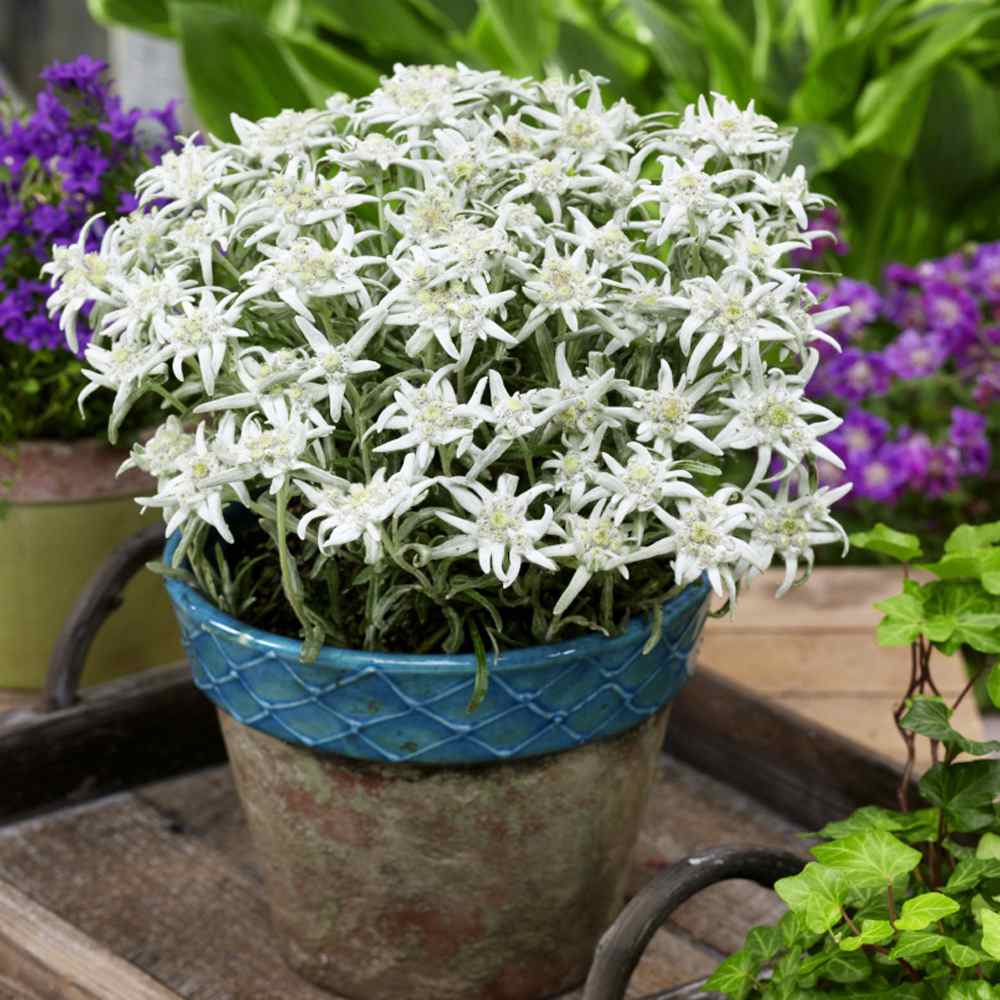
Edelweiss (Leontopodium alpinum) is one of the world's most famous alpine wildflowers, treasured for its distinctive star-shaped blooms covered in soft silvery-white woolly hairs that shimmer in the sunlight. Native to the rugged mountain slopes of the European Alps, Edelweiss has become an enduring symbol of courage, purity, and mountain adventure. Compact mounds of gray-green foliage produce clusters of velvety white flowers throughout summer, creating an elegant display perfectly suited for rock gardens, alpine troughs, and well-drained perennial borders. Although delicate in appearance, Edelweiss is remarkably hardy and thrives where many other flowering plants struggle.
Garden Uses:
Edelweiss is ideal for alpine gardens, rock gardens, trough gardens, raised beds, gravel gardens, xeriscapes, and sunny perennial borders with excellent drainage. Its soft silver foliage provides beautiful contrast with blue campanulas, creeping phlox, aubrieta, dianthus, sedums, saxifrages, alpine asters, and dwarf ornamental grasses. The flowers also dry beautifully and have long been prized for everlasting floral arrangements.
Growing Information:
Sow seeds on the surface of moist growing medium, as light aids germination. Keep temperatures between 60-65°F and maintain even moisture until germination, which generally occurs within 14-28 days. Plants require full sun and exceptionally well-drained soil, preferably sandy, gravelly, or rocky with excellent air circulation. Avoid overly rich or wet soils, particularly during winter. Once established, Edelweiss becomes highly drought tolerant and requires very little maintenance. Mature clumps may be divided every few years if desired.
Quick Facts:
| Botanical Name: | Leontopodium alpinum |
| Common Name: | Edelweiss |
| Plant Type: | Hardy alpine perennial |
| Height: | 6-12 inches |
| Spread: | 8-12 inches |
| Bloom Color: | Silvery-white with creamy yellow centers |
| Bloom Season: | Late spring through midsummer |
| Light Requirements: | Full sun |
| Soil Requirements: | Poor to average, sharply well-drained sandy or gravelly soil |
| USDA Zones: | 4-8 |
| Uses: | Rock gardens, alpine gardens, troughs, gravel gardens, xeriscapes, dried flowers |

Contact Us | Privacy Policy | About Us
Serving gardeners since 1992
State of Mississippi Seedmen's Permit #C-391, Ohio 90152, Minnesota 20086777