
New Account | Seed Mix |
Gift Certificates |AAS Winners |
Gardening Products
SEEDS: Unusual | Annuals | Perennials | Vegetables | Herbs | Trees
Cherry Tree Seeds
Important Note: Most of the seeds on this page will
benefit greatly from using the Cold Stratification Kits that we use in our own
greenhouses. We find we receive significantly better and faster
germination results when we use this on prunus seeds.
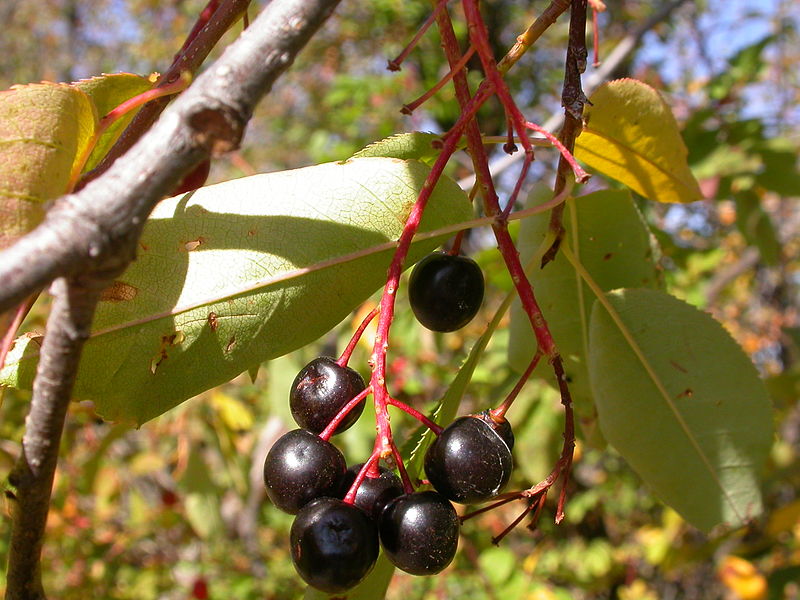
Image: By Matt Lavin from Bozeman, Montana, USA (Prunus virginianaUploaded by Tim1357) [CC BY-SA 2.0], via Wikimedia Commons
.jpg)
TRZ153 Wild Black Cherry ( Prunus Virginiana )
For zones 2-6. A medium size cherry tree; height usually not
over 20 to 25 feet, diameter 4 to 8 inches; with an irregular,
rounded crown. Bright green, broadly oval leaves, paler
underneath; length 3 to 4 inches, width 1 to 2 inches. Fruit is
in dense clusters; reddish, turning nearly black when fully
ripe; each berry containing a single seed, skin of fruit thick;
flesh thin and dark; very astringent to the taste, but edible.
Popular tree for birds. Most widely distributed tree in North
America, extending from the Arctic Circle to Mexico and from
the Atlantic to the Rockies.
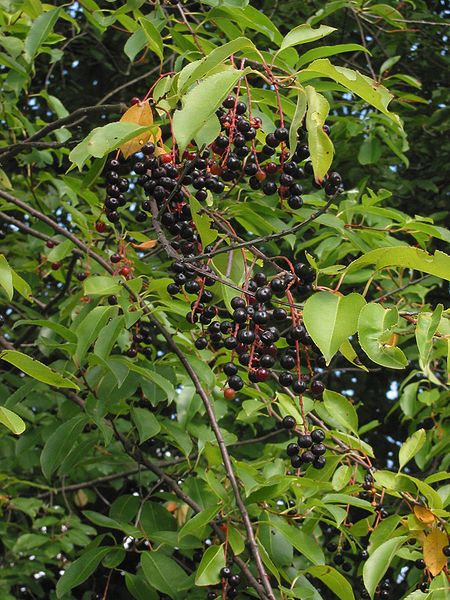
_Prunus_serotina.jpg)
PR08 Wild Black Cherry ( Prunus serotina )
A fast growing cherry for zones 2-8. Grows in pyramidal to
conical shape 50-75 feet tall. Leaf: 2 to 5" alternate, simple
leaves; yellow to red fall color. Flower/Fruit: 4 to 6" raceme
of white flowers in early spring; small juicy reddish black
edible berries in summer that attract birds.
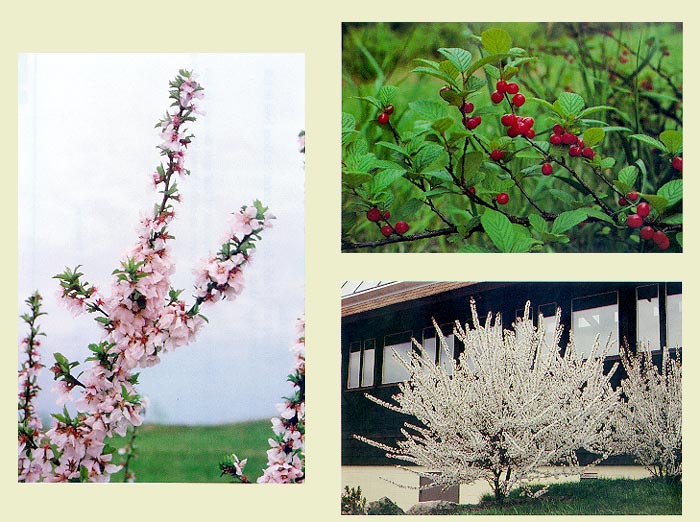
TRZ152 Nanking Cherry ( Prunus tomentosa )
Best for zones 2 to 7, grows to 8 ft, spread 8 ft. Rounded, deciduous shrub with white flowers and red fruit. Nanking Cherry can be used in the shade, but it flowers better
in sun or partial shade. The flowers are borne briefly in early spring and are pale pink, fading to white. The red fruits are sour and eaten by birds. The plant is often
purchased by homeowners as a smaller substitute for tart
cherry.
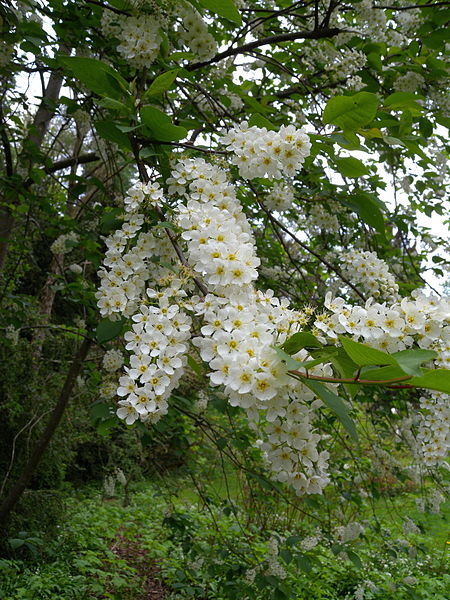
Image: By MurielBendel [CC BY-SA 4.0], from Wikimedia Commons

PR14 European Bird Cherry ( Prunus padus )
European birdcherry is a deciduous ornamental cherry tree growing 20-40 feet tall with a rounded crown. Fragrant white flowers in pendulous 3-6" long clusters appear after the foliage emerges in spring. Flowers are followed by astringent, pea-sized, black cherries which ripen in mid-summer. As with the closely-related chokecherry (Prunus virginiana), the fruit is extremely bitter to humans but loved by birds. Serrate, dull dark green leaves. Foliage turns yellow in fall. Zones 3-7.
Contact Us | Privacy Policy | About Us
Serving gardeners since 1992
State of Mississippi Seedmen's Permit #C-391, Ohio 90152, Minnesota 20086777