
Allium ( Flowering Onion )
Alliums are plants of exquisite beauty in both flower and leaf, with tough constitutions. These easy-to-grow plants come in a broad palette of colors, heights, bloom times and flower forms. They make excellent cut flowers for fresh or dried bouquets. Even crowded gardens can accommodate a few alliums because they don't take up much space. What's more, alliums are relatively resistant to deer, moles, chipmunks, and rabbits.
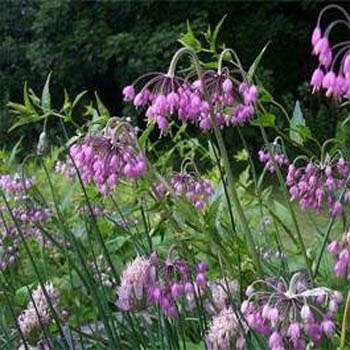
Nodding Onion (Allium cernuum) is one of North America's most charming native wildflowers, producing graceful clusters of bell-shaped, rosy-pink to lavender flowers that gently nod downward atop slender stems. Unlike the upright blooms of ornamental onions, the flower umbels of this species arch gracefully, giving the plant its distinctive common name. Blooming in midsummer, Nodding Onion adds delicate beauty to perennial borders, prairie gardens, and native landscapes while serving as an outstanding nectar source for bees, butterflies, and other beneficial insects.
Garden Uses
Nodding Onion is an excellent addition to native plant gardens, prairie restorations, pollinator gardens, rock gardens, perennial borders, meadow plantings, and naturalized landscapes. Its graceful flowers combine beautifully with Purple Coneflower, Black-eyed Susan, Blazing Star, Prairie Dropseed, Butterfly Weed, Penstemon, and native grasses. The fine, blue-green foliage provides attractive texture throughout the growing season, while the flowers are also suitable for fresh and dried arrangements.
Growing Information
Nodding Onion performs best in full sun to partial shade and thrives in well-drained soils ranging from sandy loam to rocky ground. Plants typically grow 12 to 24 inches tall with a spread of 8 to 12 inches, forming slowly expanding clumps over time. Once established, they are highly drought tolerant and require little maintenance. Unlike many ornamental onions, the foliage remains attractive through much of the growing season. Seeds may be sown outdoors in fall or stratified before spring sowing. Plants gradually naturalize without becoming invasive and are long-lived once established.

Contact Us | Privacy Policy | About Us
Serving gardeners since 1992
State of Mississippi Seedmen's Permit #C-391, Ohio 90152, Minnesota 20086777