
New seed varieties just added or have just came back in stock!

A traditional heirloom variety grown for its tall, juicy stalks and naturally sweet juice, which can be pressed and cooked down into old-fashioned sorghum syrup. Closely associated with the agricultural traditions of Mennonite and other rural farming communities, sweet sorghum was once an important source of homemade sweetener throughout the American South and Midwest. Plants develop sturdy, corn-like stalks topped with attractive seed heads, commonly reaching 8 to 12 feet tall or more under favorable conditions. Unlike grain sorghum, which is grown primarily for its seeds, sweet sorghum is cultivated chiefly for the sugary juice stored in its stalks. Its impressive height and lush foliage also make it an interesting addition to heritage gardens, educational plantings, and small-scale homesteading projects.
Mennonite Sweet Sorghum thrives in full sun and warm weather, performing best in fertile, well-drained soil with moderate moisture. It is grown as a warm-season annual throughout much of the United States and is particularly well adapted to regions with long, hot summers. Sow seeds outdoors after all danger of frost has passed and soil temperatures have reached at least 65–70°F. Space plants approximately 6 to 12 inches apart in rows 30 to 36 inches apart, allowing adequate room for cultivation and harvesting. Plants generally require approximately 100 to 120 days or more to reach syrup-making maturity, depending on growing conditions and the particular seed strain. Stalks are traditionally harvested when sugar content is high, often around the time the seed heads reach maturity. The leaves and seed heads are removed, and the stalks are passed through a sorghum mill to extract their juice, which is then carefully boiled and skimmed until it thickens into rich, amber-colored syrup. The red-hulled seed may be ground to make flour, especially for pancakes
For germination, direct sow seeds approximately 1/2 to 1 inch deep in warm, moist soil. Germination usually occurs within 5 to 10 days when soil temperatures are around 70–85°F. Keep young seedlings free of weeds until established, and avoid excessive nitrogen fertilization late in the season, which can encourage leafy growth at the expense of stalk sugar accumulation.
Seedman Notes: Sweet sorghum holds a special place in American agricultural history. Before inexpensive refined sugar became widely available, families often gathered for community sorghum-making days, using animal-powered mills and large evaporating pans to produce a year's supply of homemade syrup. These gatherings became treasured rural traditions, combining hard work, shared meals, and neighborly fellowship. Mennonite Sweet Sorghum offers today's gardeners an opportunity to preserve a piece of that heritage while experiencing the remarkable journey from a handful of seeds to a traditional homemade sweetener. Unlike true molasses, which is a byproduct of sugarcane refining, sorghum syrup is made directly from the concentrated juice of sweet sorghum stalks.
.jpg)
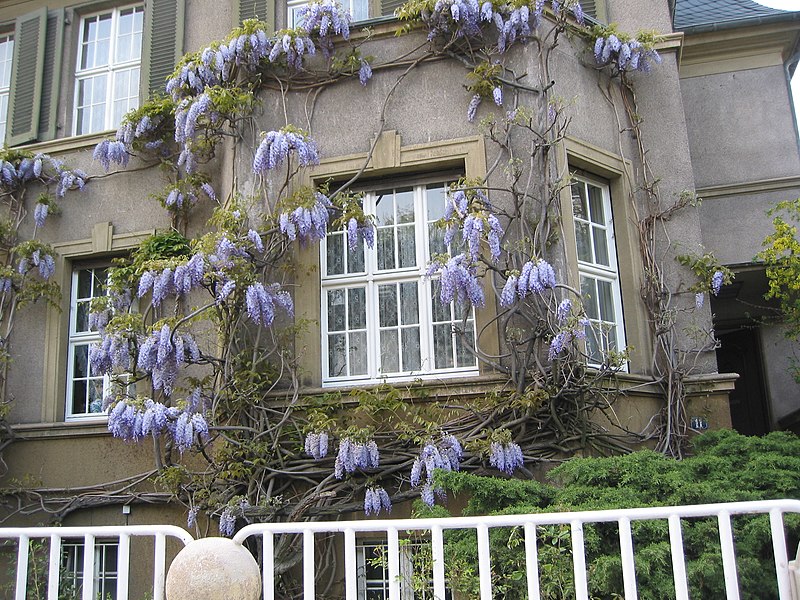
Blue Wisteria Vine (Wisteria sinensis), better known as Chinese Wisteria, is a vigorous woody vine famous for its spectacular spring display of fragrant blue-violet to lavender flower clusters. Native to China, mature vines develop heavy, twisting stems and attractive pinnate foliage, eventually reaching 20 to 30 feet or more when provided with strong support. The cascading flower racemes are especially striking when trained over a large arbor, pergola, sturdy fence, or other substantial structure, where an established vine can become an impressive landscape specimen.
Hardy in approximately USDA Zones 5–9, Chinese Wisteria grows best in full sun and moderately fertile, well-drained soil. Established plants are vigorous and tolerate considerable pruning, which is often necessary to control their size and encourage a well-shaped framework. Seed-grown plants should be considered a long-term project because they may require several years to reach flowering maturity and will not necessarily duplicate the flower color or performance of a named cultivar. Chinese Wisteria can also spread aggressively and is considered invasive in a number of areas of the United States, so gardeners should check local recommendations before planting and prevent unwanted seedlings or escape into natural areas.
For germination, soak the hard seeds in warm water for about 24 hours before sowing approximately 1/2 inch deep in a moist, well-drained seed-starting medium. Keeping the medium around 70–75°F generally encourages germination, which commonly begins within a few weeks when viable seed is used.
Seedman Notes: Few flowering vines can equal the dramatic beauty of a mature wisteria in bloom, but Wisteria sinensis deserves plenty of room and a genuinely strong support—the woody vines become surprisingly powerful with age. Also remember that wisteria seeds and pods are toxic if eaten, so they should be kept away from children and pets. For gardeners able to manage its vigorous growth responsibly, growing a wisteria from seed can become a rewarding specimen that develops character and beauty for many years.
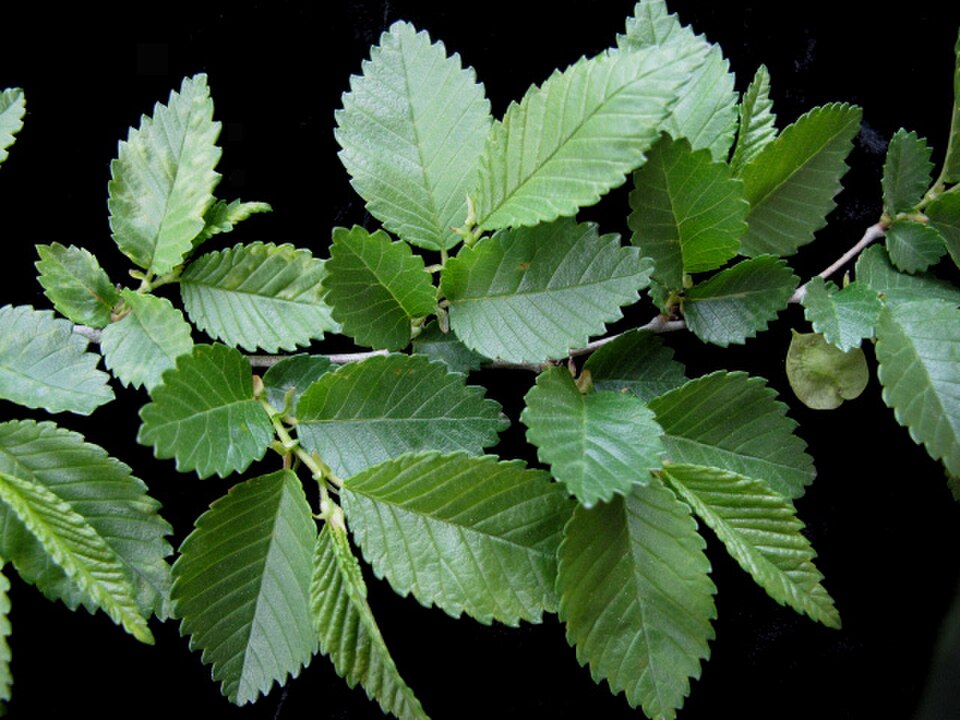

A remarkably tough, fast-growing deciduous tree native to northern China, Mongolia, Siberia, and surrounding areas of central Asia. It typically develops into a medium-sized tree with an open, spreading crown and small, dark green leaves that turn yellow in fall. One of its greatest strengths is its ability to survive conditions that challenge many other trees, including severe winter cold, summer heat, drought, wind, and relatively poor soils. Mature trees commonly reach 40 to 60 feet tall, although size and form vary considerably with climate and growing conditions.
Best suited to USDA Zones 3–9, Siberian Elm grows in full sun and adapts to an unusually wide range of soils, including dry and alkaline sites. Its rapid growth and tolerance of exposed conditions led to extensive planting for windbreaks, shelterbelts, erosion control, and difficult landscapes, particularly across the Great Plains. Gardeners should choose its location carefully, however. The species produces abundant winged seeds, can self-sow aggressively, and is considered invasive or undesirable in some regions. Its wood can also be somewhat brittle, making it better suited to naturalized areas, windbreaks, large properties, and challenging sites than locations immediately beside buildings or heavily traveled areas.
Seeds are unusual among many temperate tree seeds because fresh Siberian Elm seed generally does not require a lengthy cold-stratification period. The papery samaras mature in spring to early summer and should be sown while fresh, as viability can decline during storage. Sow shallowly in a moist, well-drained seed-starting medium, barely covering the seed, and keep evenly moist at approximately 65–75°F; fresh viable seed can germinate quite rapidly under favorable conditions.
Seedman Notes: Siberian Elm earned much of its reputation because it could establish where more demanding trees struggled, which made it historically important in Plains shelterbelt and windbreak plantings. Its toughness is also the reason it should be planted thoughtfully today—before planting, we recommend checking local invasive-plant guidance, since Ulmus pumila has naturalized extensively in parts of North America.
_(34545835481).jpg)
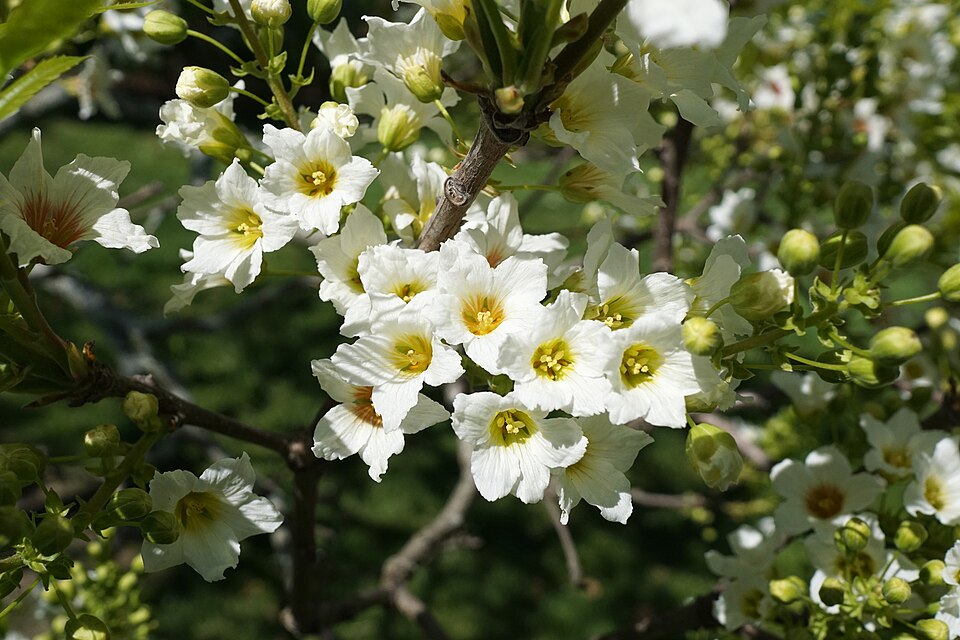
Also known as Yellowhorn, is an unusual deciduous flowering shrub or small tree native to northern China and neighboring areas of East Asia. It typically grows about 8 to 20 feet tall and develops attractive pinnate foliage resembling that of a rowan or mountain ash. Its outstanding feature is the showy display of white, five-petaled spring flowers, each marked near the center with yellow that often changes to reddish or purplish tones as the blossom ages. Flowers are followed by rounded, leathery capsules containing large, dark brown to black seeds, giving the plant additional ornamental interest.
Hardy in approximately USDA Zones 4–8, Yellowhorn performs best in full sun and fertile, well-drained soil, although established plants tolerate considerable cold and periods of drought. It makes an excellent specimen for an unusual-tree collection, sunny border, courtyard, or smaller landscape where its spring flowers can be appreciated at close range. The seeds are rich in oil and have a history of food use in China, and the species has also attracted interest as a potential oilseed crop. Plants may take several years to reach flowering size, but their relatively compact stature and combination of flowers, foliage, and decorative seed capsules make them particularly interesting for gardeners who enjoy uncommon woody plants.
For germination, soak the large seeds in warm water for about 24 hours, then sow approximately 1 inch deep in a moist, well-drained medium. Fresh seed may germinate without prolonged treatment, although a period of cold, moist stratification can help with seed that remains dormant. Maintain moderate warmth after sowing and avoid keeping the medium excessively wet, since the fleshy seeds can rot under soggy conditions.
Seedman Notes: Yellowhorn is one of those plants that seems surprisingly little known considering how much it offers. The botanical name Xanthoceras refers to the yellow, horn-like structures within the flowers, while sorbifolium describes foliage resembling that of Sorbus. For customers looking for a genuinely unusual flowering tree that remains manageable in size, this is a fascinating choice.
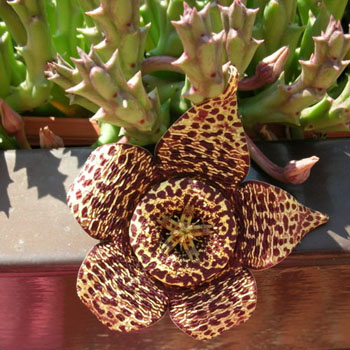
Starfish Plant (Orbea variegata, syn. Stapelia variegata) is an unusual South African succulent grown for its remarkable star-shaped flowers, intricately patterned in shades of creamy yellow, chocolate brown and purple. The fleshy, angular gray-green stems form spreading clumps and may develop attractive purplish coloring in strong light. Flowers generally appear in late summer into fall and measure about 2–3 inches across, with markings so variable that individual blooms can look surprisingly different. Also called Carrion Flower, the blossoms produce an unusual odor resembling decaying organic matter—an adaptation that attracts flies and other insects that serve as pollinators. This fascinating species has a long history in cultivation and was introduced into Europe as early as 1639.
Starfish Plant makes an intriguing container specimen and is especially well suited to sunny windows, greenhouses and succulent collections. Plants remain low, with reclining stems forming clumps that may eventually spread 20 inches or more. Provide bright light to partial sun and a gritty, exceptionally well-drained cactus or succulent mix. Water when actively growing but allow the soil to dry between waterings, and greatly reduce moisture during the winter resting period. Outdoors it is best suited to warm climates, approximately USDA Zones 9–11, while gardeners in colder regions can easily grow it in containers and bring plants indoors before freezing weather. Good drainage is essential, as prolonged wet soil can cause stem and root rot.
Sow the unusual flattened seeds on the surface of a sterile, sandy, fast-draining seed-starting mixture, pressing them gently into the medium rather than burying deeply. Keep warm, bright and lightly moist but never waterlogged; fresh seed generally germinates readily under favorable conditions. Once seedlings are established, gradually treat them like mature succulents, allowing the growing medium to dry somewhat between waterings.
Seedman Notes: This is one of those plants people remember after seeing it bloom. The extraordinary patterned flowers look almost artificial, and their unusual pollination strategy makes Starfish Plant an excellent botanical conversation piece. Don't let the name “carrion flower” discourage you—the odor is part of what makes the plant biologically fascinating, and the striking starfish-shaped blossoms make this an especially rewarding succulent to raise from seed.
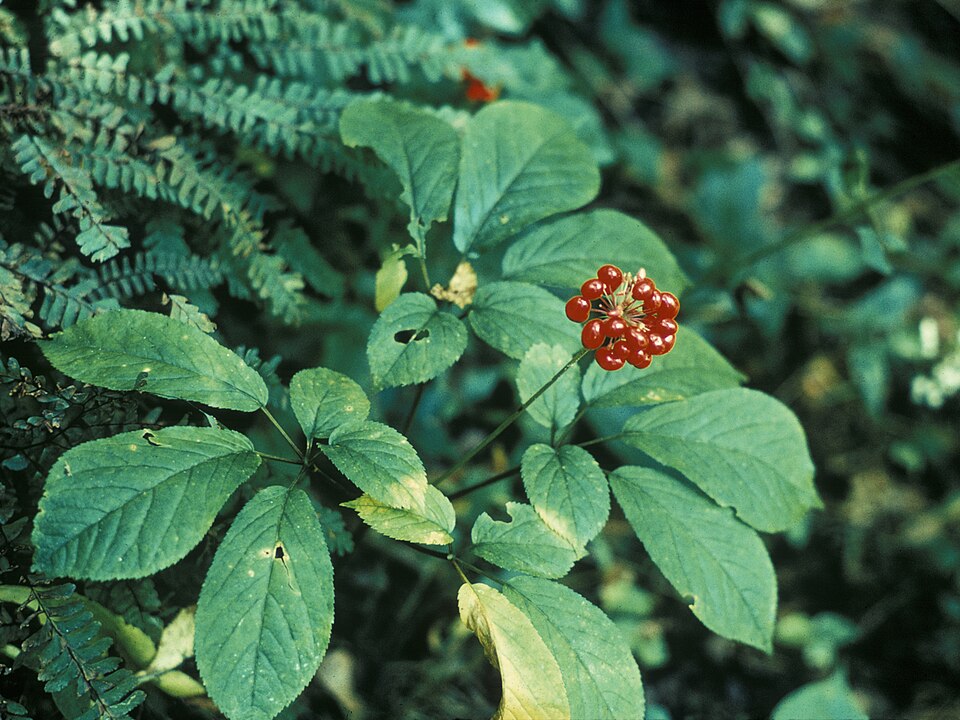

Best suited to approximately USDA Zones 3–8, American Ginseng requires substantial shade, rich woodland soil with abundant organic matter, good drainage and consistent but not waterlogged moisture. A site resembling its natural habitat beneath deciduous hardwoods is preferable to an ordinary sunny garden bed. Plants develop slowly and should be regarded as a long-term woodland crop rather than a quick harvest. Wild American Ginseng has been heavily harvested and is subject to conservation and trade regulations, so growers interested in commercial production or sale should become familiar with applicable state and federal requirements. Garden-grown plants should never be used as justification for collecting wild roots.
Ginseng seed has a naturally deep dormancy and requires patience. Fresh seed normally undergoes a prolonged sequence of warm and cold conditions before germinating, often taking 18 months or more from harvest. Commercial seed is frequently sold already stratified; when sowing stratified seed, plant approximately 1/2–1 inch deep in a shaded, well-drained woodland-style seedbed, cover lightly with leaf litter, and keep the area naturally moist.
Seedman Notes: American Ginseng has a remarkable history extending from Indigenous use to an international trade that developed during the 1700s, when North American roots became highly valued in Asian markets. Because wild populations have declined in many areas, growing ginseng from cultivated seed offers gardeners an opportunity to appreciate this unusual native woodland plant without placing additional pressure on wild stands.
Our seeds are dormant that need double stratification. Expect germination in 2 years.
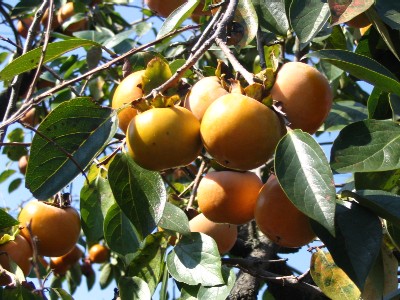

Japanese Persimmon (Diospyros kaki), also known as Asian or Oriental Persimmon, is a beautiful deciduous fruit tree that combines ornamental appeal with delicious autumn fruit. Native to East Asia and cultivated for centuries, it typically grows about 15–30 feet tall with glossy green leaves that often develop attractive yellow, orange and red fall color. The striking orange to reddish-orange fruits may remain hanging on bare branches after the leaves drop, creating a spectacular late-season display. Seed-grown plants naturally vary in fruit size, shape, flavor and astringency, making each tree somewhat unique.
Best suited to approximately USDA Zones 7–10, Japanese Persimmon grows well in full sun and fertile, well-drained soil, although established trees are adaptable to a range of conditions. Young trees benefit from regular moisture while developing their root systems. Persimmons can make excellent edible landscape specimens because of their manageable size, attractive foliage and colorful fruit. Because seedlings are genetically variable and may take several years to bear, named commercial cultivars are normally propagated by grafting; seed-grown trees are particularly interesting for collectors, experimentation and use as potential rootstock.
For germination, soak the seeds for about 24 hours and then provide approximately 60–90 days of cold, moist stratification. After chilling, sow about 1/2–1 inch deep in a well-drained medium and keep warm and evenly moist until germination. Young seedlings develop substantial roots, so transplant them carefully and provide sufficiently deep containers if they are not planted out promptly.
Seedman Notes: Japanese Persimmon has been cultivated in China and other parts of East Asia for well over a thousand years and eventually became one of the world's most widely grown persimmons. The genus name Diospyros comes from Greek words often interpreted as “divine fruit” or “fruit of the gods”—an especially fitting name when a mature tree is covered with brilliant orange fruit in autumn.


The classic evergreen tree whose aromatic leaves have been treasured for centuries as the culinary herb known as bay leaf. Native to the Mediterranean region, it develops glossy, deep green foliage and can eventually become a handsome small tree or large shrub, commonly reaching 15–30 feet where climate permits, although it is easily maintained much smaller by pruning. Mature plants may produce small yellow-green flowers followed on female plants by dark purple-black fruits. Its dense evergreen growth makes it attractive as a specimen, hedge, screen, or formal container plant.
Best suited to USDA Zones 8–10, Sweet Bay Laurel prefers full sun to partial shade and fertile, well-drained soil. Established plants have reasonable drought tolerance, although regular moisture encourages better growth. In colder regions it makes an excellent large container plant that can be moved into a protected, cool, bright location for winter. Leaves can be harvested throughout the year and used fresh or dried for flavoring soups, stews, sauces and other dishes; whole leaves are normally removed before serving. Plants respond well to pruning and can even be trained into attractive standards and topiary forms.
Seeds germinate best when fresh and may be slow and somewhat irregular. Soak seeds in warm water for about 24 hours, then sow approximately 1/2 inch deep in a moist, well-drained seed-starting medium. Maintaining temperatures around 65–75°F is helpful, and germination may require several weeks or occasionally considerably longer, so patience is important.
Seedman Notes: Few trees have a cultural history as rich as Sweet Bay Laurel. The ancient Greeks and Romans fashioned its branches into laurel wreaths associated with honor, victory and achievement—the origin of expressions such as “resting on one's laurels.” Growing a bay tree therefore provides not only a useful culinary herb, but a living connection to thousands of years of Mediterranean history.
Package of 5 seeds $3.50
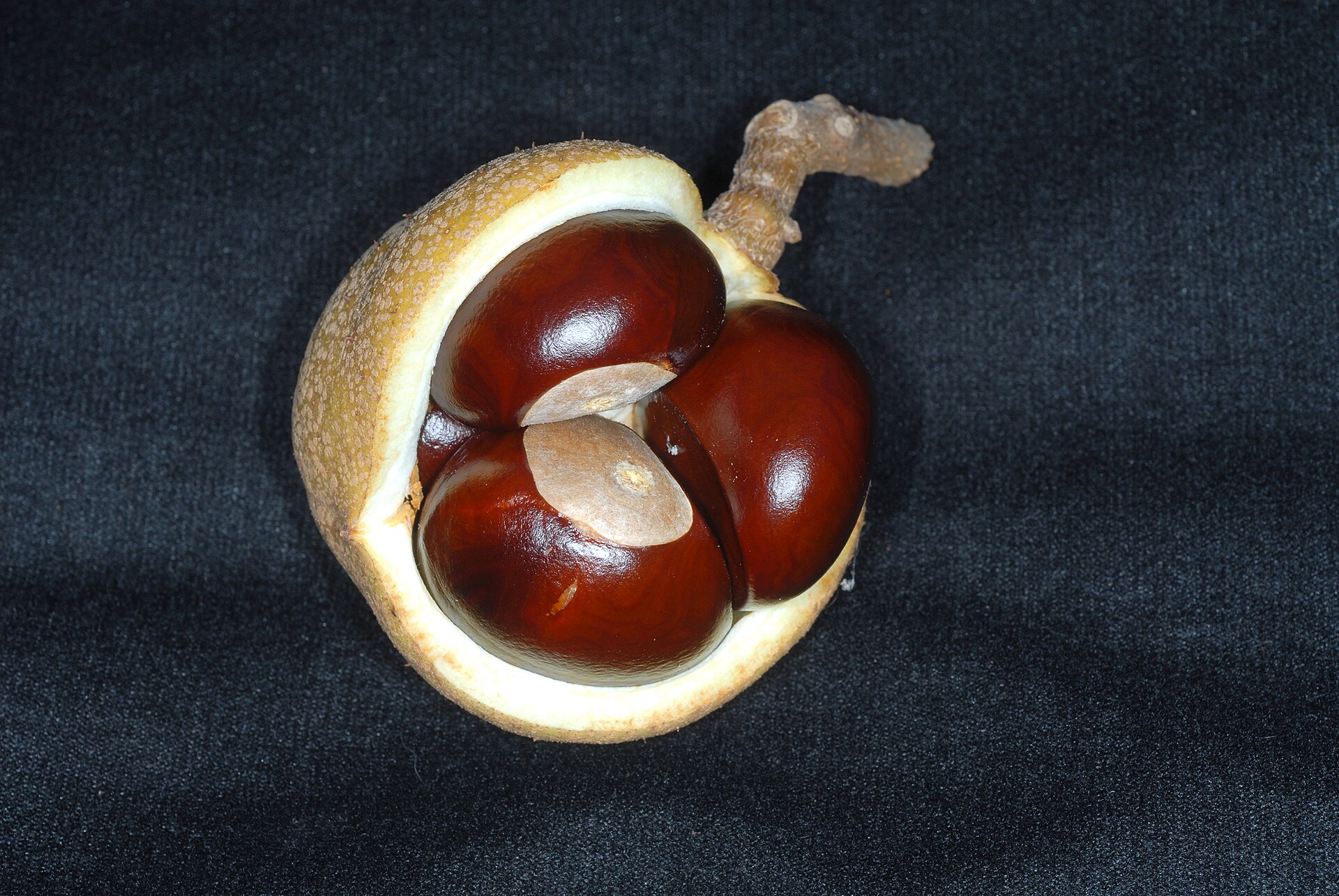

A handsome native North American deciduous tree best known for its distinctive palmate leaves, spring clusters of greenish-yellow flowers, and smooth, rounded brown seeds marked with a pale “eye.” Usually reaching about 20–40 feet tall, it develops a rounded crown and makes an interesting native specimen or woodland-edge tree. The flowers appear in upright clusters in spring and are followed by leathery, somewhat prickly husks containing the glossy buckeye seeds that inspired the tree’s common name.
Best grown in USDA Zones 3–7, Ohio Buckeye prefers fertile, moderately moist, well-drained soil and performs in full sun to partial shade. It is particularly appropriate for naturalized areas, native plantings and larger landscapes where fallen leaves and fruits are not a concern. The flowers provide an early-season resource for pollinating insects, while the tree supplies cover and habitat value. All parts of the plant, particularly the seeds, contain toxic compounds and should not be eaten by people or livestock.
For germination, fresh seeds should not be allowed to dry excessively. Sow outdoors in fall for natural winter chilling, or provide approximately 90–120 days of cold, moist stratification before spring sowing. Plant about 1–2 inches deep and keep the medium evenly moist.
Seedman Notes: Ohio Buckeye is the state tree of Ohio, and its shiny mahogany-brown seeds have long been carried as good-luck tokens. The name “buckeye” comes from the seed’s resemblance to the large, dark eye of a deer, making this an especially interesting native tree for gardeners who enjoy plants with a strong connection to American history and folklore.
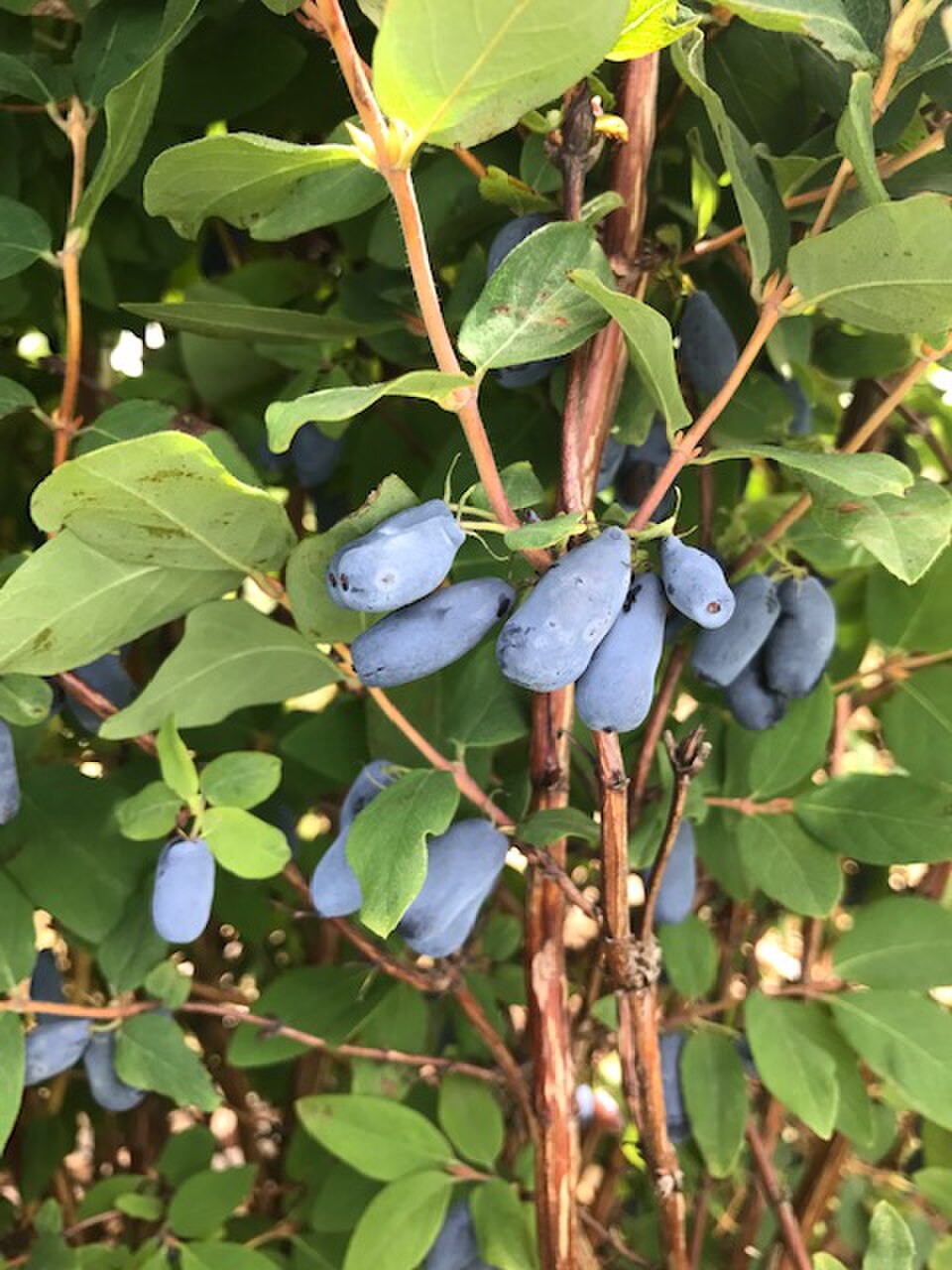

Also known as Haskap, or Honeyberry, this a remarkable deciduous shrub cherished for its nutrient-rich, edible berries and striking ornamental qualities. Thriving in USDA Zones 2 to 7, this circumpolar plant is native to the moist boreal forests of Asia, North America, and Europe. With an impressive height and spread of 4 to 6 feet, and adorned with glaucous green leaves, Blue Honeysuckle blooms with small, yellowish-white flowers between April and June. These blossoms give way to clusters of deep-blue, sweet-tart berries, reminiscent of blueberries with hints of raspberry or elderberry.
Ideal for edible landscapes, honeyberry shrubs are cold-hardy and low-maintenance, thriving in well-drained, organically rich soils under full sun to part shade. Thanks to their ability to tolerate deer and black walnut, they are perfect for hedges or fruit gardens. Each bite offers a powerhouse of vitamin C, flavonoids, and antioxidants, perfect for fresh eating or transforming into exquisite jams, pastries, and wines. Enhance your garden aesthetics and culinary experiences with the versatile and rewarding blue honeysuckle.
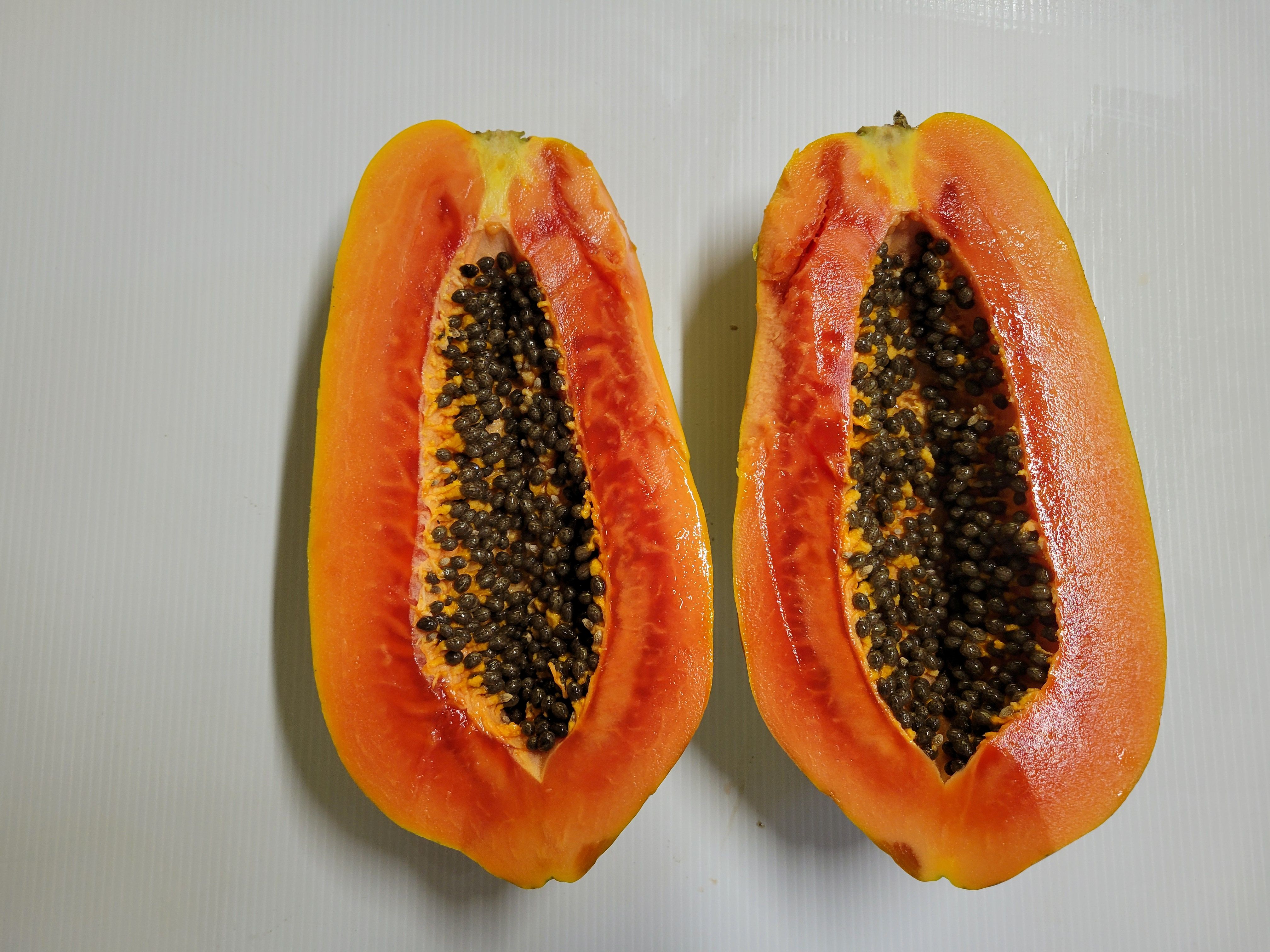
This is is a variety grown in Mexico and very popular at grocery stores and fruit stands there. The fruits are slightly larger than Hawaiian Solo varieties, often getting in the 3-4 pound range compared to 2-3 pounds for the HS variety, but still small enough for the solo description. It is not nearly as well known as other commercial varieties grown in the region which are much larger fruits, but should be tried by any Papaya lover. We love the softer flesh for fruit salads, smoothies, and juices, and is great for eating fresh.
The fruits have smooth golden to yellow skin, rich orange to salmon-colored flesh with a little marbling, sweet tropical flavor, and fragrant aroma. As noted, we love the flavor of these and they are productive growers.
Plant Characteristics
- Botanical Name: Carica papaya
- Common Name: Mexican Solo Papaya
- Plant Type: Tropical fruit-bearing herbaceous tree
- Mature Height: 8 to 15 feet outside, 7-12 feet in containers.
- Growth Rate: Extremely fast
- USDA Zones: 9b to 11
- Fruit Color: Golden-yellow skin with deep orange flesh
- Fruit Weight: Typically 3 to 4 pounds
Papaya seeds germinate readily under warm conditions.
- Sow seeds approximately 1/4 inch deep.
- Maintain temperatures between 75 and 90°F.
- Keep soil consistently moist.
- Provide bright light after emergence.
- Use a well-drained growing medium.
- Germination typically occurs within 2 to 6 weeks.
Thrives in full sun and fertile, well-drained soils rich in organic matter.
Regular watering and fertilization encourage rapid growth and continuous fruit production.
Excellent drainage is critical, as papayas are sensitive to standing water and poorly drained soils.
Under ideal conditions, fruit production often begins within the first year from seed.
Container GrowingThis Papaya performs well in large containers of 20 gallons or larger.
Container-grown plants require regular feeding, consistent watering, and protection from frost.
Large patio specimens can produce surprisingly abundant harvests while adding a dramatic tropical appearance.
Fruit InformationThe fruits contain smooth, sweet flesh with a rich tropical aroma and relatively small seed cavity.
The flavor is often described as a blend of melon, peach, mango, and honey-like sweetness.
Excellent for fresh eating, fruit salads, smoothies, juices, and desserts.
Nutritional ValueRich in Vitamin C, Vitamin A, potassium, folate, antioxidants, and digestive enzymes.
The fruit is considered one of the healthiest tropical foods and is enjoyed worldwide as part of a nutritious diet.
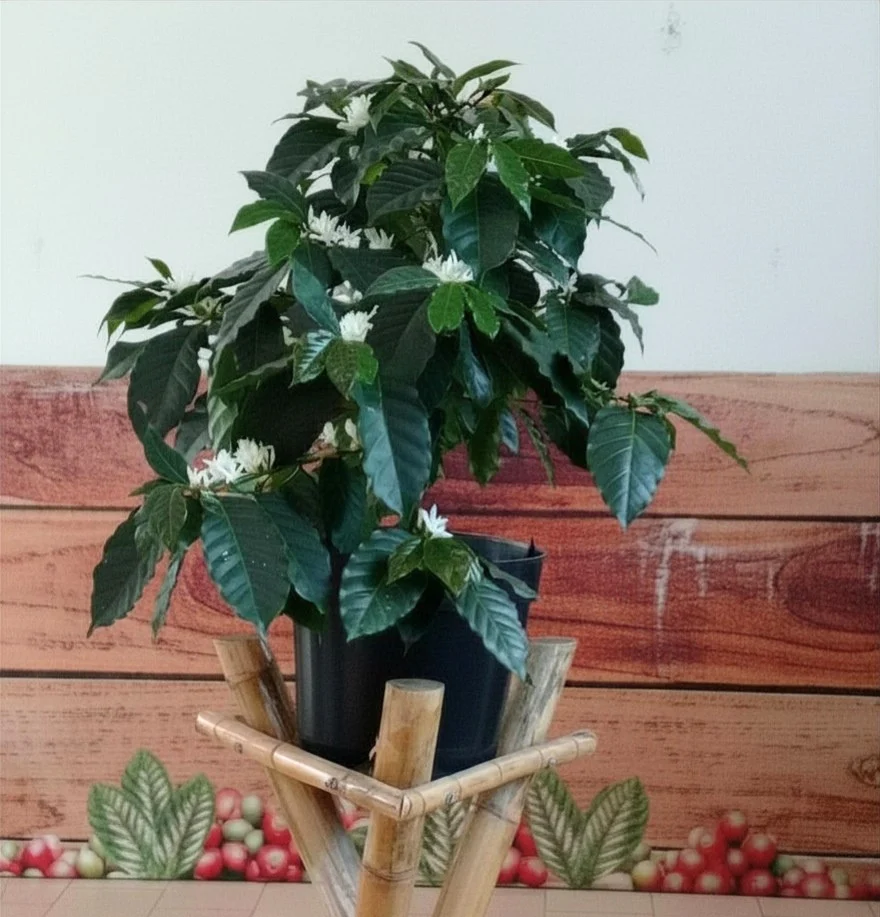
Coffea arabica ‘Aztec Gold’, also known as Oro Azteca, is a compact, dwarf selection of Arabica coffee valued for its smaller growth habit and suitability for container production. Compared to standard coffee varieties, this selection remains more manageable in size while still producing the characteristic glossy foliage and fragrant white flowers typical of Coffea arabica.
Due to its compact form, ‘Aztec Gold’ / Oro Azteca is especially well suited for greenhouse production, indoor growing, and specialty nursery markets. It offers growers the opportunity to produce coffee plants in smaller formats without sacrificing ornamental appeal.
A fast-growing tropical vine valued for its glossy, deep green foliage and climbing or trailing growth habit. It is widely used in interior plant programs, hanging baskets, and container production due to its attractive foliage and adaptability to indoor environments.
Grape Ivy is grown commercially in 3 to 10 inch pots and 6 to 22 inch hanging baskets. The plant is used very effectively where a trailing vine is required. It will tolerate light levels as low as 75 foot-candles indoors which makes it a good choice for many interiors.
Growing indoors: Allow the soil to become nearly dry between waterings. Water the plant thoroughly and allow the water to drain through. Never let the plant stand in water as this will cause root rot.
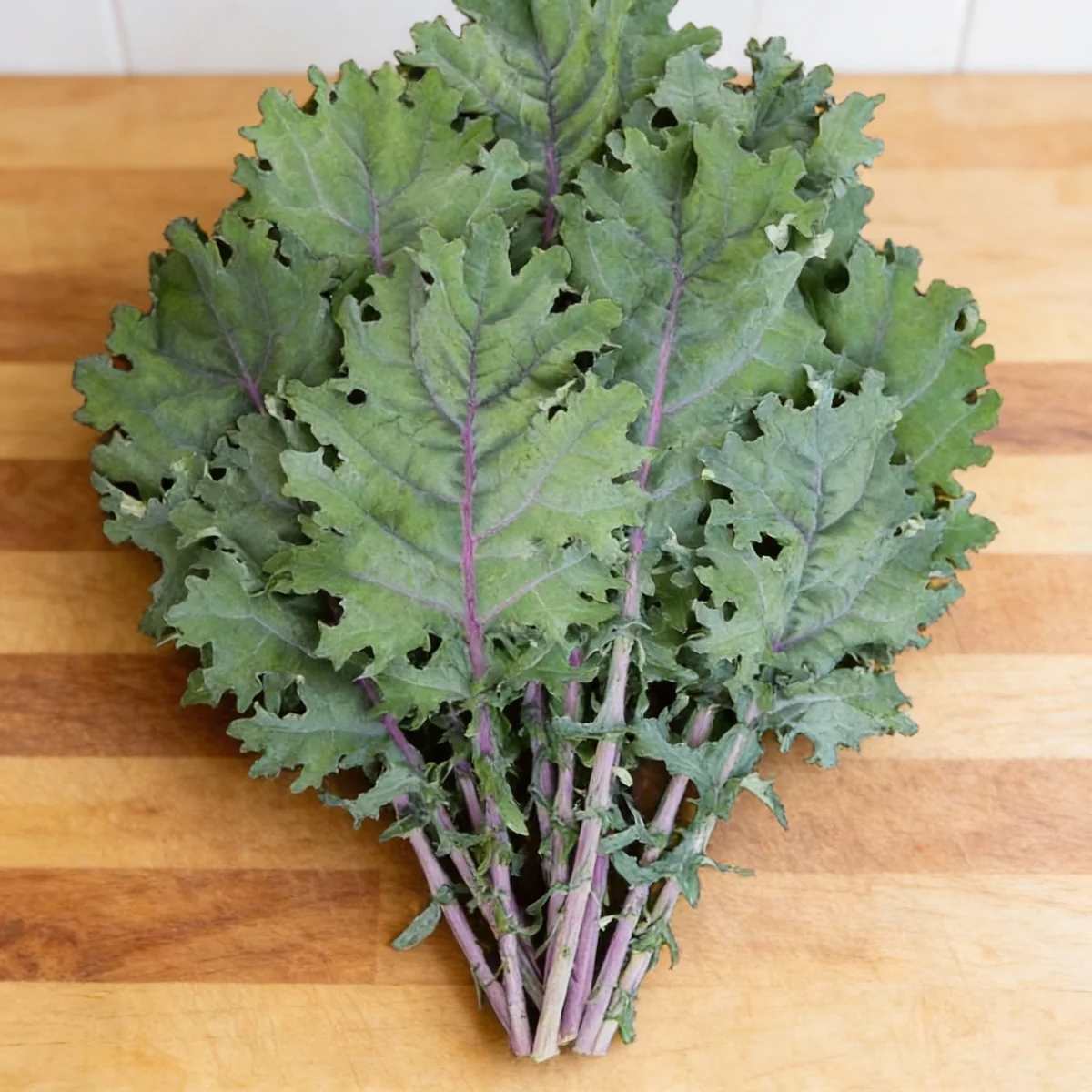
Red Russian Kale (Brassica napus, Pabularia Group) is a beautiful old heirloom with tender, deeply cut blue-green to gray-green leaves carried on striking reddish-purple stems and veins. Also historically known as Ragged Jack and Buda Kale, this Russo-Siberian type was grown in the 19th century and was brought to Canada by Russian traders. Unlike heavily curled kales, Red Russian develops broad, flat, oakleaf-like foliage with a delicate texture and mild, sweet flavor. Young leaves are excellent raw in salads and baby-leaf mixes, while larger leaves remain tender enough for sautéing, steaming, soups and other cooked dishes. Plants are vigorous, typically reaching about 18–36 inches tall, and the colorful foliage makes Red Russian attractive enough to use in edible ornamental plantings.
Red Russian thrives in the cool weather of spring and fall and is especially valuable for late-season production because of its excellent cold tolerance. Grow in full sun in fertile, well-drained soil with consistent moisture, spacing mature plants approximately 12–18 inches apart. Baby leaves can be harvested in about 25 days, with mature leaves generally ready in approximately 50–60 days. Harvest the tender outer leaves individually and allow the growing center to remain for continued production. Like many kales, its eating quality becomes especially good after exposure to cool weather and light frost, when the leaves develop a noticeably sweeter flavor and their red-purple coloring becomes more pronounced.
Sow seed about 1/4–1/2 inch deep, either directly in the garden or indoors about 4–6 weeks before transplanting. Kale germinates over a broad range of cool soil temperatures, with seedlings commonly emerging in approximately 4–10 days under favorable conditions. Spring crops can be started before the last frost, while late-summer sowings provide excellent fall and early-winter harvests.
Seedman Notes: Red Russian is one of our favorite kales for gardeners who think they don't particularly like kale. The young leaves are unusually tender and mild, making them much more suitable for fresh salads than many heavily curled types. Try harvesting some as baby greens and allowing the remaining plants to mature for fall harvest—the colder weather brings out the sweetness that has helped keep this historic variety in gardens for generations.
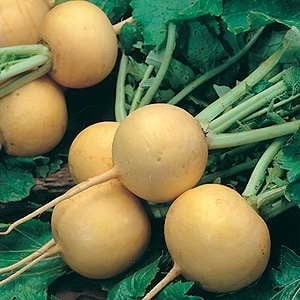
A beautiful old heirloom dating to the mid-1800s, also historically known as Robertson's Golden Ball and Orange Jelly. Unlike the familiar white and purple-topped turnips, Golden Ball produces smooth, round golden-yellow roots with rich yellow flesh. The flavor is exceptionally mild, sweet and tender, often described as pleasantly nutty, and the roots are excellent roasted, simmered, mashed or added to soups and stews. Although they can reach 4–5 inches across, the roots are at their sweetest and most tender when harvested at about 3–4 inches in diameter. The leafy tops are edible as well, giving gardeners two useful crops from the same planting.
Golden Ball is a cool-season vegetable ideally suited to spring and especially fall gardens. Direct sow in full sun in fertile, loose, well-drained soil and provide consistent moisture so the roots develop rapidly without becoming tough or overly pungent. Thin seedlings to approximately 3–6 inches apart depending on the root size desired. Maturity is generally about 45–60 days, with young roots harvestable earlier, and successive sowings can extend the harvest. Fall-grown roots are particularly worthwhile, developing excellent flavor as cool weather arrives. Golden Ball is also regarded as a good storage turnip, making it useful for gardeners interested in producing vegetables for both fresh eating and winter keeping.
Sow seed directly about 1/4–1/2 inch deep as soon as the soil can be worked in spring, or sow in late summer for a fall crop. Germination is normally quick, often occurring in approximately 5–10 days when soil temperatures and moisture are favorable. Keep the seedbed evenly moist until seedlings are established, then thin promptly to prevent crowding and poorly shaped roots.
Seedman Notes: Golden Ball is an heirloom worth growing for more than its unusual color. Its sweet, mild yellow flesh has kept this variety in gardens for well over a century, and it is an excellent choice for gardeners who normally find ordinary turnips too sharp or strongly flavored. For the finest eating quality, don't wait for the roots to reach their maximum size—harvest them around 3 inches across when they are especially tender and sweet.
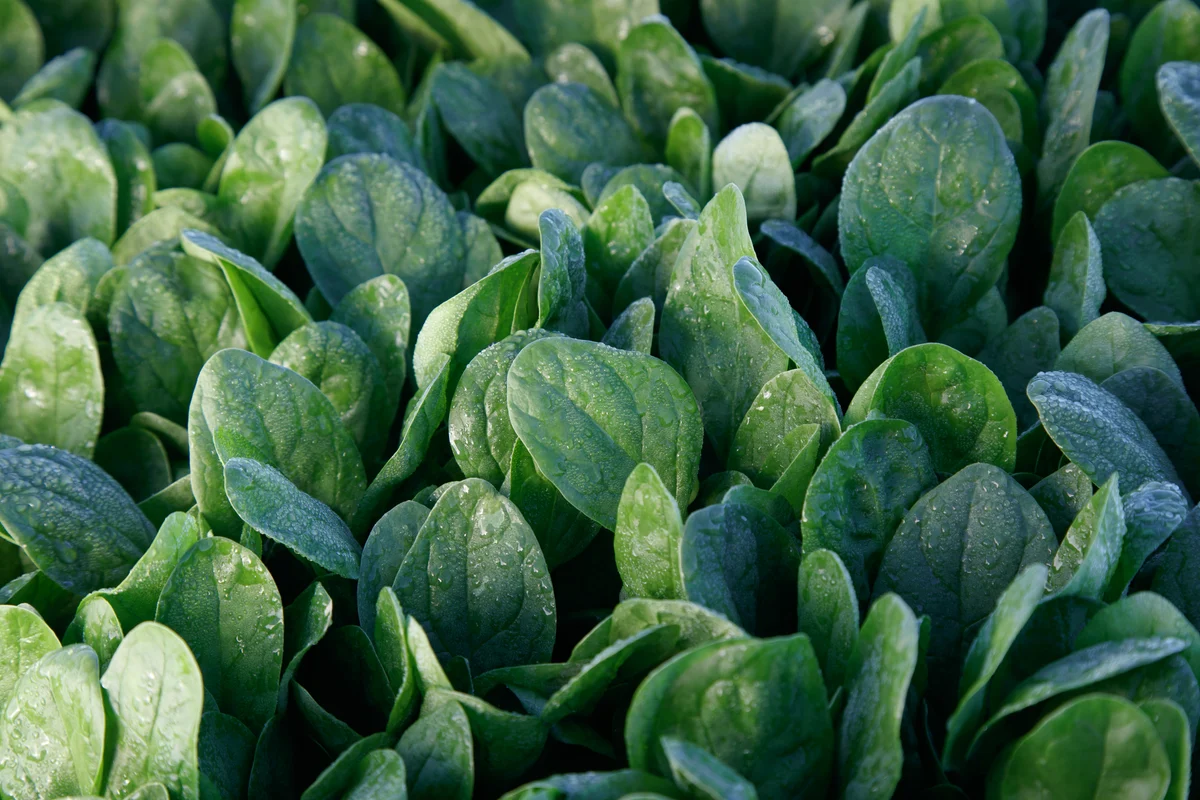
A versatile hybrid producing attractive, smooth, dark green leaves with a rounded to oval shape and an upright growth habit that makes harvesting especially easy. The leaves develop excellent texture and substance along with a mild, pleasing spinach flavor, making Lakeside equally useful for tender baby-leaf salads, fresh bunching and larger leaves for cooking. Its combination of uniform growth, attractive color and excellent eating quality makes it a fine choice for both home gardens and intensive raised-bed production.
Grow Lakeside during the cool weather of spring and fall in fertile, well-drained soil with consistent moisture. Plants perform best in full sun during cool weather, although some afternoon shade can help extend production as temperatures rise. Baby leaves can be ready approximately 25–30 days from direct seeding, and the variety has good bolt tolerance for extending the useful harvest period. Lakeside also offers an excellent disease package, with high resistance to multiple races of spinach downy mildew and intermediate resistance to additional races, an important advantage for gardeners who have experienced this troublesome spinach disease.
Sow seed directly about 1/2 inch deep in cool, moist soil, with germination generally occurring in approximately 5–14 days under favorable conditions. Sow relatively closely for baby-leaf harvesting or thin plants to several inches apart when larger leaves and bunches are desired. Succession sowings every couple of weeks during suitable cool weather can provide an extended supply of fresh spinach.
Seedman Notes: Lakeside is particularly useful for gardeners who want one spinach variety capable of several different harvest styles. Pick the young leaves for baby spinach, allow plants to develop for bunching, or repeatedly clip usable leaves as needed—a productive, adaptable hybrid with excellent garden and kitchen versatility.
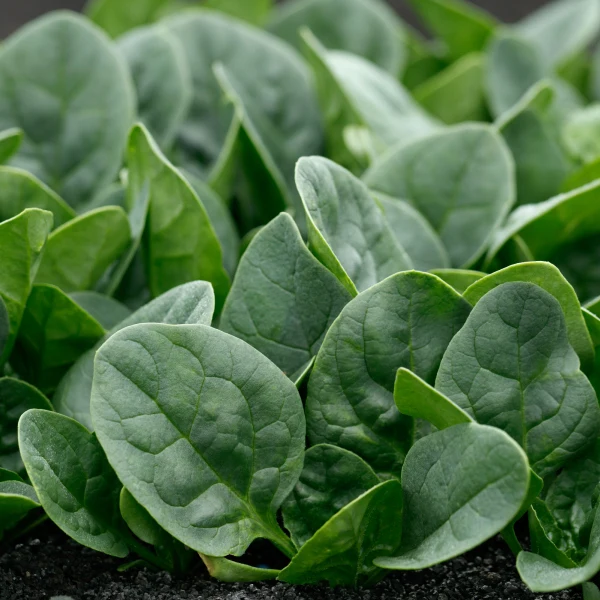
An attractive hybrid developed especially for producing beautiful, uniform baby spinach. Plants form an upright habit with thick, smooth, round-to-oval leaves of a very dark green color. The leaves have excellent substance and holding quality, making Countryside especially well suited for baby-leaf salads, fresh eating and repeated clipping. Its moderate growth rate helps maintain quality in the garden rather than quickly becoming oversized, while the upright foliage makes harvesting and cleaning easier.
Grow Countryside during the cool weather of spring and fall in full sun, or provide some afternoon shade where temperatures warm quickly. Sow directly into fertile, well-drained soil and keep the planting evenly moist for tender, rapid growth. Baby leaves can be harvested in approximately 23–27 days under favorable outdoor conditions, with larger leaves allowed to develop for later harvest. Countryside also offers useful bolt tolerance and excellent disease protection, with high resistance to multiple races of spinach downy mildew (Pe 1–12, 14–16, 19–20), an especially valuable characteristic where this disease has been troublesome.
Sow seed about 1/2 inch deep in cool soil, with germination generally occurring in approximately 5–14 days under favorable conditions. For baby-leaf production, seeds can be planted relatively closely and young leaves clipped as soon as they reach the desired size; allow wider spacing if larger mature plants are wanted.
Seedman Notes: Countryside is an excellent choice for gardeners who enjoy the tender spinach sold in packaged baby-leaf mixes. Its combination of exceptionally dark color, thick smooth leaves, uniform growth and strong downy mildew resistance makes it particularly attractive for succession plantings and repeated fresh harvests.
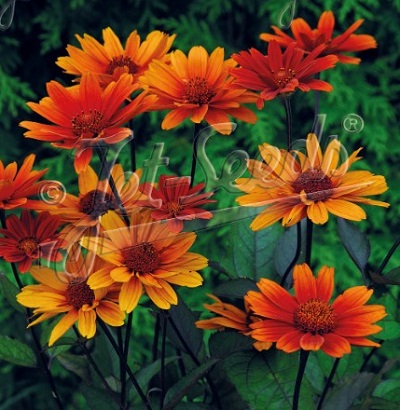
Bleeding Hearts Heliopsis (Heliopsis helianthoides var. scabra 'Bleeding Hearts') is a remarkable perennial false sunflower that replaces the familiar golden-yellow Heliopsis flower with a much richer and more dramatic palette. Flowers open an intense fiery red to red-orange and gradually mature through orange and bronze tones, creating several shades on the plant at the same time. The colorful blooms are beautifully contrasted by dark purple-bronze foliage and nearly black stems, giving the entire plant ornamental value even before flowering begins. Plants develop into sturdy, upright clumps approximately 3 to 4 feet tall and bloom from midsummer well into fall, making Bleeding Hearts outstanding for perennial borders, prairie-style gardens, mass plantings and cutting gardens.
Grow Bleeding Hearts in full sun and average, well-drained soil. Plants are adaptable to a surprisingly broad range of soils and, once established, tolerate heat and periods of dry weather while flowering most heavily with reasonable moisture during prolonged drought. Hardy in approximately USDA Zones 3-9, this is a dependable perennial for gardeners across a wide climatic range. The long stems make excellent cut flowers, while the abundant summer and fall blooms attract bees, butterflies and other beneficial pollinators. Removing faded flowers can encourage continued bloom, or some mature seed heads may be left later in the season to provide food for birds and additional winter interest.
Sow seeds in a moist, well-drained seed-starting medium, covering them only thinly, and maintain temperatures around 68°F with consistent moisture until germination. The seed is considered relatively quick and straightforward to germinate, and established seedlings should be moved into cooler, bright conditions for sturdy growth. Plants can flower during their first year when started sufficiently early.
Seedman Notes: Bleeding Hearts is one of those varieties that makes gardeners look twice because it does not resemble the traditional yellow Heliopsis they may already know. The combination of fiery red-orange flowers, bronze-purple foliage and black stems is exceptional, and the flowers continue changing color as they mature. Introduced by Jelitto Perennial Seeds in 2018, it combines the toughness and pollinator value of Heliopsis with an entirely different garden color palette.
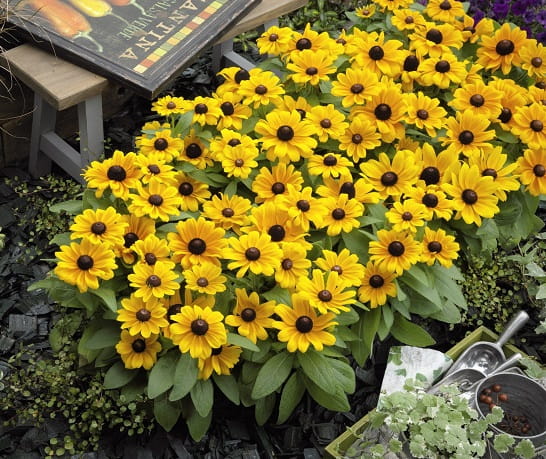
Claire Orange F1 Rudbeckia (Rudbeckia hirta) is an exciting new breeding breakthrough and the world's first pollen-free F1 hybrid Rudbeckia. Plants produce an abundance of brilliant, clear orange flowers surrounding exceptionally clean, dark central cones, creating a striking display without the pollen normally associated with traditional Rudbeckia blooms. Claire Orange is naturally compact, well branched and uniform, generally reaching about 12 to 15 inches tall with a spread of approximately 12 inches. Its tidy habit and heavy flower production make it outstanding for sunny borders, mass plantings, patio containers and combination planters, while its early flowering and long season of color keep plants attractive from late spring through summer and into fall.
Grow Claire Orange in full sun and fertile, well-drained soil with moderate, consistent moisture. This variety was specifically selected for exceptional vigor along with impressive heat and disease tolerance, allowing plants to maintain their appearance through challenging summer conditions. The compact growth requires little maintenance and fits particularly well into containers and smaller garden spaces where taller Rudbeckias can become overwhelming. Because the flowers are pollen-free, their dark central eyes remain remarkably clean as the blooms mature, and the sterile character also contributes to a longer-lasting floral display. Claire Orange performs beautifully planted individually in containers but becomes especially impressive when several plants are grouped together to create a mass of glowing orange color.
Sow seed on the surface of a fine, moist, well-drained seed-starting medium and cover only very lightly, since Rudbeckia seed benefits from light during germination. Maintain temperatures around 68-72°F and consistent moisture until seedlings emerge, typically within approximately 7-14 days under favorable conditions. Provide seedlings with strong light and good air circulation, then transplant outdoors after they have been hardened and danger of severe frost has passed.
Seedman Notes: Claire Orange is much more than another new Rudbeckia color. Its distinction as the first pollen-free F1 hybrid Rudbeckia represents a genuine advance in flower breeding, combining clean flowers, compact growth, heavy blooming, heat tolerance and strong garden performance in a single seed-grown variety. Its selection as a 2026 All-America Selections National Winner provides additional confirmation that this is an introduction worth watching—and one we expect gardeners will quickly notice.
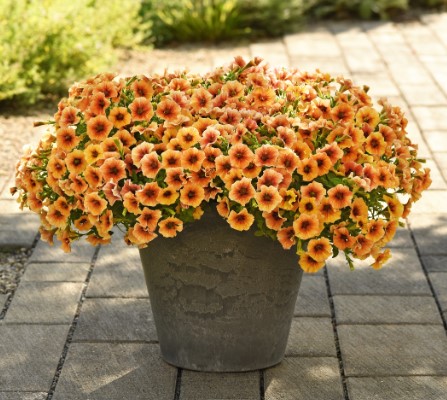
An exciting new seed-grown Petchoa combining the flower power and vigorous garden performance of petunias with the brilliant colors associated with calibrachoa. Nectarine produces glowing flowers in warm orange and yellow tones, but one of its most unusual characteristics is its ability to change appearance with growing conditions. Flowers produced under greenhouse conditions show rich orange coloring with warm yellow undertones, while plants moved outdoors develop an attractive soft rose overlay. The result is a constantly changing blend of nectarine-orange, yellow and rosy shades. Plants remain low at approximately 6 to 10 inches tall while spreading 20 to 28 inches, creating a full, mounded and trailing display ideal for hanging baskets, patio containers, window boxes and mixed combination planters.
Grow Caliburst Nectarine in full sun to partial sun with fertile, well-drained soil and consistent moisture. Its controlled spreading habit provides the fullness gardeners expect from a premium vegetative Petchoa while offering the convenience of growing plants from seed. Caliburst is also notably cold durable, allowing plants to perform well during cool early-spring conditions and then continue flowering through summer and into fall. Regular feeding is beneficial for container-grown plants because their long flowering season requires considerable nutrition. With its 20 to 28-inch spread, Nectarine is particularly well suited to hanging baskets where stems can mound over the center and gradually trail over the edges, and it also combines beautifully with contrasting blue, purple, white or deep burgundy flowers.
Caliburst Nectarine is supplied as pelleted seed for easier handling and accurate sowing. Sow pellets on the surface of a fine, moist seed-starting medium without covering them, since light is important for germination. Maintain temperatures around 70-75°F and keep the pellets consistently moist until they have completely dissolved and germination occurs, generally in approximately 7-10 days. Seedlings are typically ready for transplanting in about 4-6 weeks.
Seedman Notes: Caliburst represents an important development in Petchoa breeding because the series brings a plant previously associated primarily with vegetative propagation into a dependable seed-grown form. Nectarine may be one of the most interesting colors yet—the flowers actually change character as growing conditions change, shifting from glowing orange and yellow toward a beautiful rose-overlaid nectarine blend outdoors. For hanging baskets and premium patio containers, this should be a real attention getter.
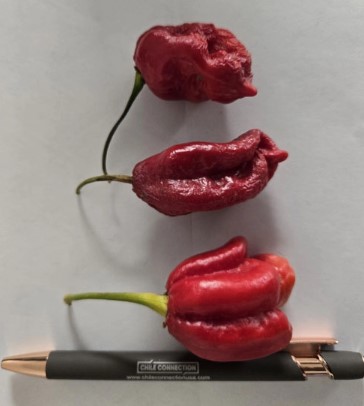
Pico Fuego Pepper is an exceptionally hot chile developed in New Mexico's famous Hatch Valley from fiery Trinidad, Barakapore, and Moruga genetics. This formidable pepper has been reported at 800,000+ Scoville Heat Units, placing it firmly in the super-hot category and making it a selection for experienced hot-pepper enthusiasts. The productive plants develop numerous intensely hot fruits with thicker flesh than many other super-hot peppers, providing a little more substance for processing into sauces, powders, flakes, and other fiery preparations. Expect approximately 90 days to maturity under favorable growing conditions.
Grow Pico Fuego in full sun, fertile well-drained soil, and plenty of summer warmth. Super-hot peppers appreciate a long growing season and benefit from being started indoors well ahead of the last expected frost. Transplant outdoors only after the soil has warmed and nighttime temperatures are reliably mild. Maintain reasonably consistent moisture without keeping the roots waterlogged, and avoid excessive nitrogen fertilizer that can produce lush foliage at the expense of fruit. Plants grown in containers should be given a generously sized pot and regular feeding during active growth. Because of the extreme heat of the fruits, wear disposable gloves when harvesting or cutting them, avoid touching the eyes or face, and keep harvested peppers away from children and pets.
Start seeds indoors approximately 8-12 weeks before the anticipated transplant date. Sow about ¼ inch deep in a moist, well-drained seed-starting mix and provide considerable bottom warmth; temperatures around 85-95°F can help encourage germination. Super-hot pepper seeds can be considerably slower and less uniform than ordinary garden peppers, sometimes requiring several weeks to emerge, so maintain warmth and moisture and be patient.
Seedman Notes: Pico Fuego is not simply another hot pepper—it is intended for the gardener who deliberately seeks extreme heat. Its Hatch Valley breeding background, very high heat level, heavy production, and comparatively thick flesh make it especially interesting for serious chile collectors and hot-sauce growers. Treat the mature fruits with respect: a very small amount can provide an extraordinary amount of heat.
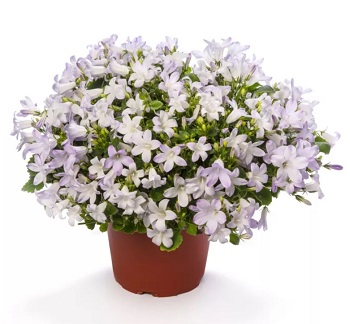
A compact, free-flowering bellflower prized for its abundance of crisp white, bell-shaped blooms held above fresh green foliage. Plants develop a neat, rounded, mounding habit and become covered with flowers during their main blooming period, creating a clean and elegant display. The bright white flowers are especially effective along pathways and border edges, where they provide contrast against darker foliage and brightly colored companions. Its naturally compact growth also makes Clockwise White an excellent choice for patio containers, window boxes, rock gardens, mixed planters, and small-space gardens.
Grow Clockwise White in full sun to partial shade in fertile, well-drained soil with reasonably consistent moisture. In areas with hot summers, some afternoon shade can help protect the foliage and flowers from excessive heat and prolong the display. Good drainage is important, particularly during cool or wet weather, and container-grown plants should never be allowed to remain in waterlogged soil. Removing faded flowers helps maintain the plant's tidy appearance and can encourage additional blooming. The numerous bell-shaped flowers also attract bees and other beneficial pollinators, making this compact Campanula useful in both ornamental and pollinator-friendly plantings.
Sow the extremely small seeds on the surface of a fine, moist, well-drained seed-starting medium and press them gently into place without covering, as light assists germination. Maintain temperatures around 65-70°F and keep the medium evenly moist without saturating it. Germination commonly begins in approximately 14-28 days, although some seedlings may take longer.
Seedman Notes: Clockwise White is particularly attractive when several plants are grouped together, producing a mound of green foliage sprinkled with brilliant white bells. Its compact size makes it easy to tuck into places where taller Campanulas would be unsuitable, and the neutral white flowers combine beautifully with almost any other garden color. It is also an excellent candidate for decorative containers where the flowers can be enjoyed up close.
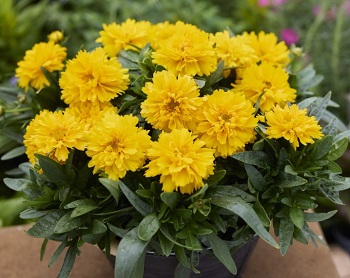
A cheerful, long-blooming perennial featuring masses of rich golden-yellow, semi-double to double flowers held above attractive green foliage. The extra petals give the blooms a fuller, almost pompon-like appearance compared with traditional single-flowered Coreopsis, creating an especially bright display in sunny gardens. Plants generally develop into compact, bushy clumps about 18 to 24 inches tall and bloom heavily through the summer, often continuing into early fall when spent flowers are removed. SunGlobe is an excellent choice for perennial borders, cottage gardens, mass plantings, pollinator gardens, cutting gardens, and sunny containers.
Grow SunGlobe in full sun and well-drained soil for the most compact plants and greatest flower production. Once established, Coreopsis grandiflora tolerates heat and periods of dry weather well and generally performs better in moderately fertile soil than in heavily enriched ground. Regular deadheading encourages additional flowering and helps keep plants attractive throughout the season; lightly cutting plants back after the first major flush can also encourage fresh growth and another display of blooms. SunGlobe is generally suitable for USDA Zones 4-9, and its bright flowers attract bees, butterflies, and other beneficial pollinators while also providing useful stems for informal summer bouquets.
Sow seeds in a moist, well-drained seed-starting medium, pressing them gently into the surface and covering only very lightly. Maintain temperatures around 65-75°F with consistent moisture and good light; germination commonly occurs in approximately 10-21 days. Established seedlings can be transplanted outdoors after danger of severe frost has passed, or seed may be direct sown where plants are to grow once conditions are suitable.
Seedman Notes: SunGlobe is one of those dependable flowers that can make a sunny planting look brighter with very little effort. Its fuller golden blooms provide considerably more visual impact than many single-flowered Coreopsis selections, yet the plants retain the easy
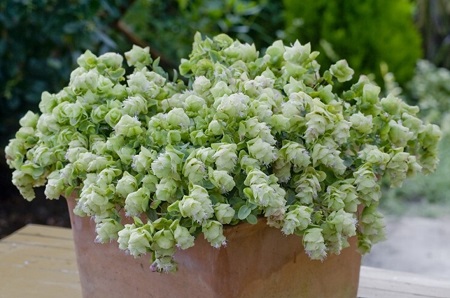
A distinctive ornamental oregano grown primarily for its remarkable flowers and foliage rather than for culinary use. Native to rocky areas of Turkey and the Caucasus region, this compact perennial forms attractive mounds of rounded, blue-green to gray-green leaves, usually reaching about 8 to 12 inches tall. In summer, slender stems carry cascading clusters of overlapping, hop-like bracts, often pale green to rosy pink, with tiny flowers emerging between them. The unusual combination of silvery foliage and dangling ornamental flower clusters makes this species an outstanding choice for rock gardens, raised beds, containers, trough gardens, and sunny border edges.
Grow Origanum rotundifolium in full sun and exceptionally well-drained soil. Once established, plants are drought tolerant and perform especially well in gravelly, rocky, or lean soils where excessive moisture does not collect around the roots. It is generally suited to approximately USDA Zones 5-9, although winter survival is greatly influenced by drainage; cold, wet soil can be more damaging than low temperatures themselves. The flowering stems are also attractive for cutting and drying, while the small flowers can draw bees and other beneficial insects. Avoid overly rich soil and heavy fertilization, which can encourage softer growth at the expense of the compact form and attractive foliage.
Sow the very small seeds on the surface of a moist, well-drained seed-starting mix, pressing them gently into the medium without deeply covering them. Provide light, consistent moisture, and temperatures around 65-70°F until germination, which commonly takes approximately 10-21 days but may occasionally be slower. Once seedlings are established, gradually reduce moisture and provide plenty of light and air circulation.
Seedman Notes: This is not the oregano to choose primarily for the herb garden—it is an ornamental treasure. Its cascading, hop-like flower clusters look especially impressive spilling over rocks, stone walls, raised beds, or the rim of a decorative container. The flowering stems also dry beautifully, making Origanum rotundifolium an unusual plant that can provide interest in the garden as well as in dried arrangements.
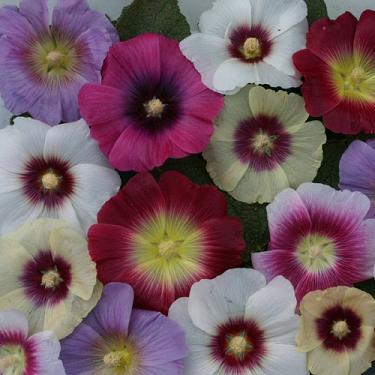
A beautiful and distinctive hollyhock mixture known for its large single blooms marked with dramatic contrasting centers, or “halos.” Flowers appear in a charming range of colors including pink, rose, red, white, cream, yellow, lavender, and soft purple, each accented by a bold central eye. This gives the planting a bright, cheerful, old-fashioned look while adding extra depth and interest to the garden display.
Garden Uses
Halo Mix is excellent for cottage gardens, back borders, fence lines, pollinator gardens, cutting gardens, and old-fashioned flower beds. Its tall flowering stems create a strong vertical accent and look especially attractive along barns, sheds, walls, and picket fences. The colorful halo-patterned blooms combine beautifully with daisies, foxgloves, delphiniums, coreopsis, salvia, yarrow, and ornamental grasses.
Growing Information
Grow Halo Mix in full sun and well-drained, fertile soil. Plants generally reach 5 to 7 feet tall and should be spaced to allow good air circulation. Provide regular moisture during establishment, then water during dry periods. Staking may be helpful in windy areas. Seeds may be started indoors early or direct sown outdoors after danger of frost. Hollyhocks are often grown as biennials or short-lived perennials, and plants may reseed where conditions are favorable.
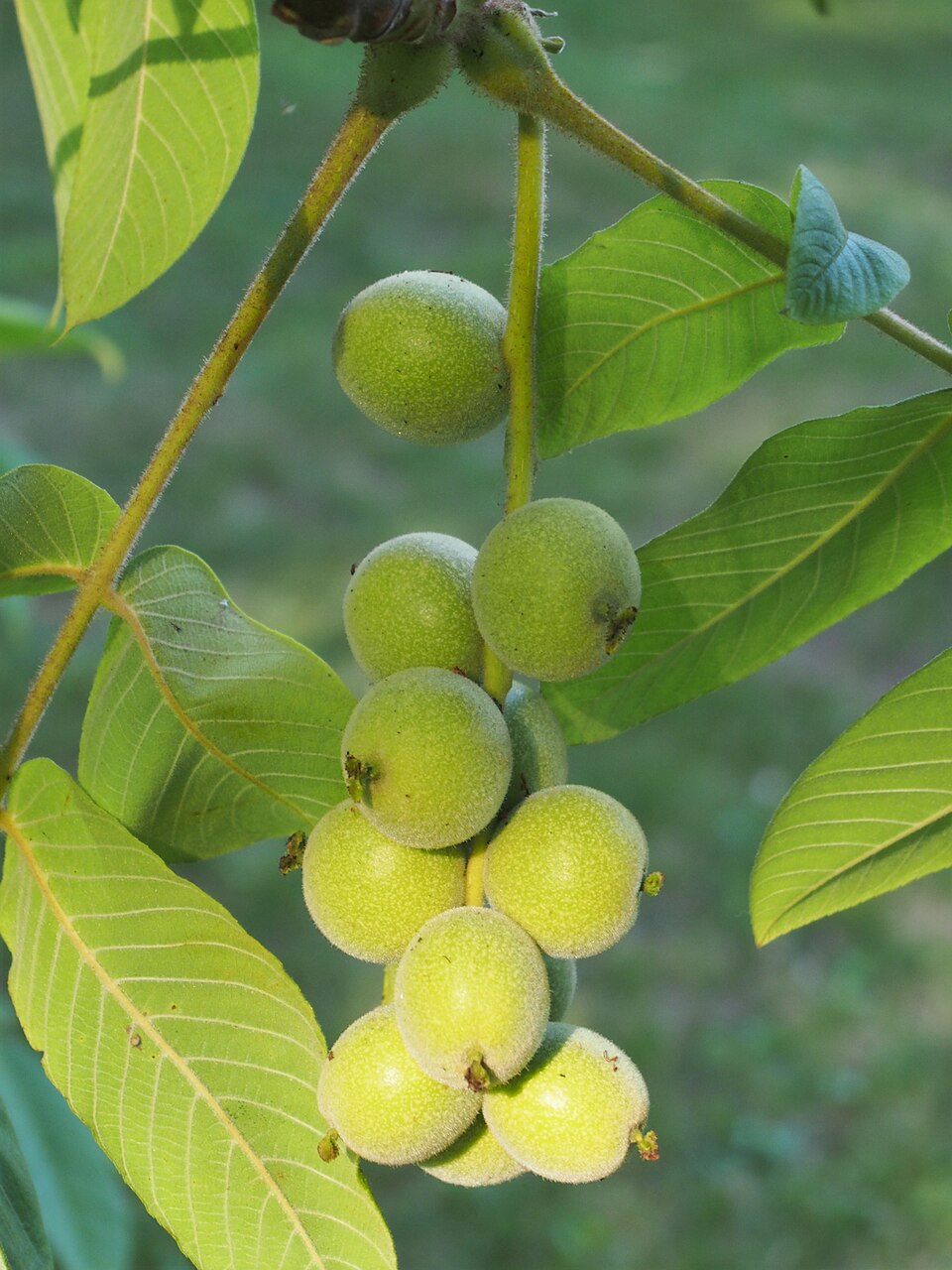

Heartnut (Juglans ailantifolia var. cordiformis) is a fascinating form of Japanese Walnut prized for its distinctive heart-shaped nuts, handsome foliage, and value as both an ornamental shade tree and an edible landscape plant. Native to Japan, Heartnut develops into a broad, attractive deciduous tree with large compound leaves that give it a lush appearance throughout the growing season. The unusual nuts are its signature feature, enclosed in green husks and containing flavorful kernels that are generally mild, sweet, and pleasantly walnut-like.
Heartnut makes an excellent choice for larger yards, homesteads, orchards, and edible landscapes. Trees generally perform best in full sun and deep, fertile, well-drained soil with dependable moisture, particularly while young. Mature trees can eventually reach approximately 30 to 50 feet tall with a broad spreading crown. Heartnuts are quite cold hardy, generally suitable for USDA Zones 4-8. For dependable nut production, planting two genetically different seedlings or compatible cultivars nearby is recommended because cross-pollination can substantially improve fruit set.
Seeds have a natural dormancy and should normally receive approximately 90-120 days of cold, moist stratification before sowing. Plant about 1-2 inches deep in a moist, well-drained medium and protect the seed from rodents while it germinates. Seed-grown trees are naturally variable, which can produce interesting differences in nut size, shell thickness, shape, and cracking quality.
Seedman Notes: Heartnut is especially appealing to gardeners who enjoy growing something both useful and unusual. When the shell is opened along its natural seam, the characteristic heart shape becomes obvious, making these nuts as interesting to display as they are to eat. Give the tree plenty of permanent space and it can develop into a beautiful shade and nut tree that may remain productive for generations.
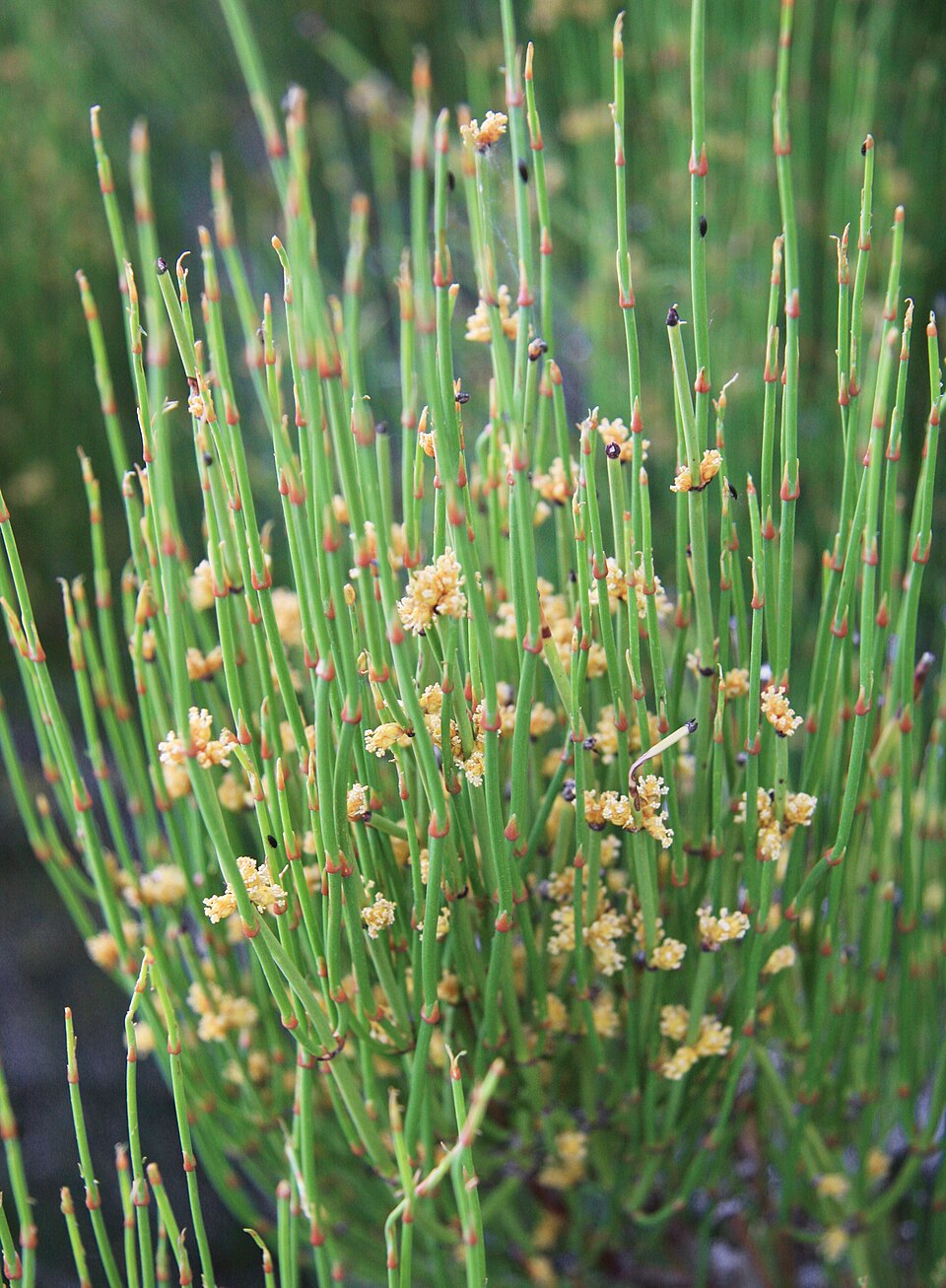

Green Mormon Tea (Ephedra viridis), also known as Green Ephedra or Indian Tea, is a distinctive evergreen shrub native to the dry mountains, deserts, and high plateaus of the western United States. Rather than conventional broad leaves, the plant produces numerous slender, jointed, bright green stems that perform most of the plant's photosynthesis, giving mature specimens an unusual airy, architectural appearance. Plants generally grow about 2 to 5 feet tall and wide, remaining attractive throughout the year and blending beautifully with rocks, native grasses, yuccas, agaves, and other drought-tolerant plants.
This exceptionally tough native is well adapted to full sun, low humidity, poor soils, and extended periods of drought. Green Mormon Tea is an excellent choice for xeriscapes, rock gardens, native plantings, erosion control, wildlife gardens, and difficult dry areas where many conventional shrubs struggle. It generally performs well in USDA Zones 4-9 when provided excellent drainage and should not be overwatered once established. Plants are normally male or female, so both sexes are needed if seed production is desired. The small reproductive cones are followed on female plants by conspicuous paired seeds surrounded by papery bracts.
Seeds benefit from approximately 30-60 days of cold, moist stratification and may then be sown about ¼ inch deep in a very well-drained medium. Keep seedlings lightly moist during establishment, gradually allowing the soil to become drier as the plants develop.
Seedman Notes: The common name Mormon Tea reflects the historical use of several western Ephedra species for brewed herbal drinks by Indigenous peoples and later settlers of the American West. This species should not be confused with Asian ephedras historically associated with concentrated ephedrine preparations, and medicinal use should not be inferred from the common name. For the landscape, its real attraction is its remarkable durability: Green Mormon Tea provides year-round green structure with very little water and looks completely at home in rugged Western and desert-style gardens.
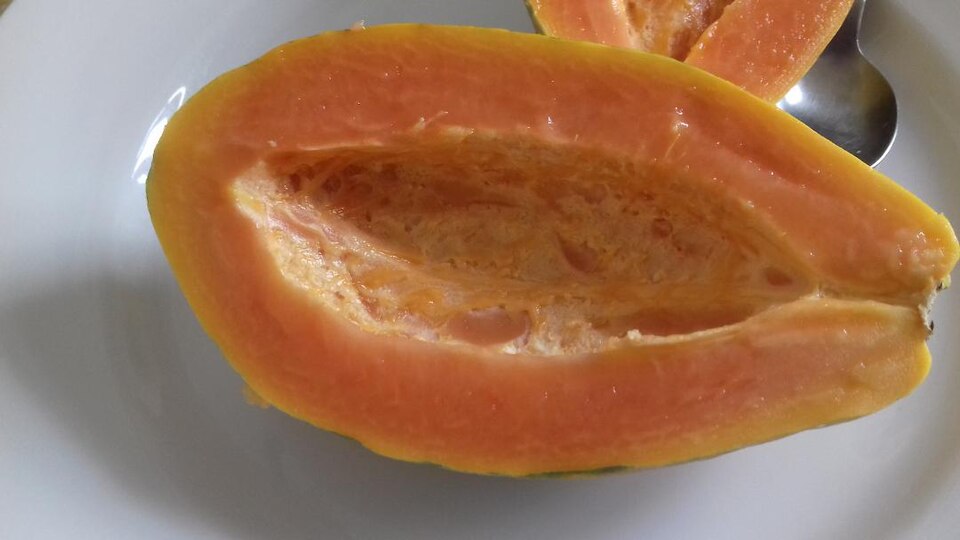

A fast-growing tropical fruit plant valued for its sweet, refreshing fruit and dramatic ornamental appearance. Plants develop a tall, usually unbranched trunk crowned by enormous, deeply lobed leaves that immediately create a lush tropical effect. The fruits develop directly along the upper trunk beneath the foliage and mature into attractive papayas with tender, juicy flesh and a sweet tropical flavor. Under warm conditions, papayas grow remarkably quickly and can begin flowering and producing fruit at a surprisingly young age, making Honeydew an especially rewarding choice for gardeners who enjoy growing unusual edible plants from seed.
Grow Honeydew Papaya in full sun, warmth, and rich, well-drained soil with regular moisture and feeding during active growth. Papayas perform best in frost-free climates, generally USDA Zones 10-11, although they can be grown as large container specimens and moved to protection in colder regions. Excellent drainage is essential because papaya roots are particularly sensitive to prolonged waterlogging. Seed-grown papayas may produce male, female, or bisexual flowers, so growing several plants and retaining the best fruiting specimens greatly improves the likelihood of successful production. Plants appreciate protection from strong winds because their large leaves and relatively soft trunks can be damaged during storms.
Sow seeds approximately ¼ inch deep in a warm, moist, well-drained seed-starting medium and maintain temperatures around 75-85°F. Germination commonly begins within two to several weeks, although individual seeds may emerge at different times. Once seedlings are established, provide strong light and avoid allowing them to become root-bound; papayas grow rapidly when warmth, moisture, and nutrition are plentiful.
Seedman Notes: Papaya is technically a giant herb rather than a true woody tree, and few edible plants provide such a dramatic tropical appearance so quickly. Honeydew Papaya is an excellent choice for warm-climate fruit gardens, edible landscapes, patios, and tropical collections. Growing several seedlings is recommended, both to improve pollination prospects and to allow selection of the strongest plants with the best fruit characteristics.
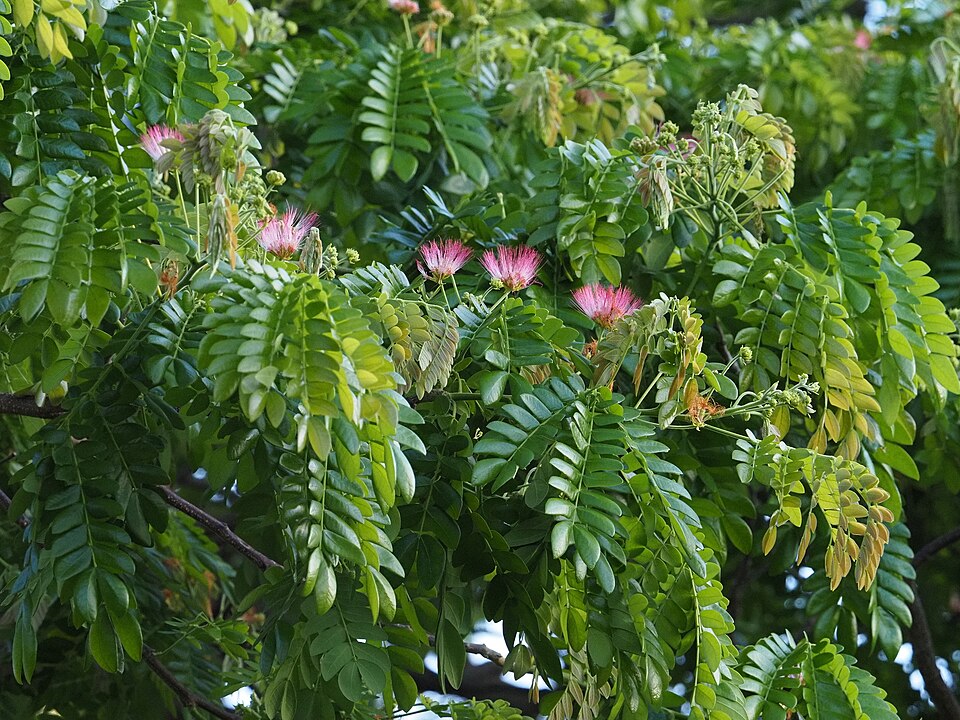

Monkey Pod Rain Tree (Albizia saman), also widely known as Rain Tree or Saman, is a magnificent tropical shade tree famous for developing an enormous, umbrella-shaped canopy. Native to tropical America but now planted throughout warm regions of the world, it can eventually reach 50 to 80 feet tall with a crown that may spread 80 to 100 feet or more under favorable conditions. The handsome bipinnate foliage gives the canopy a soft, fern-like texture, while clusters of unusual pink flowers with prominent stamens provide additional color and attract pollinators. Its tremendous spreading form makes an established Rain Tree one of the most impressive specimen trees in a tropical landscape.
Grow Monkey Pod in full sun and provide plenty of permanent space, as this is definitely not a tree for a confined location. It thrives in warm tropical and subtropical climates, generally USDA Zones 10-11, and adapts to a variety of soils provided reasonable drainage is available. Young trees appreciate regular moisture and grow rapidly, while established specimens become considerably more tolerant of seasonal drought. One fascinating characteristic gives the Rain Tree its common name: the leaflets naturally fold together during rain and toward evening, allowing more water to pass through the canopy to the ground beneath. The broad crown provides exceptional shade and makes the species valuable for parks, estates, pastures, large lawns, and tropical avenues.
For seed propagation, the hard seed coat should be scarified or the seeds soaked in very warm water before planting. Sow approximately ½ inch deep in a moist, well-drained medium and maintain temperatures around 75-85°F; properly treated fresh seed can germinate relatively quickly.
Seedman Notes: Few trees create a more dramatic living canopy than a mature Monkey Pod. Its huge spreading branches can form an almost natural outdoor room beneath the tree, providing welcome shade across an extraordinary area. The dark brown seed pods contain a sweet, sticky pulp that has traditionally been eaten by livestock and wildlife, explaining another common name, Monkey Pod. With sufficient room to develop naturally, this is a true legacy tree capable of becoming the defining feature of a large tropical landscape.
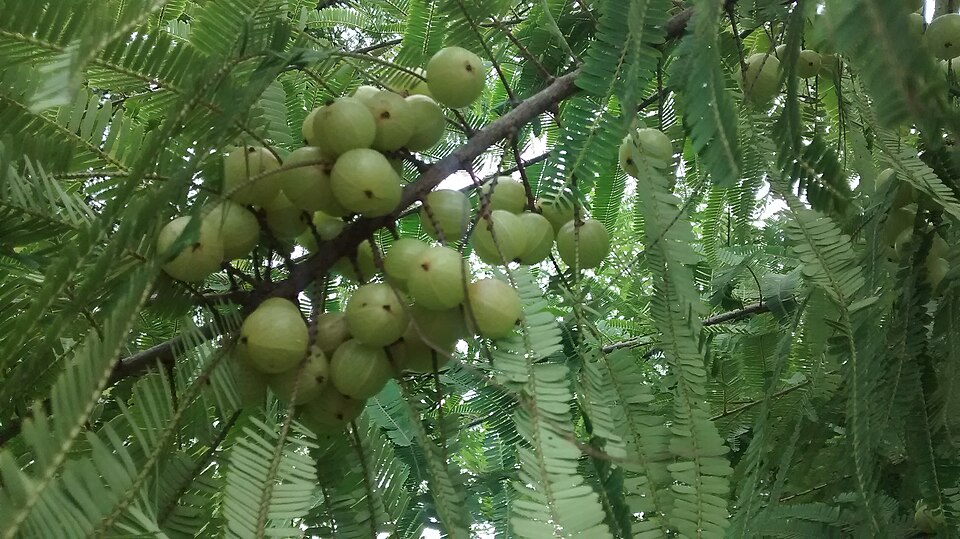

Commonly known as Amla or Amalaki, is a highly valued fruit tree native to tropical and subtropical regions of South and Southeast Asia. It develops into an attractive small to medium-sized deciduous tree, generally 20 to 40 feet tall, with a light, graceful crown and numerous slender branchlets covered with tiny leaves that give the foliage an almost feathery appearance. Small greenish-yellow flowers are followed by distinctive round, smooth, pale green to yellow-green fruits. The crisp fruits have an intensely tart, sour flavor with noticeable astringency and are traditionally eaten fresh or prepared as preserves, pickles, chutneys, candies, beverages, and other foods.
Grow Indian Gooseberry in full sun and well-drained soil in warm climates, generally USDA Zones 10-11, although established trees can tolerate brief periods of cooler weather better than many strictly tropical fruit trees. Once established, Amla is remarkably tolerant of heat and seasonal drought and can succeed on relatively poor soils, although regular moisture and reasonable fertility encourage stronger growth and fruit production. Its manageable size, attractive fine-textured foliage, and useful fruit make it an interesting choice for tropical edible landscapes, food forests, home orchards, and specimen plantings. The fruit is naturally very rich in vitamin C and has been valued as a food plant in India for centuries.
For seed propagation, soak seeds in water for approximately 12-24 hours and sow about ¼ to ½ inch deep in a warm, moist, well-drained medium. Temperatures around 75-85°F are suitable for germination; keep the medium consistently moist but never waterlogged. Germination can be irregular, so allow several weeks and do not discard the planting prematurely.
Seedman Notes: Amla has an extraordinary cultural history and is one of the most famous plants associated with traditional Ayurvedic preparations, although plants grown from seed should be appreciated primarily as fruit and ornamental trees rather than as a substitute for medical treatment. Seedlings can vary in fruit size, flavor, and productivity, which also makes growing Amla from seed particularly interesting for collectors. With its unusual fruit, ancient history, and adaptability to hot climates, Indian Gooseberry is an excellent conversation plant with genuine edible-landscape value.
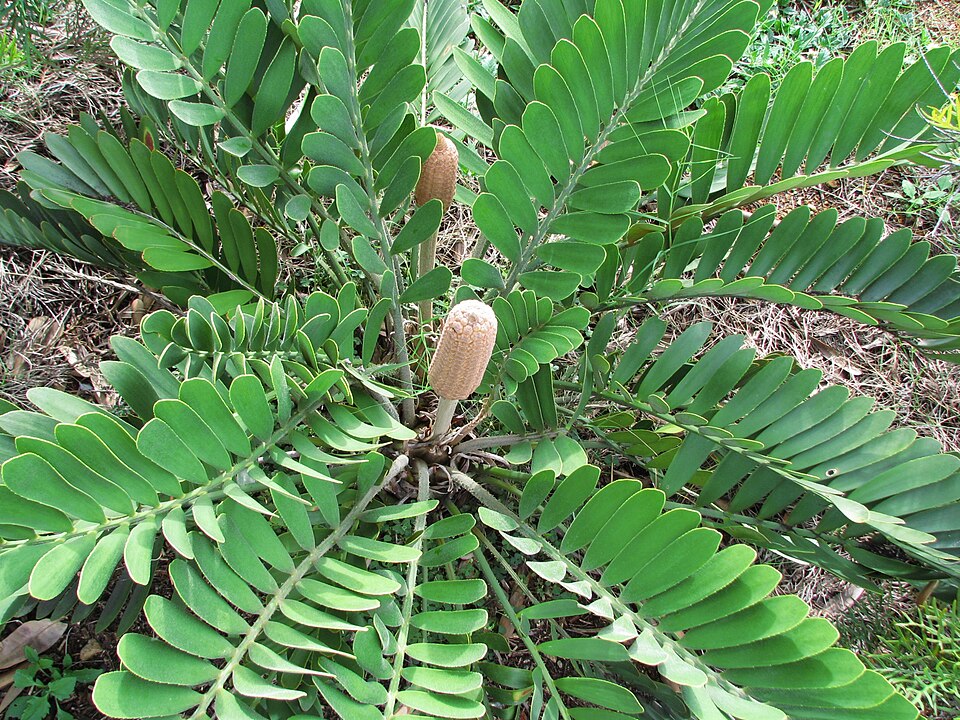

An interesting specimen or accent plant for the front of tropical borders, rock gardens, and seaside gardens. Also suitable as a container plant and can be grown indoors. The specific epithet furfuracea means scruffy or mealy, in reference to the surface texture of the leaflets.
Best grown in sandy, coarse, well-draining soils in full sun to part shade. Requires a relatively dry period of dormancy in winter but regular watering during the growing season. Hardy in Zones 9-11. Does not tolerate hard frosts. Tolerant of salt spray and some drought.
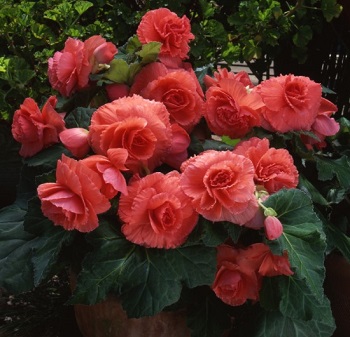
Marquee™ Ruffled Coral Salmon is an outstanding F1 tuberous begonia grown for its enormous, fully double flowers in beautiful warm shades of coral and salmon. The heavily ruffled petals give each bloom an exceptionally full, luxurious appearance, with individual flowers capable of reaching an impressive 5 to 9 inches across. Plants develop an upright, well-branched habit approximately 14 to 20 inches tall, creating a spectacular display from late spring through summer and into fall. Formerly associated with the famous AmeriHybrid® begonias, the Marquee series represents a new generation of these exceptionally large-flowered tuberous begonias.
This begonia is particularly impressive in patio containers, decorative pots, shaded garden beds and protected porch plantings where its enormous blossoms can be appreciated up close. Plants prefer bright shade or partial sun and should be protected from intense afternoon sunlight in hot climates. Space plants about 12 to 16 inches apart, or give individual container plants sufficient room to develop their broad flowering canopy. Consistent moisture produces the best growth, but the growing medium should drain freely because tuberous begonias dislike remaining waterlogged. Regular light feeding during active growth helps support the continuous production of these unusually large flowers.
Seeds are pelleted for easier handling and should be started indoors in a fine, sterile seed-starting medium. Sow on the surface without covering, as light is beneficial for germination, and maintain temperatures around 72 to 76°F with high, even moisture until seedlings become established. Germination generally begins within about 7 to 14 days under favorable conditions, although the tiny seedlings require patience and careful watering during their early development. Allow approximately 7 to 8 weeks for plug development and another 11 to 15 weeks after transplanting for finished flowering plants. With its remarkable flower size, rich coral-salmon coloring and beautifully ruffled double blooms, Marquee™ Ruffled Coral Salmon is a premium begonia for creating dramatic color in shaded and partially shaded locations. Pelleted seeds for easy germination.
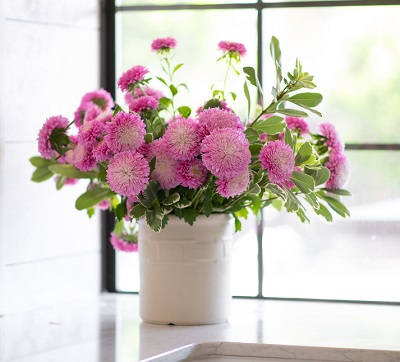
An impressive F1 cut flower aster prized for its exceptionally large, fully double, pompon-style blooms in a beautiful clear pink. The substantial flowers are carried on tall, strong stems, giving them excellent presence both in the garden and in floral arrangements. Plants are vigorous growers, reaching approximately 36 to 48 inches tall under favorable conditions, and the first flowers can reach around 3 to 4 inches across. For exhibition-quality blooms, plants may also be disbudded so their energy is directed into producing fewer but even larger flowers.
Developed especially with the cut flower grower in mind, Azumi XL Pink combines impressive flower size with sturdy stems and good plant vigor. The long stems make the flowers excellent for bouquets, wedding arrangements and other floral work, while the soft pink coloring blends particularly well with white, lavender, blue and pastel flowers. Another important advantage of the Azumi XL series is its resistance to Fusarium, a troublesome soilborne disease of China asters. This added resistance makes Azumi XL Pink a particularly worthwhile selection for gardeners and flower growers who have experienced disease problems with traditional asters.
Grow Azumi XL Pink in full sun and fertile, well-drained soil, providing consistent moisture while avoiding constantly wet conditions. Seeds may be started indoors about 6 to 8 weeks before the last expected frost or direct sown after danger of frost has passed. Good air circulation and crop rotation are beneficial when growing asters, and plants grown for cutting may appreciate support as their tall flowering stems develop. Harvest when the flowers are beginning to open fully but before they become overly mature. With its extra-large pink blooms, strong cutting stems, vigorous growth and useful Fusarium resistance, Azumi XL Pink is an outstanding new aster for both the cutting garden and professional-quality bouquets.
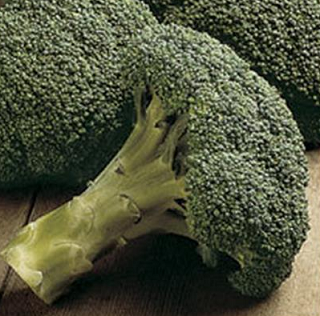
Replaces Packman, which has been a favorite for years. Pack-Pro Broccoli is an early-maturing F1 hybrid developed as an excellent replacement for the popular Packman variety. Compact, vigorous plants produce large, tight, attractive green heads with a pleasant crunchy texture and excellent flavor. With maturity in about 55 days, Pack-Pro is a particularly useful choice for gardeners wanting a dependable broccoli that does not require a long growing season.
One of the best features of Pack-Pro is its ability to continue producing after the main head has been harvested. Cutting the central head encourages the development of numerous tender side shoots, extending the harvest and providing additional smaller heads for fresh eating. The compact, semi-domed plants are widely adapted and perform well under a range of growing conditions. Pack-Pro is especially well suited to fall production, when cool temperatures help produce firm, high-quality heads, although it can also be grown as a spring crop in most areas.
For best results, grow in full sun and fertile, well-drained soil with consistent moisture throughout the growing period. Start seeds indoors about 4 to 6 weeks before transplanting, or direct sow where conditions permit, covering seeds about 1/4 to 1/2 inch deep. Space established plants approximately 18 to 24 inches apart to allow good head development and air circulation. Harvest the main head while the buds are still tight and compact, then leave the plant growing to take advantage of the productive side shoots that follow. Pack-Pro's combination of early maturity, compact growth, extended harvest and excellent eating quality makes it a very good choice for both home gardeners and market growers.
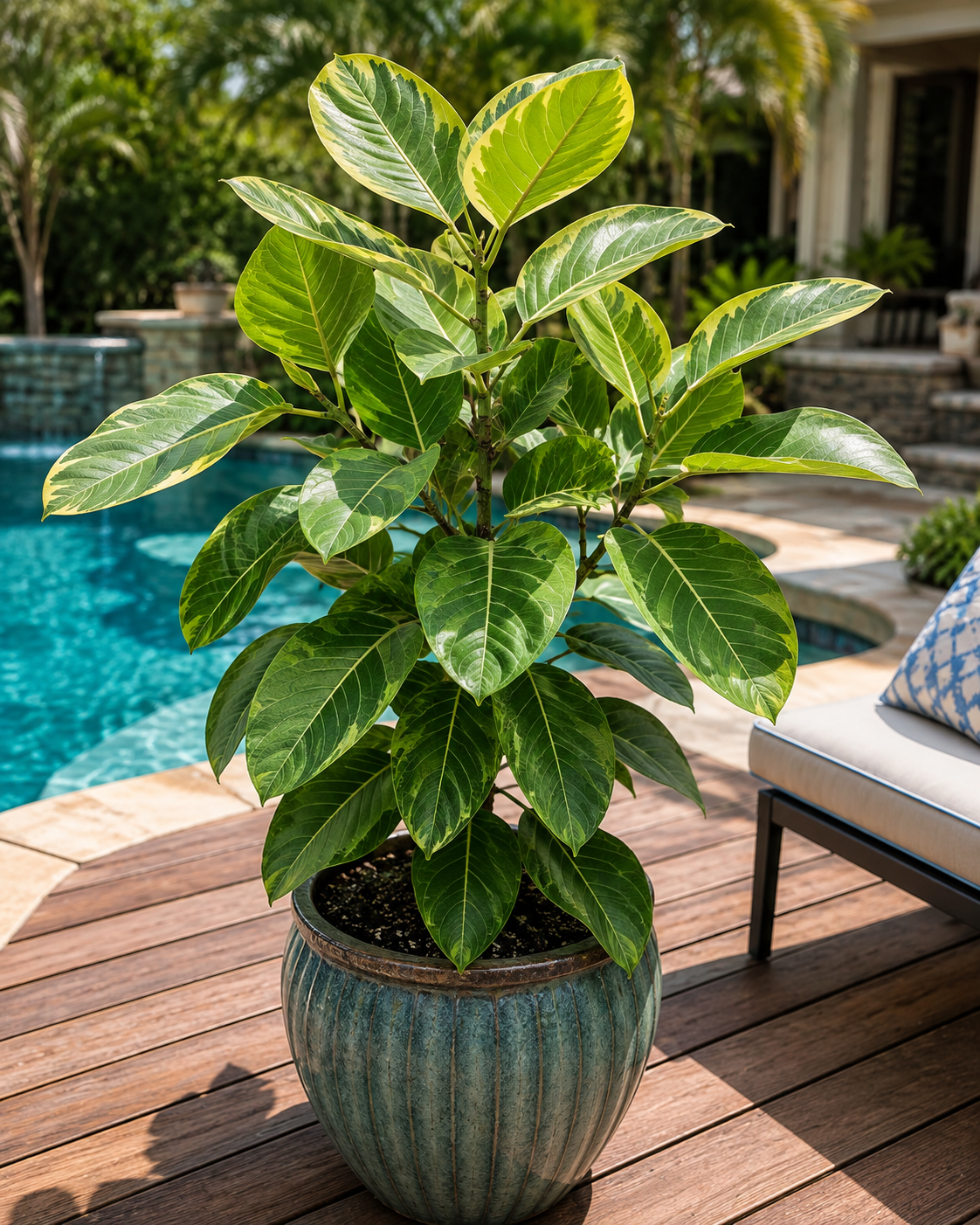
As a houseplant, Council Fig is remarkably adaptable and relatively easy to maintain. It thrives in bright, indirect light but will tolerate several hours of gentle morning sun. Plants prefer a fertile, well-drained potting mix that is allowed to dry slightly between waterings, as consistently soggy soil should be avoided. Moderate indoor humidity encourages lush foliage, although established plants adapt well to typical household conditions. During the active growing season, feeding monthly with a balanced houseplant fertilizer helps maintain vigorous growth and encourages the production of its attractive new foliage.
With time, Council Fig develops into an impressive indoor specimen that combines the durability of the popular rubber tree with the elegant branching habit of other ornamental figs. Its handsome evergreen leaves help soften interior spaces while contributing a fresh, tropical appearance year-round. Given adequate light and occasional pruning to maintain its shape, Ficus altissima can provide decades of beauty as a long-lived houseplant, making it an excellent choice for both beginning and experienced indoor gardeners seeking a distinctive yet easy-care tropical tree.
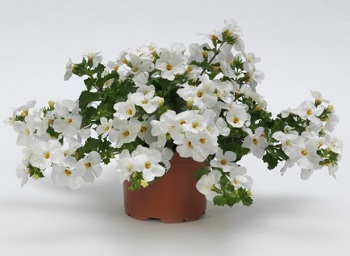
Renowned for its continuous blooming habit, Galactic Mist White flowers heavily throughout the growing season with very little maintenance. Plants perform best in hanging baskets or patio containers filled with a rich, well-drained potting mix and placed where they receive morning sun with afternoon shade or bright filtered light in warmer climates. Consistent moisture is important, as Bacopa prefers evenly moist soil and rewards regular watering with an abundance of blooms. Feeding every two to three weeks with a balanced liquid fertilizer helps maintain vigorous growth and ensures baskets remain full of flowers throughout the summer.
Whether grown alone for a graceful waterfall of pure white blossoms or combined with colorful calibrachoas, petunias, verbena, or lobelia, Bacopa Galactic Mist White is one of the finest trailing plants for hanging baskets. Its compact yet vigorous growth habit creates dense, overflowing displays without becoming unruly, while the nectar-rich flowers attract bees and other beneficial pollinators. With its season-long flowering, elegant cascading habit, and easy-care nature, Galactic Mist White is an exceptional choice for gardeners seeking classic beauty and dependable performance in hanging baskets and mixed containers.
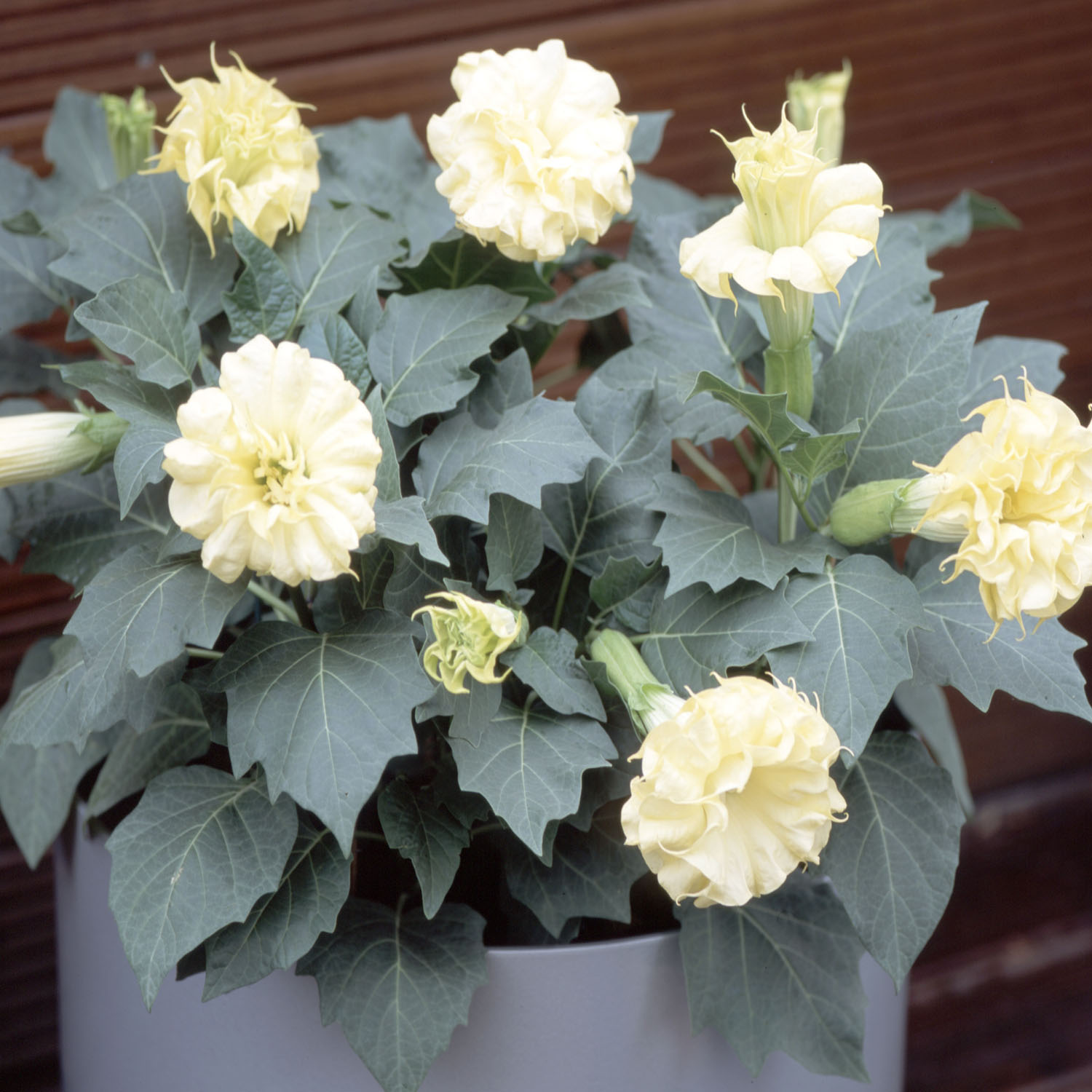
This unique yellow flower lasts only one night! From an unusual cigar-shaped flower bud, each flower will unravel in the evening to reveal a fragrant trumpet-shaped yellow bloom that only lasts until noon the following day. But wait, no need to worry as these trumpet shaped yellow flowers will typically bloom intermittently from mid-summer to frost. Flowers are followed by thorny, spherical fruit. Plants belong to the nightshade family which is toxic so do not ingest.
In the ground, plants do best in rich, humusy, well-drained loams in full sun with regular moisture. Plants tend to sprawl, and are best spaced about 3 feet apart unless staking or other support will be used. Deadheading flowers is not necessary. When planting yellow Datura Metel as a container plant, it may be cut back and overwintered indoors in a sunny window.
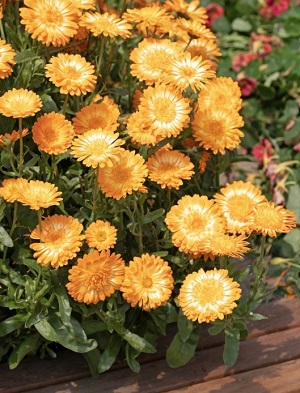
Kablouna Luna is exceptionally easy to grow and thrives in cool weather, producing its finest displays during the mild temperatures of spring and fall. Plants prefer full sun and well-drained soil but tolerate a wide range of garden conditions. Regular deadheading encourages an even longer bloom season, while occasional watering during dry periods keeps plants vigorous and productive. Its compact, well-branched habit makes it an excellent choice for containers as well as garden beds, where the bright yellow flowers attract bees, butterflies, and other beneficial pollinators throughout the growing season.
Beyond its ornamental value, Calendula Kablouna Luna offers the traditional versatility for which pot marigolds have been treasured for centuries. The edible petals add a splash of color to fresh salads, soups, and rice dishes, while the blooms are also popular for drying and floral crafts. Whether planted to brighten the vegetable garden, enhance a cottage border, or provide long-lasting cut flowers for indoor arrangements, Kablouna Luna delivers months of reliable blooms, outstanding garden performance, and timeless charm that has made calendulas a favorite of gardeners around the world.
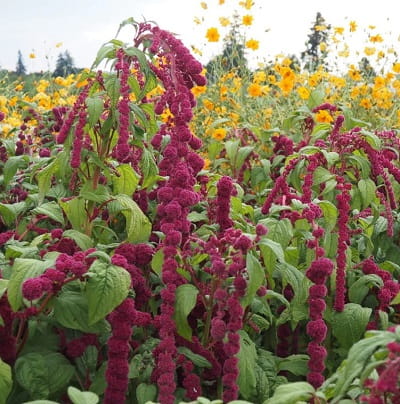
Dreadlocks Amaranthus is fast growing and exceptionally easy to cultivate from seed. Plants thrive in full sun and well-drained soil, quickly reaching 3 to 5 feet in height while tolerating summer heat, humidity, and periods of drought once established. The unusual flower tassels continue to lengthen throughout the season, providing an ever-changing display that attracts bees, butterflies, and other beneficial pollinators. As autumn approaches, the mature seed heads become a valuable food source for finches and many other songbirds, adding even more wildlife interest to the garden.
Highly prized by floral designers, the distinctive hanging blooms make outstanding fresh-cut flowers and are equally impressive when dried for everlasting arrangements, wreaths, and seasonal decorations. Their unique twisted form and rich color add texture that few other annuals can match. Like other amaranths, the young leaves are edible and may be cooked as a nutritious leafy green, while the tiny seeds have long been valued as a wholesome grain. With its unforgettable flower form, exceptional garden performance, and outstanding value as both a landscape and cut flower, Amaranthus Dreadlocks is a spectacular heirloom variety that is sure to become a conversation piece wherever it is grown.
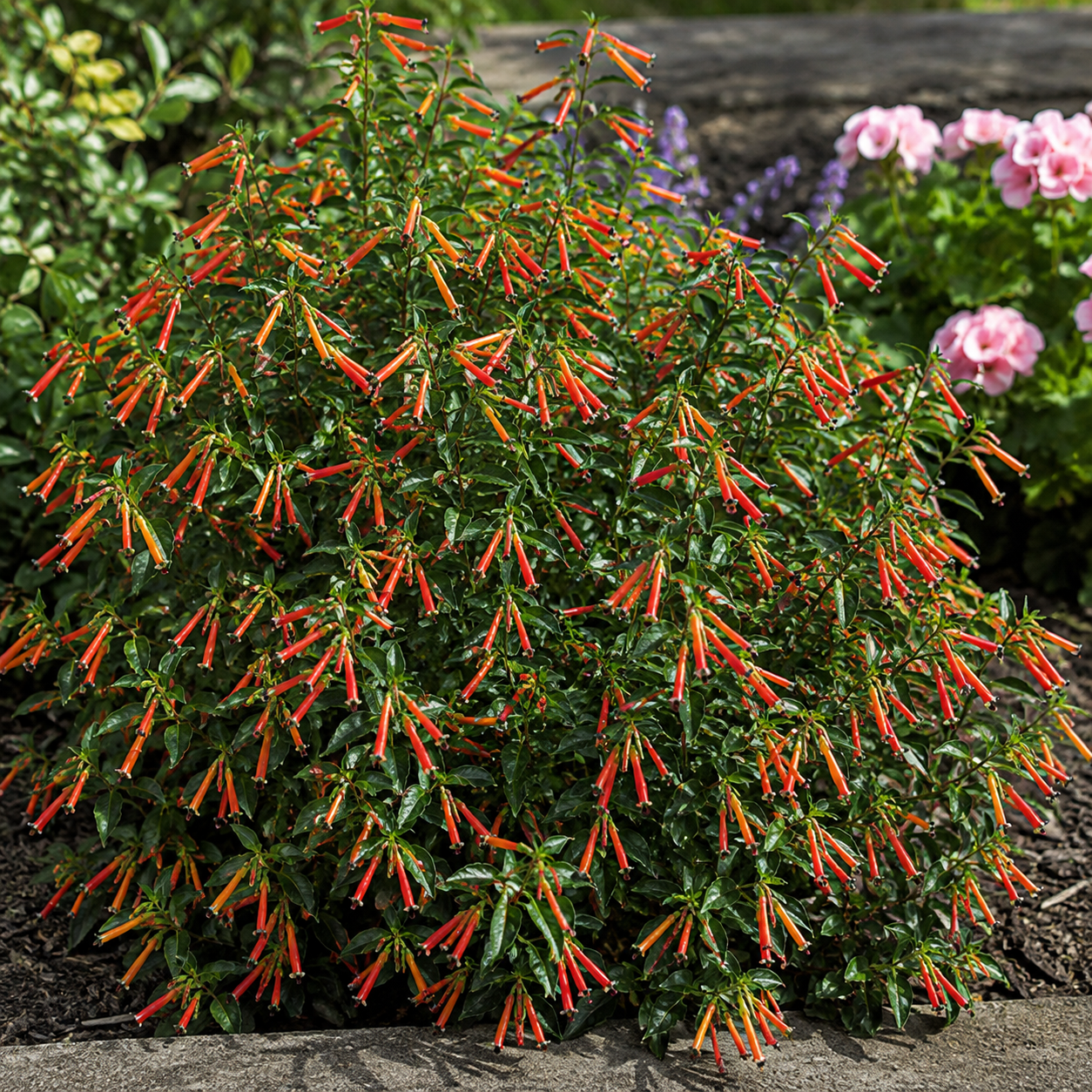
One of the greatest attractions of Cigar Plant is its remarkable ability to attract hummingbirds. The slender tubular flowers are perfectly shaped for hummingbird feeding and quickly become a favorite nectar source throughout the growing season. Butterflies and beneficial pollinators also visit the abundant blooms, adding movement and life to the garden. Plants thrive in full sun to light afternoon shade and prefer fertile, well-drained soil with regular watering during periods of hot, dry weather. Once established, they tolerate heat well and continue flowering with minimal maintenance. Occasional trimming encourages a fuller, more compact plant and stimulates even heavier blooming.
In frost-free climates, Cigar Plant can be grown as a tender perennial, while in cooler regions it is commonly enjoyed as a long-blooming annual. Its naturally rounded growth habit makes it ideal for edging walkways, filling mixed containers, or spilling gently from hanging baskets where the unusual flowers can be appreciated up close. Whether planted to attract hummingbirds, add continuous summer color, or create a tropical accent on the patio, Cuphea ignea is an easy-to-grow favorite that rewards gardeners with an endless display of fascinating blooms from spring until the arrival of frost.
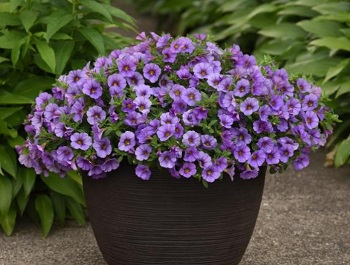
An exceptional trailing variety prized for its rich denim-blue blossoms that provide a cool, calming contrast in hanging baskets and mixed patio containers. The compact, cascading plants quickly develop into a lush mound before spilling gracefully over the sides of baskets, creating a waterfall of color from late spring until frost. The uniquely soft blue blooms hold their color well throughout the season and pair beautifully with white, yellow, pink, or silver foliage plants, making this variety an outstanding choice for both modern and cottage-style garden displays.
One of the greatest strengths of the Classique series is its continuous flowering habit. Unlike many annuals, Calibrachoa requires little maintenance to remain attractive, as spent flowers naturally drop away without deadheading. Plants perform best in hanging baskets at least 10 to 12 inches in diameter filled with a well-drained, high-quality potting mix. Regular watering is important during hot weather, but allowing the soil to drain freely helps prevent root problems. A light application of balanced liquid fertilizer every week or two encourages vigorous growth and an abundance of blooms throughout the growing season.
For gardeners seeking long-lasting color with minimal effort, Calibrachoa Classique Denim is an outstanding hanging basket selection. Its naturally branching habit produces dense, full baskets without becoming leggy, while the trailing stems remain attractive even during periods of summer heat. Whether displayed on a porch, patio, balcony, or shepherd's hook, the elegant blue flowers create a relaxing, eye-catching display that also attracts hummingbirds and pollinating bees. Combined with its exceptional flowering performance and easy-care nature, Classique Denim remains one of the finest choices for spectacular summer hanging baskets.
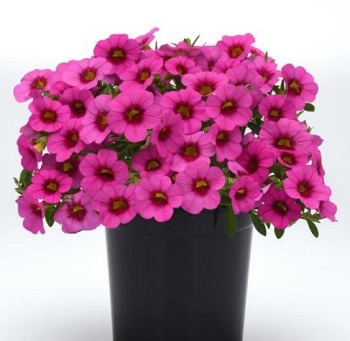
Brings brilliant color and nonstop blooms to hanging baskets with its striking rose-pink flowers highlighted by vibrant contrasting centers. The cheerful blossoms cover the cascading plants from late spring until frost, creating a dense curtain of color that spills beautifully over the edges of baskets and containers. Its vivid, eye-catching blooms make it an excellent choice for brightening porches, patios, decks, and garden sitting areas, either planted alone or combined with complementary annuals.
Members of the Classique series are known for their vigorous branching habit, producing full, well-shaped baskets with very little maintenance. The self-cleaning flowers continuously replace themselves, eliminating the need for deadheading while maintaining a fresh appearance throughout the season. For best results, grow plants in hanging baskets at least 10 to 12 inches in diameter using a well-drained potting mix. Regular watering, especially during periods of hot weather, along with applications of a balanced liquid fertilizer every one to two weeks, will reward gardeners with exceptional growth and an abundance of colorful blooms.
Calibrachoa Classique Rose Blast is an outstanding performer for gardeners who want dependable, season-long displays with minimal effort. Its trailing stems quickly create a lush, overflowing basket that remains attractive even through the heat of summer. The vibrant rose blossoms are highly attractive to hummingbirds and other pollinators, adding movement and life to outdoor living spaces. With its exceptional flowering ability, rich coloration, and easy-care nature, Classique Rose Blast is a superb choice for creating dazzling hanging baskets that provide months of continuous beauty.
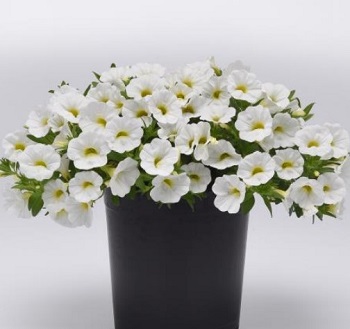
A timeless hanging basket favorite, producing a profusion of crisp, pure white blooms that cascade gracefully over the edges of containers from late spring until frost. The bright flowers create a clean, elegant display that complements virtually any home or garden style, from classic cottage gardens to modern patios. Whether planted alone for a sophisticated monochromatic look or paired with colorful companion plants, its abundant blooms provide season-long beauty with remarkable reliability.
The Classique series is valued for its vigorous yet well-controlled growth, naturally forming dense, rounded plants before trailing into a beautiful waterfall of flowers. The self-cleaning blooms continuously replace themselves, eliminating the need for deadheading and keeping baskets looking fresh throughout the growing season. Plants thrive in hanging baskets at least 10 to 12 inches in diameter filled with a fertile, well-drained potting mix. Consistent watering and regular feeding with a balanced liquid fertilizer every one to two weeks encourage vigorous growth and continuous flowering, even during the warmest months of summer.
Gardeners appreciate Calibrachoa Classique White not only for its elegant appearance but also for its versatility and dependable performance. The luminous white flowers brighten shaded porches, soften bold color combinations, and provide striking contrast when mixed with vibrant pinks, blues, reds, or purples. Its cascading habit creates full, overflowing baskets that remain attractive throughout the season while also attracting hummingbirds and beneficial pollinators. Easy to grow and exceptionally floriferous, Classique White is an excellent choice for creating refined, long-lasting hanging basket displays with minimal maintenance.
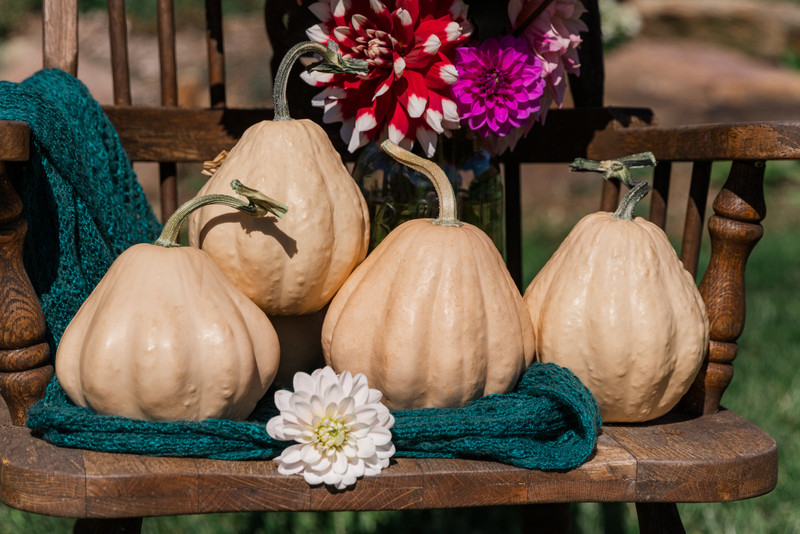
Ivory Gourd is an elegant hard-shelled heirloom grown for its beautiful creamy ivory-colored fruits and classic pear-shaped form. The smooth to lightly textured gourds mature to a rich ivory color, making them especially attractive for autumn displays, seasonal decorations, and a wide variety of decorative craft projects. Their gracefully curved stems and pleasing shape give each fruit its own unique character, making them as ornamental in the garden as they are after harvest.
Once fully matured and properly cured, the durable shells are ideal for painting, carving, woodburning, staining, and other decorative techniques. Ivory Gourds are popular for creating centerpieces, decorative bowls, holiday displays, floral arrangements, rustic ornaments, and countless handcrafted items. Their naturally light-colored shell provides an excellent canvas for artwork while also looking beautiful when left in its natural state.
Vigorous vines produce an abundant crop of medium-sized gourds throughout the growing season and perform best in full sun with fertile, well-drained soil. Grow the vines on sturdy fences, arbors, or trellises to improve fruit shape and simplify harvesting, or allow them to spread naturally across the garden. Leave the fruits on the vine until fully mature and the stems begin to dry before curing them in a warm, well-ventilated location for several weeks. Easy to grow and exceptionally rewarding, Ivory Gourd is an outstanding choice for gardeners, crafters, and anyone who enjoys growing distinctive ornamental gourds.
95 days.

Canteen Gourd is a distinctive hard-shelled heirloom prized for its broad, flattened, disk-like shape and short central stem. The unusual fruits resemble an old-fashioned canteen or water vessel, giving this unique variety its descriptive name. As the gourds mature, their pale green rind gradually hardens into a durable shell, making them excellent for decorative and practical craft projects.
The wide, rounded form provides an ideal surface for painting, carving, woodburning, and other artistic techniques. Once fully cured, the gourds can be transformed into decorative bowls, lidded containers, display pieces, ornaments, and a variety of handcrafted creations. Each fruit develops its own subtle variations in color and shape, ensuring every finished project is one of a kind.
Plants produce vigorous climbing vines that thrive in full sun and fertile, well-drained soil. Grow them on a sturdy fence, arbor, or trellis for the best fruit development, or allow the vines to spread naturally across the garden. Leave the gourds on the vine until fully mature before curing them in a warm, dry, well-ventilated location. Easy to grow and highly rewarding, Canteen Gourd is an outstanding choice for gardeners, crafters, and anyone who enjoys growing unusual heirloom gourds. 95 days.
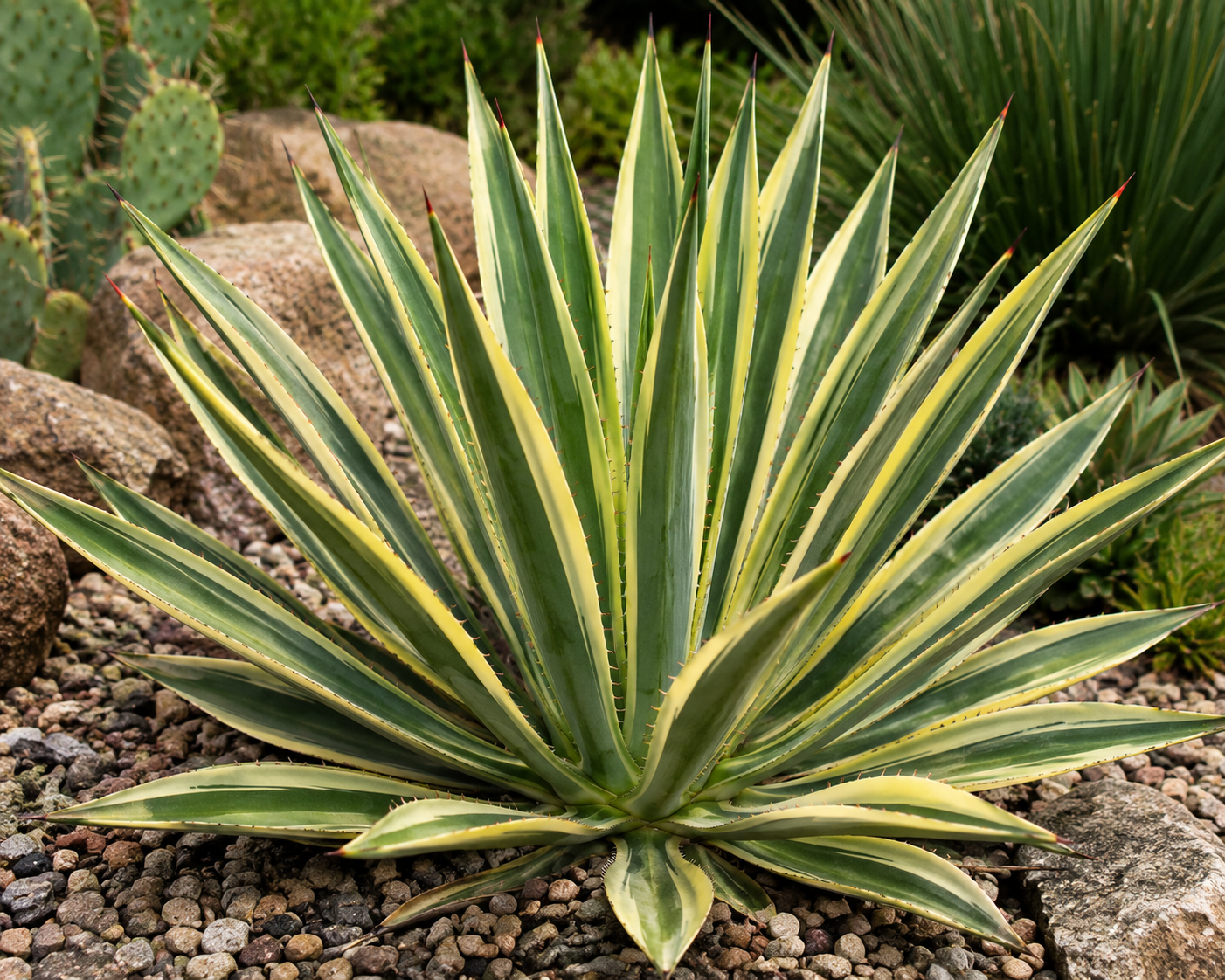
Caribbean Agave (Agave angustifolia 'Marginata') is a striking variegated succulent admired for its bold architectural form and colorful foliage. The graceful rosettes are composed of long, narrow blue-green leaves edged with broad creamy-yellow margins, creating a dramatic contrast that brightens gardens year-round. Small marginal teeth and a sharp terminal spine give the plant its classic agave character while maintaining an elegant, symmetrical appearance that makes it an outstanding focal point.
This beautiful selection thrives in full sun and well-drained soil, where it develops into an impressive specimen well suited for xeriscapes, rock gardens, Mediterranean-style landscapes, and large decorative containers. The colorful variegation remains attractive throughout the year and pairs beautifully with cacti, yuccas, aloes, ornamental grasses, and other drought-tolerant plants. Its exceptional heat tolerance and low water requirements make it an excellent choice for water-wise gardening.
Easy to grow and requiring very little maintenance once established, Caribbean Agave is valued for its durability as well as its ornamental beauty. Plants tolerate prolonged periods of drought and thrive in hot, sunny locations with excellent drainage. Whether planted as a dramatic landscape accent or displayed in a decorative container on a patio or terrace, this handsome variegated agave provides year-round color, texture, and architectural interest with minimal care.
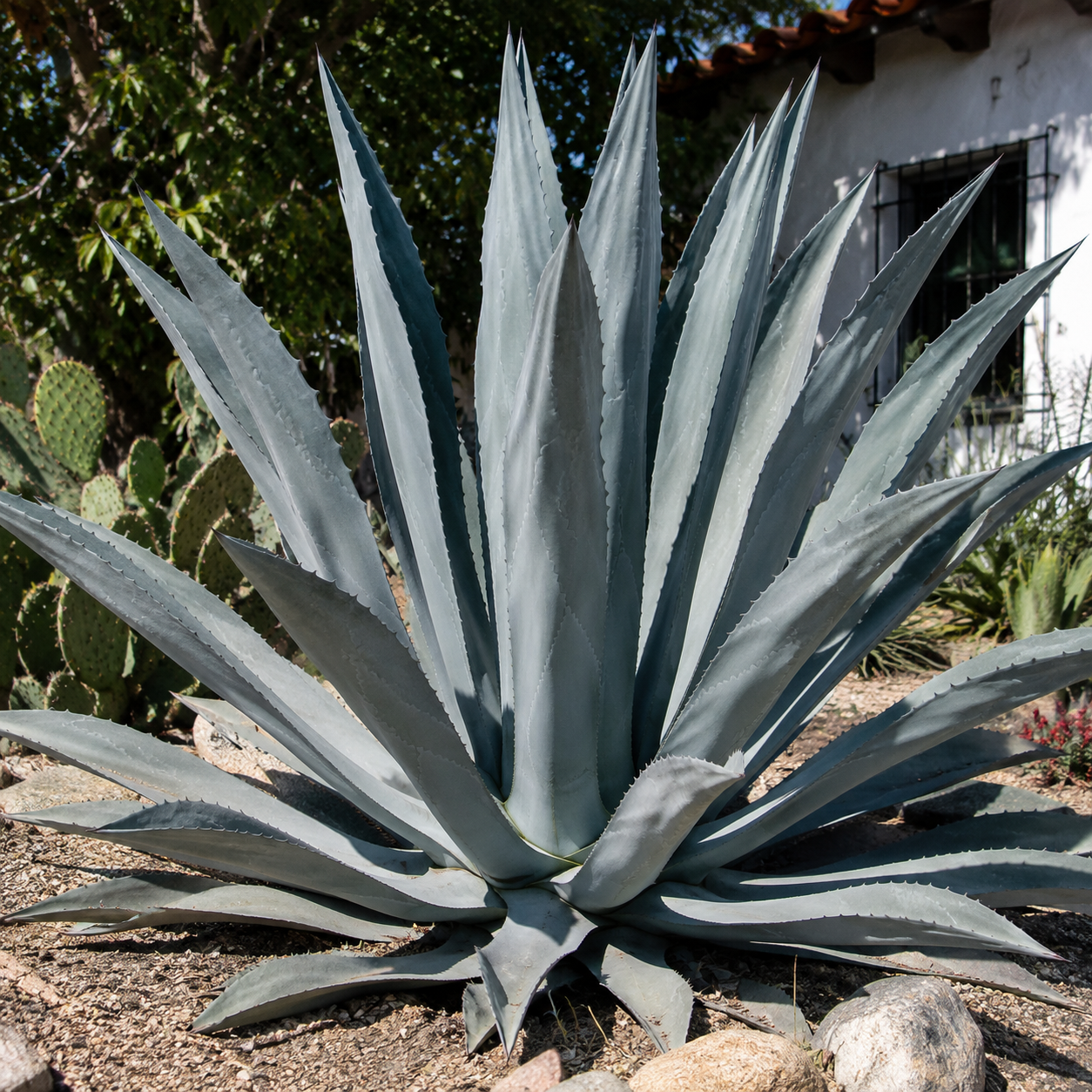
Tequila/Mezcal Agave (Agave americana), commonly known as the Century Plant, is one of the world's most recognizable succulents, admired for its massive architectural rosettes of blue-gray leaves and its remarkable cultural history. Native to Mexico, this spectacular plant forms impressive clumps of broad, heavily armed leaves that may reach 6 to 8 feet in height and even greater width. Although often called the Century Plant, it typically flowers after 10 to 30 years depending on climate and growing conditions, producing a towering flower stalk that may exceed 20 feet before the original rosette completes its life cycle.
For thousands of years, agaves have played an important role in the daily lives of the peoples of Mexico and the American Southwest. Long before European settlement, Indigenous cultures harvested agaves for food, fiber, roofing material, rope, soap, needles, and fermented beverages. The large central heart, or "piña," was traditionally roasted in underground ovens where the natural starches were converted into sweet sugars, creating a nutritious food with a rich, caramel-like flavor. Strong fibers extracted from the leaves were woven into cordage, nets, sandals, mats, and textiles, while the sharp leaf tips often served as natural sewing needles complete with attached fiber thread.
Perhaps no plant is more closely associated with the history of Mexico than agave. For centuries, roasted agave hearts were fermented to produce pulque, a traditional beverage considered sacred by many Indigenous civilizations. Following the introduction of distillation by Spanish settlers during the 16th century, distilled agave spirits gradually evolved into what are now known as mezcal and, later, tequila. While true tequila is produced exclusively from Blue Weber Agave (Agave tequilana), many other agave species, including Agave americana, have historically been used in the production of regional mezcals and continue to be utilized in certain traditional spirits today. This rich heritage has made agaves an enduring symbol of Mexican culture and craftsmanship.
Beyond its fascinating history, Tequila/Mezcal Agave is an outstanding ornamental landscape plant. Its bold, symmetrical form creates a dramatic focal point in xeriscapes, desert gardens, Mediterranean landscapes, and large decorative containers. The striking blue-gray foliage contrasts beautifully with flowering perennials, ornamental grasses, cacti, yuccas, and other drought-tolerant plants. Mature specimens become increasingly impressive with age, developing into magnificent architectural features that require very little maintenance.
Easy to grow and exceptionally drought tolerant, Tequila/Mezcal Agave thrives in full sun and well-drained soil where it requires only occasional watering after establishment. Plants are well suited to hot, dry climates and perform best in locations with excellent drainage. Whether grown for its remarkable beauty, historical significance, or as a living connection to one of the world's oldest cultivated plants, Tequila/Mezcal Agave is a rewarding addition to any succulent collection or water-wise landscape.
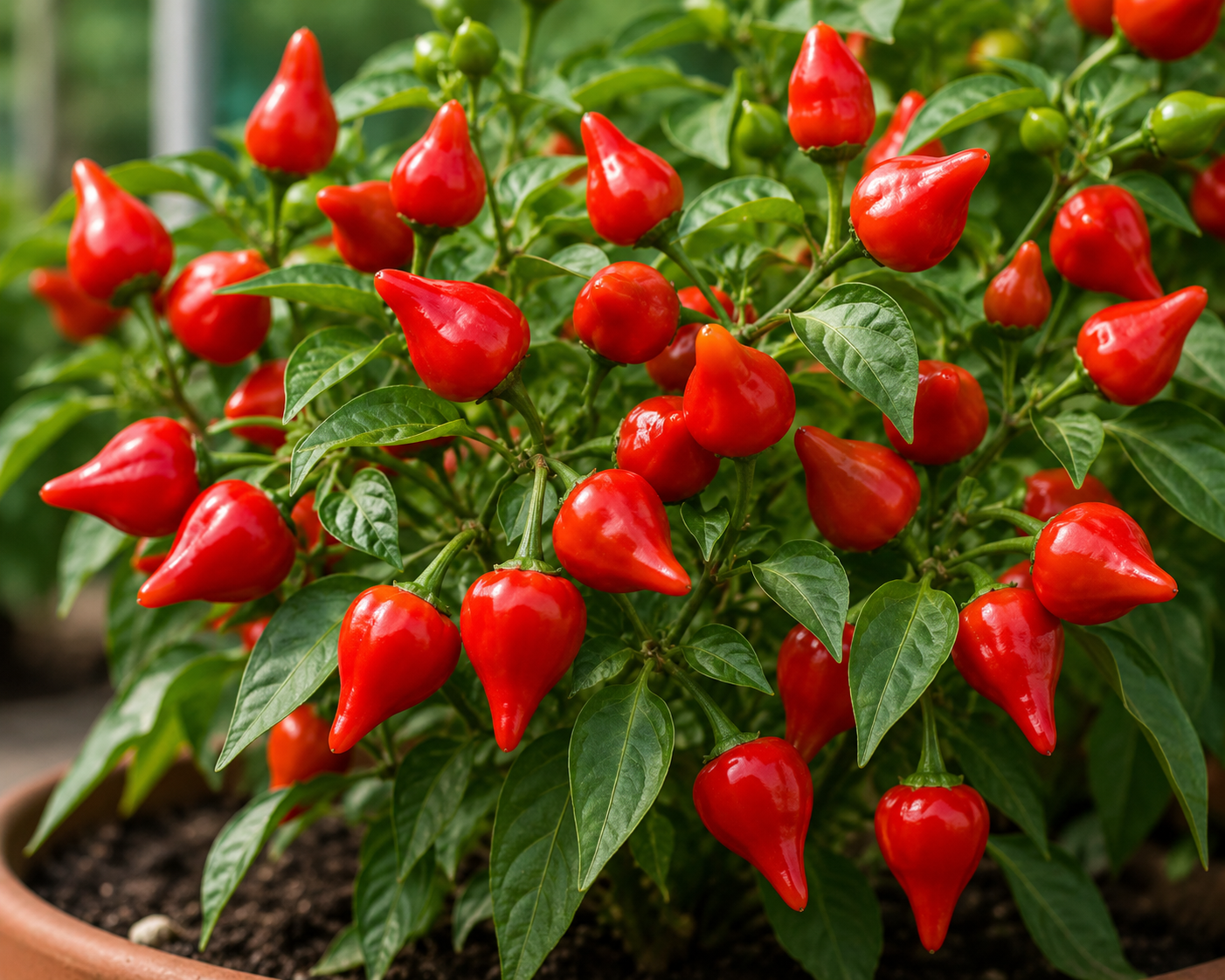
Biquinho Red Pepper (Capsicum chinense) is a delightful heirloom pepper from Brazil that has become one of the fastest-growing favorites among home gardeners and gourmet cooks. Its tiny, glossy, bright red fruits feature a distinctive pointed "little beak" shape, giving rise to the Portuguese name Biquinho, meaning "little beak." Unlike many members of the Capsicum chinense family, Biquinho is exceptionally mild, offering a pleasantly sweet, fruity flavor with only a hint of warmth. Its crisp texture and attractive appearance have made it especially popular in fresh salads, appetizer trays, and specialty produce departments.
Compact plants grow approximately 24 to 36 inches tall and become covered with dozens, often hundreds, of dangling peppers throughout the summer. The small fruits ripen from green to brilliant scarlet red, creating an ornamental display that is equally attractive in vegetable gardens, patio containers, and raised beds. Heavy yields continue until frost, making Biquinho Red an excellent producer for gardeners looking for both beauty and productivity.
One of the reasons Biquinho Red has gained tremendous popularity in supermarkets is its versatility in the kitchen. The peppers are delicious eaten fresh right off the plant, but they truly shine as a salad pepper where their crisp texture, vibrant color, and mild sweetness add flavor without overwhelming heat. They are equally excellent for pickling, garnishing charcuterie boards, stuffing with soft cheeses, preserving, or adding whole to stir-fries and vegetable dishes. Their attractive shape and brilliant color also make them a favorite for decorative culinary presentations.
Easy to grow in full sun and fertile, well-drained soil, Biquinho Red performs well in both garden beds and large containers. Plants thrive during warm weather and continue producing heavily with regular harvesting. Gardeners appreciate its dependable yields, ornamental appearance, and unique combination of sweetness, mild flavor, and exceptional versatility. Whether grown for fresh eating, gourmet cooking, or simply as an attractive edible ornamental, Biquinho Red Pepper is quickly becoming one of today's most sought-after specialty peppers.
Specifications:
Botanical Name: Capsicum chinense
Common Name: Biquinho Red Pepper, Little Beak Pepper
Plant Type: Warm-season annual
Days to Maturity: Approximately 85–95 days
Plant Height: 24–36 inches
Fruit Size: About 1 inch long
Fruit Color: Green maturing to bright red
Heat Level: Very mild (approximately 500–1,000 Scoville Heat Units)
Light: Full sun
Soil: Fertile, well-drained soil
Uses: Fresh salads, snacking, pickling, stuffing, charcuterie boards, containers, gourmet cooking, ornamental gardens
Disease Resistance:
No specific disease resistance has been documented for this heirloom variety. Healthy plants perform best when grown in well-drained soil with good air circulation and proper crop rotation.
Seedman Notes:
Biquinho Red has become one of the hottest trends in specialty produce markets, largely because of its outstanding qualities as a fresh salad pepper. The tiny fruits deliver sweet, crisp flavor with almost no heat, making them enjoyable for nearly everyone. Combined with tremendous productivity and ornamental beauty, this Brazilian heirloom is an excellent addition to any vegetable garden.
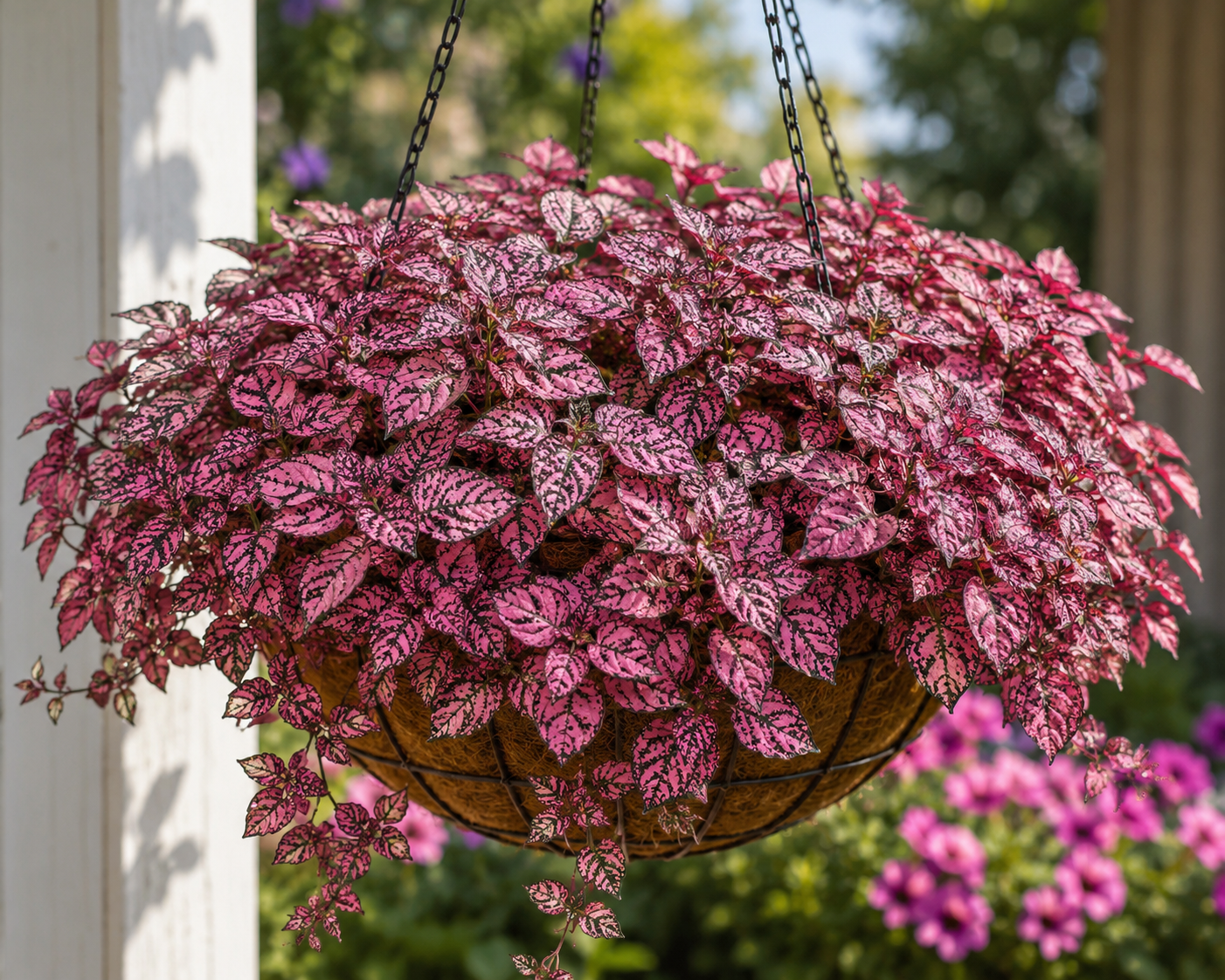
Confetti Rose Hypoestes (Hypoestes phyllostachya), commonly known as the Polka Dot Plant, is a striking foliage variety prized for its deep green leaves generously splashed with vibrant rose-pink markings. The colorful foliage provides continuous ornamental interest from spring until frost, making it an excellent choice for borders, containers, hanging baskets, and indoor displays. Native to Madagascar, this compact plant has become one of the most popular foliage annuals for brightening shaded gardens and interior spaces.
Growing approximately 10 to 18 inches tall with a naturally bushy habit, Confetti Rose produces dense branching covered with colorful leaves that become even more vivid in bright filtered light. Unlike flowering annuals that bloom for only part of the season, this variety maintains its attractive foliage throughout its growing cycle. Occasional small lavender flowers may appear late in the season, but the brilliantly colored leaves remain the plant's greatest ornamental feature.
Confetti Rose performs best in fertile, well-drained soil that remains consistently moist without becoming waterlogged. It thrives in partial shade outdoors where the foliage retains its richest coloration, while indoors it flourishes in bright indirect light as an attractive and easy-care houseplant. Regular pinching encourages fuller branching, resulting in a compact, well-shaped specimen ideal for decorative containers and mixed plantings.
Easy to grow from seed, Confetti Rose quickly develops into an attractive landscape or container plant that pairs beautifully with impatiens, coleus, begonias, caladiums, and other shade-loving ornamentals. Whether used to brighten shaded flower beds, patio planters, hanging baskets, or sunny windows indoors, its cheerful rose-speckled foliage provides dependable season-long color with very little maintenance.
Specifications:
Botanical Name: Hypoestes phyllostachya
Common Name: Confetti Rose Polka Dot Plant
Plant Type: Tender perennial grown as an annual or houseplant
Height: 10–18 inches
Spread: 10–16 inches
Light: Partial shade to bright indirect light
Soil: Fertile, moist, well-drained soil
Water Needs: Moderate; keep evenly moist
Bloom Time: Late summer (small lavender flowers)
Foliage: Green leaves heavily spotted with bright rose-pink
Uses: Containers, hanging baskets, borders, houseplants, mixed planters, shaded gardens
Hardiness: USDA Zones 10–11 (grown as an annual elsewhere)
Seedman Notes:
Confetti Rose is one of our brightest foliage selections, producing continuous color even when flowers are absent. Its compact growth, easy maintenance, and brilliantly speckled leaves make it an excellent choice for shaded landscapes, decorative containers, hanging baskets, and indoor displays throughout the growing season.
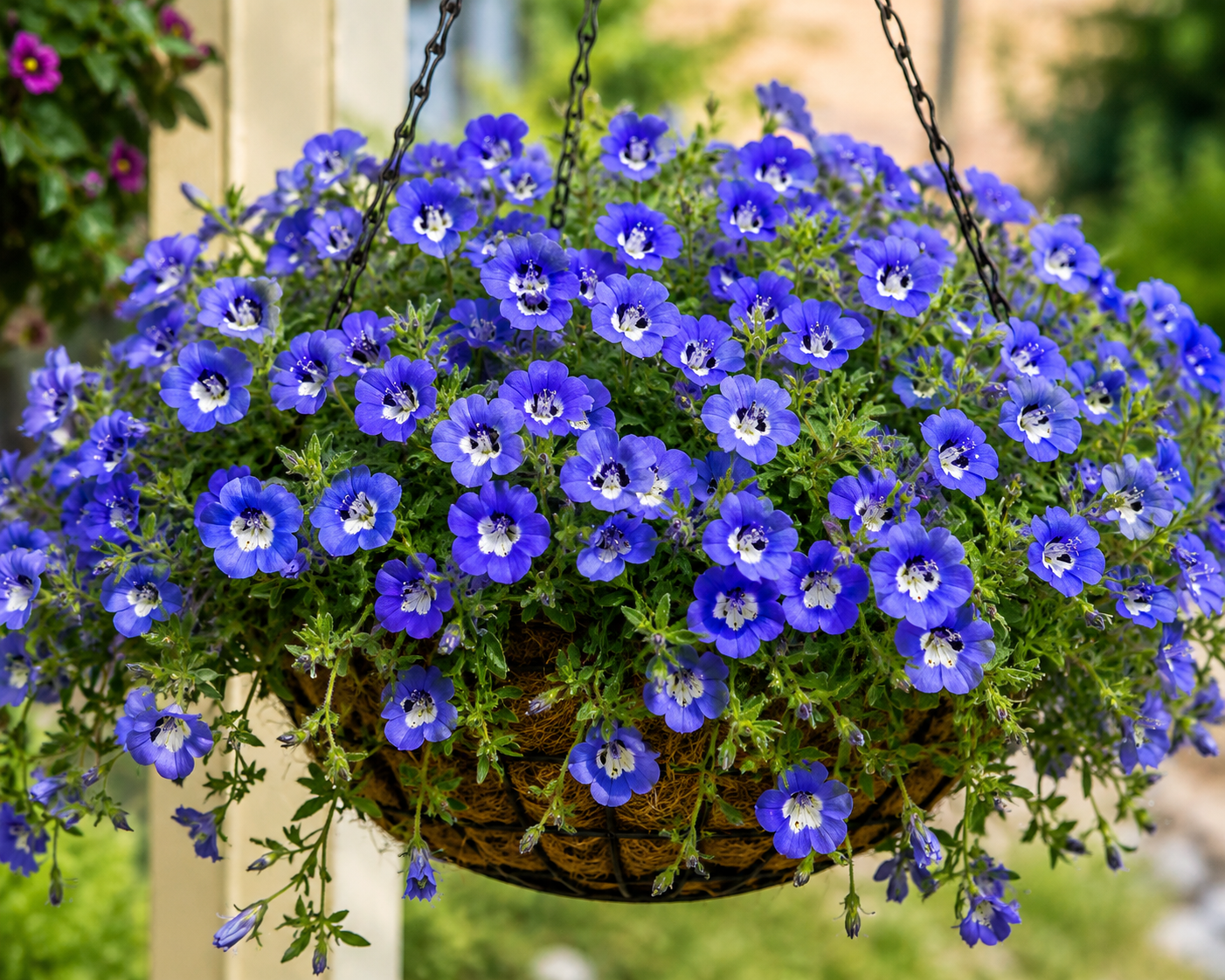
Nolana Bluebird (Nolana paradoxa) is a breathtaking trailing annual prized for its abundant trumpet-shaped flowers in brilliant sky-blue with luminous white centers. Native to the coastal deserts of Chile, this heat-loving plant thrives in sunny, dry conditions where it quickly forms a spreading carpet of lush green foliage covered with hundreds of cheerful blooms. Its vivid flower color and naturally cascading habit make it one of the finest choices for rock gardens, raised beds, hanging baskets, containers, and sunny borders.
Growing only 4 to 8 inches tall while spreading 18 to 30 inches or more, Bluebird creates an attractive mat of succulent foliage that remains fresh throughout the season. Beginning in late spring and continuing well into summer, the plant produces an endless succession of large, funnel-shaped blossoms that open fully in bright sunshine. The striking blue flowers closely resemble miniature morning glories, creating a brilliant display that attracts bees and other beneficial pollinators while providing continuous color in even the hottest weather.
Bluebird performs best in full sun and well-drained sandy or gravelly soils where excessive moisture is avoided. Once established, it demonstrates excellent drought tolerance and flourishes with surprisingly little care, making it ideal for xeriscapes, rock gardens, retaining walls, and coastal landscapes. Its trailing stems spill gracefully over containers and stone walls, softening edges while producing waves of vivid blue flowers throughout the growing season.
Easy to grow from seed, Nolana Bluebird germinates readily in warm soil and quickly develops into a vigorous flowering groundcover. It combines beautifully with other drought-tolerant annuals and alpine plants while adding brilliant color to difficult sunny locations where many other flowering plants struggle. Whether grown as a spreading groundcover or cascading from hanging baskets and containers, Bluebird provides one of the most spectacular displays of true blue flowers available from seed.
Specifications:
Botanical Name: Nolana paradoxa
Common Name: Nolana Bluebird, Chilean Bellflower
Plant Type: Annual
Height: 4–8 inches
Spread: 18–30 inches
Light: Full sun
Soil: Well-drained sandy, gravelly, or moderately fertile soil
Water Needs: Low once established
Bloom Time: Late spring through summer
Flower Color: Brilliant sky-blue with white centers
Uses: Rock gardens, hanging baskets, containers, groundcover, borders, retaining walls, xeriscapes
Hardiness: Grown as an annual in all USDA zones
Seedman Notes:
Bluebird is one of the finest trailing annuals for sunny gardens, combining exceptional drought tolerance with a remarkable display of brilliant blue flowers. Its cascading growth and long bloom season make it equally valuable in rock gardens, hanging baskets, and containers where its vibrant blossoms provide months of dependable color.
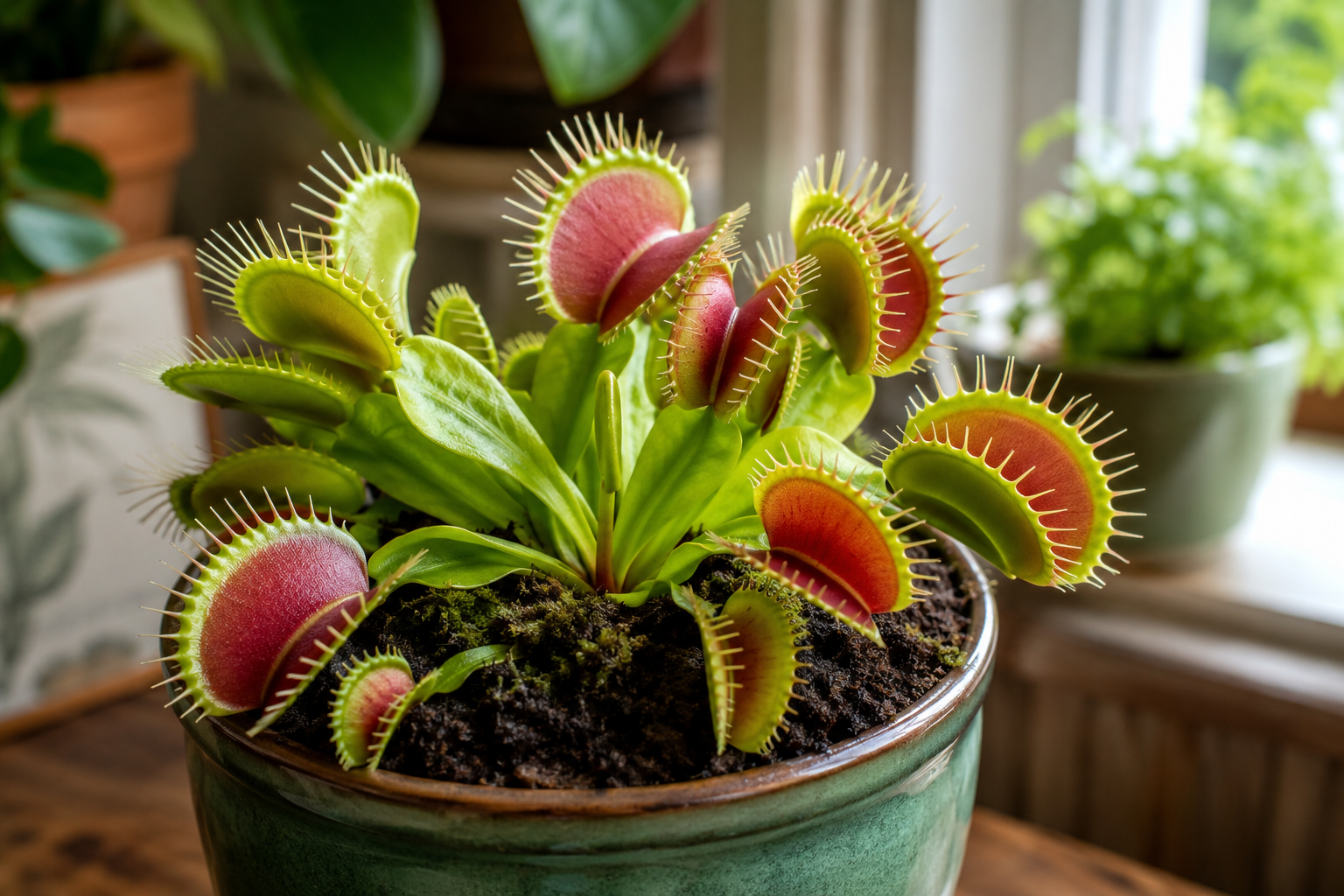
The world's most famous carnivorous plant! The Venus Flytrap is one of nature's most remarkable creations. Native to the bogs of North and South Carolina, this fascinating plant captures insects using specialized leaf traps that snap shut with astonishing speed. Its unique appearance and insect-catching abilities have made it a favorite among plant enthusiasts, collectors, and curious gardeners for generations.
Despite its exotic reputation, the Venus Flytrap can make an excellent houseplant when provided with the proper conditions. Its compact size, unusual growth habit, and interactive nature make it one of the most entertaining plants you can grow indoors.
Why Grow Venus Flytrap?- One of the most unusual and fascinating houseplants available.
- Produces specialized traps that capture small insects.
- Excellent conversation piece for home or office.
- A favorite educational plant for children and adults alike.
- Long-lived when given proper care.
- Compact enough for windowsills, terrariums, and small spaces.
Each trap contains tiny trigger hairs. When an insect touches these hairs twice within a few seconds, the trap rapidly closes. This clever mechanism helps prevent the plant from wasting energy on raindrops, falling debris, or other false alarms.
Once captured, the insect is digested over several days, allowing the plant to obtain nutrients that are scarce in its naturally nutrient-poor bog habitat.
Growing as a HouseplantVenus Flytraps are different from most common houseplants and should not be treated like ordinary potted plants.
- Light: Requires very bright light and benefits from several hours of direct sun daily.
- Water: Use only rainwater, distilled water, or reverse-osmosis water.
- Soil: Plant in a carnivorous plant mix, typically peat moss and perlite.
- Humidity: Appreciates moderate to high humidity.
- Fertilizer: Never fertilize Venus Flytraps.
- Feeding: The plant can catch its own insects and usually does not require feeding.
Unlike tropical houseplants, Venus Flytraps naturally experience a winter dormancy period. During this time growth slows, some leaves may die back, and the plant rests before resuming vigorous growth in spring. This dormancy helps maintain long-term health and vigor.
Seed GerminationSow seeds on the surface of a moist carnivorous plant mix and do not cover deeply. Provide bright light, high humidity, and consistently moist conditions using distilled, rain, or reverse-osmosis water. Germination generally occurs within several weeks, though patience is often rewarded with stronger seedlings.
Did You Know?Venus Flytraps can count! Research suggests the plant responds differently depending on how many times its trigger hairs are stimulated. This allows it to distinguish between a potential meal and a false alarm, making it one of the most sophisticated plants in the natural world.
Whether grown for science, curiosity, or pure enjoyment, the Venus Flytrap remains one of the most captivating houseplants ever discovered.
How to make your own Carnivorus Plant Potting Mix.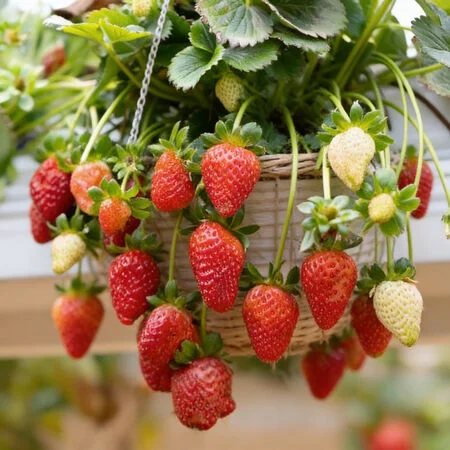
Fresca Strawberry is an exceptional alpine strawberry prized for its continuous production of small, intensely sweet berries and delightful fragrance. Unlike traditional garden strawberries, Fresca produces charming, bright red fruits throughout the growing season without relying on runners, making it an excellent choice for borders, containers, hanging baskets, window boxes, and small garden spaces. The berries possess an old-fashioned wild strawberry flavor that is remarkably rich and aromatic, making every harvest a special treat for fresh eating and gourmet desserts.
Compact, attractive plants form neat mounds of lush green foliage covered with delicate white blossoms that continually give way to bright red berries from late spring until frost. Because Fresca is a day-neutral alpine type, it flowers and fruits over an extended season rather than producing a single large crop. The plants devote their energy to flowering and fruit production instead of producing runners, resulting in tidy, easy-to-manage plants that remain beautiful throughout the season. The blossoms are also highly attractive to bees and other beneficial pollinators.
Fresca thrives in full sun to partial shade and prefers fertile, well-drained soil rich in organic matter. Regular watering and mulching help maintain steady production while keeping the berries clean and healthy. Its compact habit makes it especially well suited for patios, balconies, and decorative edible gardens where space is limited. The flavorful berries are naturally rich in vitamin C, antioxidants, manganese, and dietary fiber, providing a healthy harvest over many months.
Whether enjoyed fresh from the plant, sprinkled over cereal, added to desserts, garnished on pastries, or used to make small batches of preserves, Fresca delivers exceptional flavor in every bite. Its continuous harvests, ornamental beauty, and rich woodland strawberry taste make it one of the finest alpine strawberries available for gardeners seeking both beauty and outstanding eating quality.
Botanical Name: Fragaria vesca
Type: Day-Neutral Alpine Strawberry
Days to Harvest: Approximately 90–120 days from seed; continuous harvest thereafter
Berry Size: Small (½–1 inch)
Plant Height: 8–10 inches
Growth Habit: Compact, clump-forming perennial with few or no runners
Primary Uses: Fresh eating, containers, hanging baskets, borders, desserts, gourmet garnishes
Seedman Notes: Fresca is one of the finest alpine strawberries available, producing a continuous harvest of wonderfully aromatic berries with the rich flavor of wild strawberries. Its runnerless habit, compact growth, and season-long production make it an outstanding choice for gardeners with limited space or anyone seeking exceptional flavor from a truly unique strawberry.
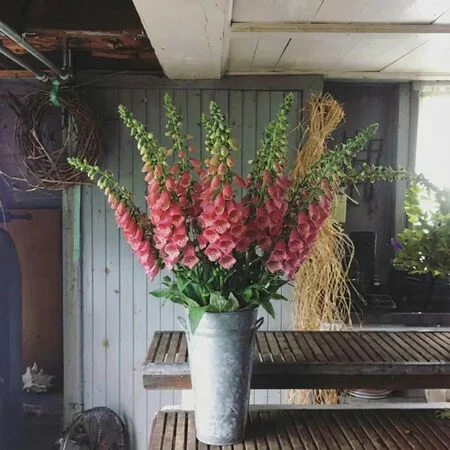
Strawberry Foxglove (Digitalis × mertonensis) is one of the most beautiful and distinctive foxglove hybrids ever introduced, combining the vigor of the common foxglove with the rich coloring of rusty foxglove. Tall, stately flower spikes are covered with large, outward-facing, strawberry-rose blossoms that glow with warm coppery undertones and speckled throats. Blooming from late spring into early summer, this remarkable perennial creates an elegant vertical accent in the garden while attracting bees, butterflies, and hummingbirds. Its unique flower color, exceptional hardiness, and long bloom period have made Strawberry Foxglove a favorite among collectors and cottage gardeners alike.
Garden Uses:
Strawberry Foxglove is an excellent choice for perennial borders, cottage gardens, woodland edges, pollinator gardens, English-style landscapes, and naturalized plantings. The tall flower spikes blend beautifully with delphiniums, lupines, peonies, campanulas, salvia, Shasta daisies, ornamental grasses, and old-fashioned roses. They also make outstanding cut flowers, adding height and elegance to fresh floral arrangements.
Growing Information:
Sow seeds on the surface of moist growing medium, as light aids germination. Maintain temperatures between 65-70°F and keep evenly moist until germination, which generally occurs within 14-21 days. Plants thrive in full sun in cooler climates or light afternoon shade in warmer regions. Rich, moist, well-drained soil produces the strongest plants and tallest flower spikes. Water regularly during dry periods and remove spent flower stalks after blooming unless seed production or natural reseeding is desired. Plants often behave as short-lived perennials but may gently self-seed in favorable locations.
Seedman Notes:
Strawberry Foxglove is one of the most elegant foxgloves we offer and a personal favorite for cottage gardens. The soft strawberry-colored blooms are simply breathtaking when planted in groups, and the plants attract an incredible number of bumblebees throughout the blooming season. For gardeners seeking something beyond the traditional purple foxglove, this remarkable hybrid offers outstanding beauty and dependable performance.
Quick Facts:
| Botanical Name: | Digitalis × mertonensis |
| Common Name: | Strawberry Foxglove |
| Plant Type: | Short-lived hardy perennial |
| Height: | 36-48 inches |
| Spread: | 18-24 inches |
| Bloom Color: | Strawberry rose with warm coppery tones and spotted throats |
| Bloom Season: | Late spring through early summer |
| Light Requirements: | Full sun to partial shade |
| Soil Requirements: | Rich, moist, well-drained soil |
| USDA Zones: | 4-8 |
| Uses: | Perennial borders, cottage gardens, woodland gardens, pollinator gardens, cut flowers |
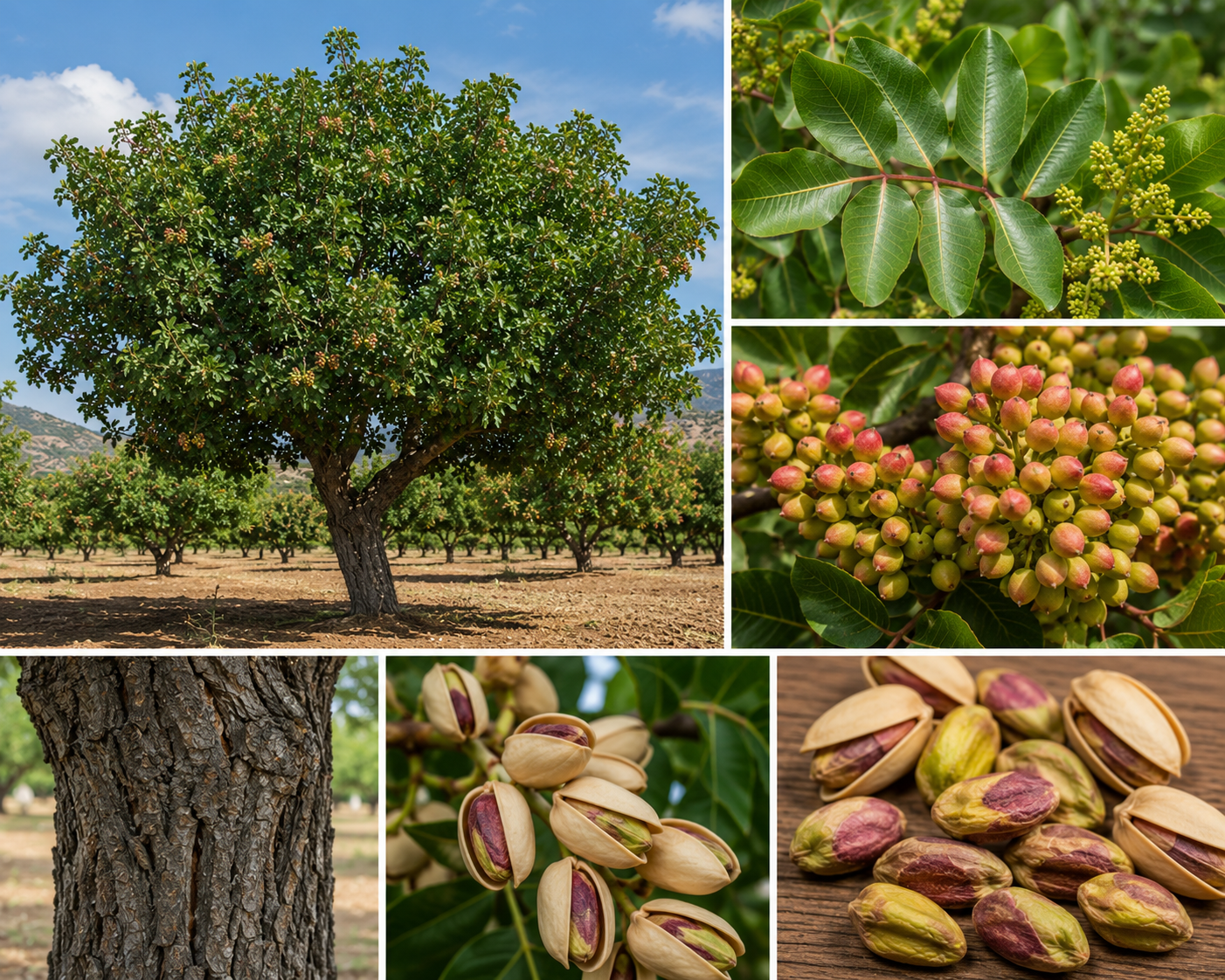

Pistachio is one of the world's oldest and most prized nut trees, valued for its delicious nuts, exceptional drought tolerance, ornamental beauty, and rich cultural history. Native to Central Asia and the Middle East, Pistacia vera has been cultivated for thousands of years and remains one of the most important nut crops in the world today.
This attractive deciduous tree develops a broad, rounded canopy and produces clusters of nuts enclosed in fleshy outer hulls. As the nuts mature, the shells naturally split open, revealing the distinctive green kernel that has made pistachios a favorite snack and culinary ingredient for centuries.
Beyond their outstanding flavor, pistachios are highly nutritious and rich in protein, fiber, healthy fats, vitamins, minerals, and antioxidants. Their combination of taste and nutrition has earned them a place among the world's most popular nuts.
Uses- Fresh roasted nuts.
- Baking and desserts.
- Ice cream and confectionery.
- Mediterranean cuisine.
- Nut butter production.
- Ornamental shade tree.
- Drought-tolerant landscaping.
- Food forest plantings.
- Soak seeds in room-temperature water for 24 hours.
- Cold stratify seeds for 30-60 days at 35-40°F (2-4°C).
- Sow seeds approximately 1 inch deep in a well-drained growing medium.
- Maintain temperatures of 70-85°F (21-29°C).
- Keep soil lightly moist.
- Provide bright light after germination.
- Germination may occur within several weeks.
- Transplant seedlings carefully due to developing taproots.
- Botanical Name: Pistacia vera
- Plant Type: Deciduous nut tree
- USDA Zones: 7-10
- Sun Exposure: Full sun
- Soil: Well-drained soil
- Water: Low to moderate once established
- Height: 20-35 feet
- Spread: 20-30 feet
- Growth Rate: Moderate
- Nut Harvest: Late summer to fall
Pistachio thrives in regions with hot, dry summers and cool winters. Once established, it is among the most drought-tolerant nut trees available and performs exceptionally well in arid climates.
Nut ProductionPistachio trees are generally either male or female. Female trees produce the nuts, while male trees provide pollen. In commercial orchards, a single male tree is often planted among several female trees to ensure pollination and nut production.
Nutritional BenefitsPistachios are rich in protein, dietary fiber, potassium, vitamin B6, healthy fats, and antioxidants. They are often considered one of the healthiest nuts and are widely recommended as part of a balanced diet.
Special Features- Produces highly prized edible nuts.
- Extremely drought tolerant.
- Long-lived tree.
- Suitable for hot climates.
- Attractive ornamental appearance.
- Excellent food forest species.
- Highly nutritious harvest.
- Ancient cultivated crop.
Many gardeners are surprised to learn that pistachios are closely adapted to desert-like conditions. In fact, the same hot, dry climates that challenge many fruit and nut trees are often ideal for pistachio production.
Another interesting feature is the natural splitting of the shell as the nut ripens. This characteristic has made pistachios easy to harvest and enjoy for thousands of years and contributes to their popularity worldwide.
Pistachio (Pistacia vera) combines ancient history, exceptional nutrition, drought tolerance, and delicious nuts into one remarkable tree. Whether grown for its harvest, ornamental value, or historical significance, it remains one of the most celebrated nut trees in human history.
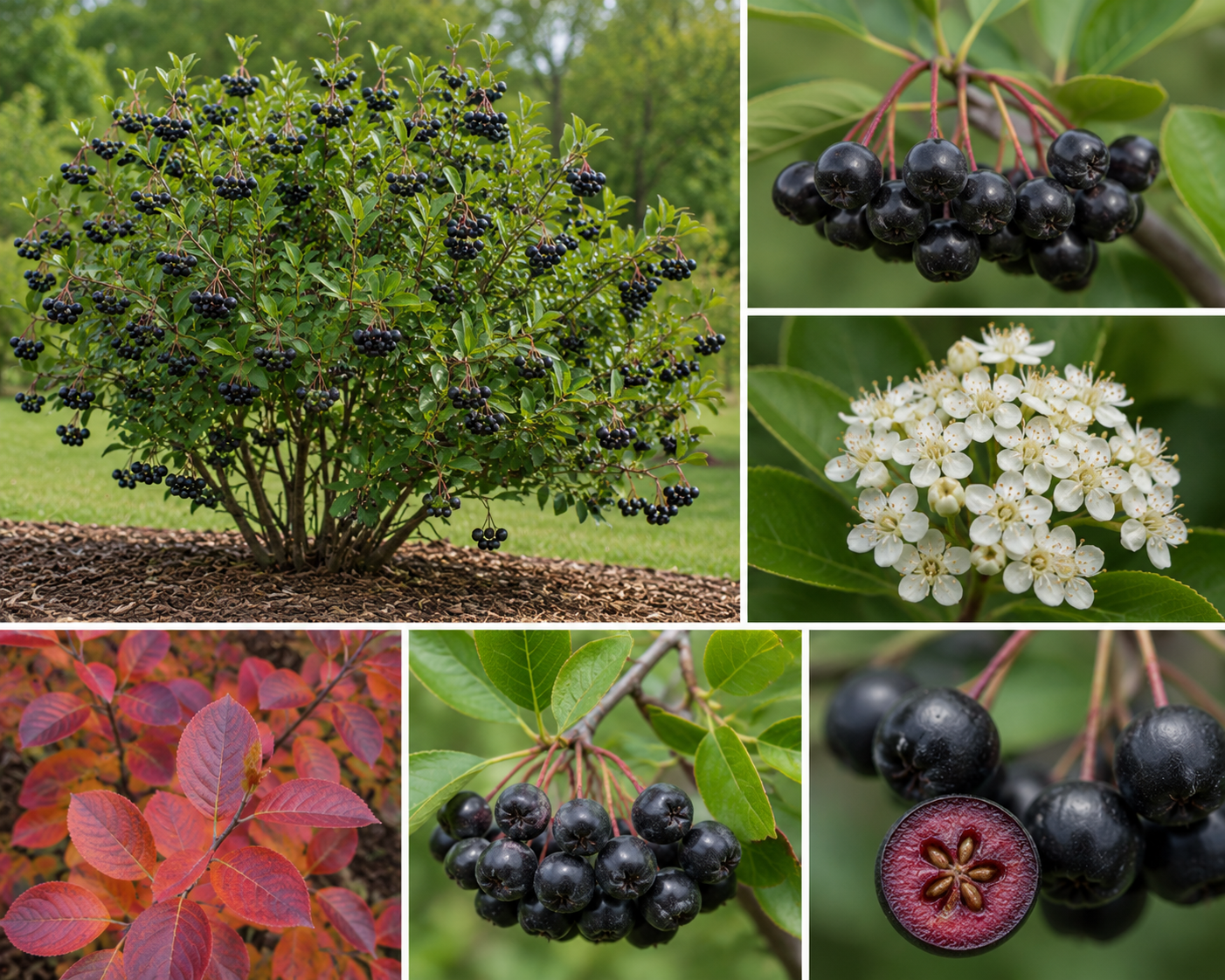
Black Chokeberry is a hardy North American native shrub prized for its highly nutritious fruits, beautiful flowers, outstanding fall color, and exceptional wildlife value. Native to eastern North America, Aronia melanocarpa has become increasingly popular among gardeners, health-conscious consumers, and conservationists due to its combination of ornamental beauty and edible harvests.
In spring, plants are covered with clusters of attractive white flowers that attract bees and pollinating insects. By late summer, these blooms develop into glossy clusters of deep purple-black berries that persist well into autumn. The fruits are rich in antioxidants and have attracted significant scientific interest for their nutritional properties.
Autumn brings one final spectacular display as the foliage turns brilliant shades of scarlet, crimson, orange, and burgundy. Few fruiting shrubs can match Black Chokeberry's combination of edible harvest, wildlife value, and ornamental appeal.
Uses- Fresh or processed fruit.
- Jams and jellies.
- Juices and smoothies.
- Wine making.
- Wildlife plantings.
- Pollinator gardens.
- Native landscaping.
- Edible hedges and screens.
- Remove seeds from ripe berries.
- Clean thoroughly to remove fruit pulp.
- Cold stratify seeds in moist peat moss or vermiculite for 60-90 days at 35-40°F (2-4°C).
- Sow seeds 1/4 inch deep in a quality seed-starting mix.
- Maintain even moisture.
- Provide bright light after sowing.
- Germination may occur over several weeks.
- Transplant seedlings once well established.
- Botanical Name: Aronia melanocarpa
- Plant Type: Deciduous fruiting shrub
- USDA Zones: 3-8
- Sun Exposure: Full sun to partial shade
- Soil: Adaptable to many soil types
- Water: Moderate moisture
- Height: 3-8 feet
- Spread: 3-8 feet
- Growth Rate: Moderate
- Fruit Ripens: Late summer to early fall
Black Chokeberry is remarkably adaptable and thrives in a wide range of conditions, including wet soils, clay soils, sandy soils, and cold climates. Once established, it is highly reliable and low maintenance.
Fruit CharacteristicsThe berries contain exceptionally high levels of anthocyanins, antioxidants responsible for their deep purple-black color. Although the fruits are somewhat astringent when eaten fresh, they are widely used in juices, syrups, wines, jams, and health products.
Nutritional BenefitsBlack Chokeberry is widely recognized as one of the most antioxidant-rich fruits known. The berries contain significant levels of anthocyanins, flavonoids, vitamin C, and other beneficial plant compounds. This has made Aronia a popular subject of nutritional and agricultural research around the world.
Seedman Growing NoteMany gardeners first plant Black Chokeberry for its edible berries and later discover that its fall color rivals some of the finest ornamental shrubs available. In many landscapes, the brilliant autumn foliage becomes just as valuable as the fruit harvest.
This species is also an outstanding choice for wildlife-friendly gardens, native plant collections, edible landscaping, and conservation projects. Few shrubs offer so many benefits while requiring so little maintenance.
Black Chokeberry (Aronia melanocarpa) is a remarkable native fruit shrub that combines beauty, nutrition, wildlife value, and adaptability. Whether planted for its antioxidant-rich berries, pollinator benefits, or spectacular fall color, it remains one of North America's most rewarding native fruiting plants.
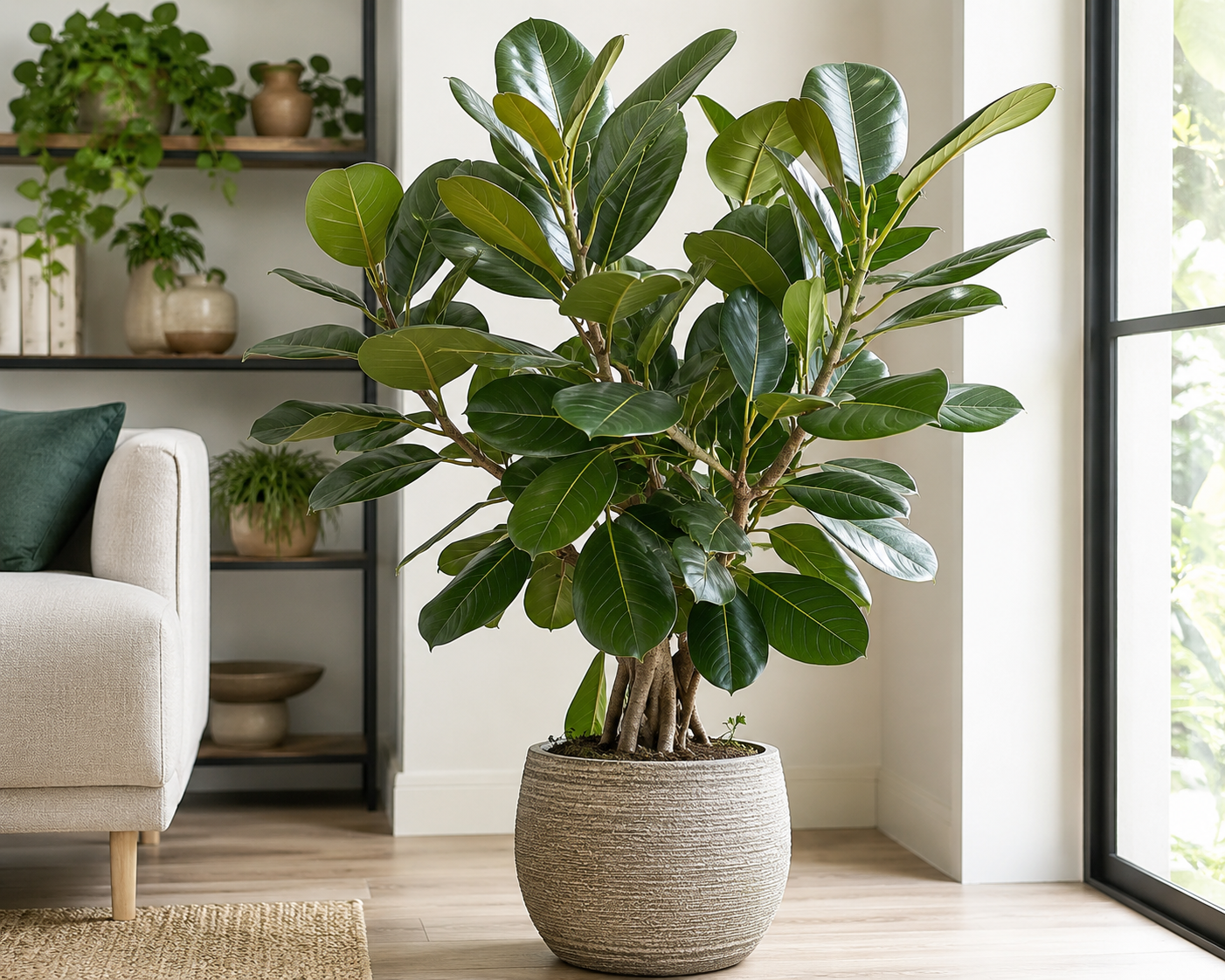
Ficus benghalensis, commonly known as the Banyan Fig or Banyan Tree, is one of the world's most impressive tropical trees and has become increasingly popular as a striking indoor foliage plant. Famous for its massive canopy and aerial roots in nature, this species adapts surprisingly well to container culture, developing into an attractive houseplant with large, leathery leaves and a bold tropical appearance.
When grown indoors, Ficus benghalensis produces broad, glossy green foliage with prominent veins, creating an elegant architectural specimen that instantly transforms a room into a lush indoor oasis. Young plants are especially prized for their vigorous growth, attractive branching habit, and ability to become stunning focal points in sunrooms, offices, atriums, and bright living spaces.
This tropical fig prefers bright, indirect light but can tolerate some direct morning sun. It thrives in warm conditions and appreciates consistent moisture while growing. Given sufficient light and room, plants can develop into impressive indoor trees that provide years of beauty and enjoyment.
In tropical climates, Banyan Trees are legendary for their enormous size and longevity, often becoming living landmarks. As a houseplant, however, they remain manageable in containers and can be pruned to maintain the desired shape and size. Their exotic appearance and relatively easy care make them a favorite among collectors of unusual tropical plants.
- Botanical Name: Ficus benghalensis
- Common Name: Banyan Fig, Banyan Tree
- Plant Type: Tropical evergreen tree
- Indoor Height: 4 to 10+ feet in containers
- Light Requirements: Bright indirect light to partial sun
- Water Needs: Moderate; allow surface soil to dry slightly between waterings
- Growth Rate: Moderate to fast
- Foliage: Large, glossy green leaves with prominent veins
- Best Uses: Houseplant, conservatory plant, office specimen, tropical container plant
- USDA Zones: 10-12 outdoors
For gardeners and plant enthusiasts seeking a dramatic tropical houseplant, Ficus benghalensis offers the beauty and grandeur of a legendary Banyan Tree in a form suitable for indoor cultivation. Its handsome foliage, vigorous growth, and exotic character make it an outstanding addition to any collection of tropical plants.
Aralia cordata 'Sun King', also known as Golden Japanese Spikenard, is a bold and beautiful shade perennial prized for its glowing golden-yellow to chartreuse foliage. Its large, tropical-looking leaves brighten shady garden spaces and create a dramatic contrast when planted among hostas, ferns, woodland plants, and darker green foliage.
This eye-catching plant forms a full, upright clump and brings a lush, almost shrub-like presence to the garden while still behaving as a hardy perennial. In part sun, the foliage tends to glow brighter yellow, while in deeper shade it takes on rich lime-green to chartreuse tones. Small white flowers may appear in summer, followed by dark berries that add seasonal interest.
'Sun King' is an excellent choice for shade gardens, woodland borders, mixed perennial beds, and large containers. It is valued for its easy-care nature, bold texture, and ability to light up darker corners of the landscape.
Zones: For zones 4-8. Best grown in moist, fertile, humusy, well-drained soils in part shade. Site in locations protected from strong winds to protect the foliage. Aralias often self-sow where the berries drop and are somewhat easy to naturalize into colonies. Seeds need to be cold stratified.
- Botanical Name: Aralia cordata 'Sun King'
- Common Name: Golden Japanese Spikenard
- Plant Type: Herbaceous perennial
- Light: Part shade to shade; morning sun helps brighten foliage color
- Foliage Color: Golden-yellow to chartreuse-lime
- Garden Use: Shade gardens, woodland borders, specimen plantings, and containers
- Special Features: Bold foliage, tropical appearance, shade tolerant, deer resistant
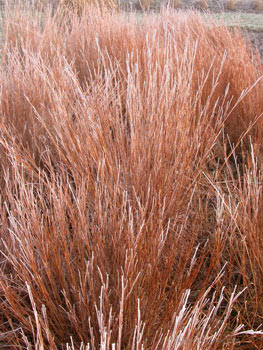
Foliage typically retains some color throughout winter. In July-August, flower stems rise higher than the foliage clump bearing small reddish-brown flowers. Flowers give way to seed heads fringed with showy, silvery-white hairs. Seed heads may persist into winter.
We like this one in large containers for late fall decorations, it looks outstanding when the fall color is on.
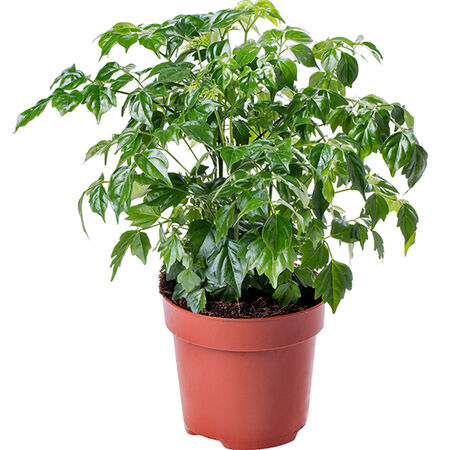
China Doll Plant is one of the most elegant foliage houseplants available, prized for its finely textured, glossy green leaves and graceful tree-like appearance. Known botanically as Radermachera sinica, this beautiful tropical species creates an airy, refined look that brightens homes, offices, sunrooms, and indoor plant collections.
Its delicate, fern-like foliage gives the impression of a miniature indoor tree while maintaining a soft and graceful character. Few houseplants combine such lush tropical beauty with such refined elegance.
An Exotic Beauty from AsiaChina Doll Plant is native to the warm subtropical regions of southern China and Taiwan. In its natural habitat, it grows as a handsome evergreen tree with glossy foliage and occasional fragrant flowers. Indoors, it develops into an attractive small tree that retains the lush appearance of its tropical origins.
The finely divided leaves create a delicate appearance, but the plant itself is surprisingly sturdy once established.
Growing as a Houseplant- Light: Bright indirect light is ideal.
- Water: Keep evenly moist but never waterlogged.
- Soil: Use a fertile, well-drained houseplant mix.
- Humidity: Appreciates moderate humidity.
- Temperature: Prefers warm temperatures and protection from drafts.
- Fertilizer: Feed lightly during active growth.
China Doll Plants prefer consistency. Once they find a location they like, they often perform beautifully for years. Sudden changes in light, temperature, or watering can sometimes cause temporary leaf drop, but healthy plants generally recover quickly once conditions stabilize.
Regular care and a stable environment are the keys to maintaining a full, lush specimen.
Container CultureChina Doll Plant thrives in containers and can gradually develop into an impressive indoor tree. Decorative pots help showcase its elegant form, while occasional pruning encourages denser branching and a fuller canopy.
Its upright growth habit makes it ideal for corners, entryways, offices, and bright living spaces.
Indoor Decorating ValueThe finely textured foliage of China Doll Plant softens interior spaces and blends beautifully with both tropical and traditional décor. It pairs exceptionally well with larger-leaved houseplants such as Ficus, Philodendrons, and Monsteras, providing an attractive contrast in texture.
Its refined appearance makes it one of the most sophisticated foliage plants available for indoor culture.
Seed GerminationSow seeds in a moist, well-drained seed-starting medium and provide warmth, humidity, and bright indirect light. Keep evenly moist during germination. Seedlings develop steadily and soon produce the attractive divided foliage that characterizes mature plants.
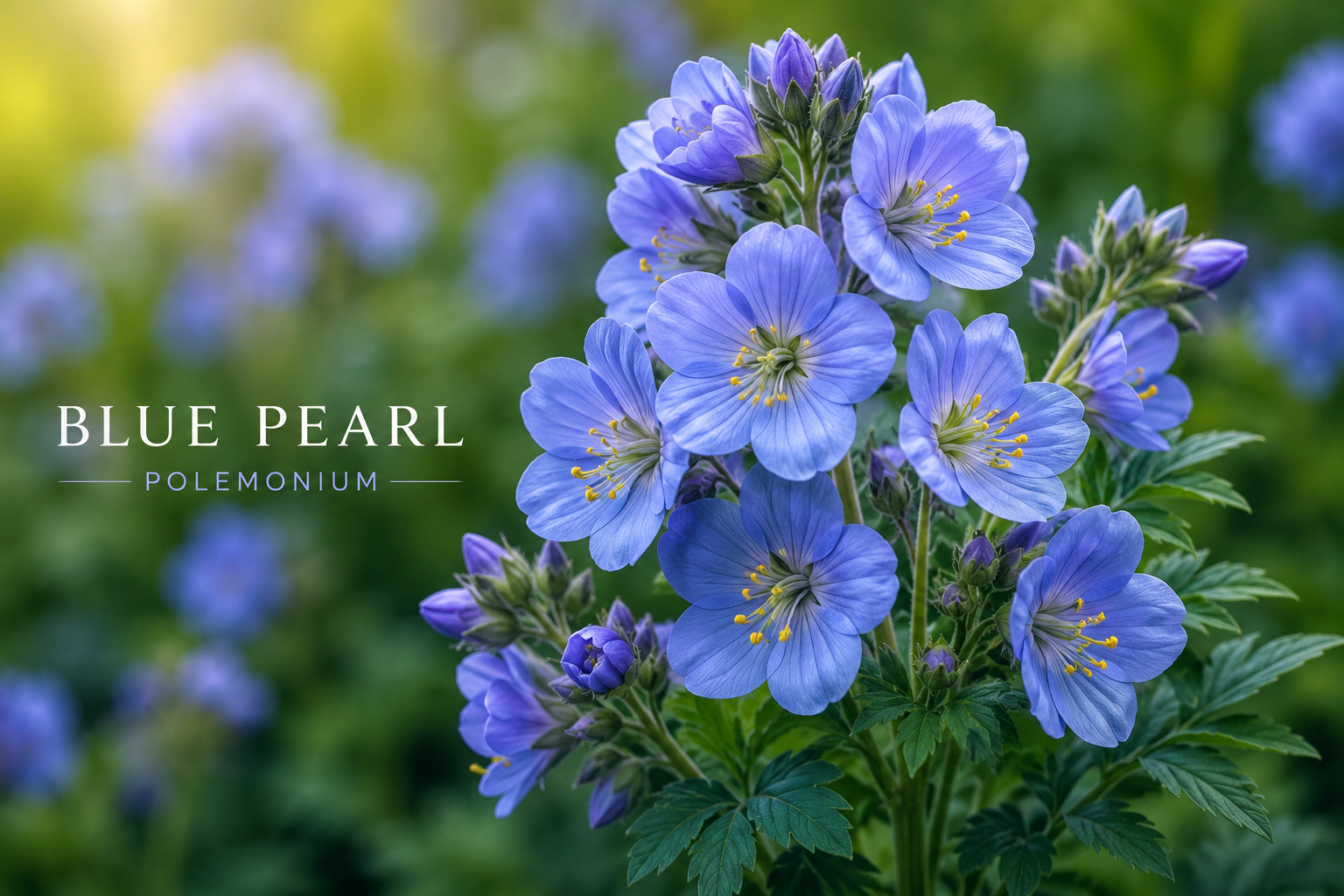
It is deer/rabbit resistant, blooms in early summer, and is often hardy to Zones 2–8.
Fragrant, sky-blue clusters with yellow anthers. Foliage is green, fern-like, arranged in a ladder-like fashion.
Light: Part sun to light shade; prefers dappled light.
Soil/Water: Moist, humus-rich, well-drained soil.Size: 9–12 inches tall, 15–18 inches wide (can reach 24-30 inches depending on conditions).
Maintenance: Low maintenance. Cutting back after the first bloom may encourage a second flush.
Hardiness: Zones 2–8.
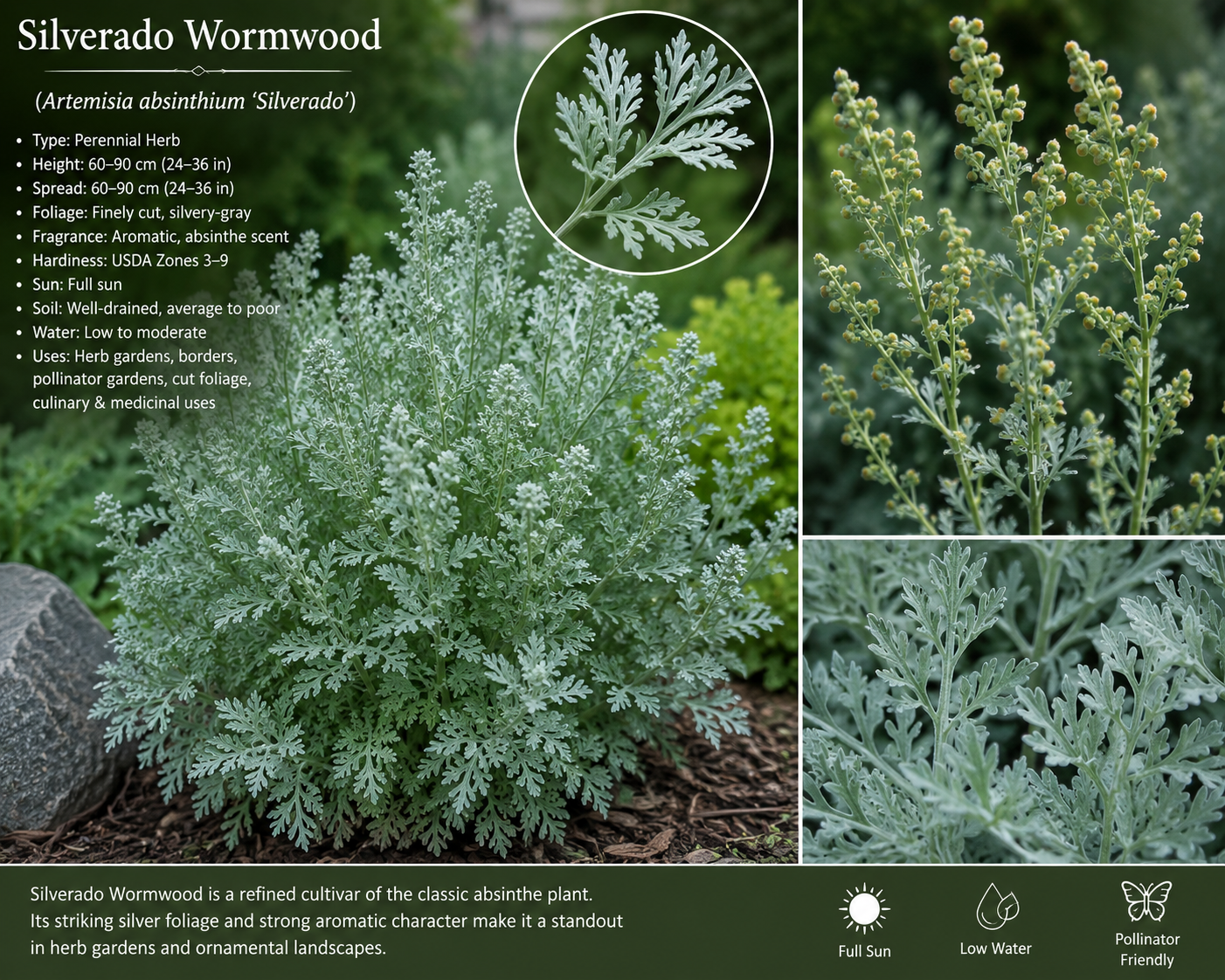
Striking Foliage: Features finely divided, feathery leaves in a brilliant silvery-gray color that remains attractive throughout the growing season.
Compact Form: Unlike taller wormwoods that can become leggy or flop, 'Silverado' maintains a dense, mounding growth habit, typically reaching 24–36 inches in height and width.
Xeriscaping Star: Extremely drought-tolerant once established, it thrives in poor, sandy, or rocky soils where other plants might struggle.
Pest Resistance: The aromatic, bitter foliage is highly deer and rabbit resistant, making it an excellent "barrier" plant for vulnerable borders.
Controlled Growth: This specific cultivar is noted for not readily self-seeding, allowing it to stay put in controlled garden spaces without becoming invasive.
Hardiness: Typically hardy in USDA Zones 4–9.
Exposure: Requires full sun (6+ hours) to maintain its vibrant silver color and tight form.
Soil: Must have well-drained soil; wet feet in winter can cause root rot.
Maintenance: Cut back in late fall or early spring to encourage fresh, tidy growth.
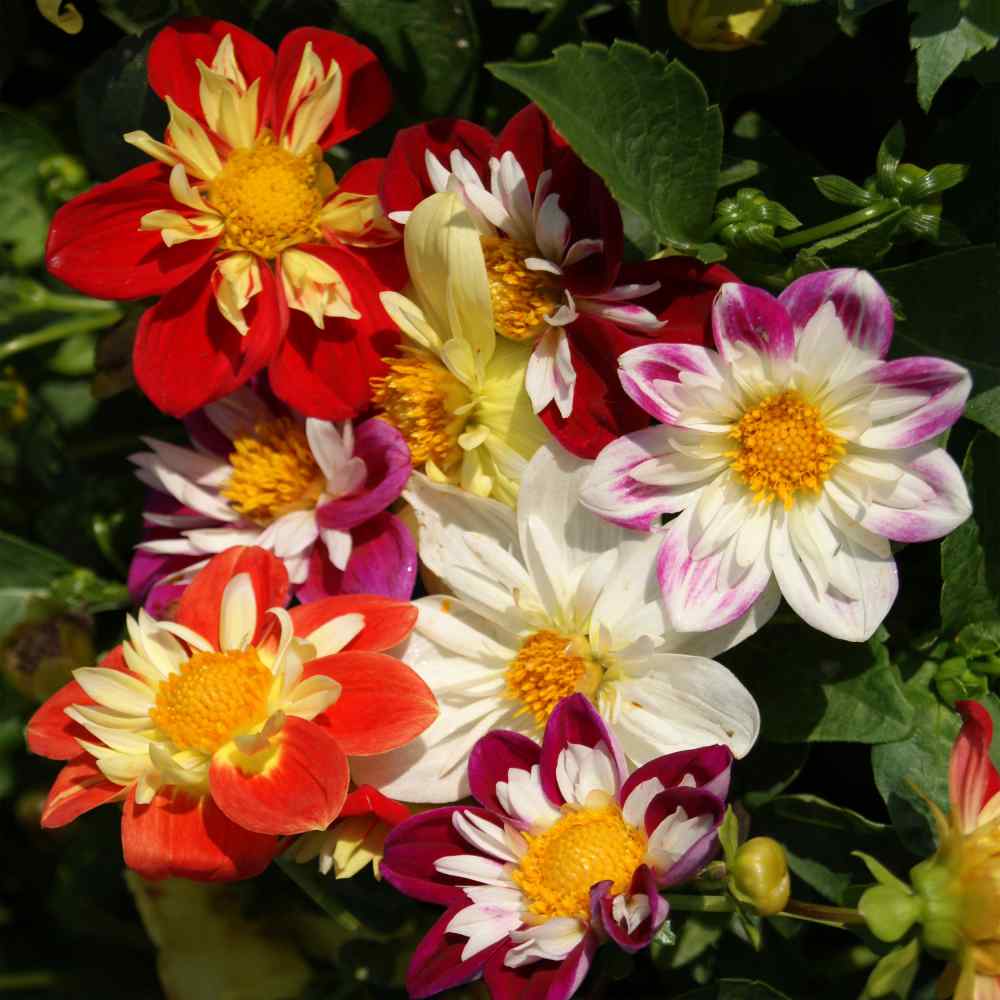
The hallmark of this variety is its "little collar" of shorter, often frilled inner petals that contrast in color with the larger outer petals.
Compact & Dwarf Size: Plants typically grow to a height of only 20 to 24 inches (approximately 2 feet), making them ideal for the front of garden borders or decorative patio pots.
No Staking Required: Due to their sturdy, low-growing nature, they do not require the heavy staking or support structures that taller dahlia varieties need.
Prolific Bloomers: They are known as "true garden performers," blooming abundantly from mid-summer until the first hard frost.
Vibrant Color Palette: The mix usually includes a wide range of warm tones such as red, orange, yellow, pink, and white, often featuring striking bicolors.
Pollinator Magnet: Their open-faced centers make it easy for bees and butterflies to access nectar, making them a valuable addition to wildlife-friendly gardens.
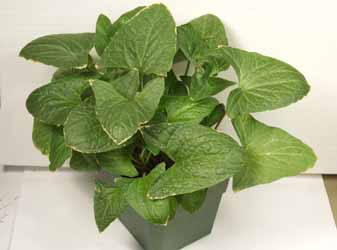
Good King Henry may have become something of a rarity today, but this unique herb still has much to offer to the home or cottage gardener.
A perennial herb in the family Chenopodiaceae, the same plant family as some familiar vegetables (including beetroot and chard) and some other useful but more unusual plants including quinoa and tree spinach. This unique herb possesses many unusual functions. One of its many common names is "All Good" and pretty much all of the plant can be eaten.
The succulent young leaves and flowering stems can be either eaten in salads or cooked like spinach. The seed can be ground and mixed with flour then used in making bread. Known as 'poor man's asparagus', the growing shoots can be tie together in bundles, cooked and eaten like asparagus. Considered to be a gourmet food, young flower buds can be sauteed in butter
It has been used as a herbal medicine to alleviate stomach-ache. The seed is a gentle laxative that is suitable for children. Chickens especially seem to have a special fondness for Good King Henry; one of its common names is "fat hen".
The root is used as a cough remedy for livestock such as sheep and goats.
Note: Good King Henry seeds have a tough seed coat and require a cold dormancy period (stratification) to sprout. To successfully germinate them, cold-condition the seeds for 6–10 weeks by storing them in a damp paper towel or sand inside the fridge, followed by surface-sowing in light, moist soil.
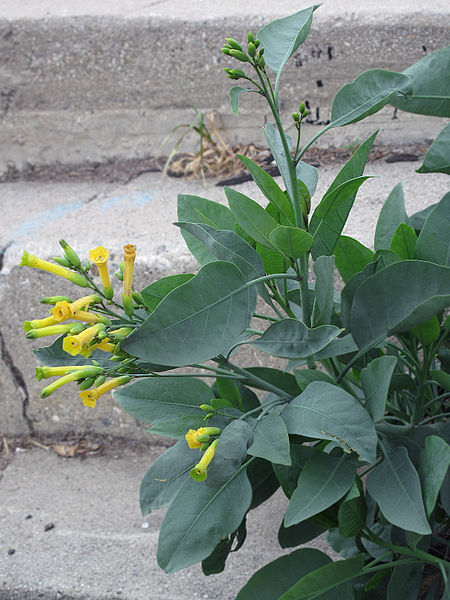

It is highly valued for its chewing, smoking and medicinal uses. It is said to have only trace nicotine. Hardy to 15 degrees. It will flower when very young.
Growing as an ornamental plant.
Looking to add a vertical, low-maintenance showstopper to your landscape? Meet Nicotiana glauca, better known as Tree Tobacco—the ultimate architectural plant for the modern, water-conscious gardener.
Year-Round Vibrant Color: Forget seasonal blooms. This plant features stunning clusters of bright, tubular yellow flowers that pop against its unique, silvery-blue "glaucous" foliage. It provides a visual punch 365 days a year.
The Ultimate Hummingbird Magnet: If you love birdwatching, this is your gold mine. The nectar-rich flowers are specifically designed for hummingbirds, ensuring your garden is a buzzing sanctuary for local wildlife.
Extreme Drought Tolerance: Living in a dry climate? No problem. Once established, this evergreen shrub thrives on neglect, requiring almost zero supplemental water. It’s the definition of "set it and forget it" landscaping.
Rapid Architectural Growth: Need a privacy screen or a focal point fast? N. glauca is a sprint-grower, quickly reaching heights of up to 20 feet with a whimsical, spindly silhouette that adds height without crowding your garden.
Hardy & Versatile: From poor, rocky soils to coastal breezes, this plant is a survivor. It fills in those "impossible" spots where other ornamentals fail to thrive.
Make a bold statement with a plant that’s as resilient as it is beautiful.
Note from Jim: I tried this a few years back. I dried the leaves and mixed in a bit of burley and flavored it with some of our flavoring ( tried vanilla, rum, whiskey, brandy and cherry, loved them all ) and found it to be an excellent pipe tobacco.
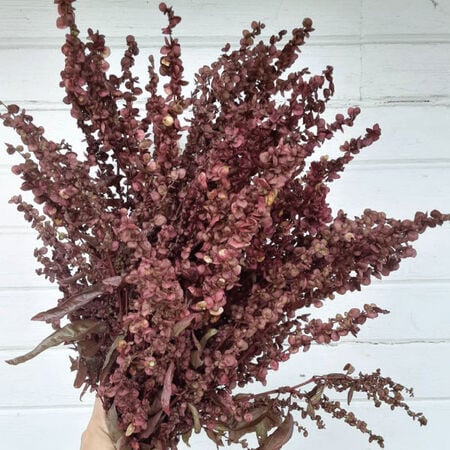
The "New Kale" of Your Kitchen. Move over, traditional spinach. Red Plume offers a more resilient, flavorful alternative that earns its "superfood" title.
Heat-Tolerant Hero: Unlike regular spinach that bolts the moment it gets warm, Orach thrives through the summer heat, providing tender greens long after other spring crops have faded.
Pre-Seasoned Flavor: Known for a unique, naturally salty taste, its leaves are perfect raw in salads or cooked in stir-fries and soups.
Nutritional Powerhouse: It is jam-packed with calcium—delivering up to 200% of your daily requirement in a single serving—plus vitamins A, C, and K.
Culinary Fun: When cooked, the deep magenta leaves can act as a natural dye, giving pasta or risotto a stunning pink hue.
A Showstopper in the Landscape. Red Plume isn't just for eating; it's a structural masterpiece that reaches 4 to 6 feet tall.
Striking Visuals: Features dramatic, upright spires of deep wine-red to cherry-red foliage that contrast beautifully with green garden beds. Textural "Plumes": As it matures, the plant produces shimmering, paper-thin seed pods that look like "dangling beads," making it a favorite "filler" for fresh and dried floral arrangements.
The "Lazy" Gardener's Dream: This plant is incredibly easy to grow, pest-resistant, and self-seeds freely. Plant it once, and you’ll likely enjoy volunteer "Red Plume" beauties for years to come.
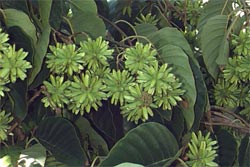
Camptotheca acuminata flourishes in semi-shade to full sun, requiring moderate to regular watering, making it a stunning ornamental addition to gardens. Its pale gray, deeply furrowed bark and eye-catching, spherical flower clusters offer a visual feast from May through July, transitioning to charming gray-brown fruits in September.
Camptotheca's fame extends beyond ornamentation, known for its historical use in traditional Chinese medicine and potential cancer-fighting properties due to the chemical camptothecin. Though modern cancer therapies like topotecan and irinotecan derive from lab processes rather than direct extraction, this tree's legacy remains captivating. Easy to cultivate from seeds, it adapts indoors under warm, bright conditions or outdoors in subtropical climates.
As an intriguing conversation piece, the Camptotheca acuminata adds not just shade, but a story of resilience and hope to your landscape. Remember, its ethnomedical uses aren't evaluated by the FDA, so consult a physician before considering any medical use. Embrace the elegance and storied past of this remarkable tree and transform your garden into a botanical oasis.
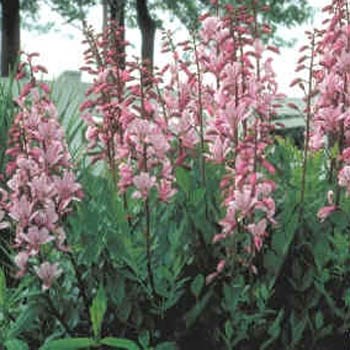
Native to central and western Asia and Europe, this plant thrives in USDA zones 3 to 8, flourishing in full sun and well-drained soils that remain consistently moist. Known for its slow establishment, Dittany eventually matures into an upright, clump-forming plant reaching heights of 2 to 4 feet, with a spread of 1.5 to 2.5 feet. During late spring to early summer, it showcases fragrant, showy flowers with five petals in hues of white, pink, red, or lilac, often veined or dotted with red, and arranged in elegant terminal racemes.
The glossy, pinnate light green leaves emit a refreshing lemony fragrance when crushed, adding to the plant's sensory allure. A distinctive feature of Dittany is its ability to exude a flammable oil from old flowers or seed pods, which, in calm conditions, can be ignited for a brief, harmless flash of light, earning it the nickname "burning bush."
Resistant to most pests and diseases, Dittany attracts butterflies and makes a striking addition to borders and cottage gardens, particularly when paired with daylilies, peonies, and iris. While its volatile oils are noteworthy, be mindful of its phototoxic properties, as contact can cause skin irritation in sensitive individuals. Explore the enchanting world of the Dittany plant, where ornamental beauty meets fascinating natural phenomena.
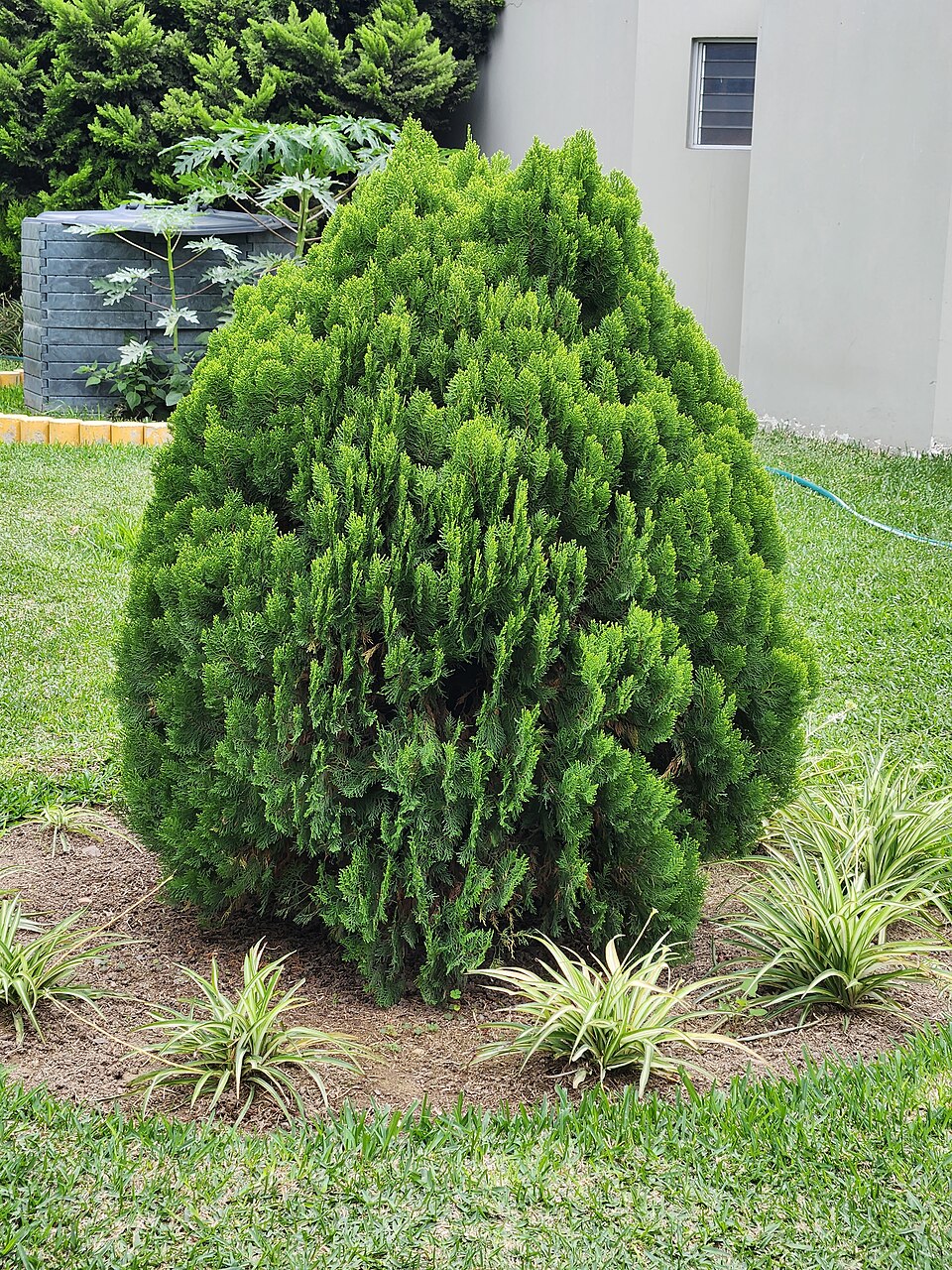
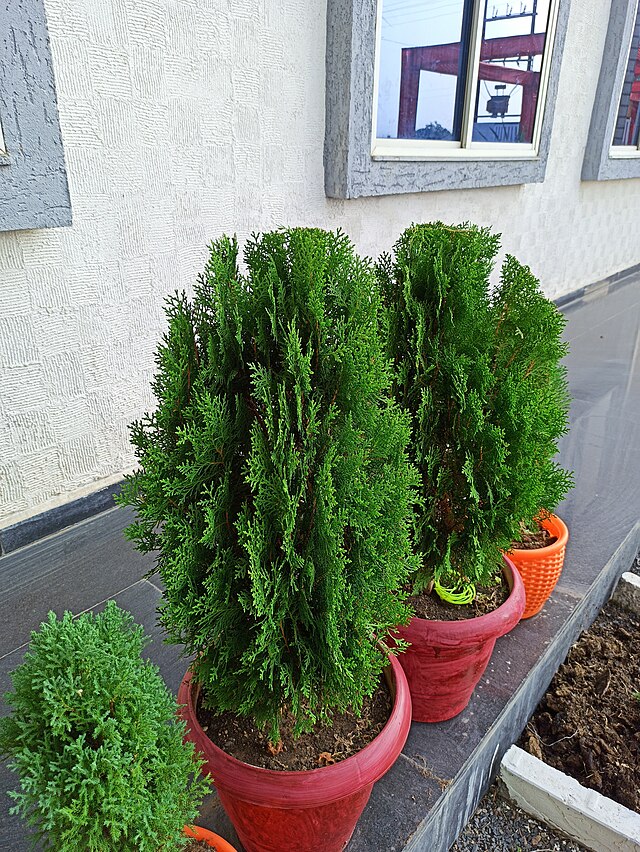
Discover the unique beauty and versatility of Platycladus orientalis 'Compacta', Dwarf Oriental Arborvitae, a stunning evergreen that enhances any landscape with its dense, pyramidal form. This cultivar is celebrated for its compact structure and adaptability, making it the perfect choice for a variety of garden applications, from hedges to standalone specimens. Native to the diverse regions of China, Korea, and the Russian Far East, this hardy evergreen thrives in USDA Zones 6 to 9, reaching an impressive height of 8-12 ft with a spread of 5-8 feet.
Optimally grown in fertile, well-drained soil with medium moisture, Dwarf Oriental Arborvitae flourishes in full sun to part shade. It appreciates good air circulation and withstands a range of conditions, except for wet, boggy sites. Notably, its scale-like leaves release a distinctive aroma when bruised, offering an additional sensory dimension to your garden space. Over time, the foliage transitions to a darker green and may bronze in winter, adding seasonal interest. Despite its rugged nature, this shrub is susceptible to common pests like bagworms and spider mites but can remain healthy with proper care. Ideal for creating living privacy screens, accentuating foundations, or enhancing garden designs, Dwarf Oriental Arborvitae promises lasting beauty and utility for your outdoor sanctuary.
Seeds need 60 days cold stratification before sowing.
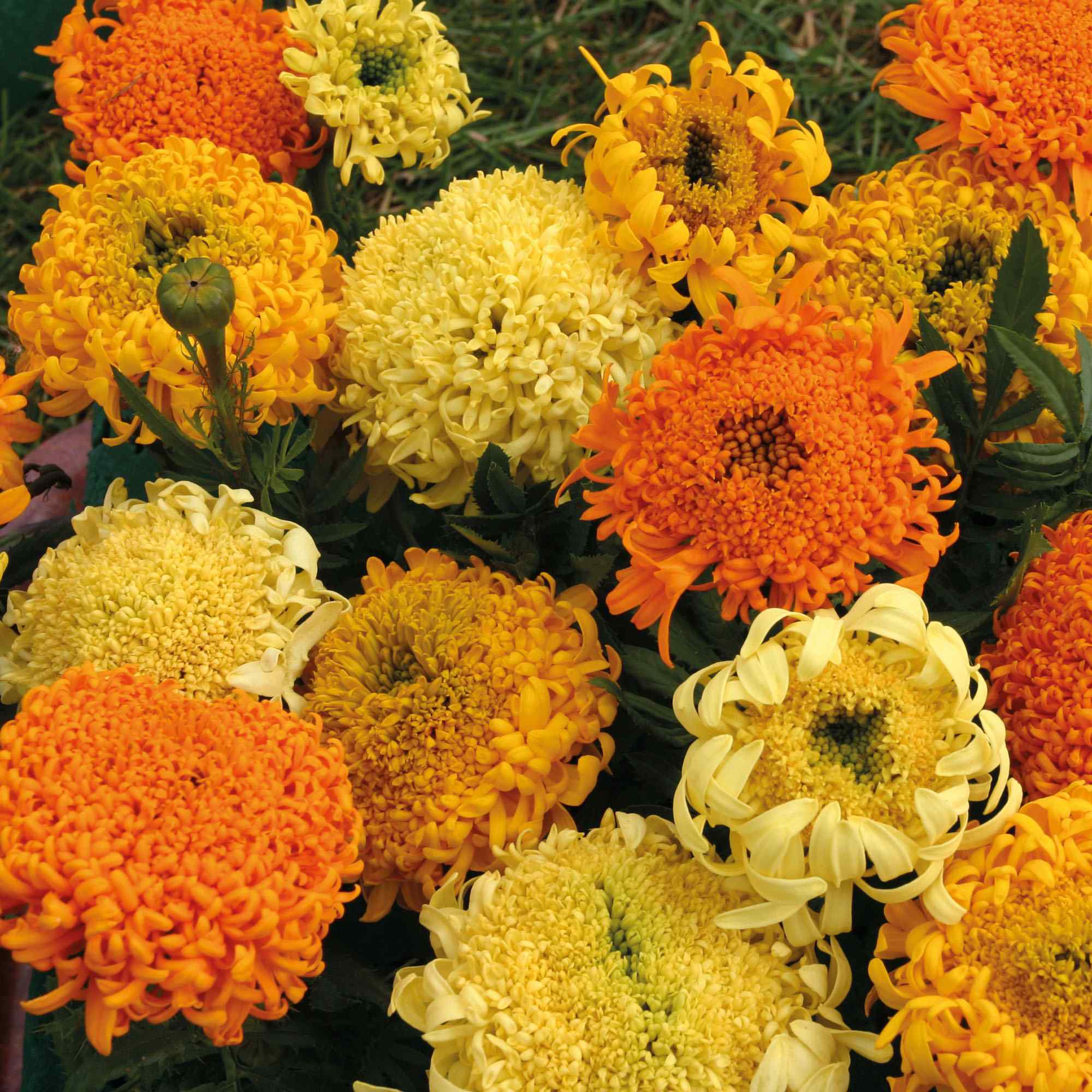
These bold blooms create striking displays in flower beds, borders, and containers, adding a lively and cheerful touch to gardens and patios.
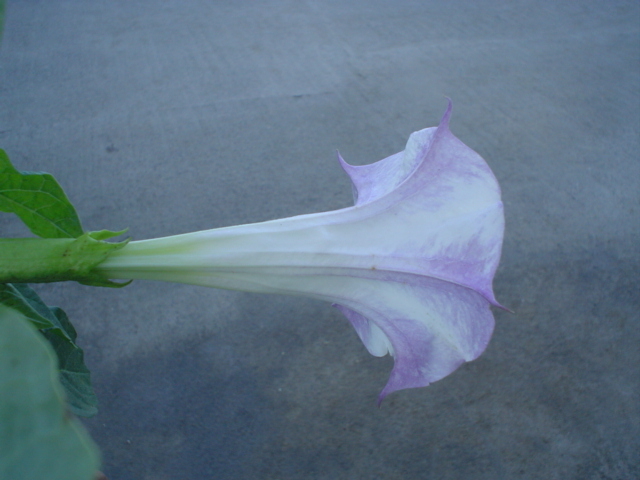
Originating from India, it is highly prized by gardeners for its unique, fragrant, upward-facing trumpet flowers and ease of growth. Large, single, upright trumpet-shaped blooms that are primarily white with distinct brownish-purple or blue-purple tinges.Fragrance is very aromatic, especially in the evening when the flowers typically open.
A shrubby, spreading plant that typically reaches 2 to 5 feet in height. Large, dark green, ovate leaves that provide a lush backdrop for the showy blooms.
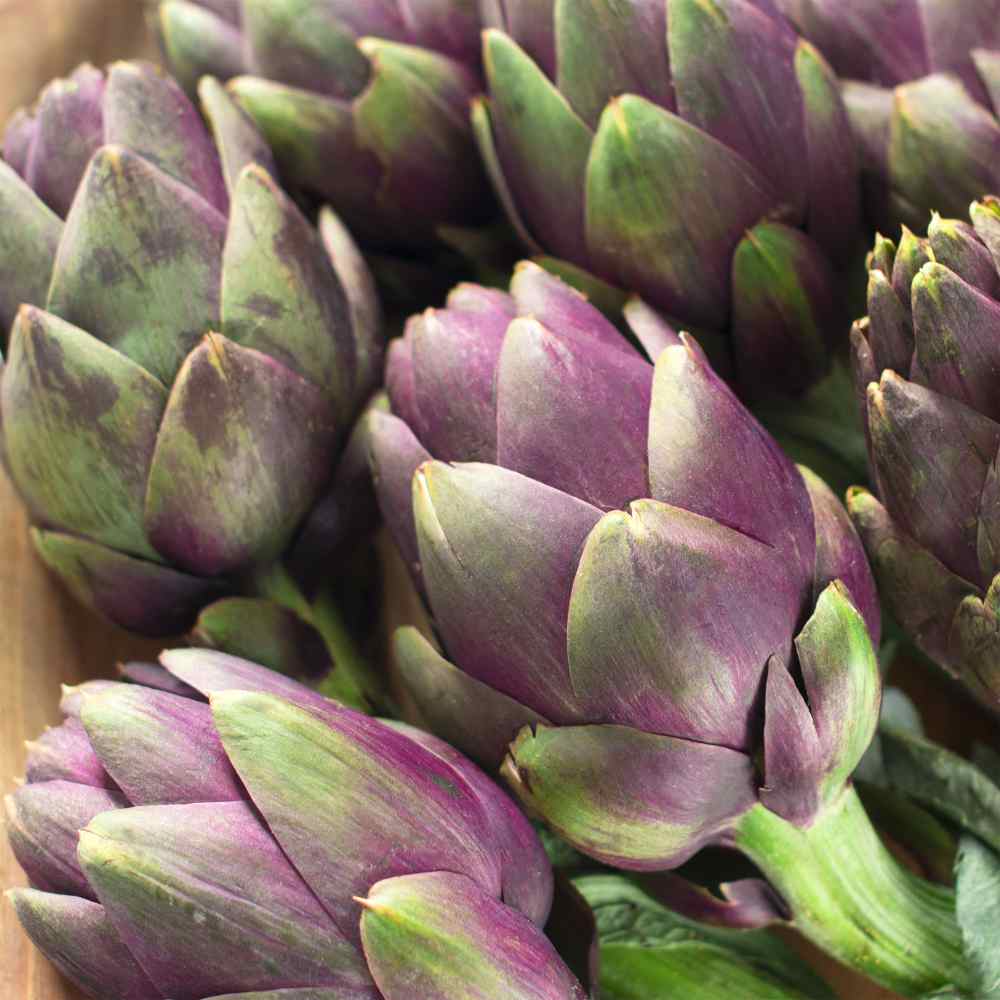
The plant is highly ornamental, reaching about a metre in height with dramatic, silvery-grey foliage. It produces 3-to-6-inch buds that are green with vibrant purple tips or entirely purple.
Known for a meaty heart and a distinctively rich flavor. While the purple color typically fades to green during cooking, the leaves remain exceptionally tender.
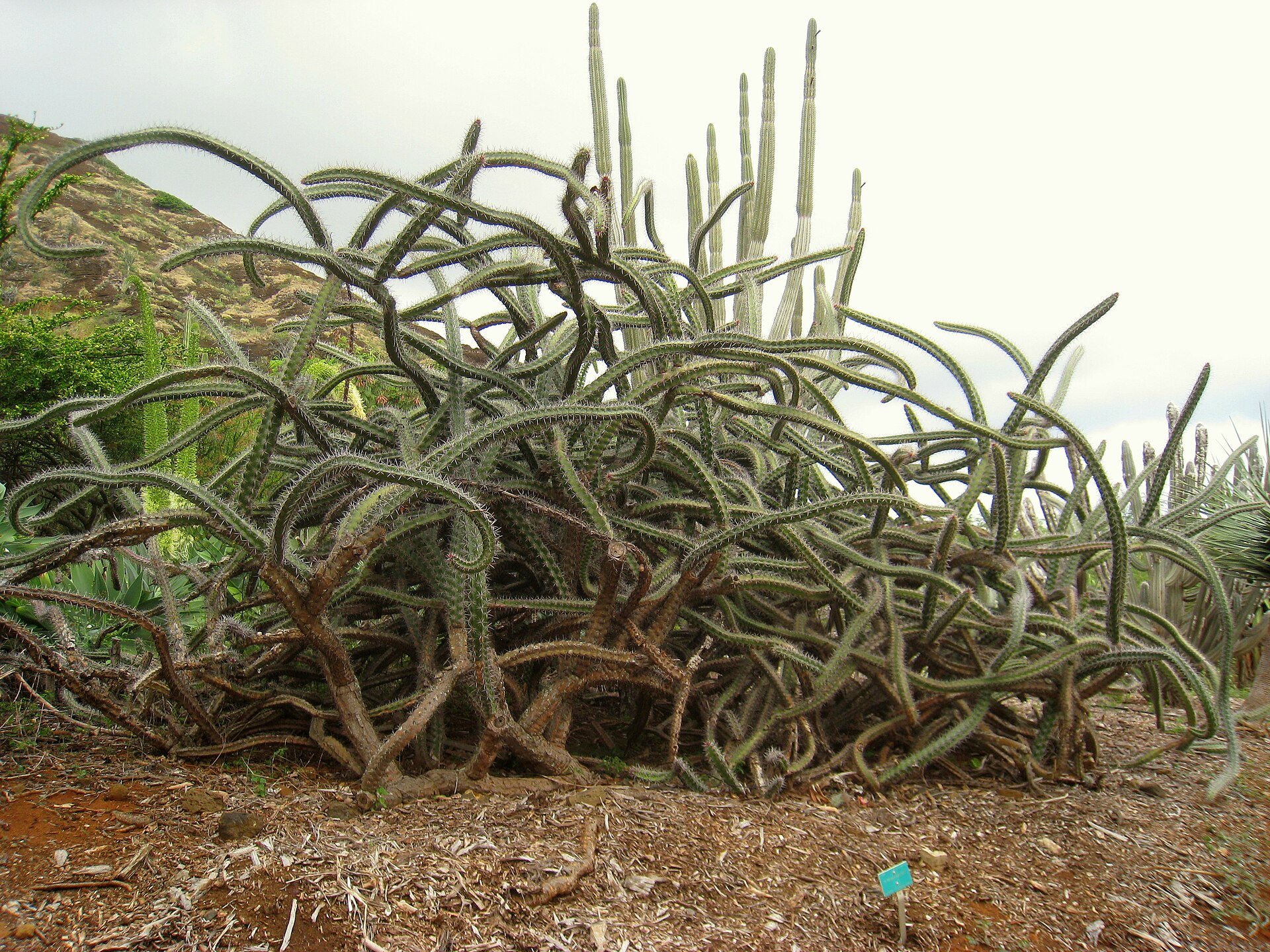

The Octopus Cactus is frequently used as an ornamental or a natural barrier due to its dense, thorny growth. Features bluish-green, columnar stems that reach 2–4 meters (6.5–13 feet) in height. The stems have 5–8 ribs and are densely covered in sharp, whitish spines.
Hardiness: Suitable for USDA zones 9b to 11b; it can tolerate brief freezes down to approximately 25°F–28°F.
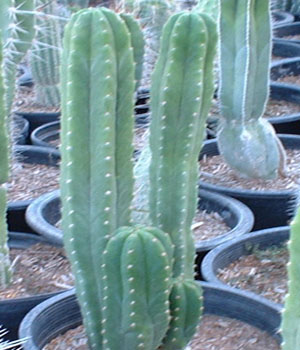
A dark green columnar cacti that can reach 10-20 ft. tall. Bears showy white fragrant flowers at night that can reach 9" across. Cold hardy outside to 15 degrees when mature. Good cacti for beginners.
It has a 2,000-year history of ceremonial use in the Andes for spiritual and divination purposes due to its mescaline content.
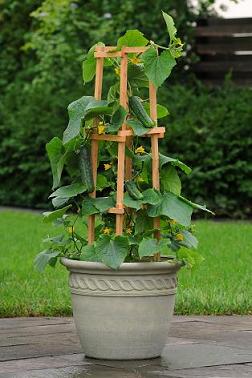
This is a parthenocarpic variety, meaning it can set fruit even in conditions with low pollinator activity, such as screened-in porches or greenhouses. Features short-branching, compact vines that typically reach 3–5 feet in length. Produces dark green, crunchy, and juicy cucumbers that are 6–8 inches long. The skin is thin and bitter-free, making peeling unnecessary.
One of the quickest varieties to harvest, reaching maturity in 50–55 days. A high-yielding variety that provides a continuous harvest throughout the season if the fruit is picked regularly.
A compact, high-yielding hybrid variety bred for small spaces like patios and container gardens. Every gardener should try this one. It produces an abundance of crisp, bitter-free cucumbers on short, 3–5 foot vines. This continuous harvest variety is ideal for fresh eating, salads, and pickling.
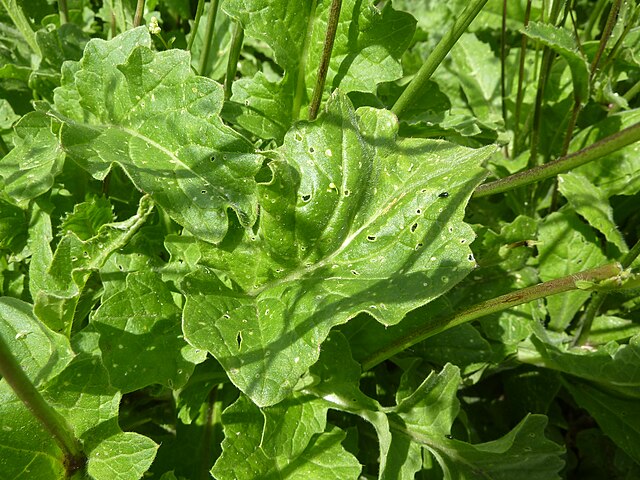
Flavor profile includes peppery bite, more intense than collards or turnip greens with slight bitterness, especially in mature leaves.
Raw: It is very pungent and spicy—can be almost overpowering in large amounts. Cooked: the heat mellows, becoming milder, slightly sweet although still pleasantly peppery compared to other Southern greens.
Flavor is stronger than collards and spicier than turnip greens, it is closer to spicy mustard or arugula, but more intense. Young leaves are milder, less bitter. Older leaves are tougher, more bitter and hot. Cold weather can make them sweeter (common in Southern gardens). 40 to 50 days to full maturity.
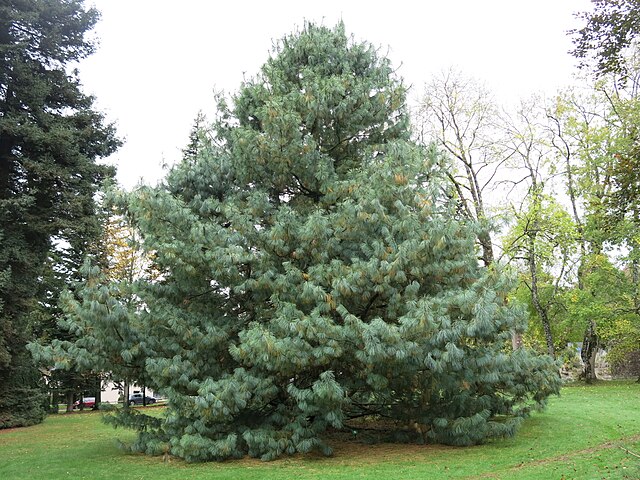

Boasting gray-green needles up to 8 inches long, which transition from upright to gracefully drooping as they mature, this pine adds a unique visual dimension to any landscape. The slender, resinous cones, ranging from 6 to 10 inches, further enhance its ornamental appeal. Ideally suited for full sun and well-drained, acidic, sandy loams, Pinus wallichiana is low-maintenance and deer-tolerant, making it a garden favorite.
Originally native to elevations of 6,000 to 14,000 feet, this conifer adapts beautifully to protected locations, although severe winter winds may cause needle browning. Honor the legacy of Nathaniel Wallich, whom this species commemorates, by bringing a piece of Himalayan grandeur into your garden.

Chinese fan palms do well in full sun and are used in masses in both outdoor landscapes and interior spaces. Young plants like it better with part shade. The leaves are magnificant and may grow up to 5 feet in diameter and form a dense canopy on a solitary brown trunk. Small specimens look great in pots and planters while mature plants make a nice specimen in the landscape. Flowers are not significant but large bunches of fruit are spectacular.
Hardy for zones 8-11.
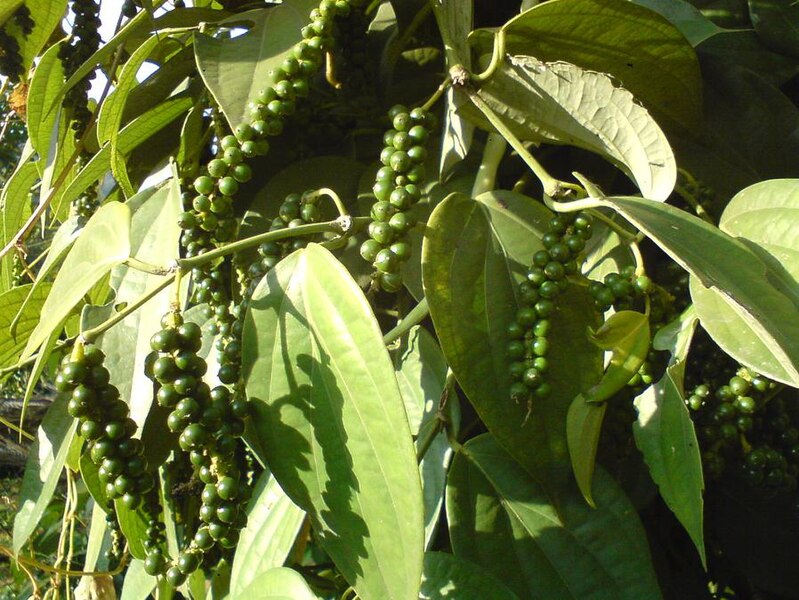
Black pepper plants make an attractive addition to your house or garden. Once grown, they develop dainty white flowers before producing fruit. The fruits will appear as clusters of round berries in a chain formation.
Conditions for growing black pepper plants require high temps, heavy and frequent rainfall, and well-draining soil, all of which are met in the countries of India, Indonesia, and Brazil where most of the commercial peppercorns are grown. Most growers in the USA grow these in containers inside the home or greenhouse. These warm loving plants will stop growing when temps drop below 65 degrees F. (18 C.) and do not tolerate frost; as such, they make great container plants. Situate in full sun with 50 percent or greater humidity, or inside the house or greenhouse if your region does not fit these criteria.
In its native habit of southern India, Black Pepper is an understory plant that climbs up trees and grows in dappled light. When grown as a houseplant, it needs moderate light in an east or west window and it should be placed directly on the windowsill or close to your light source if grown in a light garden. It does benefit from some direct sunlight but not hot noonday sun. Like other tropical plants, Black Pepper can be grown outside during the summer months and brought inside for the winter.
The flowers start growing at the leaf nodes of new growth. The small white flowers form pendulous spikes and then small, round, green peppercorns form in chains, which in time ripen to red. Growth slows down in the winter, yet it will fruit and flower year-round. The pepper plant can produce an abundance of peppercorns in a pot as small as 8-inches.
To fertilize, use a soluble or liquid fertilizer applied every two weeks when you water. Don’t over fertilize your black pepper plant, as a rule of thumb, the less light, the less often you fertilize, so outside in summer means more, inside in winter less.
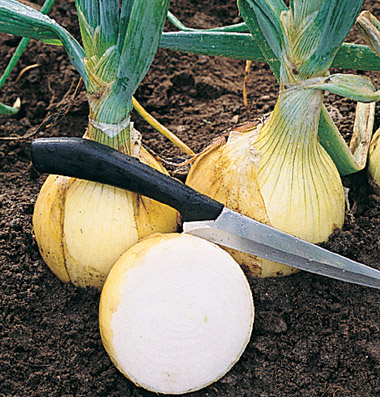
Can grow 8 inches in diameter. Mild onion with excellent size potential. Jumbo to colossal, round to teardrop-shaped bulbs with light yellow skins. Use fresh or for short-term storage.
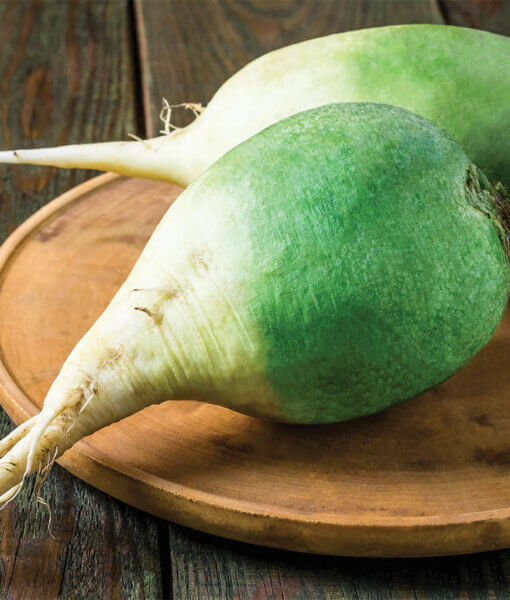
New to North America, this Japanese heirloom is a medium sized, oblong daikon type. The wasabi-green skin and flesh is crisp and succulent, with a strong heat reminiscent of the much loved Japanese horseradish paste.
The flavor is sharp and tear-inducing for lovers of spice. Wasabi radish seeds also make excellent micro-greens, with the spiciness developing early on in its tiny leaves.
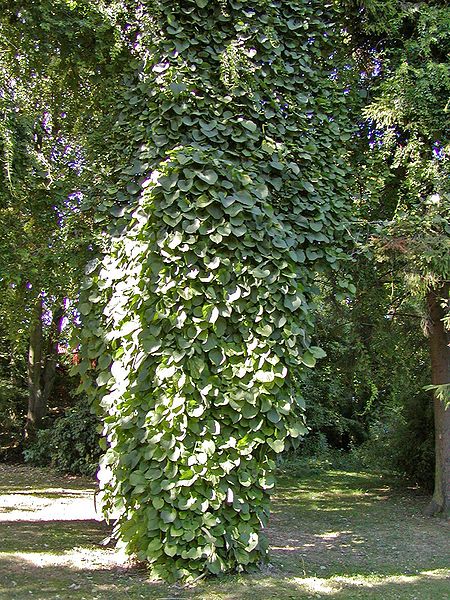

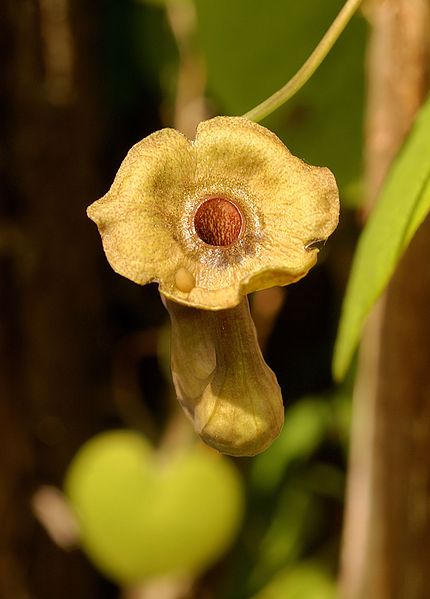

Dutchman's Pipe is a very vigorous native vine. It will create a thick green screen in a short period of time making it ideal for covering a fence, wall or strong trellis. It can grow to 30 feet tall in some cases.
It has large, dark green, heart-shaped leaves and very interesting flowers that are shaped like a small pipe. They are a few inches long and are a mahogony-cream color.
This vine plays an important role in the life of native Pipevine Swallowtail butterflies. The flowers provide nectar for the butterflies, and the leaves are an important food source for the caterpillars. The vigorous growth of this vine makes it easy to share the leaves with these beautiful insects.
This native plant grows best in moist, well-drained soil, in full to partial sun. It can reach heights of 30 feet tall. It is a good plant for having few pest or disease problems, and as a bonus it withstands urban pollution quite well.
For zones 4-8.
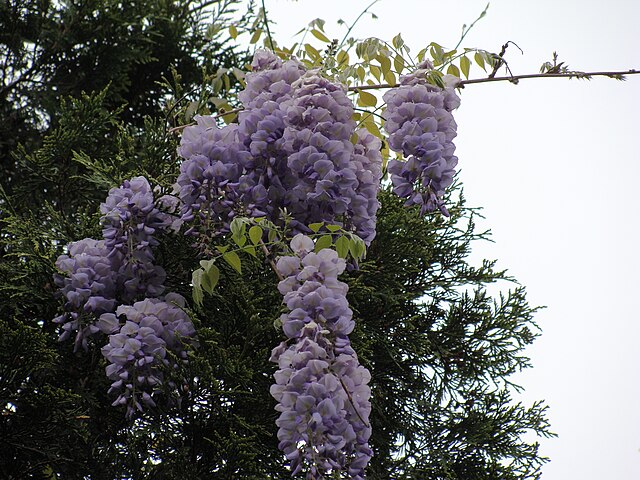
Flowers features a delightful, sweet, and lightly fragrant scent, often described as having notes of honey and lavender. While generally less overpowering than Asian varieties, its blooming flowers produce a pleasant, airy perfume that attracts pollinators.
Native to the southeastern United States, it thrives in moist conditions, such as swampy woods and along streams, making it an ideal choice for those seeking to enhance garden aesthetics with a touch of native elegance. This woody vine can climb up to 40 feet, offering a stunning vertical accent to any landscape.
Unlike its more aggressive cousin, Chinese wisteria, American wisteria twines less invasively, providing vibrant clusters of fragrant, pea-like flowers that attract birds and delight the senses without overwhelming their surroundings.
Choose your planting location with care, as this vine does not favor transplanting. Enhance your garden with a blend of beauty and sustainability with American wisteria, perfect for arbors, pergolas, and trellises.
American Wisteria is a plant of easy garden culture; for best results provide a location in full or nearly full sun and water regularly during dry spells; it is hardy in USDA zones 5 through 9. It can be grown to flowering size in containers if provided with a trellis for support.
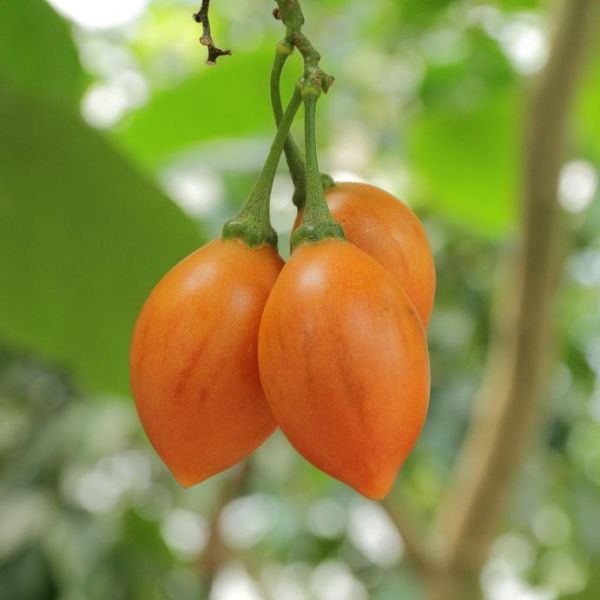
Oval or egg-shaped fruits, are roughly 2–4 inches long and have a unique sweet-tart or tangy taste, often described as a cross between a tomato, passion fruit, and guava.
Reaches heights of 10–15 feet outdoors, but can be easily grown in tubs and brought inside during winter in colder zones. It features large, heart-shaped leaves and fragrant lavender-pink flowers.
The skin is tough and bitter, so the inner pulp is typically scooped out or the fruit is peeled before eating. Unripe fruits are slightly toxic. Used in both sweet and savory dishes, including juices, smoothies, jams, chutneys, sauces, and desserts. High in vitamins A, C, and E, as well as iron, potassium, and antioxidants.
In South America, leaves or fruit pulp are sometimes used as poultices for sore Thrives in subtropical to temperate climates (USDA Zones 9–11). Requires full sun to partial shade and well-draining soil. It is sensitive to frost and should be moved indoors in colder regions. Fast-growing but relatively short-lived (5–12 years). It typically begins fruiting within 1–2 years.
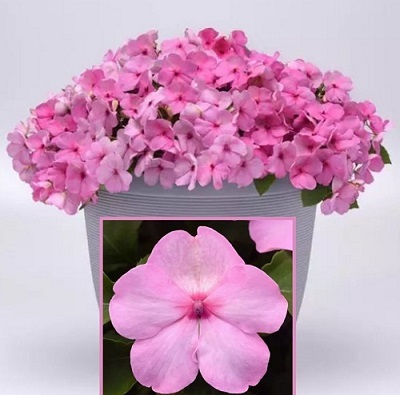
According to trials at the Penn State Trial Gardens, this variety received a near-perfect rating of 4.96 out of 5.00 for its 2025 performance.
Reaches a height of 14–18 inches and a width of 12–14 inches. Thrives in shade to partial sun, making it ideal for brightening dark garden corners or north-facing porches.
Provides continuous, fast-filling color from late spring until the first frost. Maintenance: It is a "self-cleaning" plant, meaning it does not require deadheading to keep blooming
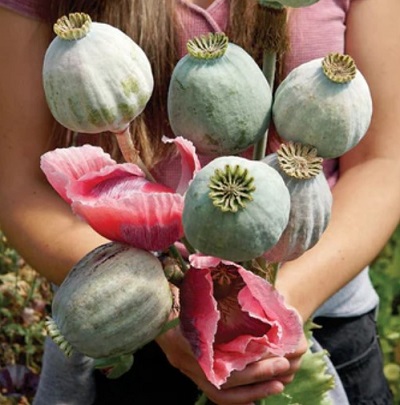
Known for producing the largest "rattle-type" pods of any variety, often used in dried floral arrangements. Expansive, fluttery flowers ranging from soft pink to lavender-purple with yellow centers.
Reaches heights of 3–4 feet (90–120 cm) on strong stems that can support the weight of the heavy pods. The pods contain blue-gray, brown, or white seeds suitable for baking and bread making.
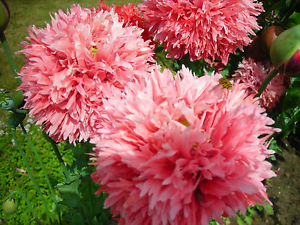
Zones 5-8.
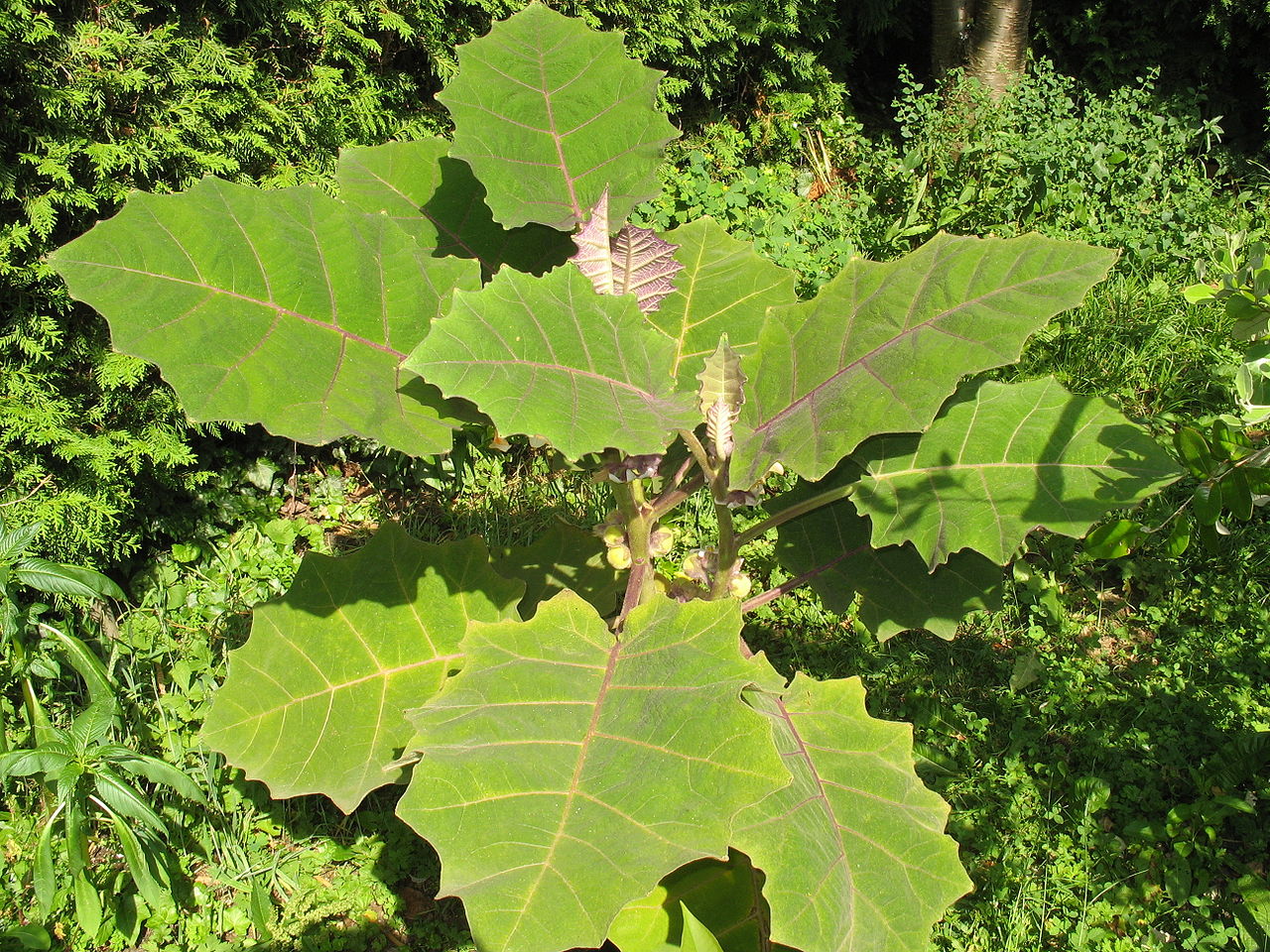
The fruit looks like a small orange but has a thick, leathery skin covered in fine, brown hairs (trichomes) that are rubbed off before eating. Inside, the pulp is bright green and juicy with a flavor often described as a refreshing, acidic blend of pineapple, lemon, and lime.
Beverages: The most popular use is for juice. In Colombia, it is the primary ingredient in lulada, a refreshing drink made with water, sugar, and ice.
Culinary: The pulp is used in jams, jellies, ice cream, and fermented fruit wines. In savory cooking, it can be added to sauces or meat stews for a tart kick.
Ornamental: Due to its massive, velvety leaves and exotic look, it is often grown as a conservatory or patio plant in cooler climates. Grows 5-10 feet tall outdoors in zones 9b and higher, but also can be grown in tubs in cooler climates.
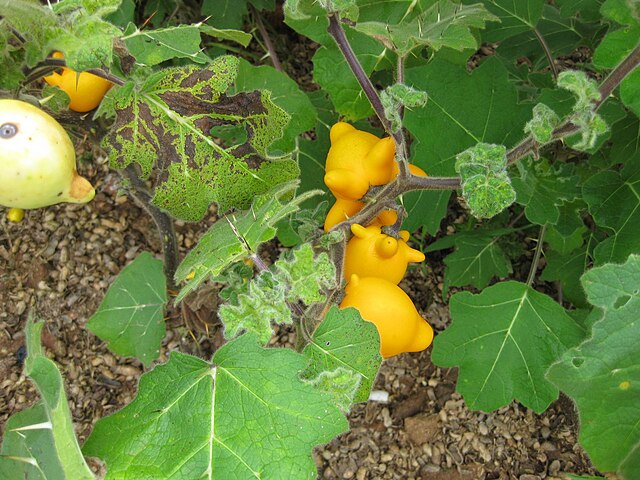
The plant grows 3–6 feet tall with thorny stems and large, velvety, purple-veined leaves. It produces star-shaped purple flowers that develop into waxy fruits.
The fruit is uniquely shaped with a nipple-like protrusion at the tip and smaller lobes at the base that resemble a cow's udder.
Toxicity: The fruit and leaves are poisonous if ingested, containing toxic steroidal glycoalkaloids like solanine. While some cultures may cook the immature fruit, it is generally considered inedible and dangerous for humans and pets.
It is primarily grown for its visual novelty and is a popular decorative plant in Asian cultures. During Lunar New Year, it symbolizes luck, prosperity, and longevity.
Practical: The fruit's juice has detergent properties and is sometimes used as a natural soap for washing clothes. It is also used as an insect repellent, particularly against cockroaches.
Floral Arrangements: Fruiting branches are frequently used in cut flower arrangements because the fruit retains its appearance for a long time.
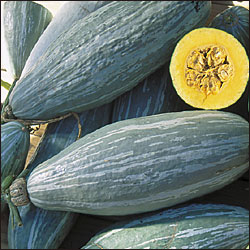
Features smooth, slate-gray or dusty-blue rinds, often with faint light stripes. Typically weighs between 5 and 10 pounds, though it can occasionally grow larger under optimal conditions.
Growing on vigorous vines that can spread 8–12 feet, it is best suited for gardens with ample space. Generally takes 90 to 105 days from sowing to harvest.
The flesh is thick, firm, and golden-orange with a sweet, nutty, and subtly fruity flavor similar to butternut squash. Ideal for roasting, baking, and pureeing for creamy soups.
It maintains its texture well during cooking, making it suitable for stews, curries, and even sweet preparations like pies, muffins, and jams.
Storage: Known as an excellent "keeper," it can be stored for up to six months in cool, dry conditions.
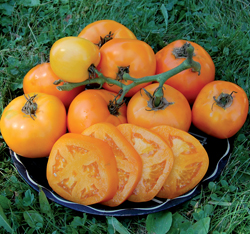
Disease resistance: Disease resistance not specified.
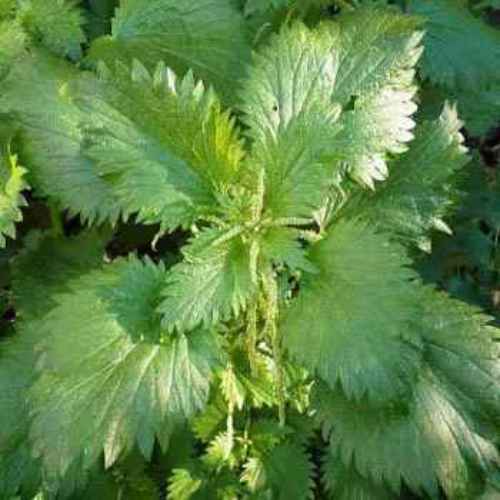
Stinging Hairs: The leaves and stems are covered with tiny, hollow hairs called trichomes. When touched, these tips break off and act like hypodermic needles, injecting a cocktail of chemicals—including histamine, formic acid, acetylcholine, and serotonin—that cause a painful, itchy sensation.
It typically grows between 2 to 4 feet (0.6 to 1.2 meters) tall, though it can reach up to 10 feet. It has square stems and opposite, heart-shaped, deeply serrated leaves.
Growth Habit: It spreads rapidly via underground rhizomes, often forming dense colonies.
Despite its "sting," the plant has been used for centuries across various fields:
Culinary: Young shoots and leaves are edible when cooked or dried, which neutralizes the stinging hairs. They are highly nutritious, containing vitamins A and C, iron, and potassium, and are often used in soups, teas, or as a spinach substitute.
Medicinal: Root: Used primarily for urinary issues associated with benign prostatic hyperplasia (enlarged prostate). Leaves: Applied topically or taken internally for arthritis, rheumatism, and allergic rhinitis (hay fever). Textiles: The strong fibers in the stalks have historically been used to make cordage, cloth, and even uniforms.
Gardening: It is used to create a nutrient-rich liquid fertilizer (nettle tea) and can act as a natural pesticide.
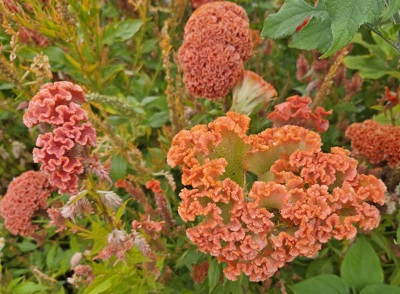
Produces large crests in various coral shades, often featuring branches tipped with lavender or coral spikes. A heat-loving annual that typically reaches heights between 12 and 36 inches.
Excellent for both fresh cut flower arrangements and as an "everlasting" dried flower, as it retains its vibrant color well after drying.
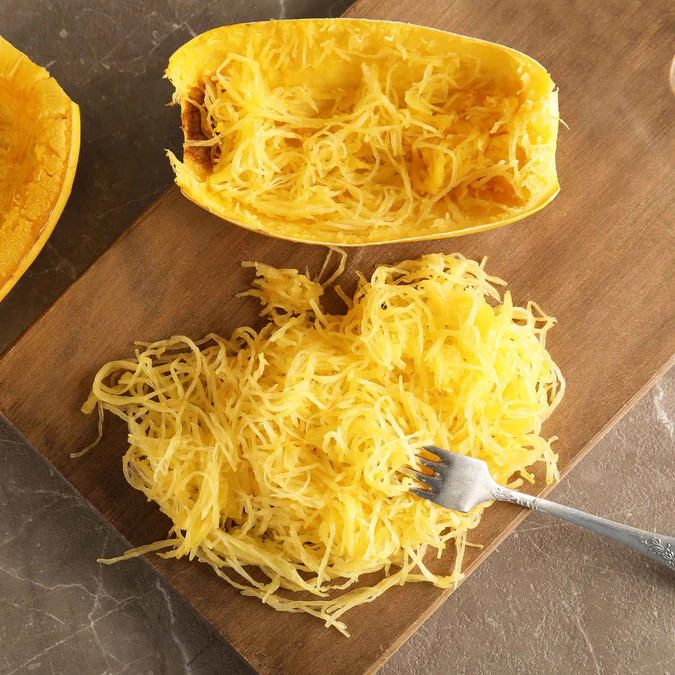
The classic pasta alternative.
This excellent open-pollinated strain's flesh has the best noodle-like consistency in our trials. Slightly sweet, nutty flavor. Oblong in shape with ivory skin that changes to pale yellow at maturity. An excellent pasta alternative — bake or boil, fork out the flesh, and top the "spaghetti" with your favorite sauce. Short vines. Avg. weight: 3–5 lb.
Suggested cooking methods: Roasting is widely considered the best method to enhance flavor and prevent a mushy texture. Roasted in Halves: The most common method. Slice the squash lengthwise, scoop out seeds, brush with oil, and roast cut-side down at 400°F for 35–50 minutes.
Roasted in Rings: For the longest "noodles," slice the squash crosswise into 1-inch rings. This cuts with the grain of the fibers, resulting in longer strands and more caramelization.
Whole Roasting: Pierce holes in the skin and bake whole for about an hour. This is easier for cutting but may result in a more steamed, watery texture.
Microwave Hack: To make raw squash easier to cut, microwave it whole for 2–5 minutes after piercing the skin with a fork.
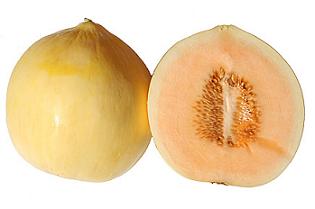
The flesh is creamy white, firm, and juicy. It has a unique flavor that is mildly sweet with a subtle peppery or spicy undertone. These melons are typically large and oval-shaped, weighing between 6 to 8 pounds. The rind is thick, tough, and deeply wrinkled, turning from pale green to a bright golden-yellow when fully ripe.
Its thick skin makes it highly resistant to bruising and allows it to be stored at room temperature for up to 4 weeks. Because it is less sugary than other melons, it is versatile for both sweet and savory dishes. It is often used in fruit salads, paired with prosciutto on charcuterie boards, or even used as a substitute for cucumber. This is a late-season variety, typically taking 105 to 115 days to reach maturity. It is exceptionally heat-tolerant and thrives in hot, dry climates like those found in the American Southwest. Seeds should be sown after the last frost once soil temperatures reach at least 70°F. They require full sun and nutrient-rich, well-draining soil.
Unlike some melons, Casabas do not "slip" from the vine easily when ripe. They should be cut from the vine when the rind is golden and the blossom end feels slightly soft under thumb pressure.
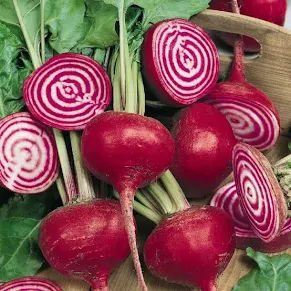
Known for being milder and sweeter than traditional red beets, and unlike deep red varieties, Chioggia beets do not "bleed" or stain other ingredients in a dish as readily.
To preserve their vibrant internal stripes, they are best served raw and thinly sliced in salads or as a garnish. When roasted, steamed, or boiled, the flavor becomes even sweeter and more caramelized, though the distinctive rings typically fade to a solid pale pink or white.
The green tops have pink-striped stems and are a highly nutritious substitute for spinach or Swiss chard. 55 days.
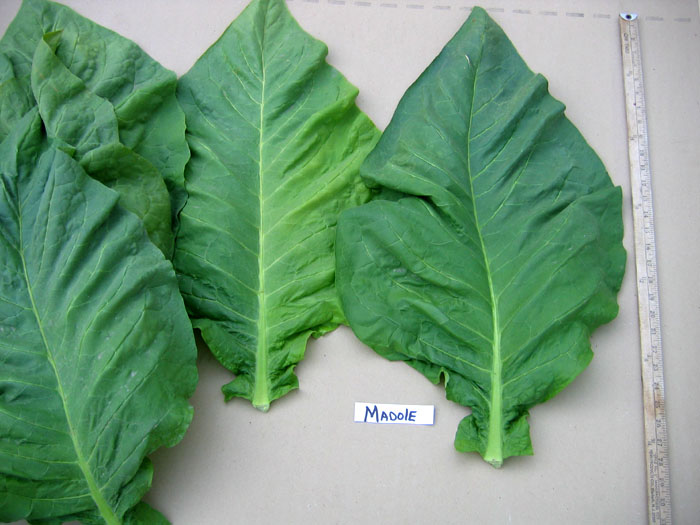
Madole is a traditional heirloom dark tobacco variety known for its robust, full-bodied flavor and early maturity. The leaves fire-cure to a dark brown color with a rich, full flavor, and is most commonly used for chewing tobacco, cigar binder, snuff, and cigarette blends.
If you want to get a full flavored cigarette tobacco like non-filtered commercial varieties, mix one quarter madole with three quarters smooth tobacco like Virginia Gold or Golden Seal.
It typically matures in 55–60 days after transplanting, making it one of the faster-maturing dark tobacco varieties. The plant reaches heights of 36–60 inches with deep green, moderately narrow leaves that can exceed two feet in length.
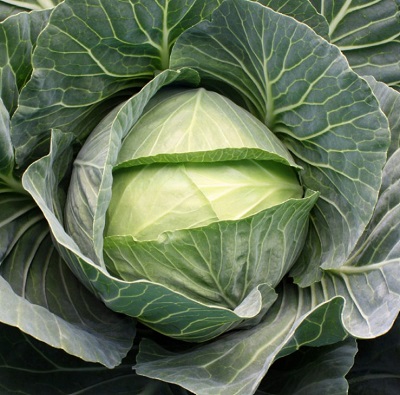
Heads are perfectly round (approx. 7 inches across) with a short core and tight wrapper leaves. It offers high resistance to Fusarium yellows race 1 and has shown tolerance to tipburn and thrips. Performs particularly well throughout the eastern half of the U.S. and is noted for its ability to hold well in the field without splitting.
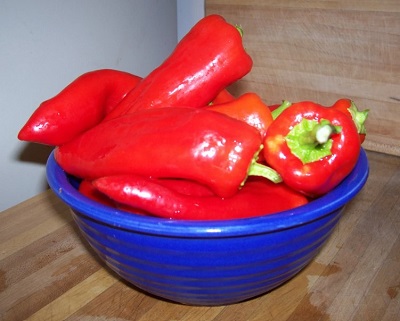
The fruits are shiny, pointed, and typically 3.5 to 5 inches long. Peppers start as a light yellow and mature to a vibrant red. Features thick walls that hold up well during roasting, peeling, and stuffing. A prolific producer, typically yielding at least a dozen (and up to 24) fruits per plant. 72 days.
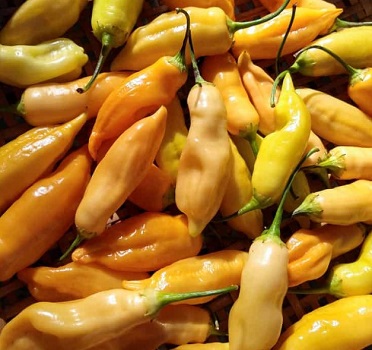
Even though they are crisp and juicy when eaten fresh and are wonderful in salads, the flavor becomes even more complex when roasted, grilled, or pickled, our favorite way being grilled.
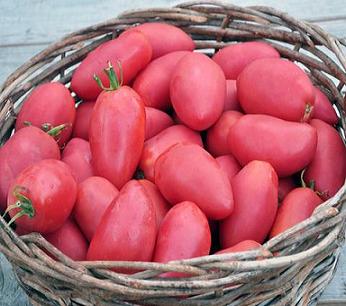
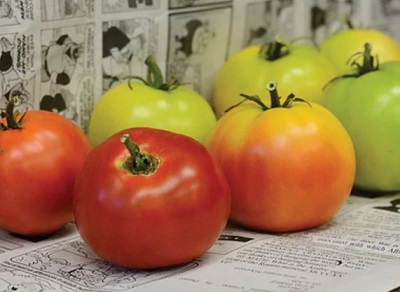
Originally introduced by Burpee in 1979, this variety is prized as a "winter storage" tomato that bridges the gap between the end of the growing season and the next year's crop. Produces medium-sized, round fruits weighing approximately 6 to 8 ounces. The skin is a unique golden orange-red when ripe, while the interior flesh is pink to medium-red.
Determinate, reaching heights of 3 to 5 feet. It typically takes 75 to 80 days from transplanting to reach maturity.
Storage and Harvesting Tips: To achieve the advertised 3-month shelf life, specific storage conditions must be met to prevent rot and ensure proper ripening. Harvest only unblemished and crack-free fruits; any damaged tomatoes should be used immediately. Store in a cool area maintained between 65°F and 68°F. Ensure fruits are not touching each other. Some gardeners recommend wrapping them in wax paper or placing them in single layers on newspaper.
Whole Plant Method: Alternatively, some growers pull up the entire plant and hang it upside down in a basement or cool room to allow the fruit to ripen on the vine over several months.
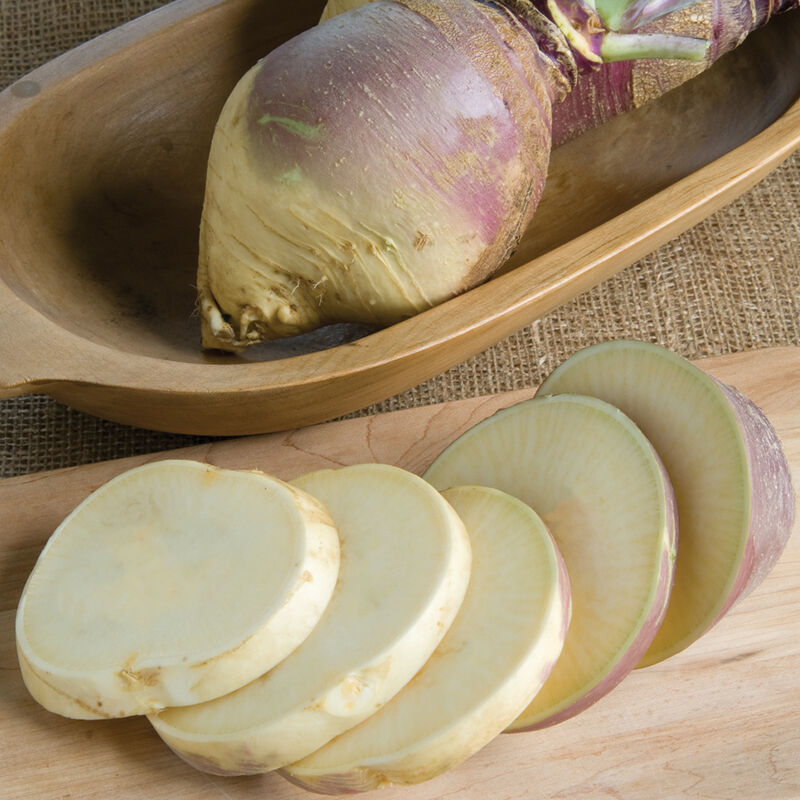
Produces round, 4 to 6 inch roots with smooth, purple-topped skin and golden-yellow bottoms. Flavor is a mix of sweet cabbage flavor with a potato-like texture. The flavor typically improves and sweetens after exposure to frost.
Recognized as an excellent "keeper," it can be stored for up to six months in cool, humid conditions like a root cellar. Generally takes 95 to 120 days to reach full maturity.
Champion produces large, dark blue-green leaves with a slightly crumpled (savoyed) texture and a thick, waxy coating that provides natural protection against cabbage worms. The plants typically grow between 24 and 36 inches tall and form upright rosettes, making them suitable for smaller garden spaces or large containers.
They have a mild, traditional cabbage-like flavor that is widely considered to become sweeter after a light frost. One of its standout features is that harvested leaves retain their eating quality for up to two weeks longer than other varieties. 60-75 days.
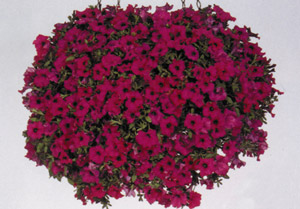
A spectacular show of cascading burgundy mini blooms, ideal to soften walkway edges, grows 6" tall, blooms in 11 weeks from seed.
Tsunami petunia is a fast-spreading, low-growing plant known for its abundance of cascading mini blooms, with a habit similar to the Wave petunia family. It's ideal for ground cover, hanging baskets, and containers, with plants capable of spreading up to 48 inches wide and reaching a height of only 4-7 inches. The Tsunami petunia requires full sun, regular watering, and feeding to maintain its prolific, nonstop bloom.
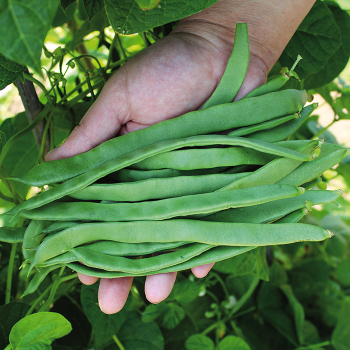
A vigorous, healthy, determinate-type pole bean that typically reaches a height of about 6 feet. Healthy plants are highly resistant to bean common mosaic virus and set well in both hot and cold conditions, offering a high yield potential.
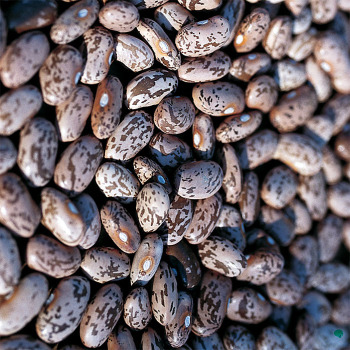
Unlike bush pintos, pole varieties require sturdy trellises, fences, or towers to climb. They have a classic, rich, and slightly earthy "pinto" flavor that becomes very creamy when cooked.
They can be eaten young as green "snap" beans, or left to mature for shelling and drying. Due to their vertical growth, they produce more in less space than bush varieties and have a longer harvest duration.
To harvest: wait until the pods are straw-colored and completely dry on the vine—typically 85 to 100 days after planting. If frost threatens before they are dry, you can pull the entire plant and finish drying it indoors.

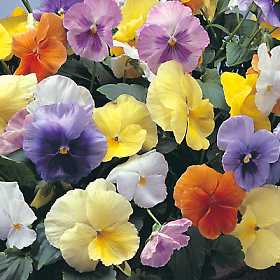
This Swiss heirloom is the parent to most of the pansies we see today. Early spring blossoms make a wonderful accent to your spring bulbs. Low, bushy plants are quick to grow and bloom, producing showy, large, velvety flowers. Use the edible petals to garnish soft cheese or baked goods. Reliable perennial in USDA zones 6-10, often grown as an annual. A 1933 All-America Selections winner. Grows 6-9 inches tall.
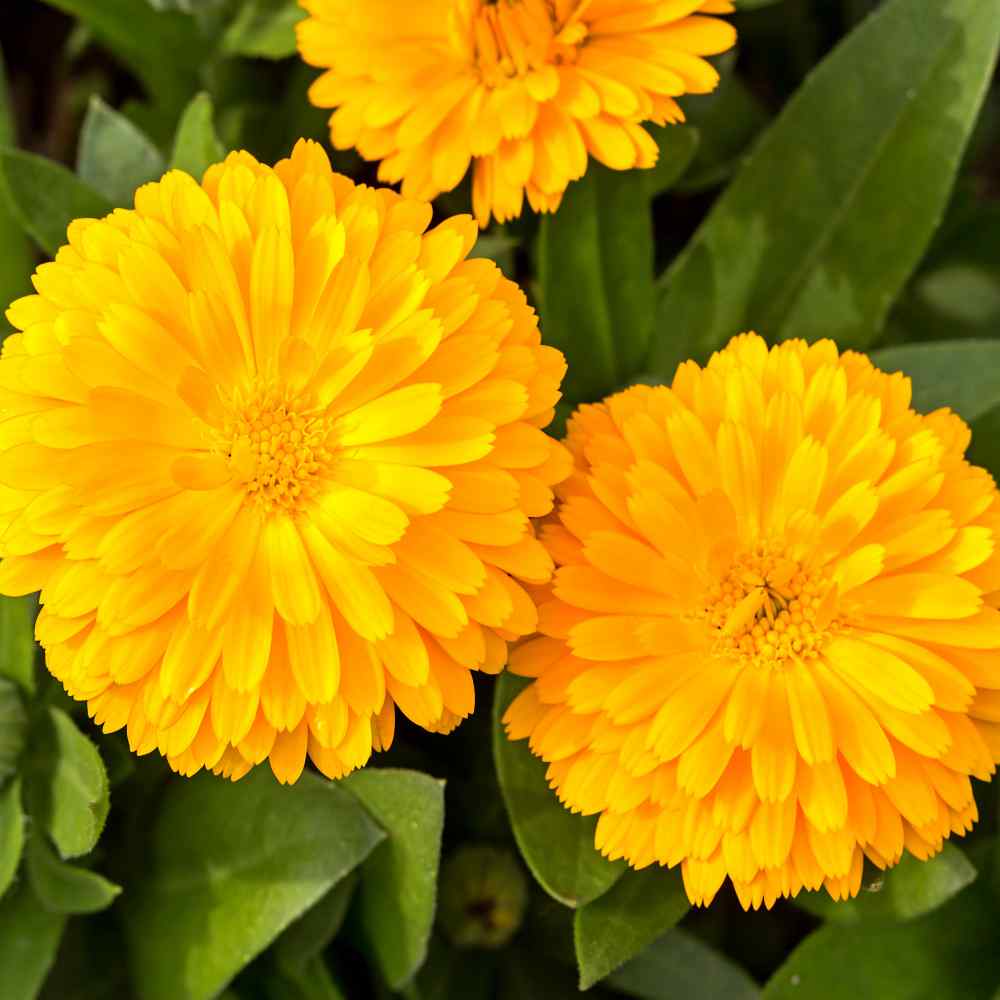
The plant features large, double, golden-yellow flowers, up to 3 inches wide, on tall, sturdy green stalks that can reach up to 24 inches in height.

The bright red fruits have a classic strawberry shape, firm texture, and a well-balanced flavor that blends rich sweetness with mild acidity. Plants are compact yet robust, making them suitable for garden beds and containers, and are valued for good disease tolerance, attractive fruit appearance, and consistent performance in a wide range of growing conditions.
Easy and reliable to sow, the F1 hybrid Beltran germinates readily and develops into strong, uniform plug plants.
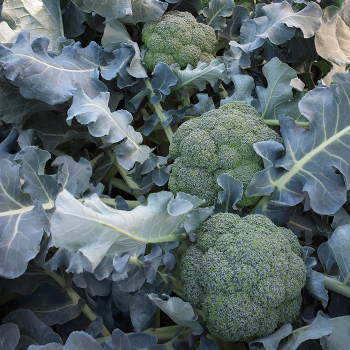
Produces extra-large, heavy, firm, and dense heads. Features dark green, dome-shaped heads with very small, fine beads, giving it a superior texture. The leaves attach lower on the stem, which makes trimming easier.
Unlike some other varieties, the non-woody, substantial stems are completely edible. The heads sit in a mid-high position on the plant, which makes them easier to harvest than some traditional varieties.
It is a versatile variety suitable for raw consumption (vegetable trays), cooking, steaming, and stores well when blanched and frozen. 65 days.
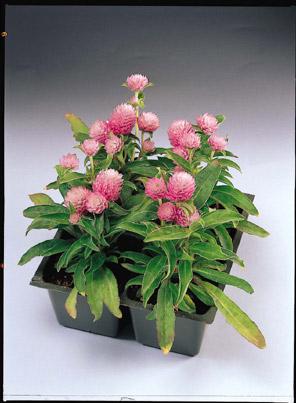
Features masses of small, 1/2-inch ball-shaped flowers composed of papery pink bracts that hold their color even after drying. Very compact, typically reaching only 6 to 8 inches in height with a similar spread.
Flowers from mid-summer until the first hard frost. Ideal for front-of-border edging, mass plantings, and as a "filler" in container gardens.
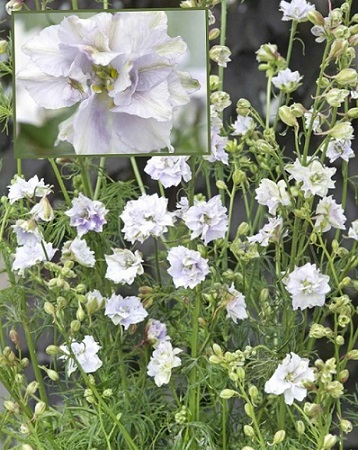
Growing gracefully to heights of four feet tall, Fancy Smokey Eyes adds vertical interest to garden beds and cut flower bouquets. Blooming from late spring to early summer, this larkspur variety attracts butterflies, bees, and possibly even fairies with its enchanting blooms.
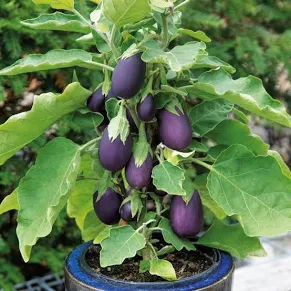
Very compact plants are predominately spineless, have a well-branched habit and grow approx. 22" high by 18" wide. Perfect for container and small space gardening. Recommended for packs, quarts and larger pots up to 3½ gallons at retail. Great for fresh markets, farmers markets and roadside stands. Widely adaptable. Produces high yields over a long period. 60 days.

Shasta Crazy Daisy blooms are recognized for their unique appearance. Their fringed petals and double blooms contribute to its distinctive characteristics that helps show every traits that the flowers have. These daisy seeds can show its full bloom with a good environment and soil.
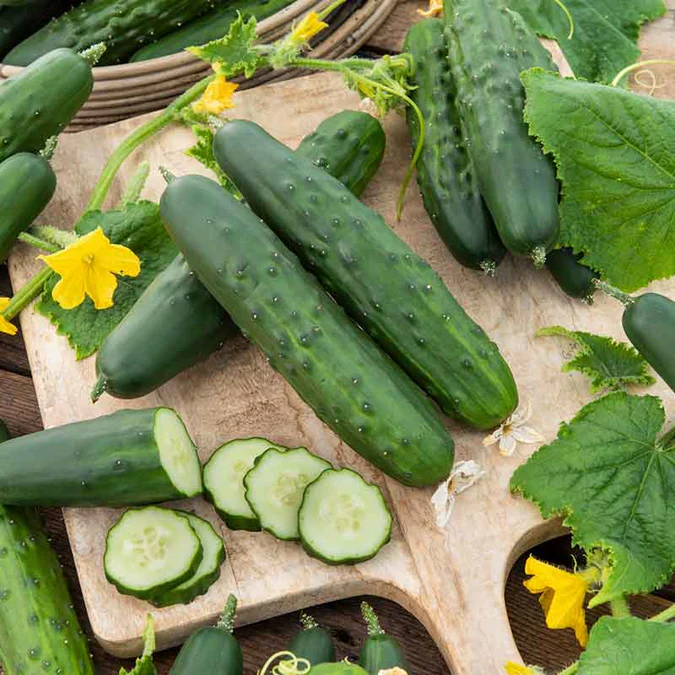
Marketer cucumber seeds produce a classic open-pollinated slicing variety introduced in the 1940s, prized for its dependable yields and smooth, dark-green fruits.
Typically growing 8–9 inches long, Marketer cucumbers have thin, tender skin, crisp texture, and a mild, refreshing flavor that makes them ideal for fresh eating. Plants are vigorous and productive, thriving in warm weather and well-drained, fertile soil; they perform well when trellised or allowed to sprawl. For best results, sow seeds after soil warms to at least 70°F, keep moisture consistent, and harvest regularly to encourage continuous production. Monoecious.
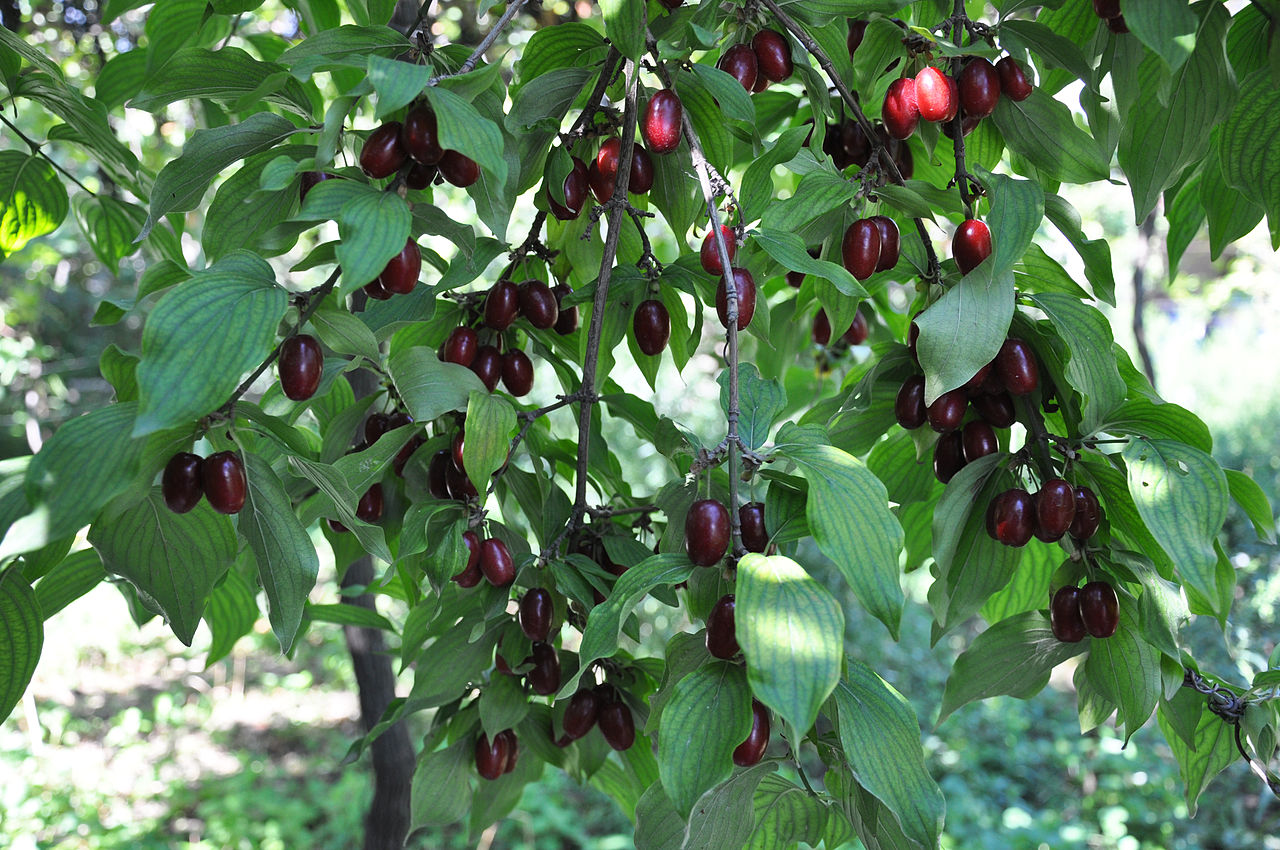
Its ornamental appeal is highlighted by vibrant yellow blooms that appear in early spring, just before the leaves unfurl. These dense clusters of flowers herald the arrival of vibrant red, cherry-like fruits by mid-summer, which are both showy and edible, ideal for making syrups and preserves.
Cornus mas prefers moist, organically rich soils and can tolerate clay soil and deer exposure, making it a practical choice for gardens. With excellent resistance to common dogwood ailments and low maintenance requirements, it's perfect for hedges, screens, or as a standout specimen in shrub borders.
Its scaly, exfoliating bark adds character and texture, while its leaf display transitions through subtle shades from green to occasional hints of reddish-purple in fall. Historically cultivated in southeastern Europe for its nutritious fruits, Cornus mas is a hardy, appealing addition to any garden, offering ecological benefits and year-round interest.

They grow naturally in dry, sandy soils and, once established, need no supplemental watering. Chickasaw plum grows 12 to 20 feet tall and 15 to 20 feet wide in an irregular shape. It is "twiggy" in nature, and has a scaly, almost black bark. Its branches are reddish with a thorn-like, small side branches. In February, March, April and May, small white flowers blossom, followed with yellow to red plums, up to 1" long. The flowers have five white petals with reddish or orange anthers.
Ripe fruits are slightly tart, but can be eaten fresh and can be made into jellies, desserts and preserves. They ripen in late summer. It requires low to medium amounts of water to grow, and dry, sandy or loose soil. It grows best in areas with regular sunlight or areas of partial shade.
Zones 5-9.
Features tri-color petals with yellow bases, red bands, and lemon tips, sometimes blending. Ideal for indoor arrangements as they don't create a mess. Produces multiple flowers on side branches, extending the bloom time.
Typically grows 3-4 feet tall, sometimes up to 6 feet. Great for cutting gardens, mixed borders, containers, and attracting pollinators.
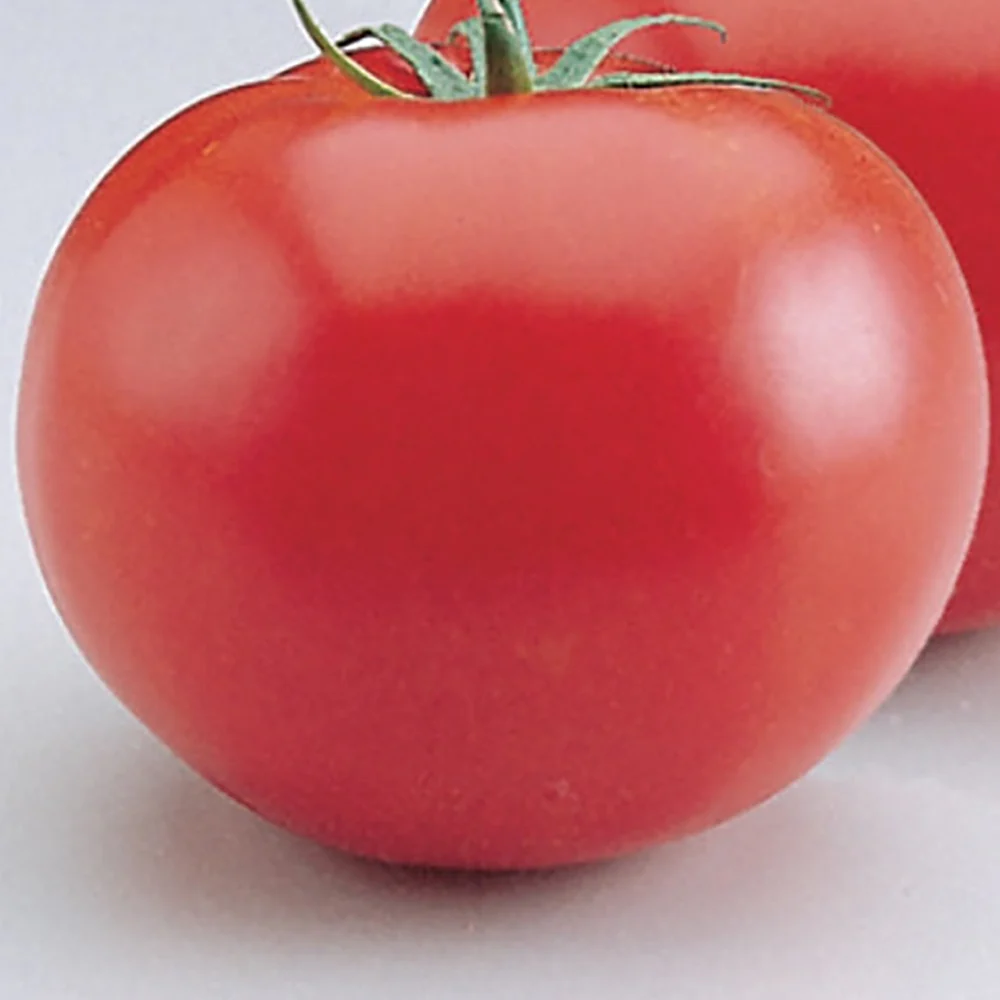
While other tomatoes surrender to high heat, you can enjoy a steady supply of fresh-from-the-garden beefsteaks. Compact, determinate plants are great for containers. Smart pick for Southern gardens. F1 Hybrid.
Fruit are 7 to 8 oz., tasty and sweet. Bacterial Wilt Tolerant. Determinate 75 days.
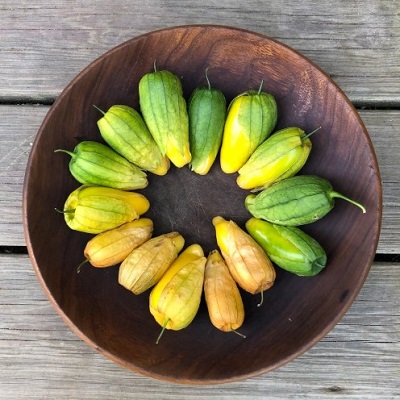
Hails from the small Aztec town of Malinalco, Mexico. The fruits are 3 inches long, oblong, and ripen from green to lemon yellow. The flavor is described as sweet and tropical, perfect for fresh eating, roasting, or making fruity salsas.
The plants are robust and multi-branched, often reaching 3 to 4 feet tall, and may appreciate support. Harvest when the fruit is plump and the surrounding papery husk (which turns yellow) splits.
Clusters of brown-red fruits, small plum size 1 x 1-1/2", juicy dark burgundy interior, indeterminate, 70 days.
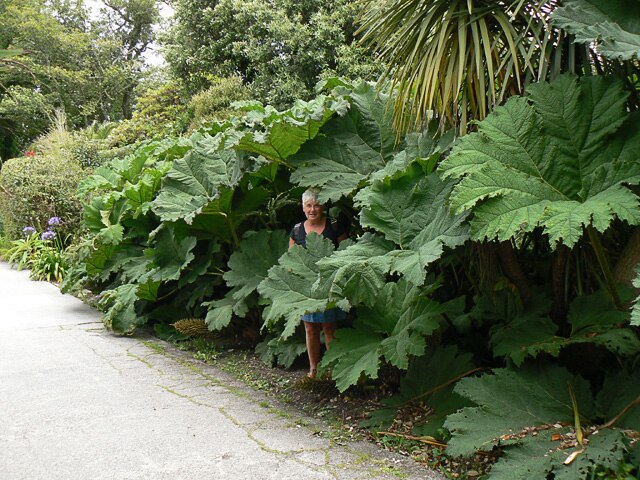
Mature plants can reach 8–10 feet in height and up to 14 feet in width. The kidney-shaped leaves are deeply veined and can grow 6–8 feet across on stiff, prickly stalks.
In early summer, it produces large, reddish-green conical flower spikes (panicles) that can be 3–6 feet tall, though they are often partially hidden by the massive leaves. Typically hardy in USDA Zones 7–10. In colder climates, the crown must be protected in winter by mulching or folding its own dead leaves over the center.
It requires permanently moist, humus-rich soil. It is ideal for the margins of ponds or streams but should not have its crown fully submerged. Light: Prefers full sun to partial shade; in hot summer climates, afternoon shade is beneficial to prevent leaf scorch.

This cylindrical bottle gourd has flesh that is sweet, tender and delicious when harvested young. The fruits have a smooth, light green skin and mature to about 12-15 in. long. Very productive plants. 75 days.
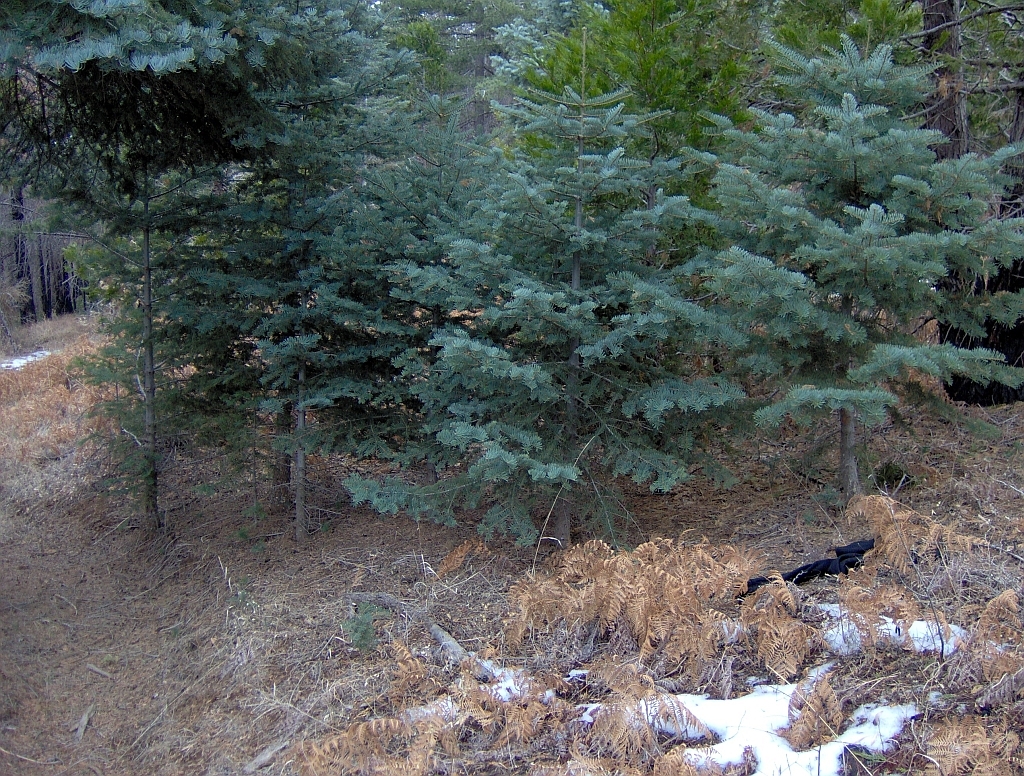
The Sierra white fir is a valuable timber tree. The wood is strong and lightweight, and is used for a variety of purposes, including construction, furniture, and pulpwood. The tree is also popular for landscaping, and is often planted in parks and gardens. The tree is named after Hugh Low, an English nurseryman. The Sierra white fir is a long-lived tree, with some individuals living for over 500 years. The tree is a host plant for the Sierra Nevada bristlecone moth. It is also a keystone species in the Sierra Nevada ecosystem.
(California White Fir/Sierra White Fir) is generally hardy in USDA Zones 3-7, tolerating cold well (down to -40°F or Zone 4/5 limits) but preferring cooler summers, struggling with intense heat/humidity south of Zone 7; while generally tough, it's less cold-hardy than inland Abies concolor varieties and sensitive to poor drainage, needing moist, well-drained soils.
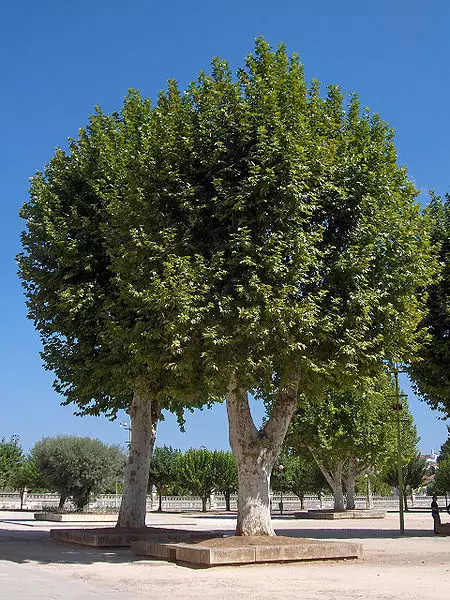
Jim's Note: This is almost dead on identical to the Platanus occidentalis, or Sycamore tree that I knew as a child. As a kid some 60 years ago, me and my brothers would collect the seed balls and have a great time throwing them at each other. Doubt any children in this modern age would see much fun in that.
Platanus acerifolia, commonly known as London Plane Tree, is a remarkable natural hybrid of American sycamore and Oriental Plane Tree. This majestic deciduous tree is renowned for its impressive adaptability, making it a popular choice in urban landscapes worldwide. Historically planted in London and major European cities from the 1640s, it has become a signature presence in American locales such as Brooklyn and San Francisco due to its robust tolerance to urban pollution.
London Plane typically reaches heights of 75-100 feet, with a sprawling canopy up to 75 feet wide. Its eye-catching bark exfoliates in distinctive patches, revealing a striking white inner bark. Its broad leaves, reminiscent of maple leaves, are medium to dark green, displaying a yellow-brown hue in the fall.
While its flowers are modest, the tree produces characteristic paired fruiting balls that persist into winter. As a member of the Platanaceae family, this tree demands space, thriving best in full sun with rich, moist soils. Ideal for parks and expansive gardens, it provides ample shade but requires maintenance due to its debris.
Is generally hardy in USDA Zones 4 through 8 or 9, thriving in diverse conditions, including urban environments.
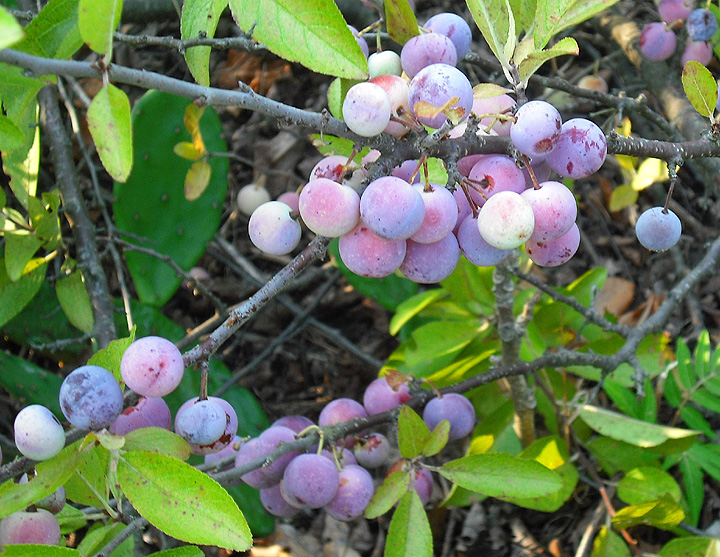
The leaves of the Beach Plum are alternate, elliptical, and serrated. They are colored green on top and pale below, becoming showy in the autumn. The flowers have five white petals and large yellow anthers, measuring about 1-1.5 cm in diameter. The fruit is an edible drupe that measures around 1.5-2 cm in diameter in the wild plant.
Thriving in a well-drained, moisture-retentive, loamy soil, the Beach Plum does well on limestone. It prefers some lime in the soil but is likely to become chlorotic if too much lime is present. The Beach Plum requires a sunny position, but it can tolerate maritime exposure.
The Beach Plum has become famous in the United States, with Plum Island, Massachusetts and Plum Island, New York being named after it. Additionally, Plum Cove Beach in Lanesville, Gloucester, Massachusetts, and Beach Plum Island (State Park) in Sussex County, Delaware, have also been named after this hardy and delicious fruit. If you're looking for a hardy and delicious fruit to add to your garden, the Prunus maritima - Beach Plum - is an excellent choice. Its ability to tolerate maritime exposure and its potential commercial importance make it an ideal addition to coastal gardens.
A very hardy shrub, thriving in USDA Zones 3 through 7 (or sometimes 3-8), tolerating significant cold, salt spray, sandy soils, and drought, making it excellent for coastal erosion control and challenging garden sites, though it needs full sun and good drainage.
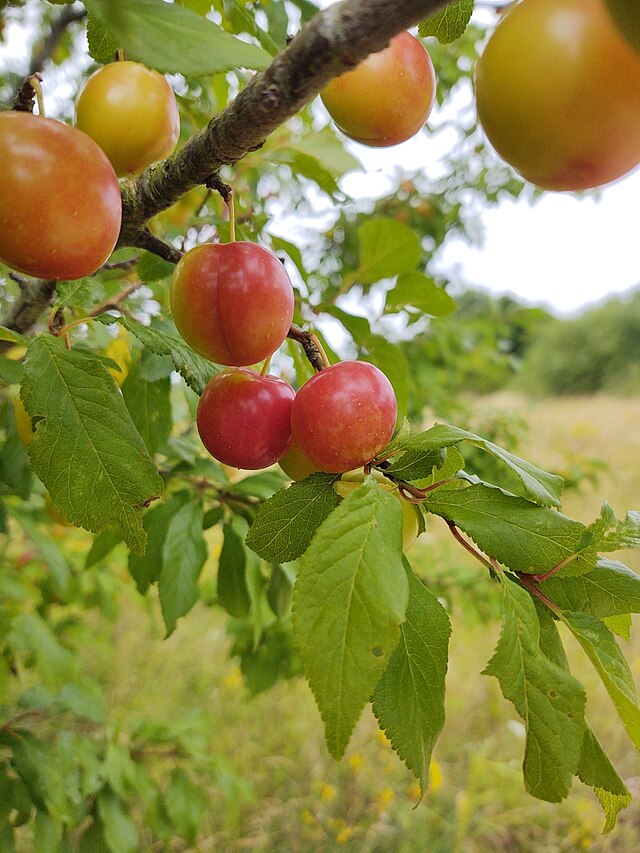
As robust as it is beautiful, thrives in the full sun but can tolerate partial shade. It demands moist, well-drained, loamy soils for flowering but showcases adaptability to many soil conditions. Given its brittle wood structure, careful handling is recommended. With appropriate pruning, care, and selection of a good central leader, this tree can indeed live up to 60 or 80 years.
It is often used as the rootstock for other Prunus species and cultivars. It is a popular ornamental tree for garden and landscaping use, grown for its very early flowering. Its charismatic presence can transform gardens into a lively and colorful paradise.
A very hardy tree, generally thriving in USDA Zones 4b/5 through 9b, tolerating cold winters and a wide range of soils (clay, loam, sand, acid to alkaline), though it prefers moist, well-drained conditions, full sun, and is a vigorous rootstock, adaptable to urban settings.
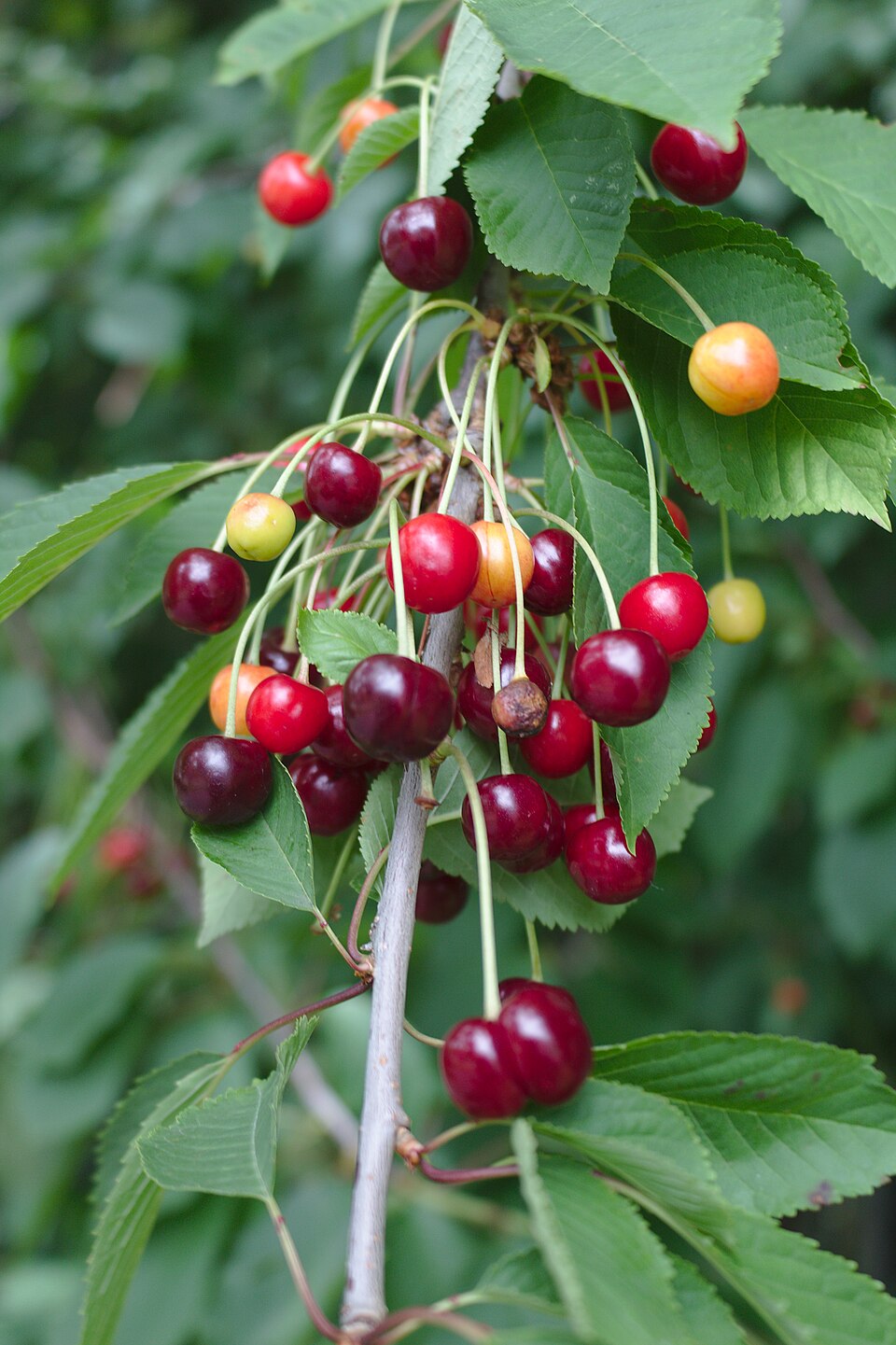
Reaching heights of 15 to 30 feet, Sweet Cherry tree thrives in full sun and prefers moisture-retentive, well-drained soils, exhibiting no tolerance for wet conditions. Gardeners celebrate this tree for its stunning seasonal transformations: fragrant white blossoms in spring, luscious red or yellow fruits in summer, and striking yellow foliage in fall. Its fleshy drupes, though smaller than commercial varieties, attract birds and squirrels, helping it naturalize beyond garden confines.
Perfect for edible gardens and pollinator-friendly landscapes, Prunus avium serves as an ornamental centerpiece. While it graces gardens as a parent to popular cultivars like the bing cherry, it stands proudly on its own, offering beauty and a touch of wild charm. Let Sweet Cherry tree elevate your outdoor space with its graceful presence and seasonal splendor.
Prunus avium (Sweet Cherry) trees generally thrive in USDA Hardiness Zones 5 through 8, though some varieties and sources mention a wider range, sometimes starting from Zone 4 up to Zone 8, requiring sufficient winter chill hours (around 700-800) for fruit production, but avoiding extreme winter cold.
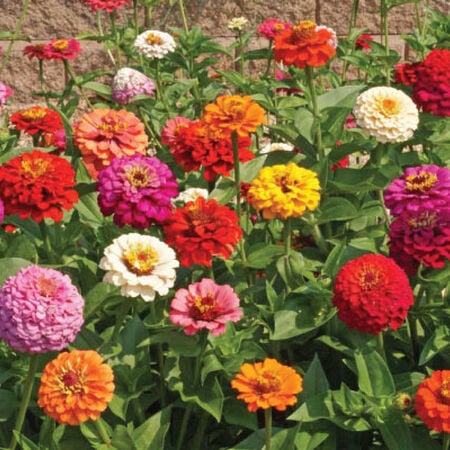
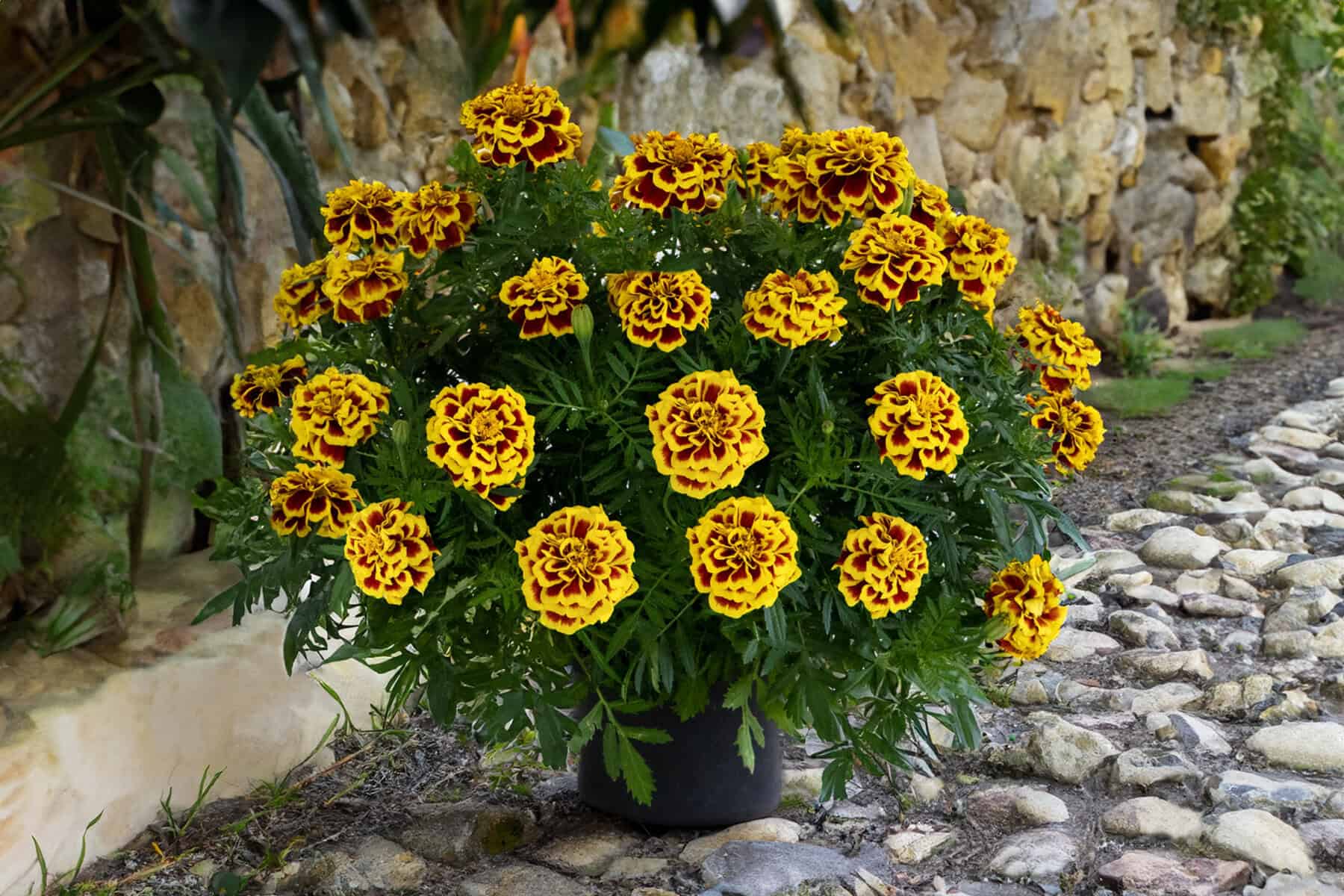
The flowers make cute cutflowers for kitchen table bouquets, but left in the garden, they attract pollinators, including hummingbirds and butterflies. Great for low edging or containers, but they are often grown in vegetable gardens and perennial gardens as they repel whiteflies and kill nematodes.
This variety is also the recipient of the Fleuroselect award for performance in European trials.
Guardian Gold Marigold (Tagetes patula) is a specialized French marigold developed not only for its brilliant golden-yellow flowers, but also for its remarkable ability to help protect gardens from destructive soil pests. Widely recognized as one of the most effective biological controls for root-knot nematodes, Guardian Gold works beneath the soil surface while providing a vibrant display of cheerful blooms above ground. It is an outstanding companion plant for vegetable gardens, raised beds, and sustainable growing systems where reducing pest pressure naturally is a priority.
Garden Uses:
Guardian Gold is ideal for vegetable gardens, raised beds, borders, containers, companion planting, and pollinator gardens. It is especially valuable when planted near tomatoes, peppers, eggplants, beans, cucumbers, melons, and other crops susceptible to nematode damage. The bright flowers also make attractive edging plants while providing season-long color and beneficial insect activity.
Growing Information:
Sow seeds indoors 4 to 6 weeks before the last frost or directly outdoors after frost danger has passed. Cover seeds lightly with soil and maintain temperatures of 70-75°F. Germination generally occurs within 5 to 10 days. Plants thrive in full sun and well-drained soil and tolerate summer heat exceptionally well. For maximum nematode suppression, plant generously throughout vegetable beds rather than using only a few isolated plants.
Natural Pest Control Benefits:
Guardian Gold is renowned for its superior effectiveness against harmful root-knot nematodes (Meloidogyne species), microscopic soil pests that attack plant roots and reduce crop production. Extensive trials have demonstrated nematode reduction rates approaching 99% when used as part of a proper garden management program. The plant's roots naturally produce bioactive compounds, including thiophenes, that are toxic to many species of harmful nematodes and can significantly reduce both active populations and egg production in the soil.
Unlike chemical nematicides that may require repeated applications, Guardian Gold works naturally as the roots grow throughout the season. Many gardeners and commercial growers use it as a cover crop or companion planting strategy to improve soil health while reducing pest pressure. In numerous situations, it has proven more effective than many traditional chemical control methods.
Early Warning System for Thrips:
Guardian Gold also serves as an effective indicator or "trap plant" for thrips populations. Research has shown that thrips are often attracted to marigolds up to two weeks earlier than they are detected on standard sticky traps. This allows gardeners and growers to identify potential infestations sooner and take corrective action before economically important crops are affected.
Pollinator and Beneficial Insect Value:
While protecting roots below ground, Guardian Gold simultaneously supports beneficial insects above ground. The bright flowers attract bees, butterflies, hoverflies, ladybugs, lacewings, parasitic wasps, and other beneficial predators that help control aphids, whiteflies, caterpillars, and additional garden pests. This dual role makes Guardian Gold one of the most useful companion plants available for organic and sustainable gardening.
Historical Significance:
French marigolds have been used in companion planting programs for decades. Scientific research into their pest-control abilities began in earnest during the twentieth century, leading to the identification of specific varieties with superior nematode-suppressing capabilities. Guardian Gold represents one of the most advanced examples of this breeding effort.
Interesting Facts:
Unlike many companion planting claims that rely primarily on folklore, the nematode-suppressing abilities of French marigolds are supported by extensive scientific research. The roots actively produce compounds that help reduce harmful nematode populations while leaving most beneficial soil organisms unharmed. Few ornamental flowers offer such a powerful combination of beauty and practical garden utility.
Seedman Notes:
Guardian Gold is one of the most valuable companion plants a gardener can grow. Its bright golden blooms provide excellent ornamental value, but its true strength lies beneath the soil. We strongly recommend planting it throughout vegetable gardens where nematodes have been a problem or where preventative protection is desired. Few flowers work harder for the gardener than Guardian Gold.
Quick Facts:
Botanical Name: Tagetes patula
Common Name: Guardian Gold Marigold
Plant Type: Annual
Height: 10-14 inches
Spread: 10-12 inches
Bloom Color: Golden yellow
Light: Full sun
Soil: Well-drained
Bloom Season: Summer until frost
Pollinator Friendly: Excellent
Companion Plant: Outstanding
Nematode Control: Up to 99% reduction in trials
Thrips Monitoring: Excellent trap plant
Heat Tolerance: Excellent
Difficulty: Easy
Rating: ★★★★★
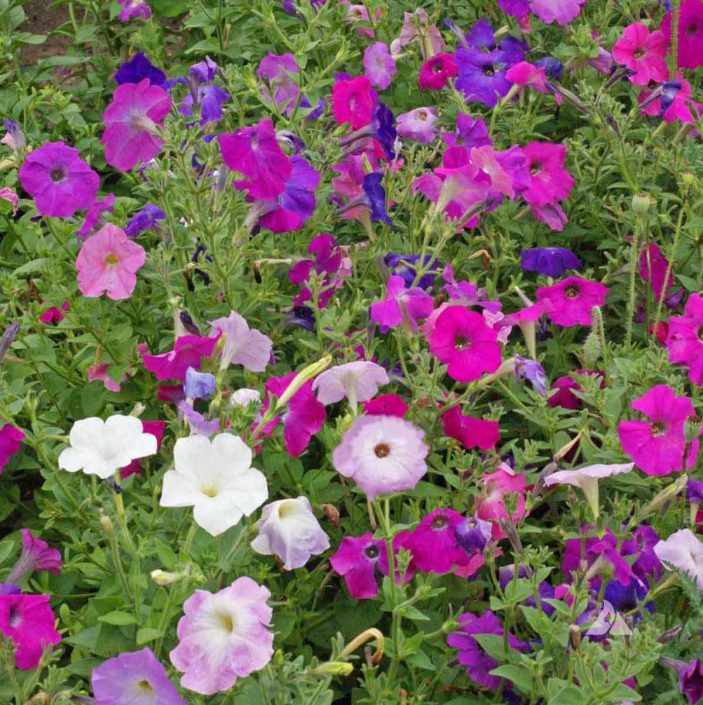
Dwarf Mixed Petunia grows 8-12 inches tall and has a bushy, free-flowering habit. Produces single flowers in shades of red, rose, pink, violet and white. Recommended for beds & borders as well as containers. Can be started 4-6 weeks prior to planting outside. Prefers full sun.
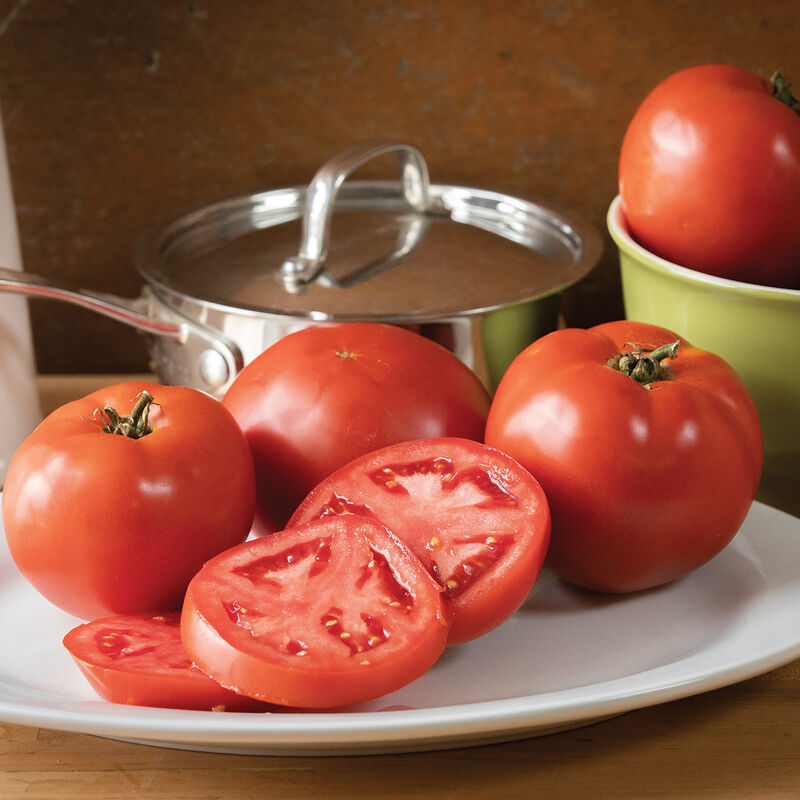
One of our favorite tomatoes and always one of our best sellers. Grows just about anywhere with excellent disease resistance and great flavor. It will produce about twice the yields of most other giant beefsteaks. Large, average 10-12 oz., mostly blemish-free, globe-shaped red fruit.
And it is earlier too, 73 days from setting out transplants. Indeterminate. With earlier maturity and superior disease tolerance, Big Beef Hybrid bears at least double the number of extra-large, extra-meaty, extra-tasty fruits of other varieties in its class.
The fruits have better shape, color, and old-time tomato flavor, too! No wonder Big Beef won an AAS award!
These well-adapted, indeterminate plants are tolerant of, or resistant to, Verticillium Wilt, Fusarium Wilt races 1 and 2, Tobacco Mosaic Virus, Root Knot Nematodes, and Stemphylium (Gray Leaf Spot).
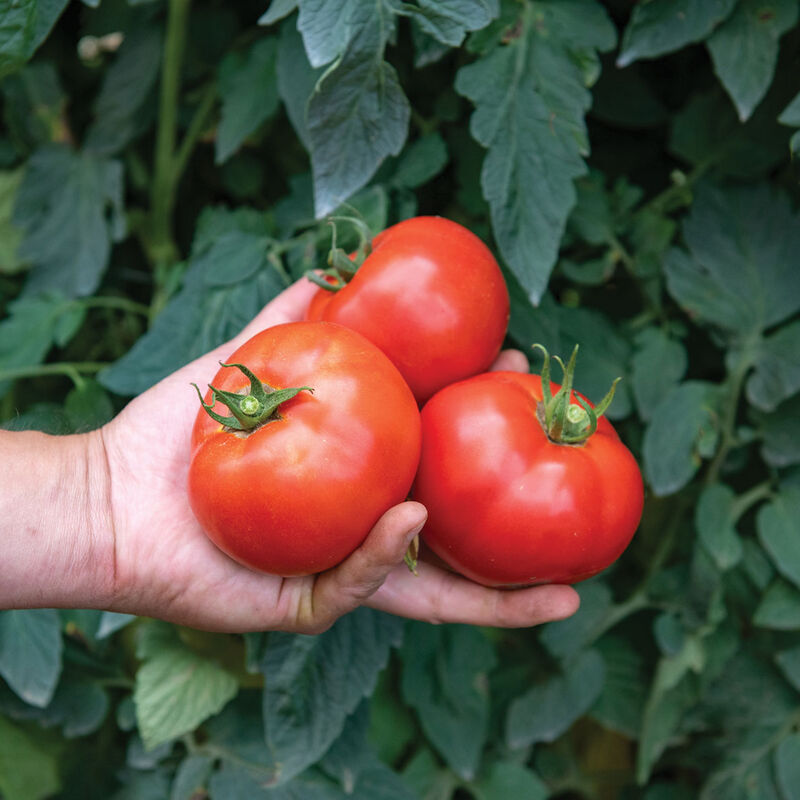
Winner of the All-America Selections award, this 8-10 oz hybrid cultivar tomato seed is a garden favorite! Celebrity Hybrid tomato seeds grow a plant that is bushy, and stops growing at a certain height. Celebrity Hybrid tomato does need staking and will continue to bear fruit, unlike true determinate type plants. This is a lovely large red globe tomato. Everything you loved about the original Celebrity, plus an added resistance to tomato spotted wilt virus. A widely adaptable hybrid for fresh market and home garden. Celebrity produces large, smooth fruit with outstanding flavor.TSWV resistance will help Southern growers, while the additional Fusarium and Stemphylium resistances are more broadly useful. Fruits avg. 7–9 oz. with more uniform shoulder ripening and better crack tolerance. Healthy plants. Vigorous determinate.
It is widely adapted throughout the country. Grow it in a tall cage or tie to a stake for support. 75 days.
Disease resistance: It has a high resistance to Alternaria stem canker Aal; fusarium wilt Fol:1; gray leaf spot Sbl,Sl,Ss; tomato mosaic virus ToMV:0-2; and verticillium wilt Va:1/Vd:1. It has intermediate resistance to tomato spotted wilt TSWV:0 and root-knot Ma,Mi,Mj.
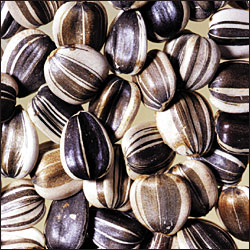
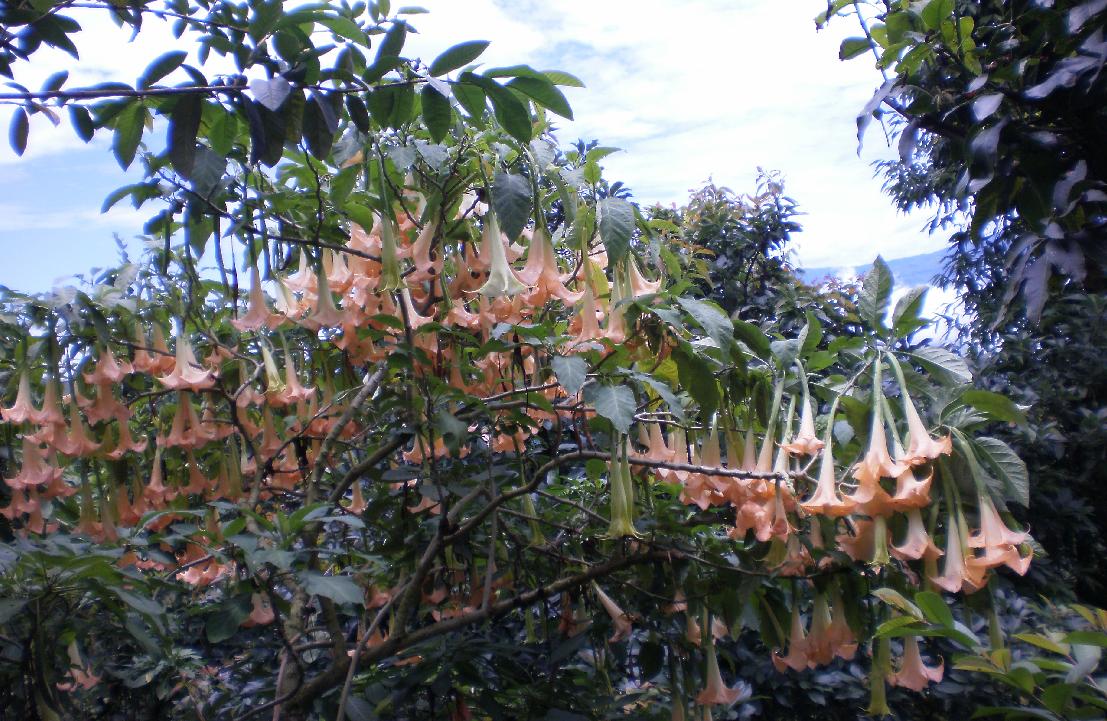
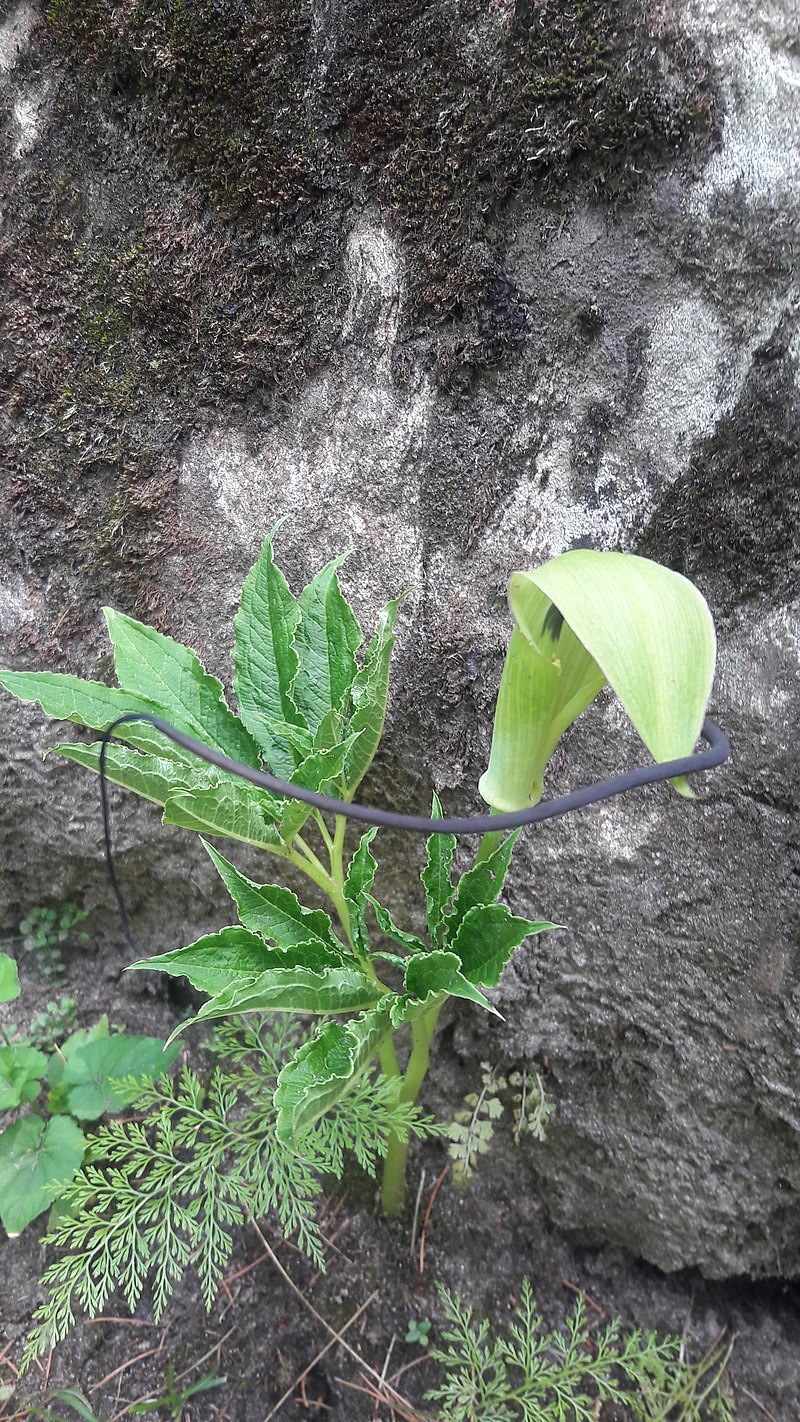
Flowers may be male or bisexual. The clustered fruits are green at first, ripening to red. The plant grows in large clumps and can be up to 5-6 feet in height.
Needs a constantly moist but well-drained, neutral to acid soil in partial shade and a cool spot.
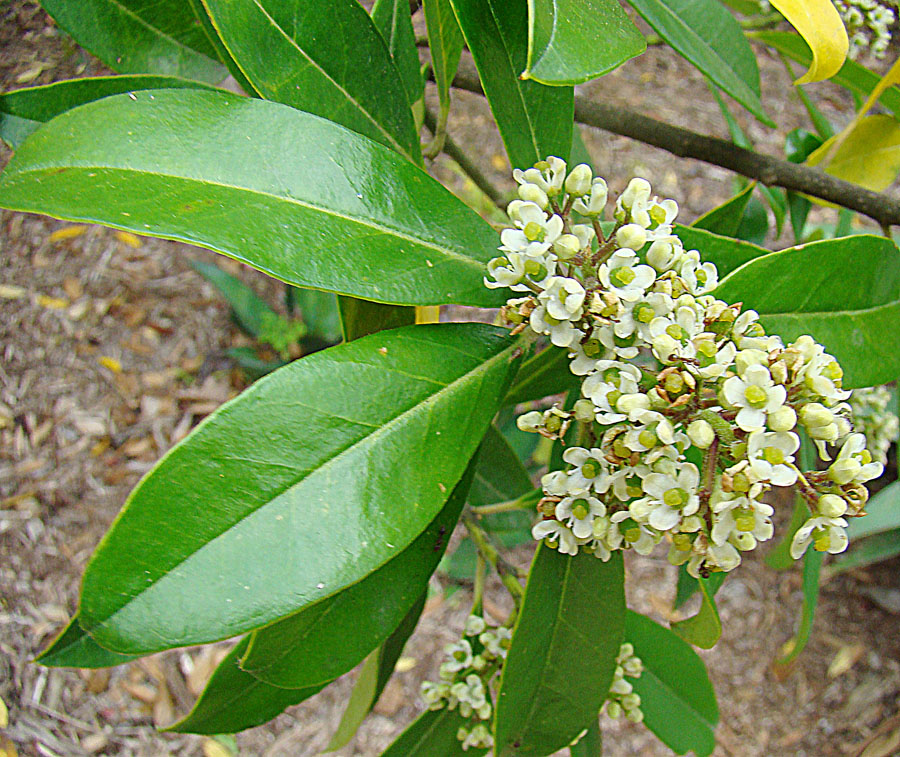
Yerba mate was has been used as a beverage since the time of the ancient Indians of Brazil and Paraguay. In the early 16th century, Juan de Solis, a Spanish explorer of South America's famed La Plata River, reported that the Guarani Indians of Paraguay brewed a leaf tea that "produced exhilaration and relief from fatigue." The Spaniards tried the beverage and liked it. Their subsequent demand for the tea led the Jesuits to develop plantations of the wild species in Paraguay and yerba mate became known as "Jesuits' tea" or "Paraguay tea." Methods of leaf preparation for the traditional tea beverage vary then and now: in one method, the branches are cut, then held over an open fire (to fire-cure the leaves). This deactivates the enzymes in the leaves (making them more brittle) and the green color of the leaves is retained in the subsequent drying process (with charred bits often found in the resulting tea product, which lends to a smoky flavor). Other methods include a brief par-blanching of the leaves in boiling water (to deactivate the leaf enzymes and soften its leathery texture). They then are toasted dry in large pans over a fire or inside a brick oven-resulting in a finished brown-leaf tea.
The wild plant has a distinct aroma and taste that has not been matched by plantation cultivation. In South America yerba mate is considered a national drink in several countries; in Europe, it is called "the green gold of the Indios." In Brazil and Paraguay (leading exporters of mate), some production still comes from wild stands-most of which is found in the humid depressions of the foothills. It is not unusual for one wild tree to yield 30-40 kg of dried leaves annually. In wild harvesting, mate gatherers, called tarrafeiros or yebateros, travel through the jungle searching for a stand of trees (called a mancha). Harvesting is done between May and October, when the tree is in full leaf. Leaves are picked from the same tree only every third year, which protects it for subsequent crops. Most of the mate in commerce today, however, comes from large cultivation projects in Paraguay and Uruguay.
The word mate is Spanish for "gourd," and refers to the small gourd cup in which the tea beverage traditionally is served throughout South America. It is also served with a metal drinking straw or tube, called a bombilla, which has a filter attached to the lower end to strain out leaf fragments. The bottom third of the gourd is filled with fire-burned or toasted leaves, and hot water is added. Burnt sugar, lemon juice, and/or milk often is used to flavor the refreshing tea, which occupies a position rivaling that of coffee in the United States. Mate bars are as prevalent in South America as coffee bars are in North America and Europe; mate drinking has deep cultural roots.
In addition to its standing as a popular beverage, yerba mate is used as a tonic, diuretic, and as a stimulant to reduce fatigue, suppress appetite, and aid gastric function in herbal medicine systems throughout South America. It also has been used as a depurative (to promote cleansing and excretion of waste). In Brazil, mate is said to stimulate the nervous and muscular systems and is used for digestive problems, renal colic, nerve pain, depression, fatigue, and obesity. A poultice of the leaves also is applied topically to anthrax skin ulcers (for which mate's tannin content - highly astringent - may be the reasoning behind this use).
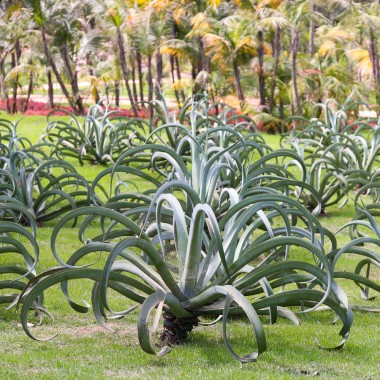
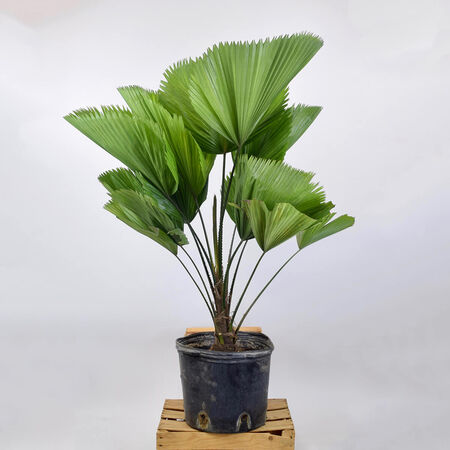
This elegant palm is great for small yards and can also grow indoors in containers in cooler climates, makes a wonderful patio plant. This is a very attractive, slow growing palm that can get up to 6-8 feet tall outdoors in warm climates, with a spread of 4 feet wide. It has a single slender trunk, 4-5 inches in diameter that takes years to develop.
The Ruffled Fan Palm is known for its unique palmate, or fan-shape leaves, with attractive splitting patterns that make it stand out in any environment. Leaves are circular, luscious green, glossy, ruffled, hence the name Ruffled Fan Palm, about 22 inches in diameter, with notched tips.
It grows best in partial shade and should not be exposed to full sun. Also, make sure to protect it from high winds to avoid frond damage. It needs a lot of water with good drainage. It can tolerate cold down to 30F when mature.
Seed Germination: These seeds inherently have a low germination rate, expect 30-40 percent in most cases.
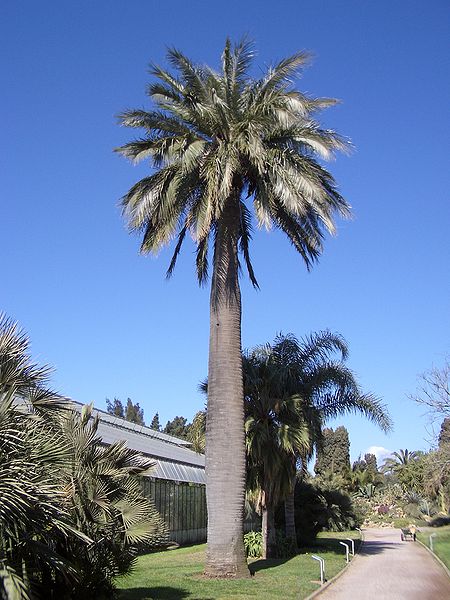
It is highly drought tolerant but will also do well in cold and humid conditions. It does not need hot summers to grow well and in winter it can take severe frost down to -16°C (3°F) unharmed. For many temperate climates it is the only large pinnate palm which is cold-tolerant enough to be successful long-term. Many fine, centennial examples can be admired for instance in California, Australia and along the Mediterranean, in southern Switzerland, along the windy Atlantic coast of France and even in Britain. And there are many other areas where it would do well but has not been tried much.
Germination and establishment are slow but easily accomplished and young plants are sought after and of high value as they are rarely found in the nursery trade.
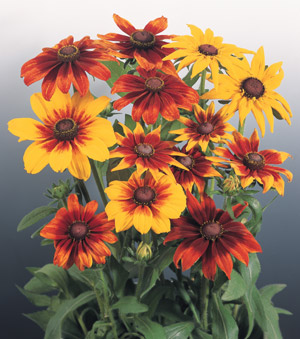
Oversized, daisy-like flowers that are a mix of colors including yellow, orange, red, and brown. The colors can appear in a range of shades from deep gold to rust and bronzy-red.
Fleuroselect, large 5" flowers splashed with red, bronze, yellow, makes a vivid display, Pellet seeds for easy germination. Grows about 22 inches tall.

Chinese forget-me-nots are easy-to-grow annuals known for their bright blue, star-shaped flowers that resemble true forget-me-nots but bloom on taller stems and last longer. They are excellent for cut flower gardens and are best planted in the spring after the last frost or in the fall for warmer climates (USDA Zones 7-10), thriving in full sun to partial shade and well-drained soil. While they can self-seed, they are not considered invasive and are valued for their long blooming season and association with love and loyalty.
Ever a favorite, these dainty blue flowers will charm any heart. This annual Asian variety has slightly larger flowers and rougher foliage than true Forget Me Not, but grows faster, and produces blooms sooner. This Asian wildflower has slightly larger flowers and rougher foliage than its more well-known European counterpart. The genus name "Cynoglossum," meaning "hound's tongue," is derived from the resemblance of the coarse leaves to a dog's tongue. Cynoglossum amabile won the prestigious All-American Selections Award in 1939, and Chinese Forget-Me-Not seeds have been a garden favorite ever since.
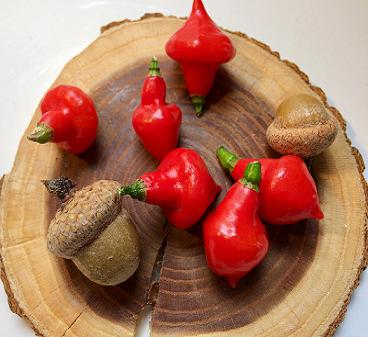
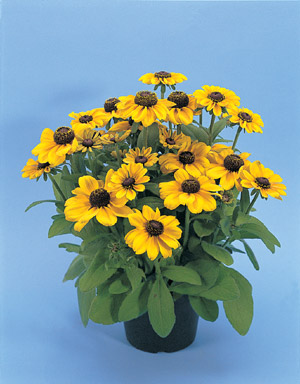
Fleuroselect, dwarf, floriferous, 2" golden flowers, for border or pots, summer bloom, grow about 12" tall. Primed seeds for easy germination.
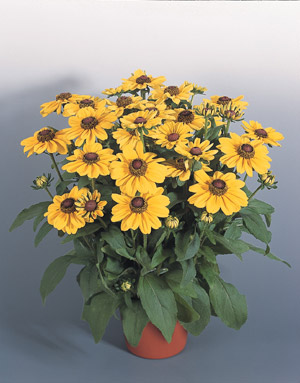
Fleuroselect, dwarf, floriferous, 2-3" bright yellow flowers, for border or pots, summer bloom, grow about 12" tall. Primed seeds for easy germination.
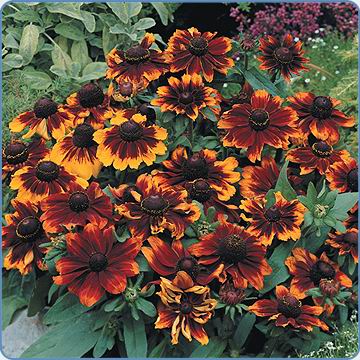
for border or pots, summer bloom, grow about 12" tall. Primed seeds for easy germination.
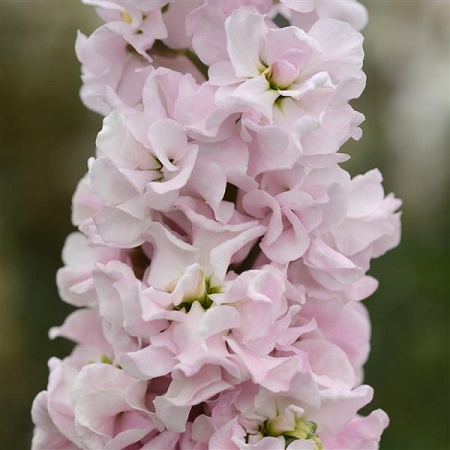
A rich, spicy, and sweet scent emanates from the blooms, with a clove-like undertone. Grows 24 to 36" tall.
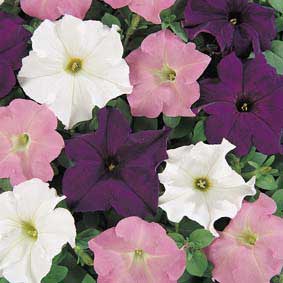
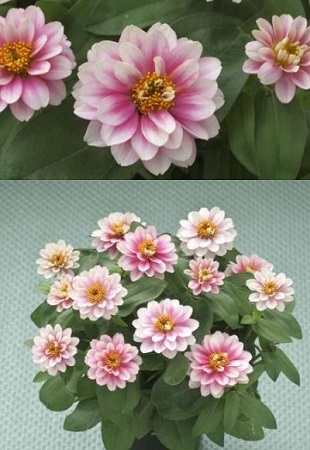
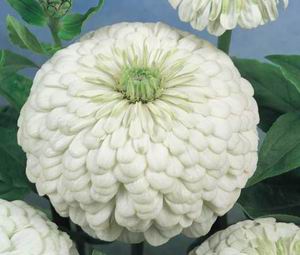
Grows into a tall, bushy, upright plant, reaching heights of 30 to 36 inches. It is widely used for cut flower gardens, borders, and mass plantings.
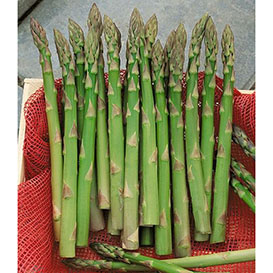
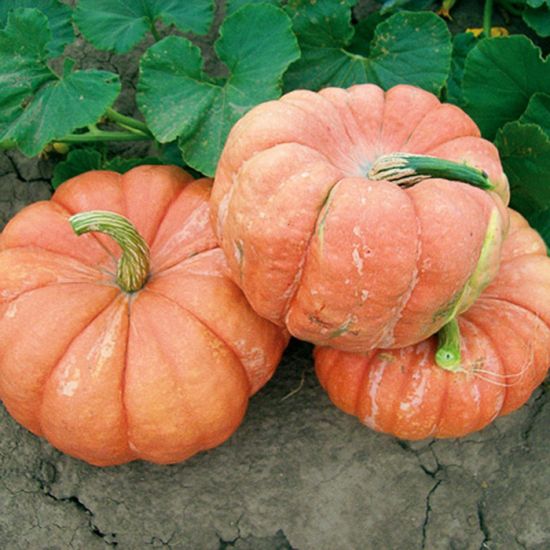

Contact Us | Privacy Policy | About Us
Serving gardeners since 1992
State of Mississippi Seedmen's Permit #C-391, Ohio 90152, Minnesota 20086777