
Aquilegia/Columbine Seed ( Perennial )
Columbine attract bees, birds, and butterflies. They are resistant to deer. All parts of the columbine are poisonous to humans.
Columbine can be propagated by seed or transplant. It is considered hardy to the USDA zone 3. In most climates, columbine needs partial sun. In warm climates, more shade and less sun in the afternoon is preferred to keep the plant from burning up.
There are two ways to propagate columbine from seed. You can plant the seed in the fall and it will germinate in the spring, or you can put the seeds in the refrigerator for three to four weeks, then plant them in the spring. The seeds will not germinate without going through a period of cold, we prefer sticking them in the fridge ourselves.
Columbine should be fertilized monthly when in bloom to ensure continued blooms. Use a general fertilizer such as 10-10-10 and follow the directions on the package.
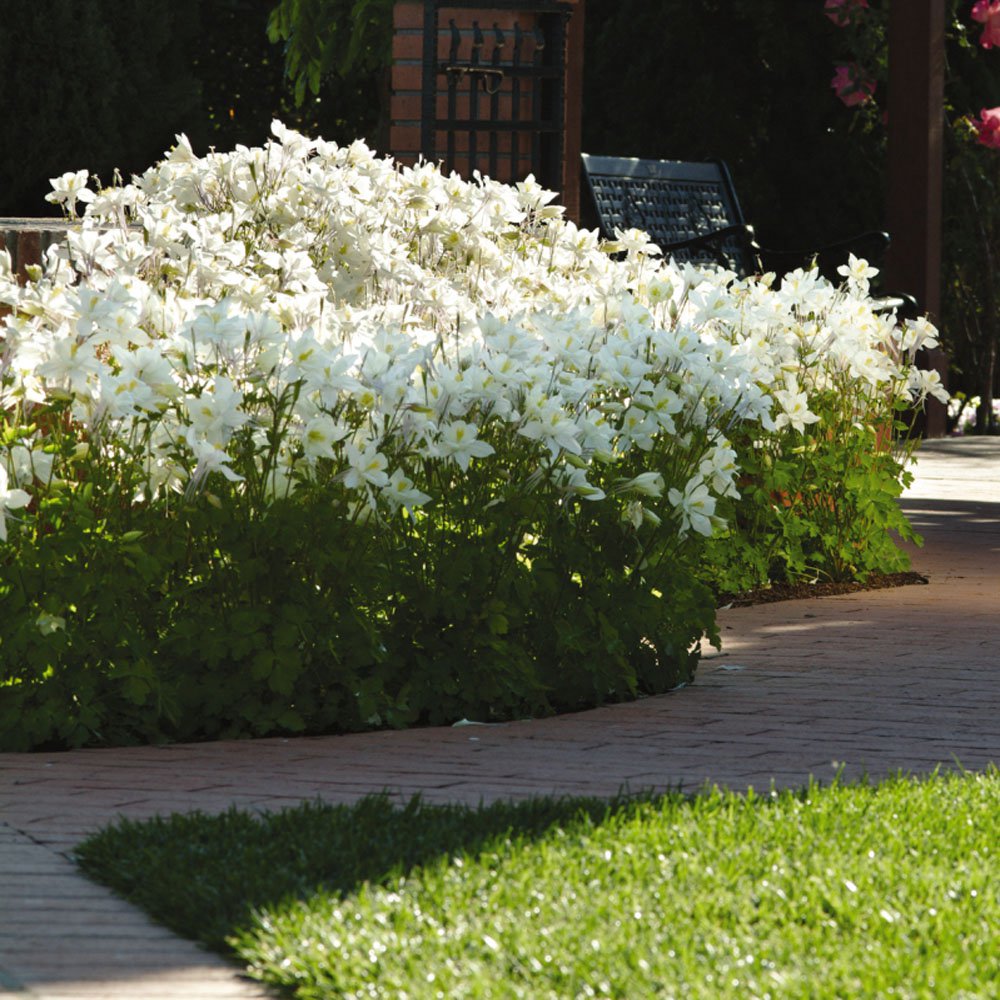
Crystal Star Columbine (Aquilegia caerulea) is an elegant perennial prized for its exceptionally large, pure white flowers accented by long, graceful spurs that give each bloom the appearance of a delicate star. This refined selection of the Rocky Mountain Columbine offers a fresh, luminous display from late spring into early summer, bringing beauty to woodland gardens, perennial borders, and cottage landscapes. The intricate blossoms seem to float above attractive blue-green fern-like foliage while attracting hummingbirds, butterflies, and early-season pollinators.
Garden Uses
Crystal Star Columbine is an outstanding choice for woodland gardens, perennial borders, cottage gardens, shade gardens, pollinator gardens, and naturalized landscapes. The crisp white flowers brighten partially shaded areas and combine beautifully with hostas, bleeding hearts, ferns, foxgloves, coral bells, woodland phlox, Virginia bluebells, and spring-flowering bulbs. It is equally at home in alpine gardens and makes an excellent cut flower for delicate spring bouquets.
Growing Information
Crystal Star grows best in full sun in cooler climates or partial shade where summers are warm. It prefers fertile, humus-rich, well-drained soil that remains evenly moist but never waterlogged. Plants typically mature 24 to 30 inches tall with a spread of 15 to 18 inches, forming attractive clumps of finely divided foliage. Remove spent flowers to encourage a tidy appearance, or allow a few seed heads to mature if natural reseeding is desired. Columbines often self-sow gently without becoming invasive, creating attractive colonies over time. Seeds benefit from a period of cool stratification and should be lightly covered with soil.
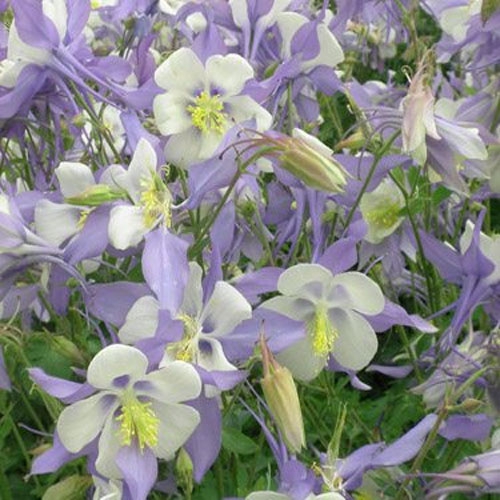
Blue Star Columbine (Aquilegia caerulea) is one of the most elegant and beloved native wildflowers of North America, producing large sky-blue and white blossoms with graceful, elongated nectar spurs that seem to float above delicate blue-green foliage. Native to the Rocky Mountains and famous as the state flower of Colorado, this striking perennial blooms in late spring and early summer, bringing cool, refreshing color to woodland gardens, cottage borders, and alpine landscapes. Its unique star-like flowers are irresistible to hummingbirds and beneficial pollinators while adding a graceful, airy beauty to the garden.
Garden Uses
Blue Star Columbine is an outstanding choice for woodland gardens, cottage gardens, alpine gardens, perennial borders, pollinator gardens, and naturalized landscapes. Its elegant flowers blend beautifully with foxgloves, bleeding hearts, lupines, hostas, ferns, Virginia bluebells, woodland phlox, coral bells, and spring-flowering bulbs. The long-stemmed blooms also make excellent cut flowers, adding a delicate woodland charm to fresh bouquets.
Growing Information
Blue Star Columbine thrives in full sun in cool climates and partial shade where summers are warm. It prefers fertile, humus-rich, well-drained soil that remains evenly moist but never soggy. Mature plants typically grow 24 to 36 inches tall with a spread of 15 to 18 inches, forming neat clumps of attractive fern-like foliage. Deadheading encourages a tidy appearance, while allowing a few seed pods to mature often results in gentle natural reseeding. Plants are relatively short-lived individually but maintain themselves through self-sown seedlings, creating beautiful colonies over time. Seeds benefit from cold stratification before germination and should be lightly covered.
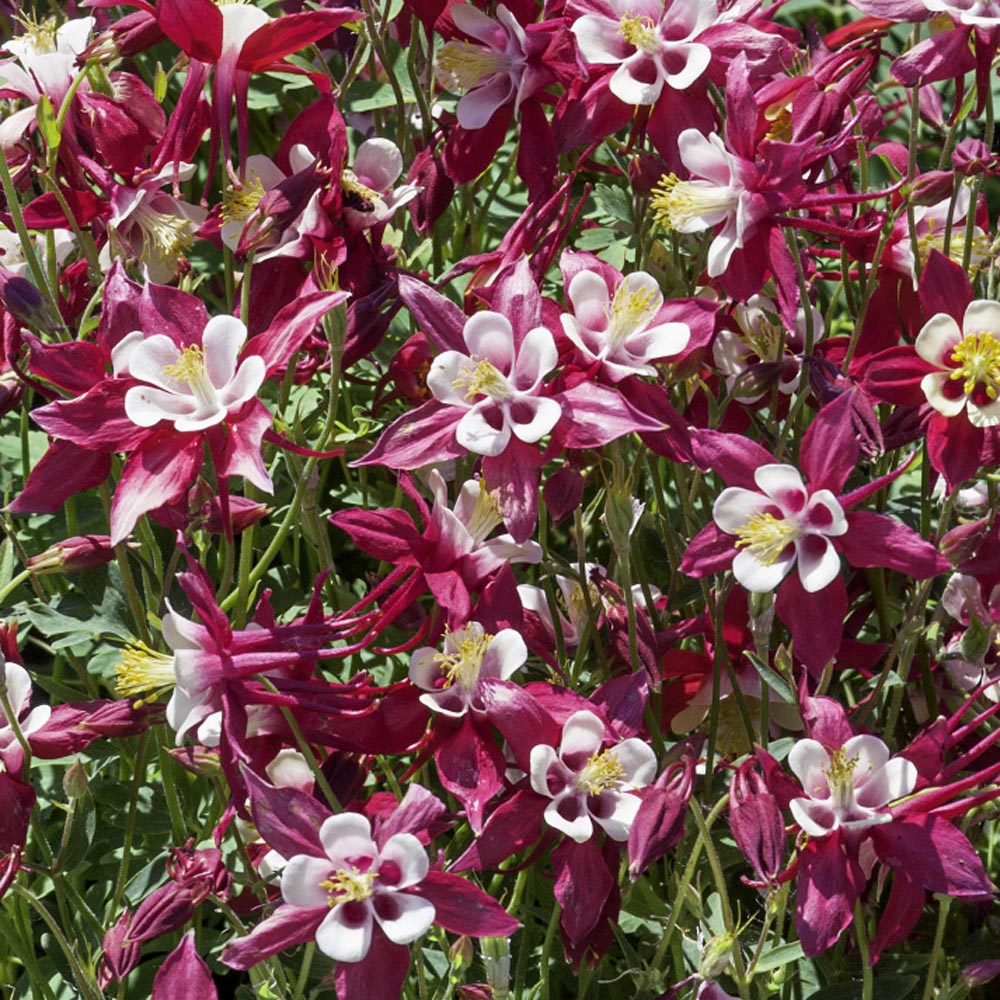
Crimson Star Columbine (Aquilegia caerulea) is a dazzling perennial that produces striking crimson-red and pure white flowers with long, elegant nectar spurs that radiate like a five-pointed star. Blooming from late spring into early summer, the vivid flowers rise gracefully above delicate blue-green, fern-like foliage, creating an eye-catching display in woodland gardens, cottage borders, and naturalized landscapes. The brilliant red coloring makes this variety especially attractive to hummingbirds, while its graceful form adds movement and elegance to any garden setting.
Garden Uses
Crimson Star Columbine is an excellent choice for woodland gardens, perennial borders, cottage gardens, pollinator gardens, alpine plantings, and shaded landscape beds. Its brilliant red and white flowers provide dramatic contrast among hostas, ferns, bleeding hearts, foxgloves, coral bells, Virginia bluebells, lupines, and spring-flowering bulbs. It also performs beautifully in patio containers and cutting gardens, where the elegant blooms make outstanding additions to spring bouquets.
Growing Information
Crimson Star grows best in full sun in cooler climates or partial shade where summers are warm. It prefers fertile, humus-rich, well-drained soil that remains evenly moist but never soggy. Mature plants generally reach 24 to 30 inches tall with a spread of 15 to 18 inches, forming attractive clumps of finely divided foliage. Deadheading helps maintain a tidy appearance, while allowing some seed heads to mature often results in gentle natural reseeding. Plants are relatively short-lived individually but readily replace themselves through seedlings, creating beautiful natural drifts over time. Seeds benefit from cool stratification before germination.
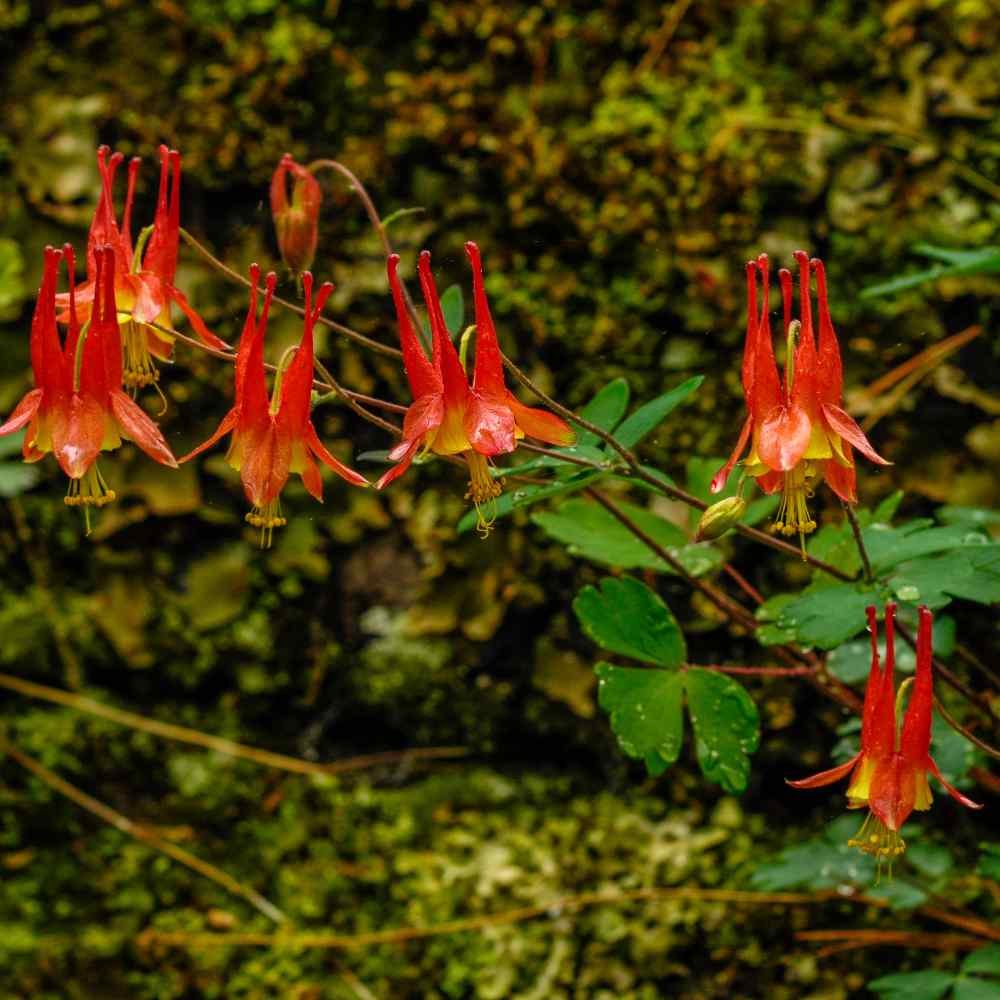
Eastern Red Columbine (Aquilegia canadensis) is one of North America's most beloved native woodland wildflowers, producing graceful nodding blossoms in brilliant scarlet red with sunny yellow centers. The elegant, lantern-like flowers hang delicately from slender stems above attractive blue-green, fern-like foliage, creating a natural woodland display from mid to late spring. Highly prized for its ability to attract hummingbirds, butterflies, and native bees, Eastern Red Columbine is a dependable perennial that brings beauty and wildlife activity to shaded gardens year after year.
Garden Uses
Eastern Red Columbine is ideal for woodland gardens, shade gardens, native plant landscapes, cottage gardens, perennial borders, naturalized areas, and pollinator gardens. It thrives beneath deciduous trees, along woodland paths, and in lightly shaded borders where its vibrant flowers brighten the spring landscape. It combines beautifully with ferns, Virginia bluebells, trilliums, bleeding hearts, foamflowers, wild geraniums, Jacob's Ladder, hostas, and other native woodland plants. It also makes an attractive cut flower for informal spring bouquets.
Growing Information
Eastern Red Columbine grows best in partial shade but tolerates full sun where soil remains consistently moist. It prefers fertile, humus-rich, well-drained soil but adapts well to average garden conditions. Mature plants typically reach 18 to 30 inches tall with a spread of 12 to 18 inches. Once established, it is surprisingly drought tolerant for a woodland perennial. Plants are relatively short-lived individually but reseed readily, forming attractive natural colonies without becoming invasive. Remove spent flowers if reseeding is not desired, or allow seed pods to mature for continued naturalization. Seeds benefit from a period of cold stratification before germination.
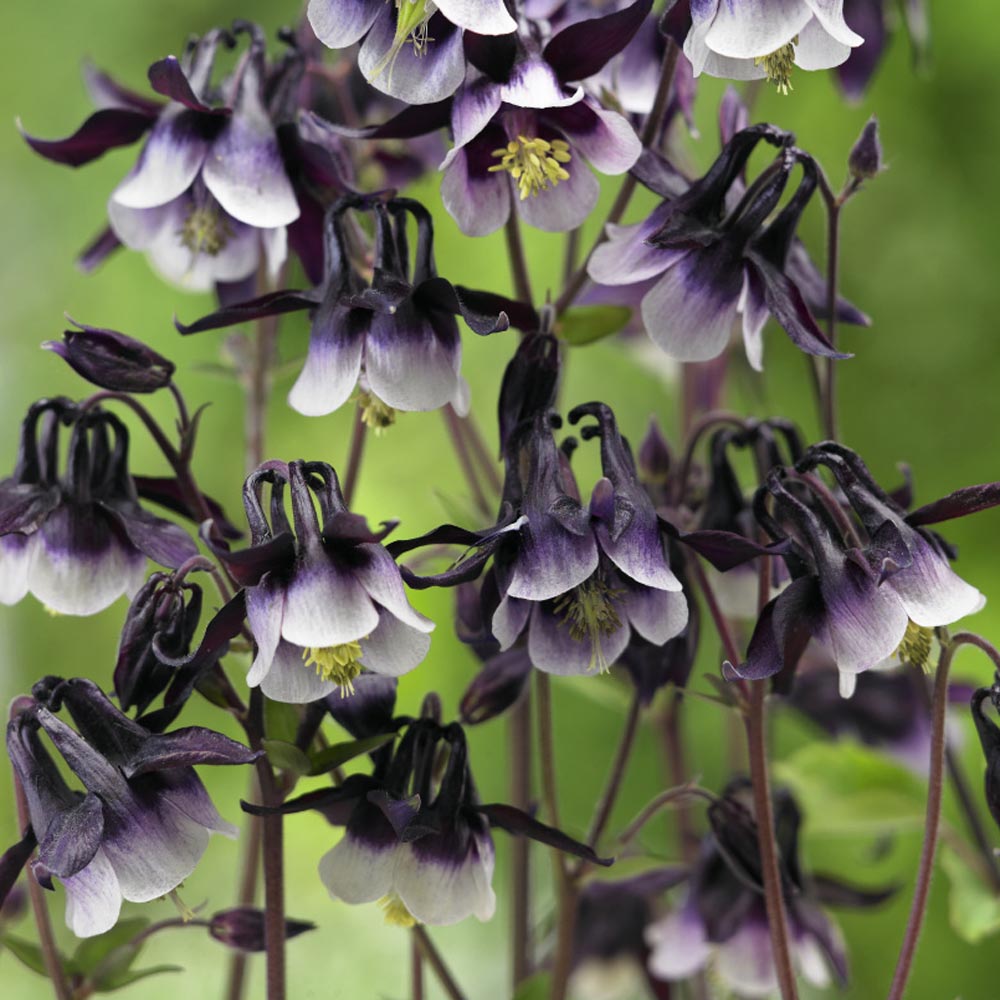
William Guinness Columbine (Aquilegia vulgaris) is one of the most striking heirloom columbines, producing elegant nodding flowers with rich, velvety maroon-purple outer petals beautifully contrasted by crisp white inner petals. This dramatic two-tone color combination gives each bloom a sophisticated appearance that stands out in woodland gardens and perennial borders. Blooming from late spring into early summer above delicate blue-green, fern-like foliage, William Guinness combines old-world charm with exceptional garden performance while attracting hummingbirds, butterflies, bees, and other beneficial pollinators.
Garden Uses
William Guinness is ideal for cottage gardens, woodland gardens, perennial borders, pollinator gardens, shaded pathways, cutting gardens, and naturalized landscapes. The bold black-and-white appearance pairs beautifully with foxgloves, hostas, ferns, bleeding hearts, coral bells, lupines, salvias, white daisies, and spring-flowering bulbs. Its refined coloring also makes it an excellent choice for formal gardens and monochromatic plantings where dramatic contrast is desired. The flowers are excellent for fresh bouquets and elegant floral arrangements.
Growing Information
William Guinness grows best in partial shade but tolerates full sun in cooler climates when adequate moisture is available. It prefers fertile, humus-rich, well-drained soil that remains evenly moist throughout the growing season. Mature plants typically reach 24 to 30 inches tall with a spread of 15 to 18 inches. Remove spent flowers to maintain a tidy appearance or allow seed heads to mature if natural reseeding is desired. Like many columbines, plants are relatively short-lived individually but gently self-sow, producing attractive colonies over time. Seeds benefit from a period of cold stratification before germination and should be lightly covered.
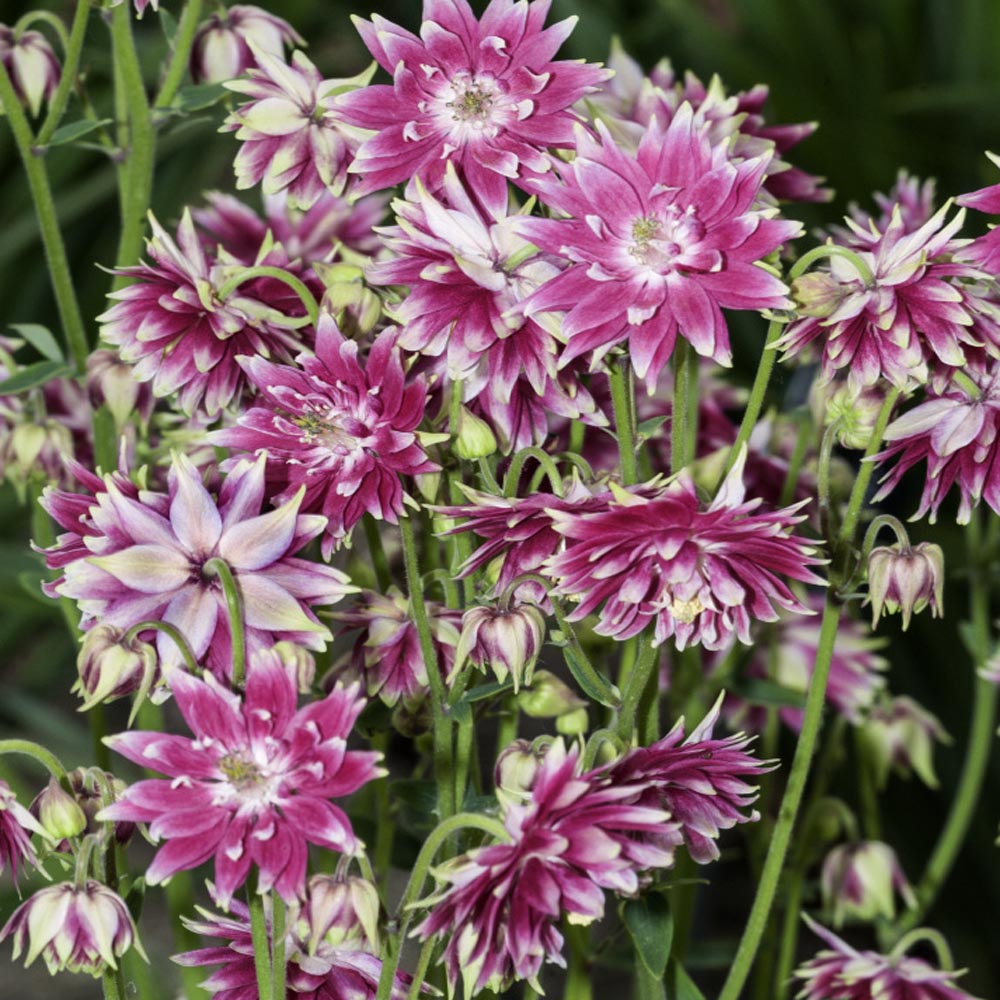
Nora Barlow Pink Columbine (Aquilegia vulgaris) is an extraordinary heirloom perennial admired for its unusual fully double, spurless flowers in soft shades of rose pink, blush, and pale green. Unlike traditional columbines with long nectar spurs, Nora Barlow produces intricate pompon-like blooms that resemble tiny decorative dahlias or double clematis flowers. Blooming from late spring into early summer above delicate blue-green, fern-like foliage, this elegant variety adds a romantic, old-fashioned charm to cottage gardens, woodland borders, and cutting gardens while attracting a variety of beneficial pollinators.
Garden Uses
Nora Barlow Pink is an outstanding choice for cottage gardens, woodland gardens, perennial borders, cutting gardens, pollinator gardens, and shaded landscape beds. Its unusual flowers pair beautifully with foxgloves, roses, peonies, delphiniums, bleeding hearts, hostas, ferns, coral bells, and hardy geraniums. The soft pink blooms blend effortlessly with pastel color schemes while providing delightful texture among more traditional flowers. It also performs beautifully in patio containers and makes an exceptional cut flower for spring arrangements.
Growing Information
Grow Nora Barlow Pink in full sun where summers are cool or partial shade in warmer regions. Plants prefer fertile, humus-rich, well-drained soil that remains consistently moist without becoming waterlogged. Mature plants typically grow 24 to 30 inches tall with a spread of 15 to 18 inches, forming neat clumps of attractive fern-like foliage. Deadheading helps maintain a tidy appearance and may encourage additional blooms, while allowing a few flowers to mature encourages gentle self-seeding. Individual plants are relatively short-lived but naturally replace themselves through seedlings, creating long-lasting colonies. Seeds benefit from cold stratification before germination.
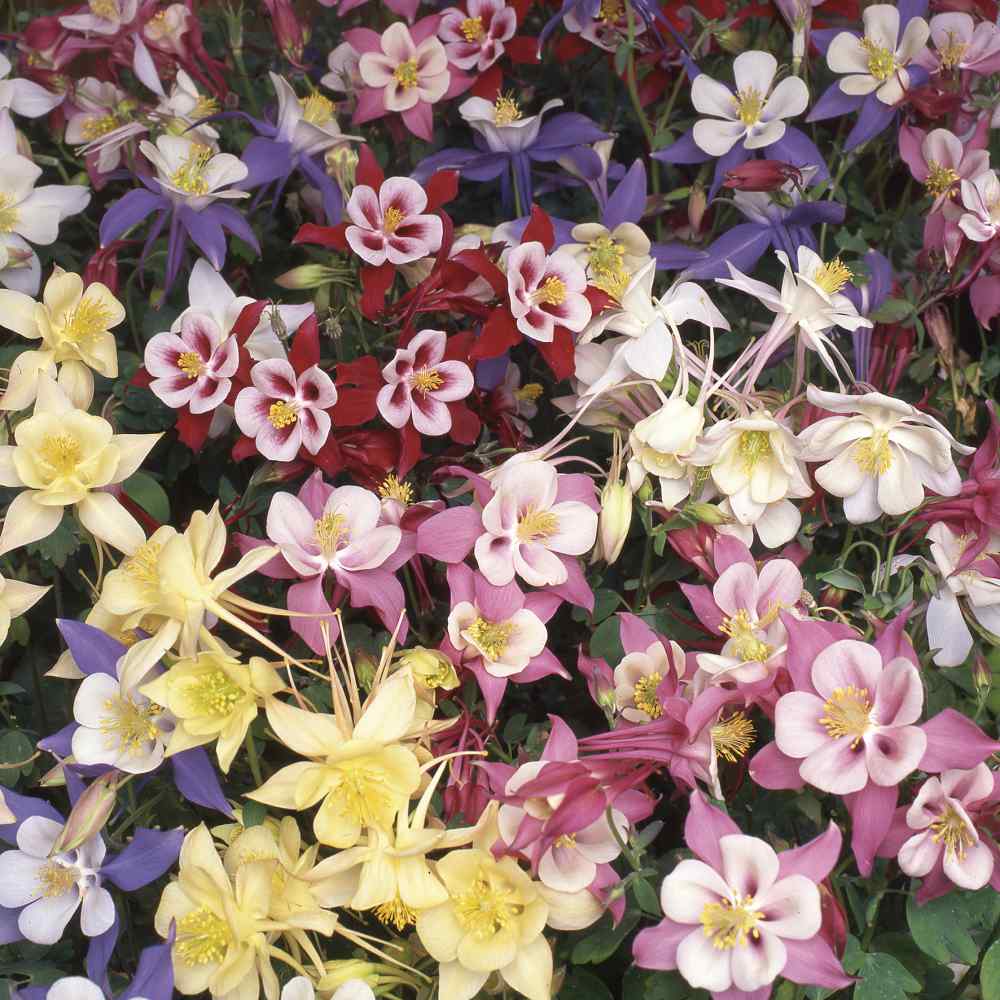
Caerulea Mix Columbine (Aquilegia caerulea) is a breathtaking blend of large-flowered Rocky Mountain Columbines featuring elegant blooms in shades of sky blue, lavender, violet, crimson, rose, pink, white, yellow, and beautiful bi-colors. Each flower displays the long, graceful nectar spurs that make this species so distinctive, giving every blossom a delicate star-like appearance. Blooming from late spring into early summer above finely divided blue-green foliage, Caerulea Mix brings vibrant color, movement, and exceptional pollinator activity to woodland gardens, perennial borders, and naturalized landscapes.
Garden Uses
Caerulea Mix is ideal for woodland gardens, cottage gardens, perennial borders, alpine gardens, pollinator gardens, naturalized landscapes, and cutting gardens. The colorful mix creates spectacular drifts beneath deciduous trees, along woodland paths, or among spring-flowering perennials. It combines beautifully with foxgloves, lupines, bleeding hearts, Virginia bluebells, ferns, hostas, coral bells, woodland phlox, and spring bulbs. The long-stemmed flowers are also excellent for fresh-cut bouquets where their delicate form adds elegance and charm.
Growing Information
Caerulea Mix performs best in full sun in cooler climates or partial shade where summers become warm. It prefers fertile, humus-rich, well-drained soil that remains evenly moist without becoming waterlogged. Mature plants typically reach 24 to 36 inches tall with a spread of 15 to 18 inches. Remove spent blooms to keep plants tidy, or leave seed heads to encourage gentle natural reseeding. Individual plants are relatively short-lived, but self-sown seedlings help establish attractive colonies that return year after year. Seeds germinate best after a period of cold stratification and should be lightly covered with soil.
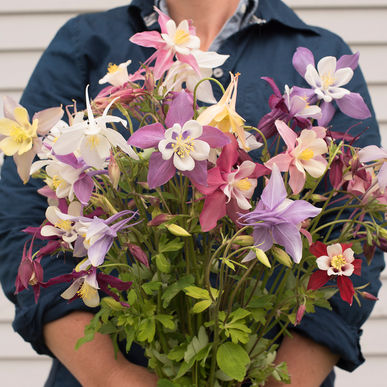
McKana Giants Columbine (Aquilegia caerulea) is a spectacular large-flowered columbine mixture known for its long graceful spurs, bright open blooms, and wide range of beautiful colors. Flowers may appear in shades of blue, lavender, violet, rose, pink, crimson, yellow, white, cream, and many striking bi-color combinations. Blooming from late spring into early summer above attractive blue-green, fern-like foliage, McKana Giants brings elegance, height, and old-fashioned charm to borders, woodland edges, cottage gardens, and pollinator plantings.
Garden Uses
McKana Giants is excellent for cottage gardens, woodland gardens, perennial borders, cutting gardens, pollinator gardens, lightly shaded beds, and naturalized plantings. The tall, airy flowers blend beautifully with foxgloves, lupines, bleeding hearts, ferns, hostas, coral bells, delphiniums, hardy geraniums, and spring-flowering bulbs. Their long stems and dramatic spurred blooms make them especially useful for fresh cut flower arrangements.
Growing Information
Grow McKana Giants in full sun in cooler climates or partial shade where summers are warm. Plants prefer fertile, humus-rich, well-drained soil with moderate, even moisture. Mature plants usually reach 24 to 36 inches tall with a spread of 15 to 18 inches. Deadheading keeps plants tidy and may extend bloom, while allowing a few seed heads to mature encourages natural reseeding. Columbines are often short-lived perennials, but they usually maintain themselves by self-sowing gently in favorable locations. Seeds benefit from cold stratification before germination and should be lightly covered with soil.

Contact Us | Privacy Policy | About Us
Serving gardeners since 1992
State of Mississippi Seedmen's Permit #C-391, Ohio 90152, Minnesota 20086777