
New Seed Arrivals | New Account |
Gift Certificates |
Gardening Products
SEEDS: Unusual | Annuals | Perennials | Vegetables | Herbs | Trees
Seeds for Bonsai Plants
A note from one of our customers:
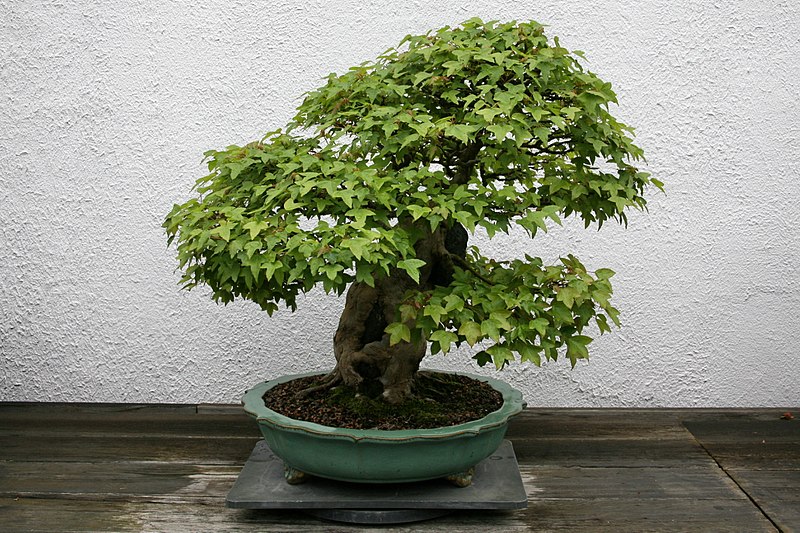
Image:Cliff from Arlington, Virginia, USA, CC BY 2.0, via Wikimedia Commons
_(3505587346).jpg)
ACER10 Trident Maple ( Acer buergerianum )
The trident maple is a very popular species for bonsai, due to its small, three-lobed leaves, a readily-thickening trunk, and thick, gnarly roots which adapt well to root-over-rock style. A small tree, the trident maple usually grows only to 20 ft. in nature with yellow blooms in early Spring. Hardiness Range: 5A-9A, Mature Height Outside: 25' to 50' / 7.60m to 15.20m
Outside Requirements: prefers partial shade or partial sun to full sun; soil should be moist.
Outside Requirements: prefers partial shade or partial sun to full sun; soil should be moist.
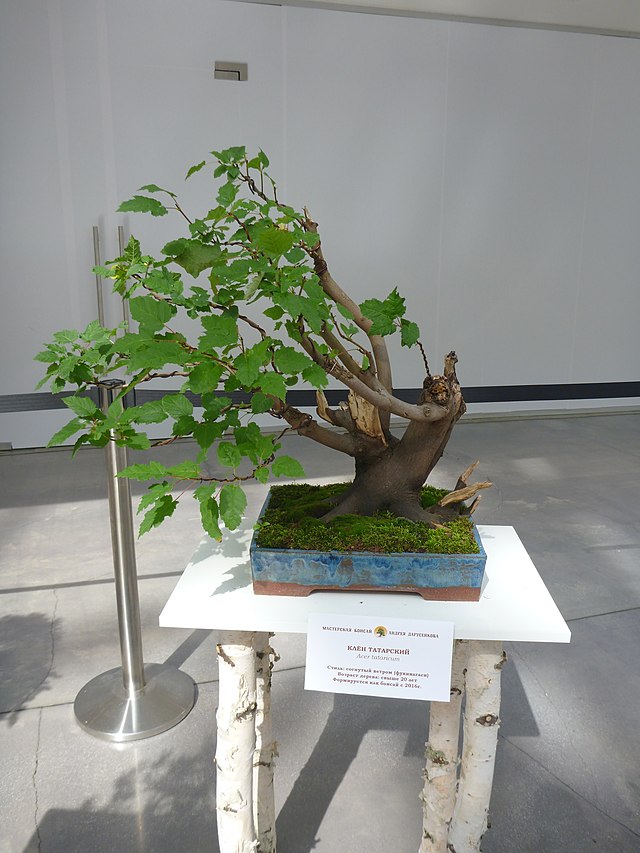
Image:IvanA, CC BY-SA 4.0, via Wikimedia Commons

TRZ165 Tartar Maple ( Acer tataricum )
An easy to grow bonsai. Acer tataricum, more commonly known as Tatar Maple or Tatarian Maple - is a resilient, deciduous shrub or tree that thrives even in harsh conditions. Originally found in central and southeastern Europe and southwestern Asia, this vibrant species can now be sighted as far as Russia, Japan, and North America.
It blooms with whitish-green flowers from May till June and proudly bears pairs of red samaras that mature in the late summer through early autumn. Tatar maple grows up to a height of 15-40 ft and boasts of thin, pale brown bark which becomes charmingly fissured on mature plants. The leaves of this species are simple and broadly ovate, displaying an unmissable matte green hue that pairs wonderfully with the pink-tinged, slender leaf petioles. In autumn, it puts on an alluring display of red foliage, making it a fantastic addition to any garden.
Acer tataricum is well-adapted to different soil types- from sandy to loamy and heavy clay soils- and pH levels. It exhibits an extraordinary tolerance for climatic extremes, thereby able to withstand hot, cold, and dry weather conditions. Making it a favorite for adding visual appeal to backyards, parks, and shelterbelts. This heartily versatile maple, with its lush foliage and weather-resistant properties, the Acer tataricum is sure to make an enriching addition to any landscape. Zones 3-8.
It blooms with whitish-green flowers from May till June and proudly bears pairs of red samaras that mature in the late summer through early autumn. Tatar maple grows up to a height of 15-40 ft and boasts of thin, pale brown bark which becomes charmingly fissured on mature plants. The leaves of this species are simple and broadly ovate, displaying an unmissable matte green hue that pairs wonderfully with the pink-tinged, slender leaf petioles. In autumn, it puts on an alluring display of red foliage, making it a fantastic addition to any garden.
Acer tataricum is well-adapted to different soil types- from sandy to loamy and heavy clay soils- and pH levels. It exhibits an extraordinary tolerance for climatic extremes, thereby able to withstand hot, cold, and dry weather conditions. Making it a favorite for adding visual appeal to backyards, parks, and shelterbelts. This heartily versatile maple, with its lush foliage and weather-resistant properties, the Acer tataricum is sure to make an enriching addition to any landscape. Zones 3-8.
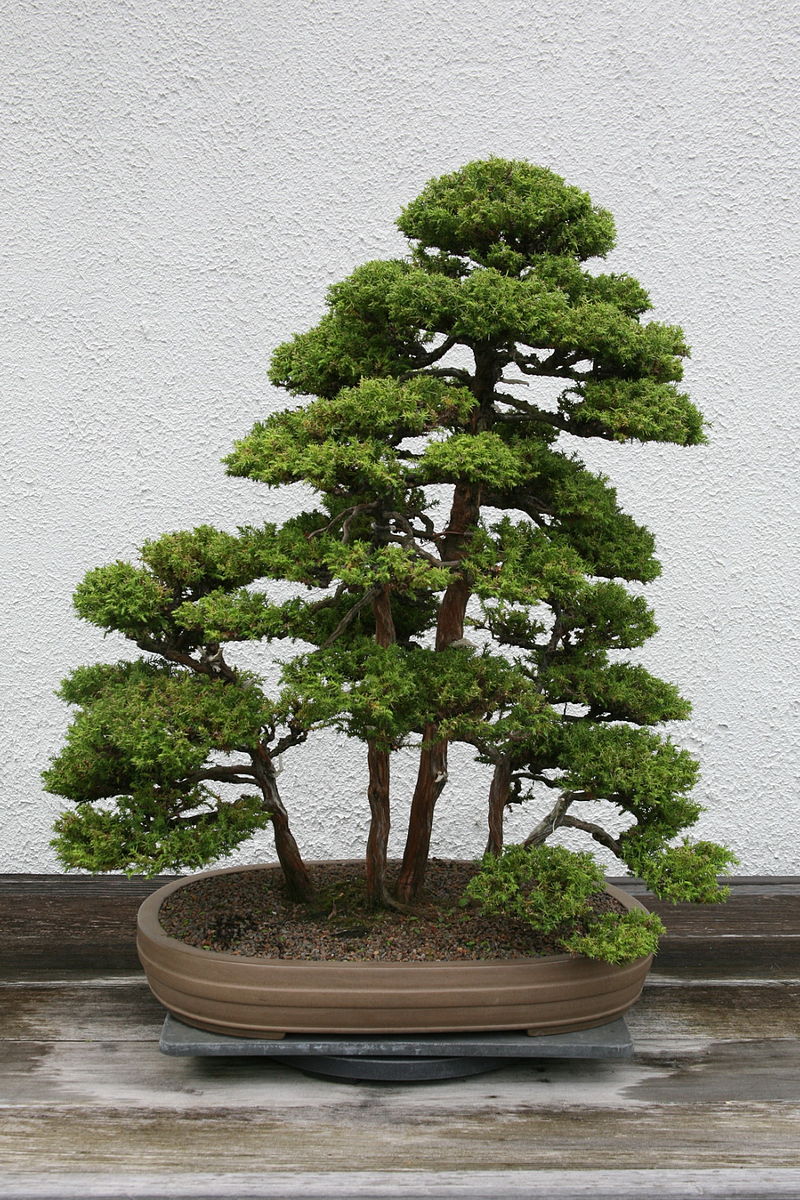
Image: By Cliff from Arlington, Virginia, USA [CC BY 2.0], via Wikimedia Commons
_(3505588924).jpg)
B1702 Sacred Japanese Cedar ( Cryptomeria japonica )
A very popular bonsai plant with pyramidal form. Outside, it is an elegant evergreen tree . The bark is reddish-brown and peels in strips.
Grown outside, it is a large conifer to 200 feet tall with a trunk to 20 feet in diameter, covered in reddish bark, and a conical crown with spreading branches. The leaves are small, needle-like and dark green.
It is native to southern Japan as well as southern China where it is found in a variety of forests from near sea level to over 8200 feet. In cultivation, it is popular as a forestry and ornamental tree in Japan and China as well as elsewhere around the world. It is very easy to grow and will do well in USDA Zones 7 and above.
It is native to southern Japan as well as southern China where it is found in a variety of forests from near sea level to over 8200 feet. In cultivation, it is popular as a forestry and ornamental tree in Japan and China as well as elsewhere around the world. It is very easy to grow and will do well in USDA Zones 7 and above.
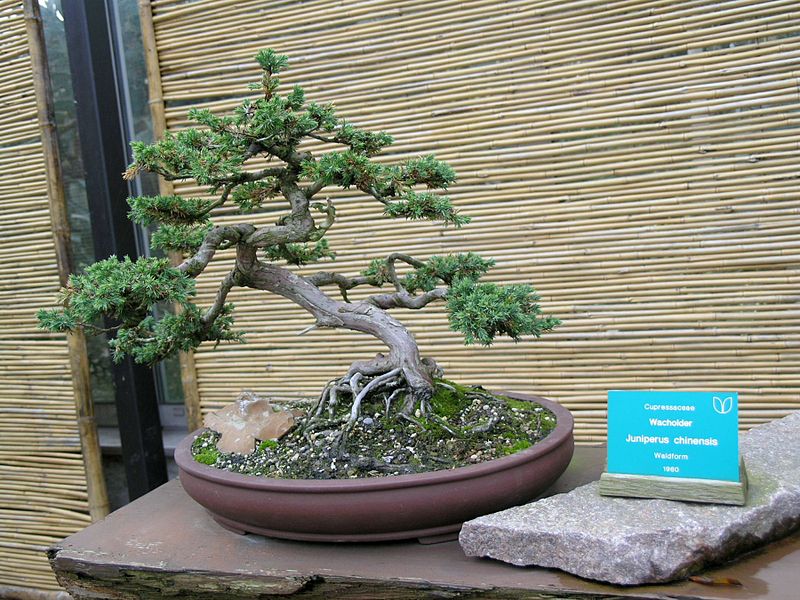
Image: By Matěj Baťha [CC BY-SA 2.5], from Wikimedia Commons
.jpg)
TRZ126 Pyramid Chinese Juniper ( Juniperus chinensis )
Looking for a centerpiece that commands attention? Meet the Pyramid Chinese Juniper Bonsai—the perfect blend of rugged natural beauty and refined geometric elegance. While most bonsai aim for a wind-swept or sprawling look, the Pyramid style offers a rare, architectural symmetry that brings a sense of calm and permanence to any space.
It’s not just a plant; it’s a living sculpture Unlike deciduous trees, this evergreen stays lush and green through every season. Its dense, needle-like foliage creates a "cloud-like" texture that is incredibly satisfying to the touch and the eye.
A Natural "Old Soul": Junipers are famous for their "shari" and "jin"—the beautiful contrast between living bark and bleached, weathered wood. Even a young pyramid juniper carries the majestic aura of an ancient mountain tree.
The Low-Maintenance Luxury: This is one of the hardiest species in the bonsai world. It’s drought-tolerant, loves the sun, and is remarkably forgiving for beginners while offering endless styling potential for experts.
Instant Zen: Its upright, balanced form is a staple of traditional Japanese gardens, designed to represent strength and stability.
It’s not just a plant; it’s a living sculpture Unlike deciduous trees, this evergreen stays lush and green through every season. Its dense, needle-like foliage creates a "cloud-like" texture that is incredibly satisfying to the touch and the eye.
A Natural "Old Soul": Junipers are famous for their "shari" and "jin"—the beautiful contrast between living bark and bleached, weathered wood. Even a young pyramid juniper carries the majestic aura of an ancient mountain tree.
The Low-Maintenance Luxury: This is one of the hardiest species in the bonsai world. It’s drought-tolerant, loves the sun, and is remarkably forgiving for beginners while offering endless styling potential for experts.
Instant Zen: Its upright, balanced form is a staple of traditional Japanese gardens, designed to represent strength and stability.
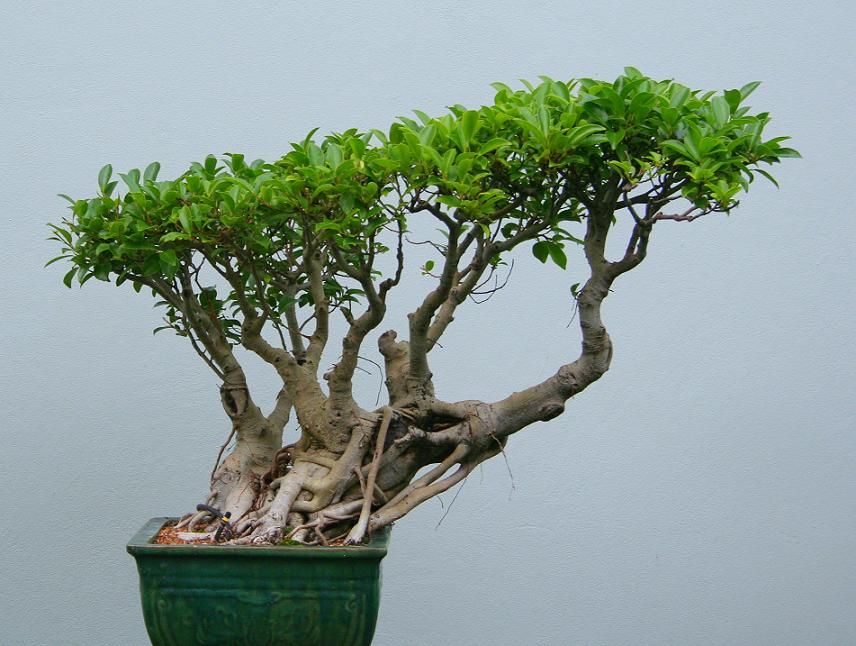
Image: By Sajansamuel at Malayalam Wikipedia [Public domain], via Wikimedia Commons

D4509 Weeping Ficus ( Ficus benjamina )
One of the most recognizable house plants grown today. Very economical and easy to grow from seed and easy to care for. A fast growing plant that can become a centerpiece. It is a bit fussy about needing bright, diffused light ( like next to a bright window, but not in direct sunlight ). Also, do not overwater, only water when top of soil is dry.
Many people know the Weeping ficus as a common office plant, because it is very low-maintenance and has air-purifying effects. Most plants improve air quality to some degree. The F. benjamina is particularly good at filtering formaldehyde, xylene and toluene.
Many people know the Weeping ficus as a common office plant, because it is very low-maintenance and has air-purifying effects. Most plants improve air quality to some degree. The F. benjamina is particularly good at filtering formaldehyde, xylene and toluene.
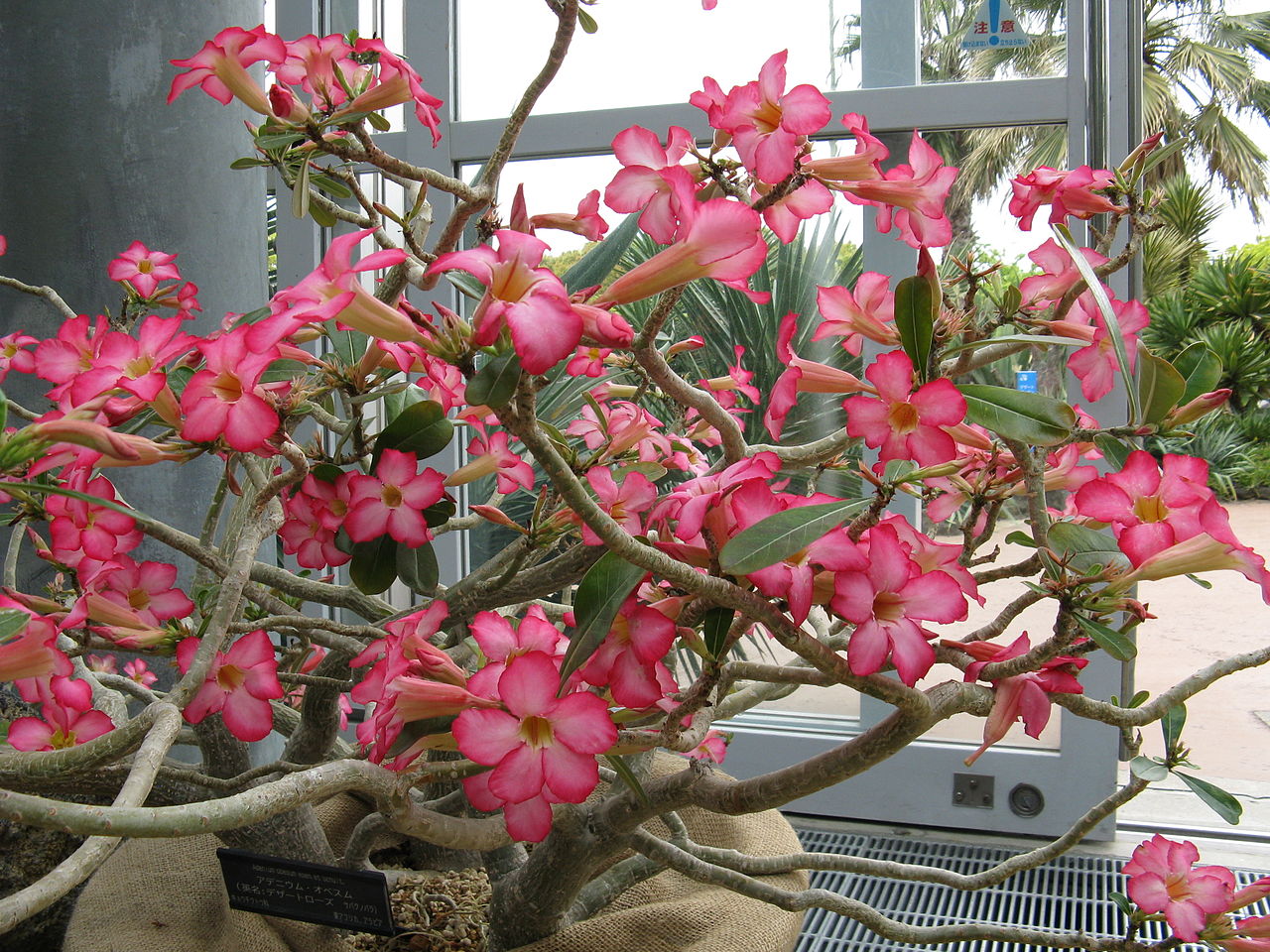
3557 Desert Rose ( Adenium obesum )
If you would like to grow a gorgeous houseplant requiring very little care, you cannot go wrong with the common Desert Rose plant.
This carefree succulent boasts an unusual trunk (caudex) shape coupled with bunches of beautiful, colorful, trumpet-shaped flowers in an abundance of carmine-rose colors.
The plant makes an excellent warm-weather addition to your patio, deck or landscape, and it also does very well as a bonsai or houseplant.
Winter hardy to Zone 11. In colder zones, plants should be grown in containers and overwintered indoors. In containers, desert rose is best grown in a loose, sandy or gravelly, well-drained soil mix in full sun. Plants have excellent heat tolerance. Apply regular moisture during periods of growth, but allow soils to dry between waterings. Regular applications of fertilizer in spring will help promote flowering. Plants can be left outdoors in sunny locations during the summer. As soon as temperatures begin to dip below 55 degrees F. in autumn, bring containers indoors to sunny but cool locations with reduced watering. Plants usually lose their leaves in winter and go into a dormancy-like period. For container plants, the best caudex usually develops from seed-grown plants.
This carefree succulent boasts an unusual trunk (caudex) shape coupled with bunches of beautiful, colorful, trumpet-shaped flowers in an abundance of carmine-rose colors.
The plant makes an excellent warm-weather addition to your patio, deck or landscape, and it also does very well as a bonsai or houseplant.
Winter hardy to Zone 11. In colder zones, plants should be grown in containers and overwintered indoors. In containers, desert rose is best grown in a loose, sandy or gravelly, well-drained soil mix in full sun. Plants have excellent heat tolerance. Apply regular moisture during periods of growth, but allow soils to dry between waterings. Regular applications of fertilizer in spring will help promote flowering. Plants can be left outdoors in sunny locations during the summer. As soon as temperatures begin to dip below 55 degrees F. in autumn, bring containers indoors to sunny but cool locations with reduced watering. Plants usually lose their leaves in winter and go into a dormancy-like period. For container plants, the best caudex usually develops from seed-grown plants.
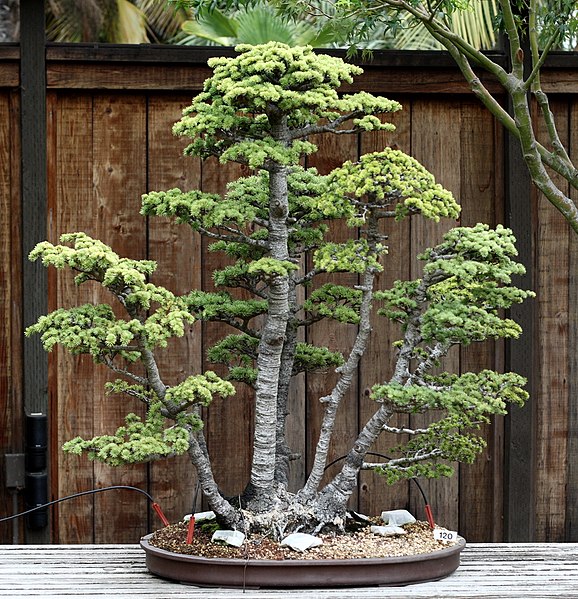
Image: By Sage Ross [GFDL (https://www.gnu.org/copyleft/fdl.html), CC-BY-SA-3.0 (https://creativecommons.org/licenses/by-sa/3.0/) or CC BY-SA 2.5 (https://creativecommons.org/licenses/by-sa/2.5)], from Wikimedia Commons
JM219 Cedar of Lebanon ( Cedrus libani )
A mature cedar of Lebanon is a stately and picturesque evergreen conifer. It has a massive (sometimes forked) trunk, very wide-spreading horizontal branches (the lower ones often kissing the ground), and a crown of flat tiers, like table tops. This magnificent tree can be raised in bonsai form very easily
The Lebanon Cedar is the national emblem of Lebanon, and it is seen on the Lebanese flag. It is also the main symbol of the Cedar Revolution, along with many political parties in Lebanon such as the Kataeb, the National Liberal Party and the Lebanese Forces. As a result of long exploitation, very few old trees remain in Lebanon, but there is now an active program to conserve and regenerate the forests. The forest of the Cedars of God in Bsharri and the Barouk forest are national reserves in Lebanon. Germination: 30-50%.
The Lebanon Cedar is the national emblem of Lebanon, and it is seen on the Lebanese flag. It is also the main symbol of the Cedar Revolution, along with many political parties in Lebanon such as the Kataeb, the National Liberal Party and the Lebanese Forces. As a result of long exploitation, very few old trees remain in Lebanon, but there is now an active program to conserve and regenerate the forests. The forest of the Cedars of God in Bsharri and the Barouk forest are national reserves in Lebanon. Germination: 30-50%.
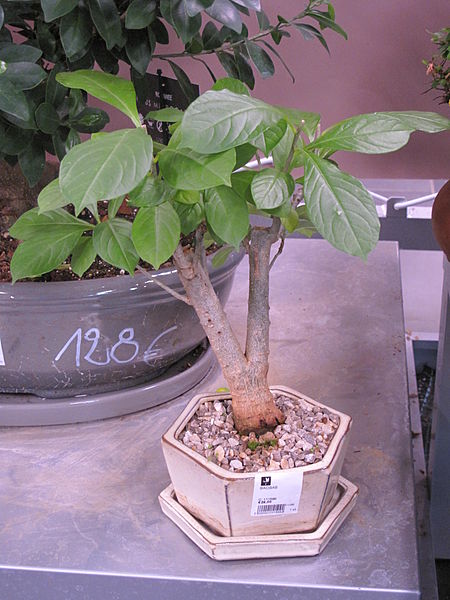
1A060 Baobab; Lemonade Tree; Monkeybread Tree ( Adonis digitata )
Imagine owning a piece of the African savannah that fits right on your windowsill. Known as the "Tree of Life," the African Baobab is one of the most iconic and resilient trees on Earth, and it makes for a truly extraordinary, conversation-starting bonsai.Imagine owning a piece of the African savannah that fits right on your windowsill. Known as the "Tree of Life," the African Baobab is one of the most iconic and resilient trees on Earth, and it makes for a truly extraordinary, conversation-starting bonsai. Even in miniature, the Baobab retains its famous massive, bottle-shaped trunk and "upside-down" branch structure, giving it a majestic, prehistoric look that no other species can replicate.
Living History: These trees are among the longest-lived on the planet, with some wild specimens dated at over 2,000 years old. Your bonsai isn't just a plant—it’s a legacy that can be passed down for generations.
The Survivor’s Choice: Junipers might be hardy, but Baobabs are legendary survivors. They are incredibly drought-tolerant, storing water in their thick trunks to thrive in dry conditions where other plants would wither.
A Year-Round Spectacle:In Summer: It sports lush, hand-shaped ("digitata") leaves that add a vibrant tropical feel.In Winter: It sheds its leaves to reveal a stark, statuesque architectural form that is equally beautiful in its dormant state.
Perfect for Modern Living:Low Maintenance: Ideal for busy collectors, this succulent tree prefers full sun and infrequent watering, especially during its winter dormancy.
Unique Aesthetic: Its grey-brown, textured bark and stout branches provide a bold, masculine contrast to more delicate bonsai styles.
Iconic Silhouette: Even in miniature, the Baobab retains its famous massive, bottle-shaped trunk and "upside-down" branch structure, giving it a majestic, prehistoric look that no other species can replicate.
Low Maintenance: Ideal for busy collectors, this succulent tree prefers full sun and infrequent watering, especially during its winter dormancy.
Unique Aesthetic: Its grey-brown, textured bark and stout branches provide a bold, masculine contrast to more delicate bonsai styles.
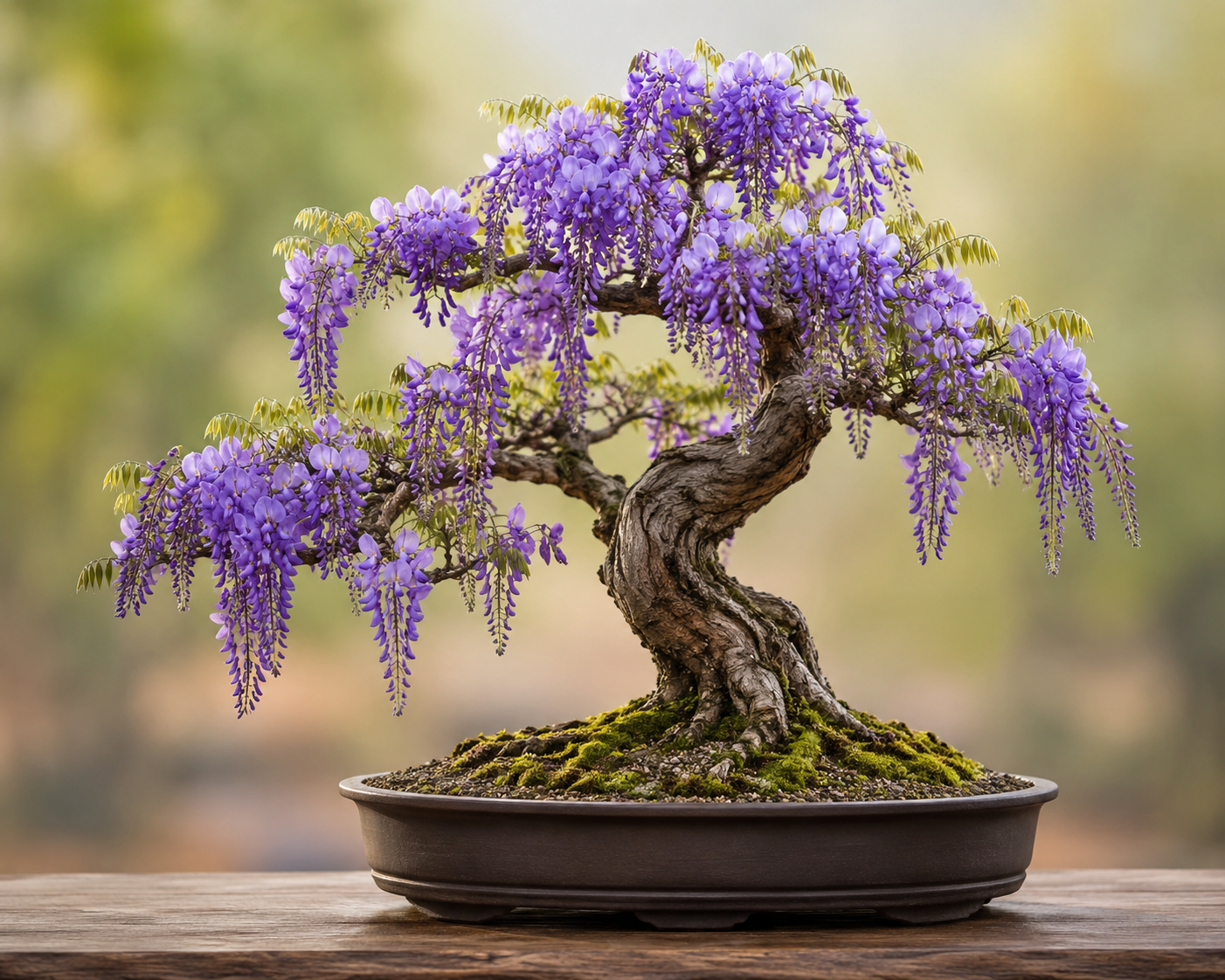
3451 African Wisteria Tree ( Bolusanthus speciousus )
Looking for the "Holy Grail" of flowering bonsai? Meet the African Wisteria Tree (Bolusanthus speciosus)—a showstopper that brings the breathtaking beauty of the African wild into your home or garden.
While traditional Wisteria can be aggressive and difficult to manage, the Bolusanthus offers that same cascading elegance in a perfectly behaved, naturally miniature form.
The Royal Bloom: Imagine hanging racemes of electric violet-blue flowers draping from your bonsai’s canopy. When in bloom, this tree is a literal fountain of colour that rivals any orchid or cherry blossom.
Exquisite Texture: Even without the flowers, its foliage is a work of art. The delicate, drooping leaflets give it a weeping, graceful silhouette that looks sophisticated year-round.The "Old World" Bark: As it matures, the bark turns a rugged, deeply fissured dark grey. This natural aging process gives a young tree the weathered, ancient appearance that bonsai masters strive for over decades.
Built for Resilience: Native to the subtropical regions of Southern Africa, this tree is drought-tolerant and loves the heat. It’s a tough, sun-loving species that rewards minimal effort with maximum visual impact.
Perfectly Sized: Unlike its vine-growing namesake, this is a true tree. Its slow growth and naturally small stature make it exceptionally easy to wire and style into classic bonsai shapes.
While traditional Wisteria can be aggressive and difficult to manage, the Bolusanthus offers that same cascading elegance in a perfectly behaved, naturally miniature form.
The Royal Bloom: Imagine hanging racemes of electric violet-blue flowers draping from your bonsai’s canopy. When in bloom, this tree is a literal fountain of colour that rivals any orchid or cherry blossom.
Exquisite Texture: Even without the flowers, its foliage is a work of art. The delicate, drooping leaflets give it a weeping, graceful silhouette that looks sophisticated year-round.The "Old World" Bark: As it matures, the bark turns a rugged, deeply fissured dark grey. This natural aging process gives a young tree the weathered, ancient appearance that bonsai masters strive for over decades.
Built for Resilience: Native to the subtropical regions of Southern Africa, this tree is drought-tolerant and loves the heat. It’s a tough, sun-loving species that rewards minimal effort with maximum visual impact.
Perfectly Sized: Unlike its vine-growing namesake, this is a true tree. Its slow growth and naturally small stature make it exceptionally easy to wire and style into classic bonsai shapes.
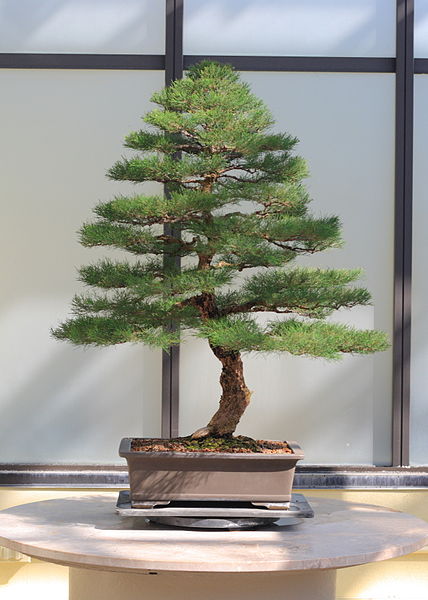

3329 River She Oak ( Casuarina equisetifolia )
Also known as Hosretail She Oak. This is a small tree growing to perhaps 20 feet in its natural environment with a pendulous, drooping, normally open habit. Flowers are inconspicuous but these trees come in male and female forms and in spring the male trees can take on an attractive rusty hew from their pollen.
Fruit is a cone to about an inch in length. Used extensively as a seaside street or park planting this species is wind firm, salt tolerant and nitrogen fixing and consequently it is particularly useful in areas of poor sandy soil where it is a valuable windbreak and soil binder.
They are very hardy trees, drought tolerant but are not frost tolerant to any real degree so are best suited to warmer Mediterranean or sub to fully tropical areas, we have seen in survive in zone 9.
This species also makes an excellent bonsai subject. Easy to propagate from seed and it can be grown in pots, tubs or indoors as a houseplant in colder climates.
Fruit is a cone to about an inch in length. Used extensively as a seaside street or park planting this species is wind firm, salt tolerant and nitrogen fixing and consequently it is particularly useful in areas of poor sandy soil where it is a valuable windbreak and soil binder.
They are very hardy trees, drought tolerant but are not frost tolerant to any real degree so are best suited to warmer Mediterranean or sub to fully tropical areas, we have seen in survive in zone 9.
This species also makes an excellent bonsai subject. Easy to propagate from seed and it can be grown in pots, tubs or indoors as a houseplant in colder climates.
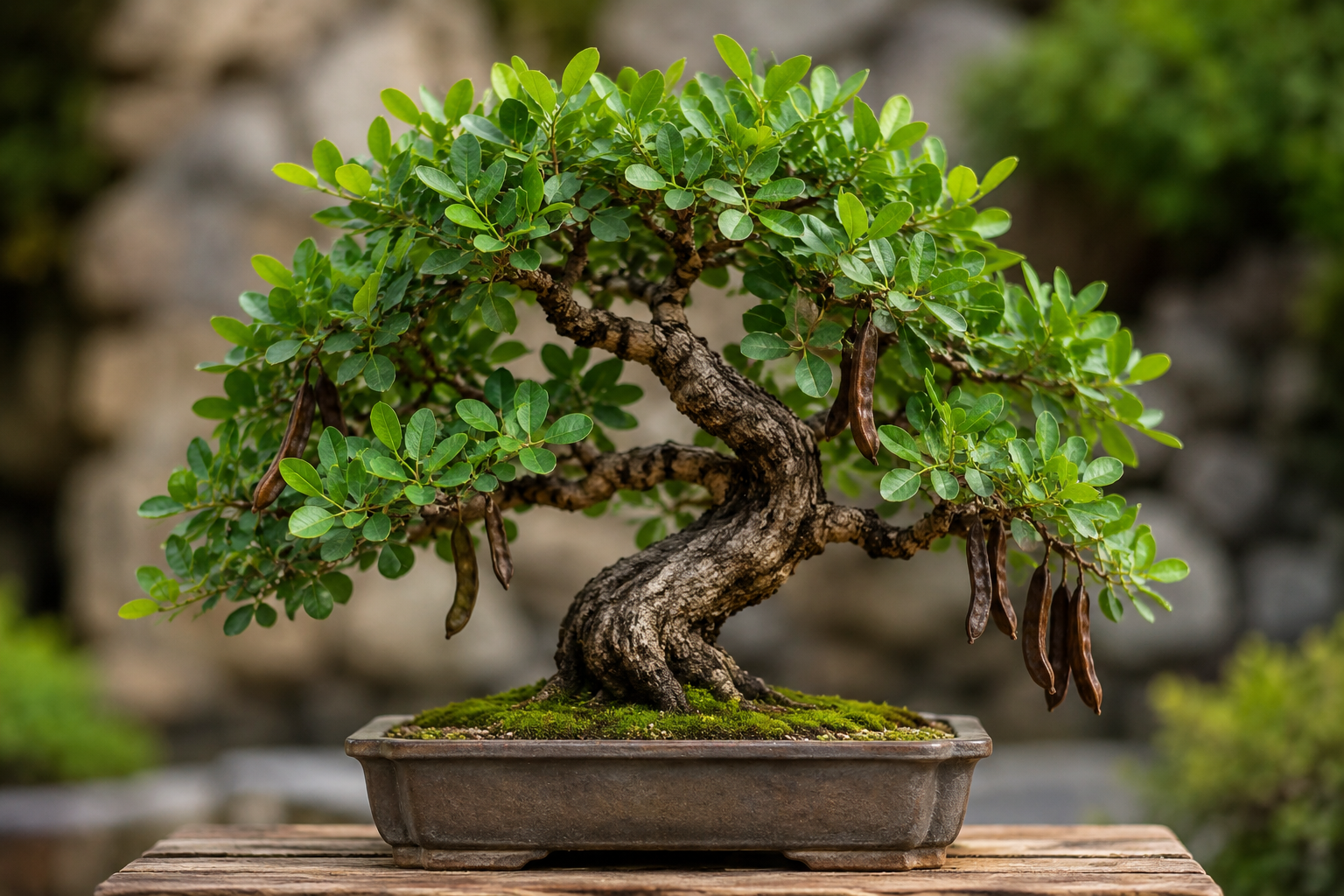
D2249 Carob Tree ( Ceratonia )
Looking for a bonsai that combines Mediterranean soul with "bulletproof" resilience? Meet the Carob Tree (Ceratonia siliqua)—the ultimate choice for a collector who values a rugged, masculine aesthetic and a tree that’s built to last. Known for centuries as the "Black Gold" of the Mediterranean, the Carob brings a sense of ancient history and sun-drenched landscapes right to your display shelf.
Why the Carob Tree is a Bonsai Powerhouse:The "Unstoppable" Survivor: If you’re prone to forgetting a watering here or there, the Carob is your best friend. It is incredibly drought-tolerant and thrives in the heat, making it one of the most forgiving species for both beginners and busy experts.
Evergreen Elegance: Its leathery, deep-green oval leaves provide a lush, dense canopy year-round. The glossy texture reflects light beautifully, giving the tree a vibrant, healthy glow even in the height of summer.
Rugged, Gnarled Character: The Carob naturally develops a thick, rough-textured trunk and interesting "muscular" surface roots (nebari) very early in its life. It looks like a century-old specimen while still in its training pot.
A Conversation Starter: Beyond its beauty, it’s a functional marvel. As the source of natural chocolate substitute (carob powder), this tree has a rich cultural story that adds a layer of depth to your collection.
Styling Versatility: Whether you prefer the upright "Informal Upright" style or a dramatic "Slanting" look, the Carob’s sturdy branches take to wiring exceptionally well and hold their shape with confidence.
Why the Carob Tree is a Bonsai Powerhouse:The "Unstoppable" Survivor: If you’re prone to forgetting a watering here or there, the Carob is your best friend. It is incredibly drought-tolerant and thrives in the heat, making it one of the most forgiving species for both beginners and busy experts.
Evergreen Elegance: Its leathery, deep-green oval leaves provide a lush, dense canopy year-round. The glossy texture reflects light beautifully, giving the tree a vibrant, healthy glow even in the height of summer.
Rugged, Gnarled Character: The Carob naturally develops a thick, rough-textured trunk and interesting "muscular" surface roots (nebari) very early in its life. It looks like a century-old specimen while still in its training pot.
A Conversation Starter: Beyond its beauty, it’s a functional marvel. As the source of natural chocolate substitute (carob powder), this tree has a rich cultural story that adds a layer of depth to your collection.
Styling Versatility: Whether you prefer the upright "Informal Upright" style or a dramatic "Slanting" look, the Carob’s sturdy branches take to wiring exceptionally well and hold their shape with confidence.
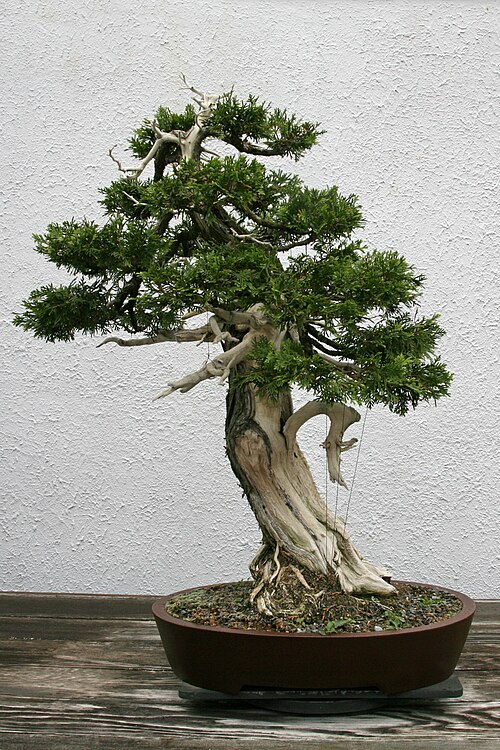
Image:National Bonsai & Penjing Museum, USA
B1708 Incense Cedar ( Calocedrus decurrens )
Looking for a bonsai that engages more than just your sight? Meet the Incense Cedar (Calocedrus decurrens)—the aromatic masterpiece of the high sierras, now scaled for your sanctuary. While many conifers look similar, the Incense Cedar stands apart with its unique, scale-like foliage and a fragrance that defines the crisp, clean air of the American West. It’s not just a tree; it’s an sensory experience.
The Signature Scent: True to its name, this tree releases a rich, spicy fragrance whenever you prune or even lightly brush against its foliage. It’s like having a natural, mountain-air diffuser in your living space.Unique "Fan-Like"
Foliage: Unlike the needles of a pine or juniper, the Incense Cedar features beautiful, flattened vertical sprays of emerald-green scales. It creates a textured, lace-like canopy that is incredibly distinct and visually cooling. Striking "Cinnamon" Bark: As the tree matures, it develops deeply furrowed, shredding bark in a rich cinnamon-red hue. The contrast between the vibrant green fans and the warm, weathered trunk is a classic "old-growth" look that usually takes decades to achieve in other species.
High-Altitude Hardiness: This is a rugged survivor. It is exceptionally cold-hardy and heat-tolerant, making it a versatile choice for collectors in a wide range of climates. It’s a "tough-as-nails" tree with a refined, delicate appearance.
The Pillar of Strength: Naturally growing in a stately, columnar fashion, this species is perfect for "Formal Upright" or "Twin Trunk" bonsai styles, representing unshakeable stability and vertical grace.
The Living Legacy:The Incense Cedar is a slow-growing treasure that rewards the patient artist. It’s a tree that carries the spirit of the giant forests, distilled into a form that fits in the palm of your hand.
The Signature Scent: True to its name, this tree releases a rich, spicy fragrance whenever you prune or even lightly brush against its foliage. It’s like having a natural, mountain-air diffuser in your living space.Unique "Fan-Like"
Foliage: Unlike the needles of a pine or juniper, the Incense Cedar features beautiful, flattened vertical sprays of emerald-green scales. It creates a textured, lace-like canopy that is incredibly distinct and visually cooling. Striking "Cinnamon" Bark: As the tree matures, it develops deeply furrowed, shredding bark in a rich cinnamon-red hue. The contrast between the vibrant green fans and the warm, weathered trunk is a classic "old-growth" look that usually takes decades to achieve in other species.
High-Altitude Hardiness: This is a rugged survivor. It is exceptionally cold-hardy and heat-tolerant, making it a versatile choice for collectors in a wide range of climates. It’s a "tough-as-nails" tree with a refined, delicate appearance.
The Pillar of Strength: Naturally growing in a stately, columnar fashion, this species is perfect for "Formal Upright" or "Twin Trunk" bonsai styles, representing unshakeable stability and vertical grace.
The Living Legacy:The Incense Cedar is a slow-growing treasure that rewards the patient artist. It’s a tree that carries the spirit of the giant forests, distilled into a form that fits in the palm of your hand.
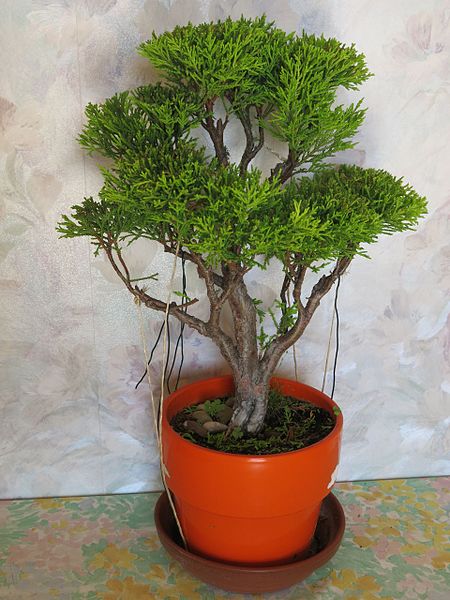
Image: By Tangopaso [Public domain], from Wikimedia Commons

B1749 Monterey Cypress ( Cupressus macrocarpa )
Looking to capture the raw, windswept energy of the California coastline? Meet the Monterey Cypress (Cupressus macrocarpa)—the "James Dean" of the bonsai world.While other trees aim for perfect symmetry, the Monterey Cypress is celebrated for its dramatic, asymmetrical character and its ability to tell a story of survival against the elements. It’s the ultimate choice for the artist who wants a tree with soul.
Naturally shaped by Pacific salt spray and gale-force winds, this species is the gold standard for "Literati" or "Slanting" bonsai styles. It captures the rugged, twisted beauty of a tree clinging to a cliffside.
Vibrant Lemon-Scented Foliage: Unlike the dark, heavy greens of many conifers, the Monterey Cypress features bright, lime-green foliage that glows in the sunlight. When crushed or pruned, it releases a refreshing, citrusy aroma that fills the room.
Rapid Character Building: This is a fast-growing cypress, meaning you don't have to wait decades to see results. It thickens its trunk quickly and responds beautifully to aggressive styling and "Jin" (deadwood) techniques.
The "Old Growth" Bark: As it matures, the bark transitions from a smooth reddish-brown to a deeply textured, silver-grey, giving even a relatively young bonsai the appearance of a centuries-old coastal survivor.
Exceptional Versatility: While it loves the coastal mist, it is surprisingly adaptable. It thrives in full sun and is incredibly resilient, making it a rewarding project for both the bold beginner and the seasoned pro.
Naturally shaped by Pacific salt spray and gale-force winds, this species is the gold standard for "Literati" or "Slanting" bonsai styles. It captures the rugged, twisted beauty of a tree clinging to a cliffside.
Vibrant Lemon-Scented Foliage: Unlike the dark, heavy greens of many conifers, the Monterey Cypress features bright, lime-green foliage that glows in the sunlight. When crushed or pruned, it releases a refreshing, citrusy aroma that fills the room.
Rapid Character Building: This is a fast-growing cypress, meaning you don't have to wait decades to see results. It thickens its trunk quickly and responds beautifully to aggressive styling and "Jin" (deadwood) techniques.
The "Old Growth" Bark: As it matures, the bark transitions from a smooth reddish-brown to a deeply textured, silver-grey, giving even a relatively young bonsai the appearance of a centuries-old coastal survivor.
Exceptional Versatility: While it loves the coastal mist, it is surprisingly adaptable. It thrives in full sun and is incredibly resilient, making it a rewarding project for both the bold beginner and the seasoned pro.
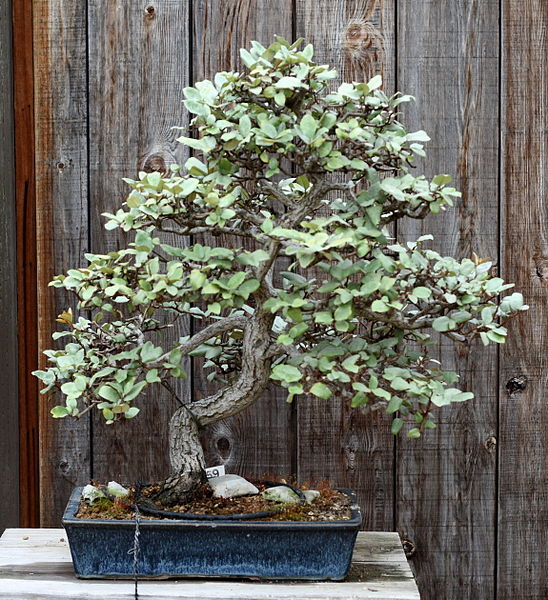

D2219 Russian Olive ( Elaeagnus angustifolia )
Looking for a bonsai that combines rugged resilience with a touch of Mediterranean flair?
Meet the Russian Olive (Elaeagnus angustifolia)—a stunning, hardy alternative to the traditional olive tree that thrives where others struggle.With its iconic silver foliage and deeply textured bark, the Russian Olive brings an immediate sense of ancient, weathered beauty to your collection.
Striking "Silver & Sage" Contrast: The narrow, willow-like leaves feature a deep green upper surface and a brilliant silvery-white underside. This dual-tone foliage creates a shimmering effect in the breeze that few other bonsai species can match.
The Look of an Ancient Giant: This species naturally develops dark, gnarled, and exfoliating bark. Even as a young bonsai, it carries the "old-soul" aesthetic of a tree that has survived centuries on a windswept plain.Hardiness That Defies the Cold: Unlike true Mediterranean olives, the Russian Olive is incredibly cold-hardy (down to USDA Zone 3). It is a "bulletproof" choice for collectors in colder climates who want the olive look without the winter stress.
Aromatic Spring Blooms: In late spring, it produces clusters of small, intensely fragrant yellow flowers that can fill an entire room with a sweet, spicy scent, followed by ornamental silver-scaled berries.
Forgiving & Fast-Growing: It is a vigorous grower that responds exceptionally well to hard pruning and wiring. Whether you are a beginner or a pro, you’ll find its ability to bud from old wood makes it a joy to style into "Informal Upright" or "Cascade" forms.
Thrives on Neglect: This tree is a survivor. It is drought-tolerant, salt-tolerant, and thrives in poor, alkaline soils. It’s the perfect "low-maintenance luxury" for a busy lifestyle.
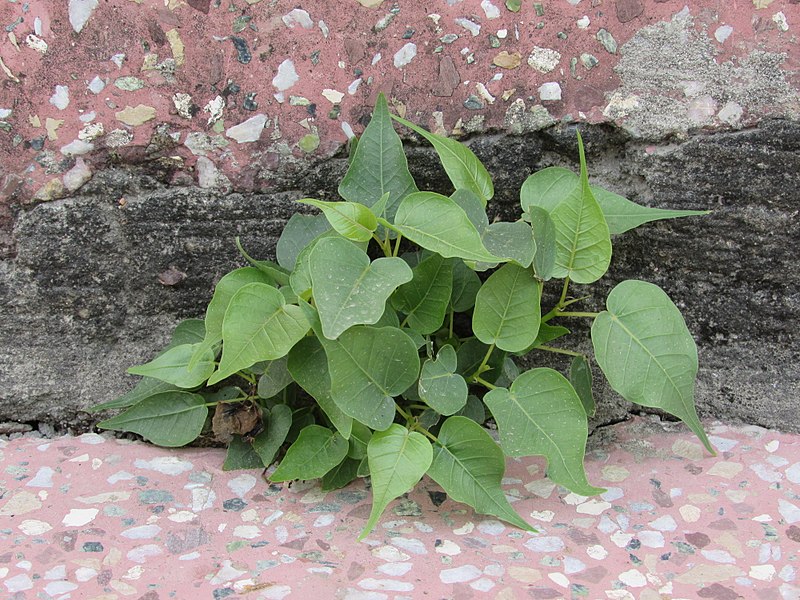
The Iconic "Drip Tip": Its heart-shaped leaves are legendary for their elongated, elegant tips. These "drip tips" are nature’s engineering for shedding rain, giving the tree a graceful, weeping silhouette that is instantly recognizable.
The Master of Aerial Roots: Like its Ficus cousins, the Peepful is a champion at producing dramatic aerial roots. Over time, these roots can be trained to wrap around rocks or form a "banyan" style forest, creating a miniature landscape that looks like an ancient jungle temple.
A Pale, Sculptural Trunk: As it matures, the bark turns a beautiful, smooth silvery-grey. The contrast between the pale, muscular trunk and the vibrant green canopy is a classic aesthetic that radiates strength and peace.
Unmatched Vitality: This is one of the most resilient and fast-growing species in the bonsai world. It is incredibly forgiving of pruning, buds back easily on old wood, and loves a warm, sunny windowsill.
Continuous Movement: The leaves are attached by long, slender petioles, meaning they dance and shimmer in even the slightest breeze—bringing a dynamic, "living" energy to your home.
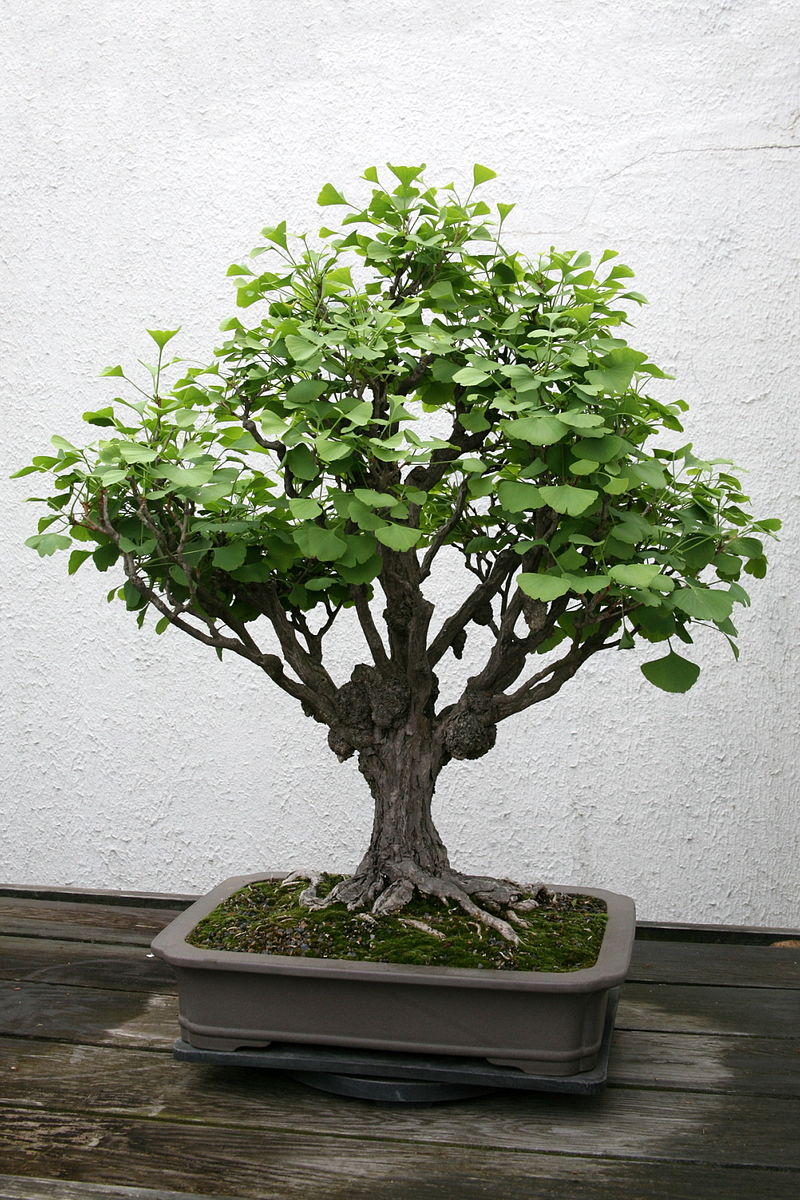
In autumn, the Ginkgo undergoes a transformation like no other. Its leaves turn a brilliant, uniform neon-yellow that glows as if it’s plugged into a light source. When they finally drop, they create a stunning "gold carpet" around the base of your pot.
The "Fan-Shaped" Wonder: Its leaves are unlike any other plant on Earth. Elegant, notched fans that flutter in the breeze with a delicate, paper-like texture. They bring a soft, feminine grace that balances out the tree’s rugged trunk.
Ancient, "Milk-White" Bark: As the Ginkgo ages, it develops a deeply fissured, corky bark in a beautiful pale grey-white. It provides a high-contrast backdrop for its vibrant green summer leaves and its golden autumn show.
Indestructible Resilience: The Ginkgo is famous for its legendary survival skills—it has survived ice ages and even the Hiroshima blast. It is incredibly resistant to pests, diseases, and urban pollution, making it a "lifetime companion" tree.
The "Chi-Chi" Character: Older Ginkgo bonsai are prized for developing "chi-chi"—unique, stalactite-like growths that hang from the branches, giving the tree a mystical, otherworldly appearance.
Meet the Russian Olive (Elaeagnus angustifolia)—a stunning, hardy alternative to the traditional olive tree that thrives where others struggle.With its iconic silver foliage and deeply textured bark, the Russian Olive brings an immediate sense of ancient, weathered beauty to your collection.
Striking "Silver & Sage" Contrast: The narrow, willow-like leaves feature a deep green upper surface and a brilliant silvery-white underside. This dual-tone foliage creates a shimmering effect in the breeze that few other bonsai species can match.
The Look of an Ancient Giant: This species naturally develops dark, gnarled, and exfoliating bark. Even as a young bonsai, it carries the "old-soul" aesthetic of a tree that has survived centuries on a windswept plain.Hardiness That Defies the Cold: Unlike true Mediterranean olives, the Russian Olive is incredibly cold-hardy (down to USDA Zone 3). It is a "bulletproof" choice for collectors in colder climates who want the olive look without the winter stress.
Aromatic Spring Blooms: In late spring, it produces clusters of small, intensely fragrant yellow flowers that can fill an entire room with a sweet, spicy scent, followed by ornamental silver-scaled berries.
Forgiving & Fast-Growing: It is a vigorous grower that responds exceptionally well to hard pruning and wiring. Whether you are a beginner or a pro, you’ll find its ability to bud from old wood makes it a joy to style into "Informal Upright" or "Cascade" forms.
Thrives on Neglect: This tree is a survivor. It is drought-tolerant, salt-tolerant, and thrives in poor, alkaline soils. It’s the perfect "low-maintenance luxury" for a busy lifestyle.
Image: Bijay chaurasia [CC BY-SA 3.0], via Wikimedia Commons
_grow_on_a_bare_wall.jpg)
D4513 Peepful Fig ( Ficus religiosa )
This isn't just a plant; it’s a living symbol of enlightenment. As the species under which the Buddha is said to have attained nirvana, the Peeful Fig brings a profound sense of spiritual heritage and "Zen" to any collection.The Iconic "Drip Tip": Its heart-shaped leaves are legendary for their elongated, elegant tips. These "drip tips" are nature’s engineering for shedding rain, giving the tree a graceful, weeping silhouette that is instantly recognizable.
The Master of Aerial Roots: Like its Ficus cousins, the Peepful is a champion at producing dramatic aerial roots. Over time, these roots can be trained to wrap around rocks or form a "banyan" style forest, creating a miniature landscape that looks like an ancient jungle temple.
A Pale, Sculptural Trunk: As it matures, the bark turns a beautiful, smooth silvery-grey. The contrast between the pale, muscular trunk and the vibrant green canopy is a classic aesthetic that radiates strength and peace.
Unmatched Vitality: This is one of the most resilient and fast-growing species in the bonsai world. It is incredibly forgiving of pruning, buds back easily on old wood, and loves a warm, sunny windowsill.
Continuous Movement: The leaves are attached by long, slender petioles, meaning they dance and shimmer in even the slightest breeze—bringing a dynamic, "living" energy to your home.
Image: By Cliff from Arlington, Virginia, USA (Ginko (Ginko biloba)Uploaded by AlbertHerring) [CC BY 2.0], via Wikimedia Commons
_(3505588883).jpg)
D2977 Ginko Biloba ( Maidenhair Fern )
Looking for a "living fossil" that brings the golden glow of ancient temples to your home? Meet the Ginkgo Biloba—the sole survivor of an entire prehistoric era and the ultimate "statement piece" for any serious collector. While other bonsai change slightly with the seasons, the Ginkgo puts on a world-class theatrical performance every single year. It’s not just a tree; it’s a piece of natural history.In autumn, the Ginkgo undergoes a transformation like no other. Its leaves turn a brilliant, uniform neon-yellow that glows as if it’s plugged into a light source. When they finally drop, they create a stunning "gold carpet" around the base of your pot.
The "Fan-Shaped" Wonder: Its leaves are unlike any other plant on Earth. Elegant, notched fans that flutter in the breeze with a delicate, paper-like texture. They bring a soft, feminine grace that balances out the tree’s rugged trunk.
Ancient, "Milk-White" Bark: As the Ginkgo ages, it develops a deeply fissured, corky bark in a beautiful pale grey-white. It provides a high-contrast backdrop for its vibrant green summer leaves and its golden autumn show.
Indestructible Resilience: The Ginkgo is famous for its legendary survival skills—it has survived ice ages and even the Hiroshima blast. It is incredibly resistant to pests, diseases, and urban pollution, making it a "lifetime companion" tree.
The "Chi-Chi" Character: Older Ginkgo bonsai are prized for developing "chi-chi"—unique, stalactite-like growths that hang from the branches, giving the tree a mystical, otherworldly appearance.
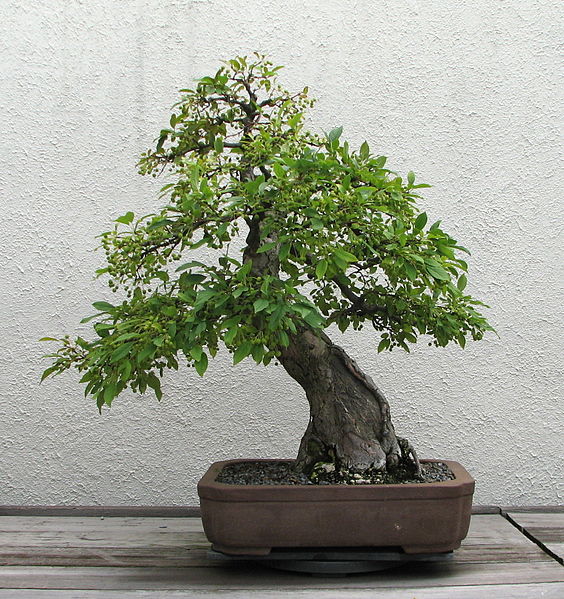

B1735 Siberian Crabapple ( Malus baccata )
If you want a tree that works as hard as you do, this is it. While other flowering trees can be finicky, the Siberian Crabapple is tough as nails and breathtakingly beautiful, offering a rotating display of blossoms, fruit, and fiery foliage.The Spring Explosion: Every spring, this tree vanishes under a blanket of snow-white or blush-pink blossoms. The fragrance is light and sweet, turning your display area into a sensory retreat.
Jeweled Winter Interest: Unlike other trees that go "quiet" in winter, the Malus baccata is famous for its vibrant, pea-sized red or yellow fruit. These "jewels" cling to the branches long after the leaves have fallen, providing a stunning contrast against the dark bark and winter snow.
The "Ironclad" Conifer Alternative: True to its name, the Siberian Crabapple is incredibly cold-hardy. It laughs at frost and is highly resistant to the pests and diseases that plague other fruit trees, making it an ideal choice for northern collectors.
Rugged, Sculptural Bark: As it matures, the bark develops a cracked, charcoal-grey texture that gives even a small tree the majestic presence of an ancient orchard giant.
Dynamic Fall Colour: Before the winter show begins, the leaves turn a burnished gold or orange, providing one last burst of warmth to your autumn garden.
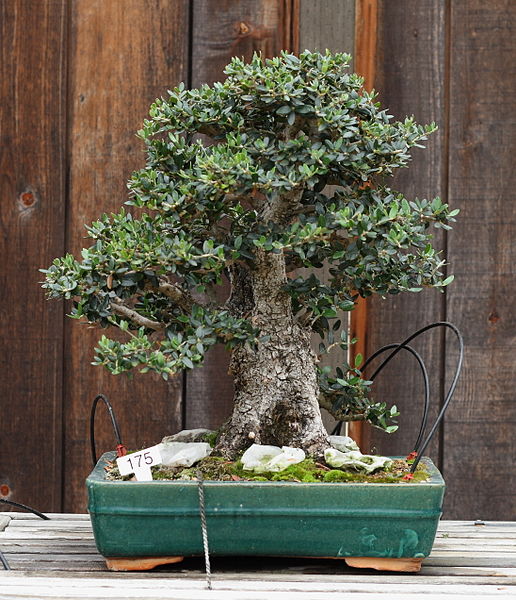

D2228 Common Olive ( Olea europaea )
Few trees carry the prestige of the Olive. It is a "living antique" that transforms any space into a sun-drenched sanctuary, bringing the soul of an Italian grove right to your tabletop.
The "Ancient" Aesthetic: Olives are famous for their rugged, gnarled trunks and silver-grey bark that fissures beautifully with age. Even a young Olive bonsai carries a "weathered-by-time" look that commands respect.
Silvery-Green Elegance: The narrow, leathery leaves are a deep sage green on top with a shimmering silver underside. This muted, sophisticated palette provides a refreshing contrast to the typical bright greens of other bonsai.
Built to Last: This is one of the most resilient and long-lived species on Earth. It is exceptionally drought-tolerant and thrives in sun-soaked environments, making it a perfect companion for a bright windowsill or a warm patio.
The Reward of Fruit: With proper care and plenty of sunlight, your bonsai can produce delicate white flowers followed by miniature olives, adding a layer of functional beauty and "harvest" charm to your hobby.
Remarkable Versatility: The Olive is a "stylist’s dream." It responds brilliantly to hard pruning and is one of the best species for creating dramatic "Jin" and "Shari" (deadwood features), allowing you to sculpt a tree that looks like it has survived centuries on a Mediterranean cliffside.
The "Ancient" Aesthetic: Olives are famous for their rugged, gnarled trunks and silver-grey bark that fissures beautifully with age. Even a young Olive bonsai carries a "weathered-by-time" look that commands respect.
Silvery-Green Elegance: The narrow, leathery leaves are a deep sage green on top with a shimmering silver underside. This muted, sophisticated palette provides a refreshing contrast to the typical bright greens of other bonsai.
Built to Last: This is one of the most resilient and long-lived species on Earth. It is exceptionally drought-tolerant and thrives in sun-soaked environments, making it a perfect companion for a bright windowsill or a warm patio.
The Reward of Fruit: With proper care and plenty of sunlight, your bonsai can produce delicate white flowers followed by miniature olives, adding a layer of functional beauty and "harvest" charm to your hobby.
Remarkable Versatility: The Olive is a "stylist’s dream." It responds brilliantly to hard pruning and is one of the best species for creating dramatic "Jin" and "Shari" (deadwood features), allowing you to sculpt a tree that looks like it has survived centuries on a Mediterranean cliffside.
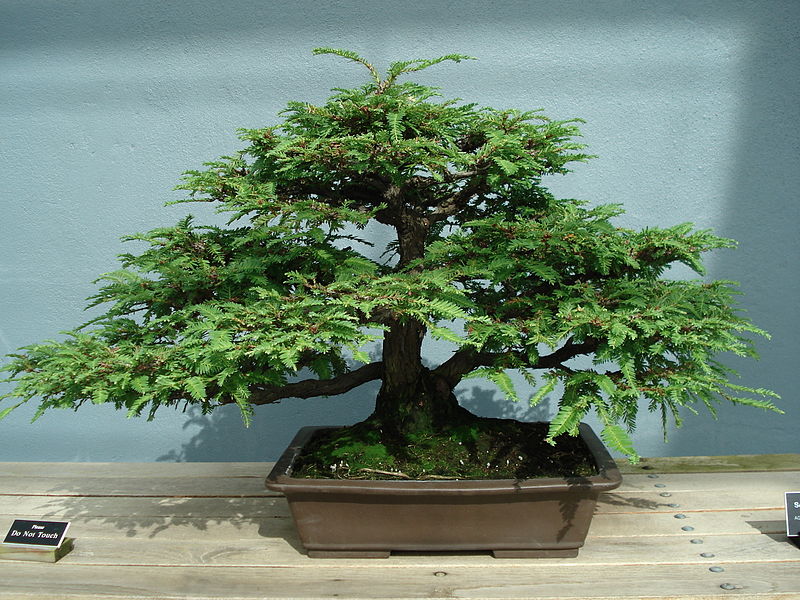
Image: By Jeffrey O. Gustafson [GFDL (https://www.gnu.org/copyleft/fdl.html) or CC BY-SA 3.0 (https://creativecommons.org/licenses/by-sa/3.0)], from Wikimedia Commons
D7874 Giant Sequoia ( Sequoia gigantea )
Looking to own the world’s most massive living thing—in a form that fits in your hand? Meet the Giant Sequoia (Sequia gigantea), the "King of the Forest" distilled into a majestic, manageable masterpiece. While most people travel thousands of miles to see these giants, you can experience the awe of the Sierras every morning on your own terrace. It is the ultimate "statement bonsai" for the collector who thinks big.
Owning a Sequoia is like owning a piece of the earth’s lungs. These trees are the heavyweights of history, and even in miniature, they radiate a sense of power and permanence that no other species can match.
The Iconic "Red" Trunk: As it matures, the Sequoia develops its legendary cinnamon-red, spongy bark. It is thick, fire-resistant, and deeply textured, providing a warm, vibrant contrast to its lush canopy.
Evergreen Precision: Its foliage is composed of fine, blue-green awl-shaped needles that create a dense, spire-like crown. It maintains a perfect, formal structure year-round, looking just like a "Christmas tree" from a prehistoric era.
Symmetry and Stature: The Giant Sequoia is the gold standard for the "Formal Upright" style. Its natural tendency to grow straight and true makes it a joy to style into a powerful, towering silhouette with perfectly balanced branches.
A "Fast" Legacy: Unlike some slow-moving conifers, the Sequoia is a vigorous grower when given plenty of sun and water. You’ll see tangible progress season after season as the trunk thickens and the bark begins to "plate" with age.
By nature, this is a low germinating seed, expect about 15-20 percent germination.
Owning a Sequoia is like owning a piece of the earth’s lungs. These trees are the heavyweights of history, and even in miniature, they radiate a sense of power and permanence that no other species can match.
The Iconic "Red" Trunk: As it matures, the Sequoia develops its legendary cinnamon-red, spongy bark. It is thick, fire-resistant, and deeply textured, providing a warm, vibrant contrast to its lush canopy.
Evergreen Precision: Its foliage is composed of fine, blue-green awl-shaped needles that create a dense, spire-like crown. It maintains a perfect, formal structure year-round, looking just like a "Christmas tree" from a prehistoric era.
Symmetry and Stature: The Giant Sequoia is the gold standard for the "Formal Upright" style. Its natural tendency to grow straight and true makes it a joy to style into a powerful, towering silhouette with perfectly balanced branches.
A "Fast" Legacy: Unlike some slow-moving conifers, the Sequoia is a vigorous grower when given plenty of sun and water. You’ll see tangible progress season after season as the trunk thickens and the bark begins to "plate" with age.
By nature, this is a low germinating seed, expect about 15-20 percent germination.
Complete Bonsai Growing Guide
All seed packets listed on this page are in stock and ready to ship.

Contact Us | Privacy Policy | About Us
Serving gardeners since 1992
State of Mississippi Seedmen's Permit #C-391, Ohio 90152, Minnesota 20086777