
The Seedman Garden-to-Bouquet Project
Few garden projects offer a reward as immediate and personal as carrying an armful of flowers indoors and turning them into a bouquet you grew yourself. The Garden-to-Bouquet Project is designed as a small cutting garden with a purpose: grow flowers that perform different jobs in an arrangement, learn when and how to harvest them, and then combine the harvest into bouquets for your home, friends, family, or a special occasion.
Rather than choosing eight flowers simply because they are pretty, we selected this group to teach the basic building blocks of floral design. Sunrich Gold Summer provides the focal flower; Matsumoto Aster adds secondary blooms; Champion Pro Pink Campanula creates height and line; Bishop's Flower supplies airy filler; Moon Lagoon Eucalyptus provides foliage; Honeywort adds unusual texture; Billy Buttons contribute repeating geometric accents; and Chabaud Avranchin Carnation brings old-fashioned fragrance and romantic color.
The Garden-to-Bouquet Journey: Plant → Grow → Cut → Condition → Design → Arrange → Display. You do not need every flower blooming on the same day, and you do not need all eight ingredients in every vase. The real goal is to learn what each type contributes so that, as the season progresses, you can begin creating combinations of your own.
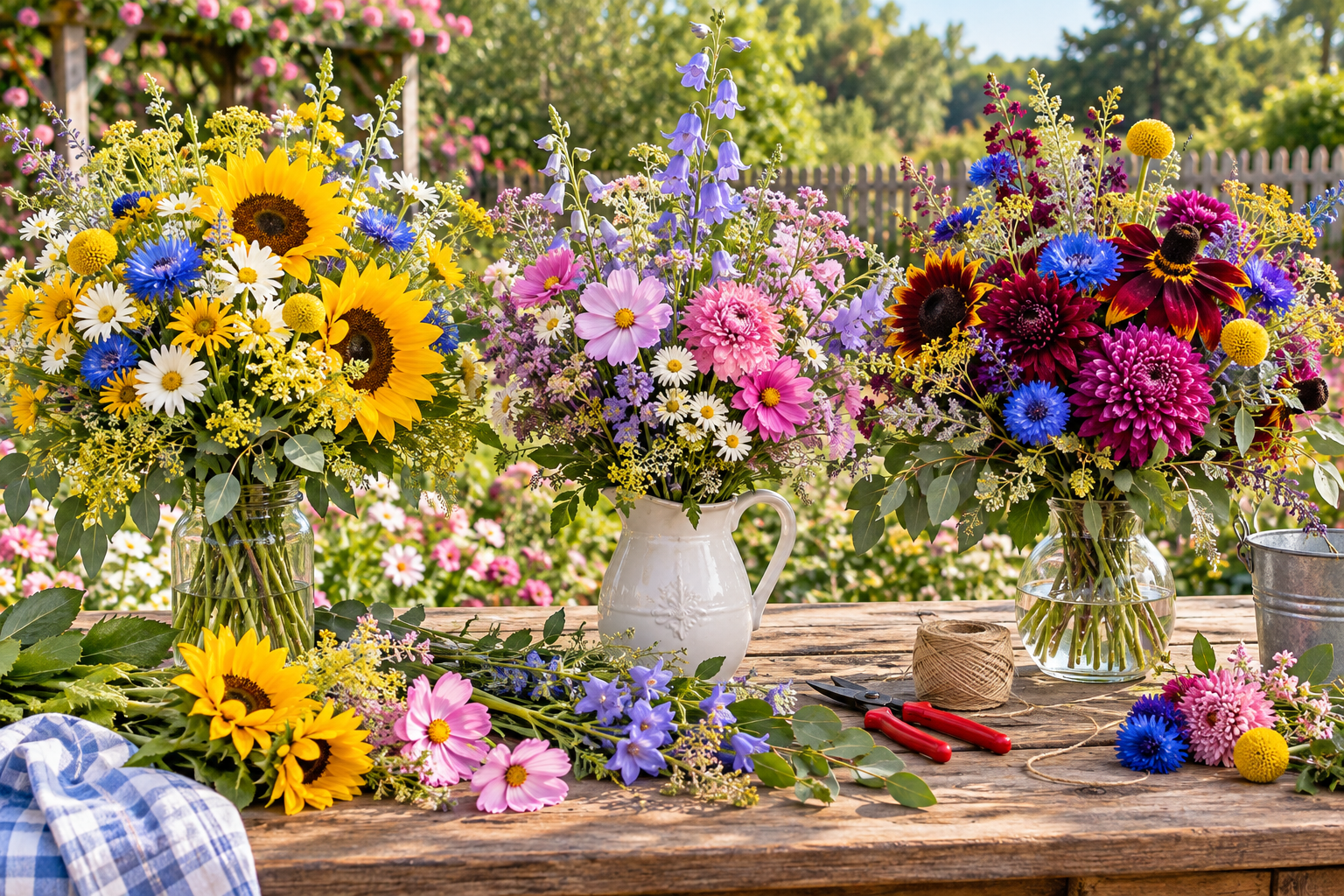
Three Bouquets to Try: The project concludes with three simple bouquet recipes—Sunny Garden, Cottage Garden, and Designer Garden—plus a practical guide to cutting, conditioning, arranging, and caring for your flowers.
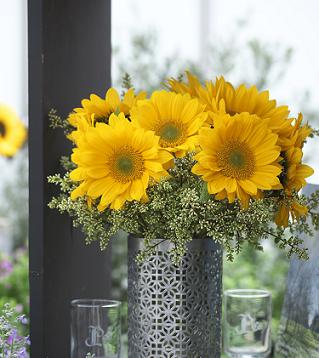
Project Role: Focal Flower. Sunrich Gold Summer Sunflower is the bold anchor of this cutting garden. Its large golden blooms naturally draw the eye, so even one or two stems can establish the character of an arrangement. Sunflowers are especially useful when learning bouquet design because they make the idea of a focal flower easy to see: place the dominant blooms first, then build the lighter and smaller materials around them.
Grow in full sun and rich, well-drained soil, and make succession sowings if you want a longer cutting season. For bouquets, cut when the petals are beginning to open but before the flower is fully mature. Harvest during the cool part of the morning, use clean sharp snips, remove leaves that would sit below the water line, and place the stems promptly into clean water. Sunrich types are valued by florists for uniform, strong-stemmed flowers and their clean presentation in arrangements.
Seedman Notes: Start your bouquet with the sunflower rather than trying to squeeze it into an arrangement at the end. A few well-positioned focal flowers usually look better than a vase crowded with competing large blooms. In our Sunny Garden recipe below, Sunrich Gold Summer provides the visual center while smaller flowers and foliage soften and connect the arrangement.
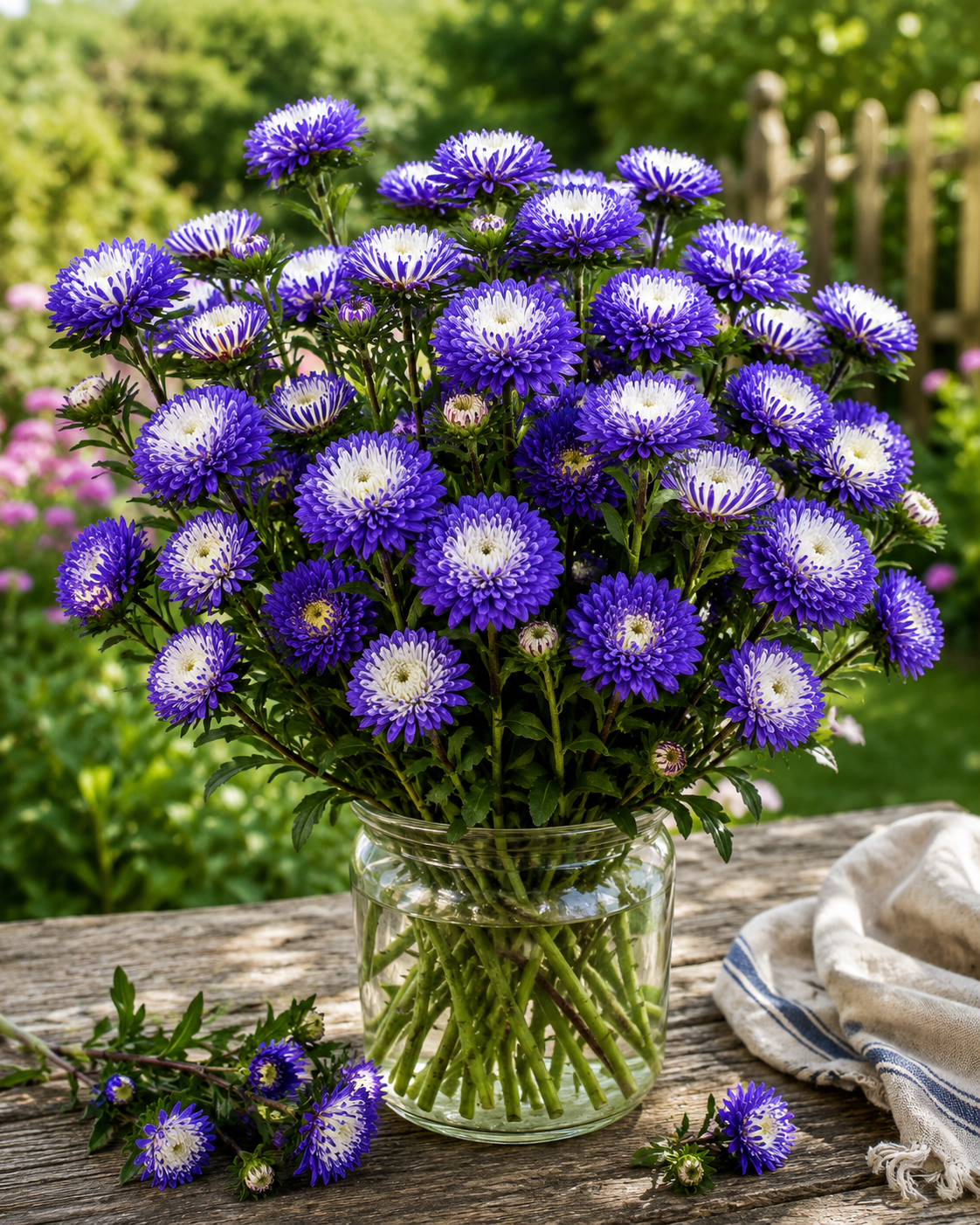
Project Role: Secondary Flower. Matsumoto Blue Tipped White Aster provides the medium-sized blooms that bridge the visual gap between a dominant focal flower and delicate fillers. Its white flowers touched with cool blue-lavender tones give a bouquet a softer, more finished appearance and combine especially well with pink, yellow, silver-green, and deeper jewel colors.
Grow in full sun in fertile, well-drained soil and keep plants evenly watered while establishing. For cutting, choose stems when several flowers have opened but additional buds are still developing. Cut in the cool morning, strip foliage from the portion of stem that will be submerged, and condition in clean water before arranging. Branching stems can often supply several flowers from a single cut, making them especially useful for filling the middle of a bouquet without making it look heavy.
Seedman Notes: Think of Matsumoto Aster as the flower that helps everything else become a bouquet. It is large enough to be noticed but not so dominant that it competes with the focal bloom. Use several stems around and between the main flowers to establish color, rhythm, and fullness.
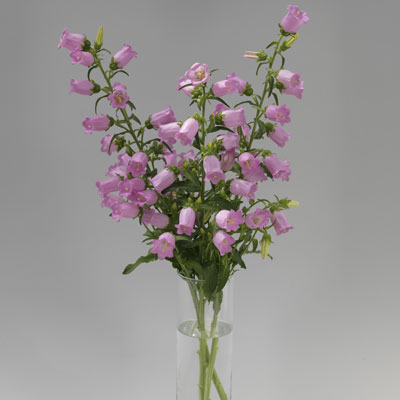
Project Role: Vertical / Line Flower. Champion Pro Pink Campanula contributes something completely different from the rounded flowers in this collection: height and direction. Its upright stems lined with soft pink bell-shaped flowers lead the eye upward and give an arrangement a graceful silhouette. A bouquet that seems too round or compact can often be transformed simply by adding a few line flowers.
Campanula prefers fertile, well-drained soil with steady moisture and performs best when grown for strong, straight stems. These are pelleted seeds, which makes the naturally tiny seed easier to handle. For arranging, harvest when the lower flowers on the spike have opened while buds remain above them. Condition immediately in clean water and handle the flowered stems gently so the bells are not bruised.
Seedman Notes: You rarely need many Campanula stems in one vase. Two or three placed at slightly different heights can give the entire bouquet movement. In the Cottage Garden recipe, Champion Pro Pink provides the vertical framework that keeps the softer carnations, asters, and Ammi from becoming a simple round mound of flowers.
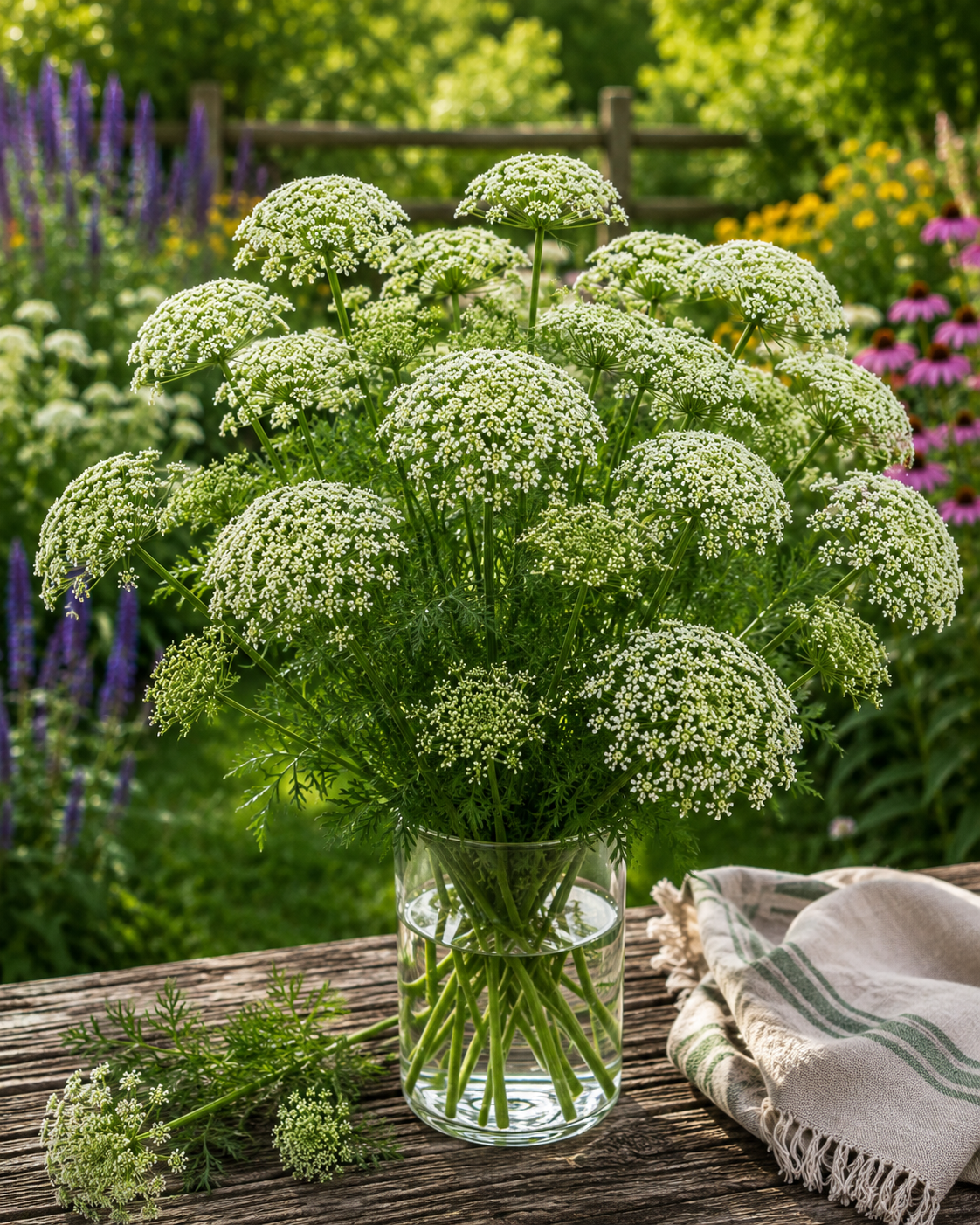
Project Role: Airy White Filler. Bishop's Flower (Ammi majus) produces broad, delicate umbels of tiny white flowers that create the airy spaces seen in professional garden-style bouquets. It fills openings without visually weighing down the arrangement and helps separate larger flowers so each bloom has room to be appreciated.
Grow in full sun to light shade in well-drained soil. Succession sowing can help extend the supply of usable stems. Cut when most of the small flowers in an umbel are open and the stem has become firm enough to support the flower head. Harvest in the cool part of the day, place promptly in water, and allow stems to condition before arranging. The lacy flowers also attract beneficial insects when allowed to remain in the garden.
Seedman Notes: Filler does not mean unimportant. Ammi is the material that visually ties neighboring flowers together and gives a bouquet breathing room. Add it after the focal and secondary flowers are positioned, turning the vase as you work and filling gaps rather than creating one solid mass of white.
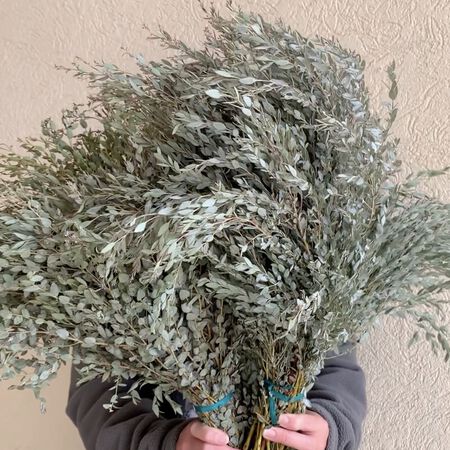
Project Role: Foliage Framework. Moon Lagoon Eucalyptus (Eucalyptus latens) provides the silvery-green foliage that gives a bouquet structure before the flowers are even added. Its rounded juvenile leaves, cool color, and characteristic eucalyptus appearance complement bright flowers while creating a natural transition between the vase and the blooms above it.
Grow in full sun with good drainage and warmth. In colder climates it is generally treated as a tender annual foliage crop, while gardeners in suitable mild climates may maintain plants longer. Cut leafy stems once they have enough length and substance for arranging, preferably during the cool part of the morning. Remove foliage below the water line and condition the stems before use. Do not overfill the vase with foliage; leave open spaces for the flowers that follow.
Seedman Notes: Florists often begin with greenery because it establishes the width and basic outline of an arrangement. Try placing several Moon Lagoon stems first, then add the flowers into the spaces you have created. This one change can make arranging homegrown flowers much easier for a beginner.
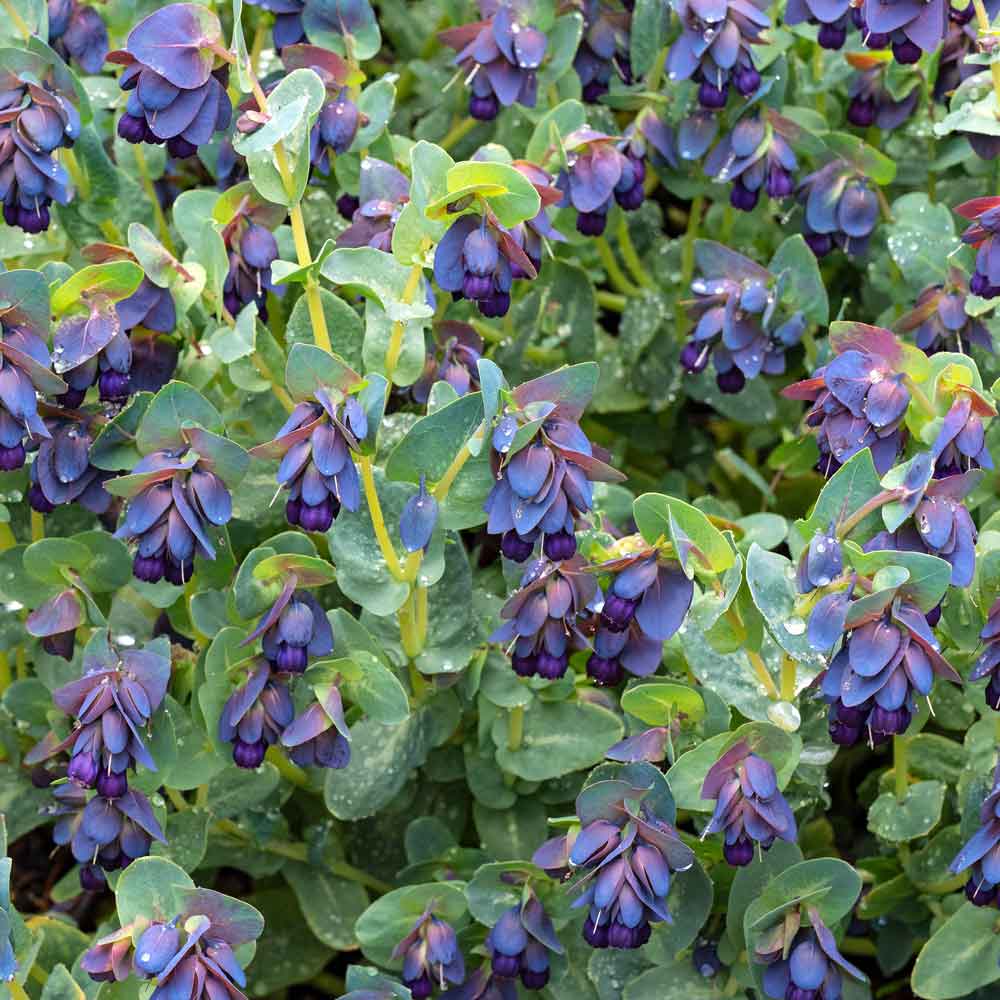
Project Role: Textural Foliage & Accent. Honeywort (Cerinthe major 'Purpurascens') brings an unusual combination of blue-green foliage, nodding purple-blue flowers, and richly colored bracts to the cutting garden. Instead of acting as a traditional flower or simple greenery, it adds texture and unexpected color that can make a homegrown bouquet look deliberately designed.
Grow in full sun to light shade in well-drained soil. Plants appreciate moderate moisture but should not remain waterlogged. Harvest stems when the bracts are well colored and flowers are developing, cutting during the cool part of the day and placing stems immediately into water. Handle gently and remove any foliage that would be submerged in the vase.
Seedman Notes: Honeywort is the ingredient to reach for when a bouquet looks pleasant but needs personality. One or two well-placed stems can introduce a completely different shape and color. In the Designer Garden recipe below, it acts as the unusual accent that keeps the arrangement from looking predictable.
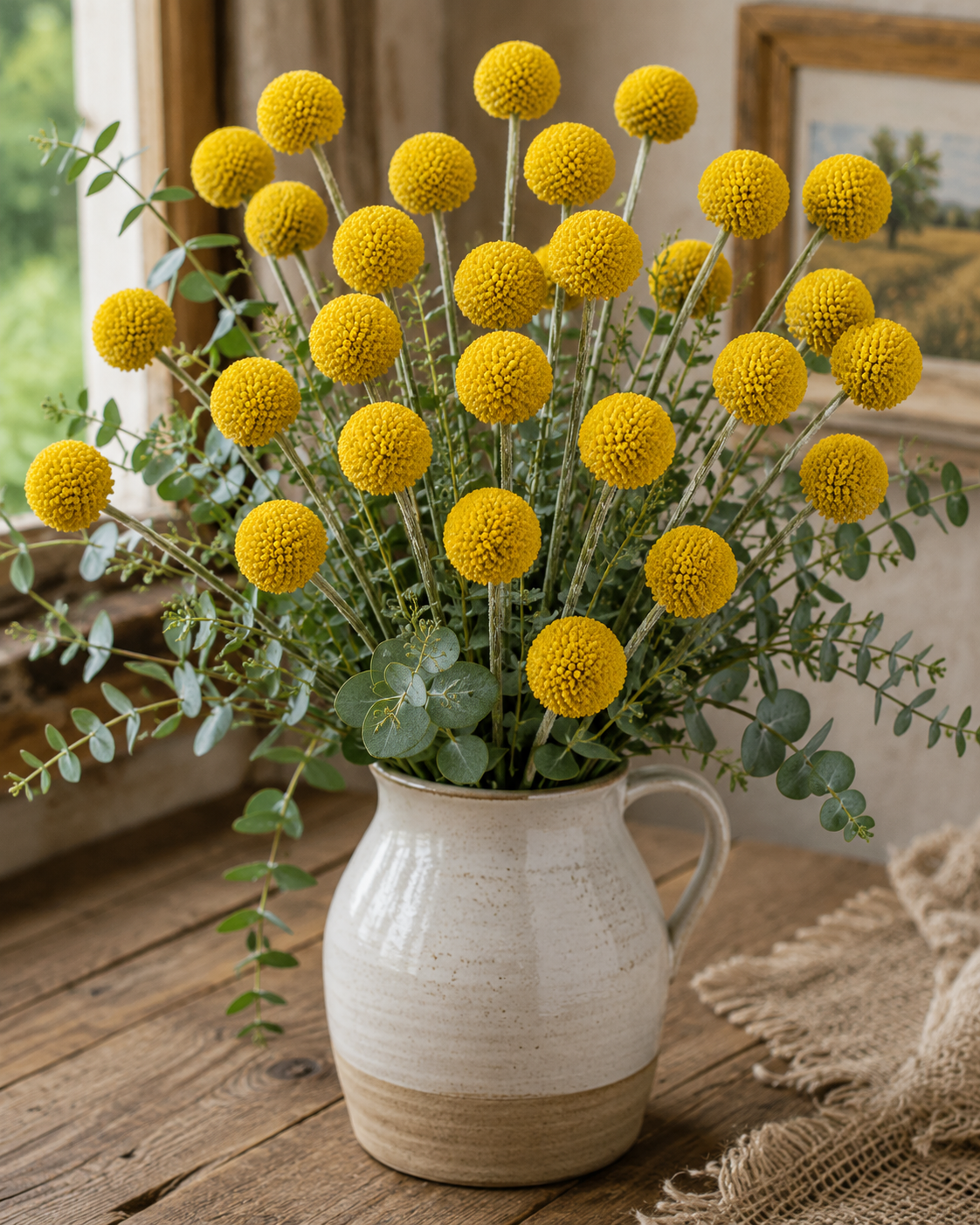
Project Role: Geometric Accent. Billy Buttons (Craspedia globosa) produce cheerful golden-yellow spheres held on slender upright stems. Their simple round shape contrasts beautifully with petals, bells, umbels, and foliage, giving the eye a repeating point to follow through an arrangement. They are especially effective when used in small numbers at different heights.
Grow in full sun and well-drained soil, avoiding consistently wet conditions. Cut stems when the yellow globes are fully colored and firm. They may be used fresh or dried, which makes them one of the most versatile materials in the project. For fresh bouquets, condition the stems in clean water; for dried use, hang small bundles upside down in a dry, airy, shaded location.
Seedman Notes: Repetition is one of the easiest floral-design ideas to learn. Rather than clustering all the Billy Buttons together, distribute several through the bouquet so the yellow spheres lead the eye from one area to another. They are particularly effective beside the broad faces of sunflowers.
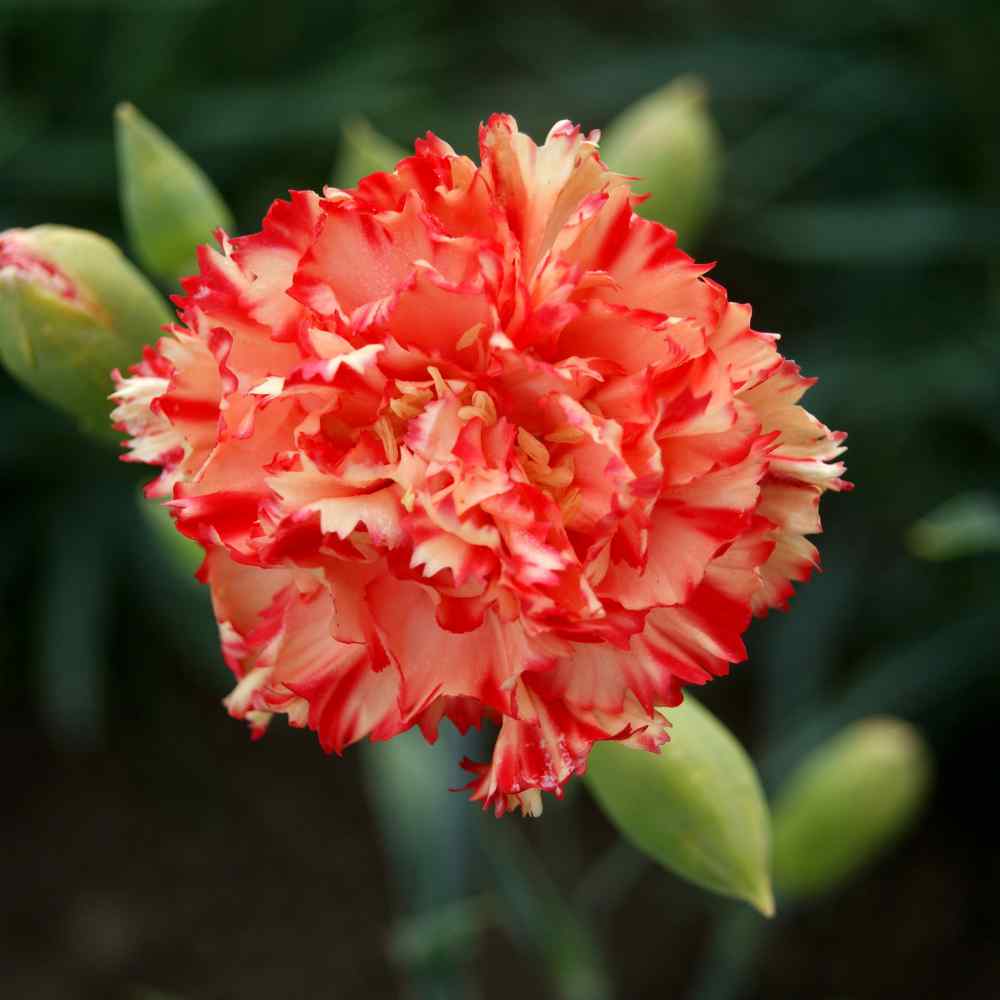
Project Role: Fragrance & Romantic Accent. Chabaud Avranchin Carnation (Dianthus caryophyllus) brings something a photograph cannot show: fragrance. Its ruffled, old-fashioned flowers add softness and perfume to arrangements while introducing the romantic character associated with traditional cottage cutting gardens.
Grow in full sun in fertile, well-drained soil and provide good air circulation. Cut stems when flowers are beginning to open rather than waiting until every bloom is fully expanded. Harvest in the cool morning, strip lower foliage, and condition the stems in clean water before arranging. Regular cutting encourages the garden to keep producing usable flowers.
Seedman Notes: A memorable bouquet can appeal to more than the eye. Chabaud Avranchin adds fragrance as another layer of the experience, making it especially useful for bedside bouquets, table arrangements, and gifts. Pair it with Campanula, Aster, Ammi, and Eucalyptus for the softer Cottage Garden style described below.
From Cutting Garden to Vase
A successful bouquet begins before you bring the flowers indoors. Walk the cutting garden during the cool part of the morning, after plants have rehydrated overnight but after heavy dew has begun to dry. Carry a clean bucket of water with you and use sharp, clean snips or pruners. Choose sturdy stems and harvest flowers at the stage appropriate for the type: some are best cut as the first flowers open, while others should be allowed to develop more fully.
Condition the Harvest: Get cut stems into water quickly. Indoors or in a shaded work area, remove every leaf that would sit below the vase water because submerged foliage decays rapidly. Recut stems if necessary, place them in a clean container of fresh water, and give them time to hydrate before arranging. Keep harvested flowers out of direct sun, hot vehicles, and drying wind.
Build the Bouquet in Layers: Begin with Moon Lagoon Eucalyptus to establish the general width and outline. Add the principal focal flowers next, followed by secondary flowers. Use Champion Pro Pink Campanula to create height and direction, then add Ammi to soften open spaces. Honeywort and Billy Buttons are accents rather than bulk ingredients, so a few stems can have more impact than many. Finish by turning the vase and viewing the arrangement from every side that will be visible.
Remember the Empty Space: One of the easiest mistakes is trying to fill every opening. A little space between flowers allows individual blooms to show their shape. Vary stem heights, avoid making every flower face exactly forward, and let a few stems extend naturally beyond the main outline. Garden bouquets are at their best when they retain some of the movement they had outdoors.
Three Garden-to-Bouquet Recipes
1. Sunny Garden Bouquet
Sunrich Gold Summer Sunflower + Billy Buttons + Bishop's Flower + Moon Lagoon Eucalyptus.
Begin with Eucalyptus for the framework, then position a small number of Sunrich blooms as the dominant focal flowers. Scatter Billy Buttons at several heights to repeat the yellow color without competing with the sunflowers. Finish with airy Ammi between the larger shapes. Why it works: one strong focal flower is echoed by smaller yellow accents while white filler and silver-green foliage keep the arrangement light.
2. Cottage Garden Bouquet
Chabaud Avranchin Carnation + Champion Pro Pink Campanula + Matsumoto Blue Tipped White Aster + Bishop's Flower + Moon Lagoon Eucalyptus.
Establish a loose foliage base, place several fragrant carnations through the center and middle level, and use Campanula above them to create graceful vertical lines. Add Asters as secondary flowers and finish with Ammi in the open spaces. Why it works: soft flowers and fragrance create the romantic character while Campanula prevents the arrangement from becoming too round or heavy.
3. Designer Garden Bouquet
Matsumoto Blue Tipped White Aster + Honeywort + Champion Pro Pink Campanula + Billy Buttons + Moon Lagoon Eucalyptus.
Start with Eucalyptus, then establish the main flower mass with Matsumoto Asters. Add Campanula for height, tuck Honeywort into several unexpected positions for blue-green and purple texture, and finish with a few Billy Buttons placed where their round yellow heads will create visual rhythm. Why it works: contrasting shapes and textures make the bouquet interesting even without one oversized focal bloom.
Create Your Own: Once you have made these three arrangements, stop thinking of the eight plants as fixed recipes and start thinking of them by role: Focal + Secondary + Line + Filler + Foliage + Accent. You may have only four ingredients ready on a particular morning, and that is enough. Learning to substitute one garden flower for another is part of becoming comfortable with floral design.
Keeping Bouquets Fresh: Begin with a thoroughly clean vase and fresh water. Check the water daily, top it up as needed, and replace cloudy water rather than simply adding more. Recut stems when appropriate and remove individual flowers or foliage as they fade. Keep finished arrangements away from strong direct sun, heating or cooling vents, and bowls of ripening fruit. Different flowers age at different rates, so removing a spent stem can often give the rest of the bouquet several more attractive days.
Planning the Cutting Garden: Plant enough of the focal and secondary flowers that you can cut freely without stripping the garden. Succession sowing of suitable annuals can extend the harvest, while foliage and filler plants often become more useful as they branch. If possible, place the cutting garden where harvesting will be convenient; a garden that is easy to reach with a bucket and snips is a garden you are much more likely to enjoy regularly.
Seedman Notes: The reward from this project is not a perfect florist's arrangement. It is learning that the flowers outside your door can become something completely new when you bring them together with a little purpose. Your first bouquet may follow one of our recipes exactly. By the end of the season, we hope you will walk through the garden with your snips, see what is ready that morning, and already have an arrangement taking shape in your mind. That is when the Garden-to-Bouquet Project has really done its job.
For over a thousand more unique seed varieties, all in stock and ready to ship, visit our Seed Catalog Index Page .

Contact Us | Privacy Policy | About Us
Serving gardeners since 1992
State of Mississippi Seedmen's Permit #C-391, Ohio 90152, Minnesota 20086777