
California Poppy Seed ( Annual )
The California poppy, or Eschscholzia californica, is the state flower of California. Known for its bright orange color, this North American native wildflower can also be found in shades of pink, yellow, red and white. California poppies can reach heights of 12 to 18 inches and bloom throughout the summer months.
California poppies are best propagated from seed. Although they can be propagated through transplantation, it is hard to do, and often times the plants do not survive the process. If you must start indoors, use deep pots. Sow seeds in the early spring once the ground reaches 60 degrees Fahrenheit and is workable. Choose an area that receives full sun, at least six hours of sunlight, and has well-draining poor soils. Mix the seeds with 4 parts sand to ensure even spacing. Cover the seeds with 1/16 inch of soil. Water immediately after sowing and keep the soil moist until the seedlings develop their first leaves.
Reduce watering of California poppies once they become established. Water plants one or two times per week only during periods of no rainfall. They are highly drought-tolerant and will suffer if kept too moist. Problems such as powdery mildew or mold will form on the plants' leaves if excessive watering is prolonged. Their roots will begin to rot and die back, affecting the health of the plant. If rainfall occurs, do not provide additional water.
California poppies prefer poor soils. If sown in areas where the soil is too rich and fertile, the poppies will produce foliage with few flowers. Fertilize California poppies only when they appear to be unhealthy with yellow leaves. Apply a 10-10-10 nitrogen, phosphorous and potassium fertilizer at the recommended rate on the label. Do not fertilize California poppies under any other circumstance, as excess fertilization will stop blooming and can harm the plants.
Blooms will begin to appear on your poppies one and a half to two months after sowing. Normal bloom time lasts for six to eight weeks. Pinch blooms from their stems as they begin to fade to encourage new blooms to form. This practice can prolong the blooming period of California poppies by one to two additional weeks.
Leave a few of the last blooms on the stems in order to encourage seed production. The petals will drop leaving a seed head behind. Remove the seed head from the stem once dry in zones 1 through 4. Store the harvested seed heads in glass jars or paper envelopes in a dark, dry and cool spot until spring sowing. Allow the dried seed heads to remain on the stems in zones 5 through 9. In these zones, the California poppies will self-sow their seeds.
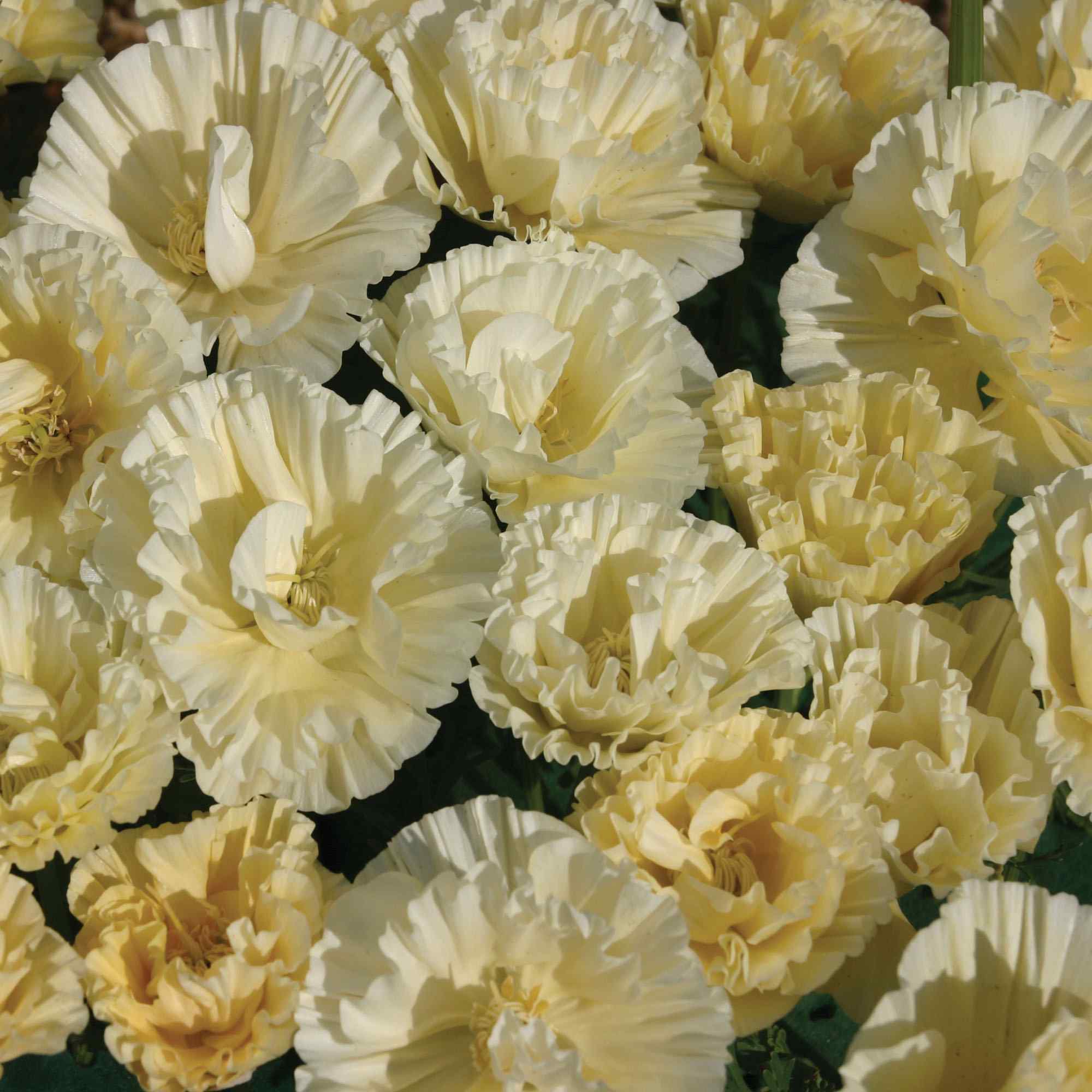
A delightful annual flower producing silky, cream-colored blooms that seem to glow above delicate blue-green foliage. A unique selection of Eschscholzia californica, Swirl Cream offers a softer and more refined appearance than traditional orange California poppies while retaining the same toughness, drought tolerance, and carefree blooming habit that have made California poppies famous worldwide.
Garden Uses
Swirl Cream is ideal for borders, rock gardens, wildflower plantings, cottage gardens, containers, and naturalized areas. The creamy blossoms blend beautifully with virtually any garden color scheme and are particularly attractive when planted alongside blue, purple, pink, or silver-foliaged plants.
The soft flower color makes this variety especially useful in moon gardens and pastel-themed plantings where bright orange flowers may appear too bold. Mass plantings create a beautiful sea of cream-colored blooms that dance in the breeze throughout the growing season.
Its compact growth habit also makes it an excellent choice for edging pathways and filling sunny garden spaces with continuous color.
Growing Information
California poppies are among the easiest annual flowers to grow from seed. Swirl Cream performs best when direct sown into the garden after danger of frost has passed. In mild winter regions, fall sowing often produces earlier and heavier spring bloom displays.
Choose a location with full sun and well-drained soil. Plants actually perform better in average to poor soils than in heavily fertilized beds. Once established, they require very little supplemental watering and tolerate drought remarkably well.
Avoid transplanting whenever possible, as California poppies develop a taproot and prefer to remain undisturbed. Deadheading can extend flowering, although allowing some seed pods to mature may encourage natural reseeding for future displays.
Under favorable conditions, plants often bloom continuously from late spring until frost.
- Botanical Name: Eschscholzia californica
- Common Name: Swirl Cream California Poppy
- Plant Type: Annual
- Bloom Color: Cream to ivory white
- Bloom Season: Late spring through frost
- Height: 10 to 16 inches
- Spread: 8 to 12 inches
- Light: Full sun
- Soil: Well-drained soil
- Drought Tolerance: Excellent once established
- Uses: Borders, rock gardens, wildflower plantings, containers, pollinator gardens
- Attracts: Bees, butterflies, beneficial insects
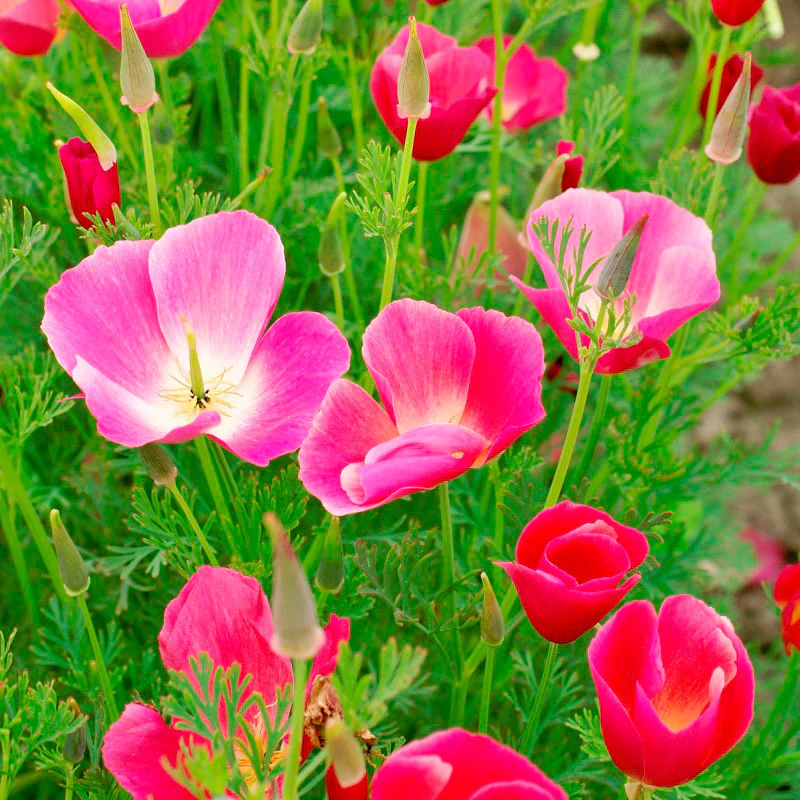
A striking heirloom-style selection producing vibrant carmine-rose to deep reddish-pink blooms that stand out dramatically against finely divided blue-green foliage. A unique form of Eschscholzia californica, Carmine King combines the rugged durability of the California Poppy with an unusually rich flower color rarely seen among traditional poppy varieties.
Garden Uses
Carmine King is an excellent choice for borders, cottage gardens, wildflower meadows, rock gardens, containers, and mass plantings. The brilliant reddish-pink flowers create an eye-catching display and provide a wonderful contrast to blue, white, yellow, and silver-foliaged plants.
This variety is particularly effective when planted in drifts, where hundreds of blooms create a colorful carpet that remains attractive for months. Its compact growth habit also makes it suitable for edging pathways, filling sunny garden spaces, and brightening drought-tolerant landscapes.
Carmine King works beautifully in naturalized settings where it can reseed and establish colorful colonies year after year.
Growing Information
Like all California poppies, Carmine King is easy to grow from seed and performs best when direct sown into the garden. Sow seeds outdoors after danger of frost has passed or during autumn in mild winter climates for earlier spring flowering.
Choose a location with full sun and well-drained soil. Plants thrive in average to poor soils and often produce better flowers when not heavily fertilized. Once established, they tolerate drought exceptionally well and require very little maintenance.
Because California poppies develop a taproot, direct sowing is generally preferred over transplanting. Deadheading can encourage additional blooming, although allowing some seed pods to mature may promote self-sowing and future generations of flowers.
Plants often bloom continuously from late spring until frost under favorable growing conditions.
- Botanical Name: Eschscholzia californica
- Common Name: Carmine King California Poppy
- Plant Type: Annual
- Bloom Color: Carmine-rose to deep reddish-pink
- Bloom Season: Late spring through frost
- Height: 10 to 16 inches
- Spread: 8 to 12 inches
- Light: Full sun
- Soil: Well-drained soil
- Drought Tolerance: Excellent once established
- Uses: Borders, rock gardens, wildflower plantings, containers, pollinator gardens
- Attracts: Bees, butterflies, hoverflies, beneficial insects
- Special Feature: Rare carmine-red flower color
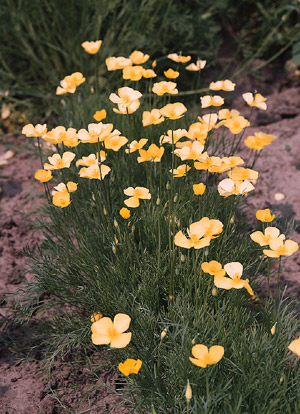
A charming, finely textured annual wildflower grown for its soft yellow to golden cup-shaped blooms and delicate, ferny foliage. Botanically known as Eschscholzia caespitosa, this species is a close relative of the familiar California poppy, but often has a lighter, more airy appearance that makes it especially useful in rock gardens, wildflower plantings, and naturalized sunny spaces.
Garden Uses
Sundew is ideal for sunny borders, rock gardens, meadow-style plantings, dry banks, cottage gardens, and naturalized wildflower areas. Its cheerful yellow flowers rise above finely divided green foliage, creating a soft, graceful display that looks especially natural in informal plantings.
This poppy is particularly useful in drought-tolerant gardens where bright seasonal color is desired with very little care. It can be planted in drifts for a natural wildflower effect or mixed with other low-growing annuals for a soft spring and summer display.
Sundew pairs beautifully with blue flax, lupines, clarkia, baby blue eyes, tidy tips, desert bluebells, and other western wildflowers. It also works well near rocks, gravel paths, and sunny garden edges where its light foliage and bright flowers can be appreciated up close.
Growing Information
Sundew grows best in full sun and well-drained soil. Like most California poppies, it prefers direct sowing where it is to grow, as plants form a taproot and do not transplant well once established.
Sow seeds outdoors after danger of frost has passed, or in fall in mild-winter areas for earlier spring bloom. Lightly cover the seed and keep the soil evenly moist until germination. Once plants are established, they are quite drought tolerant and require very little care.
Avoid overly rich soil or heavy fertilization, as this can encourage excess foliage at the expense of flowers. Plants perform especially well in average, sandy, gravelly, or lean soils with good drainage.
Deadheading may extend flowering, but allowing some seed pods to mature can encourage self-sowing in favorable locations.
- Botanical Name: Eschscholzia caespitosa
- Common Name: California Poppy Sundew, Tufted Poppy
- Plant Type: Annual wildflower
- Bloom Color: Soft yellow to golden yellow
- Bloom Season: Spring to early summer, often longer in mild climates
- Height: Usually 6 to 12 inches
- Spread: 8 to 12 inches
- Light: Full sun
- Soil: Well-drained, sandy, gravelly, or average soil
- Drought Tolerance: Excellent once established
- Best Uses: Rock gardens, wildflower gardens, borders, dry banks, naturalized areas
- Attracts: Bees, hoverflies, beneficial insects
- Special Note: Best direct sown where it is to grow
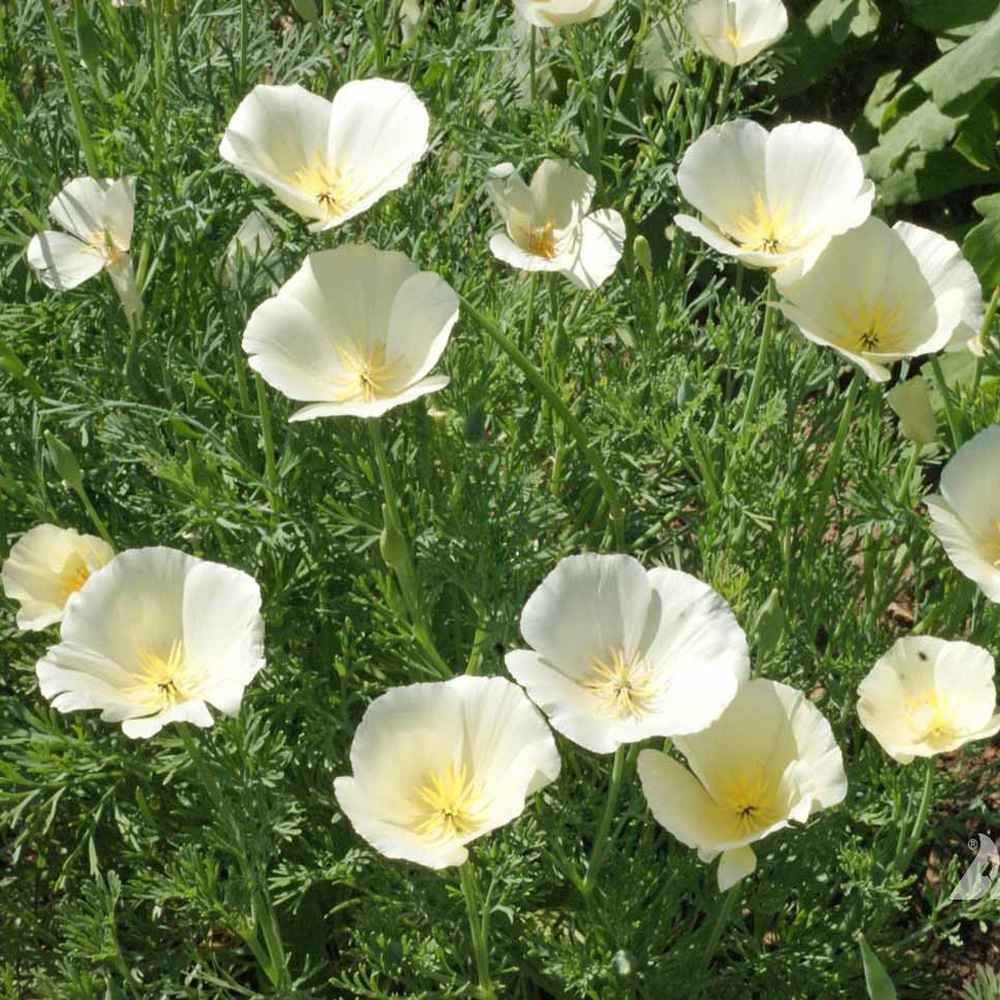
An elegant heirloom-style selection producing silky, ivory-white to creamy white flowers that float above finely textured blue-green foliage. A refined form of Eschscholzia californica, White Linen offers all of the toughness, drought tolerance, and easy-care nature of traditional California poppies while providing a softer, more sophisticated color palette for gardens and landscapes.
Garden Uses
White Linen is ideal for borders, cottage gardens, wildflower meadows, rock gardens, containers, and naturalized plantings. The luminous white blooms brighten sunny garden spaces and blend effortlessly with almost any flower color.
This variety is especially useful in moon gardens, white-themed plantings, and pastel flower combinations where its delicate blossoms seem to glow in early morning and evening light. The flowers combine beautifully with blue cornflowers, lavender, baby's breath, pink cosmos, and silver-foliaged plants such as Dusty Miller.
Mass plantings create a graceful carpet of white blooms that provides months of color with very little maintenance.
Growing Information
White Linen is easy to grow and performs best when direct sown into the garden. Like most California poppies, it develops a taproot and prefers not to be transplanted once established.
Sow seeds outdoors after danger of frost has passed, or in autumn in mild-winter climates for earlier spring flowering. Select a location with full sun and well-drained soil. Lightly cover the seed and keep the soil moist until germination occurs.
Plants thrive in average, sandy, or rocky soils and often perform better in lean conditions than in rich, heavily fertilized ground. Once established, White Linen is highly drought tolerant and requires very little supplemental watering.
Deadheading can encourage additional blooms, although allowing some seed pods to mature often results in natural reseeding and future generations of flowers.
- Botanical Name: Eschscholzia californica
- Common Name: White Linen California Poppy
- Plant Type: Annual
- Bloom Color: Ivory white to creamy white
- Bloom Season: Late spring through frost
- Height: 10 to 16 inches
- Spread: 8 to 12 inches
- Light: Full sun
- Soil: Well-drained soil
- Drought Tolerance: Excellent once established
- Best Uses: Wildflower gardens, borders, rock gardens, containers, moon gardens
- Attracts: Bees, butterflies, hoverflies, beneficial insects
- Special Feature: Rare white California poppy blooms
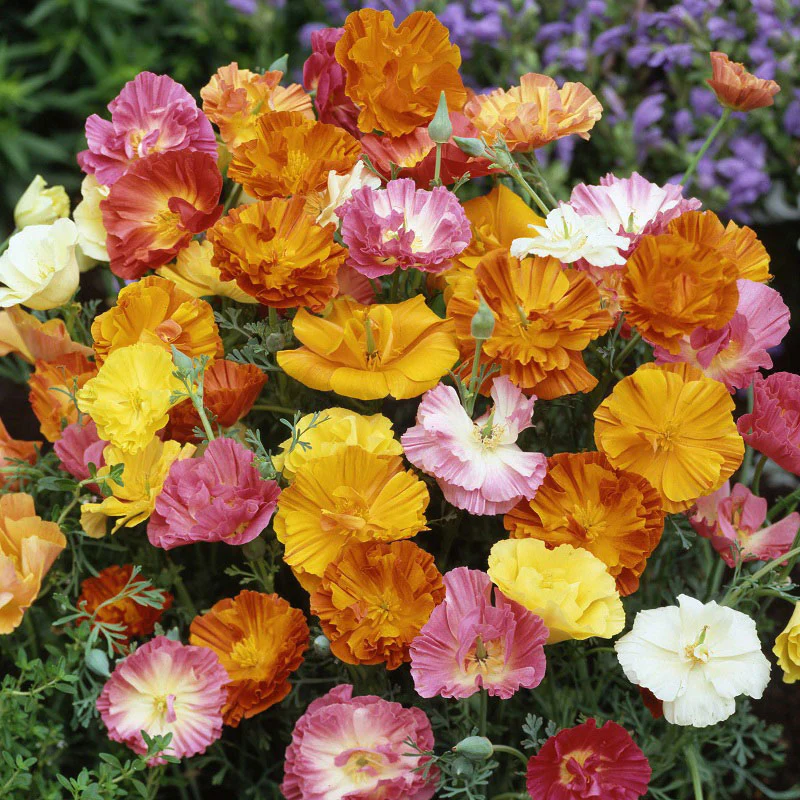
A delightful blend of semi-double and double-flowered blooms in shades of orange, gold, cream, rose, pink, apricot, and ivory. A premium selection of Eschscholzia californica, this mix offers the same drought tolerance and easy-care nature of traditional California poppies while adding extra petal count and a colorful range of soft, romantic hues that resemble miniature dancing ballerinas twirling across the garden.
Garden Uses
Ballerina Mix is ideal for cottage gardens, wildflower meadows, borders, rock gardens, containers, and naturalized landscapes. The double and semi-double flowers create a softer, fuller appearance than standard California poppies, making them especially attractive in ornamental garden settings.
The mixture of warm and pastel colors allows Ballerina Mix to blend beautifully with many other annuals and perennials. It combines especially well with cornflowers, baby's breath, larkspur, cosmos, lavender, yarrow, and ornamental grasses.
Large drifts create a stunning display of constantly changing colors and textures, while smaller plantings add charm and elegance to mixed flower beds.
Growing Information
Like all California poppies, Ballerina Mix is best direct sown where it is to grow. Seeds may be planted outdoors after danger of frost has passed or during autumn in mild winter climates for earlier spring blooms.
Choose a location with full sun and well-drained soil. Plants thrive in average to poor soils and generally perform better without excessive fertilizer. Once established, they are highly drought tolerant and require minimal maintenance.
Because California poppies develop a taproot, transplanting is often less successful than direct sowing. Lightly cover seed, keep moist until germination, and thin seedlings as necessary for proper spacing.
Deadheading encourages continued flowering, although allowing some seed pods to mature may promote self-sowing and future generations of blooms.
- Botanical Name: Eschscholzia californica
- Common Name: Ballerina Mix California Poppy
- Plant Type: Annual
- Bloom Color: Mixed shades of orange, gold, cream, pink, rose, apricot, and ivory
- Flower Type: Semi-double to double blooms
- Bloom Season: Late spring through frost
- Height: 10 to 16 inches
- Spread: 8 to 12 inches
- Light: Full sun
- Soil: Well-drained soil
- Drought Tolerance: Excellent once established
- Best Uses: Wildflower gardens, borders, containers, rock gardens, naturalized areas
- Attracts: Bees, butterflies, hoverflies, beneficial insects
- Special Feature: Double and semi-double flowers in a wide range of colors
( Eschscholzia californica )
A spectacular blend of colorful, bell-shaped blooms in shades of rose, pink, scarlet, cream, yellow, orange, apricot, and ivory. A distinctive selection of Eschscholzia californica, Mission Bells Mix is celebrated for its unique semi-double, fluted flowers that resemble miniature church bells swaying in the breeze. This award-winning variety combines extraordinary color diversity with the rugged durability and drought tolerance that have made California poppies a favorite of gardeners worldwide.
Garden Uses
Mission Bells Mix is ideal for borders, cottage gardens, wildflower meadows, rock gardens, containers, and naturalized landscapes. The unusual flower form and wide range of colors create a vibrant display that remains attractive throughout the growing season.
This mix is particularly effective when planted in large drifts where the colorful blooms blend together to create a tapestry of warm and pastel shades. It also performs beautifully in water-wise gardens, sunny slopes, and informal meadow-style plantings.
The compact plants are excellent for edging pathways, filling gaps in flower beds, and providing season-long color in difficult sunny locations.
Growing Information
Mission Bells Mix is easy to grow and performs best when direct sown where it is to bloom. Seeds may be planted outdoors after danger of frost has passed or during autumn in mild-winter climates for earlier spring flowering.
Select a location with full sun and well-drained soil. California poppies generally thrive in average to poor soils and require little supplemental fertilization. Rich soils often encourage excess foliage growth at the expense of flowers.
Because the plants develop taproots, direct sowing is preferred over transplanting. Once established, they tolerate drought exceptionally well and require minimal care.
Deadheading can prolong blooming, although many gardeners allow some seed pods to mature so plants may naturally reseed and return in future seasons.
- Botanical Name: Eschscholzia californica
- Common Name: Mission Bells Mix California Poppy
- Plant Type: Annual
- Bloom Color: Mixed shades of pink, rose, scarlet, orange, yellow, apricot, cream, and ivory
- Flower Type: Fluted, bell-shaped, semi-double blooms
- Bloom Season: Late spring through frost
- Height: 10 to 18 inches
- Spread: 8 to 12 inches
- Light: Full sun
- Soil: Well-drained soil
- Drought Tolerance: Excellent once established
- Best Uses: Wildflower gardens, borders, containers, rock gardens, naturalized areas
- Attracts: Bees, butterflies, hoverflies, beneficial insects
- Special Feature: Unique bell-shaped flowers in a wide range of colors
A brilliant red-flowered selection of Eschscholzia californica, grown for its glowing cup-shaped blooms, golden centers, and finely cut blue-green foliage. This vivid variety offers the easy-care nature and drought tolerance of the classic California poppy while adding a bold red color that brings exceptional warmth and excitement to sunny gardens.
Garden Uses
Red Chief is ideal for borders, wildflower gardens, rock gardens, cottage gardens, dry banks, containers, and naturalized sunny areas. Its bright red flowers create a fiery display that stands out beautifully against the soft, fern-like foliage.
This variety is especially effective when planted in groups or broad drifts, where the flowers form a glowing carpet of red blooms. It combines well with yellow, orange, white, blue, and purple annuals, and is striking alongside silver foliage plants such as Dusty Miller.
Red Chief is also useful for adding quick color to poor or dry soils where many more demanding annuals may struggle.
Growing Information
Red Chief grows best in full sun and well-drained soil. Like other California poppies, it is best direct sown where it is to grow because plants develop a taproot and do not transplant easily.
Sow seeds outdoors after danger of frost has passed, or in fall in mild-winter regions for earlier spring bloom. Lightly cover the seed and keep the soil evenly moist until germination. Once established, plants are very drought tolerant and require little care.
Avoid overly rich soil or heavy fertilization, as this can encourage leafy growth at the expense of flowers. Deadheading may extend the bloom season, while allowing some seed pods to mature can encourage natural reseeding where conditions are favorable.
- Botanical Name: Eschscholzia californica
- Common Name: Red Chief California Poppy
- Plant Type: Annual wildflower
- Bloom Color: Bright red with golden centers
- Bloom Season: Late spring through frost in favorable conditions
- Height: Usually 10 to 16 inches
- Spread: 8 to 12 inches
- Light: Full sun
- Soil: Well-drained, average, sandy, or gravelly soil
- Drought Tolerance: Excellent once established
- Best Uses: Wildflower gardens, borders, rock gardens, dry banks, containers
- Attracts: Bees, butterflies, hoverflies, beneficial insects
- Special Note: Best direct sown where it is to grow
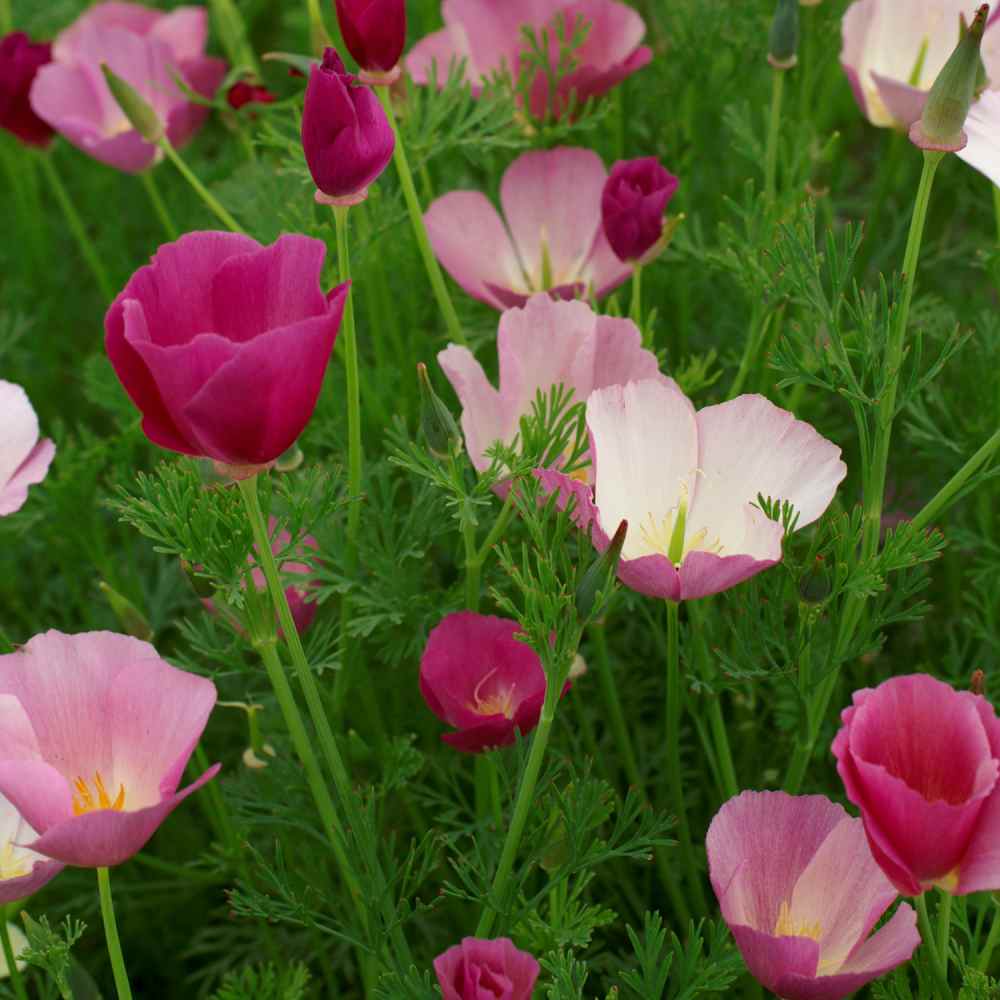
An extraordinary and highly sought-after selection of Eschscholzia californica, producing silky blooms in shades of rose-purple, mauve, lavender-pink, and smoky violet. This unusual color range sets Purple Gleam apart from traditional orange California poppies, making it one of the most distinctive and admired varieties available for flower gardens, wildflower plantings, and containers.
Garden Uses
Purple Gleam is ideal for borders, cottage gardens, wildflower meadows, rock gardens, containers, and naturalized plantings. The unusual flower color adds sophistication and elegance to the landscape while maintaining the carefree nature of the species.
The blooms blend beautifully with blue cornflowers, white alyssum, baby's breath, lavender, nigella, and ornamental grasses. They are especially effective in pastel-themed gardens where softer colors are desired.
Mass plantings create an impressive display of shimmering mauve and rose-lavender tones that appear almost luminous in sunlight. The flowers also provide excellent contrast when combined with silver foliage plants such as Dusty Miller.
Growing Information
Purple Gleam grows best in full sun and well-drained soil. Like all California poppies, it performs best when direct sown where it is to flower, as the plants develop taproots and dislike transplanting.
Sow seeds outdoors after danger of frost has passed, or in autumn in mild winter climates for earlier spring bloom. Lightly cover seed and keep evenly moist until germination occurs.
Plants thrive in average, sandy, rocky, or moderately poor soils and generally perform better without excessive fertilization. Once established, Purple Gleam is highly drought tolerant and requires minimal maintenance.
Deadheading can extend flowering, while allowing some seed pods to mature may encourage natural reseeding for future displays.
- Botanical Name: Eschscholzia californica
- Common Name: Purple Gleam California Poppy
- Plant Type: Annual
- Bloom Color: Rose-purple, mauve, lavender-pink, and smoky violet shades
- Bloom Season: Late spring through frost
- Height: 10 to 16 inches
- Spread: 8 to 12 inches
- Light: Full sun
- Soil: Well-drained soil
- Drought Tolerance: Excellent once established
- Best Uses: Wildflower gardens, borders, rock gardens, containers, cottage gardens
- Attracts: Bees, butterflies, hoverflies, beneficial insects
- Special Feature: Rare purple-toned California poppy flowers
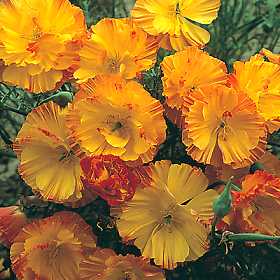
A breathtaking selection from the famous Thai Silk series, producing silky, satiny blooms in delicate shades of apricot, peach, soft coral, and warm cream. These elegant flowers shimmer in the sunlight with a distinctive sheen that resembles fine silk fabric, creating one of the most refined and sophisticated displays available among California poppies.
Garden Uses
Thai Silk Apricot Chiffon is ideal for borders, cottage gardens, cutting gardens, containers, rock gardens, and naturalized plantings. The soft apricot and peach tones bring warmth and elegance to flower beds while blending beautifully with many other annuals and perennials.
This variety pairs exceptionally well with lavender, blue cornflowers, white alyssum, baby's breath, ornamental grasses, and silver-foliaged plants such as Dusty Miller. The delicate coloring makes it especially attractive in pastel-themed gardens and romantic cottage-style landscapes.
Mass plantings create a glowing tapestry of soft sunset colors that remain attractive throughout the growing season.
Growing Information
Like all California poppies, Thai Silk Apricot Chiffon performs best when direct sown into the garden. Seeds may be planted after danger of frost has passed or during autumn in regions with mild winters for earlier spring flowering.
Choose a location with full sun and well-drained soil. Plants thrive in average, sandy, gravelly, or moderately poor soils and generally require little supplemental fertilization. Rich soils often produce excess foliage at the expense of flowers.
Because California poppies develop taproots, direct sowing is preferred over transplanting. Once established, plants are highly drought tolerant and require very little maintenance.
Deadheading may encourage additional flowering, although allowing some seed pods to mature can result in natural reseeding for future garden displays.
- Botanical Name: Eschscholzia californica
- Common Name: Thai Silk Apricot Chiffon California Poppy
- Plant Type: Annual
- Bloom Color: Apricot, peach, coral, cream, and soft sunset tones
- Flower Type: Silky, satiny single blooms
- Bloom Season: Late spring through frost
- Height: 10 to 16 inches
- Spread: 8 to 12 inches
- Light: Full sun
- Soil: Well-drained soil
- Drought Tolerance: Excellent once established
- Best Uses: Borders, cottage gardens, rock gardens, containers, wildflower plantings
- Attracts: Bees, butterflies, hoverflies, beneficial insects
- Special Feature: Silky, shimmering petals with unique apricot coloration
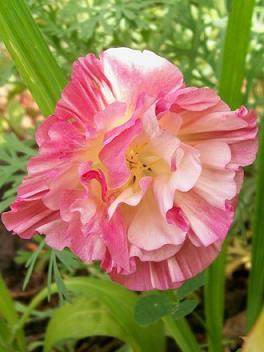
A luxurious selection from the celebrated Thai Silk series, producing silky, satiny blooms in soft shades of blush pink, champagne rose, shell pink, and warm ivory. The delicate flowers shimmer in sunlight with a unique silk-like sheen, creating one of the most elegant and refined displays available among California poppies.
Garden Uses
Thai Silk Pink Champagne is ideal for cottage gardens, borders, cutting gardens, containers, rock gardens, and naturalized plantings. The soft pastel coloring brings a romantic, sophisticated quality to flower beds while maintaining the easy-care nature that California poppies are famous for.
This variety blends beautifully with lavender, baby's breath, white alyssum, blue cornflowers, larkspur, cosmos, and ornamental grasses. Its subtle pink tones also pair wonderfully with silver foliage plants such as Dusty Miller, creating elegant color combinations throughout the garden.
Mass plantings create a breathtaking display of soft, glowing color that resembles a field of delicate silk flowers dancing in the breeze.
Growing Information
Like other California poppies, Thai Silk Pink Champagne performs best when direct sown where it is to bloom. Seeds may be planted outdoors after danger of frost has passed or in autumn in mild winter climates for earlier spring flowering.
Select a location with full sun and well-drained soil. Plants thrive in average, sandy, rocky, or moderately poor soils and generally require very little fertilizer. Excessively rich soils often result in more foliage and fewer flowers.
Because California poppies develop taproots, transplanting is generally not recommended. Once established, plants tolerate drought exceptionally well and require minimal maintenance.
Deadheading may encourage continued flowering, while allowing some seed pods to mature can promote natural reseeding for future garden displays.
- Botanical Name: Eschscholzia californica
- Common Name: Thai Silk Pink Champagne California Poppy
- Plant Type: Annual
- Bloom Color: Blush pink, champagne rose, shell pink, and ivory tones
- Flower Type: Silky, satiny single blooms
- Bloom Season: Late spring through frost
- Height: 10 to 16 inches
- Spread: 8 to 12 inches
- Light: Full sun
- Soil: Well-drained soil
- Drought Tolerance: Excellent once established
- Best Uses: Borders, cottage gardens, containers, rock gardens, wildflower plantings
- Attracts: Bees, butterflies, hoverflies, beneficial insects
- Special Feature: Shimmering silk-like petals in soft pink champagne shades
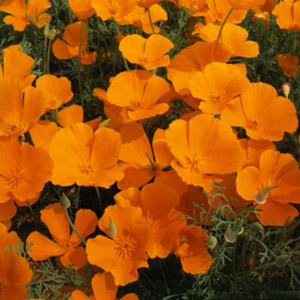
A classic and exceptionally vibrant selection of Eschscholzia californica, producing large, brilliant orange blooms that seem to glow in the sunshine. With its silky petals, finely divided blue-green foliage, and outstanding drought tolerance, Orange King represents the very best qualities of the California state flower while delivering larger and more intensely colored blossoms than many standard strains.
Garden Uses
Orange King is ideal for borders, wildflower meadows, cottage gardens, rock gardens, containers, dry slopes, and naturalized landscapes. The brilliant orange flowers create a bold splash of color and are especially effective when planted in large drifts.
This variety combines beautifully with blue cornflowers, purple larkspur, white alyssum, bachelor's buttons, baby's breath, and ornamental grasses. The vivid orange blooms provide excellent contrast against cooler flower colors and silver-foliaged plants.
Orange King is particularly valuable in drought-tolerant gardens where dependable color is desired throughout the warm season.
Growing Information
Orange King performs best when direct sown into the garden. Like all California poppies, it develops a taproot and generally does not transplant well. Seeds may be sown outdoors after danger of frost has passed or in autumn in mild-winter climates for earlier flowering.
Choose a location with full sun and well-drained soil. Plants thrive in average, sandy, gravelly, or moderately poor soils and often perform better without heavy fertilization. Rich soils may encourage excessive foliage growth at the expense of flowers.
Once established, Orange King is remarkably drought tolerant and requires very little maintenance. Deadheading can encourage continued flowering, while allowing some seed pods to mature often results in natural reseeding.
Plants typically bloom from late spring until frost under favorable conditions.
- Botanical Name: Eschscholzia californica
- Common Name: Orange King California Poppy
- Plant Type: Annual
- Bloom Color: Brilliant deep orange
- Flower Size: Larger than many standard California poppy strains
- Bloom Season: Late spring through frost
- Height: 10 to 18 inches
- Spread: 8 to 12 inches
- Light: Full sun
- Soil: Well-drained soil
- Drought Tolerance: Excellent once established
- Best Uses: Wildflower gardens, borders, rock gardens, containers, naturalized areas
- Attracts: Bees, butterflies, hoverflies, beneficial insects
- Special Feature: Extra-large brilliant orange flowers
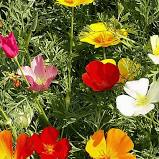
A colorful wildflower blend of Eschscholzia californica, grown for its cheerful cup-shaped blooms, finely cut blue-green foliage, and outstanding ability to thrive in sunny, dry garden conditions. This native-style mix brings together the classic colors of California poppies, often including orange, gold, yellow, cream, rose, pink, and red shades for a bright, natural meadow effect.
Garden Uses
California Poppy Native Mix is excellent for wildflower gardens, sunny borders, rock gardens, dry banks, cottage gardens, meadow plantings, containers, and naturalized areas. Its bright, open flowers create an easy, informal display that looks especially beautiful when sown in broad drifts.
This mix is ideal for gardeners wanting quick seasonal color with very little maintenance. The flowers combine well with blue cornflowers, lupines, tidy tips, baby blue eyes, clarkia, alyssum, larkspur, and ornamental grasses.
In mass plantings, the varied colors create a lively patchwork of glowing blooms that move gently in the breeze and brighten even poor, dry soils.
Growing Information
California Poppy Native Mix grows best in full sun and well-drained soil. Seeds should be direct sown where the plants are to grow, as California poppies form taproots and generally do not transplant well.
Sow outdoors after danger of frost has passed, or sow in fall in mild-winter regions for earlier spring bloom. Lightly cover seed and keep the soil evenly moist until germination. Once established, plants become highly drought tolerant and usually require very little watering.
Plants thrive in average, sandy, gravelly, or lean soils. Avoid heavy fertilization, as rich soil can encourage leafy growth at the expense of flowers. Deadheading may extend bloom, while allowing some seed pods to mature can encourage natural reseeding in favorable locations.
- Botanical Name: Eschscholzia californica
- Common Name: California Poppy Native Mix
- Plant Type: Annual wildflower
- Bloom Color: Mixed shades of orange, gold, yellow, cream, pink, rose, and red
- Bloom Season: Late spring through frost in favorable conditions
- Height: Usually 10 to 16 inches
- Spread: 8 to 12 inches
- Light: Full sun
- Soil: Well-drained, average, sandy, or gravelly soil
- Drought Tolerance: Excellent once established
- Best Uses: Wildflower gardens, borders, rock gardens, dry banks, containers, naturalized areas
- Attracts: Bees, butterflies, hoverflies, beneficial insects
- Special Note: Best direct sown where it is to grow
Jim's Plant Growth Stimulator
Many greenhouse growers and commercial farms use a combination of these ingredients in their growing process. We have been using this formula in our gardens, fields and greenhouses since 1992, and we use it on everything we grow. We would not make this available to our customers if we did not firmly believe that it does enhance the growth and health of plants that it is applied to.
To see the results for yourself, we advise using it on some plants and not on others and see the difference.
Note: We only ship this product to addresses inside the USA. The following ingredients are used in making Jim's Plant Growth Stimulator:
Gibberellic Acid
Gibberellic Acid is EPA approved, and is commercially used to grow most fruits and vegetables we eat.
B1 Vitamins and Plant Hormones
Micronutrients
Other ingredients
Each 8 ounce bottle of JPG01 Plant Growth Stimulator makes 16 gallons spray-on solution, you can also use a drench and pour it around the base of the plant if you prefer. The bottle comes with a 1/2 ounce measuring spoon, simply mix a half ounce of plant growth stimulator with a gallon of water and spray onto the plants, or drench the soil around the plant. :
Sowing and Care Instructions for Eschscholzia Species:
Sow on cultivated soil. Can be fall planted in California, but should be Spring planted in cooler zones. Plants are easy to grow, but do not like to be transplanted. Sow in place when possible. Prefers sunny spot with well drained soil.
And check out our

Contact Us | Privacy Policy | About Us
Serving gardeners since 1992
State of Mississippi Seedmen's Permit #C-391, Ohio 90152, Minnesota 20086777