
Candytuft Seeds
The candytuft plant (Iberis sempervirens) is a European native that has adapted well to most USDA zones. The 10 to 18 inch tall beauty is a flowering, evergreen perennial.
Candytuft flowers are handy to cover up declining foliage of early spring blooming bulbs. Candytuft flowers look lovely spilling over a wall or draping from a hanging basket. The annual species are derived from two species; Iberis umbellata (the most common) and Iberis amara. There are several named selections of the annual species, available in a wider range of colours than the perennial types. The annual species grow from 6" to 18" tall and are grown as bedding plants, cut-flowers and winter pot plants. They prefer full sun and grow quite quickly from seed. Late winter-early spring-sown seed will bloom throughout May to July at which stage they become rather leggy and thin and are best replaced with summer-blooming annuals.
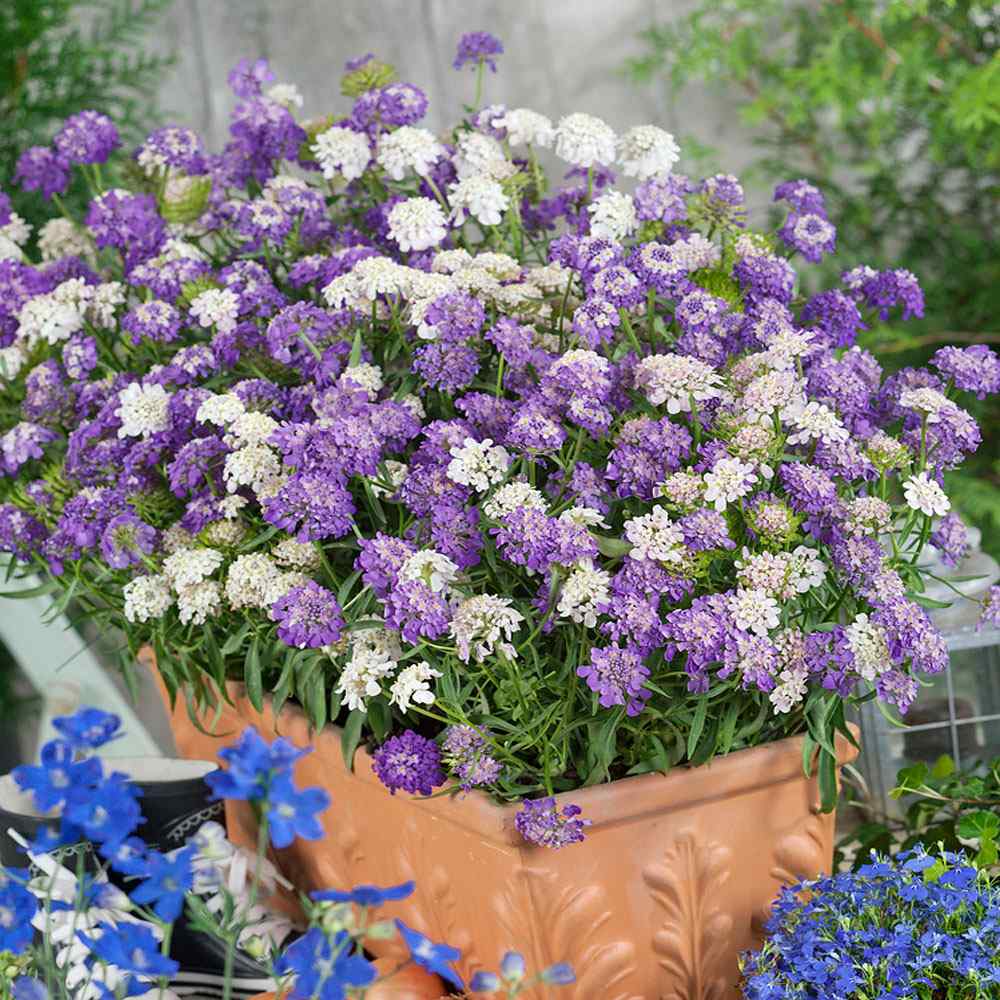
Candytuft (Iberis umbellata) is a delightful old-fashioned flowering perennial that produces dense, flattened clusters of brilliantly colored blooms in shades of white, pink, lavender, rose, crimson, and purple. Blooming from late spring well into summer, its cheerful flowers rise above tidy mounds of dark green foliage, creating a colorful display that attracts butterflies and beneficial pollinators. Candytuft has been a favorite of cottage gardeners for generations thanks to its dependable performance, easy culture, and long-lasting beauty.
Garden Uses:
Candytuft is ideal for rock gardens, borders, edging, cottage gardens, pollinator gardens, raised beds, and patio containers. Its compact growth habit makes it an excellent choice for planting along walkways or at the front of perennial borders where the colorful flower clusters can be fully appreciated. It combines beautifully with dianthus, coreopsis, bellflowers, alyssum, phlox, and spring-flowering bulbs.
Growing Information:
Sow seeds directly outdoors after danger of frost has passed or start indoors 6-8 weeks before planting out. Cover seeds lightly with soil and keep evenly moist until germination, which usually occurs within 10-21 days at temperatures of 65-70°F. Plants perform best in full sun and well-drained soil. Once established, Candytuft tolerates short periods of drought and requires very little maintenance. Removing spent flower clusters encourages additional blooming and keeps plants looking fresh throughout the season.
Quick Facts:
| Botanical Name: | Iberis umbellata |
| Common Name: | Candytuft |
| Plant Type: | Short-lived perennial (often grown as an annual) |
| Height: | 10-16 inches |
| Spread: | 10-14 inches |
| Bloom Colors: | White, pink, rose, lavender, crimson, and purple |
| Bloom Season: | Late spring through midsummer |
| Light Requirements: | Full sun |
| Soil Requirements: | Well-drained, average soil |
| USDA Zones: | 3-9 |
| Uses: | Rock gardens, borders, edging, cottage gardens, pollinator gardens, containers |

Contact Us | Privacy Policy | About Us
Serving gardeners since 1992
State of Mississippi Seedmen's Permit #C-391, Ohio 90152, Minnesota 20086777