
Centaurea Seed ( Annual )
Although cornflowers are native to Europe, where they got their common name because they often grew in corn fields. They have made themselves at home in North American and can be found naturalizing throughout most of the continent. Because of their near true blue color and profuse bloom, they are popular garden flowers as well.
The other common name is Bachelors Button. The term bachelor's button refers to the long-lasting quality of the flower when it is cut and placed in the buttonhole of a suit or shirt; decades ago, bachelors sported the flower when they went courting. The origin of the word 'bluet' is from the French word for the mountain centaurea.
Cornflowers are annuals that can be grown just about anywhere, from USDA Hardiness Zone 2 through 11, but they should be planted during the cool season and will decline as the weather heats up. Grow Centaurea in full sun or partial shade and moisture-retentive but well-drained soil. Cut flower stems to the ground after first wave of blossoms to encourage rebloom (which isn't dependable in the South) and to curb tendency to self-sow.
Useful gardening information
Sow seeds about 1/2 inch deep in any good garden soil. Centaureas prefer slightly alkaline soil, but they are really not fussy.
Keep the seedbed moist until germination occurs in 7 to 10 days for annuals, 2 to 3 or 3-1/2 weeks for perennials.
Annual cornflowers perform best when they are slightly crowded. Thin the annuals to stand anywhere from 6 to 12 inches apart, depending on the species or cultivar. Space perennials 2 to 3 feet apart.
Starting Indoors
Sow seeds indoors about one month before you want to plant the seedlings outdoors.

Florist Blue Boy Centaurea is a classic cornflower variety prized for its brilliant true-blue blooms and outstanding usefulness as a cut flower. The frilly, thistle-like flowers appear on slender stems and bring a fresh, airy beauty to gardens and bouquets alike. Easy to grow from seed and beloved for generations, Florist Blue Boy provides one of the clearest blue flower colors available among annuals, making it a favorite for cottage gardens, cutting gardens, wildflower plantings, and pollinator beds.
Garden Uses
Florist Blue Boy Centaurea is ideal for cutting gardens, cottage gardens, wildflower areas, borders, pollinator gardens, and informal meadow-style plantings. Its vivid blue flowers combine beautifully with white, pink, lavender, yellow, and silver-foliaged plants.
This variety is especially valued by florists and home gardeners for fresh bouquets. The long stems and rich blue color make it a wonderful companion for roses, baby's breath, larkspur, snapdragons, calendula, cosmos, and other cut flowers.
Growing Information
Sow seeds directly outdoors in early spring as soon as the soil can be worked, or sow in fall in mild climates for earlier blooms the following season. Seeds generally germinate within 7 to 14 days when kept evenly moist.
Plants prefer full sun and well-drained soil. Centaurea performs best in cool to moderate weather and usually blooms heavily in spring and early summer. In warmer regions, providing good air circulation and avoiding overly rich soil helps maintain strong stems and healthy growth.
Florist Blue Boy typically grows 24 to 36 inches tall and produces an abundance of blue flowers suitable for both garden display and cutting.
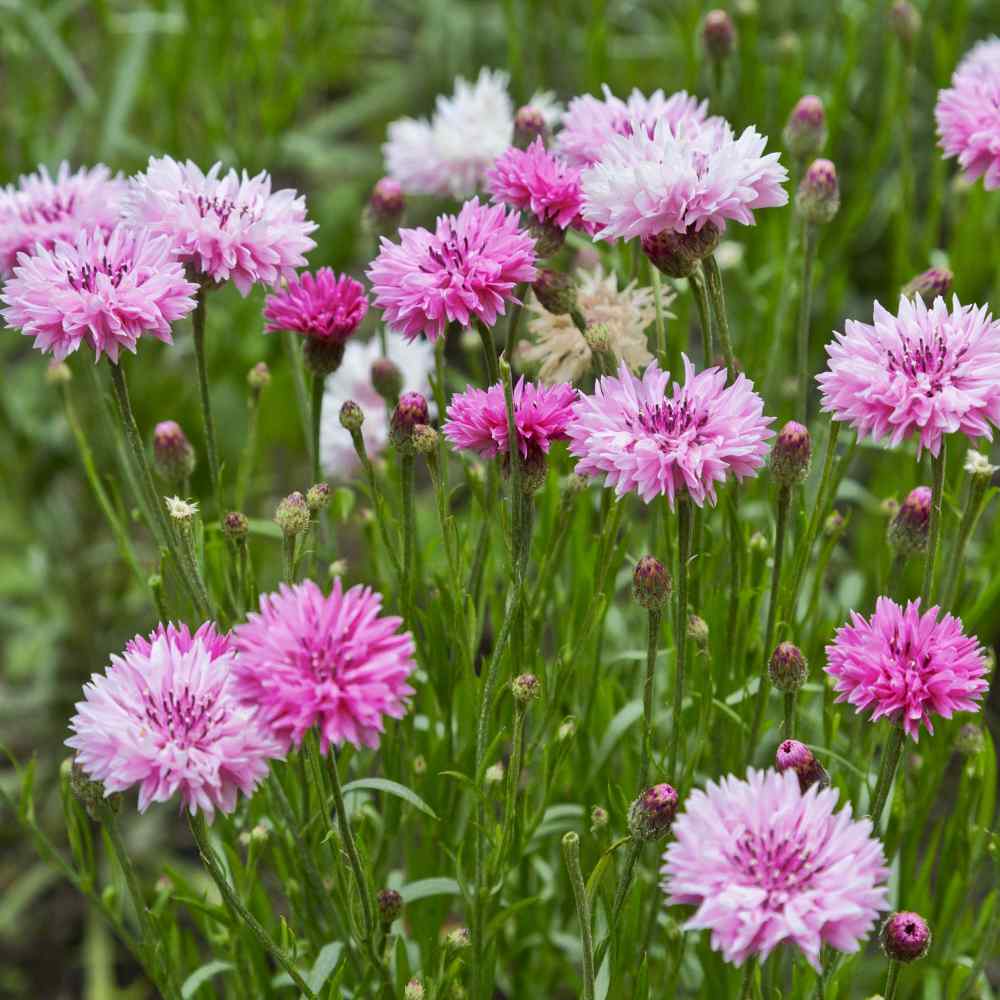
Dwarf Tom Pouce Pink Centaurea is a charming compact cornflower variety that produces masses of soft pink, fully double blooms on neat, shorter plants. The fringed flowers resemble miniature pink pompons, creating a delicate cottage-garden effect while remaining tidy enough for borders, containers, and small garden spaces. Easy to grow from seed and wonderfully free flowering, this variety brings old-fashioned beauty, pollinator value, and excellent cut flower charm to spring and early summer gardens.
Garden Uses
Dwarf Tom Pouce Pink Centaurea is ideal for borders, edging, cottage gardens, cutting gardens, containers, and pollinator plantings. Its compact habit makes it especially useful near the front of beds or in smaller spaces where taller cornflowers may be too large.
The soft pink blooms pair beautifully with blue cornflowers, white alyssum, larkspur, calendula, pansies, violas, and other cool-season flowers. The blooms are also lovely in small bouquets and informal cottage-style arrangements.
Growing Information
Sow seeds directly outdoors in early spring as soon as the soil can be worked, or sow in fall in mild climates for earlier blooms. Seeds usually germinate within 7 to 14 days when kept evenly moist.
Plants grow best in full sun and well-drained soil. Centaurea prefers cool to moderate temperatures and often blooms most heavily in spring and early summer. Avoid overly rich soil, which can encourage excessive leafy growth.
Dwarf Tom Pouce Pink typically grows 12 to 18 inches tall, producing an abundance of double pink flowers over a long bloom period.
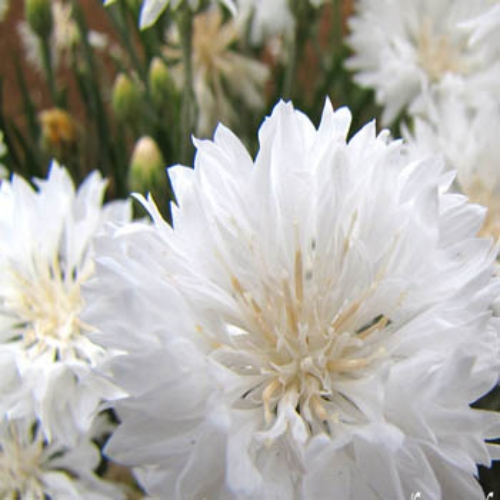
Dwarf Tom Pouce White Centaurea is a delightful compact cornflower variety that produces masses of fully double, snow-white blooms on neat, dwarf plants. The fringed flowers resemble miniature white chrysanthemums or fluffy pompons, creating a fresh and elegant display in borders, containers, and cottage gardens. Easy to grow and remarkably floriferous, this charming heirloom-style variety provides abundant blooms during spring and early summer while attracting beneficial pollinators to the garden.
Garden Uses
Dwarf Tom Pouce White Centaurea is ideal for cottage gardens, edging, containers, cutting gardens, pollinator beds, and mixed annual plantings. Its compact growth habit makes it especially valuable for the front of flower borders and smaller garden spaces.
The pure white flowers provide an excellent contrast to blue cornflowers, pink dianthus, purple larkspur, calendula, snapdragons, and other cool-season annuals. The blooms are also attractive in bouquets, where their delicate texture adds softness and elegance to floral arrangements.
Growing Information
Sow seeds directly outdoors in early spring as soon as the soil can be worked, or sow in fall in mild climates for earlier flowering the following season. Germination typically occurs within 7 to 14 days under favorable conditions.
Plants thrive in full sun and well-drained soil. Centaurea performs best in cool to moderate temperatures and generally blooms most heavily during spring and early summer. Avoid excessively rich soil, as it may encourage leafy growth at the expense of flowers.
Dwarf Tom Pouce White typically reaches 12 to 18 inches in height and produces abundant double blooms over an extended flowering period.

Contact Us | Privacy Policy | About Us
Serving gardeners since 1992
State of Mississippi Seedmen's Permit #C-391, Ohio 90152, Minnesota 20086777