
Coreopsis Seed ( Annual )
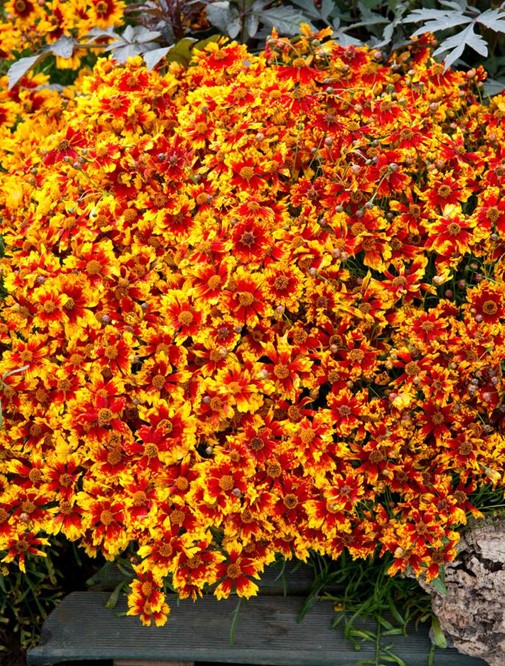
A colorful, free-flowering perennial prized for its bold daisy-like blooms and exceptionally long season of garden color. The flowers feature rich burgundy-red to wine-colored centers surrounded by contrasting golden-yellow petal tips, creating a dramatic bicolored effect that stands out beautifully in sunny plantings. Plants develop into compact, bushy clumps with fine green foliage and produce masses of flowers from early summer well into fall when conditions are favorable. Typically reaching about 12 to 18 inches tall, Boom is an excellent choice for perennial borders, cottage gardens, mass plantings, pollinator gardens, and patio containers.
Grow Boom Coreopsis in full sun and well-drained soil for the strongest plants and most abundant flowering. Once established, plants have good tolerance to heat and periods of dry weather, making them useful for sunny, lower-maintenance landscapes. Coreopsis performs especially well when overly rich soil and excessive fertilizer are avoided, as leaner conditions encourage sturdy growth and plentiful flowers. Removing faded blooms can prolong flowering and maintain a tidy appearance, although plants may continue blooming freely without constant attention. The nectar-rich flowers are attractive to bees and butterflies, adding wildlife value along with their bright summer color.
Sow seeds in a moist, well-drained seed-starting medium, pressing them into the surface and covering only lightly. Maintain temperatures around 65-75°F and consistent moisture until germination, which commonly occurs in approximately 10-21 days. Provide seedlings with strong light and transplant outdoors after danger of hard frost has passed, spacing plants sufficiently for good air circulation and mature growth.
Seedman Notes: Boom is an especially useful Coreopsis when you want something more dramatic than the traditional solid-yellow forms. Its wine-red and golden bicolored flowers provide an almost painted appearance, while the compact habit makes it equally at home in the landscape or a decorative container. Allow a few late flowers to mature if seed production is desired, but because Boom is a hybrid, seed-grown offspring may show some variation in flower color and pattern—a feature that can make growing a group from seed particularly interesting.
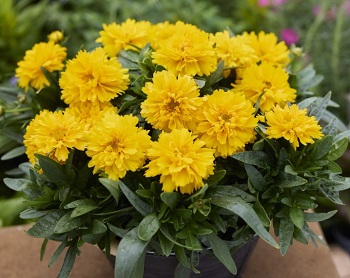
A cheerful, long-blooming perennial featuring masses of rich golden-yellow, semi-double to double flowers held above attractive green foliage. The extra petals give the blooms a fuller, almost pompon-like appearance compared with traditional single-flowered Coreopsis, creating an especially bright display in sunny gardens. Plants generally develop into compact, bushy clumps about 18 to 24 inches tall and bloom heavily through the summer, often continuing into early fall when spent flowers are removed. SunGlobe is an excellent choice for perennial borders, cottage gardens, mass plantings, pollinator gardens, cutting gardens, and sunny containers.
Grow SunGlobe in full sun and well-drained soil for the most compact plants and greatest flower production. Once established, Coreopsis grandiflora tolerates heat and periods of dry weather well and generally performs better in moderately fertile soil than in heavily enriched ground. Regular deadheading encourages additional flowering and helps keep plants attractive throughout the season; lightly cutting plants back after the first major flush can also encourage fresh growth and another display of blooms. SunGlobe is generally suitable for USDA Zones 4-9, and its bright flowers attract bees, butterflies, and other beneficial pollinators while also providing useful stems for informal summer bouquets.
Sow seeds in a moist, well-drained seed-starting medium, pressing them gently into the surface and covering only very lightly. Maintain temperatures around 65-75°F with consistent moisture and good light; germination commonly occurs in approximately 10-21 days. Established seedlings can be transplanted outdoors after danger of severe frost has passed, or seed may be direct sown where plants are to grow once conditions are suitable.
Seedman Notes: SunGlobe is one of those dependable flowers that can make a sunny planting look brighter with very little effort. Its fuller golden blooms provide considerably more visual impact than many single-flowered Coreopsis selections, yet the plants retain the easy
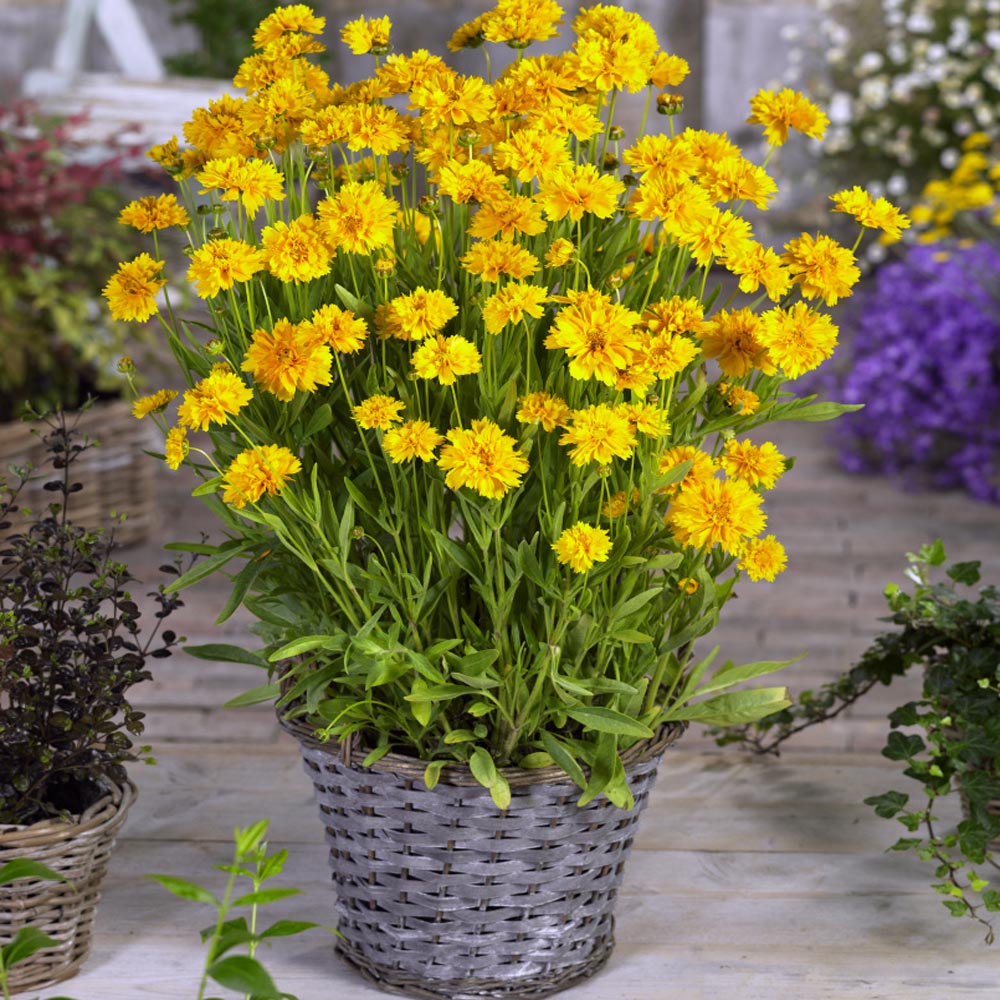
Early Sunrise Coreopsis (Coreopsis grandiflora) is an award-winning perennial celebrated for its large, fully double golden-yellow blooms that resemble miniature chrysanthemums. Flowering from early summer until frost, this compact, free-blooming variety produces an abundance of cheerful blossoms above neat mounds of deep green foliage. Renowned for its long bloom season, exceptional garden performance, and outstanding pollinator value, Early Sunrise brings brilliant sunshine-like color to borders, cottage gardens, containers, and cutting gardens.
Garden Uses:
Early Sunrise is perfect for perennial borders, cottage gardens, pollinator gardens, cutting gardens, patio containers, foundation plantings, and mass landscape displays. Its rich golden flowers combine beautifully with purple coneflowers, salvias, lavender, Shasta daisies, blanket flowers, black-eyed Susans, ornamental grasses, and blue flowering perennials. The sturdy stems also produce excellent fresh-cut flowers with an extended vase life.
Growing Information:
Sow seeds indoors 6-8 weeks before the last frost or directly outdoors after danger of frost has passed. Lightly cover the seeds with fine soil and maintain temperatures between 65-70°F. Germination typically occurs within 10-20 days. Plants thrive in full sun and well-drained soil, tolerating average, sandy, or even somewhat poor soils once established. Early Sunrise is highly drought tolerant after establishment. Regular deadheading encourages continuous flowering from early summer well into autumn, while dividing mature clumps every 3-4 years helps maintain vigorous growth.
Pollinator Value:
The bright golden flowers attract honeybees, native bees, butterflies, hoverflies, and numerous beneficial insects throughout their exceptionally long blooming season. The abundant pollen and nectar make Early Sunrise one of the finest perennial flowers for supporting pollinators from early summer until frost.
Natural Garden Benefits:
Early Sunrise provides season-long nectar while requiring very little maintenance or supplemental watering once established. Its compact habit suppresses weeds, helps conserve soil moisture, and provides dependable color during the hottest months of summer. The flowers also attract beneficial predatory insects that contribute to natural garden balance.
Historical Significance:
Coreopsis grandiflora is native to the southeastern United States, where it naturally grows in open meadows and sunny prairies. Early Sunrise was developed through careful breeding to produce unusually large, fully double flowers and a remarkably long blooming season. It received the prestigious All-America Selections (AAS) award for its outstanding garden performance and remains one of the most popular Coreopsis varieties grown today.
Interesting Facts:
The genus name Coreopsis comes from Greek words meaning "bug-like," referring to the shape of the seeds. Despite this unusual origin, the flowers themselves are among the brightest and happiest in the perennial garden. The fully double blooms of Early Sunrise remain attractive far longer than many traditional Coreopsis varieties, making them excellent for both garden displays and floral arrangements.
Seedman Notes:
Early Sunrise is one of our favorite long-blooming perennials because it delivers nonstop color with almost no effort. The brilliant double golden flowers brighten every sunny garden while attracting countless butterflies and bees. Whether planted in borders, containers, or pollinator gardens, this dependable variety rewards gardeners with months of cheerful blooms year after year.
Quick Facts:
| Botanical Name: | Coreopsis grandiflora |
| Common Name: | Early Sunrise Coreopsis |
| Plant Type: | Hardy perennial |
| Height: | 18-24 inches |
| Spread: | 15-18 inches |
| Bloom Color: | Double golden yellow |
| Bloom Season: | Early summer until frost |
| Light Requirements: | Full sun |
| Soil Requirements: | Well-drained, average to sandy soil |
| USDA Zones: | 4-9 |
| Uses: | Borders, cottage gardens, pollinator gardens, cutting gardens, containers, mass plantings |

Contact Us | Privacy Policy | About Us
Serving gardeners since 1992
State of Mississippi Seedmen's Permit #C-391, Ohio 90152, Minnesota 20086777