
Cover Crop Seeds
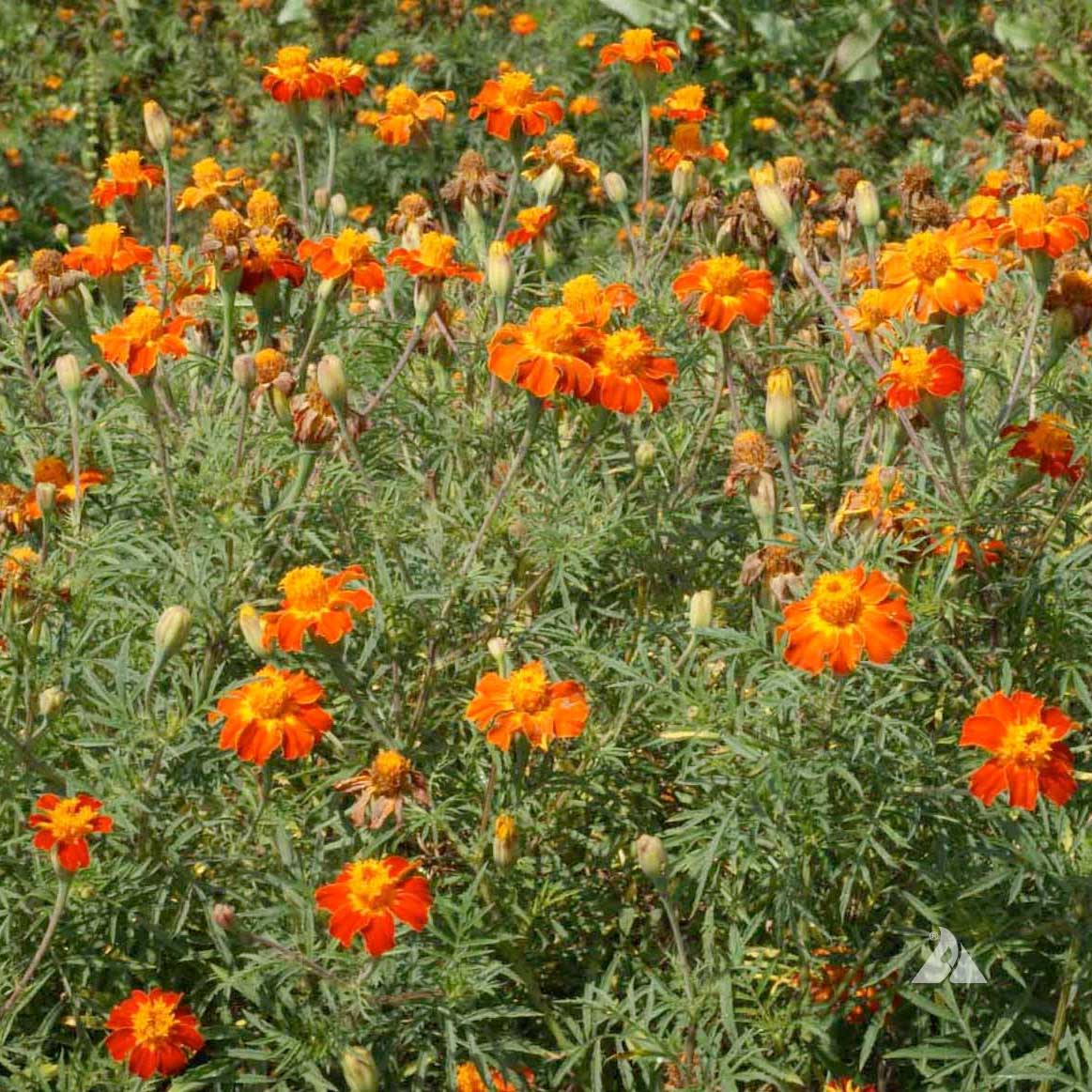
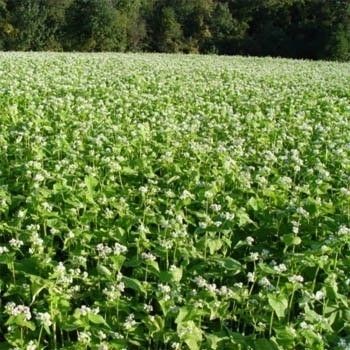
Buckwheat can be helpful in managing Verticillium wilt, a soilborne fungal disease, by enhancing soil health through its ability to scavenge phosphorus and add nitrogen. A study on potatoes showed that treating soil with nitrogen and phosphorus multiple times can significantly reduce Verticillium wilt, and buckwheat excels in this regard. Additionally, buckwheat can act as a green mulch when it's no longer needed.
Buckwheat is a plant of many uses. Though frequently used culinarily as a cereal grain, buckwheat is actually a seed—it’s also a great source of fiber, vitamin B6, and minerals such as magnesuim and zinc. It is naturally gluten-free and can be purchased roasted, as unroasted groats, as noodles, or in flour form. It has been eaten in Asian and Eastern European countries for centuries, but is now becoming increasingly popular in the west due to its many health benefits.
Buckwheat has a deep earthy and nutty flavor. In its unroasted form it is pale green and usually sprouted, and it is labeled as "groats." When you see buckwheat in its light tan form, it has been roasted. Roasted buckwheat, commonly known as "kasha," is tender and grain-like, and it works well in porridge. Despite having "wheat" in the name, buckwheat is in fact gluten-free.
Summer annual which can be used as a green manure crop. An early maturing wheat suitable for almost any type soil. Seeds remain on stalk after ripening, providing food over extended period of time. Buckwheat has a short growing season, maturing in 10 to 12 weeks. It is quickly killed by frost.
Benefits of Buckwheat Cover Crops: Quick cover. Few cover crops establish as rapidly and as easily as buckwheat. Its rounded pyramid- shaped seeds germinate in just three to five days. Leaves up to 3 inches wide can develop within two weeks to create a relatively dense, soil shading canopy. Buckwheat typically produces only 2 to 3 tons of dry matter per acre, but it does so quickly—in just six to eight weeks. Buckwheat residue also decomposes quickly, releasing nutrients to the next crop.
Weed suppressor. Buckwheat’s strong weed suppressing ability makes it ideal for smothering warm-season annual weeds. It’s also planted after intensive, weed-weakening tillage to crowd out perennials. A mix of tillage and successive dense seedings of buckwheat can effectively suppress Canada thistle, sowthistle, creeping jenny, leafy spurge, Russian knapweed and perennial peppergrass. While living buckwheat may have an allelopathic weed-suppressing effect, its primary impact on weeds is through shading and competition.
Phosphorus scavenger. Buckwheat takes up phosphorus and some minor nutrients (possibly including calcium) that are otherwise unavailable to crops, then releasing these nutrients to later crops as the residue breaks down. The roots of the plants produce mild acids that release nutrients from the soil. These acids also activate slow-releasing organic fertilizers, such as rock phosphate. Buckwheat’s dense, fibrous roots cluster in the top 10 inches of soil, providing an extensive root surface area for nutrient uptake.
Thrives in poor soils. Buckwheat performs better than cereal grains on low-fertility soils and soils with high levels of decaying organic matter. That’s why it was often the first crop planted on cleared land during the settlement of woodland areas and is still a good first crop for rejuvenating over-farmed soils. However, buckwheat does not do well in compacted, droughty or excessively wet soils.
Quick regrowth. Buckwheat will regrow after mowing if cut before it reaches 25 percent bloom. It also can be lightly tilled after the midpoint of its long flowering period to reseed a second crop. Some growers bring new land into production by raising three successive buckwheat crops this way.
Soil conditioner. Buckwheat’s abundant, fine roots leave topsoil loose and friable after only minimal tillage, making it a great mid-summer soil conditioner preceding fall crops in temperate areas.
Nectar source. Buckwheat’s shallow white blossoms attract beneficial insects that attack or parasitize aphids, mites and other pests. These beneficials include hover flies (Syrphidae), predatory wasps, minute pirate bugs, insidious flower bugs, tachinid flies and lady beetles. Flowering may start within three weeks of planting and continue for up to 10 weeks.
Nemagon White Mustard
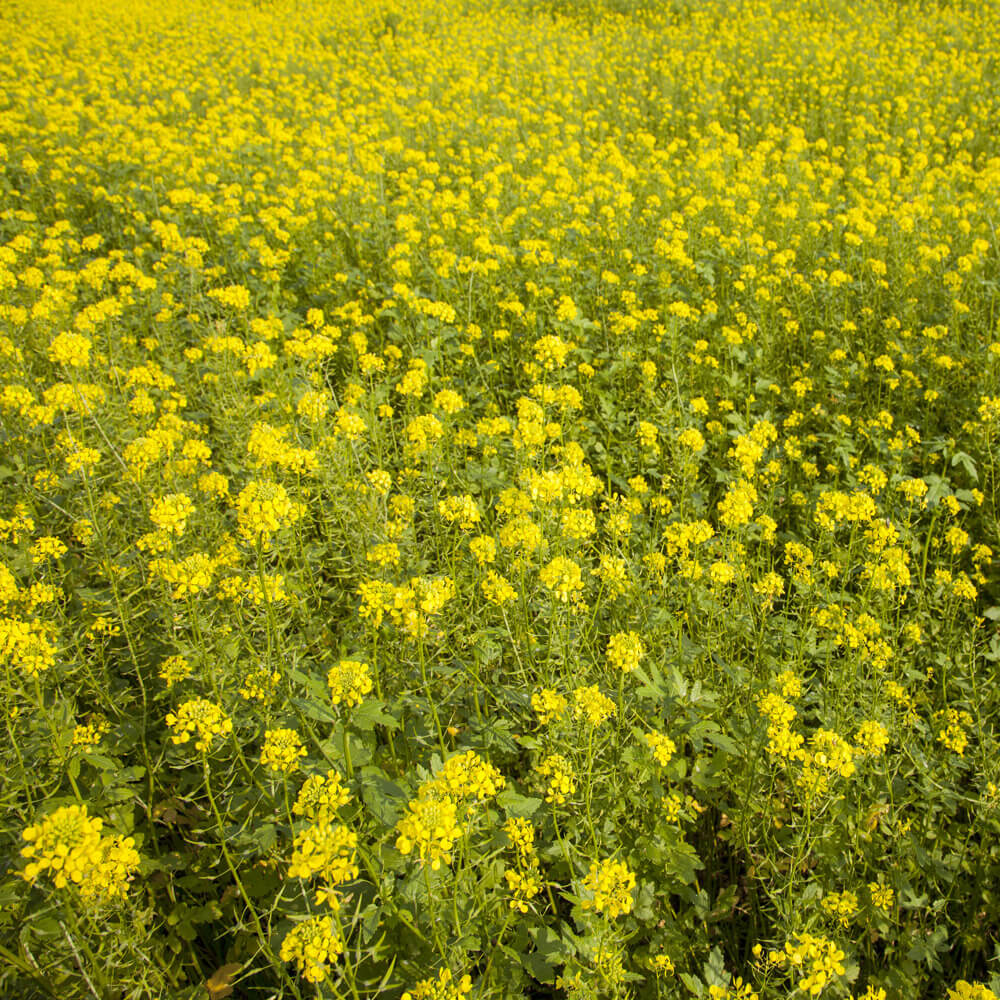
Nemagon white mustard seeds also contains high levels of glucosinate which is a compound similar to those found in commercial soil fumigants. It also features exceptional fast growth forming a compact covering to obstruct weeds.
The deep root system does a great job of re-utilizing nutrients that may have filtered past the root zone of crop plants. The tap root grows to a depth of three feet which helps break up soil and scavenge nutrients. Use Nemagon white mustard seed as a winter cover crop in home gardens, crop rotations and vineyards. It provides natural weed suppression, increased tilth, and increased organic soil matter. Nemagon is high in sulfer, which can become available to the subsequent crop when the mustard is incorporated in to the soil. Do not permit the mustard to go to seed or it could become a field impurity.
One pound will cover about 3,500 square feet.
Caliente 199 Mustard Blend for Biofumigation
 Every so often we come across a gardening technique that is so wonderful we have to stop and ponder "why in the world have we not been doing this in the past"?
 This is one of those techniques, one that is used by large crop growers and is now available to gardeners with small growing areas. It is as simple as sowing a fast growing blend of mustard seeds when your gardening season is about over with, then chopping up the mustards and tilling them into the soil.
Everyone who has a garden or flower bed that is used season after season should seriously consider improving their soil by green manuring with Caliente 199 Mustards Seed Mix.
This is a natural way to import excellent disease, weed and nematode suppression in future plantings and not have to rely on chemicals and fumigants. Ideal for organic growers.
This mustard blend can be used in small beds, gardens, truck patches and crop fields.
Being a member of the mustard family, it grows vigorously in a short period of time, ready to chop and till in about 100 days after sowing seed.
Caliente 199 Mustard Blend has been bred specifically for biofumigation and green manuring. The naturally occurring biofumigant gas (ITC) is produced by the plants when the crop is chopped, incorporating this compound and the green material into soil results in many benefits including improved soil structure, health and fertility, suppression of various soil-borne diseases and pests and increased soil microbial activity.
When you chop and till Caliente 199 into your soil, you receive the following benefits:
Naturally occurring biofumigation
Improves soil fertility and structure
Adds nutrients and organic matter
Improves soil aeration
Increases water infiltration and holding capacity
Reduced soil erosion from wind and water
Increases soil biodiversity by stimulating the growth of beneficial microbes and other soil organisms
Ideal for organic crop rotations and conventional systems where ICM (Integrated Crop Management) and reduced risk inputs are used.
Suppression of a range of soil-borne diseases, including Verticillium wilt, Rhizoctonia spp., Pythium spp., Fusarium spp., and Sclerotinia spp.
Suppression of a range of nematodes
It is believed that this mechanism was originally developed by the plant as a defense against sucking and chewing insects, but over time many of the glucosinolates ( the compounds that make certain brassicas taste hot or spicy, such as some really spicy radishes ), have been bred out of brassica crops to make them better. Today, most varieties of mustard, cabbage, cauliflower and rape seed have low levels of glucosinolates, Caliente Mustard Blend is exactly the opposite, it offers the highest possible level of glucosinolates.
To create the best biofumigation effect, Caliente Mustard plants must be chopped as finely as possible before immediately incorporating into them into the soil, simply plowing the mustard under with a breaking plow will not give the same effect. For large fields, disking and then breaking under works fine. For small gardens, mowing with a bushhog, or lawnmower, then tilling into the soil works fine. For very small beds, we actually use a weed trimmer to chop up the mustard and a small hand held tiller to turn them under.
They are very versatile and grow in almost any climate and soil. Caliente 199 Mustards have been developed over many years, with new blends and varieties developed for performing specific functions, and for growing in different climates and situations. They are not simple green manure or cover crops and should not be confused with fodder mustard which is commonly available as a green manure and will not generate the same biofumigation effect.
When considering disease suppression, it is important to note that the biofumigation aspect is not the only important factor. It is a combination of the biofumigation plus the incorporation of green material into the soil which encourages beneficial microbe multiplication. These beneficial soil microbes play an important part in 'out-competing' pathogenic microbes for space in the soil profile, helping to keep soil disease levels down.
Caliente Mustard can be sown in spring or late summer and incorporated 2 weeks after flowering has just started. Sow anytime from early spring to mid fall. Sow seeds onto cultivated soil, and gently rake in & firm to ensure good seed to soil contact. Water the seed in lightly ( or sow just before a rain shower ) and keep moist until germination has began. Keep the soil moist throughout the growing cycle as periods of drought will cause it to flower early and mean less bulky organic growth. A balanced N:P:K fertilizer ( 8*8*8 works just fine ) can be applied before or just after sowing to ensure best growth, keep in mind the Caliente Mustard will return these nutrients to the soil when dug in, so you are really just adding fertilize to future crops.
Our smallest pack is 35g, ( a little over an ounce ) and will cover 275 square feet of garden.
Our 88g ( about 3.1 ounces ) pack will cover about 850 square feet, our 175g pack will cover about 1,700 square feet.
Our one pound package will cover about 4,400 square feet and our 5 pound package will cover a half acre.
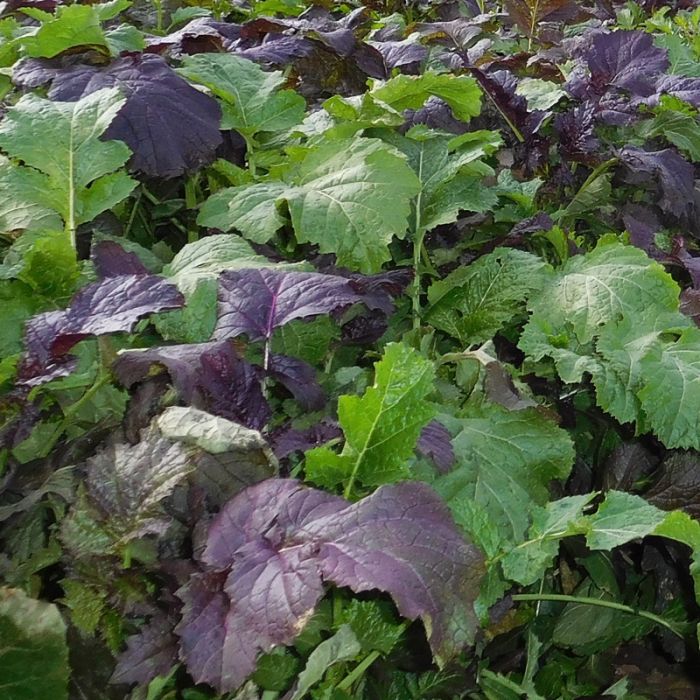
New! Caliente Rojo Mustard for Maximum Biofumigation

Contact Us | Privacy Policy | About Us
Serving gardeners since 1992
State of Mississippi Seedmen's Permit #C-391, Ohio 90152, Minnesota 20086777