
Delphinium Seed ( Annual )
To aid in the germination of Larkspur seeds, place the flower seeds on a damp paper towel, seal the towel and seeds in a ziploc bag and place in the refrigerator for 1 - 2 weeks. After removing the flower seeds from the refrigerator, directly sow the Larkspur flower seeds outdoors in prepared soil, keeping the seeds moist until germination. Larkspur seeds can also be sown indoors and Larkspur seedlings transplanted outside after 8 weeks of growth. Larkspur care includes staking the tall flowers if needed, watering deeply each week, and applying a liquid fertilizer every other week during the growing season. After blooms are spent, cut back hard to encourage a second bloom later in the season. The flower seeds and Larkspur plants are poisonous to humans and pets, so do not consume or grow these if you have chewing pets.
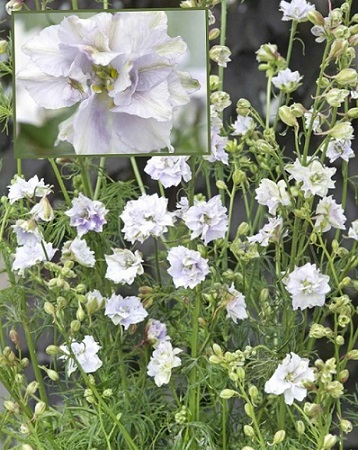
An elegant lacy-flowered delphinium selection known for its soft white blooms washed with smoky lavender, pale lilac, and subtle gray-blue tones. The delicate semi-double to double flowers rise on graceful stems above finely cut foliage, creating a refined, romantic display in borders, cottage gardens, and cutting gardens. Its cool pastel coloring gives the plant a misty, old-fashioned charm, while the upright flower spikes provide beautiful vertical interest from late spring into summer.
Garden Uses:
Fancy Smokey Eyes is ideal for cottage gardens, perennial borders, cutting gardens, pollinator plantings, and romantic mixed flower beds. The pale lavender-white flowers blend beautifully with roses, foxgloves, campanula, dianthus, larkspur, cosmos, snapdragons, and ornamental grasses. The tall, airy stems are excellent for adding height and softness to borders, while the unusual smoky coloring makes the blooms especially attractive in fresh floral arrangements.
Growing Information:
Start seeds indoors 8-10 weeks before outdoor planting time, or sow outdoors in cool weather. Delphinium seed often germinates best with cool conditions and consistent moisture. Sow lightly on the surface of moist seed-starting mix and cover very lightly. Germination may occur in 14-28 days. Plants prefer full sun in cooler climates and light afternoon shade in hot regions. Provide fertile, well-drained soil and regular moisture. Fancy Smokey Eyes typically grows 24-36 inches tall, though height may vary with growing conditions. Taller stems may benefit from light support in windy locations.
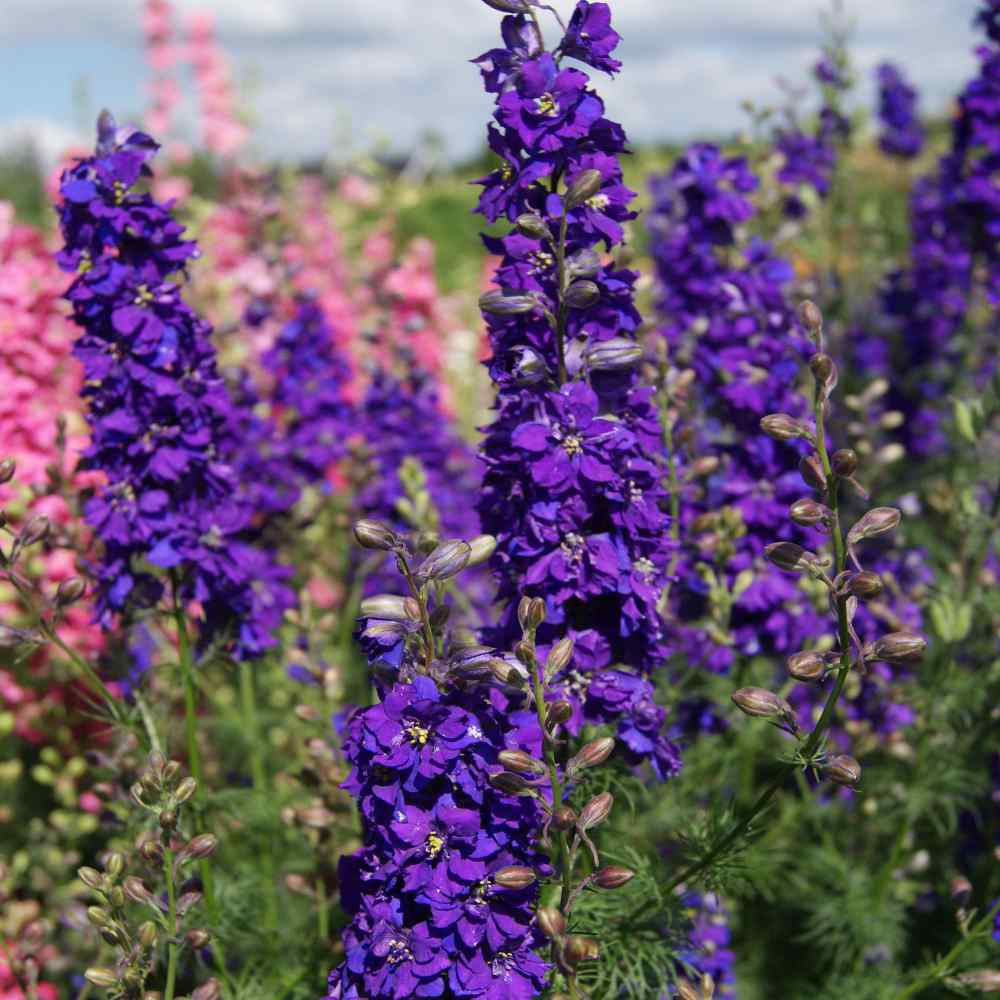
A striking annual larkspur grown for its tall, upright spikes of rich blue to violet-blue flowers. Often listed as Delphinium consolida, this cool-season annual adds dramatic vertical color to spring borders, cottage gardens, wildflower plantings, and cut flower gardens.
Garden Uses
Blue Spire is one of the best annual flowers for adding height and deep color to the garden. Its tall flower spikes are excellent for the back of borders, along fences, in cottage gardens, and in mixed annual beds where a strong vertical accent is needed.
The blue blooms combine beautifully with pink, white, lavender, yellow, and soft rose flowers. It is especially attractive when planted with poppies, cornflowers, alyssum, nigella, cosmos, and other old-fashioned annuals. In mass plantings, Blue Spire creates a bold ribbon of cool color that stands out beautifully in spring and early summer.
Growing Information
Blue Spire performs best in cool weather and should be direct sown where it is to grow. Seeds may be planted in fall in mild-winter regions for spring bloom, or very early in spring as soon as the soil can be worked. Cool soil conditions help encourage better germination and stronger early growth.
Select a sunny site with well-drained garden soil. Cover the seed lightly and keep the seedbed evenly moist until germination. Since annual larkspur develops a taproot and does not transplant easily, direct sowing is usually the most reliable method.
Thin seedlings to allow good air circulation and sturdy flower spike development. Taller plants may need light support in windy locations. Once established, Blue Spire is fairly easy to grow and may self-sow if seed heads are allowed to mature.
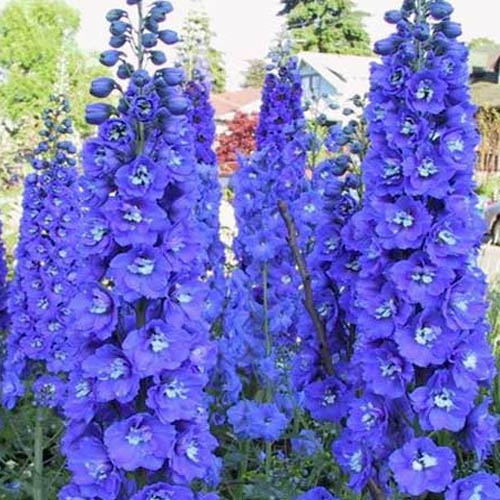
As magnificent perennial delphinium prized for its towering flower spikes of deep royal purple blooms accented by contrasting white “bees” at the center of each flower. A member of the Pacific Giant type delphiniums, Delphinium cultorum 'King Arthur' creates a dramatic display in cottage gardens, perennial borders, and cutting gardens where height and rich color are desired.
Garden Uses
King Arthur is one of the finest vertical accent plants available for the perennial flower garden. Its stately flower spikes can reach impressive heights, creating a striking focal point in borders and mixed plantings. The rich purple flowers provide excellent contrast against lighter-colored blooms and ornamental foliage.
This variety is particularly effective in cottage gardens, English-style borders, cutting gardens, and formal perennial beds. The tall flower spikes serve as excellent background plants and pair beautifully with roses, foxgloves, peonies, daisies, lupines, and ornamental grasses.
King Arthur is also one of the premier cut flower delphiniums, producing long-lasting stems that add elegance and height to fresh floral arrangements.
Growing Information
King Arthur grows best in full sun in cooler climates, though some afternoon shade is beneficial in regions with hot summers. Plants prefer rich, fertile, well-drained soil with consistent moisture throughout the growing season.
Sow seeds indoors 8 to 10 weeks before the last expected frost or direct sow in cool conditions. Delphinium seed often germinates best when exposed to cool temperatures. Transplant seedlings carefully, providing adequate spacing to encourage strong air circulation.
Because of their height, mature plants often benefit from staking or support, especially in windy locations. Removing spent flower spikes after the first bloom may encourage a lighter second flowering later in the season.
Regular feeding and consistent watering will help produce the strongest stems and largest flower spikes.

Contact Us | Privacy Policy | About Us
Serving gardeners since 1992
State of Mississippi Seedmen's Permit #C-391, Ohio 90152, Minnesota 20086777