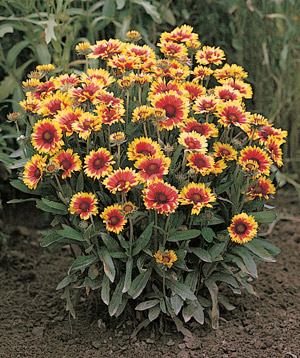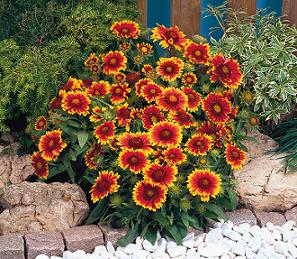
Blanketflower ( Gaillardia ) Seed

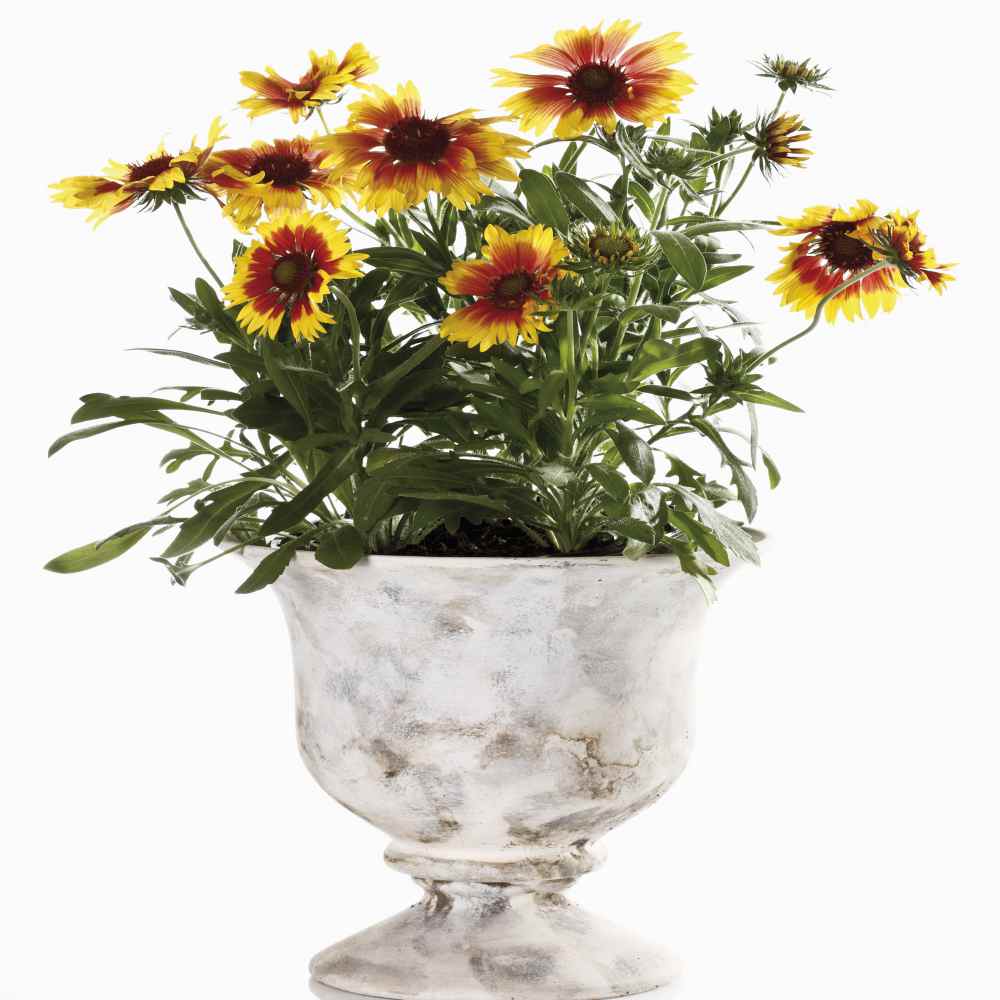
Grow gaillardia for its striking, long-blooming, two-toned flowers, its ability to attract pollinators like bees and butterflies, and its native status as a hardy, drought-tolerant plant that thrives in sunny, hot, dry conditions. Gaillardia is a low-maintenance choice for rock gardens, native plant collections, or containers, offering vibrant color and requiring minimal care once established.

Gardening info:


Watch a YouTube Video on how to establish Blanketflower


Indian Blanket Gailardia seeds. Indian Blanket Gailardia seeds.
TWT286 Indian Blanket ( Gaillardia pulchella )

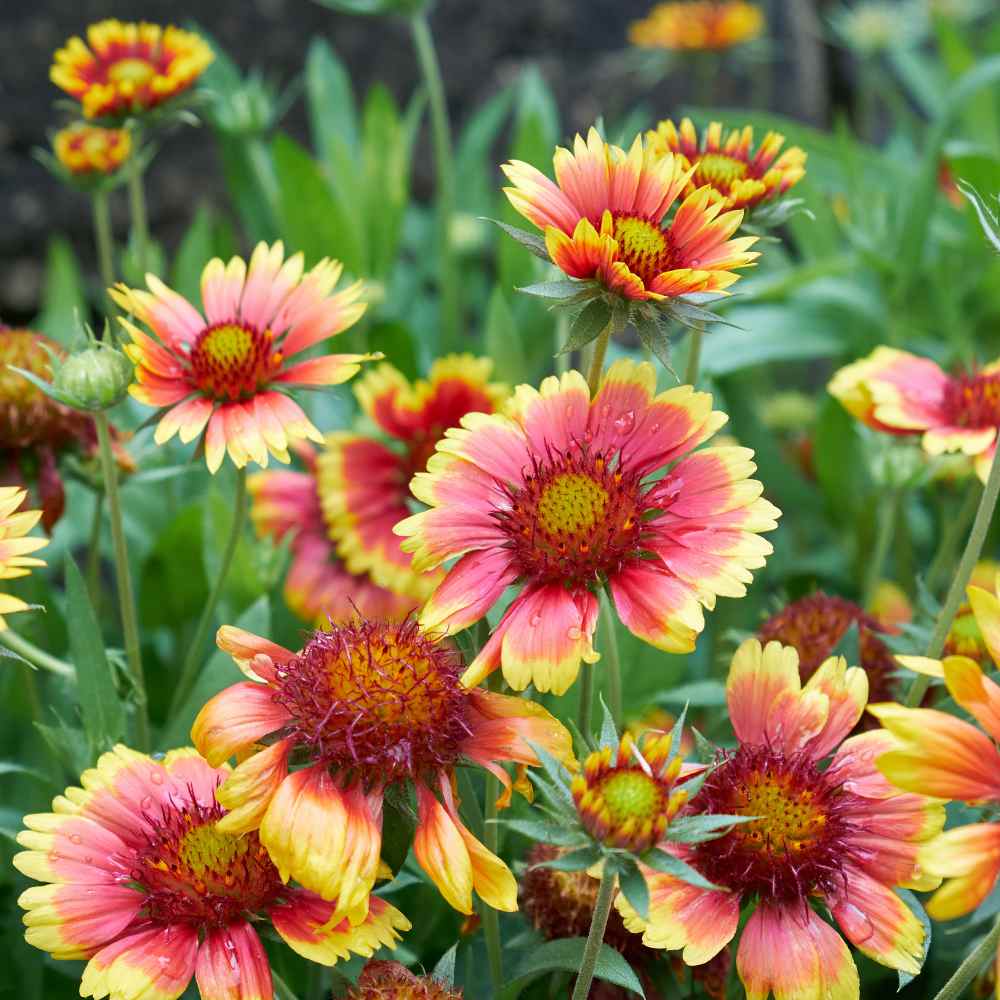
Indian Blanket (Gaillardia pulchella) is one of North America's most cheerful native wildflowers, producing brilliant daisy-like blooms in glowing shades of scarlet, crimson, orange, and golden yellow from late spring until frost. Often carpeting roadsides, open prairies, and sunny meadows, this long-blooming annual or short-lived perennial creates spectacular displays that seem to shimmer in the summer sunshine. Its vivid bicolored flowers resemble the richly patterned woven blankets traditionally crafted by Native American tribes, giving rise to its well-known common name.

Fast-growing and exceptionally easy to cultivate, Indian Blanket forms bushy, well-branched plants reaching 18 to 24 inches tall. The blooms are held above gray-green foliage on sturdy stems that continue producing flowers for months with minimal care. Highly tolerant of heat, drought, poor soils, and coastal conditions, it is one of the finest choices for colorful, low-maintenance gardens and naturalized landscapes.

Garden Uses

Indian Blanket is perfect for wildflower meadows, prairie restorations, cottage gardens, butterfly gardens, pollinator plantings, roadside plantings, xeriscapes, and sunny perennial borders. It performs equally well in mass plantings where the vivid flowers create striking drifts of color or scattered naturally among native grasses and other wildflowers.

Its compact habit also makes it suitable for containers, raised beds, rock gardens, and edging sunny pathways. The long-lasting flowers are excellent for fresh bouquets, while the dried seed heads provide late-season interest and food for birds.

Growing Information

Indian Blanket thrives in full sun and prefers well-drained soil. Sandy, gravelly, rocky, and average garden soils all produce excellent results, while overly rich or poorly drained soils may shorten the plant's lifespan. Mature plants generally reach 18 to 24 inches tall with a spread of 12 to 18 inches.

Seeds may be sown directly outdoors after danger of frost has passed or started indoors 6 to 8 weeks earlier. Simply press seeds lightly into the soil, as light aids germination. Maintain temperatures around 70°F. Germination typically occurs within 10 to 20 days.

Once established, Indian Blanket requires very little supplemental watering and thrives in hot, dry weather. Removing spent flowers encourages continuous blooming, although allowing some flowers to mature provides seed for natural reseeding and winter bird food.

Pollinator Value

Indian Blanket is among the finest nectar plants for pollinator gardens. The colorful blooms attract honeybees, native bees, butterflies, skippers, hoverflies, and numerous beneficial insects throughout the growing season. The extended flowering period provides a dependable nectar source from late spring well into autumn.

As flowers mature, goldfinches and other small songbirds eagerly feed on the abundant seeds, adding additional wildlife value to the garden.

Natural Garden Benefits

As a native North American wildflower, Indian Blanket plays an important ecological role by supporting native pollinators and seed-eating birds. Its drought tolerance makes it ideal for sustainable landscapes that require minimal irrigation once established.

The deep root system helps stabilize sandy soils, making it valuable for erosion control on slopes, roadsides, coastal plantings, and prairie restorations. Plants readily reseed under favorable conditions, creating colorful naturalized colonies over time.

Historical Significance

Gaillardia pulchella is native to much of the southern and central United States, extending into Mexico. It has flourished naturally across prairies, coastal dunes, open fields, and dry grasslands for thousands of years, providing seasonal color and valuable nectar for native insects.

The genus Gaillardia honors Antoine René Gaillard de Charentonneau, an 18th-century French magistrate and enthusiastic patron of botany. Today, Indian Blanket serves as the official state wildflower of Oklahoma and remains one of the country's most beloved native wildflowers.

Interesting Facts

The common name "Indian Blanket" refers to the brilliant red, orange, and yellow flower colors that resemble the intricate woven blanket patterns created by Native American artisans.

The species name pulchella means "beautiful" in Latin, an appropriate description for one of North America's showiest native flowers.

Indian Blanket thrives where many ornamental flowers struggle, often blooming beautifully in hot, dry locations with little more than sunshine and well-drained soil.

Individual plants may behave as annuals or short-lived perennials depending upon climate, but they often reseed generously, providing colorful displays year after year.

Seedman Notes

Indian Blanket has long been one of our favorite native wildflowers because it offers brilliant color with almost effortless care. Few plants bloom as continuously through intense summer heat while providing so much value for butterflies, bees, and songbirds. Whether planted in formal borders or allowed to naturalize across open meadows, this cheerful native always brings lasting beauty to the landscape.

Quick Facts
Botanical Name Gaillardia pulchella
Common Name Indian Blanket, Firewheel
Plant Type Annual or short-lived perennial wildflower
Height 18-24 inches
Spread 12-18 inches
Bloom Color Scarlet, red, orange, and golden yellow
Bloom Season Late spring through frost
Light Requirements Full sun
Water Needs Low once established
Soil Type Well-drained sandy, rocky, or average soils
USDA Zones 3-10
Drought Tolerance Excellent
Pollinator Friendly Excellent

Seedman Star Ratings
Ease of Growing ★★★★★
Heat Tolerance ★★★★★
Drought Tolerance ★★★★★
Bloom Duration ★★★★★
Pollinator Value ★★★★★
Wildlife Value ★★★★★
Landscape Impact ★★★★★
Overall Garden Value ★★★★★
 2.25g pack ( about 800 seeds ) $3.95
Sundance Bicolor Gailardia seeds.
LET141 Sundance Bicolor ( Gaillardia sundance bicolor )

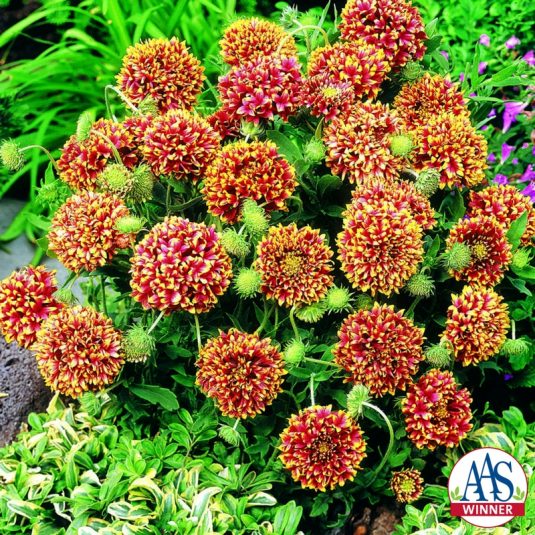
Sundance Bicolor (Gaillardia 'Sundance Bicolor') is a spectacular double-flowered blanket flower that transforms one of America's favorite native wildflowers into an eye-catching garden showpiece. Instead of the traditional daisy-like blooms, Sundance Bicolor produces fully double, globe-shaped flowers with frilly petals in rich crimson-red accented by brilliant golden-yellow tips. The unique pompon-like blooms resemble miniature chrysanthemums or carnations and provide continuous color from early summer until frost.

Compact, vigorous, and exceptionally floriferous, Sundance Bicolor grows into a tidy mound approximately 18 to 24 inches tall, producing dozens of long-lasting blooms held well above attractive gray-green foliage. Its remarkable tolerance for heat, drought, humidity, and poor soils makes it an outstanding performer throughout much of North America, where it continues blooming long after many other annuals and short-lived perennials have faded.

Garden Uses

Sundance Bicolor is ideal for sunny perennial borders, cottage gardens, butterfly gardens, pollinator plantings, xeriscapes, cutting gardens, and mixed containers. Its compact habit also makes it an excellent choice for edging pathways, raised beds, patio planters, and rock gardens.

The unusual double blooms combine beautifully with purple coneflowers, salvias, coreopsis, rudbeckias, yarrow, ornamental grasses, lavender, and blue flowering perennials. Long, sturdy stems make outstanding cut flowers, while the bright blooms add vibrant color to fresh bouquets throughout the summer.

Growing Information

Sundance Bicolor thrives in full sun and performs best in well-drained soil. Sandy, rocky, gravelly, and average garden soils all produce excellent results, while overly rich or poorly drained soils may reduce flowering and longevity. Mature plants typically reach 18 to 24 inches tall with a spread of 12 to 18 inches.

Seeds may be started indoors 6 to 8 weeks before the final frost or sown directly outdoors once the soil has warmed. Press seeds lightly into the soil without covering heavily, as light aids germination. Maintain temperatures around 70°F. Germination generally occurs within 10 to 20 days.

Once established, plants require little maintenance beyond occasional watering during prolonged drought. Removing spent blooms encourages an even heavier display of flowers throughout the growing season, although leaving a few seed heads late in the season benefits visiting birds.

Pollinator Value

The colorful blooms attract honeybees, native bees, butterflies, hoverflies, and numerous other beneficial insects throughout their exceptionally long flowering season. Although the double flowers provide slightly less accessible nectar than single-flowered Gaillardia varieties, they still serve as an excellent nectar source for many pollinating insects.

As seed heads mature, goldfinches and other small songbirds frequently visit to feed on the nutritious seeds during late summer and autumn.

Natural Garden Benefits

Sundance Bicolor contributes valuable nectar to pollinator gardens while requiring minimal irrigation once established. Its drought tolerance makes it an excellent choice for sustainable landscapes and water-wise gardens where dependable color is desired throughout the hottest months of summer.

The sturdy root system helps stabilize light soils, while the extended bloom season supports beneficial insects over a long portion of the growing season.

Historical Significance

Sundance Bicolor was developed from the North American native Gaillardia pulchella, preserving the toughness and adaptability of its wild ancestor while introducing an entirely new flower form. Blanket flowers have been cultivated in gardens since the early nineteenth century and remain among the most dependable flowering plants for hot, sunny locations.

The genus Gaillardia honors Antoine René Gaillard de Charentonneau, an eighteenth-century French patron of botany whose support helped encourage the study and cultivation of ornamental plants.

Interesting Facts

The fully double blooms are created by the transformation of many of the flower's central disk florets into colorful petal-like structures, giving each bloom its distinctive pompon appearance.

Despite its refined appearance, Sundance Bicolor retains the exceptional toughness of native blanket flowers, thriving in hot, dry weather that causes many bedding plants to decline.

The brilliant red and golden-yellow blooms remain among the brightest colors in the summer garden and often continue flowering until the first hard frost.

Its cheerful blooms make excellent long-lasting cut flowers and continue opening new blossoms throughout the season with regular deadheading.

Seedman Notes

Sundance Bicolor has become one of our favorite Gaillardia selections because it offers something completely different from the traditional blanket flower. The fully double blooms look almost hand-crafted, combining brilliant color with outstanding heat tolerance and months of dependable flowering. If you're looking for a unique variety that thrives through the hottest days of summer while attracting pollinators and brightening the landscape, Sundance Bicolor is an exceptional choice.

Quick Facts
Botanical Name Gaillardia 'Sundance Bicolor'
Common Name Sundance Bicolor Blanket Flower
Plant Type Annual or short-lived perennial
Height 18-24 inches
Spread 12-18 inches
Bloom Color Deep crimson-red with golden-yellow petal tips
Bloom Season Early summer through frost
Light Requirements Full sun
Water Needs Low once established
Soil Type Well-drained sandy, rocky, or average soil
USDA Zones 3-10
Drought Tolerance Excellent
Pollinator Friendly Yes

Seedman Star Ratings
Ease of Growing ★★★★★
Heat Tolerance ★★★★★
Drought Tolerance ★★★★★
Bloom Duration ★★★★★
Container Performance ★★★★★
Pollinator Value ★★★★☆
Landscape Impact ★★★★★
Overall Garden Value ★★★★★
 30mg pack ( about 25 seeds ) $2.95
Arizona Apricot Gailardia seeds.
SF306 Arizona Apricot ( Gaillardia x grandiflora )

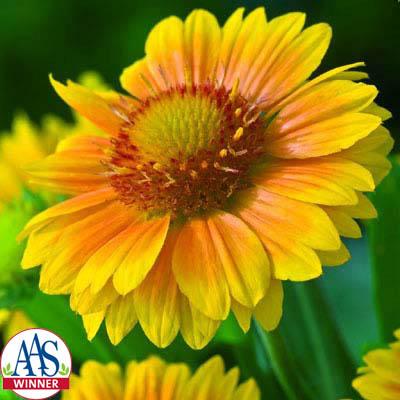
Arizona Apricot (Gaillardia × grandiflora) is an award-winning blanket flower that produces a stunning display of large, soft apricot-orange blooms with golden-yellow edges from late spring until frost. Part of the renowned Arizona Series, this compact perennial combines exceptional heat tolerance, outstanding drought resistance, and one of the longest blooming seasons of any garden perennial. Its warm sunset colors bring a softer, more refined palette to the garden while still delivering the rugged performance for which Gaillardias are famous.

Growing into neat, rounded mounds just 10 to 12 inches tall, Arizona Apricot is covered with cheerful daisy-like flowers that continue blooming almost continuously throughout the growing season. The compact habit makes it especially well suited for borders, containers, and smaller garden spaces where months of dependable color are desired. Its silver-green foliage provides an attractive backdrop for the glowing flowers while remaining tidy throughout the season.

Garden Uses

Arizona Apricot is an excellent choice for perennial borders, cottage gardens, butterfly gardens, pollinator plantings, rock gardens, xeriscapes, and sunny edging. Its naturally compact habit also makes it one of the finest Gaillardias for containers, patio planters, window boxes, and raised beds.

The warm apricot flowers blend beautifully with purple salvias, lavender, blue veronica, coreopsis, echinacea, yarrow, ornamental grasses, and white flowering perennials. The long stems also provide attractive cut flowers for fresh bouquets throughout the summer months.

Growing Information

Arizona Apricot thrives in full sun and performs best in well-drained soil. Sandy, gravelly, rocky, and average garden soils are all suitable, while heavy clay or consistently wet conditions should be avoided. Mature plants typically grow 10 to 12 inches tall with a spread of 12 to 15 inches.

Seeds may be started indoors 6 to 8 weeks before the final frost or sown directly outdoors after danger of frost has passed. Press seeds lightly into the soil, as light improves germination. Maintain temperatures near 70°F. Germination generally occurs within 10 to 20 days.

Once established, Arizona Apricot requires minimal watering and thrives during hot, dry summers. Removing spent flowers encourages nearly continuous blooming, although allowing a few blooms to mature provides seed for birds later in the season. Dividing mature clumps every few years helps maintain vigorous flowering.

Pollinator Value

The large open flowers are highly attractive to honeybees, native bees, butterflies, skippers, and beneficial hoverflies. Their accessible central disks provide abundant nectar and pollen throughout the extended flowering season, making Arizona Apricot one of the finest pollinator perennials for sunny gardens.

As flowers mature, goldfinches and other seed-eating birds frequently visit to feed on the ripening seed heads during late summer and autumn.

Natural Garden Benefits

Arizona Apricot is exceptionally well suited for sustainable landscapes because of its excellent drought tolerance and minimal maintenance requirements. Once established, it requires very little supplemental irrigation while continuing to produce abundant flowers during prolonged periods of summer heat.

The deep root system helps stabilize light soils while supporting beneficial insects and seed-eating birds throughout much of the growing season. Its compact size also makes it an excellent addition to water-wise urban gardens and pollinator habitats.

Historical Significance

Gaillardia × grandiflora is a naturally occurring hybrid developed from the North American native species Gaillardia aristata and Gaillardia pulchella. Plant breeders combined the long flowering season of one parent with the perennial hardiness of the other, producing one of the most dependable flowering perennials for modern gardens.

The Arizona Series was specifically developed for improved branching, earlier flowering, compact growth, and exceptional garden performance. Arizona Apricot has earned numerous awards for its outstanding bloom production, durability, and landscape value.

Interesting Facts

The soft apricot flower color changes subtly with temperature and sunlight, often displaying peach, golden, and coral tones throughout the season.

Arizona Apricot begins flowering much earlier than many traditional blanket flowers and often continues blooming until the first hard frost with only occasional deadheading.

The compact plants rarely require staking, even during periods of heavy flowering, making them ideal for formal borders and container gardens.

Like its native ancestors, Arizona Apricot flourishes in poor soils where many flowering perennials struggle, rewarding gardeners with months of colorful blooms despite challenging growing conditions.

Seedman Notes

Arizona Apricot is one of our favorite compact Gaillardias because its warm, pastel flower colors fit beautifully into almost any landscape design. The soft apricot blooms provide a refreshing alternative to the traditional bright reds and yellows while maintaining the outstanding toughness and nonstop flowering that have made blanket flowers such dependable garden favorites. For gardeners seeking exceptional color with very little maintenance, this variety is difficult to surpass.

Quick Facts
Botanical Name Gaillardia × grandiflora
Common Name Arizona Apricot Blanket Flower
Plant Type Hardy perennial
Height 10-12 inches
Spread 12-15 inches
Bloom Color Soft apricot-orange with golden-yellow edges
Bloom Season Late spring through frost
Light Requirements Full sun
Water Needs Low once established
Soil Type Well-drained sandy, rocky, or average soils
USDA Zones 3-10
Drought Tolerance Excellent
Pollinator Friendly Excellent

Seedman Star Ratings
Ease of Growing ★★★★★
Heat Tolerance ★★★★★
Drought Tolerance ★★★★★
Bloom Duration ★★★★★
Container Performance ★★★★★
Pollinator Value ★★★★★
Landscape Impact ★★★★★
Overall Garden Value ★★★★★
 100mg pack ( about 25 seeds ) $2.95
Goblin Gailardia seeds.
TWT114 Goblin ( Gaillardia aristata Goblin Kobold )

Goblin Blanket Flower (Gaillardia aristata 'Goblin' / 'Kobold') is a compact, long-blooming perennial that packs brilliant color into a tidy, easy-to-manage plant. Producing masses of large daisy-like flowers in rich mahogany-red with glowing golden-yellow edges, Goblin creates an almost continuous display from early summer until frost. Its compact habit, exceptional durability, and outstanding drought tolerance have made it one of the most popular blanket flower varieties for borders, rock gardens, and containers.

Growing just 12 to 15 inches tall, Goblin forms dense, rounded clumps of gray-green foliage that become nearly hidden beneath its cheerful blooms during the flowering season. Unlike taller varieties that may require staking, Goblin remains naturally compact and sturdy while thriving in intense summer heat, poor soils, and dry conditions. Its vivid flowers bring brilliant color to the landscape while attracting butterflies, bees, and other valuable pollinators throughout the growing season.

Garden Uses

Goblin is ideal for perennial borders, cottage gardens, butterfly gardens, rock gardens, xeriscapes, prairie plantings, and sunny edging. Its compact growth habit also makes it an excellent choice for patio containers, window boxes, raised beds, and small-space gardens where dependable color is desired throughout the summer.

The rich red and yellow blooms pair beautifully with blue salvias, lavender, coreopsis, yarrow, echinacea, catmint, ornamental grasses, and white flowering perennials. The long-lasting flowers are excellent for fresh bouquets and continue blooming with regular deadheading.

Growing Information

Goblin Blanket Flower performs best in full sun and well-drained soil. Sandy, rocky, gravelly, and average garden soils are all suitable, while heavy clay and overly wet conditions should be avoided. Mature plants typically grow 12 to 15 inches tall with a spread of 12 to 18 inches.

Seeds may be started indoors 6 to 8 weeks before the final spring frost or sown directly outdoors after danger of frost has passed. Press seeds lightly into the soil without covering deeply, as light encourages germination. Maintain temperatures around 70°F. Germination generally occurs within 10 to 20 days.

Once established, Goblin requires very little maintenance beyond occasional watering during prolonged drought. Removing spent flowers encourages nonstop blooming throughout the season, while dividing mature plants every 3 to 4 years helps maintain vigorous growth and flowering.

Pollinator Value

The open, nectar-rich flowers attract honeybees, native bees, butterflies, hoverflies, and numerous beneficial insects from early summer well into autumn. The prominent central disks provide easy access to pollen and nectar, making Goblin one of the finest compact pollinator plants for sunny gardens.

As flower heads mature, goldfinches and other small birds often feed on the ripening seeds, adding additional wildlife interest later in the season.

Natural Garden Benefits

Goblin is an excellent addition to pollinator gardens and water-wise landscapes thanks to its exceptional drought tolerance and months-long flowering season. Once established, it requires very little supplemental irrigation while continuing to produce abundant flowers during periods of intense summer heat.

Its fibrous root system helps stabilize light soils while supporting native pollinators and beneficial insects throughout much of the growing season. Deer and rabbits generally leave Gaillardia alone, making it an excellent choice in areas with browsing wildlife.

Historical Significance

Gaillardia aristata, commonly known as the Great Blanket Flower, is native to the western United States and Canada, where it naturally grows across prairies, foothills, and open mountain meadows. The cultivar 'Goblin'—also sold under the name 'Kobold'—was selected in Europe for its compact habit, heavy flowering, and exceptional garden performance while retaining the rugged durability of its native parent.

The genus Gaillardia honors Antoine René Gaillard de Charentonneau, an eighteenth-century French patron of botany whose support helped advance horticultural research and plant cultivation.

Interesting Facts

The names "Goblin" and "Kobold" refer to the same popular cultivar, with "Kobold" being the original European introduction and "Goblin" becoming widely adopted in North American nursery trade.

The brilliant flower colors remain vibrant even during prolonged periods of intense summer heat, making Goblin one of the most dependable flowering perennials for hot climates.

The gray-green foliage provides excellent contrast to the rich mahogany-red blooms while helping reduce water loss during drought conditions.

Individual flowers often remain attractive for over a week, with new buds continually opening throughout the growing season.

Seedman Notes

Goblin has earned its reputation as one of the finest compact blanket flowers available. We especially appreciate its ability to bloom almost continuously while requiring very little maintenance. Its compact size makes it incredibly versatile, fitting equally well into containers, borders, and rock gardens. For gardeners wanting nonstop color, excellent pollinator value, and outstanding drought tolerance, Goblin remains one of our favorite Gaillardia selections.

Quick Facts
Botanical Name Gaillardia aristata 'Goblin' ('Kobold')
Common Name Goblin Blanket Flower
Plant Type Hardy perennial
Height 12-15 inches
Spread 12-18 inches
Bloom Color Mahogany-red with golden-yellow edges
Bloom Season Early summer through frost
Light Requirements Full sun
Water Needs Low once established
Soil Type Well-drained sandy, rocky, or average soil
USDA Zones 3-10
Drought Tolerance Excellent
Pollinator Friendly Excellent

Seedman Star Ratings
Ease of Growing ★★★★★
Heat Tolerance ★★★★★
Drought Tolerance ★★★★★
Bloom Duration ★★★★★
Container Performance ★★★★★
Pollinator Value ★★★★★
Landscape Impact ★★★★★
Overall Garden Value ★★★★★
 70mg pack ( about 30-40 seeds ) $4.95
Arizona Sun Gailardia seeds.
SF399 Arizona Sun ( Gaillardia x grandiflora )

Arizona Sun (Gaillardia × grandiflora) is one of the brightest and longest-blooming blanket flowers available, producing a spectacular display of fiery scarlet-red blooms boldly tipped with golden-yellow from late spring until frost. Bred as part of the award-winning Arizona Series, this compact perennial combines exceptional flower power with outstanding heat and drought tolerance, making it one of the finest performers for sunny gardens. Its brilliant sunset colors seem to glow against the silver-green foliage, bringing months of cheerful color even during the hottest days of summer.

Compact, well-branched plants grow into tidy mounds just 10 to 12 inches tall while producing dozens of large daisy-like flowers throughout the growing season. Unlike many taller blanket flowers, Arizona Sun rarely requires staking and maintains its attractive form in borders, containers, and mass plantings. Its nonstop blooms and rugged durability have earned numerous garden awards and made it a favorite among professional landscapers and home gardeners alike.

Garden Uses

Arizona Sun is ideal for perennial borders, cottage gardens, butterfly gardens, rock gardens, pollinator plantings, xeriscapes, edging, and patio containers. Its naturally compact habit makes it especially valuable in smaller gardens, raised beds, window boxes, and mixed planters where continuous color is desired.

The vivid red and yellow blooms combine beautifully with blue salvias, lavender, catmint, purple coneflowers, coreopsis, yarrow, ornamental grasses, and white flowering perennials. The sturdy stems also produce excellent cut flowers that remain colorful in bouquets for many days.

Growing Information

Arizona Sun thrives in full sun and performs best in well-drained soil. Sandy, gravelly, rocky, and average garden soils all produce excellent results, while poorly drained or consistently wet soils should be avoided. Mature plants typically reach 10 to 12 inches in height with a spread of 12 to 15 inches.

Seeds may be started indoors 6 to 8 weeks before the final spring frost or sown directly outdoors after danger of frost has passed. Press seeds gently into the soil without covering deeply, as light aids germination. Maintain temperatures around 70°F. Germination usually occurs within 10 to 20 days.

Once established, Arizona Sun requires very little supplemental watering and thrives during prolonged periods of heat and drought. Deadheading encourages continuous flowering throughout the season, although allowing a few blooms to mature provides seeds for visiting birds. Divide mature clumps every few years to maintain peak vigor.

Pollinator Value

The large open flowers provide abundant nectar and pollen that attract honeybees, native bees, butterflies, skippers, hoverflies, and numerous other beneficial insects throughout the growing season. Because flowering begins early and continues until frost, Arizona Sun serves as a dependable nectar source for pollinators over many months.

Goldfinches and other small songbirds frequently feed on mature seed heads during late summer and autumn, adding additional wildlife value to the garden.

Natural Garden Benefits

Arizona Sun is exceptionally well suited for water-wise landscapes and pollinator gardens. Its deep root system allows the plant to flourish in dry conditions while helping stabilize light soils on slopes and open planting areas.

Its outstanding drought tolerance reduces irrigation requirements, while its extended bloom season supports beneficial insects from spring through fall. Deer and rabbits generally leave blanket flowers alone, making Arizona Sun an excellent choice for gardens where browsing wildlife is common.

Historical Significance

Gaillardia × grandiflora originated as a hybrid between the North American species Gaillardia aristata and Gaillardia pulchella, combining the perennial durability of one parent with the exceptionally long flowering season of the other. The Arizona Series was specifically developed to produce earlier blooms, compact growth, superior branching, and outstanding garden performance.

Arizona Sun has received numerous horticultural awards and has become one of the most widely planted compact blanket flowers throughout North America due to its reliability and exceptional landscape performance.

Interesting Facts

Arizona Sun often begins blooming during its first growing season and continues producing flowers almost continuously until the first hard frost.

The vibrant flower colors remain remarkably bright even under intense summer sunlight, resisting fading far better than many traditional bedding plants.

Its compact size allows it to fit easily into containers and smaller landscapes while still producing flowers nearly as large as much taller blanket flower varieties.

The silver-green foliage helps reduce moisture loss during hot weather, contributing to the plant's excellent drought resistance.

Seedman Notes

Arizona Sun is one of those plants that simply refuses to quit blooming. Its brilliant scarlet and golden flowers provide nonstop color through heat, drought, and long summer days with remarkably little maintenance. We especially recommend it for gardeners wanting maximum flower production in smaller spaces, containers, or sunny borders where dependable performance is essential. It remains one of the finest compact Gaillardias available today.

Quick Facts
Botanical Name Gaillardia × grandiflora
Common Name Arizona Sun Blanket Flower
Plant Type Hardy perennial
Height 10-12 inches
Spread 12-15 inches
Bloom Color Scarlet-red with golden-yellow tips
Bloom Season Late spring through frost
Light Requirements Full sun
Water Needs Low once established
Soil Type Well-drained sandy, rocky, or average soil
USDA Zones 3-10
Drought Tolerance Excellent
Pollinator Friendly Excellent

Seedman Star Ratings
Ease of Growing ★★★★★
Heat Tolerance ★★★★★
Drought Tolerance ★★★★★
Bloom Duration ★★★★★
Container Performance ★★★★★
Pollinator Value ★★★★★
Landscape Impact ★★★★★
Overall Garden Value ★★★★★
 50mg pack ( about 25 seeds ) $2.95

All seed packets listed on this page are in stock and ready to ship.