
Geranium Flower Seed ( Annual )
Gardening info:
You should grow geraniums for their beautiful and varied flower colors, long blooming season, ease of care, adaptability to various garden settings (including containers and hanging baskets), and diverse foliage and flower types. They are a classic choice for adding vibrant color and continuous blooms to outdoor spaces, and some scented varieties can even be used to flavor dishes. Geraniums are easy to grow annuals that fit well in home gardens, container gardens, flowerbeds, and even as houseplants. We like them for their big, bright bloom, and because they are so easy to grow almost anywhere. Geraniums make great flowers for kids.
Home gardeners use Geranium plants in a wide variety of ways. They are well suited for container gardens by themselves or with other flowers. You can use them to make a potted gift for a friend for any occasion. They grow well in flower gardens along with your other favorites.
When the weather gets cold these hardy plants will withstand light frosts and patiently await transplanting into containers to move them indoors. Smaller, dwarf varieties make the best houseplants. Geraniums like lots of sun. So, put them in a sunny window or room. They prefer temperatures below 70 degrees.
Geraniums can be grown from seed or cuttings. But, most people buy small plants from garden stores at very low prices and plant them around the garden and in containers. Plant them in full or partial shade. While they will tolerate poor soil, add compost and a general purpose fertilizer to maximize growth and plant health.
By mid-summer, your geranium plant will be growing bright white, red or pink blooms. They will continuously bloom all the way to the first frost and beyond.
Tip: To promote continuous blooming, pinch or cut off the blooms after they die.
Geraniums live approximately 18 months. They will last over the winter as indoors houseplants. Getting them to bloom indoors is sometimes a little difficult.,as they often go dormant, or grow slowly. After transplanting, place them in a cool, but sunny location. Cut them back by about 1/3. Don't overwater . They prefer soil on the dry side. Fertilize once a month.
If you want to grow cuttings, snip off several new growths, about 3-4 inches in length. Then stick them in moist potting soil. Keep the soil moist and they will root. Comes spring they are just about the right size for planting in a container on the porch or directly in the garden.
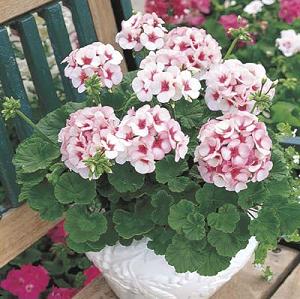
Maverick Star Geranium is a bright and cheerful seed-grown geranium known for its rounded clusters of pink-and-white star-patterned flowers held above handsome green foliage. A selection of Pelargonium x hortorum, this variety brings dependable color, compact growth, and classic geranium charm to containers, porch planters, bedding displays, and sunny garden borders.
Garden Uses
Maverick Star is excellent for patio pots, porch containers, window boxes, hanging baskets, bedding displays, and mixed annual borders. The flowers feature a charming star-like pattern, with soft pale petals accented by deeper pink centers, giving the plant a fresh and decorative look.
Its compact, well-branched habit makes it especially useful where a neat, rounded plant is desired. It combines beautifully with white alyssum, blue lobelia, dusty miller, petunias, verbena, marigolds, coleus, and ornamental grasses.
This variety is particularly attractive in white or terra-cotta containers, where the patterned blooms and deep green foliage create a classic garden display.
Growing Information
Maverick Star grows best in full sun to light afternoon shade and well-drained soil. In hot southern climates, some afternoon shade can help keep plants looking fresh during the hottest part of summer.
Seeds may be started indoors 10 to 12 weeks before the last frost. Sow seeds in a warm, bright location and keep the soil evenly moist but not waterlogged. Once seedlings are large enough to handle, transplant into individual pots and grow on until outdoor conditions are warm and settled.
Plants prefer moderate moisture and good air circulation. Avoid heavy, soggy soils, as geraniums perform best when allowed to dry slightly between waterings. Regular feeding during the growing season helps support continuous flowering.
Removing spent flower heads encourages fresh blooms and keeps plants tidy.
- Botanical Name: Pelargonium x hortorum
- Common Name: Maverick Star Geranium
- Plant Type: Tender perennial grown as an annual
- Bloom Color: Pink and white star-patterned flowers
- Bloom Season: Late spring through frost
- Height: Usually 12 to 16 inches
- Spread: 12 to 16 inches
- Light: Full sun to light afternoon shade
- Soil: Well-drained soil or quality potting mix
- Best Uses: Containers, bedding plants, window boxes, porch pots, borders
- Attracts: Bees, butterflies, occasional beneficial insects
- Special Feature: Distinctive pink-and-white star-patterned blooms
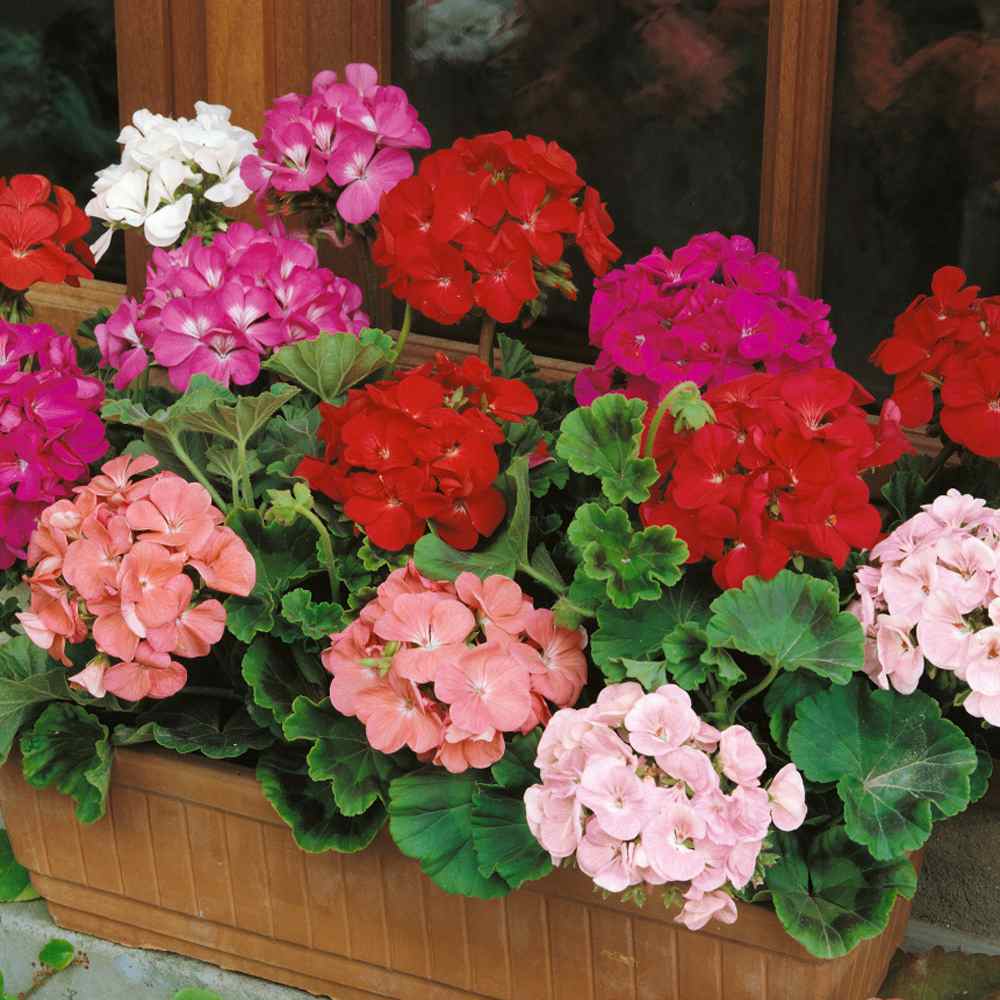
Geranium F2 Mix is a colorful blend of seed-grown garden geraniums producing large clusters of blooms in shades of red, pink, salmon, rose, white, scarlet, and bicolors. These vigorous plants combine the classic beauty of traditional geraniums with improved uniformity, reliable flowering, and excellent garden performance, making them a favorite choice for containers, bedding displays, and sunny borders.
Garden Uses
Geranium F2 Mix is ideal for patio containers, porch planters, window boxes, hanging baskets, flower beds, borders, and mass landscape plantings. The broad range of flower colors allows gardeners to create vibrant displays that remain attractive from late spring until frost.
Plants develop neat, mounded habits that work equally well as focal points in containers or as colorful bedding plants. The blooms pair beautifully with alyssum, lobelia, dusty miller, verbena, petunias, marigolds, coleus, and ornamental grasses.
Because of their long flowering season and dependable performance, geraniums remain among the most popular plants for municipal plantings, commercial landscapes, and home gardens worldwide.
Growing Information
Geranium F2 Mix grows best in full sun to partial shade and prefers rich, well-drained soil. In hot southern climates, some afternoon shade can help maintain peak flower production during midsummer.
Start seeds indoors approximately 10 to 12 weeks before the last expected frost. Geranium seed germinates best in warm conditions with consistent moisture. Once seedlings develop several true leaves, transplant them into individual pots and grow them on until outdoor conditions are suitable.
Plants appreciate regular watering but should not be kept constantly wet. Allowing the soil surface to dry slightly between waterings encourages healthy root development.
Removing spent flower clusters promotes continued blooming and keeps plants looking fresh throughout the season. Monthly feeding during active growth helps maintain vigorous flowering.
- Botanical Name: Pelargonium x hortorum
- Common Name: Geranium F2 Mix
- Plant Type: Tender perennial grown as an annual
- Bloom Color: Mixed shades of red, pink, salmon, rose, scarlet, white, and bicolors
- Bloom Season: Late spring through frost
- Height: 12 to 18 inches
- Spread: 12 to 16 inches
- Light: Full sun to partial shade
- Soil: Rich, well-drained soil
- Best Uses: Containers, window boxes, bedding plants, borders, patio gardens
- Attracts: Bees, butterflies, beneficial insects
- Special Feature: Reliable seed-grown hybrid performance with mixed flower colors

Contact Us | Privacy Policy | About Us
Serving gardeners since 1992
State of Mississippi Seedmen's Permit #C-391, Ohio 90152, Minnesota 20086777