
Gomphrena Seed ( Annual )
This would be too late, as they need about 10 weeks to produce flowers. Gomphrena is a good cut flower, and lasts for days. It is also a fine Everlasting.
Flowers dry quickly and easily for winter arrangements, retaining their shape and color.
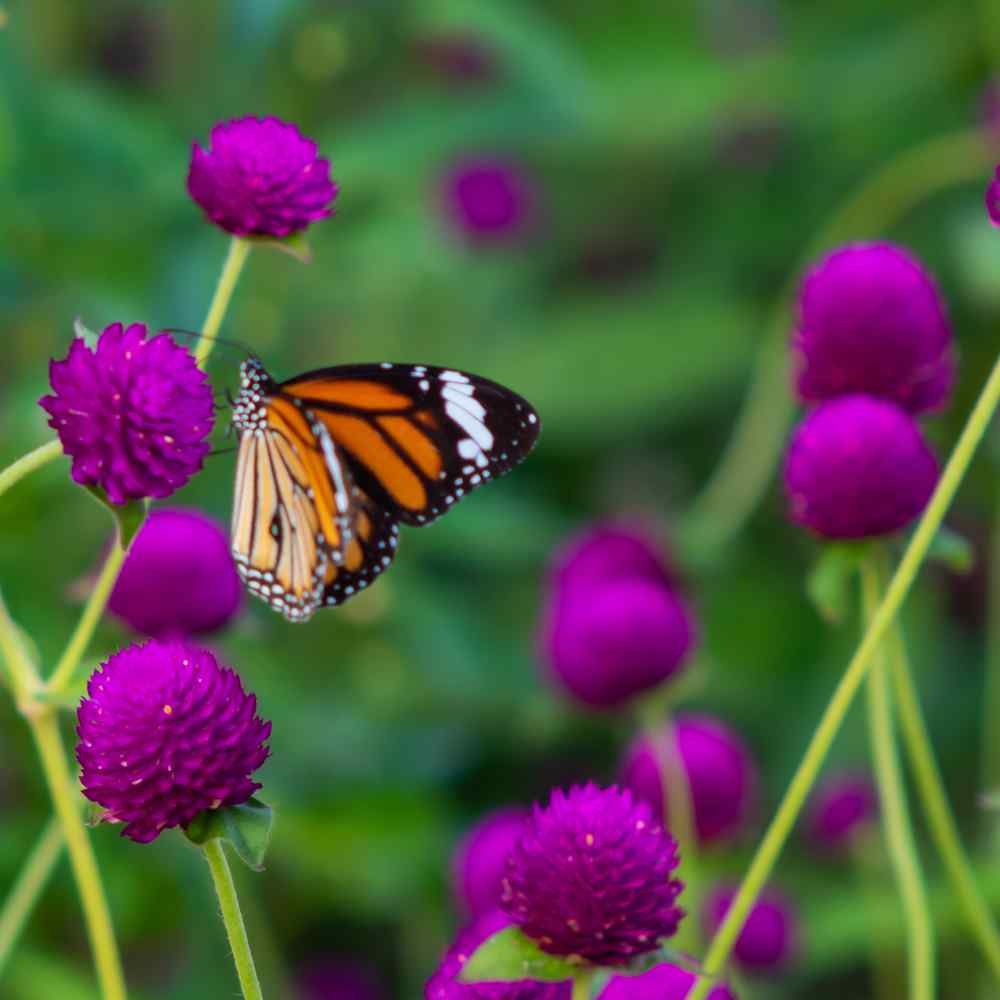
Very Purple Globe Amaranth is a brilliant annual flower grown for its vivid purple, clover-like blooms that hold their color beautifully in the garden and after drying. Botanically known as Gomphrena globosa, this tough, heat-loving plant produces rounded flower heads on upright stems, making it excellent for borders, cutting gardens, containers, pollinator plantings, and everlasting dried arrangements.
Garden Uses
Very Purple is ideal for sunny borders, cottage gardens, cutting gardens, pollinator beds, containers, and mass plantings. The bright purple flower globes create bold dots of color above the foliage and blend beautifully with zinnias, marigolds, celosia, cosmos, salvia, lantana, and ornamental grasses.
This variety is especially useful in hot summer gardens where many softer annuals begin to fade. The flowers remain attractive for a long period and can be used fresh or dried, making the plant valuable both outdoors and indoors.
In mixed plantings, Very Purple adds texture as well as color. Its rounded blooms contrast nicely with daisy-shaped flowers, spikes, and airy filler plants.
Growing Information
Gomphrena grows best in full sun and well-drained soil. Seeds may be started indoors 6 to 8 weeks before the last frost or sown outdoors after the soil has warmed and danger of frost has passed.
For best germination, sow seed in a warm location and keep the seedbed evenly moist until seedlings appear. Once established, plants are heat tolerant, drought tolerant, and low maintenance.
Avoid overly wet soil, as gomphrena prefers good drainage and performs well in average garden soil. Pinching young plants can encourage branching and more flower stems. Regular cutting or deadheading encourages continued bloom production through summer and into fall.
- Botanical Name: Gomphrena globosa
- Common Name: Very Purple Globe Amaranth
- Plant Type: Annual
- Bloom Color: Bright purple to deep magenta-purple
- Bloom Season: Summer through frost
- Height: Usually 18 to 24 inches
- Spread: 12 to 18 inches
- Light: Full sun
- Soil: Well-drained average garden soil
- Drought Tolerance: Good once established
- Best Uses: Borders, cutting gardens, containers, dried flowers, pollinator gardens
- Attracts: Butterflies, bees, beneficial insects
- Special Feature: Excellent everlasting flower for dried arrangements
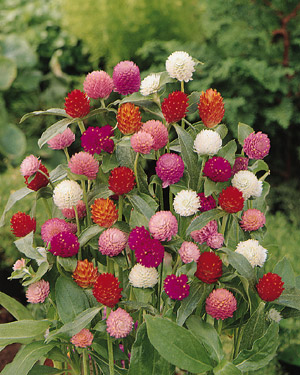
Dwarf Buddy Mix Globe Amaranth is a compact, free-flowering selection of Gomphrena nana that produces masses of colorful, globe-shaped blooms in shades of purple, rose, pink, white, and magenta. This dwarf variety offers all the heat tolerance, drought resistance, and long-lasting flower power of traditional globe amaranths while maintaining a neat, compact habit ideal for borders, containers, and smaller garden spaces.
Garden Uses
Dwarf Buddy Mix is perfect for edging flower beds, containers, window boxes, patio planters, pollinator gardens, and colorful summer borders. Its compact size makes it especially useful where larger gomphrena varieties might overwhelm neighboring plants.
The bright, rounded flower heads provide continuous color throughout summer and fall, creating attractive displays in both formal and informal gardens. The mix pairs beautifully with marigolds, zinnias, celosia, salvia, petunias, and ornamental grasses.
Because of its tidy growth habit, Dwarf Buddy Mix is also an excellent choice for children's gardens, raised beds, and small-space gardening projects.
Growing Information
Dwarf Buddy Mix thrives in full sun and well-drained soil. Seeds may be started indoors 6 to 8 weeks before the last frost or sown outdoors once soil temperatures have warmed and danger of frost has passed.
Plants establish quickly and begin flowering early in the season. Once established, they tolerate heat, humidity, and periods of drought remarkably well.
Water regularly during establishment, but avoid overly wet conditions. Mature plants prefer moderate watering and good drainage. Deadheading is generally unnecessary, as plants continue producing flowers throughout the season.
Regular cutting for bouquets or dried arrangements often encourages even more flowering.
- Botanical Name: Gomphrena nana
- Common Name: Dwarf Buddy Mix Globe Amaranth
- Plant Type: Annual
- Bloom Color: Purple, pink, rose, magenta, and white mix
- Bloom Season: Summer through frost
- Height: 8 to 12 inches
- Spread: 8 to 12 inches
- Light: Full sun
- Soil: Well-drained soil
- Drought Tolerance: Good once established
- Best Uses: Borders, containers, edging, pollinator gardens, dried flowers
- Attracts: Butterflies, bees, hoverflies, beneficial insects
- Special Feature: Compact habit with excellent dried flower quality
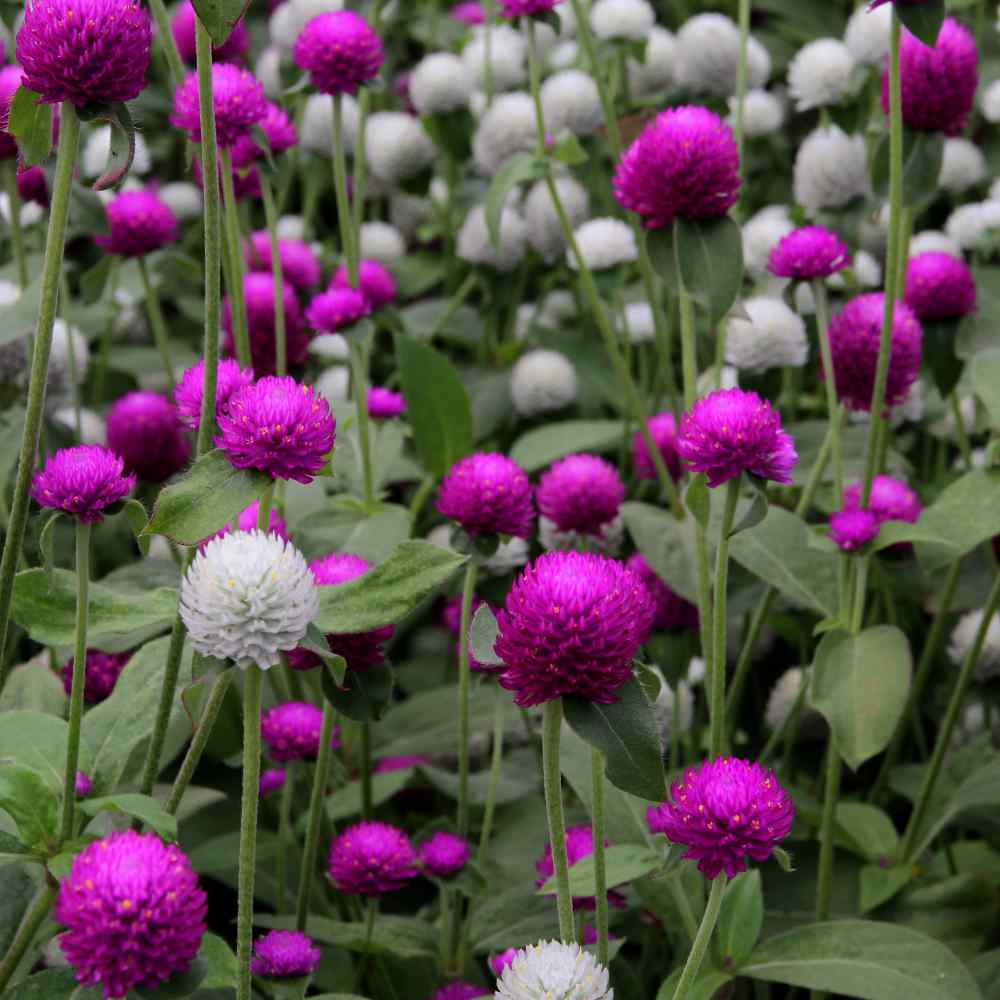
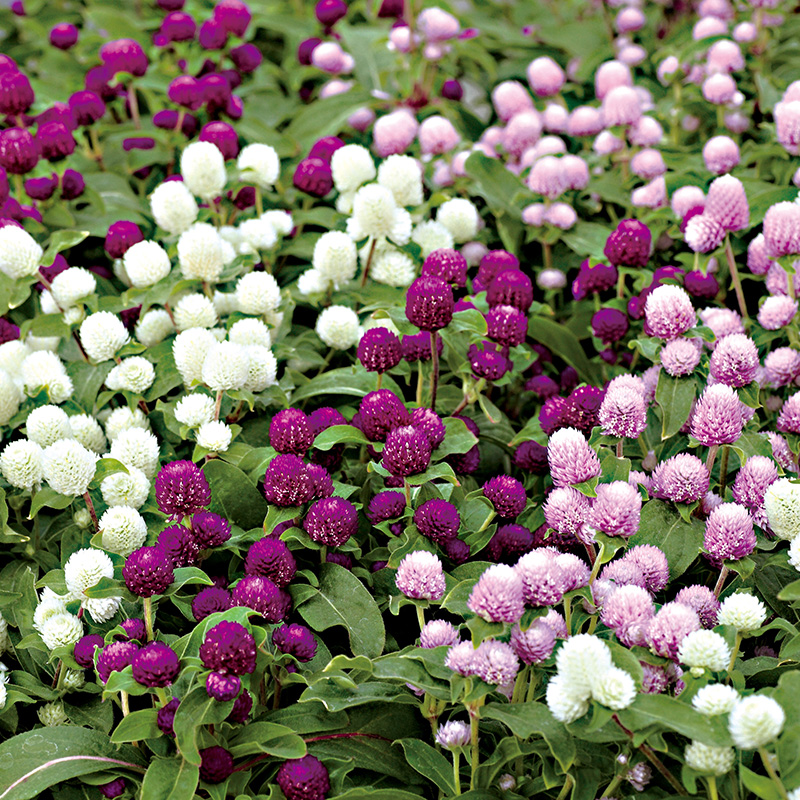
Dwarf Gnome Mix Globe Amaranth is a compact, colorful selection of Gomphrena globosa, grown for its rounded, clover-like blooms in shades of purple, magenta, pink, rose, lavender, and white. This dwarf mix offers the same heat tolerance, long bloom season, and excellent dried flower value as taller gomphrenas, but in a shorter, tidy form that is especially useful for borders, containers, and edging.
Garden Uses
Dwarf Gnome Mix is ideal for sunny borders, edging, containers, window boxes, patio planters, pollinator gardens, rock gardens, and small-space plantings. The compact plants produce cheerful globe-shaped blooms above attractive green foliage, creating a neat and colorful display throughout the warm season.
The mixed colors combine beautifully with marigolds, zinnias, celosia, salvia, petunias, verbena, alyssum, and ornamental grasses. The rounded flower heads also add pleasing texture when planted with daisy-shaped flowers or trailing annuals.
Because of its short habit, Dwarf Gnome Mix is especially useful at the front of beds or in containers where taller gomphrena varieties may be too large.
Growing Information
Gomphrena grows best in full sun and well-drained soil. Seeds may be started indoors 6 to 8 weeks before the last frost or sown outdoors once the soil has warmed and all danger of frost has passed.
Keep the seedbed warm and evenly moist until seedlings appear. Once established, plants are tolerant of heat, humidity, and periods of dry weather, making them dependable choices for summer gardens.
Dwarf Gnome Mix prefers average garden soil with good drainage. Avoid overly wet conditions, as gomphrena performs best when not kept constantly soggy. Pinching young plants can encourage branching and a fuller habit.
Deadheading is usually not necessary, but regular cutting for bouquets or dried flowers encourages continued bloom production.
- Botanical Name: Gomphrena globosa
- Common Name: Dwarf Gnome Mix Globe Amaranth
- Plant Type: Annual
- Bloom Color: Mixed purple, magenta, pink, rose, lavender, and white
- Bloom Season: Summer through frost
- Height: Usually 8 to 12 inches
- Spread: 8 to 12 inches
- Light: Full sun
- Soil: Well-drained average garden soil
- Drought Tolerance: Good once established
- Best Uses: Borders, edging, containers, window boxes, dried flowers, pollinator gardens
- Attracts: Butterflies, bees, hoverflies, beneficial insects
- Special Feature: Compact plants with excellent everlasting blooms
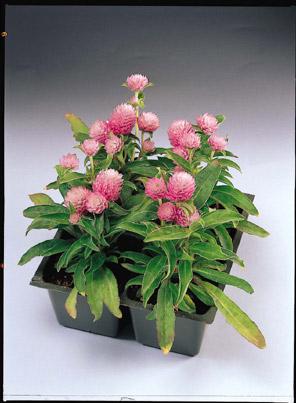
Gnome Pink Globe Amaranth is a compact, cheerful selection of Gomphrena globosa, grown for its soft pink, rounded flower heads and tidy dwarf habit. This heat-loving annual is especially well suited to containers, edging, small borders, patio planters, and dried flower arrangements, offering season-long color with very little maintenance.
Garden Uses
Gnome Pink is ideal for containers, patio pots, window boxes, edging, rock gardens, pollinator beds, and the front of sunny borders. Its compact growth habit makes it a perfect choice where a neat, rounded plant is needed without overwhelming nearby flowers.
The soft pink globe-shaped blooms combine beautifully with white alyssum, blue lobelia, purple salvia, marigolds, zinnias, celosia, petunias, verbena, and ornamental grasses. In containers, it provides a charming mound of green foliage topped with long-lasting pink flowers.
Because the blooms dry so well, Gnome Pink is also excellent for cutting gardens and everlasting flower projects.
Growing Information
Gomphrena grows best in full sun and well-drained soil. Seeds may be started indoors 6 to 8 weeks before the last frost or sown outdoors after the soil has warmed and all danger of frost has passed.
Keep the seedbed warm and evenly moist until seedlings appear. Once established, plants tolerate heat, humidity, and short dry periods very well. They prefer average garden soil or quality potting mix with good drainage.
For container growing, use a pot with drainage holes and avoid keeping the soil constantly wet. Pinching young plants can encourage branching and a fuller, bushier habit. Regular cutting for bouquets or dried stems will encourage additional bloom production.
- Botanical Name: Gomphrena globosa
- Common Name: Gnome Pink Globe Amaranth
- Plant Type: Annual
- Bloom Color: Soft pink
- Bloom Season: Summer through frost
- Height: Usually 8 to 12 inches
- Spread: 8 to 12 inches
- Light: Full sun
- Soil: Well-drained garden soil or quality potting mix
- Drought Tolerance: Good once established
- Best Uses: Containers, edging, borders, window boxes, dried flowers, pollinator gardens
- Attracts: Butterflies, bees, hoverflies, beneficial insects
- Special Feature: Compact habit with excellent everlasting pink blooms
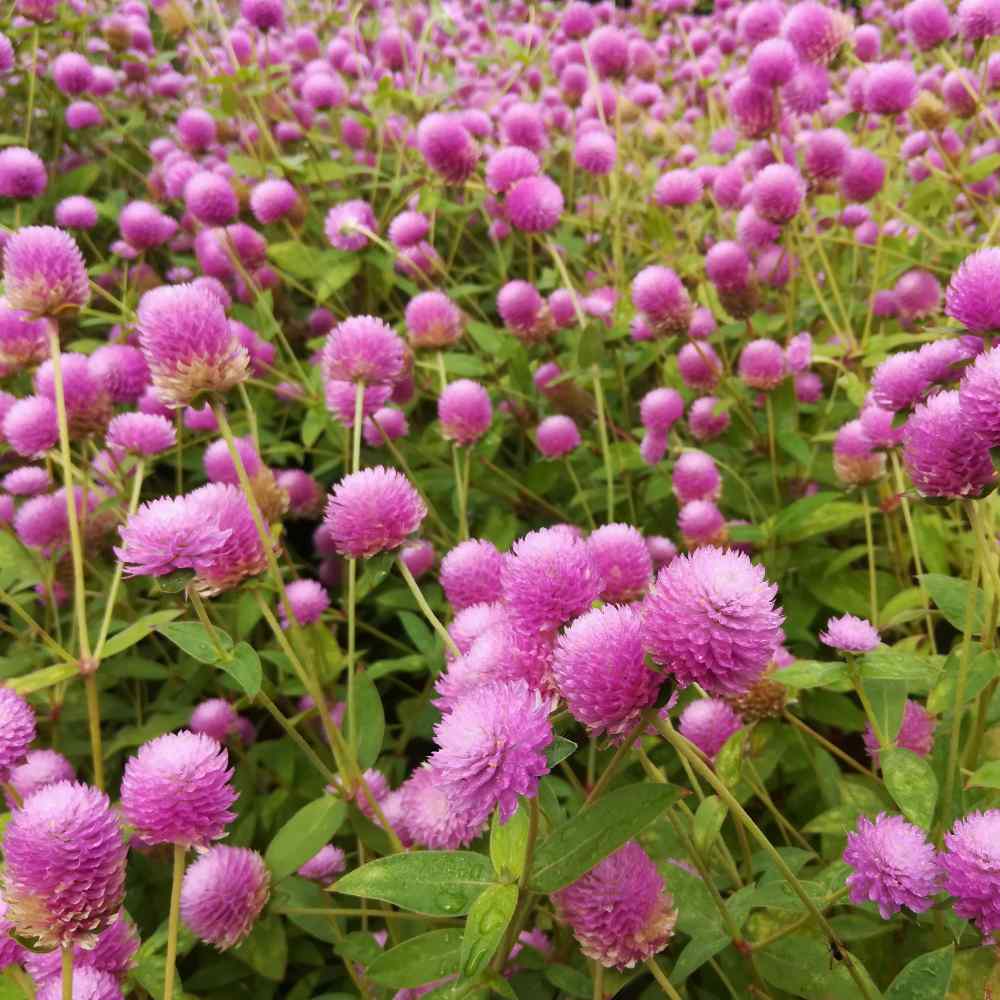
Rose Globe Amaranth is a beautiful heirloom selection of Gomphrena globosa, producing abundant globe-shaped blooms in rich rosy-pink shades throughout the summer and fall. This easy-to-grow annual is prized for its exceptional heat tolerance, long flowering season, and outstanding performance as both a garden flower and an everlasting dried flower.
Garden Uses
Rose Globe Amaranth is ideal for borders, cutting gardens, cottage gardens, pollinator plantings, containers, raised beds, and mixed annual displays. The bright rose-colored flower heads create cheerful splashes of color above the foliage and remain attractive even during periods of intense summer heat.
The rounded blooms provide excellent contrast when planted alongside zinnias, celosia, marigolds, salvias, cosmos, ornamental grasses, and other summer-flowering annuals. The flowers are especially effective in mass plantings where their vibrant color can create an eye-catching display.
Because the blooms dry exceptionally well, Rose Globe Amaranth is also highly valued for everlasting arrangements, wreaths, and decorative crafts.
Growing Information
Rose Globe Amaranth grows best in full sun and well-drained soil. Seeds may be started indoors 6 to 8 weeks before the last frost or sown directly outdoors once soil temperatures have warmed and danger of frost has passed.
Provide consistent moisture during germination and early growth. Once established, plants become highly tolerant of heat, humidity, and periods of drought.
Gomphrena performs best in average garden soil with good drainage and generally requires little maintenance. Avoid excessive fertilization, which can encourage foliage growth at the expense of flowers.
Regular harvesting of flowers for bouquets often encourages additional bloom production throughout the season.
- Botanical Name: Gomphrena globosa
- Common Name: Rose Globe Amaranth
- Plant Type: Annual
- Bloom Color: Rich rose pink
- Bloom Season: Summer through frost
- Height: 18 to 24 inches
- Spread: 12 to 18 inches
- Light: Full sun
- Soil: Well-drained average garden soil
- Drought Tolerance: Good once established
- Best Uses: Borders, containers, cutting gardens, pollinator gardens, dried flowers
- Attracts: Butterflies, bees, hoverflies, beneficial insects
- Special Feature: Excellent everlasting flowers that retain color when dried
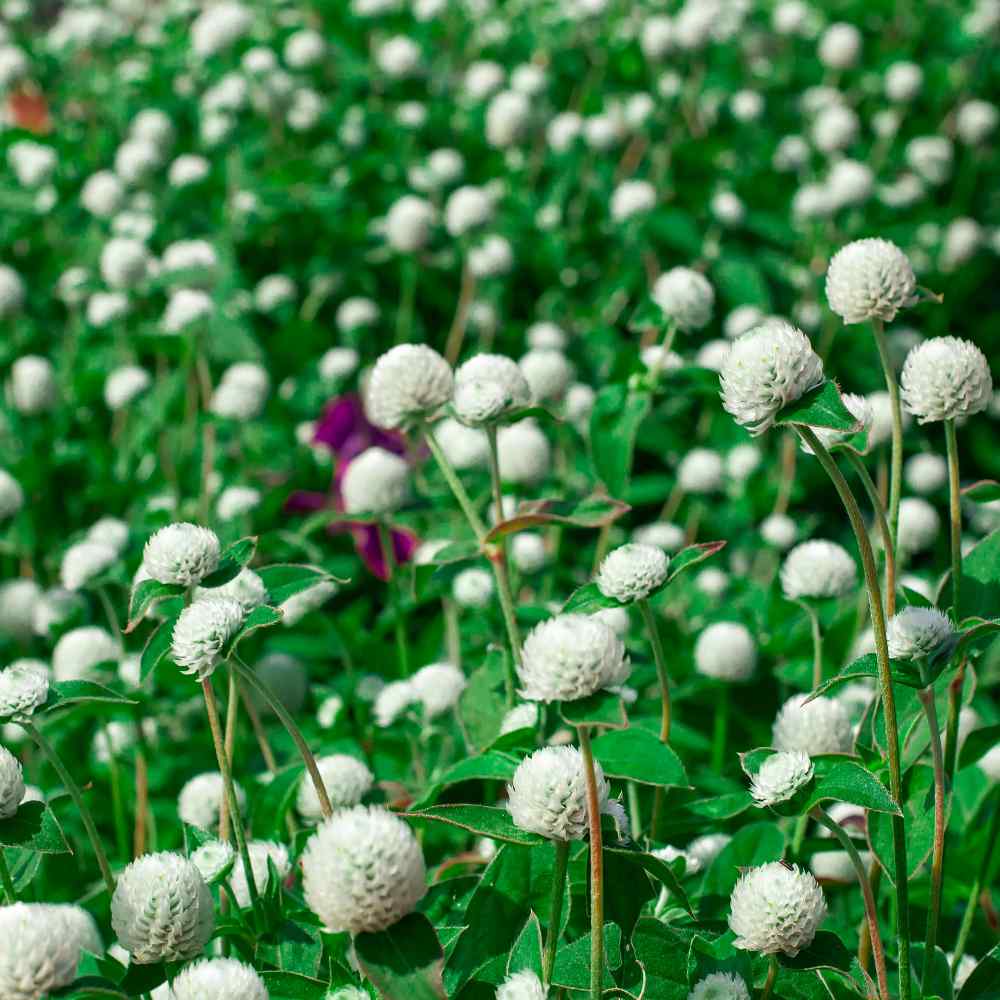
Very White Globe Amaranth is a striking selection of Gomphrena globosa that produces pure white, globe-shaped blooms held above tidy green foliage throughout the summer and fall. This elegant variety combines the outstanding heat tolerance, drought resistance, and long flowering season of traditional globe amaranths with a clean, bright flower color that adds freshness and contrast to garden plantings and floral arrangements.
Garden Uses
Very White is ideal for borders, cottage gardens, cutting gardens, pollinator plantings, containers, raised beds, and mixed annual displays. The crisp white blooms provide a cooling effect in the garden and blend effortlessly with virtually every flower color.
The rounded flower heads pair beautifully with zinnias, celosia, salvia, marigolds, cosmos, petunias, ornamental grasses, and other gomphrena varieties. White flowers are particularly useful for brightening mixed plantings and creating contrast among more vibrant colors.
Very White is also highly valued in moon gardens and evening landscapes, where the bright blooms seem to glow in fading light.
Growing Information
Very White grows best in full sun and well-drained soil. Seeds may be started indoors 6 to 8 weeks before the last frost or direct sown outdoors once soil temperatures have warmed and frost danger has passed.
Provide consistent moisture during germination and early establishment. Once mature, plants tolerate heat, humidity, and periods of drought remarkably well.
Gomphrena performs best in average garden soil with good drainage and generally requires little maintenance. Avoid overwatering, as excessively wet conditions may reduce plant vigor.
Regular harvesting of blooms encourages continuous flower production and provides an abundance of stems for fresh and dried arrangements.
- Botanical Name: Gomphrena globosa
- Common Name: Very White Globe Amaranth
- Plant Type: Annual
- Bloom Color: Pure white
- Bloom Season: Summer through frost
- Height: 18 to 24 inches
- Spread: 12 to 18 inches
- Light: Full sun
- Soil: Well-drained average garden soil
- Drought Tolerance: Good once established
- Best Uses: Borders, containers, cutting gardens, moon gardens, dried flowers
- Attracts: Butterflies, bees, hoverflies, beneficial insects
- Special Feature: Bright white everlasting blooms that dry beautifully
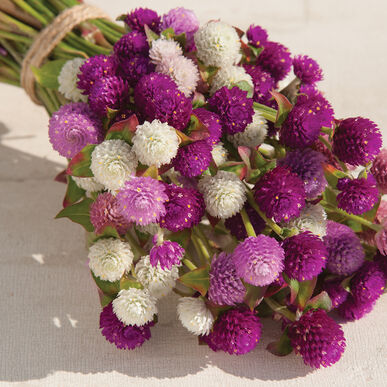
QIS Mix Globe Amaranth is a premium florist-quality blend of Gomphrena globosa developed for exceptional cut flower production, vibrant color, and uniform growth. The mix typically includes rich shades of purple, rose, pink, white, lavender, and magenta, producing sturdy stems topped with perfectly rounded flower heads that bloom continuously from summer until frost.
Garden Uses
QIS Mix is ideal for cutting gardens, cottage gardens, pollinator plantings, borders, containers, raised beds, and large seasonal flower displays. The long stems and uniform blooms make this series especially valuable for fresh bouquets and dried flower arrangements.
Unlike many compact globe amaranth varieties, QIS Mix produces taller plants with excellent stem length, making it a favorite among flower farmers and home gardeners who enjoy harvesting flowers throughout the season.
The colorful blooms combine beautifully with zinnias, celosia, cosmos, sunflowers, salvias, ornamental grasses, and other warm-season annuals. Large plantings create impressive displays of vibrant color and texture.
Growing Information
QIS Mix performs best in full sun and well-drained soil. Seeds may be started indoors 6 to 8 weeks before the last frost or sown directly outdoors after the soil has warmed and frost danger has passed.
Plants thrive in warm weather and establish quickly once temperatures rise. Provide regular moisture during early growth, but avoid overly wet conditions. Once established, gomphrena is highly tolerant of heat, humidity, and occasional drought.
For the longest stems, space plants adequately and provide good air circulation. Regular harvesting of flowers encourages continuous blooming and increased stem production throughout the season.
Plants require very little maintenance and generally perform well even during periods of intense summer heat.
- Botanical Name: Gomphrena globosa
- Common Name: QIS Mix Globe Amaranth
- Plant Type: Annual
- Bloom Color: Mixed shades of purple, rose, pink, magenta, lavender, and white
- Bloom Season: Summer through frost
- Height: 20 to 30 inches
- Spread: 12 to 18 inches
- Light: Full sun
- Soil: Well-drained average garden soil
- Drought Tolerance: Good once established
- Best Uses: Cutting gardens, borders, pollinator gardens, dried flowers, flower farming
- Attracts: Butterflies, bees, hoverflies, beneficial insects
- Special Feature: Florist-quality blooms with long stems and excellent drying characteristics

Contact Us | Privacy Policy | About Us
Serving gardeners since 1992
State of Mississippi Seedmen's Permit #C-391, Ohio 90152, Minnesota 20086777