
Hand Pollination of Gourds
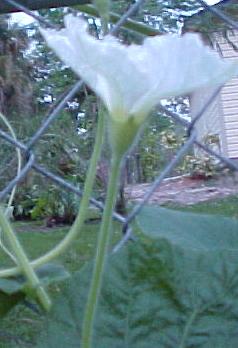 Each gourd vine
bears male and female flowers. The male flowers usually appear
first. It is very easy to tell male from female flowers as the
female flower will have the small gourd shape below the bloom,
while the male flower ( photo at left is male flower )
grows on a stem without the ball shape below the flower.
Each gourd vine
bears male and female flowers. The male flowers usually appear
first. It is very easy to tell male from female flowers as the
female flower will have the small gourd shape below the bloom,
while the male flower ( photo at left is male flower )
grows on a stem without the ball shape below the flower.
The first vine that grows will generally have mostly male flowers, but you can make it produce more female flowers ( thus making more gourds ) by cutting the ends of the vine back.
Left on their own, gourds depend on insects such as bees and beetles for pollination. One problem with this is that gourds cross-pollinate very easily, and the seeds the gourd produces will usually not be true, and will produce a gourd with characteristics of both plants.
Another side effect is that the germination rate of the
seeds will be very poor. Normal germination for gourd seeds can
be as low as 25%, but by hand pollination, germination can be
as high as 80% or more.
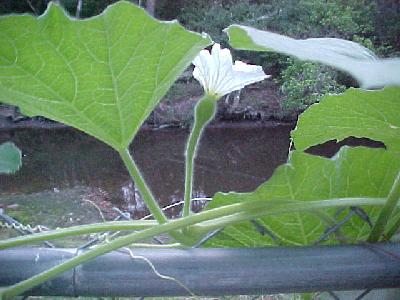 Hand pollination is
a very simple procedure. It simply involves shaking or tapping
pollen from the male flower to the female flower ( the photo
on the left is a female flower, notice the tiny ball shaped
gourd below the flower ).
Hand pollination is
a very simple procedure. It simply involves shaking or tapping
pollen from the male flower to the female flower ( the photo
on the left is a female flower, notice the tiny ball shaped
gourd below the flower ).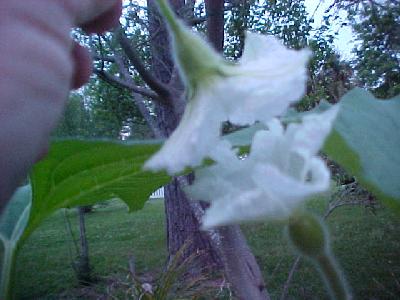 Most gourd flowers
open at night and usually last only one night. The best time
for hand pollinating is just before dark, when the flowers have
already opened, and there is still enough light to see what you
are doing.
Most gourd flowers
open at night and usually last only one night. The best time
for hand pollinating is just before dark, when the flowers have
already opened, and there is still enough light to see what you
are doing.Simply break off the male flower, and hold it over the female flower and "tap" the pollen from the male flower, or if you prefer, you can "kiss" the two flowers together.
( Notice the difference between the male flower on the top and the female flower below, it is very easy to tell the two apart ).
One male flower can pollinate several female flowers, simply discard the male flower when through.
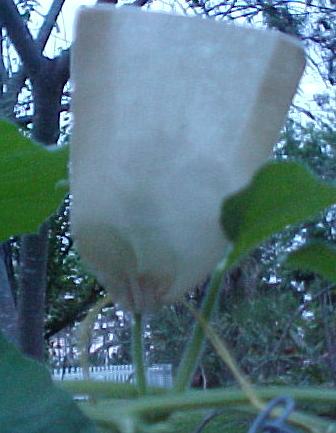 The final step is
placing a bag over the pollinated female flower. This prevents
the flower from being cross pollinated by insects that have
visited other types of gourds.
The final step is
placing a bag over the pollinated female flower. This prevents
the flower from being cross pollinated by insects that have
visited other types of gourds.This is necessary to insure that the gourd will produce true seeds.
We use 3 inch by 5 inch draw string muslin cloth bags. The bags slide easily over the flower and you simply pull the drawstring snug, no need to tie. After 48 hours, remove the bag and re-use it. Will last for years.
If you cannot find these bags locally, you can order them below.
Happy Gardening!
Return to Gourd Seed Page

Contact Us | Privacy Policy | About Us
Serving gardeners since 1992
State of Mississippi Seedmen's Permit #C-391, Ohio 90152, Minnesota 20086777