
Our Favorite Hollyhocks
Once established in a garden, hollyhocks often self-sow, forming a colony of plants themselves. The seedlings transplant well. These seedlings are easy to transplant on a cool day to avoid excessive heat-wilting.
Feel free to grow hollyhocks under Black Walnut trees; they are tolerant of the toxic juglone that is emitted through the trees' roots.
For more flower stalks, pinch out the growing tips once or twice early in the growing season. This gives shorter plants with more branches.
In zones 6 and below, mulch your plants during the winter. Dormant terminal buds are sometimes injured by freezing so a protective mulch of straw, hay or leaves will help keep them warm.
In wet winter areas, the dormant terminal buds are sometimes injured by rotting. A well-drained place is the key to this problem. Double flowered types may need staking as they fall over after a rain because the flowers will hold a large amount of water. If you live in an area with summer rains, be sure to stake your double hollyhocks well.
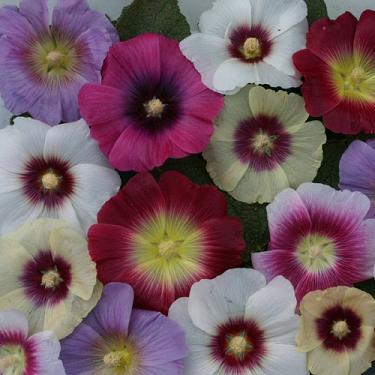
A beautiful and distinctive hollyhock mixture known for its large single blooms marked with dramatic contrasting centers, or “halos.” Flowers appear in a charming range of colors including pink, rose, red, white, cream, yellow, lavender, and soft purple, each accented by a bold central eye. This gives the planting a bright, cheerful, old-fashioned look while adding extra depth and interest to the garden display.
Garden Uses
Halo Mix is excellent for cottage gardens, back borders, fence lines, pollinator gardens, cutting gardens, and old-fashioned flower beds. Its tall flowering stems create a strong vertical accent and look especially attractive along barns, sheds, walls, and picket fences. The colorful halo-patterned blooms combine beautifully with daisies, foxgloves, delphiniums, coreopsis, salvia, yarrow, and ornamental grasses.
Growing Information
Grow Halo Mix in full sun and well-drained, fertile soil. Plants generally reach 5 to 7 feet tall and should be spaced to allow good air circulation. Provide regular moisture during establishment, then water during dry periods. Staking may be helpful in windy areas. Seeds may be started indoors early or direct sown outdoors after danger of frost. Hollyhocks are often grown as biennials or short-lived perennials, and plants may reseed where conditions are favorable.
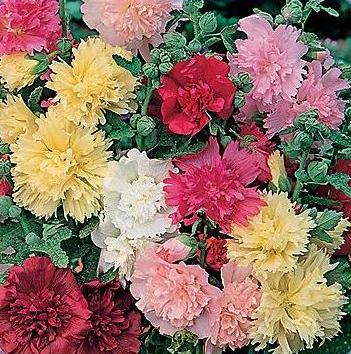
Hollyhocks Summer Carnival Mix (Alcea rosea) is a spectacular old-fashioned garden favorite known for its towering spikes of large, fully double blooms in a festive range of colors. Shades may include rose, pink, red, white, yellow, cream, and deep burgundy, creating a bright cottage-garden display from early to midsummer. These stately plants bring height, charm, and nostalgic beauty to flower borders while offering valuable pollen and nectar for bees and other garden pollinators.
Garden Uses
Summer Carnival Mix is perfect for cottage gardens, perennial borders, fence lines, back-of-border plantings, cutting gardens, and old-fashioned flower beds. Its tall upright stems make an excellent background plant behind shorter perennials and annuals. Plant along walls, barns, trellises, garden sheds, or picket fences for a classic heirloom look. The colorful double blooms are especially attractive in informal gardens and make beautiful cut flowers for large arrangements.
Growing Information
Grow hollyhocks in full sun and rich, well-drained soil. Plants perform best with good air circulation and evenly moist soil during active growth, though they should not sit in wet ground. Summer Carnival Mix often blooms the first year from an early sowing, making it especially useful for gardeners who want faster flowers than traditional biennial hollyhocks. Plants may reach 5 to 7 feet tall and may benefit from staking in windy locations. Sow seeds indoors several weeks before the last frost or direct sow outdoors after danger of frost has passed. Press seeds lightly into the soil and cover only shallowly. Deadheading can extend flowering, while allowing some seed pods to mature may encourage reseeding.
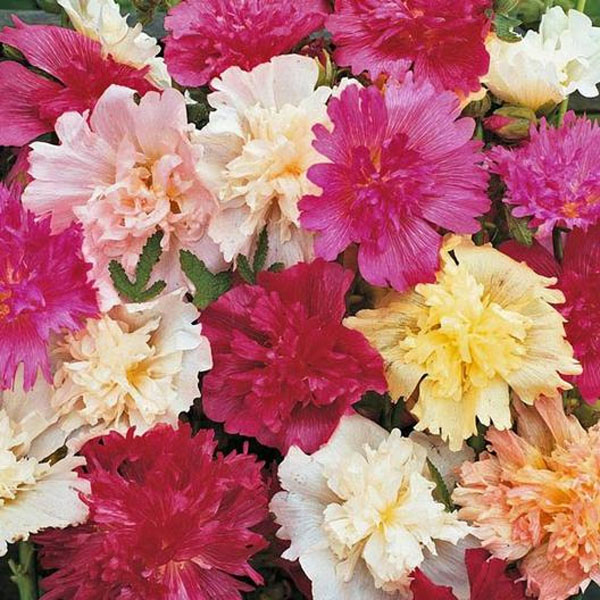
Queeny Mix Hollyhock (Alcea rosea) is a unique compact hollyhock that delivers all the old-fashioned beauty of traditional hollyhocks in a much shorter, more manageable plant. Producing large, fully double blooms in an elegant mix of pink, rose, salmon, yellow, cream, white, and rich crimson shades, Queeny Mix flowers over a long period while fitting beautifully into modern flower beds, containers, and smaller gardens. Unlike the towering varieties that often require staking, this award-winning selection forms sturdy, bushy plants that bloom freely their first season from seed.
Garden Uses
Queeny Mix is ideal for cottage gardens, mixed perennial borders, patio containers, cutting gardens, foundation plantings, and pollinator gardens. Its compact habit makes it especially valuable near the front or middle of flower beds where traditional hollyhocks would be too tall. It pairs beautifully with Shasta Daisy, Delphinium, Salvia, Foxglove, Dianthus, Coreopsis, Yarrow, and ornamental grasses. The long-lasting double blooms also make excellent cut flowers, bringing classic cottage-garden charm indoors.
Growing Information
Queeny Mix performs best in full sun and fertile, well-drained soil. Plants typically grow 24 to 36 inches tall and 18 to 24 inches wide, remaining much shorter than standard hollyhocks while maintaining excellent flower production. Water regularly during establishment, then provide moderate moisture throughout the growing season. Good air circulation helps keep foliage healthy. Deadheading encourages additional blooms, although allowing a few flowers to mature may result in gentle self-seeding. Seeds should be lightly covered with soil, as they germinate readily under warm conditions. In many climates, plants bloom the first year when started early indoors.
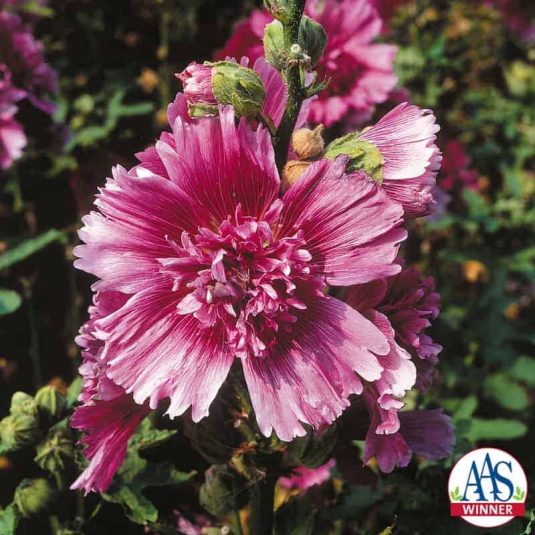
Queeny Purple Hollyhock (Alcea rosea) is a stunning compact hollyhock that produces large, fully double blooms in rich shades of royal purple, plum, and deep violet. Offering the timeless elegance of traditional hollyhocks on shorter, sturdier plants, this award-winning variety is perfect for today's gardens where space is often limited. Blooming over an extended period during summer, Queeny Purple combines old-fashioned charm with modern garden performance, creating an eye-catching display in borders, containers, and cottage gardens while attracting bees and butterflies throughout the season.
Garden Uses
Queeny Purple is an outstanding choice for perennial borders, cottage gardens, patio containers, cutting gardens, foundation plantings, and pollinator gardens. Growing much shorter than traditional hollyhocks, it fits beautifully near the front or middle of flower beds where its luxurious purple blooms become a striking focal point. It pairs especially well with white Shasta daisies, yellow Coreopsis, lavender, foxgloves, salvias, delphiniums, ornamental grasses, and silver-foliaged plants. The elegant flowers also make long-lasting additions to fresh floral arrangements.
Growing Information
Grow Queeny Purple in full sun and fertile, well-drained soil. Plants typically mature 24 to 36 inches tall with a spread of 18 to 24 inches, requiring little or no staking thanks to their sturdy stems. Provide consistent moisture during establishment, then water as needed during dry periods. Good air circulation helps maintain healthy foliage and reduces the chance of hollyhock rust. Deadheading encourages continued blooming, while allowing a few flowers to mature may encourage gentle self-seeding. Seeds germinate readily when lightly covered with soil, and plants frequently bloom the first year from an early sowing.
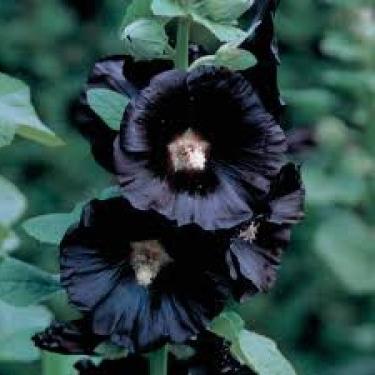
Black as Night Hollyhock (Alcea nigra) is one of the most dramatic flowering perennials a gardener can grow. Its large, satiny blossoms appear an extraordinarily deep maroon that often looks nearly jet black in certain lighting, creating an unforgettable display against its tall flowering stems. This heirloom hollyhock brings elegance, mystery, and old-world charm to cottage gardens while providing abundant pollen and nectar for bees and other beneficial insects. Blooming from midsummer into late summer, its striking flowers make an outstanding focal point in any sunny border.
Garden Uses
Black as Night is ideal for cottage gardens, perennial borders, historic gardens, cutting gardens, fence lines, and pollinator plantings. Its tall flower spikes provide dramatic vertical interest and pair beautifully with white Shasta daisies, pale pink roses, foxgloves, lavender, delphiniums, ornamental grasses, and silver-foliaged plants. The nearly black flowers also create stunning contrast when planted alongside cream, yellow, or pastel-colored hollyhocks. It is especially attractive planted against white fences, stone walls, or light-colored buildings where the dark blooms truly stand out.
Growing Information
Grow Black as Night Hollyhock in full sun and fertile, well-drained soil. Plants typically mature between 5 and 7 feet tall with a spread of 18 to 24 inches. Good air circulation is important to minimize hollyhock rust, and staking may be beneficial in windy locations. Water regularly during dry periods but avoid constantly wet foliage. Seeds may be started indoors several weeks before the last frost or direct sown outdoors after danger of frost has passed. Plants generally bloom during their second season, although early sowings may flower the first year under favorable conditions. Allowing a few seed pods to mature often results in attractive natural reseeding.
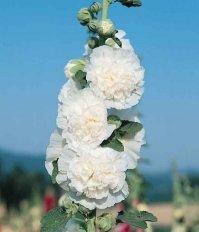
Pure White Hollyhock (Alcea chater) is a graceful, old-fashioned garden perennial prized for its tall spikes of large, fully double, snowy-white flowers. The blooms resemble soft ruffled pompons or miniature peonies, creating an elegant vertical display that brightens cottage gardens, borders, and fence lines. With its clean white color, strong garden presence, and classic heirloom charm, Pure White Hollyhock is especially useful for moon gardens, wedding gardens, and any planting where a refined, luminous accent is desired.
Garden Uses
Pure White Hollyhock is excellent for cottage gardens, white gardens, moon gardens, perennial borders, cutting gardens, and plantings along fences, walls, barns, and garden sheds. Its tall flower spikes make it a beautiful background plant behind shorter perennials and annuals. The pure white blooms combine beautifully with lavender, blue delphiniums, pink roses, purple salvia, foxgloves, yarrow, daisies, and ornamental grasses. The flowers are also attractive in tall floral arrangements, especially for soft, romantic bouquets.
Growing Information
Grow Pure White Hollyhock in full sun and fertile, well-drained soil. Plants typically reach 5 to 7 feet tall with a spread of 18 to 24 inches. Provide regular moisture during establishment and during extended dry periods, but avoid wet, poorly drained soil. Good air circulation is important for healthy foliage and helps reduce the risk of hollyhock rust. Staking may be helpful in windy locations or very rich soils. Seeds may be started indoors before the last frost or direct sown outdoors after danger of frost has passed. Plants are often grown as biennials or short-lived perennials, though early sowing may produce blooms the first year in favorable conditions.
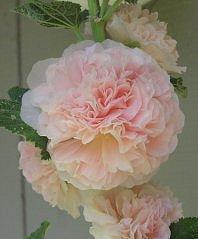
Chamois Rose Hollyhock (Alcea chater) is a classic Chater's Double Hollyhock prized for its elegant, fully double blooms in soft antique rose, warm blush-pink, and delicate peach-rose tones. The densely ruffled flowers resemble giant carnations or peonies and are carried along tall, stately flower spikes that create a breathtaking display in the summer garden. This heirloom favorite combines timeless cottage-garden charm with graceful color that blends beautifully into both traditional and contemporary landscapes.
Garden Uses
Chamois Rose Hollyhock is ideal for cottage gardens, perennial borders, cutting gardens, fence lines, foundation plantings, and formal flower beds. Its tall flowering stalks create dramatic vertical accents and are especially attractive planted against fences, stone walls, garden sheds, or along walkways. The soft rose-colored blooms combine beautifully with lavender, delphiniums, foxgloves, daisies, white phlox, blue salvias, and ornamental grasses. The large double flowers are also excellent for cutting, lending an elegant old-world touch to floral arrangements.
Growing Information
Grow Chamois Rose Hollyhock in full sun and fertile, well-drained soil. Plants generally mature 5 to 7 feet tall with a spread of 18 to 24 inches. Regular watering during dry periods promotes vigorous flowering, while good drainage and proper spacing help maintain healthy foliage. Good air circulation is especially important for minimizing hollyhock rust. Staking may be beneficial where strong winds are common. Seeds may be started indoors before the last frost or direct sown outdoors after danger of frost has passed. Plants usually bloom during their second season, although early sowings may flower the first year under favorable growing conditions.