
Hyssop Seeds
This hardy perennial likes full sun and well-drained, alkaline soil. It is a bushy plant with woody stems and small leaves. Pollinators love Hyssop flowers, and in mid-summer there are many spikes of violet-blue flowers. Grow plants in the herb garden where they can be pruned into a nice hedge. It also grows well in window boxes and other containers.
Hyssop is a good expectorant and antiviral herb commonly used to treat respiratory conditions such as influenza, sinus infections, colds, and bronchitis. Most of its medicinal properties are attributed to the essential oil of hyssop. Hyssop oil can be diffused in a sickroom to help control germs and clear the air.
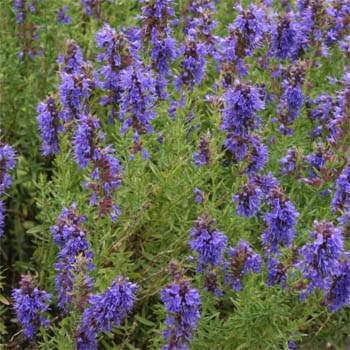
The compact, bushy plants feature narrow, fragrant dark green leaves and upright flower spikes that attract an abundance of bees, butterflies, hummingbirds, and other beneficial pollinators. In fact, Hyssop is often considered one of the finest bee plants available, making it a favorite among pollinator gardeners and beekeepers.
Historically, Hyssop has been cultivated in monastery gardens, medicinal herb gardens, and cottage gardens throughout Europe. The aromatic foliage has long been used in herbal teas, traditional preparations, and culinary applications. The leaves possess a distinctive mint-like flavor with notes of sage and camphor, making them useful in moderation for seasoning soups, salads, meats, and herbal beverages.
Beyond its usefulness, Hyssop is an exceptionally ornamental plant. The vibrant flowers, tidy growth habit, and long blooming season make it equally suitable for borders, herb gardens, pollinator gardens, rock gardens, and patio containers.
Uses and Benefits- Produces striking spikes of blue-violet flowers.
- One of the finest pollinator plants for bees.
- Attracts butterflies, hummingbirds, and beneficial insects.
- Traditional medicinal herb with centuries of history.
- Useful in herbal teas and traditional herbal preparations.
- Aromatic foliage with distinctive flavor.
- Excellent ornamental herb for borders and cottage gardens.
- Drought tolerant once established.
- Excellent cut flower and dried flower plant.
- Suitable for containers and patio gardens.
- Low maintenance and long-lived perennial.
- Deer and rabbit resistant.
Hyssop is a hardy perennial in USDA Zones 4-9.
Germination Instructions- Start seeds indoors 6-8 weeks before the last frost or sow outdoors after danger of frost has passed.
- Press seeds lightly into the soil surface.
- Cover very lightly with fine soil.
- Maintain temperatures between 65-75°F (18-24°C).
- Keep soil evenly moist during germination.
- Seeds typically germinate in 14-21 days.
- Provide bright light after seedlings emerge.
- Plant in full sun for best flowering.
- Prefers well-drained soil.
- Tolerates drought once established.
- Avoid overly wet conditions.
- Trim lightly after flowering to maintain a compact shape.
- Excellent for pollinator gardens, herb gardens, and cottage gardens.
- Plant near vegetables and fruit crops to attract beneficial insects.
Hyssop performs exceptionally well in containers and patio planters. Choose a container at least 10-12 inches deep with good drainage. Its compact growth habit, drought tolerance, and long flowering season make it one of the best perennial herbs for container culture.
Combining ornamental beauty, pollinator value, drought tolerance, and centuries of traditional use, Hyssop remains one of the most rewarding herbs for the home garden. Whether grown for bees, butterflies, herbal teas, or its striking blue flower spikes, Hyssop provides years of beauty and usefulness with minimal care.

Contact Us | Privacy Policy | About Us
Serving gardeners since 1992
State of Mississippi Seedmen's Permit #C-391, Ohio 90152, Minnesota 20086777