
Impatiens Seed ( Annual )
You can use impatiens flowers as bedding plants, border plants or in containers. They enjoy moist but well draining soil and partial to deep shade.
They do not do as well in full sun, but if you would like to plant them in full sun, they will need to be acclimated to the harsher light. You can do this by exposing the impatiens plants to increasing amount of sunlight over the course of a week.
You can plant impatiens flowers quite close to one another, inches apart if you like. The closer they are planted together, the faster the plants will grow together to form a bank of lovely impatiens flowers.
Impatiens flowers do best if fertilized regularly. Use water soluble fertilizer on your impatiens every two weeks through spring and summer. You can also use slow release fertilizer at the beginning of the spring season and once more half way through summer.
Impatiens do not need to be deadheaded. They self-clean their spent blooms and will bloom profusely all season long.
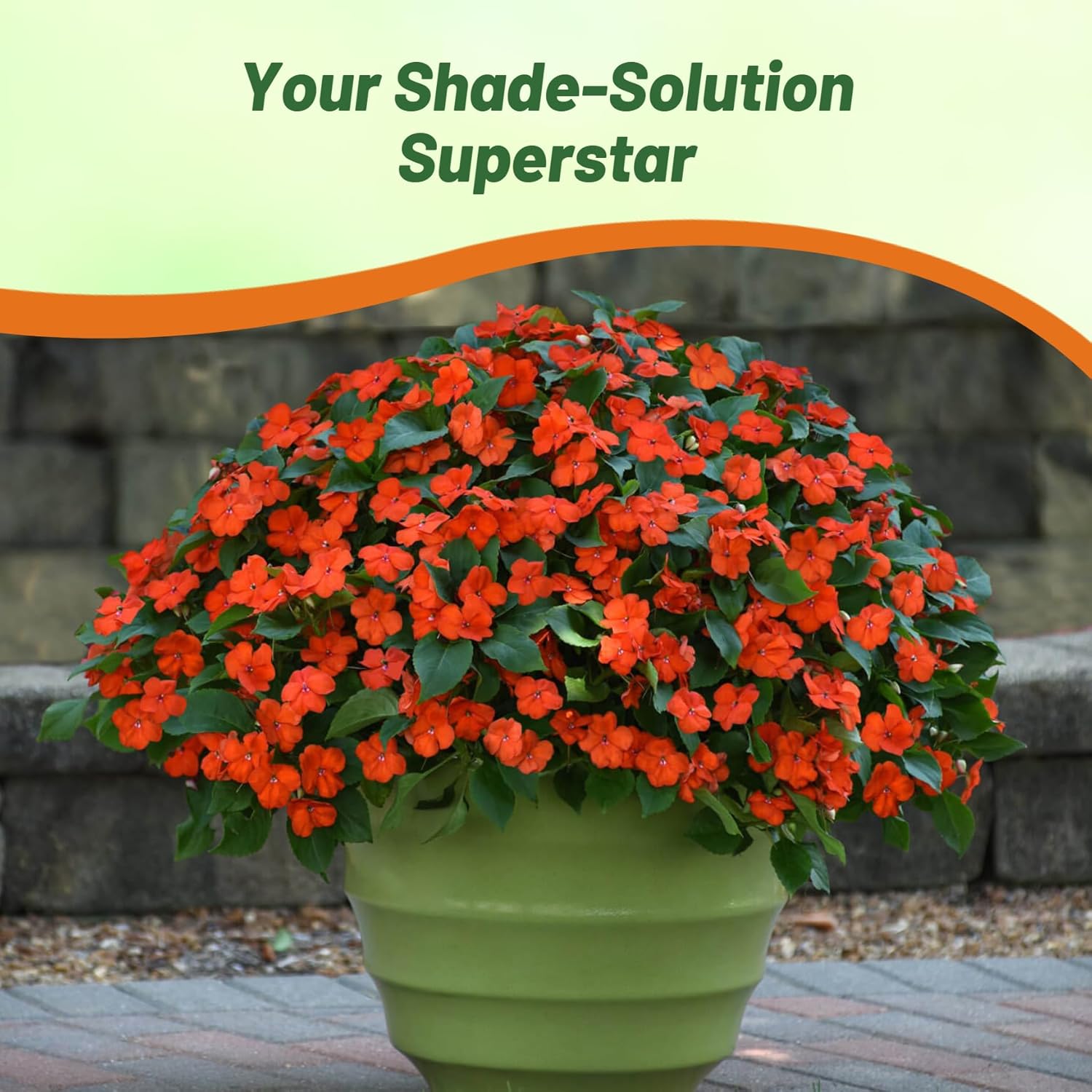
Baby Orange Impatiens is a compact, shade-loving annual grown for its bright orange blooms and neat, mounded growth habit. This cheerful variety produces masses of vivid flowers over glossy green foliage, bringing warm color to shaded patios, porches, containers, and garden beds. Its small size, heavy blooming habit, and ability to brighten low-light areas make it an excellent choice for gardeners needing reliable color where many sun-loving annuals struggle.
Garden Uses: Baby Orange Impatiens is ideal for containers, hanging baskets, window boxes, shaded borders, edging, patio planters, and mass plantings. Its glowing orange flowers create a bold splash of color in shade gardens and combine beautifully with coleus, begonias, caladiums, ferns, hypoestes, torenia, and white or purple impatiens. It is especially useful near entryways, porches, and seating areas where compact plants with continuous bloom are desired.
Growing Information: Start seeds indoors several weeks before the last frost date, or transplant outdoors after all danger of frost has passed and nights remain warm. Plant in partial shade to bright shade and rich, well-drained soil. Keep soil evenly moist but not waterlogged, as impatiens perform best with steady moisture. Container-grown plants may need frequent watering during hot weather. Feed lightly and regularly to support continuous flowering. Avoid hot afternoon sun, which can scorch foliage and reduce bloom quality.
- Botanical Name: Impatiens walleriana
- Common Name: Baby Orange Impatiens
- Plant Type: Annual
- Sun Exposure: Partial shade to bright shade
- Height: 8 to 12 inches
- Spread: 8 to 12 inches
- Bloom Color: Bright orange
- Bloom Season: Spring through fall
- Growth Habit: Compact, mounded, free-flowering
- Best Uses: Containers, shade borders, edging, hanging baskets, mass plantings
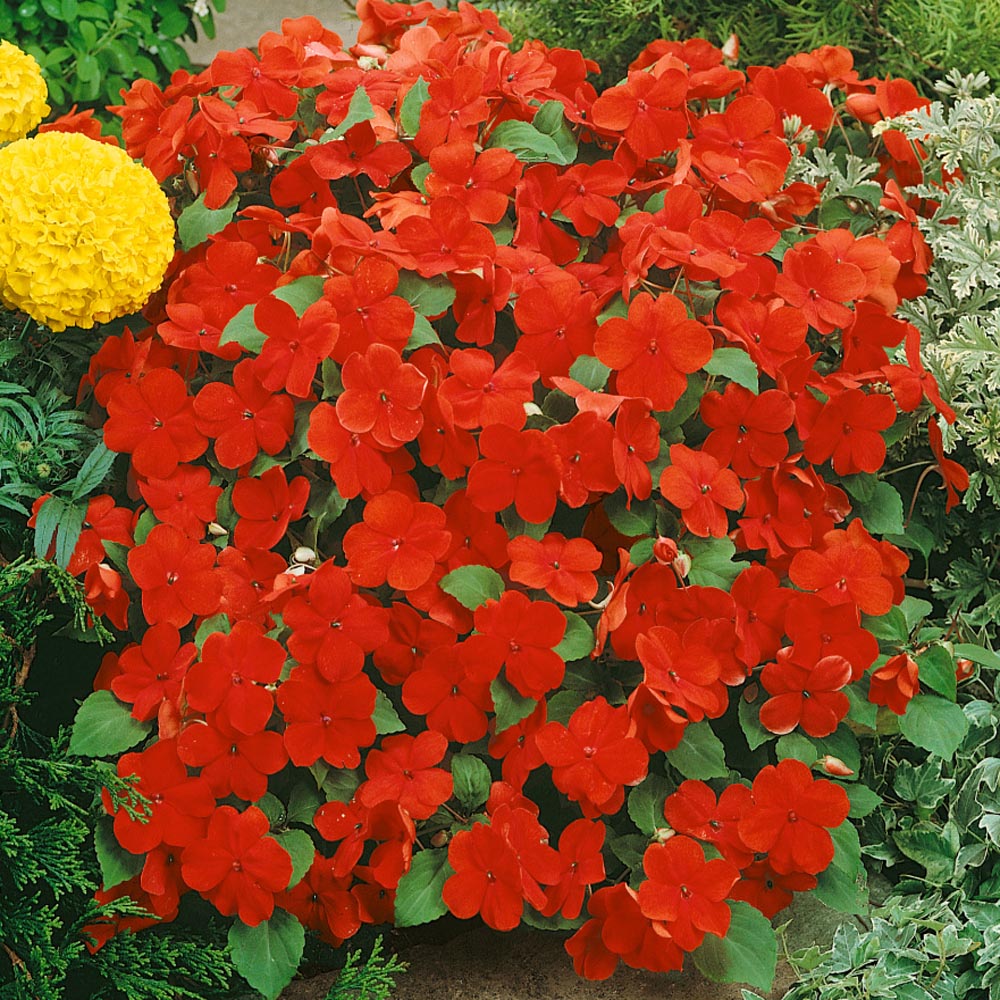
Baby Scarlet Impatiens is a compact, free-flowering annual prized for its brilliant scarlet-red blooms and exceptional performance in shaded gardens. The vibrant flowers blanket the plant from late spring until frost, creating a continuous display of color over attractive green foliage. Its neat, rounded growth habit and nonstop flowering make it one of the finest choices for containers, borders, and landscape plantings where bright color is needed in lower-light conditions.
Garden Uses: Baby Scarlet Impatiens is ideal for containers, hanging baskets, window boxes, shaded borders, edging, mass plantings, and woodland gardens. The vivid scarlet flowers create striking contrast against green foliage and combine beautifully with white impatiens, coleus, caladiums, begonias, ferns, and hypoestes. It is especially effective in shaded entryways, patios, and porch planters where its brilliant blooms can be enjoyed up close.
Growing Information: Start seeds indoors several weeks before the last frost date, or transplant outdoors once all danger of frost has passed and temperatures remain warm. Plant in partial shade to bright shade in fertile, well-drained soil. Maintain even soil moisture, particularly in containers and during hot weather. Regular feeding with a balanced fertilizer encourages continuous flowering. Avoid intense afternoon sun, which can stress plants and reduce bloom production.
- Botanical Name: Impatiens walleriana
- Common Name: Baby Scarlet Impatiens
- Plant Type: Annual
- Sun Exposure: Partial shade to bright shade
- Height: 8 to 12 inches
- Spread: 8 to 12 inches
- Bloom Color: Brilliant scarlet-red
- Bloom Season: Spring through frost
- Growth Habit: Compact, rounded, free-flowering
- Best Uses: Containers, borders, hanging baskets, edging, mass plantings
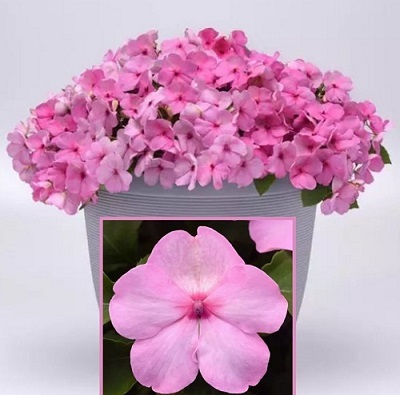
Beacon® Light Pink Impatiens is an outstanding garden impatiens bred for exceptional disease resistance, vigorous growth, and masses of soft light pink blooms. Part of the groundbreaking Beacon® series, this variety brings back the classic beauty of traditional impatiens while offering improved resistance to Impatiens Downy Mildew. The gentle pink flowers blanket the plants throughout the growing season, creating a bright, cheerful display in shaded gardens, containers, and landscape beds.
Garden Uses: Beacon® Light Pink Impatiens is perfect for containers, hanging baskets, window boxes, shaded borders, foundation plantings, woodland gardens, and mass bedding displays. The delicate light pink flowers pair beautifully with white impatiens, blue lobelia, coleus, caladiums, begonias, ferns, and hypoestes. Its uniform growth habit makes it especially effective when planted in large groups for sweeping displays of color.
Growing Information: Start seeds indoors 8 to 10 weeks before the last frost date or transplant nursery-grown plants outdoors after all danger of frost has passed. Plant in partial shade to bright shade and fertile, well-drained soil rich in organic matter. Keep soil evenly moist, particularly during warm weather. Regular feeding with a balanced fertilizer encourages continuous flowering. Avoid prolonged drought stress, as impatiens perform best with consistent moisture.
- Botanical Name: Impatiens walleriana
- Common Name: Beacon® Light Pink Impatiens
- Plant Type: Annual
- Sun Exposure: Partial shade to bright shade
- Height: 10 to 14 inches
- Spread: 12 to 14 inches
- Bloom Color: Soft light pink
- Bloom Season: Spring through frost
- Growth Habit: Compact, mounded, vigorous
- Special Feature: Improved Downy Mildew resistance
- Best Uses: Containers, borders, hanging baskets, bedding displays
- Shade Garden Rating: ★★★★★
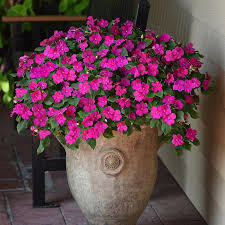
Beacon Violet F1 Impatiens is a premium hybrid impatiens featuring rich violet-purple blooms, vigorous growth, and outstanding disease resistance. Part of the revolutionary Beacon® series, this variety was bred to provide the classic beauty of garden impatiens while offering improved resistance to Impatiens Downy Mildew. The brilliant violet flowers create a striking display against lush green foliage and bloom continuously from late spring until frost.
Garden Uses: Beacon Violet F1 is ideal for containers, hanging baskets, window boxes, shaded borders, woodland gardens, foundation plantings, and mass bedding displays. The deep violet blooms provide dramatic contrast when paired with white impatiens, silver foliage plants, pink begonias, caladiums, coleus, and ferns. It is especially effective in shaded locations where the vibrant flowers seem to glow against darker backgrounds.
Growing Information: Start seeds indoors approximately 8 to 10 weeks before the final spring frost or transplant seedlings after all danger of frost has passed. Plant in partial shade to bright shade in fertile, well-drained soil rich in organic matter. Maintain consistent moisture throughout the growing season, particularly during warm weather. Feed regularly with a balanced fertilizer to support continuous flowering. Avoid allowing plants to dry out completely for best performance.
- Botanical Name: Impatiens walleriana
- Common Name: Beacon Violet F1 Impatiens
- Plant Type: Annual
- Sun Exposure: Partial shade to bright shade
- Height: 10 to 14 inches
- Spread: 12 to 14 inches
- Bloom Color: Rich violet-purple
- Bloom Season: Spring through frost
- Growth Habit: Compact, mounded, vigorous
- Special Feature: Improved Downy Mildew resistance
- Best Uses: Containers, borders, hanging baskets, bedding displays
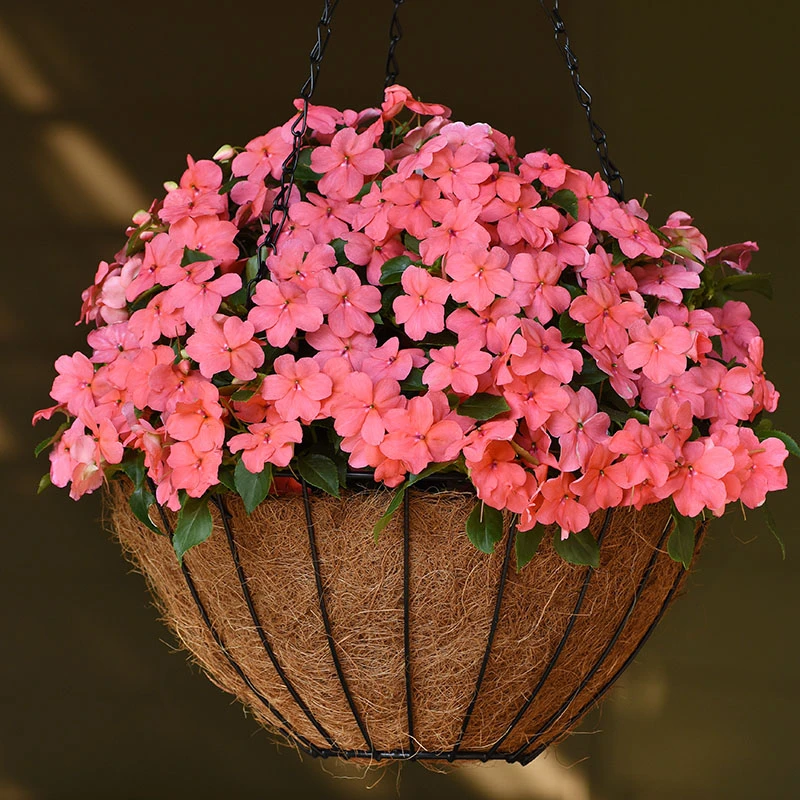
Beacon Coral F1 Impatiens is a vibrant hybrid impatiens featuring masses of warm coral-colored blooms and the improved disease resistance that has made the Beacon® series so popular. The flowers display a beautiful blend of pink, peach, and coral tones that brighten shaded gardens with months of continuous color. Combined with vigorous growth and exceptional garden performance, Beacon Coral F1 brings renewed confidence to gardeners who love traditional impatiens.
Garden Uses: Beacon Coral F1 is ideal for containers, hanging baskets, window boxes, shaded borders, foundation plantings, woodland gardens, and large bedding displays. Its warm coral flowers pair beautifully with white impatiens, blue lobelia, silver foliage plants, coleus, caladiums, begonias, and ferns. The bright blooms are especially effective in shaded locations where warm colors help illuminate darker corners of the landscape.
Growing Information: Start seeds indoors approximately 8 to 10 weeks before the final frost date or transplant outdoors after all danger of frost has passed. Plant in partial shade to bright shade in fertile, well-drained soil enriched with organic matter. Maintain consistent moisture throughout the growing season, particularly during hot weather and in containers. Feed regularly with a balanced fertilizer to support vigorous growth and nonstop flowering. Avoid allowing plants to become excessively dry.
- Botanical Name: Impatiens walleriana
- Common Name: Beacon Coral F1 Impatiens
- Plant Type: Annual
- Sun Exposure: Partial shade to bright shade
- Height: 10 to 14 inches
- Spread: 12 to 14 inches
- Bloom Color: Coral, salmon-pink, peach-coral tones
- Bloom Season: Spring through frost
- Growth Habit: Compact, mounded, vigorous
- Special Feature: Improved Downy Mildew resistance
- Best Uses: Containers, borders, hanging baskets, bedding displays
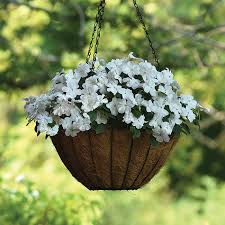
Beacon White F1 Impatiens is a premium hybrid impatiens featuring masses of pure white blooms, vigorous growth, and outstanding disease resistance. As part of the innovative Beacon® series, this variety was developed to restore the beauty of traditional impatiens while offering improved resistance to Impatiens Downy Mildew. The brilliant white flowers blanket the plants from spring until frost, creating a clean, elegant display that brightens even the shadiest garden locations.
Garden Uses: Beacon White F1 is ideal for containers, hanging baskets, window boxes, shaded borders, woodland gardens, foundation plantings, and mass bedding displays. The crisp white blooms pair beautifully with virtually every flower color and foliage type. It combines especially well with Beacon Violet, Beacon Coral, begonias, coleus, caladiums, ferns, and hypoestes. White flowers are particularly valuable for illuminating shaded gardens and creating moonlight garden effects.
Growing Information: Start seeds indoors approximately 8 to 10 weeks before the final spring frost date or transplant seedlings outdoors after all danger of frost has passed. Plant in partial shade to bright shade in fertile, well-drained soil rich in organic matter. Maintain consistent soil moisture throughout the growing season, especially during warm weather. Apply a balanced fertilizer regularly to support continuous flowering. Avoid allowing the soil to dry completely, as impatiens perform best with steady moisture.
- Botanical Name: Impatiens walleriana
- Common Name: Beacon White F1 Impatiens
- Plant Type: Annual
- Sun Exposure: Partial shade to bright shade
- Height: 10 to 14 inches
- Spread: 12 to 14 inches
- Bloom Color: Pure white
- Bloom Season: Spring through frost
- Growth Habit: Compact, mounded, vigorous
- Special Feature: Improved Downy Mildew resistance
- Best Uses: Containers, borders, hanging baskets, bedding displays, moon gardens

Baby Pink is a compact, free-flowering annual prized for its beautiful pink blooms and exceptional performance in shaded gardens. The vibrant flowers blanket the plant from late spring until frost, creating a continuous display of color over attractive green foliage. Its neat, rounded growth habit and nonstop flowering make it one of the finest choices for containers, borders, and landscape plantings where bright color is needed in lower-light conditions.
Garden Uses: Baby Pink is ideal for containers, hanging baskets, window boxes, shaded borders, edging, mass plantings, and woodland gardens. The vivid pink flowers create striking contrast against green foliage and combine beautifully with white impatiens, coleus, caladiums, begonias, ferns, and hypoestes. It is especially effective in shaded entryways, patios, and porch planters where its brilliant blooms can be enjoyed up close.
Growing Information: Start seeds indoors several weeks before the last frost date, or transplant outdoors once all danger of frost has passed and temperatures remain warm. Plant in partial shade to bright shade in fertile, well-drained soil. Maintain even soil moisture, particularly in containers and during hot weather. Regular feeding with a balanced fertilizer encourages continuous flowering. Avoid intense afternoon sun, which can stress plants and reduce bloom production.
- Botanical Name: Impatiens walleriana
- Common Name: Baby Pink Impatiens
- Plant Type: Annual
- Sun Exposure: Partial shade to bright shade
- Height: 8 to 12 inches
- Spread: 8 to 12 inches
- Bloom Color: Brilliant scarlet-red
- Bloom Season: Spring through frost
- Growth Habit: Compact, rounded, free-flowering
- Best Uses: Containers, borders, hanging baskets, edging, mass plantings
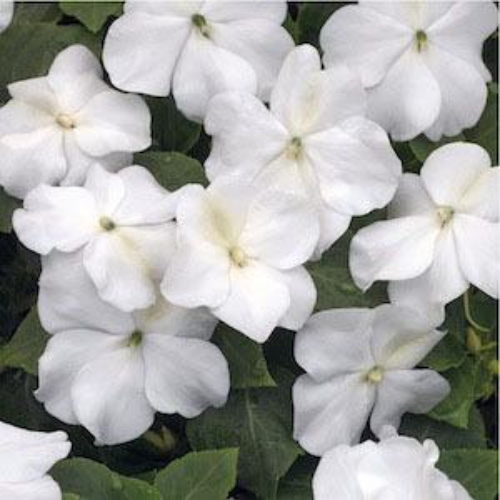
Baby White Impatiens is a clean, bright, easy-to-grow bedding plant valued for its pure white blooms, compact habit, and dependable color in shady garden spaces. This variety produces masses of soft white flowers over rich green foliage, creating a fresh, cooling effect in baskets, containers, porch planters, borders, and shaded beds. Baby White is especially useful where gardeners want a crisp, elegant flower that brightens dark corners without overpowering nearby plants.
Garden Uses:
Baby White Impatiens is excellent for hanging baskets, patio containers, window boxes, shaded borders, mass plantings, and porch displays. Its white blooms show beautifully in low-light areas and pair well with pink, coral, red, violet, or mixed impatiens. It is also a fine choice for formal plantings, memorial gardens, and moonlight-style gardens where white flowers glow softly in evening light.
Growing Information:
Start seeds indoors 8 to 10 weeks before the last expected frost. Press seeds gently into the surface of a fine seed-starting mix, as impatiens seed needs light to germinate. Keep evenly moist and warm at about 70-75°F. Germination usually occurs in 14 to 21 days. Transplant outdoors after all danger of frost has passed. Baby White prefers partial shade to shade, rich well-drained soil, and steady moisture. Avoid hot, dry locations and protect from harsh afternoon sun.
Annual
Height: 8-12 inches
Spread: 8-12 inches
Bloom Color: Pure white
Light: Partial shade to shade
Soil: Rich, moist, well-drained
Use: Baskets, containers, shaded beds, borders
Germination: 14-21 days at 70-75°F
Difficulty: Easy to moderate
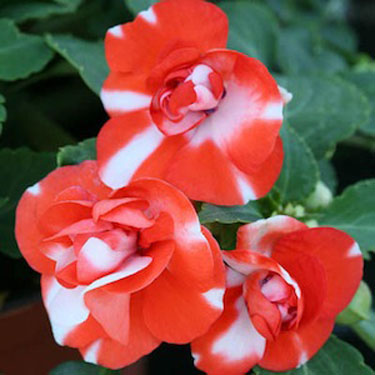
Double Athena Orange Flash Impatiens is a showy double-flowered impatiens variety known for its rose-like blooms in bright orange with flashing white accents. The fully double flowers give the plant a miniature camellia or rose appearance, making it especially attractive in shaded containers, porch pots, hanging baskets, and protected garden beds. Its bold orange-and-white coloring adds a lively tropical look to areas where many other flowering annuals struggle to perform.
Garden Uses:
Double Athena Orange Flash is excellent for shaded baskets, patio containers, window boxes, porch planters, and garden borders. Its double blooms make it especially useful where a fuller, more decorative flower form is desired. The bright orange color pairs beautifully with white impatiens, dark green foliage plants, coleus, begonias, caladiums, and other shade-loving annuals.
Growing Information:
Start seeds indoors 8 to 10 weeks before the last expected frost. Sow seeds on the surface of a fine seed-starting mix and press them gently into place without covering heavily, as impatiens seed needs light for best germination. Keep warm, evenly moist, and humid at about 70-75°F. Germination usually occurs in 14 to 21 days. Transplant outdoors after all danger of frost has passed. Grow in partial shade to shade with rich, moist, well-drained soil. Avoid hot afternoon sun and keep containers from drying out.
Annual
Height: 8-12 inches
Spread: 10-14 inches
Bloom Color: Orange with white accents
Flower Form: Fully double
Light: Partial shade to shade
Soil: Rich, moist, well-drained
Use: Baskets, containers, shaded beds, porch planters
Germination: 14-21 days at 70-75°F
Difficulty: Easy to moderate

Contact Us | Privacy Policy | About Us
Serving gardeners since 1992
State of Mississippi Seedmen's Permit #C-391, Ohio 90152, Minnesota 20086777