
Hollyhock Seed ( Perennial )
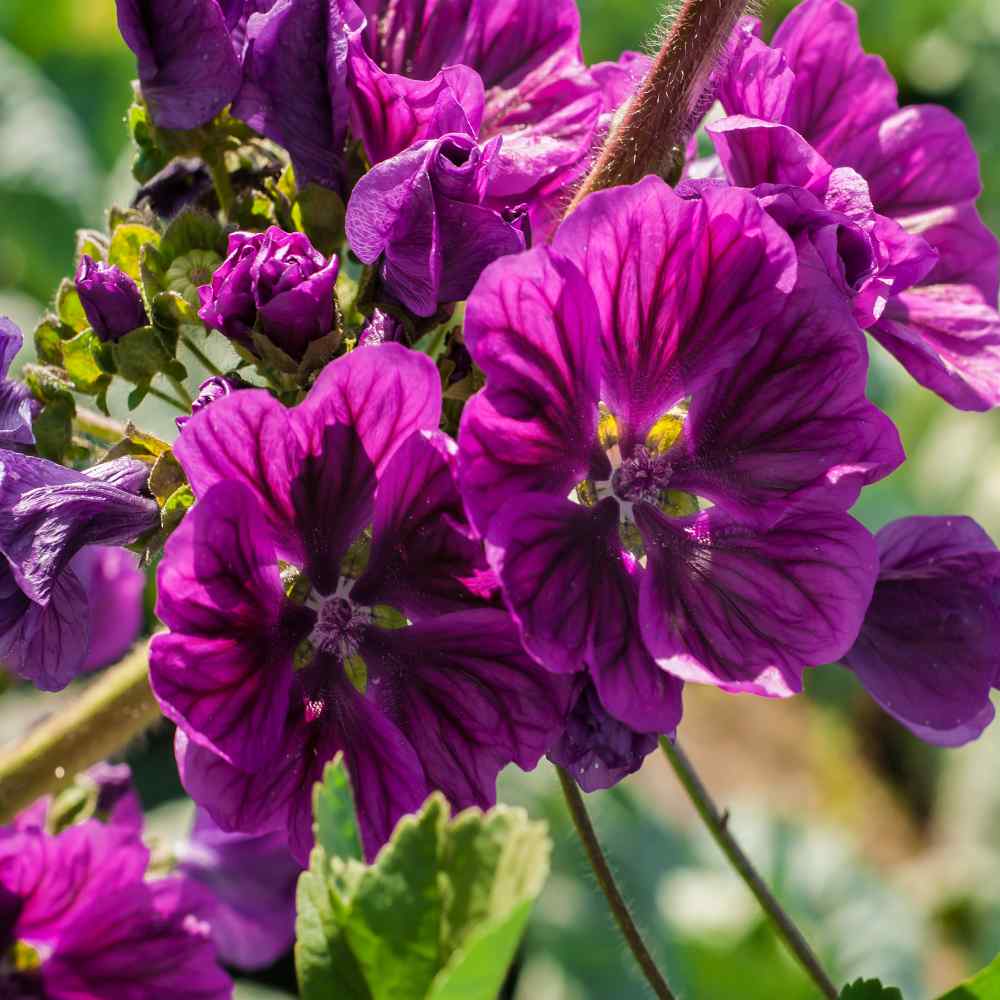
French Hollyhock (Malva sylvestris var. mauritiana) is a striking old-fashioned perennial or biennial mallow grown for its tall spikes of richly colored purple-magenta flowers with dramatic dark veining. Often compared to miniature hollyhocks, this beautiful plant produces open, saucer-shaped blooms along upright stems from early summer into autumn, creating a bold yet graceful display in cottage gardens, pollinator plantings, and informal borders. The large rounded leaves and freely branching stems give the plant a lush, traditional garden appearance.
Fast-growing and easy from seed, French Hollyhock commonly reaches 3 to 5 feet tall, providing excellent height and color without the bulk of true hollyhocks. The flowers are highly attractive to bees, butterflies, and other beneficial insects, while the long bloom season makes it a dependable garden performer. Its rich purple flowers with darker veins create an especially dramatic effect when planted in groups or combined with softer-colored cottage garden plants.
Garden Uses
French Hollyhock is ideal for cottage gardens, pollinator gardens, wildflower borders, herb gardens, cutting gardens, naturalized plantings, and the back of sunny borders. Its tall stems make it useful for adding height, color, and a relaxed old-fashioned feeling to mixed flower beds.
The deep magenta-purple flowers combine beautifully with foxgloves, hollyhocks, larkspur, lavender, roses, yarrow, salvia, cosmos, echinacea, ornamental grasses, and white or pale pink flowering perennials. The flowers also make charming additions to casual bouquets.
Growing Information
French Hollyhock grows best in full sun to light partial shade and prefers well-drained, moderately fertile soil. It adapts well to average garden conditions and can tolerate periods of dry weather once established. Mature plants generally reach 36 to 60 inches tall with a spread of 18 to 30 inches.
Sow seeds directly outdoors after danger of frost has passed or start indoors 6 to 8 weeks before transplanting. Plant seeds approximately ¼ inch deep and keep the soil evenly moist until germination. Seeds usually germinate within 10 to 21 days under warm conditions.
Water regularly during establishment, then provide moderate watering during extended dry periods. Deadheading encourages continued bloom, while allowing some seed heads to mature may result in volunteer seedlings the following season. Tall plants may benefit from support in windy locations.
| Quick Facts | |
|---|---|
| Botanical Name | Malva sylvestris var. mauritiana |
| Common Name | French Hollyhock, High Mallow, Tree Mallow |
| Plant Type | Biennial or short-lived perennial |
| Height | 36-60 inches |
| Spread | 18-30 inches |
| Bloom Color | Rich purple-magenta with dark veining |
| Bloom Season | Early summer through autumn |
| Light Requirements | Full sun to light partial shade |
| Water Needs | Moderate; tolerates some drought once established |
| Soil Type | Well-drained average to moderately fertile soil |
| USDA Zones | 4-9 |
| Pollinator Friendly | Excellent |
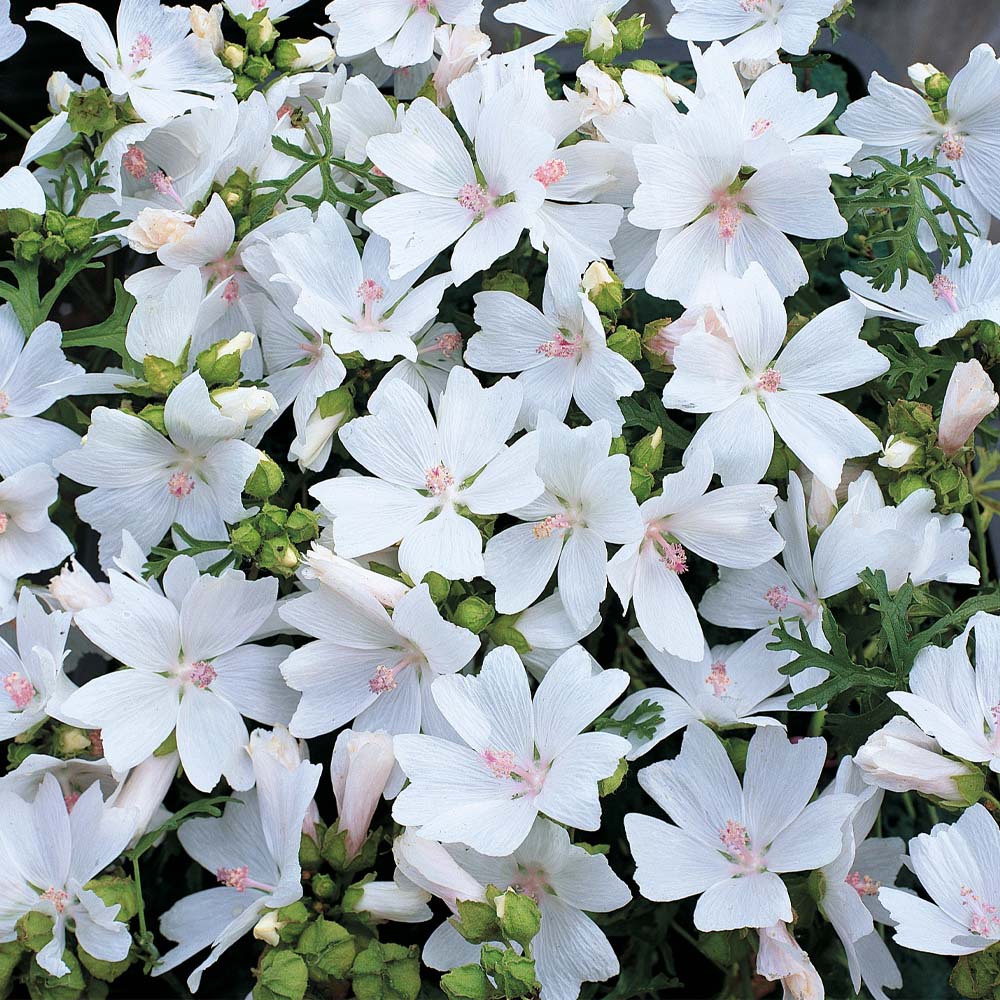
Dwarf Snow White Hollyhock (Malva moschata 'Alba') is a charming compact perennial treasured for its pure white, satiny blossoms that bloom abundantly above neat mounds of finely divided green foliage. Also known as White Musk Mallow, this graceful European wildflower offers all the cottage garden appeal of larger hollyhocks in a much smaller, more manageable plant. Its pristine flowers brighten sunny borders from early summer well into autumn while attracting bees, butterflies, and other beneficial pollinators throughout the season.
Unlike the towering traditional hollyhocks, Dwarf Snow White Hollyhock typically grows only 18 to 30 inches tall, making it ideal for smaller gardens, borders, rock gardens, and containers. The softly textured foliage remains attractive throughout the growing season, while the succession of delicate white blooms provides months of elegant color. Easy to grow and long-lived, this delightful perennial blends beautifully into both formal and informal garden settings.
Garden Uses
Dwarf Snow White Hollyhock is perfect for cottage gardens, perennial borders, rock gardens, pollinator gardens, herb gardens, containers, edging, and naturalized plantings. Its compact size makes it especially valuable for the front of flower beds where taller hollyhocks would be overwhelming.
The snowy white flowers pair beautifully with lavender, catmint, salvia, foxgloves, campanula, gaillardia, coreopsis, yarrow, dianthus, and ornamental grasses. They also create elegant contrast when planted alongside deep purple, blue, or pink flowering perennials.
Growing Information
Dwarf Snow White Hollyhock grows best in full sun to light partial shade and prefers well-drained, moderately fertile soil. It tolerates a wide range of soil types provided drainage is good. Mature plants generally reach 18 to 30 inches tall with a spread of 18 to 24 inches.
Sow seeds directly outdoors after the danger of frost has passed or start indoors 6 to 8 weeks before transplanting. Cover seeds lightly with soil and maintain consistent moisture until germination, which usually occurs within 10 to 21 days. Plants often bloom the first year when started early indoors and continue flowering for many seasons once established.
Water regularly during establishment, then only during prolonged dry periods. Deadheading encourages continued blooming, although allowing a few seed pods to mature may result in gentle self-sowing. Divide mature clumps every few years if desired to maintain vigorous growth.
| Quick Facts | |
|---|---|
| Botanical Name | Malva moschata 'Alba' |
| Common Name | Dwarf Snow White Hollyhock, White Musk Mallow |
| Plant Type | Hardy perennial |
| Height | 18-30 inches |
| Spread | 18-24 inches |
| Bloom Color | Pure white |
| Bloom Season | Early summer through early fall |
| Foliage | Finely divided green leaves |
| Light Requirements | Full sun to light partial shade |
| Water Needs | Moderate; drought tolerant once established |
| Soil Type | Well-drained average to moderately fertile soil |
| USDA Zones | 4-8 |
| Pollinator Friendly | Excellent |

Contact Us | Privacy Policy | About Us
Serving gardeners since 1992
State of Mississippi Seedmen's Permit #C-391, Ohio 90152, Minnesota 20086777