
Our Favorite Marigolds
Marigolds emit a strong scent from compounds in their roots and foliage that deter unwanted insects such as aphids, mosquitoes, tomato worms, and blackflies. Certain types of marigolds contain alpha-terthienyl, a chemical that can suppress root-knot nematodes, microscopic worms in the soil that damage plant roots. The flowers attract pollinators like bees and butterflies and also draw in predatory insects such as ladybugs and hoverflies, which help control pest populations naturally.
Their vibrant yellow and orange flowers provide a burst of color, enhancing the aesthetic of any garden. Marigolds are known for being hardy, easy to grow, and can tolerate a variety of conditions.
Companion planting: You can plant them among vegetables, such as tomatoes, squash, and carrots, to protect them from pests and improve the soil.
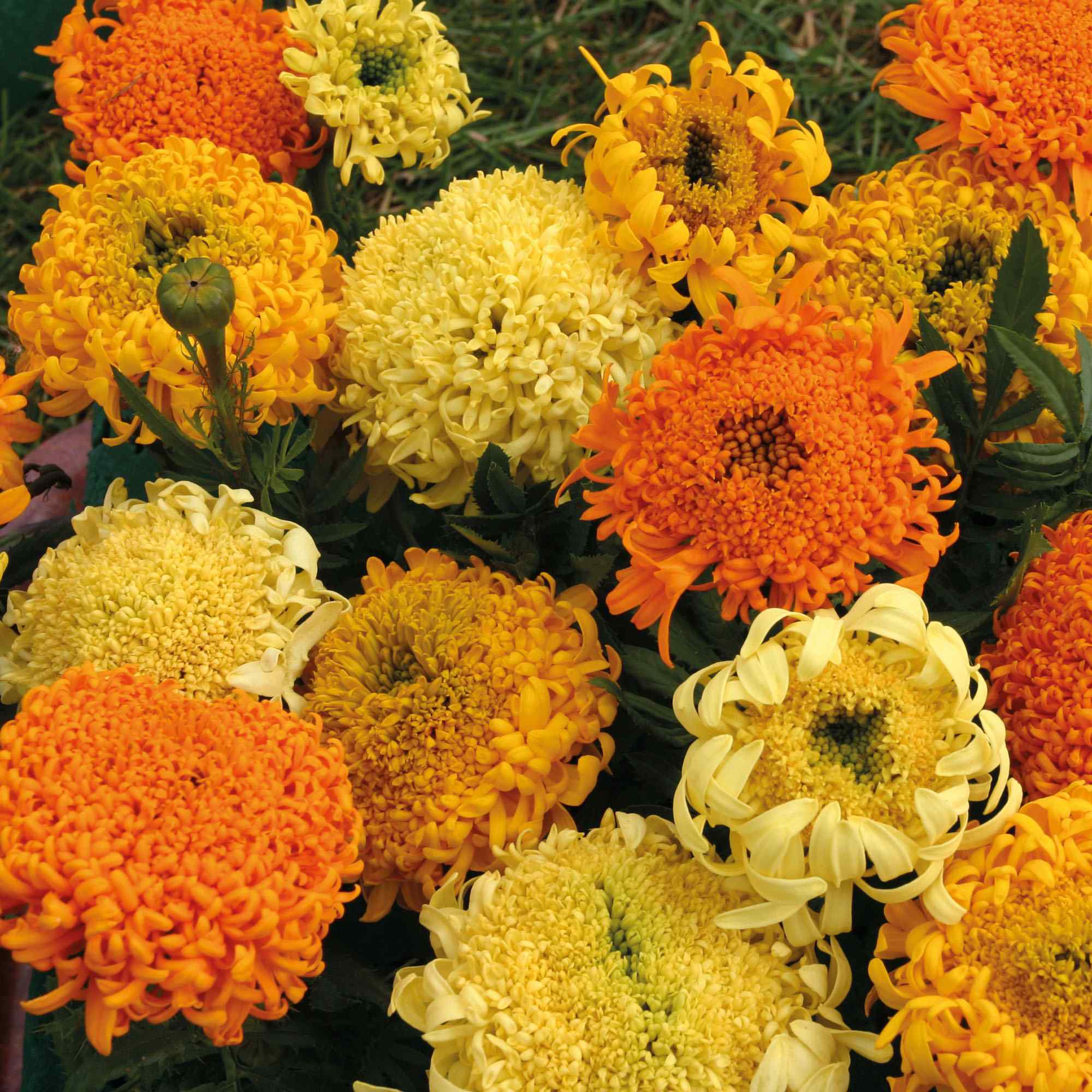
A charming and exceptionally floriferous marigold variety prized for its compact habit, cheerful blooms, and season-long color. Producing masses of bright flowers over neat, bushy plants, this variety is perfect for containers, borders, bedding displays, and patio gardens. Its abundant blossoms create a vibrant display that attracts attention from early summer until frost while requiring minimal maintenance.
Garden Uses:
Yummy Mummy Marigold is ideal for edging flower beds, filling containers, window boxes, patio planters, hanging baskets, and mass landscape plantings. Its compact growth habit makes it especially useful in smaller gardens and decorative container arrangements. The bright blooms combine beautifully with petunias, lobelia, alyssum, salvias, zinnias, and other summer annuals.
Growing Information:
Sow seeds indoors 4 to 6 weeks before the last expected frost or directly outdoors after frost danger has passed. Cover seeds lightly with soil and maintain temperatures between 70-75°F. Germination typically occurs within 5 to 10 days. Transplant or thin seedlings to allow good air circulation. Marigolds thrive in full sun and well-drained soil and are remarkably tolerant of heat, humidity, and periods of drought once established. Regular deadheading encourages continuous blooming throughout the season.
Quick Facts:
Botanical Name: Tagetes species
Common Name: Yummy Mummy Marigold
Plant Type: Annual
Height: 8-12 inches
Spread: 8-12 inches
Bloom Color: Bright golden-yellow to orange tones
Light: Full sun
Soil: Well-drained, average fertility
Bloom Season: Early summer until frost
Pollinator Friendly: Yes
Use: Containers, borders, bedding plants, edging, patio gardens
Heat Tolerance: Excellent
Drought Tolerance: Good once established
Difficulty: Easy
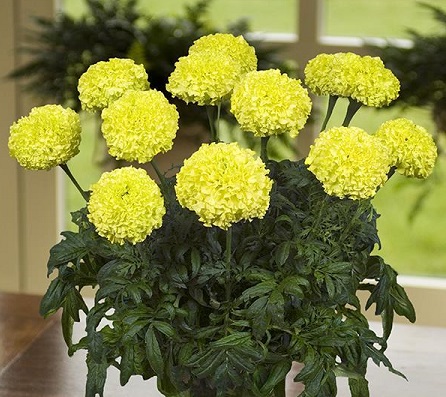
A unique and eye-catching marigold variety distinguished by its unusual lime-green flower coloration and compact, well-branched growth habit. Unlike traditional marigolds that bloom in shades of yellow, orange, and gold, Nosento Lime Green offers a refreshing chartreuse-green appearance that adds novelty and sophistication to garden beds, containers, and floral arrangements. The unusual blooms create striking contrasts when paired with brighter flowers and serve as a conversation piece wherever they are grown.
Garden Uses:
Nosento Lime Green is excellent for containers, patio planters, flower borders, edging, mixed annual beds, and specialty color-themed gardens. The unique green blooms blend beautifully with purple salvias, blue lobelias, red celosias, white alyssum, and ornamental foliage plants. It is especially effective in modern landscape designs, monochromatic plantings, and cut flower gardens where unusual colors are desired.
Growing Information:
Sow seeds indoors 4 to 6 weeks before the last expected frost or directly outdoors after danger of frost has passed. Cover seeds lightly with soil and maintain temperatures of 70-75°F. Germination usually occurs within 5 to 10 days. Transplant seedlings into full sun and well-drained soil after weather warms. Marigolds are highly adaptable and tolerate heat, humidity, and periods of dry weather once established. Regular deadheading encourages continuous flowering throughout the growing season.
Quick Facts:
Botanical Name: Tagetes species
Common Name: Nosento Lime Green Marigold
Plant Type: Annual
Height: 10-14 inches
Spread: 10-12 inches
Bloom Color: Lime green to chartreuse green
Light: Full sun
Soil: Well-drained, average fertility
Bloom Season: Summer until frost
Pollinator Friendly: Yes
Use: Containers, borders, bedding plants, specialty gardens, cut flowers
Heat Tolerance: Excellent
Drought Tolerance: Good once established
Difficulty: Easy
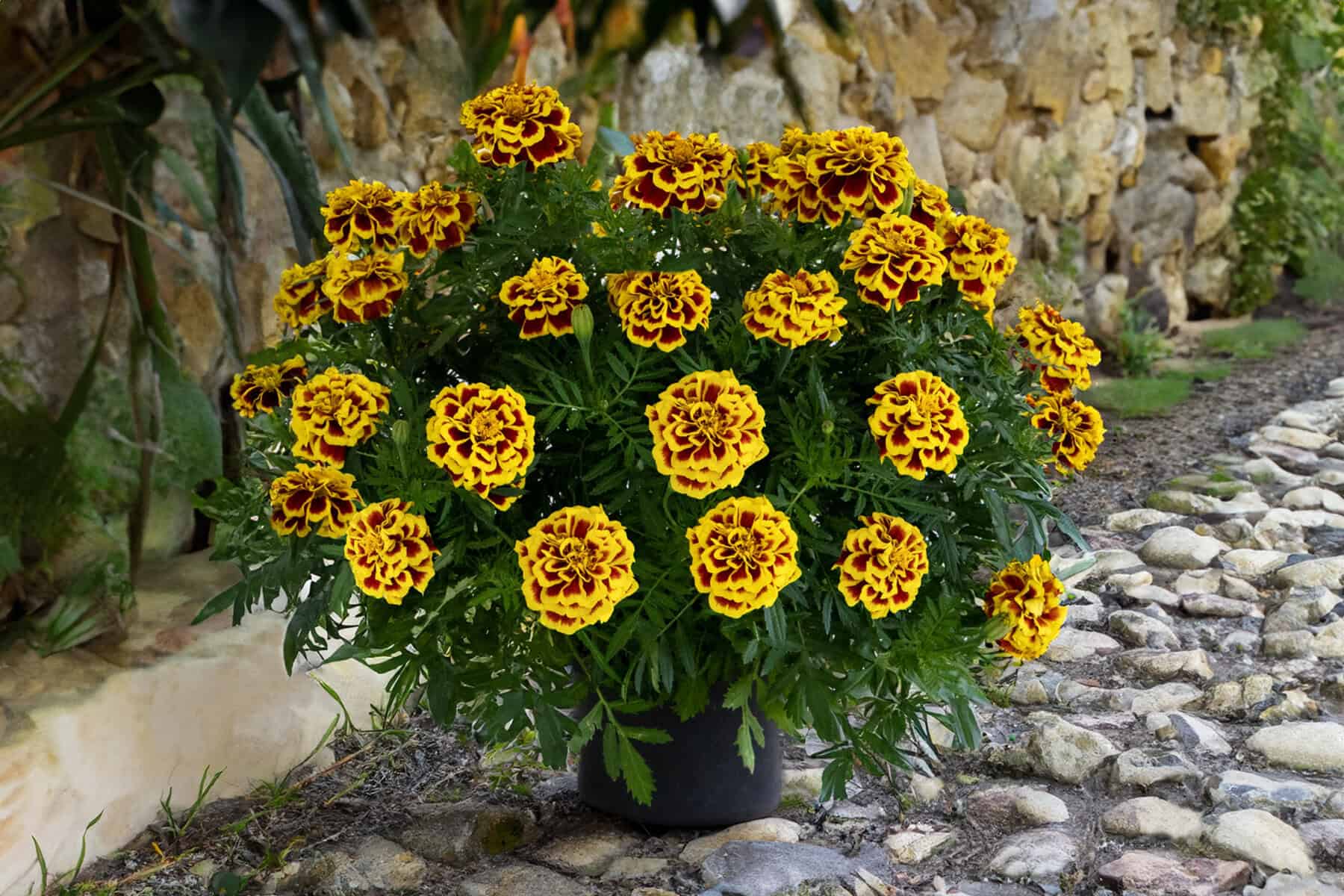
A vibrant and colorful marigold variety that lives up to its tropical name with brilliant shades of mango orange, golden yellow, and warm sunset tones. This compact, free-flowering annual produces masses of bright blooms that create a cheerful display from early summer until frost. The bold colors and tidy growth habit make Mango Tango an excellent choice for flower beds, borders, containers, and pollinator gardens where continuous color is desired.
Garden Uses:
Mango Tango Marigold is perfect for edging garden beds, mass plantings, patio containers, window boxes, hanging baskets, and mixed annual displays. The warm tropical colors blend beautifully with blue lobelia, purple salvia, red celosia, white alyssum, and ornamental grasses. It is especially attractive in sunny borders and cottage-style gardens where its bright blooms provide season-long color.
Growing Information:
Sow seeds indoors 4 to 6 weeks before the final frost or directly outdoors once danger of frost has passed. Cover seeds lightly with soil and maintain temperatures between 70-75°F. Germination usually occurs within 5 to 10 days. Marigolds thrive in full sun and well-drained soil. Once established, they tolerate heat, humidity, and occasional dry conditions remarkably well. Deadheading spent flowers encourages continuous blooming throughout the growing season.
Quick Facts:
Botanical Name: Tagetes species
Common Name: Mango Tango Marigold
Plant Type: Annual
Height: 10-14 inches
Spread: 10-12 inches
Bloom Color: Mango orange, golden yellow, and warm sunset tones
Light: Full sun
Soil: Well-drained, average fertility
Bloom Season: Early summer until frost
Pollinator Friendly: Yes
Use: Borders, containers, bedding plants, edging, pollinator gardens
Heat Tolerance: Excellent
Drought Tolerance: Good once established
Difficulty: Easy
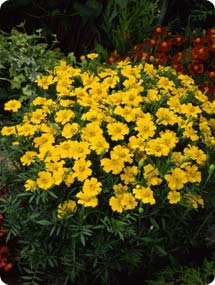
A specialized French marigold developed not only for its brilliant golden-yellow flowers, but also for its remarkable ability to help protect gardens from destructive soil pests. Widely recognized as one of the most effective biological controls for root-knot nematodes, Guardian Gold works beneath the soil surface while providing a vibrant display of cheerful blooms above ground. It is an outstanding companion plant for vegetable gardens, raised beds, and sustainable growing systems where reducing pest pressure naturally is a priority.
Garden Uses:
Guardian Gold is ideal for vegetable gardens, raised beds, borders, containers, companion planting, and pollinator gardens. It is especially valuable when planted near tomatoes, peppers, eggplants, beans, cucumbers, melons, and other crops susceptible to nematode damage. The bright flowers also make attractive edging plants while providing season-long color and beneficial insect activity.
Growing Information:
Sow seeds indoors 4 to 6 weeks before the last frost or directly outdoors after frost danger has passed. Cover seeds lightly with soil and maintain temperatures of 70-75°F. Germination generally occurs within 5 to 10 days. Plants thrive in full sun and well-drained soil and tolerate summer heat exceptionally well. For maximum nematode suppression, plant generously throughout vegetable beds rather than using only a few isolated plants.
Natural Pest Control Benefits:
Guardian Gold is renowned for its superior effectiveness against harmful root-knot nematodes (Meloidogyne species), microscopic soil pests that attack plant roots and reduce crop production. Extensive trials have demonstrated nematode reduction rates approaching 99% when used as part of a proper garden management program. The plant's roots naturally produce bioactive compounds, including thiophenes, that are toxic to many species of harmful nematodes and can significantly reduce both active populations and egg production in the soil.
Unlike chemical nematicides that may require repeated applications, Guardian Gold works naturally as the roots grow throughout the season. Many gardeners and commercial growers use it as a cover crop or companion planting strategy to improve soil health while reducing pest pressure. In numerous situations, it has proven more effective than many traditional chemical control methods.
Early Warning System for Thrips:
Guardian Gold also serves as an effective indicator or "trap plant" for thrips populations. Research has shown that thrips are often attracted to marigolds up to two weeks earlier than they are detected on standard sticky traps. This allows gardeners and growers to identify potential infestations sooner and take corrective action before economically important crops are affected.
Interesting Facts:
Unlike many companion planting claims that rely primarily on folklore, the nematode-suppressing abilities of French marigolds are supported by extensive scientific research. The roots actively produce compounds that help reduce harmful nematode populations while leaving most beneficial soil organisms unharmed. Few ornamental flowers offer such a powerful combination of beauty and practical garden utility.
Seedman Notes:
Guardian Gold is one of the most valuable companion plants a gardener can grow. Its bright golden blooms provide excellent ornamental value, but its true strength lies beneath the soil. We strongly recommend planting it throughout vegetable gardens where nematodes have been a problem or where preventative protection is desired. Few flowers work harder for the gardener than Guardian Gold.
Quick Facts:
Botanical Name: Tagetes patula
Common Name: Guardian Gold Marigold
Plant Type: Annual
Height: 10-14 inches
Spread: 10-12 inches
Bloom Color: Golden yellow
Light: Full sun
Soil: Well-drained
Bloom Season: Summer until frost
Pollinator Friendly: Excellent
Companion Plant: Outstanding
Nematode Control: Up to 99% reduction in trials
Thrips Monitoring: Excellent trap plant
Heat Tolerance: Excellent
Difficulty: Easy
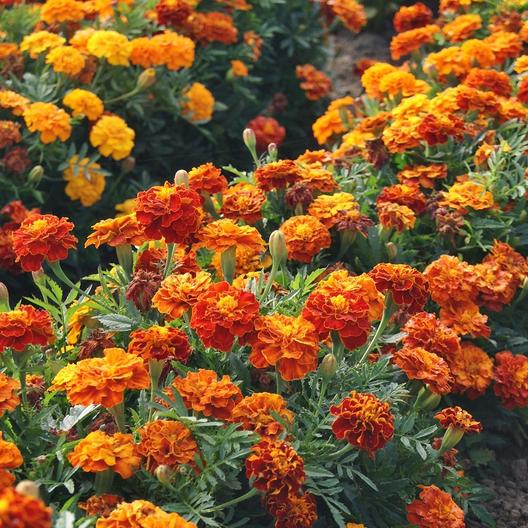

A lively and colorful blend of compact French marigolds featuring an exciting range of warm-toned blooms in shades of gold, yellow, orange, mahogany, red, and striking bi-colors. The plants form dense, well-branched mounds covered with flowers from early summer until frost, creating a brilliant display of color in garden beds, containers, and borders. Their dependable performance, easy-care nature, and continuous flowering have made French marigolds a favorite among gardeners for generations.
Garden Uses:
Sparky Mix is ideal for edging flower beds, mass plantings, containers, window boxes, vegetable gardens, pollinator gardens, and mixed annual borders. The bright colors create eye-catching displays when planted in groups and blend beautifully with zinnias, salvias, petunias, alyssum, and ornamental grasses. Their compact habit also makes them excellent choices for smaller gardens and patio plantings.
Growing Information:
Sow seeds indoors 4 to 6 weeks before the last expected frost or directly outdoors once danger of frost has passed. Cover seeds lightly with soil and maintain temperatures of 70-75°F. Germination usually occurs within 5 to 10 days. Plants thrive in full sun and well-drained soil and quickly establish once transplanted. Marigolds are highly tolerant of summer heat, humidity, and occasional dry conditions. Deadheading will encourage even heavier flowering throughout the season.
Natural Garden Benefits:
French marigolds have long been used in companion planting programs due to their beneficial effects in the garden. Their roots naturally produce compounds that can help suppress certain species of harmful soil nematodes, while their flowers attract beneficial insects such as ladybugs, lacewings, hoverflies, and parasitic wasps. These natural allies help reduce populations of aphids, whiteflies, and other common garden pests.
Quick Facts:
Botanical Name: Tagetes patula
Common Name: Sparky French Marigold Mix
Plant Type: Annual
Height: 8-12 inches
Spread: 8-12 inches
Bloom Colors: Yellow, gold, orange, red, mahogany, and bi-colors
Light: Full sun
Soil: Well-drained, average fertility
Bloom Season: Early summer until frost
Pollinator Friendly: Excellent
Companion Plant: Yes
Use: Borders, containers, edging, vegetable gardens, pollinator gardens
Heat Tolerance: Excellent
Drought Tolerance: Good once established
Difficulty: Easy
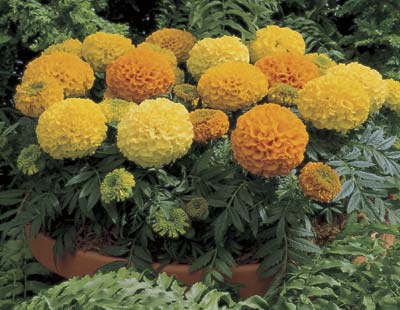
A premium African marigold mixture known for its large, fully double blooms, compact plant habit, and brilliant range of sunny colors. The plants produce rounded, carnation-like flowers in shades of bright yellow, gold, orange, and soft primrose, creating a bold and cheerful display in containers, borders, and bedding plantings. Unlike older tall African marigolds, the Antigua series stays more compact and uniform, making it especially useful for pots, patio planters, and neat landscape displays.
Garden Uses:
Antigua Mix is excellent for containers, patio bowls, flower beds, borders, edging, mass plantings, and sunny landscape displays. Its large rounded blooms provide strong visual impact even from a distance, while the compact plants remain tidy and easy to manage. The warm color range combines beautifully with blue salvia, purple petunias, white alyssum, red celosia, ornamental grasses, and mixed summer annuals.
Growing Information:
Sow seeds indoors 4 to 6 weeks before the last expected frost or directly outdoors after all danger of frost has passed. Cover seeds lightly with soil and maintain temperatures around 70-75°F. Germination usually occurs within 5 to 10 days. Transplant into full sun and well-drained soil after weather has warmed. Antigua marigolds are heat tolerant and perform best with regular watering, good drainage, and occasional feeding. Removing spent flowers will encourage continuous bloom production through summer and into fall.
Quick Facts:
Botanical Name: Tagetes erecta
Common Name: Antigua Mix Marigold
Plant Type: Annual
Height: 10-14 inches
Spread: 10-12 inches
Bloom Colors: Yellow, gold, orange, and primrose tones
Flower Type: Large fully double blooms
Light: Full sun
Soil: Well-drained, average fertility
Bloom Season: Summer until frost
Pollinator Friendly: Good
Companion Plant: Yes
Use: Containers, borders, bedding plants, patio planters, mass plantings
Heat Tolerance: Excellent
Difficulty: Easy
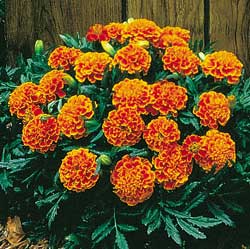
A vigorous, early-flowering French marigold renowned for its compact growth, exceptional branching, and abundance of bright, cheerful blooms. Producing a continuous display of richly colored flowers throughout the growing season, this variety combines the toughness and reliability of traditional French marigolds with improved uniformity and garden performance. The plants remain neat and well-shaped while generating a remarkable number of blooms, making them ideal for both home gardens and professional landscape plantings.
Garden Uses:
Hero Super Spry is perfect for flower beds, borders, edging, patio containers, window boxes, vegetable gardens, and mass landscape displays. Its compact habit and heavy flowering make it especially useful where dependable color is needed throughout the summer. The bright blooms combine beautifully with petunias, lobelia, salvia, zinnias, celosia, and other annual flowers.
Growing Information:
Sow seeds indoors 4 to 6 weeks before the final frost or directly outdoors after danger of frost has passed. Cover seeds lightly with soil and maintain temperatures between 70-75°F. Germination usually occurs within 5 to 10 days. Plants thrive in full sun and well-drained soil and quickly establish once transplanted. Marigolds tolerate heat, humidity, poor soils, and occasional drought exceptionally well. Regular deadheading will promote even heavier flowering, though the plants naturally bloom continuously with minimal care.
Natural Garden Benefits:
Like many French marigolds, Hero Super Spry offers valuable companion planting benefits. The roots naturally produce compounds that can help suppress certain harmful soil nematodes, while the flowers attract beneficial insects such as ladybugs, lacewings, hoverflies, and parasitic wasps. These beneficial insects help reduce populations of aphids, whiteflies, thrips, and other common garden pests, making Hero Super Spry a useful addition to vegetable gardens and pollinator plantings.
Quick Facts:
Botanical Name: Tagetes patula
Common Name: Hero Super Spry Marigold
Plant Type: Annual
Height: 8-12 inches
Spread: 8-12 inches
Bloom Colors: Shades of yellow, gold, orange, and mahogany depending on selection
Light: Full sun
Soil: Well-drained, average fertility
Bloom Season: Early summer until frost
Pollinator Friendly: Excellent
Companion Plant: Yes
Use: Borders, edging, containers, vegetable gardens, bedding displays
Heat Tolerance: Excellent
Drought Tolerance: Good once established
Difficulty: Easy
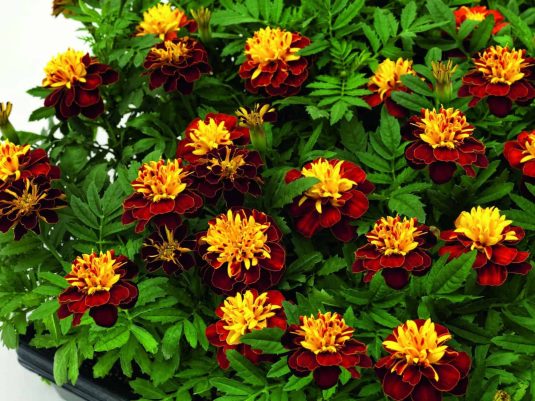
A dazzling French marigold variety celebrated for its fiery bi-colored blooms that combine rich mahogany-red petals with brilliant golden-yellow centers. The vivid flowers create a striking flame-like effect that stands out in garden beds, containers, and borders throughout the growing season. Part of the highly regarded Janie Series, this variety offers excellent uniformity, compact growth, early flowering, and exceptional heat tolerance, making it a favorite among both home gardeners and professional landscapers.
Garden Uses:
Janie Flame is ideal for edging flower beds, mass plantings, patio containers, window boxes, pollinator gardens, and vegetable garden borders. Its dramatic two-tone flowers provide excellent contrast when planted alongside blue lobelia, purple salvia, white alyssum, yellow marigolds, and ornamental foliage plants. The compact habit makes it particularly useful for smaller gardens and formal landscape displays.
Growing Information:
Start seeds indoors 4 to 6 weeks before the final frost or sow directly outdoors after frost danger has passed. Cover seeds lightly with soil and maintain temperatures between 70-75°F. Germination typically occurs within 5 to 10 days. Plants prefer full sun and well-drained soil but tolerate a wide range of growing conditions. Once established, Janie Flame handles heat, humidity, and periods of dry weather with ease. Deadheading encourages continuous flowering, although plants naturally bloom heavily throughout the season.
Quick Facts:
Botanical Name: Tagetes patula
Common Name: Janie Flame Marigold
Plant Type: Annual
Height: 8-10 inches
Spread: 8-10 inches
Bloom Color: Mahogany-red petals with golden-yellow centers
Flower Type: Single to semi-double bi-colored blooms
Light: Full sun
Soil: Well-drained, average fertility
Bloom Season: Early summer until frost
Pollinator Friendly: Excellent
Companion Plant: Yes
Use: Borders, edging, containers, vegetable gardens, mass plantings
Heat Tolerance: Excellent
Drought Tolerance: Good once established
Difficulty: Easy
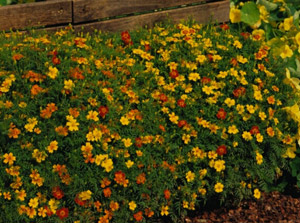
A delightful heirloom-style marigold prized for its masses of small, star-shaped flowers and finely textured, fern-like foliage. This colorful mixture produces hundreds of cheerful blooms in shades of golden yellow, orange, scarlet, mahogany, and striking bi-colors that blanket the plants from early summer until frost. Unlike larger French or African marigolds, Signet marigolds offer a light, airy appearance that makes them equally attractive in flower beds, containers, herb gardens, and edible landscapes.
Garden Uses:
Signet Starfire Mix is ideal for borders, edging, rock gardens, cottage gardens, containers, window boxes, raised beds, and pollinator plantings. The compact, mounded plants become covered with flowers, creating a colorful carpet effect throughout the growing season. Their fine-textured foliage blends beautifully with herbs, salvias, lobelia, alyssum, and other annual flowers.
Growing Information:
Sow seeds indoors 4 to 6 weeks before the final frost or directly outdoors after danger of frost has passed. Cover seeds lightly with soil and maintain temperatures between 70-75°F. Germination typically occurs within 5 to 10 days. Plants thrive in full sun and well-drained soil and quickly establish in warm weather. Signet marigolds are exceptionally heat tolerant, drought resistant once established, and require very little maintenance beyond occasional watering during prolonged dry periods.
Quick Facts:
Botanical Name: Tagetes tenuifolia
Common Name: Signet Starfire Mix Marigold
Plant Type: Annual
Height: 10-14 inches
Spread: 12-18 inches
Bloom Colors: Yellow, gold, orange, scarlet, mahogany, and bi-colors
Flower Type: Small single star-shaped blooms
Light: Full sun
Soil: Well-drained, average fertility
Bloom Season: Early summer until frost
Pollinator Friendly: Excellent
Companion Plant: Yes
Edible Flowers: Yes
Heat Tolerance: Excellent
Drought Tolerance: Very good once established
Difficulty: Easy
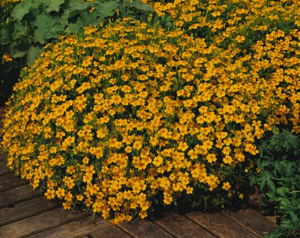
This is one of the most charming and versatile marigolds available, producing hundreds of bright tangerine-orange flowers above delicate, fern-like foliage. Unlike the larger blooms of French and African marigolds, Tangerine Gem creates a cloud of small, cheerful flowers that completely cover the plant throughout the growing season. The compact, rounded plants offer exceptional heat tolerance, outstanding pollinator value, and even edible flowers, making them a favorite among ornamental gardeners, herb growers, and vegetable gardeners alike.
Garden Uses:
Tangerine Gem is ideal for borders, edging, containers, raised beds, herb gardens, rock gardens, cottage gardens, and vegetable gardens. The compact mounds of bright orange flowers create a colorful carpet effect and are especially attractive when planted in groups. Their fine-textured foliage provides a soft contrast to larger-leaved plants and blends beautifully with salvias, alyssum, basil, peppers, and ornamental grasses.
Growing Information:
Sow seeds indoors 4 to 6 weeks before the final frost or directly outdoors after danger of frost has passed. Cover seeds lightly with soil and maintain temperatures between 70-75°F. Germination usually occurs within 5 to 10 days. Plants thrive in full sun and well-drained soil and quickly establish once temperatures warm. Tangerine Gem tolerates summer heat, humidity, and drought remarkably well and often continues blooming heavily even during the hottest part of the season.
Quick Facts:
Botanical Name: Tagetes tenuifolia
Common Name: Signet Tangerine Gem Marigold
Plant Type: Annual
Height: 10-14 inches
Spread: 12-18 inches
Bloom Color: Bright tangerine-orange
Flower Type: Small single blooms
Light: Full sun
Soil: Well-drained, average fertility
Bloom Season: Early summer until frost
Pollinator Friendly: Excellent
Companion Plant: Yes
Edible Flowers: Yes
Heat Tolerance: Excellent
Drought Tolerance: Very good once established
Difficulty: Easy
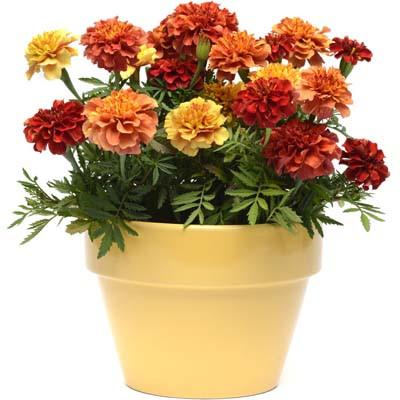
One of the most remarkable marigold introductions in recent years, celebrated for its unique color-changing blooms that display an ever-shifting blend of strawberry pink, rose, peach, apricot, gold, and soft yellow tones. Unlike traditional marigolds that remain shades of yellow or orange, Strawberry Blonde produces flowers whose colors evolve as temperatures change, creating a constantly changing display throughout the growing season. The compact plants are covered with blooms from early summer until frost, making this variety a true garden showpiece.
Garden Uses:
Strawberry Blonde is ideal for containers, patio planters, borders, edging, cottage gardens, pollinator gardens, and mixed annual displays. The unusual flower colors blend beautifully with lavender, blue salvia, white alyssum, pink petunias, dusty miller, and ornamental grasses. Because no two plants bloom exactly alike, it creates a highly dynamic and artistic appearance in garden settings.
Growing Information:
Sow seeds indoors 4 to 6 weeks before the final frost or directly outdoors after danger of frost has passed. Cover seeds lightly with soil and maintain temperatures between 70-75°F. Germination usually occurs within 5 to 10 days. Plants thrive in full sun and well-drained soil and are highly tolerant of summer heat and humidity. Regular watering during dry periods and occasional deadheading will help maintain peak flowering performance throughout the season.
Quick Facts:
Botanical Name: Tagetes patula
Common Name: Strawberry Blonde Marigold
Plant Type: Annual
Height: 8-10 inches
Spread: 8-12 inches
Bloom Colors: Strawberry pink, rose, peach, apricot, gold, and yellow
Flower Type: Double blooms
Light: Full sun
Soil: Well-drained, average fertility
Bloom Season: Early summer until frost
Pollinator Friendly: Excellent
Companion Plant: Yes
Heat Tolerance: Excellent
Drought Tolerance: Good once established
Special Feature: Temperature-responsive color changes
Difficulty: Easy
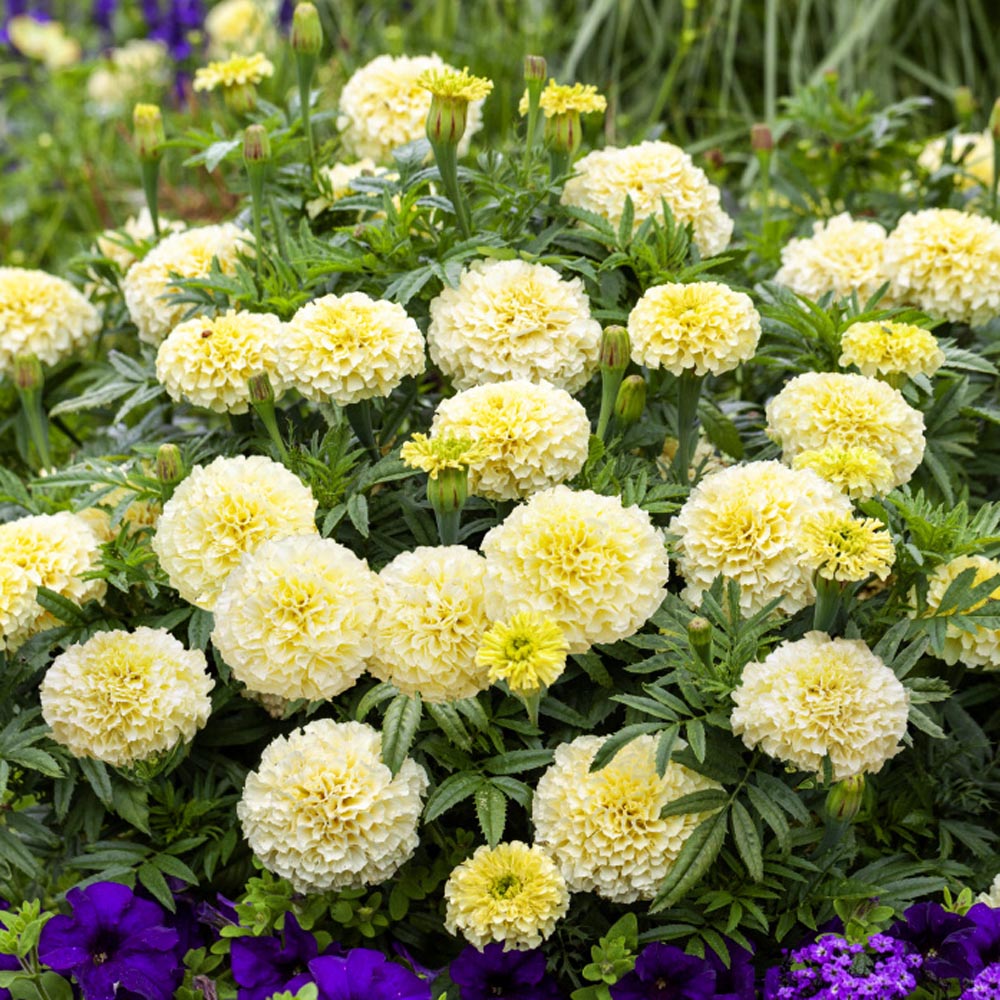
A groundbreaking African marigold variety celebrated for its rare creamy-white blooms, a color long sought after by marigold breeders. Unlike the traditional yellow, gold, and orange shades associated with marigolds, Kilimanjaro produces large, fully double flowers in elegant ivory-white to soft cream tones. The plants are vigorous, well-branched, and flower abundantly throughout the growing season, bringing a refined and sophisticated look to flower beds, borders, containers, and cutting gardens.
Garden Uses:
Kilimanjaro White is ideal for formal flower beds, mixed borders, containers, wedding gardens, moon gardens, cutting gardens, and mass landscape plantings. The creamy-white blooms create striking contrasts with blue, purple, pink, and red flowers while adding brightness to evening gardens. Its unusual coloration makes it especially valuable for gardeners seeking a more refined alternative to traditional marigolds.
Growing Information:
Start seeds indoors 4 to 6 weeks before the final frost or sow directly outdoors after danger of frost has passed. Cover seeds lightly with soil and maintain temperatures between 70-75°F. Germination usually occurs within 5 to 10 days. Plants thrive in full sun and well-drained soil and perform exceptionally well in summer heat. Regular watering and occasional deadheading help maintain peak flowering, although the plants naturally bloom heavily throughout the season.
Quick Facts:
Botanical Name: Tagetes erecta
Common Name: Kilimanjaro White Marigold
Plant Type: Annual
Height: 14-18 inches
Spread: 12-14 inches
Bloom Color: Creamy white to ivory white
Flower Type: Large fully double blooms
Light: Full sun
Soil: Well-drained, average fertility
Bloom Season: Summer until frost
Pollinator Friendly: Excellent
Companion Plant: Yes
Use: Containers, borders, cutting gardens, wedding gardens, moon gardens
Heat Tolerance: Excellent
Difficulty: Easy
Special Feature: Rare white marigold coloration
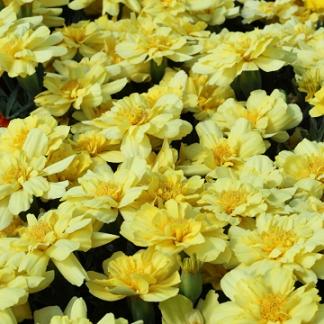
A refined African marigold variety prized for its soft vanilla-cream blooms and compact, garden-friendly habit. The flowers open in pale creamy yellow with warm golden centers, giving the plant a softer, more elegant appearance than traditional orange and gold marigolds. Its fully double blooms, tidy growth, and season-long color make it an excellent choice for containers, borders, formal plantings, and cutting gardens.
Garden Uses:
Alumina Vanilla Creme is ideal for containers, patio planters, flower beds, borders, edging, cutting gardens, wedding gardens, and moon garden plantings. The soft cream-yellow blooms blend beautifully with blue, purple, pink, white, and deep red flowers. Its gentle color also works well in formal landscapes where a softer marigold shade is preferred over the usual bright orange tones.
Growing Information:
Sow seeds indoors 4 to 6 weeks before the last expected frost or directly outdoors after all danger of frost has passed. Cover seeds lightly with soil and maintain temperatures around 70-75°F. Germination usually occurs within 5 to 10 days. Transplant into full sun and well-drained soil after weather has warmed. Plants are heat tolerant and perform best with regular watering, good drainage, and occasional feeding. Deadheading spent blooms will encourage continued flowering from summer until frost.
Quick Facts:
Botanical Name: Tagetes erecta
Common Name: Alumina Vanilla Creme Marigold
Plant Type: Annual
Height: 12-14 inches
Spread: 12-14 inches
Bloom Color: Vanilla cream to pale yellow with golden centers
Flower Type: Fully double blooms
Light: Full sun
Soil: Well-drained, average fertility
Bloom Season: Summer until frost
Pollinator Friendly: Excellent
Companion Plant: Yes
Use: Containers, borders, bedding plants, cutting gardens, formal displays
Heat Tolerance: Excellent
Drought Tolerance: Good once established
Difficulty: Easy
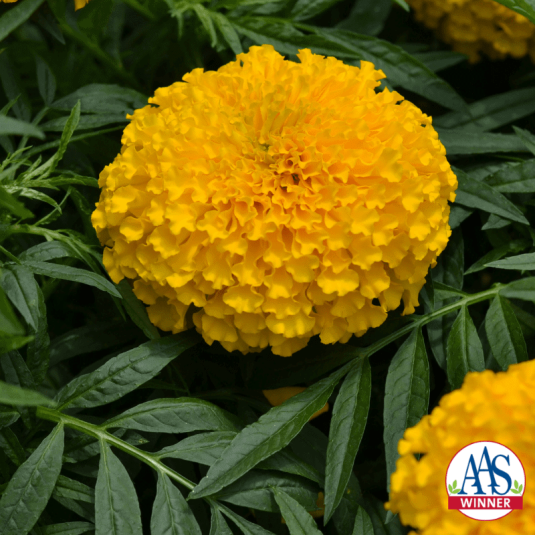
A spectacular African marigold variety developed to produce exceptionally large, fully double golden-yellow blooms on sturdy, weather-resistant plants. The enormous flower heads can reach impressive sizes, creating a bold splash of color that stands out in flower beds, borders, containers, and cutting gardens. With its strong stems, uniform growth habit, and nonstop flowering, Big Duck Gold delivers the classic marigold look on a grand scale.
Garden Uses:
Big Duck Gold is ideal for flower beds, mass plantings, cutting gardens, landscape borders, large containers, and public garden displays. The oversized blooms provide outstanding visual impact and are visible from a considerable distance, making them especially effective in large landscape plantings. They combine beautifully with blue salvias, purple ageratum, red celosia, ornamental grasses, and other warm-season annuals.
Growing Information:
Start seeds indoors 4 to 6 weeks before the final frost or sow directly outdoors after all danger of frost has passed. Cover seeds lightly with soil and maintain temperatures of 70-75°F. Germination generally occurs within 5 to 10 days. Plants perform best in full sun and well-drained soil. Once established, they tolerate heat, humidity, and occasional drought with ease. Regular watering during prolonged dry periods and removal of spent blooms will help maximize flowering.
Quick Facts:
Botanical Name: Tagetes erecta
Common Name: Big Duck Gold Marigold
Plant Type: Annual
Height: 12-18 inches
Spread: 12-14 inches
Bloom Color: Rich golden yellow
Flower Type: Large fully double blooms
Light: Full sun
Soil: Well-drained, average fertility
Bloom Season: Summer until frost
Pollinator Friendly: Excellent
Companion Plant: Yes
Use: Borders, containers, cutting gardens, mass plantings, landscape displays
Heat Tolerance: Excellent
Drought Tolerance: Good once established
Difficulty: Easy
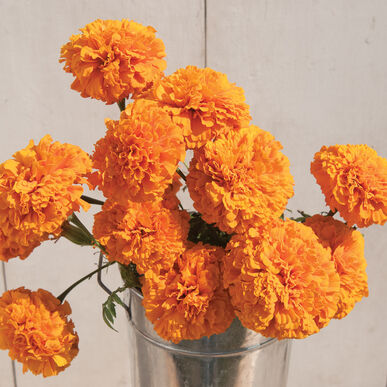
A magnificent African marigold prized for its enormous, fully double blooms in rich shades of brilliant orange. The massive flower heads sit atop sturdy, weather-resistant stems and provide one of the boldest displays available in the annual flower garden. Bred for uniformity, strong garden performance, and exceptional flower size, this hybrid delivers months of brilliant color from summer until frost while thriving in heat and challenging garden conditions.
Garden Uses:
Giant Orange Hybrid is ideal for large flower beds, borders, landscape plantings, cutting gardens, containers, and public displays. Its oversized blooms create dramatic visual impact and are especially effective when planted in groups. The vivid orange flowers combine beautifully with blue salvias, purple ageratum, white alyssum, ornamental grasses, and other summer-blooming annuals. The long stems also make excellent cut flowers for fresh arrangements.
Growing Information:
Start seeds indoors 4 to 6 weeks before the final frost or sow directly outdoors after all danger of frost has passed. Cover seeds lightly with soil and maintain temperatures between 70-75°F. Germination generally occurs within 5 to 10 days. Plants thrive in full sun and well-drained soil and develop rapidly once warm weather arrives. Giant Orange Hybrid tolerates summer heat exceptionally well and continues blooming heavily even during hot conditions. Deadheading spent flowers helps encourage maximum flower production throughout the season.
Quick Facts:
Botanical Name: Tagetes erecta
Common Name: Giant Orange Hybrid Marigold
Plant Type: Annual
Height: 24-36 inches
Spread: 12-18 inches
Bloom Color: Brilliant deep orange
Flower Type: Large fully double blooms
Light: Full sun
Soil: Well-drained, average fertility
Bloom Season: Summer until frost
Pollinator Friendly: Excellent
Companion Plant: Yes
Use: Borders, cutting gardens, containers, mass plantings, landscape displays
Heat Tolerance: Excellent
Drought Tolerance: Good once established
Difficulty: Easy
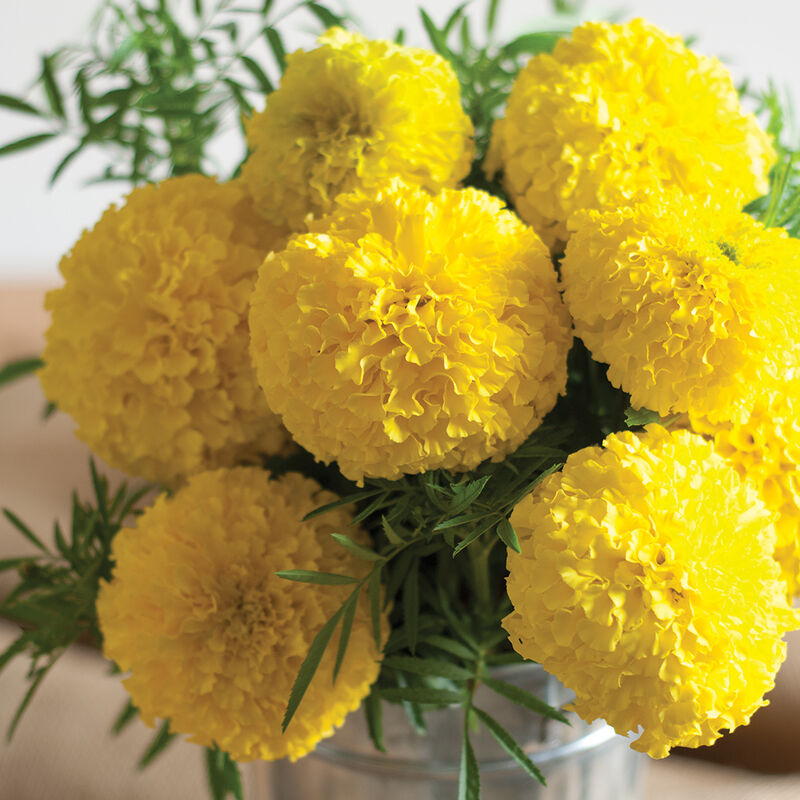
A spectacular African marigold variety that produces enormous, fully double blooms in brilliant golden-yellow shades. The massive flower heads rise above strong, sturdy stems and create one of the brightest displays available in the summer garden. Bred for exceptional flower size, uniform growth, and reliable performance, this hybrid combines classic marigold toughness with show-quality blooms that remain attractive throughout the growing season.
Garden Uses:
Giant Yellow Hybrid is ideal for large flower beds, borders, mass plantings, cutting gardens, landscape displays, and oversized containers. Its bold yellow blooms provide excellent contrast against blue, purple, red, and white flowering plants. The long stems and large flowers also make excellent cut flowers for fresh bouquets and floral arrangements. When planted in groups, the brilliant blooms create a striking display visible from considerable distances.
Growing Information:
Start seeds indoors 4 to 6 weeks before the final frost or sow directly outdoors after all danger of frost has passed. Cover seeds lightly with soil and maintain temperatures between 70-75°F. Germination generally occurs within 5 to 10 days. Plants thrive in full sun and well-drained soil and establish rapidly once warm weather arrives. Giant Yellow Hybrid tolerates heat, humidity, and occasional drought exceptionally well. Regular deadheading and occasional feeding help promote maximum flower production from summer until frost.
Quick Facts:
Botanical Name: Tagetes erecta
Common Name: Giant Yellow Hybrid Marigold
Plant Type: Annual
Height: 24-36 inches
Spread: 12-18 inches
Bloom Color: Bright golden yellow
Flower Type: Large fully double blooms
Light: Full sun
Soil: Well-drained, average fertility
Bloom Season: Summer until frost
Pollinator Friendly: Excellent
Companion Plant: Yes
Use: Borders, cutting gardens, containers, mass plantings, landscape displays
Heat Tolerance: Excellent
Drought Tolerance: Good once established
Difficulty: Easy
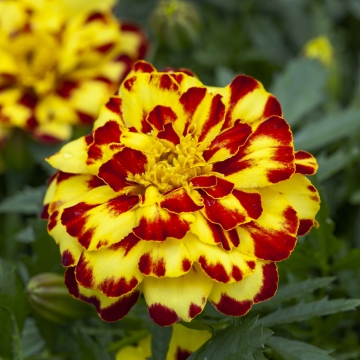
A distinctive African marigold variety known for its creamy yellow blooms richly marked with deep red to mahogany accents. The flowers have a warm dessert-like color pattern, blending soft vanilla-yellow petals with bold cinnamon-red splashes that give each bloom a unique, hand-painted appearance. Compact, floriferous, and easy to grow, this variety brings unusual color and excellent garden performance to containers, borders, and sunny bedding displays.
Garden Uses:
Alumina Creme Brulee is ideal for containers, patio planters, flower beds, edging, mixed borders, and specialty color-themed gardens. Its cream and red markings create striking contrast when paired with blue salvia, purple petunias, white alyssum, bronze foliage plants, and solid yellow or orange marigolds. The compact habit also makes it useful for formal plantings and decorative container combinations.
Growing Information:
Sow seeds indoors 4 to 6 weeks before the final frost or directly outdoors after all danger of frost has passed. Cover seeds lightly with soil and maintain temperatures around 70-75°F. Germination usually occurs within 5 to 10 days. Transplant outdoors into full sun and well-drained soil after temperatures have warmed. Plants tolerate heat and humidity well and perform best with regular watering, good drainage, and occasional feeding. Removing spent blooms encourages continuous flowering until frost.
Quick Facts:
Botanical Name: Tagetes erecta
Common Name: Alumina Creme Brulee Marigold
Plant Type: Annual
Height: 12-14 inches
Spread: 12-14 inches
Bloom Color: Creamy yellow with deep red to mahogany markings
Flower Type: Fully double blooms
Light: Full sun
Soil: Well-drained, average fertility
Bloom Season: Summer until frost
Pollinator Friendly: Excellent
Companion Plant: Yes
Use: Containers, borders, bedding plants, patio planters, mixed annual displays
Heat Tolerance: Excellent
Drought Tolerance: Good once established
Difficulty: Easy
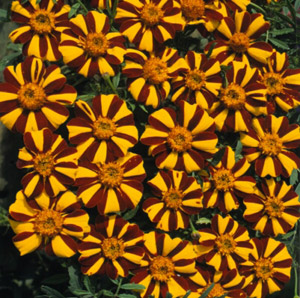
A bold and unusual French marigold variety admired for its striking striped flowers in rich mahogany-red and golden-yellow. The blooms have a bright, pinwheel-like pattern that gives each plant a lively, festive appearance, while the double to semi-double flower form adds extra fullness and texture. Compact, colorful, and dependable, Mr. Majestic Double is an excellent choice for gardeners who want a marigold with strong visual character and old-fashioned charm.
Garden Uses:
Mr. Majestic Double Marigold is outstanding in borders, edging, containers, window boxes, cottage gardens, and mixed annual beds. Its striped flowers are especially attractive when planted where they can be viewed up close, such as along walkways, porch steps, patios, or the front of flower beds. The warm red and yellow coloring also blends beautifully with zinnias, celosia, cosmos, salvia, ornamental peppers, and other summer annuals.
Growing Information:
Sow seeds indoors 4-6 weeks before the last expected frost or directly outdoors after all danger of frost has passed. Seeds usually germinate in 5-10 days at 70-75°F. Plant in full sun and well-drained soil. Mr. Majestic Double typically grows about 10-12 inches tall with a compact, branching habit. Water regularly during dry spells, but avoid overly wet soil. Removing spent blooms will encourage continued flowering and help keep plants tidy through summer and into fall.
Quick Facts:
- Botanical Name: Tagetes patula
- Common Name: Mr. Majestic Double Marigold
- Plant Type: Annual
- Height: 10-12 inches
- Spread: 8-10 inches
- Bloom Color: Mahogany-red and golden-yellow striped
- Flower Form: Double to semi-double
- Light Requirements: Full sun
- Soil: Well-drained garden soil
- Germination Time: 5-10 days
- Bloom Season: Summer to frost
- Attracts: Bees, butterflies, hoverflies, beneficial insects