
Oenothera Seed ( Perennial )
The dusk and dawn-blooming flowers attract night-flying moths and early morning bees, making it a valuable plant for pollinator gardens.
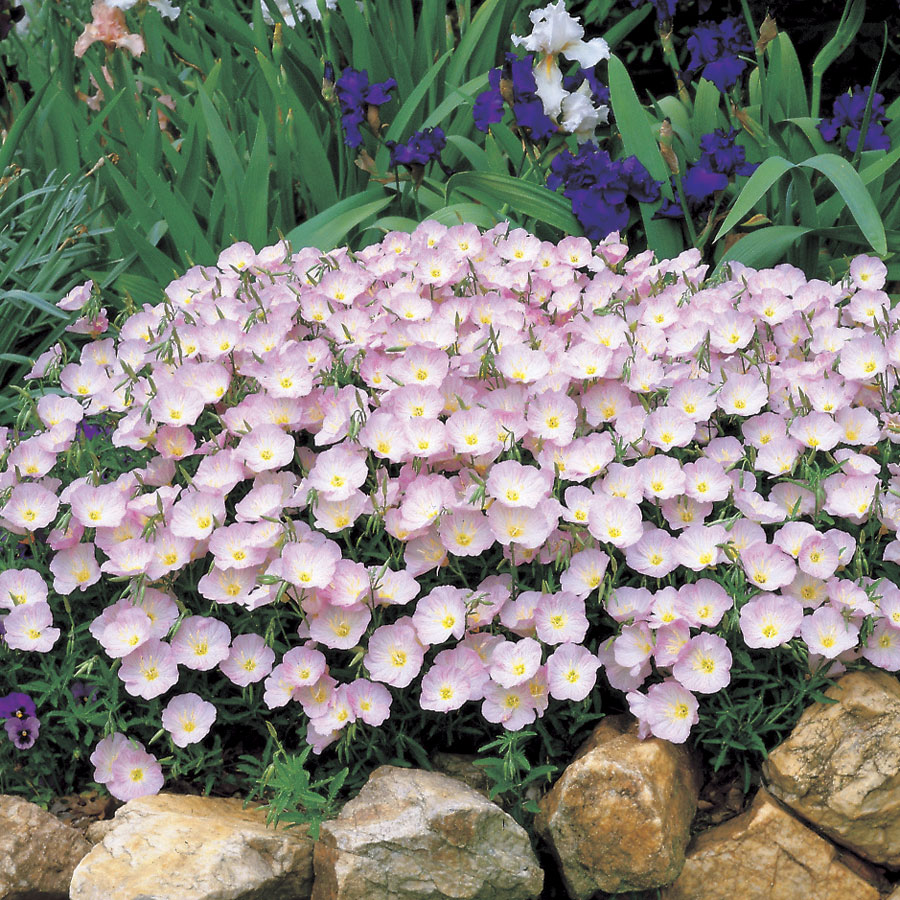
Pink Evening Primrose (Oenothera speciosa 'Rosea') is a graceful native perennial celebrated for its delicate satiny pink flowers that seem to carpet the landscape in late spring and early summer. Often called Showy Evening Primrose, Mexican Evening Primrose, or Pink Ladies, this hardy wildflower produces masses of soft blush-pink blooms with golden centers that brighten borders, meadows, rock gardens, and naturalized plantings. The flowers open wide in the cool of the morning and evening, creating a spectacular display that appears to float above the attractive green foliage.
Fast spreading by underground rhizomes, Pink Evening Primrose forms beautiful colonies that provide outstanding ground cover while attracting bees, butterflies, and numerous beneficial pollinators. Plants typically grow 12 to 18 inches tall and bloom for many weeks, making them one of the finest choices for gardeners seeking a carefree perennial that thrives in sunny locations. Once established, this North American native is remarkably drought tolerant and requires very little maintenance.
Garden Uses
Pink Evening Primrose is ideal for cottage gardens, native plant gardens, wildflower meadows, pollinator gardens, prairie plantings, rock gardens, slopes, borders, roadside plantings, and naturalized areas. Its spreading habit makes it especially useful as a flowering ground cover in sunny locations.
The soft pink flowers combine beautifully with purple coneflowers, black-eyed Susans, gaillardia, lavender, yarrow, coreopsis, ornamental grasses, salvia, liatris, and other drought-tolerant native perennials. The blooms also make delicate additions to fresh-cut wildflower bouquets.
Growing Information
Pink Evening Primrose thrives in full sun but will tolerate light partial shade. It grows well in average, sandy, rocky, or moderately fertile soils provided drainage is good. Mature plants generally reach 12 to 18 inches tall while spreading 18 to 36 inches or more through underground rhizomes.
Sow seeds directly outdoors in spring or fall, or start indoors 6 to 8 weeks before transplanting. Cover seeds lightly with soil and maintain even moisture until germination, which typically occurs within 10 to 21 days. Plants establish quickly and may bloom during their first growing season under favorable conditions.
Once established, very little care is required. Water occasionally during prolonged drought, although mature plants tolerate dry conditions exceptionally well. Colonies may be divided every few years if spreading becomes excessive or if new plants are desired.
| Quick Facts | |
|---|---|
| Botanical Name | Oenothera speciosa 'Rosea' |
| Common Name | Pink Evening Primrose, Showy Evening Primrose, Pink Ladies |
| Plant Type | Hardy native perennial |
| Height | 12-18 inches |
| Spread | 18-36+ inches |
| Bloom Color | Soft pink with golden-yellow centers |
| Bloom Season | Late spring through early summer |
| Light Requirements | Full sun to light partial shade |
| Water Needs | Low once established |
| Soil Type | Well-drained average, sandy, or rocky soil |
| USDA Zones | 4-9 |
| Drought Tolerant | Excellent |
| Pollinator Friendly | Excellent |
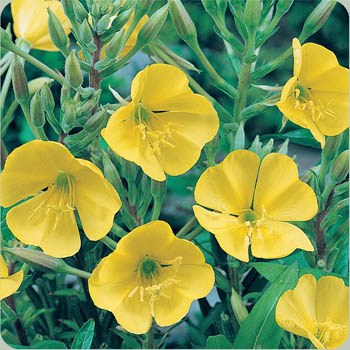
Evening Primrose (Oenothera) is a diverse group of hardy flowering plants admired for their delicate cup-shaped blossoms, exceptional adaptability, and outstanding value to pollinators. Many species produce large, satiny flowers that open dramatically in the evening, giving rise to the common name "Evening Primrose." Depending on the species, blooms may be bright yellow, white, pink, or soft blush, often glowing in the fading light and attracting night-flying moths as well as daytime bees and butterflies. These beautiful wildflowers have become favorites in cottage gardens, native landscapes, prairie plantings, and water-wise gardens around the world.
Most perennial evening primroses form attractive clumps or spreading colonies, blooming from late spring through summer with hundreds of cheerful flowers. Their remarkable drought tolerance, adaptability to poor soils, and long flowering period make them excellent choices for low-maintenance gardens. Whether planted in formal borders or allowed to naturalize in open meadows, Evening Primrose provides dependable color while supporting a wide range of beneficial wildlife.
Garden Uses
Evening Primrose is well suited for native plant gardens, wildflower meadows, prairie restorations, cottage gardens, pollinator gardens, rock gardens, sunny borders, slopes, roadside plantings, and naturalized landscapes. Many spreading species also make attractive flowering groundcovers in difficult sunny locations.
These graceful flowers combine beautifully with coneflowers, black-eyed Susans, gaillardia, liatris, coreopsis, salvia, lavender, yarrow, ornamental grasses, penstemon, asters, and other drought-tolerant native perennials. Their open blooms also add a light, natural appearance to fresh-cut wildflower bouquets.
Growing Information
Most Oenothera species grow best in full sun but tolerate light afternoon shade. They perform well in average, sandy, gravelly, rocky, or moderately fertile soils with good drainage. Depending on the species, mature plants typically range from 12 to 48 inches tall with spreads of 12 to 36 inches or more.
Sow seeds outdoors in spring or autumn, or start indoors 6 to 8 weeks before the final frost. Cover seeds lightly with soil and maintain even moisture until germination, which generally occurs within 10 to 21 days. Many perennial species establish quickly and begin flowering during their first or second growing season.
Once established, Evening Primrose requires very little maintenance. Water only during prolonged drought and remove spent flower stalks if desired to encourage continued blooming. Many species spread naturally through underground rhizomes or self-sowing, making them excellent choices for naturalized landscapes.
| Quick Facts | |
|---|---|
| Botanical Name | Oenothera spp. |
| Common Name | Evening Primrose |
| Plant Type | Annual, biennial, or perennial (depending on species) |
| Height | 12-48 inches (varies by species) |
| Spread | 12-36+ inches |
| Bloom Color | Yellow, white, pink, or blush depending on species |
| Bloom Season | Late spring through summer |
| Light Requirements | Full sun to light partial shade |
| Water Needs | Low once established |
| Soil Type | Well-drained average, sandy, rocky, or gravelly soil |
| USDA Zones | Varies by species (generally 4-9) |
| Drought Tolerant | Excellent |
| Pollinator Friendly | Outstanding |
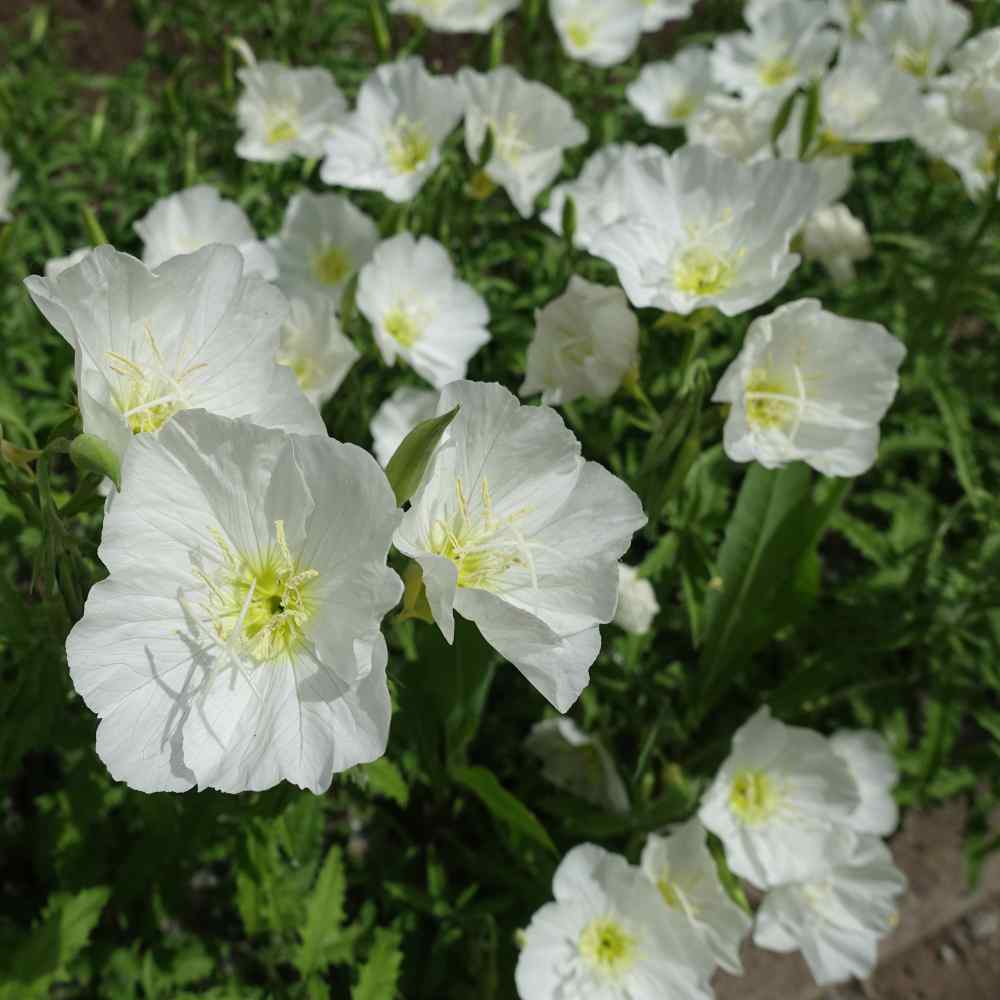
Pale Evening Primrose (Oenothera pallida) is a beautiful native perennial known for its elegant creamy white to pale yellow blossoms that open in the evening and often glow softly in the fading light. The satiny flowers, accented by bright golden stamens, appear in abundance from late spring through summer, creating a luminous display that attracts both daytime pollinators and nocturnal moths. With its graceful habit, drought tolerance, and long bloom period, Pale Evening Primrose is an excellent choice for native gardens, xeriscapes, rock gardens, and naturalized landscapes.
Growing into neat clumps approximately 12 to 24 inches tall, this hardy wildflower produces slender flowering stems above attractive lance-shaped foliage. The flowers often remain open through the cool morning hours before closing during the heat of the day, only to be replaced by fresh blossoms the following evening. Its understated elegance and exceptional adaptability make it a valuable addition to both formal perennial borders and informal meadow plantings.
Garden Uses
Pale Evening Primrose is ideal for native plant gardens, prairie restorations, pollinator gardens, rock gardens, dry borders, cottage gardens, xeriscapes, and naturalized landscapes. Its soft flower color blends beautifully with both bold and pastel flowering perennials.
The creamy blooms pair especially well with purple coneflowers, gaillardia, liatris, blue salvia, lavender, penstemon, yarrow, black-eyed Susans, ornamental grasses, and other drought-tolerant native wildflowers. Its graceful flowers also make attractive additions to informal cut flower arrangements.
Growing Information
Pale Evening Primrose thrives in full sun and prefers well-drained sandy, gravelly, or rocky soils. It tolerates average garden soil provided drainage is excellent and performs exceptionally well in dry conditions once established. Mature plants generally reach 12 to 24 inches tall with a spread of 12 to 24 inches.
Sow seeds outdoors in fall or spring, or start indoors 6 to 8 weeks before transplanting. Cover seeds lightly with soil and maintain consistent moisture until germination, which generally occurs within 10 to 21 days. Plants establish readily and may begin flowering during their first growing season under favorable conditions.
Once established, Pale Evening Primrose requires very little care. Water occasionally during extended drought but avoid overly wet conditions. Plants may slowly spread by seed or short rhizomes, forming attractive colonies over time without becoming difficult to manage.
| Quick Facts | |
|---|---|
| Botanical Name | Oenothera pallida |
| Common Name | Pale Evening Primrose |
| Plant Type | Hardy native perennial |
| Height | 12-24 inches |
| Spread | 12-24 inches |
| Bloom Color | Creamy white to pale yellow |
| Bloom Season | Late spring through summer |
| Light Requirements | Full sun |
| Water Needs | Low once established |
| Soil Type | Well-drained sandy, rocky, or gravelly soil |
| USDA Zones | 4-8 |
| Drought Tolerant | Excellent |
| Pollinator Friendly | Outstanding |

Contact Us | Privacy Policy | About Us
Serving gardeners since 1992
State of Mississippi Seedmen's Permit #C-391, Ohio 90152, Minnesota 20086777