
Parsnip Seeds
Parsnips, popular with ancient Greeks and Romans, were brought over to the Americas with the first colonists. Although parsnips are biennials, they are usually grown as an annual vegetable. Parsnips are a hardy, cool-season crop that is best harvested after a hard frost. Parsnips are not only tasty in soups and stews, but can also be enjoyed by themselves.
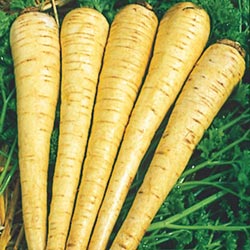
The large roots resemble pale carrots but offer a richer, more complex flavor that combines hints of carrot, celery, parsley, and sweet spices. Parsnips are widely used in soups, stews, casseroles, roasted vegetable dishes, purees, and traditional holiday meals. Roasting particularly enhances their natural sweetness, making them a favorite among gardeners and chefs alike.
In addition to their culinary appeal, parsnips are highly nutritious and easy to store. The roots can remain in the garden through much of the winter in many regions, allowing gardeners to harvest fresh vegetables long after most crops have finished for the season.
All American Parsnip is known for producing large, smooth, uniform roots with excellent flavor and dependable yields. Its ability to thrive in cool weather and improve in taste after frost has made it a favorite among homesteaders, survival gardeners, and vegetable enthusiasts.
Uses and Benefits- Produces large, sweet, creamy-white roots.
- Flavor improves after cool weather and light frost.
- Excellent roasted, baked, mashed, or added to soups and stews.
- Highly nutritious root vegetable.
- Excellent storage crop.
- Can remain in the garden through winter in many climates.
- Ideal for homestead and self-sufficiency gardens.
- Easy to grow in loose, fertile soil.
- Reliable producer of uniform roots.
- Excellent cool-season crop.
- Suitable for raised beds and deep containers.
- Traditional heirloom vegetable.
All American Parsnip is grown as a cool-season vegetable in USDA Zones 2-9.
Germination Instructions- Sow seeds directly outdoors as soon as soil can be worked in spring.
- Parsnips do not transplant well and should be direct sown.
- Plant seeds approximately 1/2 inch deep.
- Maintain soil temperatures between 50-75°F (10-24°C).
- Keep soil consistently moist during germination.
- Seeds typically germinate in 14-28 days.
- Use fresh seed whenever possible for best germination.
- Thin seedlings to allow proper root development.
- Plant in full sun.
- Prefers deep, loose, stone-free soil.
- Avoid fresh manure, which may cause root forking.
- Maintain consistent moisture for best root quality.
- Harvest after frost for maximum sweetness.
- Excellent for fall and winter gardens.
- Can be left in the ground and harvested as needed during cool weather.
Parsnips can be grown successfully in containers, but because they develop long taproots, container depth is critical. Choose a container at least 24-30 inches deep with loose, well-drained growing media. Shallow containers often produce short, misshapen roots, while deep containers allow the roots to develop properly. Large patio planters, deep raised beds, and tall containers are best suited for growing quality parsnips.
Combining excellent flavor, outstanding storage qualities, cold tolerance, and nutritional value, All American Parsnip is one of the finest root vegetables for home gardens. Whether grown for roasting, soups, winter storage, or self-sufficiency gardening, this heirloom favorite provides dependable harvests and delicious roots year after year.

Contact Us | Privacy Policy | About Us
Serving gardeners since 1992
State of Mississippi Seedmen's Permit #C-391, Ohio 90152, Minnesota 20086777