
Platycodon Seed ( Perennial )
The balloon flower is a hardy plant that is able to grow in both dry climates as well as cold climates. Typically, they can be found in growing zones three through nine, which covers the majority of the United States. When properly cared for, most varieties of balloon flowers will grow to be about two feet tall and about one foot wide, though dwarf varieties tend to be about half that size. The plant will begin blooming during late July or early August.
These plants are non-aggressive, which means that you can plant them in your garden without worrying that they are going to take over the other plants. In addition to making your garden beautiful and vibrant, the leaves can be crushed and used as a supplement that can have several health benefits. However, the leaves at the base of the plant are said to be slightly toxic, so only the top leaves should be used in culinary dishes.
Watch for the balloon flowers to sprout in the spring. This plant does best in partial sun or full sun and in well-drained soil.
Apply a complete plant food after new growth appears. If granular plant food is used, water the balloon flower after application.
Water the plant regularly but be careful not to overwater it. Root rot can occur if the soil is too moist.
Use plant stakes or circles to support taller varieties of balloon flowers. Leave the stakes in place at the end of the season to mark the location of the plant. They die down completely at the end of the growing season and their foliage can be mistaken for a weed.
Deadhead the individual balloon flowers after the blossoms fade to encourage new growth. Cut off the whole top of the stem after several blossoms have faded, to encourage repeat blooming.
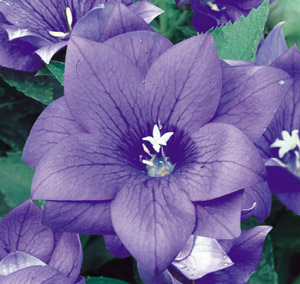
Double Blue Balloon Flower (Platycodon grandiflorus) is a charming perennial favorite known for its inflated balloon-like buds that slowly open into rich blue, double, star-shaped blooms. The unusual buds are often just as decorative as the flowers themselves, giving the plant a long season of interest in borders, cottage gardens, rock gardens, and container plantings. Its compact habit, clean foliage, and vivid blue coloring make it especially valuable for adding cool tones to sunny perennial beds.
Garden Uses
Double Blue Balloon Flower is excellent for perennial borders, mixed flower beds, edging, rock gardens, cottage gardens, and decorative containers. Its upright but tidy habit makes it easy to combine with coreopsis, yarrow, echinacea, gaillardia, dianthus, and other summer-blooming perennials. The deep blue flowers are particularly useful where a gardener wants contrast against yellow, white, pink, or orange flowers.
Growing Information
Sow seeds indoors 8 to 10 weeks before the last expected frost, pressing the seed lightly into the surface of the growing medium, as light can help germination. Keep moist but not soggy at about 65 to 70 degrees. Germination may be somewhat slow and uneven, often taking 14 to 30 days. Transplant seedlings carefully after frost danger has passed, as balloon flower develops a fleshy root system and does not appreciate rough handling once established.
Plants prefer full sun to light shade and well-drained garden soil. Once established, they are fairly drought tolerant and low maintenance. Avoid overly rich soil or excessive fertilizer, which can encourage floppy growth. Deadheading may help extend bloom, though seed pods can also be left for natural interest.
Quick Facts
| Botanical Name | Platycodon grandiflorus |
| Common Name | Double Blue Balloon Flower |
| Plant Type | Perennial |
| Flower Color | Blue to violet-blue |
| Bloom Season | Summer |
| Height | 18 to 24 inches |
| Spread | 12 to 18 inches |
| Light | Full sun to light shade |
| Soil | Well-drained garden soil |
| Water Needs | Moderate; drought tolerant once established |
| Uses | Borders, containers, rock gardens, cottage gardens, cut flowers |
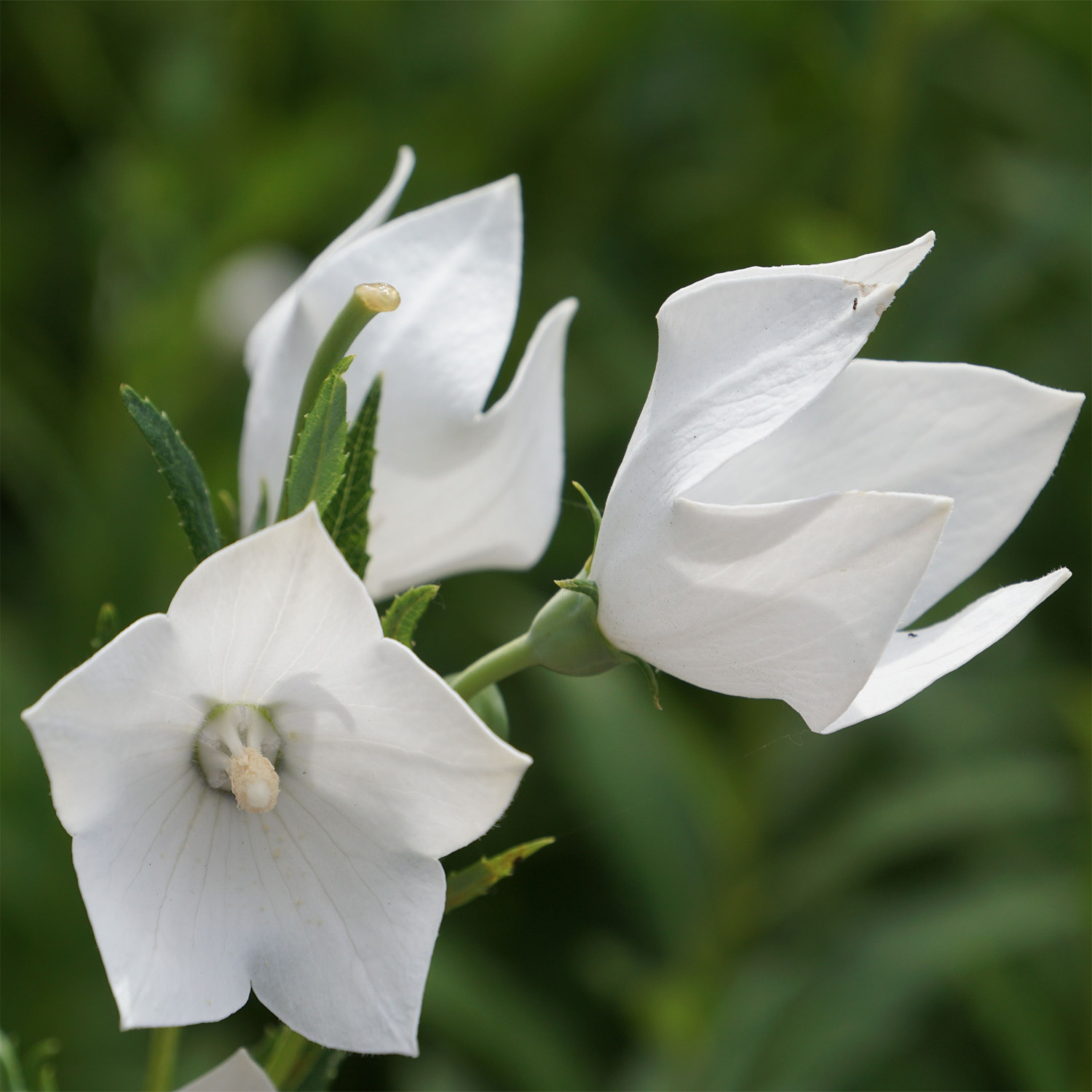
White Balloon Flower (Platycodon grandiflorus White) is a graceful perennial prized for its pure white, star-shaped flowers that emerge from distinctive balloon-like buds. The inflated buds slowly expand before bursting open into elegant five-pointed blooms that brighten the summer garden. Its compact growth habit, dark green foliage, and long blooming season make it an excellent choice for perennial borders, cottage gardens, rock gardens, and decorative containers.
Garden Uses
White Balloon Flower is ideal for mixed perennial borders, cottage gardens, edging, rock gardens, patio containers, and moon gardens where its bright white flowers remain visible even in the evening. The blooms pair beautifully with blue salvia, lavender, purple coneflowers, coreopsis, yarrow, dianthus, and ornamental grasses. They also make attractive, long-lasting cut flowers for fresh bouquets.
Growing Information
Start seeds indoors approximately 8 to 10 weeks before the last expected spring frost. Sow seeds on the surface of a moist seed-starting mix and press them lightly into the soil, as light improves germination. Maintain temperatures between 65° and 70°F while keeping the soil evenly moist. Germination generally occurs in 14 to 30 days.
Transplant seedlings outdoors after all danger of frost has passed. Plant in full sun to partial shade in fertile, well-drained soil. Space plants 12 to 18 inches apart. Balloon Flowers develop thick, fleshy roots and dislike transplanting once established, so choose their permanent location carefully. Water regularly during the first growing season, then only during extended dry periods.
Quick Facts
| Characteristic | Details |
|---|---|
| Botanical Name | Platycodon grandiflorus White |
| Common Name | White Balloon Flower |
| Plant Type | Hardy Perennial |
| Flower Color | Pure White |
| Bloom Time | Mid to Late Summer |
| Height | 18–24 inches |
| Spread | 12–18 inches |
| Sun Exposure | Full Sun to Partial Shade |
| Soil Requirements | Average, fertile, well-drained soil |
| Water Requirements | Moderate |
| USDA Zones | 3–8 |
| Garden Uses | Borders, cottage gardens, containers, rock gardens, cut flowers, moon gardens |

Contact Us | Privacy Policy | About Us
Serving gardeners since 1992
State of Mississippi Seedmen's Permit #C-391, Ohio 90152, Minnesota 20086777