
Safflower Seeds
Life Cycle: Hardy annual.
Height: 30 to 36 inches (75 to 92 cm).
Native: Mediterranean.
Growing Zone: Zones 3 to 9.
Flowers: Summer.
Sow Outdoors: 1/4 inch. Early spring before last frost or late autumn. Spacing 6 to 10 inches.
Sow Indoors: Peat pots. Germination time: one to two weeks. Temperature 60 to 70°F. Seven or eight weeks before expected last frost. Transplant outdoors following the last frost.
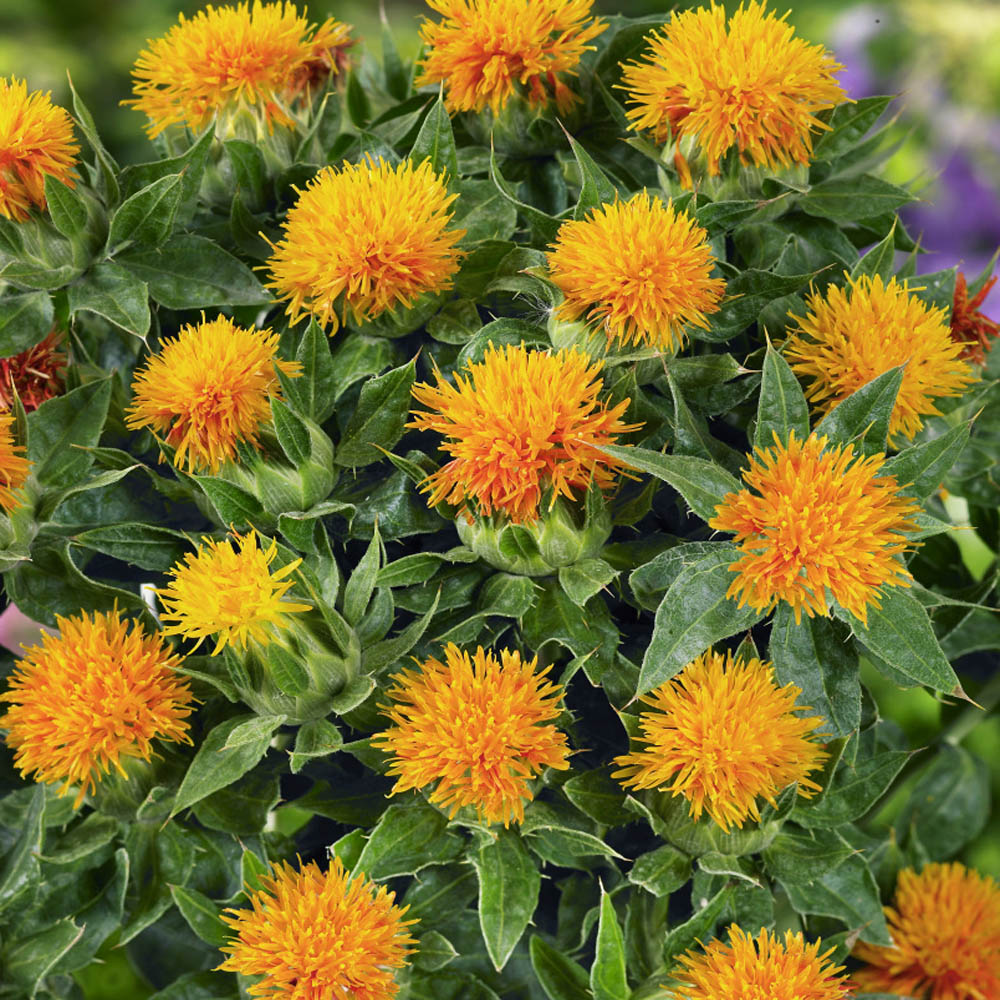
The spiny, thistle-like foliage provides dramatic texture, while the colorful flowers attract bees, butterflies, and other beneficial insects. As the blooms mature, they create a vibrant display that lasts for weeks and can also be harvested for dried floral arrangements.
Uses- Produces bright orange-yellow flowers for ornamental gardens.
- Excellent cut flower and dried flower material.
- Flowers attract bees, butterflies, and beneficial pollinators.
- Seeds are used for bird feed and oil production.
- Historically grown as a natural dye plant.
- Outstanding choice for drought-tolerant and xeriscape gardens.
Safflower can be successfully grown in large containers provided sufficient root space is available. Choose a container at least 14–18 inches deep and wide to accommodate the plant's strong taproot. Use a well-draining potting mix and place the container in full sun.
Once established, Safflower is highly tolerant of heat and dry conditions. Water regularly during early growth, then reduce watering frequency as plants mature. Good drainage is essential, as overly wet soil can lead to poor growth.
The upright growth habit and colorful flowers make Safflower an eye-catching specimen for sunny patios and container gardens.
Germination Instructions- Sow seeds directly into containers or garden soil after danger of frost has passed.
- Plant seeds ½ to 1 inch deep.
- Maintain soil temperatures between 60–75°F for best germination.
- Keep soil lightly moist until seedlings emerge.
- Seeds typically germinate in 7–14 days.
- Thin seedlings to allow adequate spacing and airflow.
- Botanical Name: Carthamus tinctorius
- Common Name: Safflower
- Plant Type: Annual Flowering Herb
- Height: 24–48 inches
- Spread: 12–24 inches
- Sun Exposure: Full Sun
- Water Requirements: Low to Moderate
- Soil: Well-draining soil
- Container Size: 14–18 inches minimum depth and width
- Days to Bloom: Approximately 90–120 days
Flowers may be harvested when fully open for fresh arrangements or cut and dried for long-lasting displays. Allow seed heads to mature and dry on the plant if seed collection is desired.
Dried flowers retain much of their vibrant color and are frequently used in dried bouquets and decorative crafts. Seeds can be harvested once flower heads have completely dried.
Why Grow Safflower?Few annuals combine beauty, usefulness, and drought tolerance as effectively as Safflower. Its brilliant flowers, pollinator appeal, historical significance, and adaptability to container culture make it a rewarding plant for gardeners seeking something both ornamental and practical. Whether grown for flowers, seeds, or simply for its cheerful display, Safflower is a standout addition to sunny gardens and patio containers.

Contact Us | Privacy Policy | About Us
Serving gardeners since 1992
State of Mississippi Seedmen's Permit #C-391, Ohio 90152, Minnesota 20086777