
African Tulip Tree Seeds
_in_Funchal,_january_2017.jpg)
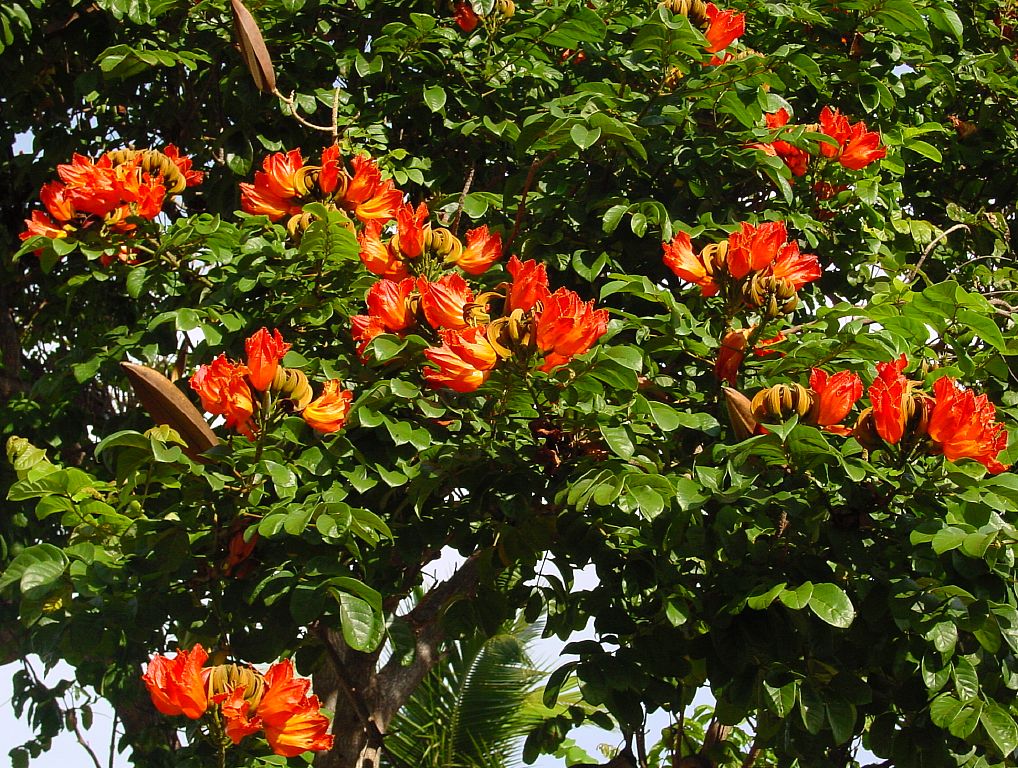
African Tulip Tree is one of the most spectacular flowering trees found in tropical and subtropical landscapes. Native to tropical Africa, this fast-growing ornamental species is renowned for its enormous clusters of brilliant orange-red flowers that create a dazzling display visible from great distances.
Mature trees typically reach 40 to 80 feet in height and develop a broad, rounded canopy that provides generous shade. The glossy dark green foliage forms an attractive backdrop that makes the vivid flowers appear even more brilliant.
The large tulip-shaped blossoms are among the most distinctive flowers produced by any tree. During peak bloom, entire branches may become covered with fiery orange and scarlet flower clusters, transforming the tree into a living flame of color.
As a specimen lawn tree, African Tulip Tree creates one of the most dramatic flowering displays available for warm-climate landscapes.
African Tulip Tree grows rapidly and develops a broad canopy. Plant where its spectacular bloom display can be viewed from a distance and where mature growth can be accommodated.
Germination Information- Sow seeds on the soil surface or lightly cover.
- Use a well-drained seed-starting mix.
- Maintain temperatures between 75-85°F.
- Keep evenly moist.
- Provide bright light.
- Germination generally occurs within 2-6 weeks.
- Botanical Name: Spathodea campanulata
- Plant Type: Tropical Flowering Tree
- USDA Zones: 10-12
- Sun Exposure: Full Sun
- Mature Height: 40-80 Feet
- Mature Spread: 30-60 Feet
- Growth Rate: Fast
- Soil Preference: Well-drained soils
- Water Requirements: Moderate
African Tulip Tree thrives in warm climates with abundant sunshine. Once established, it tolerates seasonal dry periods while continuing to provide impressive flowering displays.
Container GrowingYoung plants may be grown in large containers for several years, but their rapid growth eventually requires permanent planting in the landscape.
Its brilliant floral display has earned it numerous common names, including Flame of the Forest, Fireball Tree, Fountain Tree, and Scarlet Bell Tree.
Today it remains one of the most admired flowering trees in tropical horticulture.
When viewed during peak bloom, a mature African Tulip Tree can appear as though it is on fire with color. The massive clusters of scarlet-orange blossoms rise above the canopy like glowing torches, creating a display that rivals many of the world's most famous flowering trees. For sheer visual impact, few tropical species can equal the unforgettable beauty of African Tulip Tree.
For additional growing details, see our African Tulip Tree Seeds AI fact sheet.
For over a thousand more unique seed varieties, all in stock and ready to ship, visit our Seed Catalog Index Page .

Contact Us | Privacy Policy | About Us
Serving gardeners since 1992
State of Mississippi Seedmen's Permit #C-391, Ohio 90152, Minnesota 20086777