
Ocotopus Agave Seeds
★★★★★ Architectural Succulent Rating: 5 out of 5 Stars
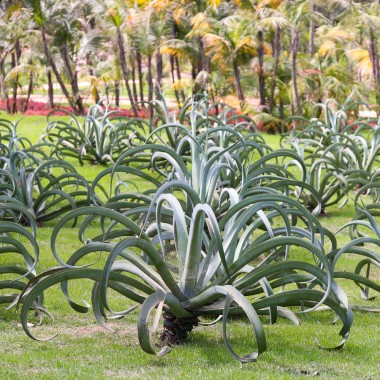
Octopus Agave is one of the most unusual and graceful members of the Agave family. Unlike the rigid, heavily armed leaves found on many agaves, this remarkable species produces long, twisting, spineless leaves that arch and curl outward in all directions, creating the appearance of a giant green octopus frozen in motion.
Native to northwestern Mexico, Octopus Agave is highly prized for its dramatic architectural form, drought tolerance, and ease of cultivation. Its soft, flowing appearance provides a striking contrast to the bold geometry of most desert plants, making it a favorite among landscape designers and collectors of unusual succulents.
Whether planted as a specimen or incorporated into xeriscape gardens, Octopus Agave creates an unforgettable focal point.
Plant Characteristics- Botanical Name: Agave vilmoriniana
- Common Names: Octopus Agave, Vilmorin's Agave
- Plant Type: Evergreen succulent
- Mature Height: 3 to 5 feet
- Mature Width: 5 to 8 feet
- Growth Rate: Moderate to fast
- USDA Zones: 8b to 11
- Foliage Color: Blue-green to gray-green
- Leaf Characteristics: Long, twisting, nearly spineless leaves
Octopus Agave is ideal for xeriscape gardens, desert landscapes, Mediterranean gardens, rock gardens, succulent collections, and modern architectural plantings.
Its flowing form provides an elegant contrast to cacti, yuccas, boulders, and rigid desert plants.
Excellent as a specimen plant where its unique shape can be fully appreciated.
Germination InformationAgave seeds germinate readily under warm conditions.
- Sow seeds on the surface of a well-drained cactus mix.
- Lightly cover with fine sand or grit.
- Maintain temperatures between 70 and 85°F.
- Keep evenly moist but never saturated.
- Provide bright indirect light.
- Germination typically occurs within 1 to 4 weeks.
Octopus Agave thrives in full sun and exceptionally well-drained soils.
Once established, plants exhibit excellent drought tolerance and require very little supplemental irrigation.
Avoid poorly drained sites, especially during winter months.
Plants develop their best form when given adequate space to spread naturally.
Container GrowingOctopus Agave performs exceptionally well in large containers and decorative planters.
Its sculptural appearance makes it a favorite for patios, courtyards, and poolside displays.
Use a fast-draining cactus or succulent soil mix for best results.
Pollinator ValueMature plants eventually produce spectacular flowering stalks that attract bees, hummingbirds, butterflies, and numerous beneficial pollinators.
The flowers provide an important nectar source in arid environments.
Wildlife ValueThe towering flower spikes provide food resources for pollinators and nectar-feeding birds.
The plant contributes to biodiversity in drought-tolerant landscapes.
Historical and Cultural FactsOctopus Agave is native to Sonora and Sinaloa in northwestern Mexico.
The species was named in honor of French horticulturist Maurice de Vilmorin, a member of the famous Vilmorin seed and plant family.
Its unusual growth habit has made it one of the most recognizable agaves cultivated worldwide.
Botanical Facts- Member of the Asparagaceae family.
- Unlike many agaves, the leaves are largely spineless.
- Produces one of the most graceful forms in the genus.
- Monocarpic—plants flower once and then gradually decline.
- Often produces numerous bulbils on the flower stalk.
- Widely regarded as one of the most ornamental agave species.
Mature plants eventually produce a spectacular flower stalk that may reach 12 to 20 feet tall.
The yellow-green flowers appear in large clusters and attract numerous pollinators.
Following flowering, plants often produce hundreds of small plantlets known as bulbils, allowing easy propagation.
Drought ToleranceOnce established, Octopus Agave is highly drought tolerant and well-suited to water-wise landscapes.
Its ability to thrive with minimal irrigation makes it valuable in regions prone to drought.
Seedman's NoteOctopus Agave is one of those plants that visitors immediately notice. Its flowing, twisting leaves create movement and elegance rarely seen among succulents.
Additional Seedman's NoteIf you're looking for an agave that breaks the stereotype of stiff, spiny desert plants, Octopus Agave is an outstanding choice. Its graceful form, low maintenance requirements, and architectural beauty make it one of the finest ornamental agaves available from seed.
For over a thousand more unique seed varieties, all in stock and ready to ship, visit our Seed Catalog Index Page .

Contact Us | Privacy Policy | About Us
Serving gardeners since 1992
State of Mississippi Seedmen's Permit #C-391, Ohio 90152, Minnesota 20086777