
Queen Agave Seeds
★★★★★ Collector's Agave Rating: 5 out of 5 Stars
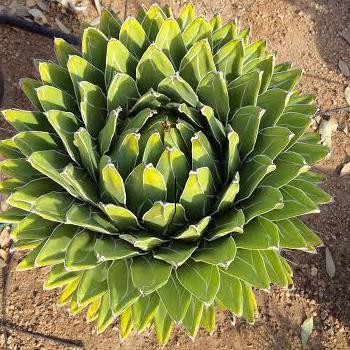
Queen Agave is widely regarded as one of the most beautiful and elegant agaves in the world. Distinguished by its perfectly symmetrical rosette and striking white markings that outline each leaf, this extraordinary species appears almost hand-crafted rather than naturally grown.
Native to the rugged limestone mountains of northeastern Mexico, Queen Agave combines remarkable architectural beauty with exceptional drought tolerance and longevity. Its compact size, geometric perfection, and dramatic contrast between dark green foliage and bright white leaf margins have made it one of the most sought-after agaves among collectors, botanical gardens, and landscape designers.
Few succulents possess the refined beauty and sculptural presence of this magnificent species.
Plant Characteristics- Botanical Name: Agave victoriae-reginae
- Common Names: Queen Agave, Royal Agave, Queen Victoria Agave
- Plant Type: Evergreen succulent
- Mature Height: 1 to 2 feet
- Mature Width: 1.5 to 3 feet
- Growth Rate: Slow
- USDA Zones: 8 to 11
- Foliage Color: Deep green with brilliant white markings
- Leaf Characteristics: Thick triangular leaves arranged in a near-perfect rosette
Queen Agave is ideal for succulent collections, xeriscape gardens, rock gardens, container displays, desert landscapes, courtyard gardens, and modern architectural plantings.
Its compact size makes it especially valuable where larger agaves would overwhelm the landscape.
Often used as a specimen plant where its symmetry can be fully appreciated.
Germination InformationSeeds germinate readily when provided warmth and proper drainage.
- Sow seeds on the surface of a well-drained cactus mix.
- Lightly cover with fine sand or grit.
- Maintain temperatures between 70 and 85°F.
- Keep evenly moist but not saturated.
- Provide bright indirect light.
- Germination generally occurs within 1 to 4 weeks.
Queen Agave thrives in full sun to light shade and requires exceptionally well-drained soil.
Once established, plants are highly drought tolerant and require very little supplemental irrigation.
Overwatering is one of the few common causes of failure.
The plant's compact form develops most beautifully when grown in bright light with excellent air circulation.
Container GrowingQueen Agave is one of the finest agaves for container culture.
Its compact size and near-perfect symmetry make it ideal for decorative pots, succulent displays, patios, and courtyards.
Use a fast-draining cactus mix and containers with excellent drainage.
Pollinator ValueMature plants eventually produce flowering stalks that attract bees, butterflies, hummingbirds, and numerous beneficial pollinators.
The flowers provide valuable nectar resources in arid environments.
Wildlife ValueFlowering plants support pollinator populations and contribute to biodiversity within drought-tolerant landscapes.
The flowers often attract a wide variety of nectar-feeding insects.
Historical and Cultural FactsQueen Agave was named in honor of Queen Victoria of Great Britain, reflecting the plant's regal appearance and exceptional beauty.
The species has been admired by collectors since the nineteenth century and remains one of the most coveted ornamental agaves in cultivation.
Its naturally occurring symmetry has fascinated botanists, artists, and gardeners for generations.
Botanical Facts- Member of the Asparagaceae family.
- Native to limestone cliffs and rocky canyons of Mexico.
- Develops one of the most symmetrical rosettes in the plant kingdom.
- Distinctive white leaf markings are unique among agaves.
- Monocarpic—flowers once before gradually declining.
- Among the most collectible and valuable ornamental agaves.
Mature plants eventually produce a stout flowering stalk that may reach 10 to 15 feet tall.
The creamy-white flowers attract numerous pollinators and typically appear after many years of growth.
Flowering generally occurs only after the plant has reached full maturity.
Drought ToleranceOnce established, Queen Agave exhibits exceptional drought tolerance.
Its thick succulent leaves efficiently store water, allowing it to thrive in harsh, arid environments.
The species is particularly well-suited to water-wise and xeriscape landscapes.
Seedman's NoteQueen Agave is often considered the finest ornamental agave ever introduced into cultivation. Its remarkable symmetry and elegant white markings make it a true living sculpture.
Additional Seedman's NoteIf you're searching for a collector-quality succulent that combines beauty, durability, and architectural perfection, Queen Agave is an outstanding choice. Few plants command attention so effortlessly or reward patience so completely.
For over a thousand more unique seed varieties, all in stock and ready to ship, visit our Seed Catalog Index Page .

Contact Us | Privacy Policy | About Us
Serving gardeners since 1992
State of Mississippi Seedmen's Permit #C-391, Ohio 90152, Minnesota 20086777