
Torch Aloe Seeds
★★★★★ Flowering Landscape Aloe Rating: 5 out of 5 Stars
Torch Aloe is one of the most widely cultivated and admired aloe species in the world. Native to southern Africa, this vigorous succulent is prized for its spectacular winter flower displays, ease of cultivation, and remarkable adaptability to a wide range of growing conditions.
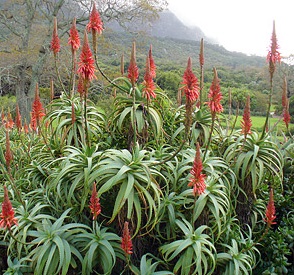
Unlike many solitary aloes, Torch Aloe naturally forms large multi-headed clumps of arching gray-green foliage. During winter and early spring, mature plants erupt into brilliant displays of fiery red, orange-red, or occasionally yellow flower spikes that rise above the foliage like flaming torches, giving rise to the plant's common name.
Its reliability, beauty, and wildlife value have made Torch Aloe a cornerstone of drought-tolerant gardens throughout warm regions of the world.
Plant Characteristics- Botanical Name: Aloe arborescens
- Common Names: Torch Aloe, Candelabra Aloe, Krantz Aloe
- Plant Type: Evergreen succulent shrub
- Mature Height: 6 to 10 feet
- Mature Width: 6 to 12 feet
- Growth Rate: Moderate to fast
- USDA Zones: 9 to 11
- Foliage Color: Gray-green to blue-green
- Flower Color: Scarlet red, orange-red, or yellow
Torch Aloe is ideal for xeriscape gardens, Mediterranean landscapes, succulent collections, hillside plantings, wildlife gardens, coastal gardens, and large specimen displays.
Its dense clumping habit makes it useful for erosion control and dramatic mass plantings.
Mature specimens create year-round architectural interest even when not in bloom.
Germination InformationSeeds germinate readily when provided warmth and proper moisture.
- Sow seeds on the surface of a well-drained cactus mix.
- Lightly cover with fine sand.
- Maintain temperatures between 70 and 85°F.
- Keep evenly moist but not saturated.
- Provide bright indirect light.
- Germination typically occurs within 2 to 6 weeks.
Torch Aloe thrives in full sun and well-drained soil.
Once established, it exhibits excellent drought tolerance and requires little supplemental irrigation.
The species is remarkably adaptable and performs well in a variety of soil types provided drainage is adequate.
Plants benefit from occasional removal of old flower stalks and aging leaves.
Container GrowingYoung plants perform very well in containers and decorative succulent planters.
Larger specimens eventually require substantial containers or landscape planting due to their clumping growth habit.
Use a fast-draining cactus mix and avoid overwatering.
Pollinator ValueTorch Aloe is among the finest pollinator plants available for warm climates.
The nectar-rich flowers attract hummingbirds, bees, butterflies, and numerous beneficial insects.
Blooming often occurs during winter when few other nectar sources are available.
Wildlife ValueThe abundant flowers provide critical food resources for nectar-feeding birds and pollinators.
Dense clumps may also offer shelter for small wildlife and beneficial insects.
The species plays an important ecological role in its native habitat.
Historical and Cultural FactsTorch Aloe is native to South Africa, Mozambique, Malawi, and Zimbabwe.
For centuries it has been cultivated near homes and villages for ornamental and traditional medicinal purposes.
It is one of the oldest aloe species grown ornamentally outside Africa.
The species name "arborescens" means "tree-like," referring to its shrubby growth habit.
Botanical Facts- Member of the Asphodelaceae family.
- Forms large multi-headed clumps rather than solitary rosettes.
- One of the most cold-tolerant large aloe species.
- Produces spectacular winter flower displays.
- Closely related to Aloe vera and other medicinal aloes.
- One of the most widely planted ornamental aloes worldwide.
Mature plants produce numerous upright flower spikes that rise above the foliage.
Each flower spike contains hundreds of tubular blossoms that provide nectar over an extended period.
Blooming typically occurs during winter and early spring.
Large clumps in full bloom create some of the most spectacular displays in the succulent world.
Drought ToleranceOnce established, Torch Aloe exhibits exceptional drought tolerance.
Its thick succulent leaves efficiently store water, allowing the plant to thrive during extended dry periods.
The species is highly valued in water-wise landscapes and xeriscape gardens.
Medicinal HistoryThroughout southern Africa, Torch Aloe has long been used in traditional herbal practices.
Like many aloe species, it contains compounds historically valued for a variety of medicinal purposes.
Its traditional use helped spread cultivation throughout many regions of Africa.
Seedman's NoteTorch Aloe is one of the most dependable and rewarding aloes a gardener can grow. Its spectacular flowers, wildlife value, and easy-care nature make it a standout performer in any warm-climate landscape.
Additional Seedman's NoteIf you're searching for an aloe that combines dramatic winter blooms, drought tolerance, and exceptional wildlife value, Torch Aloe is hard to surpass. Its brilliant flower spikes and rugged beauty have made it a favorite among gardeners worldwide for generations.
For over a thousand more unique seed varieties, all in stock and ready to ship, visit our Seed Catalog Index Page .

Contact Us | Privacy Policy | About Us
Serving gardeners since 1992
State of Mississippi Seedmen's Permit #C-391, Ohio 90152, Minnesota 20086777