
Carob Tree Seeds
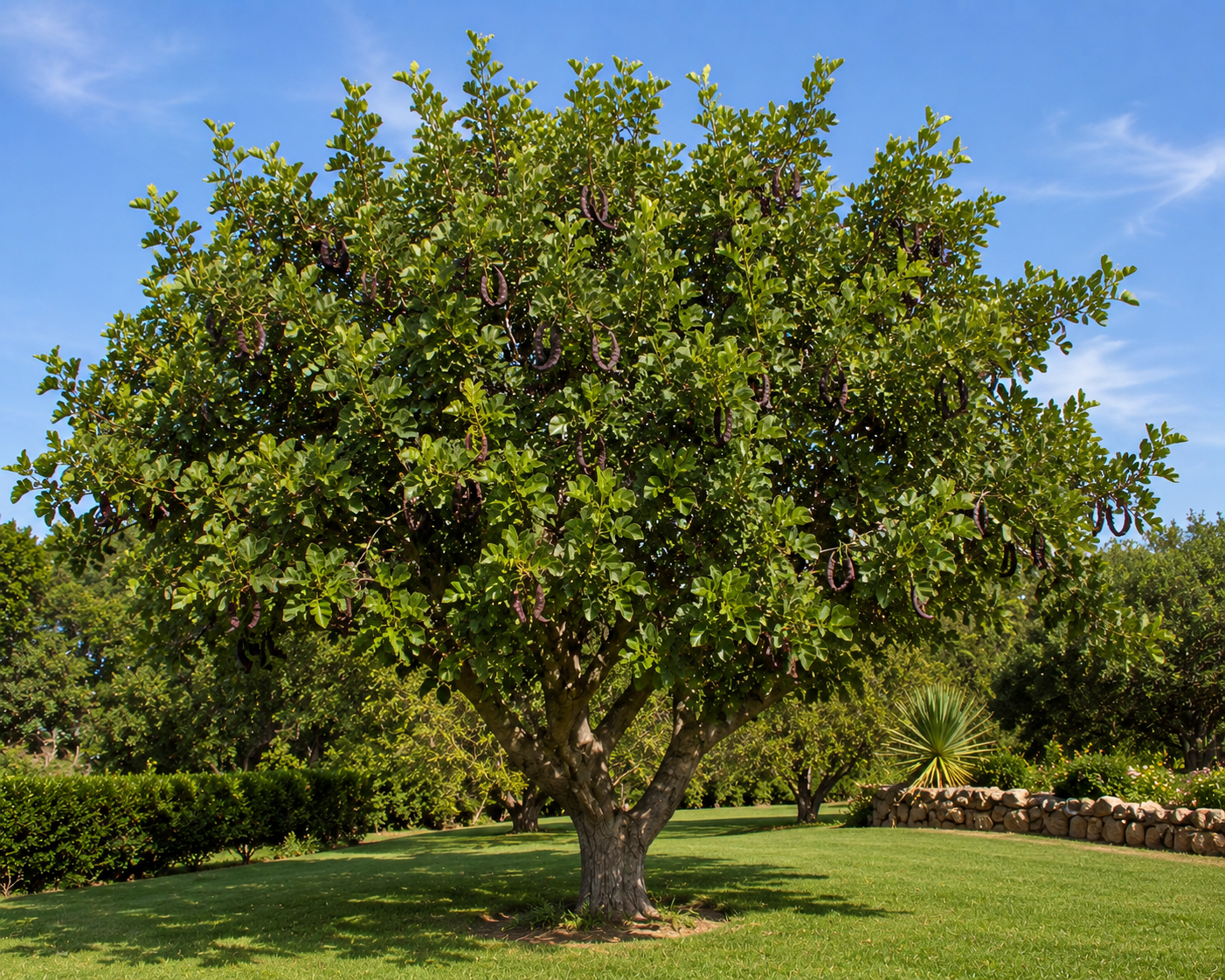
The long brown pods hanging from its branches helped sustain generations in the land of the Bible.
Across the rocky hillsides surrounding ancient villages, the Carob Tree quietly flourished where many other trees struggled to survive. Its broad evergreen canopy provided welcome shade from the Mediterranean sun, while its long, leathery seed pods offered a dependable source of nourishment during times of plenty and hardship alike. For thousands of years this remarkable tree has been cultivated throughout the Holy Land, earning a reputation as one of the most resilient and valuable food trees of the Biblical world.
Carob has long been associated with one of Christ's best-loved parables. In the story of the Prodigal Son, Jesus described a young man so desperate with hunger that he longed to eat the pods fed to the swine. Many Biblical scholars believe these pods were those of the Carob Tree, sometimes called "locust beans" or "St. John's Bread." Whether or not this was the exact species intended, the tree was certainly familiar to Jesus' audience and represented a humble but dependable source of food that sustained both people and livestock throughout the region.
Today, the Carob Tree remains one of the finest ornamental and edible trees for warm climates. Its dense, glossy evergreen foliage creates welcome shade throughout the year, while the nutritious pods are naturally sweet and have long been enjoyed as livestock feed, traditional foods, and a caffeine-free chocolate substitute. Exceptionally drought tolerant once established, Carob thrives in poor soils where many other fruit trees cannot, making it a valuable addition to Mediterranean, xeriscape, and Biblical gardens.
Planting a Carob Tree today allows gardeners to experience one of the ancient food trees that helped shape life throughout the eastern Mediterranean. Its remarkable longevity, handsome appearance, and enduring connection to the teachings of Jesus make it a meaningful addition to any Bible Garden while serving as a living reminder of God's provision even in difficult times.
Specifications
- Botanical Name: Ceratonia siliqua
- Common Name: Carob Tree
- Plant Type: Evergreen tree
- Height: 30–50 feet
- Spread: 25–40 feet
- Growth Rate: Slow to moderate
- Sun Requirements: Full sun
- Soil Preference: Well-drained soil; highly tolerant of rocky, alkaline, and poor soils
- Water Requirements: Low once established; exceptionally drought tolerant
- USDA Zones: 9–11
- Uses: Edible pods, shade tree, Biblical gardens, xeriscapes, Mediterranean landscapes, wildlife habitat
- Wildlife Value: Flowers provide nectar for pollinating insects, while pods serve as food for livestock and wildlife.
Biblical Significance
The Carob Tree has been cultivated throughout the eastern Mediterranean since ancient times and is closely associated with the agricultural world of the Bible. Many Biblical scholars believe the "husks" or pods mentioned in Jesus' Parable of the Prodigal Son were the sweet, leathery pods of the Carob Tree, although this identification cannot be stated with complete certainty. Regardless, Ceratonia siliqua was a familiar and valuable food tree throughout the region during Biblical times, making it an excellent representative of the landscapes and orchards known to the people of Scripture.
Selected Bible References
- Luke 15:16 — The Prodigal Son longs to eat the pods fed to the swine, traditionally identified by many scholars as carob pods.
Life in Biblical Times
Imagine walking along a dusty hillside path outside a Galilean village. Nearby stood broad-canopied Carob Trees whose heavy brown pods ripened beneath the warm Mediterranean sun. Shepherds rested beneath their shade while livestock eagerly fed on the fallen pods. Families gathered the sweet fruit for both human and animal use, appreciating the tree's dependable harvest even during dry years. It was this familiar sight that likely came to mind when Jesus described the desperate hunger of the Prodigal Son, making His lesson all the more vivid to those who first heard it.
Did You Know?
The seeds of the Carob Tree are remarkably uniform in weight. For centuries jewelers used them as a standard for weighing precious gemstones, giving rise to the modern unit known as the "carat."
Seedman Notes
The Carob Tree beautifully illustrates God's provision through one of the oldest cultivated food trees of the Mediterranean world. Its evergreen beauty, nutritious pods, extraordinary drought tolerance, and long association with the teachings of Jesus make it a distinctive addition to our Bible Garden collection. Whether grown for its historical importance, handsome appearance, or edible harvest, the Carob Tree offers gardeners a living connection to the orchards and hillsides of the Biblical world.
For over a thousand more unique seed varieties, all in stock and ready to ship, visit our Seed Catalog Index Page .

Contact Us | Privacy Policy | About Us
Serving gardeners since 1992
State of Mississippi Seedmen's Permit #C-391, Ohio 90152, Minnesota 20086777