
Common Olive Seeds
The first olive branch carried a message that changed the world.
As the waters of the Great Flood slowly receded, Noah released a dove from the Ark in search of dry land. When the bird returned carrying a freshly plucked olive leaf, it announced that God's judgment had ended and that new life was beginning (Genesis 8:11). That simple branch became one of history's most enduring symbols of peace, hope, and reconciliation. For thousands of years the Common Olive has represented God's provision, endurance, and blessing, making it one of the most recognizable and meaningful plants found throughout the Bible.
Long before modern nations existed, olive groves covered the hills of ancient Israel and the Mediterranean world. Families patiently cared for trees that would feed generations, often planting groves knowing they might never enjoy their full harvest themselves. Olive oil illuminated the lamps of the Tabernacle and later the Temple, anointed kings and priests, healed wounds, nourished families, and became one of the most valuable commodities in the ancient world. Few plants influenced daily life more completely than the remarkable Olive Tree.
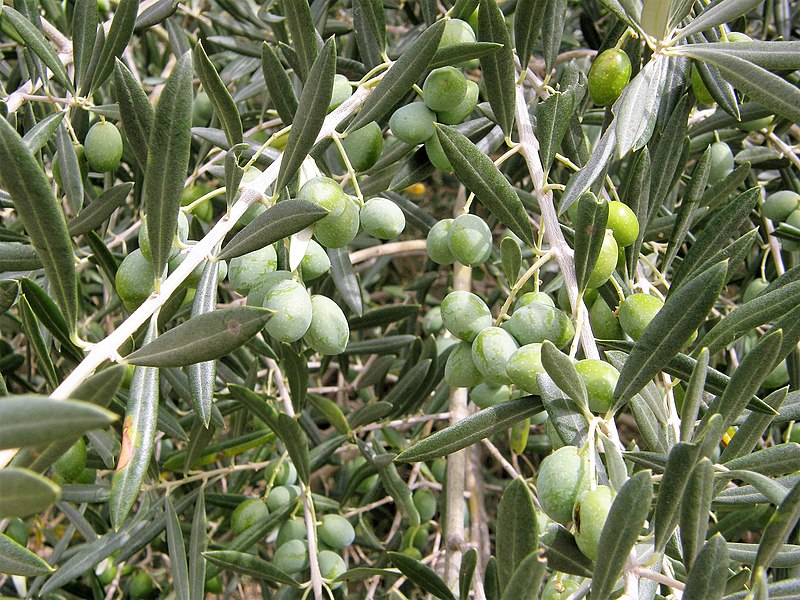
The same characteristics that made the olive indispensable more than three thousand years ago continue to make it one of the world's finest landscape trees today. Its shimmering silver-green evergreen foliage provides year-round beauty while its naturally sculptured trunk becomes increasingly gnarled and picturesque with age, eventually resembling a piece of living artwork. Once established, the Common Olive is remarkably drought tolerant, thrives in poor soils, resists heat with ease, and requires surprisingly little maintenance. Some trees continue producing fruit for many centuries, with ancient specimens still bearing crops after more than a thousand years.
Beyond its remarkable beauty, the Common Olive remains one of the world's most useful trees. The flavorful fruit can be cured for the table or pressed into fresh olive oil, while the antioxidant-rich leaves have long been appreciated for herbal teas. The fragrant spring flowers attract bees and other beneficial pollinators, and the tree's exceptional longevity makes it a gift that often outlives the gardener who plants it. Few trees combine history, symbolism, beauty, sustainability, and usefulness as completely as the timeless Common Olive.
Specifications
- Botanical Name: Olea europaea
- Common Name: Common Olive
- Plant Type: Evergreen fruit tree
- Height: 20–30 feet
- Spread: 15–30 feet
- Growth Rate: Slow to moderate
- Sun Requirements: Full sun
- Soil Preference: Well-drained soil; highly adaptable to rocky and poor soils
- Water Requirements: Low once established; highly drought tolerant
- USDA Zones: 8–10
- Uses: Fruit production, olive oil, ornamental specimen, Mediterranean gardens, Biblical gardens, drought-tolerant landscapes
- Wildlife Value: Flowers attract honeybees and other beneficial pollinators.
Biblical Significance
From Genesis through the New Testament, the Common Olive stands as one of Scripture's most meaningful plants. Olive oil illuminated the sacred lamps of the Tabernacle, anointed priests and kings, accompanied offerings, and symbolized God's blessing and the presence of the Holy Spirit. The Mount of Olives became one of Jesus' favorite places of teaching and prayer, while the Garden of Gethsemane—whose name literally means "oil press"—served as the setting for some of the most profound moments preceding His crucifixion. Throughout Scripture, the olive represents peace, faithfulness, abundance, endurance, and God's covenant with His people.
Selected Bible References
- Genesis 8:11 — Noah's dove returns carrying an olive leaf.
- Exodus 27:20 — Pure olive oil for the Tabernacle lamps.
- Deuteronomy 8:7–8 — Olive trees among the blessings of the Promised Land.
- Deuteronomy 33:24 — "Let him dip his foot in oil."
- Psalm 52:8 — "I am like a green olive tree in the house of God."
- Psalm 128:3 — Children compared to olive plants around the family table.
- Zechariah 4:3 — The vision of the two olive trees.
- Matthew 24:3 — Jesus teaches on the Mount of Olives.
- Luke 22:39–46 — Jesus prays on the Mount of Olives before His arrest.
- Romans 11:17–24 — Paul compares believers to branches grafted into an olive tree.
Life in Biblical Times
Imagine standing on a hillside outside Jerusalem during the autumn olive harvest. Entire families worked beneath ancient trees whose twisted trunks had already witnessed generations of harvests. Woven cloths were spread beneath the branches while ripe olives were carefully gathered by hand before being carried in baskets or on the backs of donkeys to the village oil press. There, massive circular stones slowly crushed the fruit into fragrant olive oil that would light homes and temples, flavor daily meals, heal wounds, anoint leaders, and become one of the region's most valuable trade goods. An olive grove was more than a crop—it was an inheritance passed from one generation to the next.
Did You Know?
Olive trees are among the longest-lived cultivated plants on Earth. Some groves growing today in the Mediterranean are believed to be well over 2,000 years old, and many ancient trees continue producing fruit despite centuries of harvests. Their extraordinary longevity has made the olive a lasting symbol of endurance, faithfulness, and peace throughout history.
Seedman Notes
When you plant a Common Olive, you are planting far more than a beautiful evergreen tree—you are continuing a tradition that stretches back thousands of years. The same tree that nourished ancient civilizations, illuminated the Temple, and became one of Scripture's greatest symbols of peace can now become part of your own landscape. Whether grown for its delicious fruit, shimmering foliage, remarkable drought tolerance, or deep Biblical significance, the Common Olive remains one of the most meaningful and rewarding trees any gardener can cultivate.
For over a thousand more unique seed varieties, all in stock and ready to ship, visit our Seed Catalog Index Page .

Contact Us | Privacy Policy | About Us
Serving gardeners since 1992
State of Mississippi Seedmen's Permit #C-391, Ohio 90152, Minnesota 20086777