
Safflower Seeds
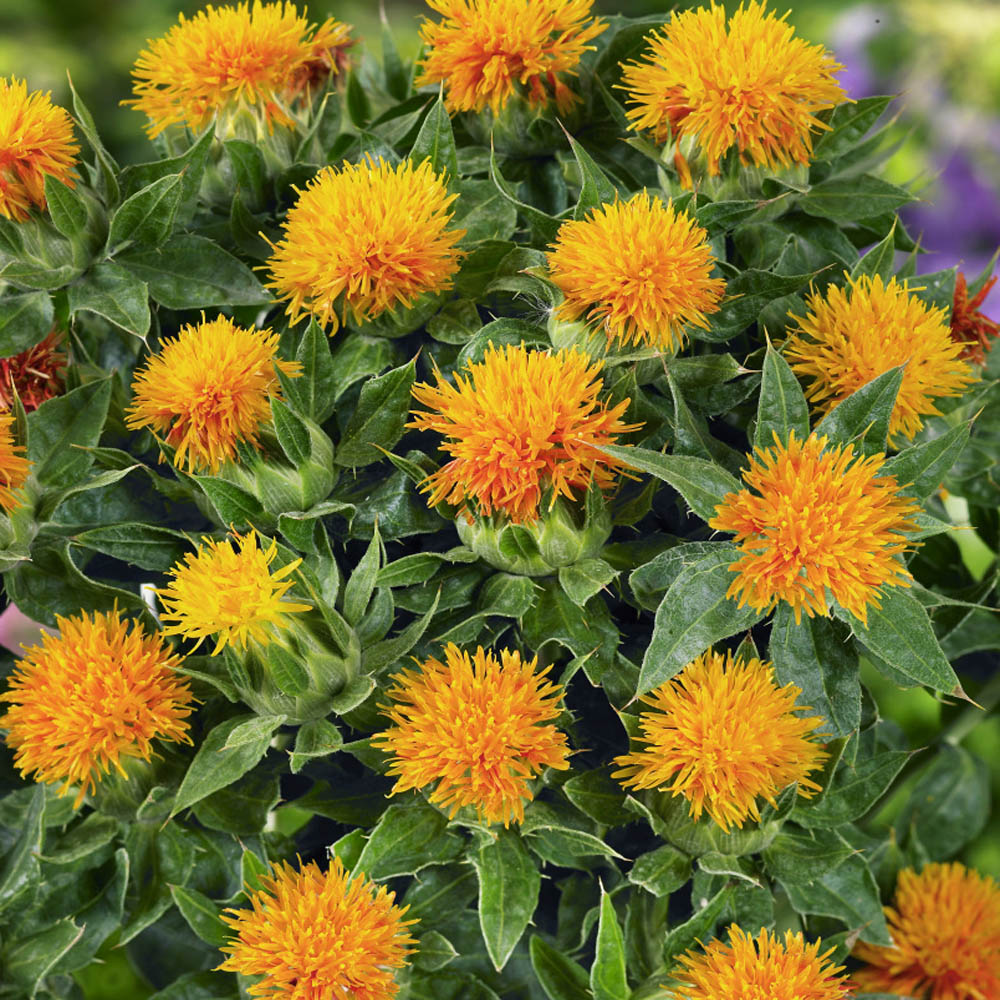
Safflower (Carthamus tinctorius) is one of the finest bird food plants a gardener can grow, producing an abundant crop of nutritious white seeds that are especially prized by many backyard songbirds. This attractive annual grows 3 to 5 feet tall with glossy green foliage and brilliant orange to deep yellow thistle-like flowers that brighten the summer garden while attracting bees and other beneficial pollinators. Long valued as both an ornamental and an ancient dye plant, Safflower has become equally respected for producing one of nature's most desirable bird seeds.
As the flower heads mature, the nutritious seeds quickly attract Northern Cardinals, Chickadees, Titmice, Mourning Doves, House Finches, Purple Finches, native sparrows, and numerous other seed-eating birds. One of Safflower's greatest advantages is that many squirrels, European Starlings, and Common Grackles show much less interest in the seeds than they do in sunflower, allowing many of your favorite backyard birds to feed with less competition. For gardeners looking to encourage colorful songbirds, Safflower is often one of the very best choices.
Safflower thrives in full sun and tolerates heat, drought, and poor soils exceptionally well once established. The spiny foliage helps protect the developing seed heads, while the brilliant flowers attract beneficial pollinating insects throughout the blooming season. Easy to grow and highly productive, it is an excellent addition to wildlife gardens, cut flower gardens, and naturalized plantings where beauty and usefulness go hand in hand.
Harvesting for Bird Food: Allow the flower heads to dry completely on the plants until the seeds become firm and the heads turn brown. Harvest by cutting the mature heads and allowing them to finish drying in a well-ventilated location before rubbing out the seeds for winter feeders. Many gardeners also leave several plants standing so birds can harvest the seed naturally throughout autumn while the remaining crop is stored for winter feeding.
Favorite Birds
- ★★★★★ Northern Cardinal
- ★★★★★ Chickadees & Titmice
- ★★★★★ House & Purple Finches
- ★★★★☆ Mourning Dove
- ★★★★☆ Native Sparrows
- ★★★★☆ White-breasted Nuthatch
Seedman Notes
Safflower has earned a loyal following among bird lovers for one simple reason—it attracts many of the birds we most enjoy watching while often drawing less attention from squirrels and some of the larger, more aggressive feeder birds. We like to harvest part of the crop for winter feeding while leaving a few seed heads standing for visiting birds. Combined with Black Oil Sunflowers, Safflower provides an outstanding one-two combination that keeps backyard feeding stations active throughout the colder months.
For over a thousand more unique seed varieties, all in stock and ready to ship, visit our Seed Catalog Index Page .

Contact Us | Privacy Policy | About Us
Serving gardeners since 1992
State of Mississippi Seedmen's Permit #C-391, Ohio 90152, Minnesota 20086777