
Blue Globe Thistle Seeds
★★★★★ Pollinator & Cut Flower Rating: 5 out of 5 Stars
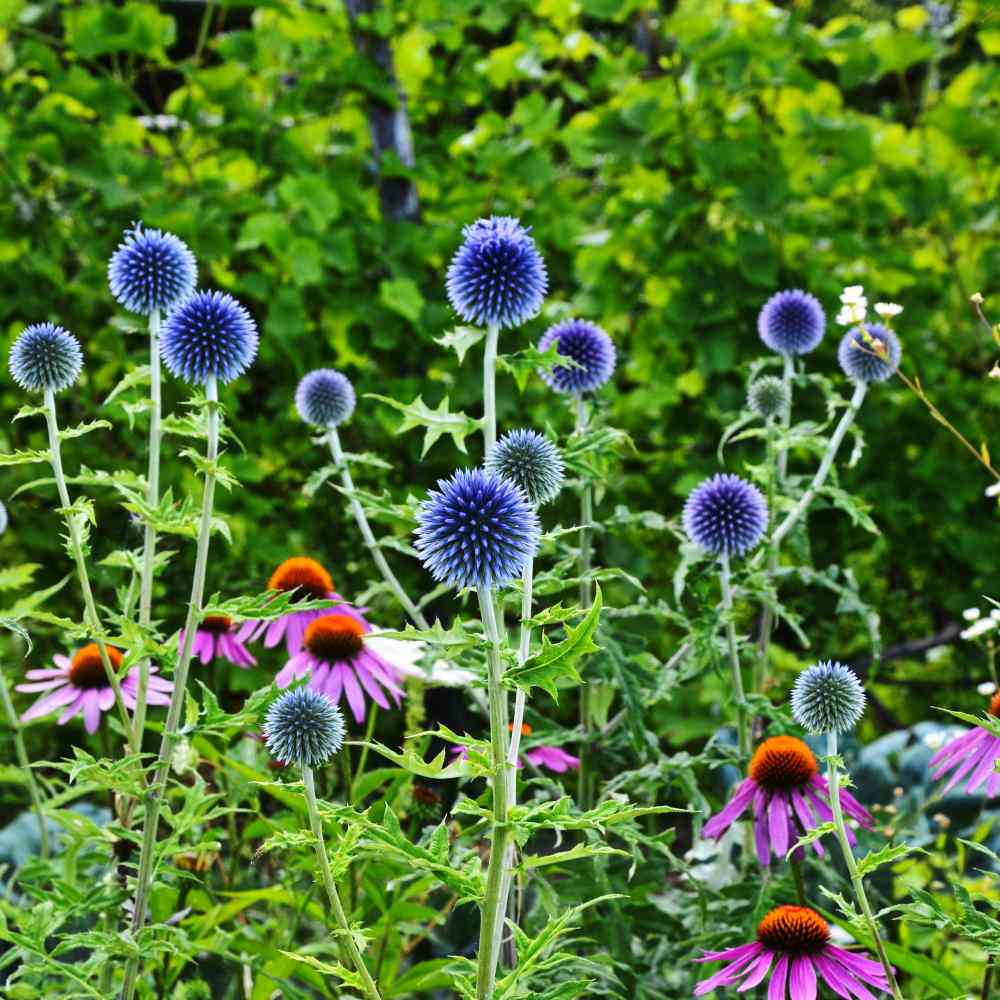
Blue Globe Thistle is one of the most distinctive and eye-catching perennials in the garden. Famous for its perfectly round steel-blue flower heads, this hardy plant combines architectural beauty, exceptional drought tolerance, and outstanding pollinator value. The unusual spherical blooms seem almost sculpted by nature and create dramatic contrast among traditional garden flowers.
Native to southeastern Europe and western Asia, Blue Globe Thistle has become a favorite among gardeners, florists, pollinator enthusiasts, and landscape designers. Its long-lasting flowers are equally beautiful in the garden, fresh-cut arrangements, and dried floral displays.
Plant Characteristics- Botanical Name: Echinops ritro
- Common Names: Blue Globe Thistle, Southern Globe Thistle
- Plant Type: Herbaceous perennial
- Mature Height: 2 to 4 feet
- Mature Spread: 2 to 3 feet
- Growth Rate: Moderate
- USDA Zones: 3 to 8
- Flower Color: Metallic blue, steel blue, lavender-blue
- Foliage: Deeply divided gray-green leaves with silvery undersides
Blue Globe Thistle is ideal for cottage gardens, pollinator gardens, prairie plantings, perennial borders, xeriscapes, cutting gardens, and contemporary landscapes.
Its bold spherical flowers provide dramatic texture and contrast when combined with coneflowers, black-eyed Susans, ornamental grasses, salvias, yarrow, and Russian sage.
Germination InformationSeeds are generally easy to germinate and establish.
- Sow seeds indoors or directly outdoors.
- Lightly cover seeds with soil.
- Maintain temperatures between 65 and 75°F.
- Keep soil evenly moist.
- Provide bright light after germination.
- Germination typically occurs within 10 to 21 days.
Blue Globe Thistle performs best in full sun and well-drained soils. It tolerates poor soils, drought, heat, and rocky conditions once established.
Overly rich soils may encourage excessive foliage growth at the expense of flowering. The plant thrives when given moderate fertility and good drainage.
Deadheading may encourage additional flowering, while leaving seed heads intact provides winter interest.
Container GrowingBlue Globe Thistle can be grown successfully in large containers and decorative planters. Its unusual flowers make an excellent focal point for patio gardens and mixed perennial displays.
Use a well-drained soil mix and avoid overwatering.
Pollinator ValueBlue Globe Thistle is among the finest pollinator plants available. The nectar-rich flowers attract honeybees, native bees, butterflies, hoverflies, and numerous beneficial insects.
During bloom season, the flower heads are often covered with pollinators from morning until evening.
Wildlife ValueGoldfinches and other seed-eating birds frequently visit mature seed heads. The flowers support pollinators while the dried seed heads provide food and winter habitat.
Leaving the spent flowers standing through winter increases wildlife value considerably.
Historical and Cultural FactsThe name "Echinops" comes from Greek words meaning "hedgehog appearance," a reference to the spiny spherical flower heads.
Blue Globe Thistle has been cultivated in European gardens for centuries and became especially popular during the Victorian era for its unusual appearance.
Today it remains one of the most widely used blue-flowering perennials in both formal and informal garden designs.
Botanical Facts- Member of the Asteraceae (Daisy) family.
- Related to sunflowers, asters, and coneflowers.
- Each globe flower head consists of hundreds of tiny individual florets.
- Excellent drought tolerance once established.
- One of the longest-lasting flowers for drying.
- Provides architectural interest throughout multiple seasons.
Few flowers create the visual impact of Blue Globe Thistle. Its perfectly spherical blooms add texture, color, and structure unlike anything else in the garden while attracting a remarkable number of pollinators.
Additional Seedman's NoteIf you enjoy unusual plants, Blue Globe Thistle deserves a prominent place in your garden. Its metallic-blue flower globes, outstanding drought tolerance, and exceptional cut flower qualities make it one of the most rewarding perennials you can grow.
For additional growing details, see our Blue Globe Thistle Seeds AI fact sheet.
For over a thousand more unique seed varieties, all in stock and ready to ship, visit our Seed Catalog Index Page .

Contact Us | Privacy Policy | About Us
Serving gardeners since 1992
State of Mississippi Seedmen's Permit #C-391, Ohio 90152, Minnesota 20086777