
Carmine King California Poppy Seeds
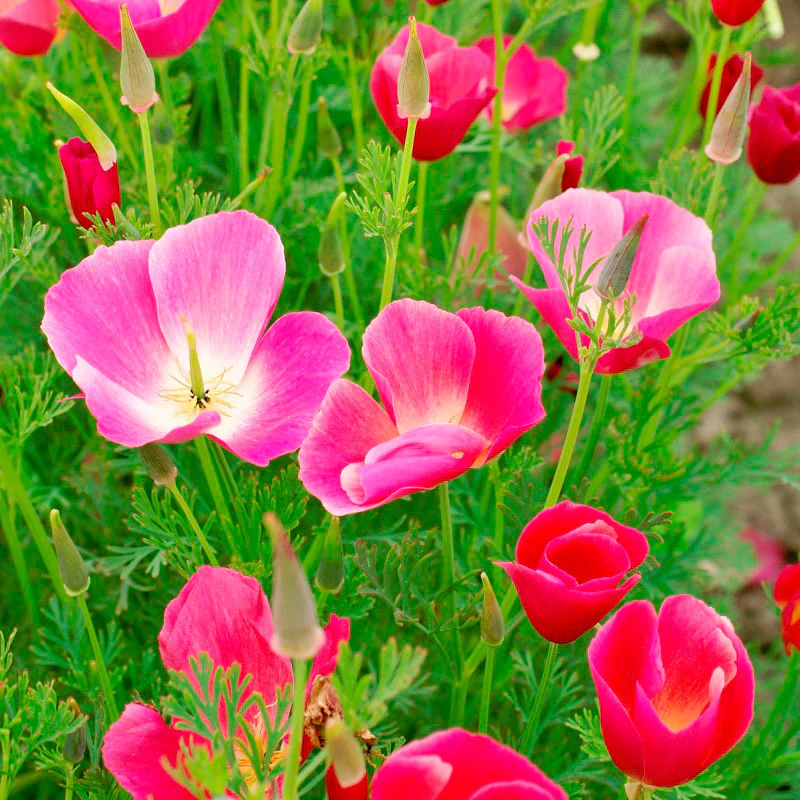
Carmine King California Poppy is a striking heirloom-style selection producing vibrant carmine-rose to deep reddish-pink blooms that stand out dramatically against finely divided blue-green foliage. A unique form of Eschscholzia californica, Carmine King combines the rugged durability of the California Poppy with an unusually rich flower color rarely seen among traditional poppy varieties.
Garden Uses
Carmine King is an excellent choice for borders, cottage gardens, wildflower meadows, rock gardens, containers, and mass plantings. The brilliant reddish-pink flowers create an eye-catching display and provide a wonderful contrast to blue, white, yellow, and silver-foliaged plants.
This variety is particularly effective when planted in drifts, where hundreds of blooms create a colorful carpet that remains attractive for months. Its compact growth habit also makes it suitable for edging pathways, filling sunny garden spaces, and brightening drought-tolerant landscapes.
Carmine King works beautifully in naturalized settings where it can reseed and establish colorful colonies year after year.
Growing Information
Like all California poppies, Carmine King is easy to grow from seed and performs best when direct sown into the garden. Sow seeds outdoors after danger of frost has passed or during autumn in mild winter climates for earlier spring flowering.
Choose a location with full sun and well-drained soil. Plants thrive in average to poor soils and often produce better flowers when not heavily fertilized. Once established, they tolerate drought exceptionally well and require very little maintenance.
Because California poppies develop a taproot, direct sowing is generally preferred over transplanting. Deadheading can encourage additional blooming, although allowing some seed pods to mature may promote self-sowing and future generations of flowers.
Plants often bloom continuously from late spring until frost under favorable growing conditions.
- Botanical Name: Eschscholzia californica
- Common Name: Carmine King California Poppy
- Plant Type: Annual
- Bloom Color: Carmine-rose to deep reddish-pink
- Bloom Season: Late spring through frost
- Height: 10 to 16 inches
- Spread: 8 to 12 inches
- Light: Full sun
- Soil: Well-drained soil
- Drought Tolerance: Excellent once established
- Uses: Borders, rock gardens, wildflower plantings, containers, pollinator gardens
- Attracts: Bees, butterflies, hoverflies, beneficial insects
- Special Feature: Rare carmine-red flower color
For over a thousand more unique seed varieties, all in stock and ready to ship, visit our Seed Catalog Index Page .

Contact Us | Privacy Policy | About Us
Serving gardeners since 1992
State of Mississippi Seedmen's Permit #C-391, Ohio 90152, Minnesota 20086777