
Creosote Bush Seeds
★★★★★ Desert Landscape Rating: 5 out of 5 Stars
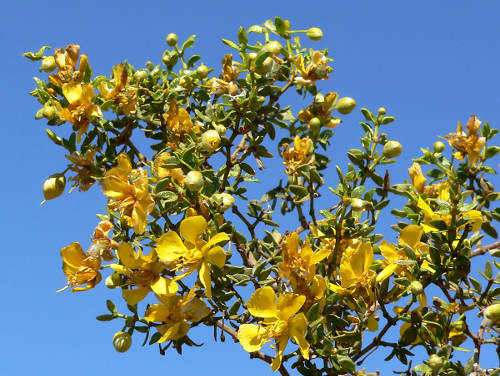
Creosote Bush is perhaps the most iconic shrub of the North American deserts. Found across vast stretches of the Mojave, Sonoran, and Chihuahuan Deserts, this remarkably resilient plant has become a symbol of survival in some of the harshest environments on Earth. Its small evergreen leaves, bright yellow flowers, and distinctive fragrance following rainfall are instantly recognizable to desert enthusiasts.
Many desert residents consider the scent of Creosote Bush after a summer rainstorm to be the very smell of the desert itself. Combined with its incredible longevity and drought tolerance, this native shrub has earned legendary status among desert plants.
Plant Characteristics- Botanical Name: Larrea tridentata
- Common Names: Creosote Bush, Greasewood, Gobernadora
- Plant Type: Evergreen desert shrub
- Mature Height: 4 to 10 feet
- Mature Spread: 4 to 12 feet
- Growth Rate: Slow
- USDA Zones: 7 to 11
- Flower Color: Bright yellow
- Foliage: Small resin-coated evergreen leaves
Creosote Bush is ideal for desert landscapes, xeriscapes, native plant gardens, wildlife gardens, restoration projects, and Southwestern-themed plantings. Its naturally sculptural form provides year-round structure and authenticity in desert garden designs.
It pairs beautifully with desert spoon, yuccas, agaves, prickly pears, ocotillo, and native grasses.
Germination InformationSeeds germinate best when provided warmth and excellent drainage.
- Lightly scarify seeds if desired.
- Sow approximately 1/4 inch deep.
- Use a sandy, fast-draining soil mix.
- Maintain temperatures between 75 and 90°F.
- Keep lightly moist during germination.
- Germination generally occurs within 2 to 6 weeks.
Creosote Bush thrives in full sun and extremely well-drained soils. It tolerates poor soils, intense heat, drought, reflected sunlight, and alkaline conditions better than almost any other landscape shrub.
Once established, supplemental watering is rarely needed. In fact, excessive irrigation can shorten the life of mature plants.
Its resin-coated leaves help reduce moisture loss and contribute to its remarkable drought resistance.
Container GrowingYoung plants may be grown in large containers using a gritty cactus mix. Excellent drainage is essential.
While possible to maintain in containers for several years, Creosote Bush performs best when planted directly into the landscape where its extensive root system can develop naturally.
Pollinator ValueThe bright yellow flowers attract native bees, honeybees, butterflies, and numerous beneficial insects. Blooming often follows rainfall events, providing valuable nectar resources during otherwise dry periods.
In native desert ecosystems, Creosote Bush is an important pollinator plant.
Wildlife ValueThe shrub provides shelter for birds, reptiles, insects, and small mammals. Numerous desert species depend upon Creosote Bush communities for protection from predators and extreme temperatures.
Entire desert ecosystems have evolved around mature Creosote Bush stands.
Historical and Cultural FactsIndigenous peoples throughout the Southwest have utilized Creosote Bush for centuries. Various parts of the plant were traditionally used in herbal preparations and cultural practices.
The Spanish name "Gobernadora" means "governor," reflecting the plant's dominance across much of the desert landscape.
Some Creosote Bush rings found in the Mojave Desert are believed to represent some of the oldest living organisms on Earth.
Botanical Facts- Member of the Zygophyllaceae family.
- Produces a distinctive desert fragrance after rain.
- Leaves are coated with a waxy resin that helps conserve moisture.
- Can survive years of extreme drought.
- Some clonal colonies may be thousands of years old.
- One of the most widespread shrubs in North American deserts.
Creosote Bush is the very essence of the Southwest. Its toughness, beauty, fragrance, and remarkable history make it one of the most fascinating desert plants available for native and xeriscape gardens.
Additional Seedman's NoteIf you want to create an authentic desert landscape, few plants are more important than Creosote Bush. Its bright flowers, evergreen foliage, and unforgettable scent after rainfall provide a genuine connection to the deserts of the American Southwest.
For over a thousand more unique seed varieties, all in stock and ready to ship, visit our Seed Catalog Index Page .

Contact Us | Privacy Policy | About Us
Serving gardeners since 1992
State of Mississippi Seedmen's Permit #C-391, Ohio 90152, Minnesota 20086777