
Bhutan Cypress Seeds
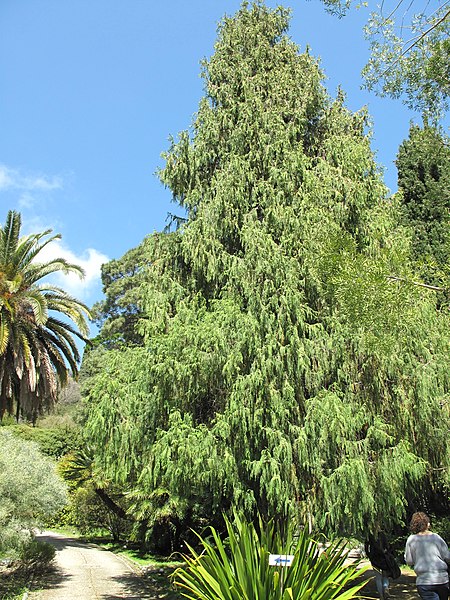
Bhutan Cypress (Cupressus torulosa) is one of the most elegant and sacred evergreen trees of the Himalayan region. Native to the mountainous forests of Bhutan, Nepal, Tibet, and northern India, this magnificent conifer is admired for its graceful drooping branches, soft blue-green foliage, aromatic wood, and impressive stature. In its native homeland, Bhutan Cypress is considered the national tree of Bhutan and is often planted near monasteries, temples, and sacred sites.
Unlike many rigid, formal conifers, Bhutan Cypress develops a graceful, flowing appearance with pendulous branchlets that sway gently in the wind. Its distinctive texture and naturally elegant form make it a standout specimen tree in landscapes and conifer collections.
⭐⭐⭐⭐⭐ Landscape Tree Rating: 5 out of 5 Stars ⭐⭐⭐⭐⭐ Specimen Tree Rating: 5 out of 5 Stars Plant Characteristics- Botanical Name: Cupressus torulosa
- Common Names: Bhutan Cypress, Himalayan Cypress, Torulosa Cypress
- Plant Type: Evergreen Conifer
- Mature Height: 40 to 80 feet
- Mature Spread: 15 to 30 feet
- Growth Rate: Moderate
- Sun Exposure: Full Sun
- USDA Zones: 7-10
Bhutan Cypress is an outstanding choice for gardeners seeking an unusual and elegant evergreen specimen.
- Specimen lawn tree
- Estate landscapes
- Evergreen screens
- Conifer collections
- Meditation gardens
- Asian-inspired landscapes
- Windbreaks
- Sacred or memorial plantings
Bhutan Cypress develops its most attractive form when given adequate space to mature naturally. Its graceful drooping branches are a major ornamental feature and should not be heavily pruned.
Germination InformationSeeds benefit from cold stratification before planting.
- Soak seeds in water for 24 hours.
- Cold stratify for 30 to 60 days at 34-40°F.
- Sow shallowly in well-drained growing medium.
- Maintain temperatures of 60-70°F.
- Keep soil evenly moist.
- Germination typically occurs within several weeks.
Bhutan Cypress prefers full sun and well-drained soils. Once established, it demonstrates moderate drought tolerance and excellent adaptability.
- Prefers well-drained soil
- Moderately drought tolerant
- Excellent landscape specimen
- Low maintenance once established
- Long-lived evergreen
Young trees benefit from regular watering during establishment and protection from prolonged waterlogged conditions.
Container GrowingSeedlings can be maintained in containers during their early years, but the species ultimately develops into a large landscape tree and should be transplanted to a permanent location while young.
Pollinator ValueLike most cypress species, Bhutan Cypress is wind pollinated. Although it does not produce nectar-rich flowers, it contributes significantly to habitat diversity.
- Provides shelter for beneficial insects
- Supports ecological diversity
- Enhances year-round habitat value
The dense evergreen canopy provides valuable shelter throughout the year.
- Nesting sites for birds
- Winter cover
- Protection from predators
- Excellent wildlife shelter
- Year-round habitat value
Bhutan Cypress holds deep spiritual significance throughout the Himalayan region. In Bhutan, it is considered the national tree and is frequently planted around monasteries and sacred sites. Ancient specimens often tower over temples, creating some of the most iconic landscapes in the Himalayas.
For centuries, the fragrant wood has been used in religious ceremonies, carvings, and traditional architecture. The tree symbolizes longevity, strength, and spiritual endurance.
Botanical Facts- National tree of Bhutan.
- Native to elevations of 4,500 to over 10,000 feet.
- Produces attractive rounded seed cones.
- Foliage often displays blue-green to gray-green coloration.
- Develops a distinctive drooping habit with age.
The wood is pleasantly aromatic, naturally durable, and resistant to decay. It has traditionally been used for construction, carvings, temple structures, and ceremonial purposes throughout the Himalayan region.
Seedman Growing TipPlant Bhutan Cypress in full sun with excellent drainage. Select a location where its elegant form can be appreciated from a distance, allowing the pendulous branches to become a focal point of the landscape.
Seedman NoteBhutan Cypress is one of the most graceful and culturally significant conifers in cultivation. Its soft blue-green foliage, flowing branch structure, and rich Himalayan heritage make it a truly exceptional specimen tree. For gardeners seeking a unique evergreen with both beauty and history, Cupressus torulosa is an outstanding choice.
Historical Seedman Fact: Some ancient Bhutan Cypress trees growing near Himalayan monasteries are believed to be several hundred years old. Their towering forms have watched over generations of monks and pilgrims, becoming living symbols of endurance and spiritual tradition.
For over a thousand more unique seed varieties, all in stock and ready to ship, visit our Seed Catalog Index Page .

Contact Us | Privacy Policy | About Us
Serving gardeners since 1992
State of Mississippi Seedmen's Permit #C-391, Ohio 90152, Minnesota 20086777