
Drunken Parrot Tree Seeds
Landscape Rating: ⭐⭐⭐⭐⭐ (5/5 Stars)
Plant CharacteristicsDrunken Parrot Tree is one of the most spectacular flowering trees of southern Africa, famous for its brilliant red blossoms, wildlife activity, and unusual common name. This handsome evergreen to semi-evergreen tree typically grows 20 to 40 feet tall in cultivation, forming a rounded crown with attractive dark green compound foliage.
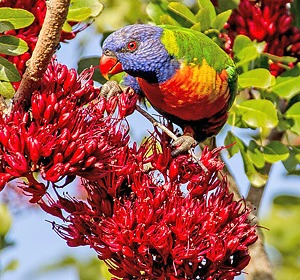
During the blooming season, the tree becomes covered with dense clusters of vivid crimson to scarlet-red flowers. These nectar-rich blooms often drip with sweet liquid, attracting birds, butterflies, bees, and other wildlife. The flowers are followed by flat brown seed pods that split open when mature to reveal hard seeds.
Its bold color, manageable size, and wildlife appeal make Drunken Parrot Tree an outstanding specimen for warm-climate lawns and tropical-style landscapes.
Landscape Uses- Specimen lawn tree
- Wildlife gardens
- Pollinator gardens
- Tropical landscapes
- Courtyard focal point
- Park and estate plantings
- Bird-attracting gardens
- Warm-climate shade tree
The combination of brilliant red flowers and active bird visitation gives this tree exceptional display value during bloom season.
Important Landscape NoteDrunken Parrot Tree is best suited to warm, frost-free or nearly frost-free climates. It should be planted in a sunny, protected location with adequate space for its rounded canopy to develop.
Germination Information- Scarify the hard seed coat before sowing.
- Soak seeds in warm water for 12-24 hours.
- Sow approximately ½ inch deep in a well-drained medium.
- Maintain temperatures between 70-85°F.
- Keep lightly moist but not waterlogged.
- Germination usually occurs within 2-6 weeks.
- Botanical Name: Schotia brachypetala
- Plant Type: Evergreen to Semi-Evergreen Flowering Tree
- USDA Zones: 9-11
- Sun Exposure: Full Sun to Light Shade
- Mature Height: 20-40 Feet
- Mature Spread: 20-35 Feet
- Growth Rate: Moderate
- Soil Preference: Well-drained soils
- Water Requirements: Moderate once established
Drunken Parrot Tree adapts to a variety of well-drained soils and performs best with regular moisture during establishment. Mature trees tolerate periods of dryness but flower best when not subjected to severe drought.
Container GrowingYoung trees can be grown in large containers for several years and make unusual patio or greenhouse specimens. In colder climates, container culture allows the plant to be protected during winter, although long-term growth is best in the landscape where hardy.
Pollinator & Wildlife ValueThis tree is famous for attracting nectar-feeding birds. The heavy nectar production draws parrots, sunbirds, bees, butterflies, and many other visitors. In its native range, birds may feed so heavily on the fermenting nectar that they appear unsteady, giving rise to the colorful name "Drunken Parrot Tree."
The flowers are also valuable to honeybees, while the dense canopy provides cover and nesting opportunities for birds and small wildlife.
Historical & Cultural SignificanceSchotia brachypetala has long been admired in southern Africa as both an ornamental and culturally significant tree. Indigenous communities used parts of the tree for traditional purposes, while gardeners prized it for its spectacular flowering display and bird-attracting qualities.
In South African landscapes, it remains one of the most beloved native flowering trees and is often planted in parks, botanical gardens, wildlife gardens, and large home landscapes.
Botanical Facts- Member of the Legume Family (Fabaceae).
- Native to southern Africa.
- Produces nectar-rich scarlet flowers directly attractive to birds.
- Develops flat seed pods typical of many legumes.
- Can be evergreen or semi-evergreen depending on climate.
- Often called Tree Fuchsia because of its vivid hanging red flowers.
Drunken Parrot Tree is an unforgettable choice for gardeners who want color, wildlife, and conversation value in one plant. When in bloom, it becomes a living bird feeder wrapped in scarlet flowers, making it one of the most exciting specimen trees for warm-climate landscapes.
Additional Seedman NoteThe name "Drunken Parrot Tree" comes from reports of parrots and other birds feeding enthusiastically on its abundant nectar. Whether they are truly intoxicated or simply excited by the feast, the sight of colorful birds visiting the red flowers has made this tree legendary among plant collectors and wildlife gardeners.