
Black Chokeberry Seeds
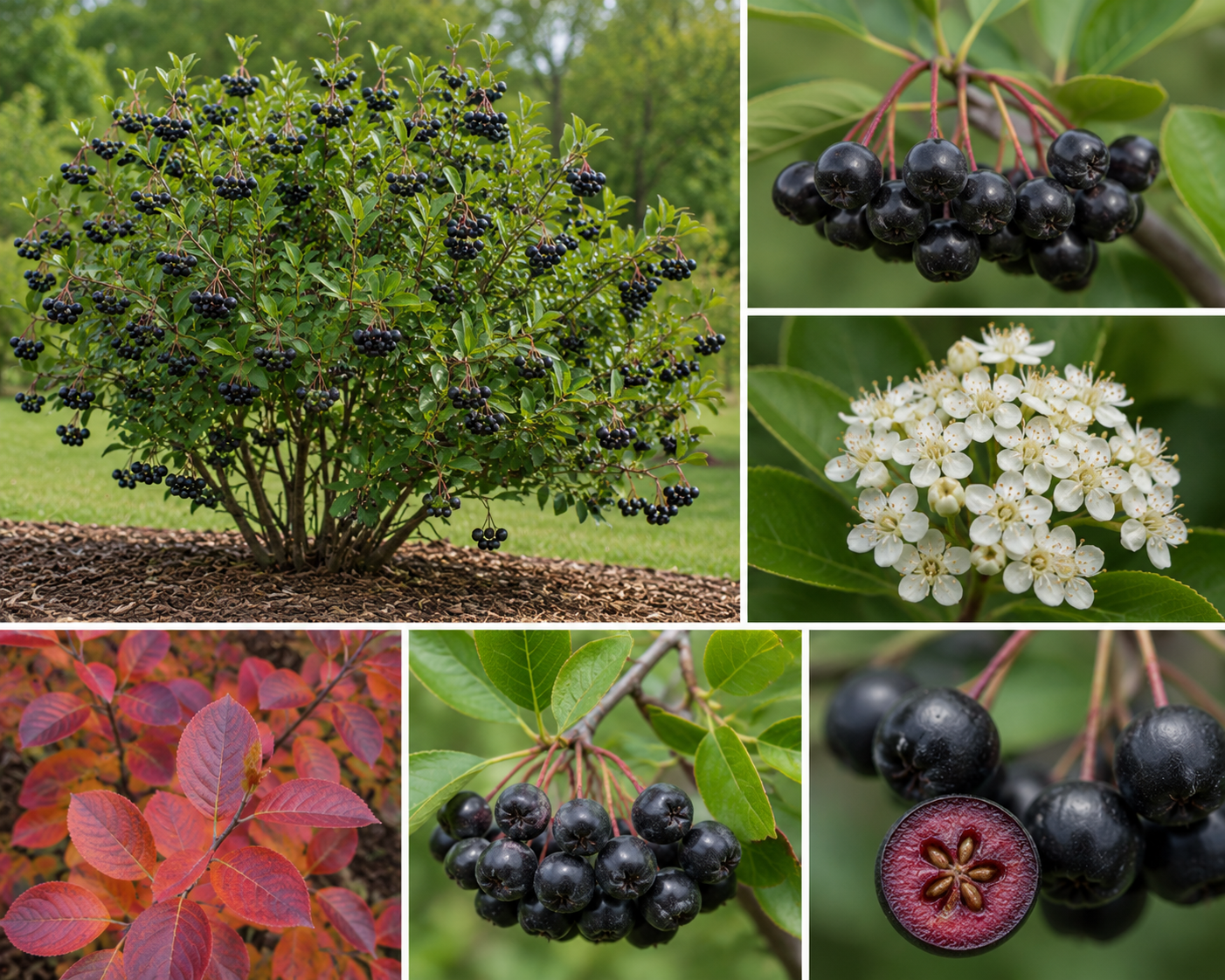
Black Chokeberry is a hardy North American native shrub prized for its highly nutritious fruits, beautiful flowers, outstanding fall color, and exceptional wildlife value. Native to eastern North America, Aronia melanocarpa has become increasingly popular among gardeners, health-conscious consumers, and conservationists due to its combination of ornamental beauty and edible harvests.
In spring, plants are covered with clusters of attractive white flowers that attract bees and pollinating insects. By late summer, these blooms develop into glossy clusters of deep purple-black berries that persist well into autumn. The fruits are rich in antioxidants and have attracted significant scientific interest for their nutritional properties.
Autumn brings one final spectacular display as the foliage turns brilliant shades of scarlet, crimson, orange, and burgundy. Few fruiting shrubs can match Black Chokeberry's combination of edible harvest, wildlife value, and ornamental appeal.
Uses- Fresh or processed fruit.
- Jams and jellies.
- Juices and smoothies.
- Wine making.
- Wildlife plantings.
- Pollinator gardens.
- Native landscaping.
- Edible hedges and screens.
- Remove seeds from ripe berries.
- Clean thoroughly to remove fruit pulp.
- Cold stratify seeds in moist peat moss or vermiculite for 60-90 days at 35-40°F (2-4°C).
- Sow seeds 1/4 inch deep in a quality seed-starting mix.
- Maintain even moisture.
- Provide bright light after sowing.
- Germination may occur over several weeks.
- Transplant seedlings once well established.
- Botanical Name: Aronia melanocarpa
- Plant Type: Deciduous fruiting shrub
- USDA Zones: 3-8
- Sun Exposure: Full sun to partial shade
- Soil: Adaptable to many soil types
- Water: Moderate moisture
- Height: 3-8 feet
- Spread: 3-8 feet
- Growth Rate: Moderate
- Fruit Ripens: Late summer to early fall
Black Chokeberry is remarkably adaptable and thrives in a wide range of conditions, including wet soils, clay soils, sandy soils, and cold climates. Once established, it is highly reliable and low maintenance.
Fruit CharacteristicsThe berries contain exceptionally high levels of anthocyanins, antioxidants responsible for their deep purple-black color. Although the fruits are somewhat astringent when eaten fresh, they are widely used in juices, syrups, wines, jams, and health products.
Wildlife and Pollinator ValueThe spring flowers attract bees, butterflies, and other beneficial pollinators. Birds frequently consume the fruits during fall and winter, while the dense branching structure provides shelter and nesting habitat.
Special Features- Native North American species.
- Exceptionally high antioxidant content.
- Brilliant fall foliage.
- Excellent pollinator plant.
- Wildlife-friendly fruits.
- Cold hardy and adaptable.
- Suitable for edible hedges.
- Low-maintenance landscape shrub.
Black Chokeberry is widely recognized as one of the most antioxidant-rich fruits known. The berries contain significant levels of anthocyanins, flavonoids, vitamin C, and other beneficial plant compounds. This has made Aronia a popular subject of nutritional and agricultural research around the world.
History and Interesting FactsNative American tribes utilized chokeberries long before European settlement. The fruits were sometimes combined with other foods and were valued as an important native fruit resource.
Despite being native to North America, Black Chokeberry became especially popular in Eastern Europe and Russia during the twentieth century, where extensive breeding and cultivation programs dramatically increased commercial production.
Today, Poland is one of the world's leading producers of Aronia berries, and the fruit has gained international recognition as a nutritional "superfruit."
Seedman Growing NoteMany gardeners first plant Black Chokeberry for its edible berries and later discover that its fall color rivals some of the finest ornamental shrubs available. In many landscapes, the brilliant autumn foliage becomes just as valuable as the fruit harvest.
This species is also an outstanding choice for wildlife-friendly gardens, native plant collections, edible landscaping, and conservation projects. Few shrubs offer so many benefits while requiring so little maintenance.
Black Chokeberry (Aronia melanocarpa) is a remarkable native fruit shrub that combines beauty, nutrition, wildlife value, and adaptability. Whether planted for its antioxidant-rich berries, pollinator benefits, or spectacular fall color, it remains one of North America's most rewarding native fruiting plants.
For over a thousand more unique seed varieties, all in stock and ready to ship, visit our Seed Catalog Index Page .

Contact Us | Privacy Policy | About Us
Serving gardeners since 1992
State of Mississippi Seedmen's Permit #C-391, Ohio 90152, Minnesota 20086777