
Chinese Mulberry Seeds
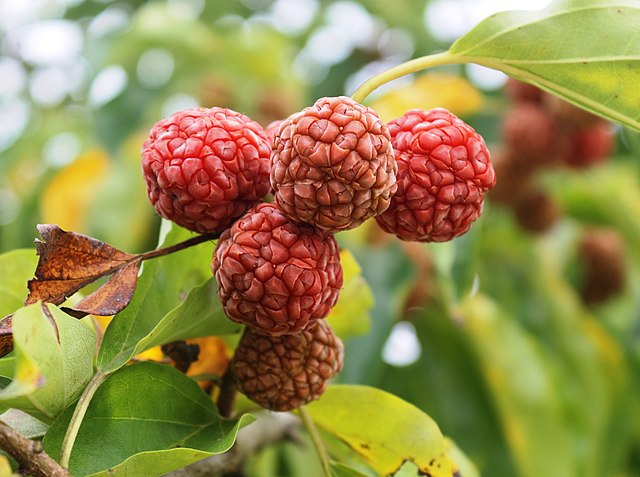
Chinese Mulberry, also known as Che, Chinese Che, Cudrang, or Mandarin Melon Berry, is a rare and fascinating fruit tree native to China and parts of East Asia. Despite its common name, it is not a true mulberry. Instead, it is a close relative of Osage Orange (Maclura pomifera) and belongs to the same genus. The tree earned its common name because its unusual fruits resemble large mulberries in appearance, although they possess a unique flavor and botanical heritage all their own.
The bright red fruits develop a distinctive bumpy surface that resembles a raspberry, mulberry, and strawberry combined. Fully ripe fruits are sweet, juicy, and aromatic, with many enthusiasts detecting hints of watermelon, fig, melon, and mulberry. Chinese Mulberry remains relatively uncommon in North America, making it a prized addition to edible landscapes and rare fruit collections.
Plant Characteristics- Botanical Name: Maclura tricuspidata
- Common Names: Chinese Mulberry, Che, Chinese Che, Cudrang, Mandarin Melon Berry
- Plant Type: Deciduous fruit tree
- USDA Zones: 5-9
- Height: 10-25 feet
- Spread: 10-20 feet
- Sun Requirements: Full sun
- Flower Color: Greenish-yellow
- Bloom Time: Spring
- Fruit Color: Scarlet red to deep crimson
The unusual fruits mature from green to bright red and soften when fully ripe. Their sweet flavor and attractive appearance make them highly desirable for fresh eating and specialty fruit production.
- Fresh eating
- Fruit salads
- Jams and preserves
- Smoothies
- Desserts
- Fruit wines
- Specialty fruit markets
- Edible landscaping
Many fruit collectors consider fully ripe Che fruit among the finest little-known fruits available for home gardens.
Germination Instructions- Soak seeds in warm water for 24 hours.
- Place seeds in moist peat moss or vermiculite.
- Cold stratify for 60-90 days at 34-40°F.
- Sow 1/4 inch deep in a well-drained seed-starting mix.
- Maintain temperatures of 70-80°F.
- Keep soil evenly moist.
- Germination generally occurs within 3-8 weeks after stratification.
- Transplant seedlings once several true leaves develop.
Chinese Mulberry grows best in full sun and well-drained soil. It adapts to a variety of soil types and becomes increasingly drought tolerant once established. The tree develops an attractive rounded canopy and requires relatively little maintenance beyond occasional pruning.
Mature specimens can produce abundant crops while serving as attractive ornamental trees in the landscape.
Container GrowingYoung trees can be successfully maintained in large containers for many years.
- Use large pots with excellent drainage.
- Provide full sun exposure.
- Use quality potting soil.
- Prune periodically to control size.
- Water regularly during active growth.
- Repot as needed.
Container growing is particularly useful for collectors of unusual fruits and gardeners with limited space.
Pollinator ValueThe spring flowers attract bees and other beneficial pollinating insects. While the flowers are not especially showy, they provide valuable early-season nectar resources.
Wildlife ValueBirds and small mammals enjoy fallen fruits, while the tree itself provides cover and nesting habitat. Mature trees contribute significantly to wildlife-friendly landscapes.
Historical and Cultural SignificanceChinese Mulberry has been cultivated in China for centuries for both its fruit and ornamental value. The species eventually spread into Korea and Japan and later attracted the attention of European and American plant collectors seeking unusual edible plants.
An interesting chapter in its history involves the silk industry. In some regions of Asia, Chinese Mulberry was occasionally grown as a backup food source for silkworms when leaves from true mulberry trees were unavailable. Although silkworms strongly prefer true mulberries (Morus species), this association helped spread the tree into gardens and agricultural plantings.
Interesting Botanical Facts- Chinese Mulberry is not a true mulberry despite its common name.
- It is more closely related to Osage Orange than to black, red, or white mulberries.
- The fruits are formed from many tiny flowers fused together into a single edible structure.
- Some cultivated selections produce nearly seedless fruits.
- The tree was historically used as a hedge plant in parts of Asia due to its dense branching habit.
Chinese Mulberry is one of those rare fruit trees that almost always sparks conversation. The bright red fruits look like oversized mulberries, yet the tree is actually a relative of Osage Orange. Visitors are often surprised to discover that this unusual fruit has been cultivated in Asia for centuries and was even associated with traditional silk production. For gardeners seeking something genuinely uncommon, productive, and historically interesting, Chinese Mulberry is a remarkable addition to the home orchard.
For additional growing details, see our Chinese Mulberry Seeds AI fact sheet.
For over a thousand more unique seed varieties, all in stock and ready to ship, visit our Seed Catalog Index Page .

Contact Us | Privacy Policy | About Us
Serving gardeners since 1992
State of Mississippi Seedmen's Permit #C-391, Ohio 90152, Minnesota 20086777