
Cluster Fig Tree Seeds
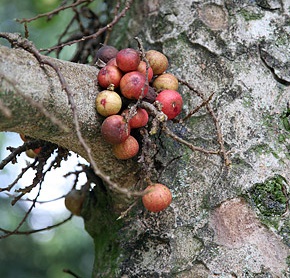
Cluster Fig, also known as Gular Fig, Indian Fig, or Country Fig, is one of the most unusual and historically important fruit trees of tropical Asia. Native to India, Southeast Asia, and parts of Australia, Ficus racemosa is famous for producing large clusters of edible figs directly on its trunk and major branches, creating one of the most spectacular fruiting displays in the plant kingdom.
Unlike most fruit trees that bear fruit on branch tips, Cluster Fig develops dense masses of figs attached directly to the trunk. As the fruits mature, they change from green to shades of orange, red, and deep crimson, transforming the tree into a living botanical curiosity.
The figs are edible and have been consumed for centuries throughout their native range. They may be eaten fresh, cooked, preserved, or incorporated into traditional dishes. In many regions, both the fruits and various parts of the tree have played important roles in local culture and traditional agriculture.
Its glossy foliage, impressive canopy, wildlife value, and remarkable fruiting habit make Cluster Fig one of the most distinctive tropical fruit trees available.
Uses- Fresh fruit consumption.
- Cooked fruit dishes.
- Wildlife food source.
- Tropical shade tree.
- Edible landscaping.
- Rare fruit collections.
- Botanical gardens.
- Cultural and heritage plantings.
- Remove seeds from fully ripe figs.
- Rinse thoroughly to remove pulp.
- Sow seeds on the surface of moist seed-starting mix.
- Do not bury deeply, as light aids germination.
- Maintain temperatures of 75-85°F (24-29°C).
- Keep humidity high and soil consistently moist.
- Provide bright indirect light.
- Germination typically occurs within 2-8 weeks.
- Botanical Name: Ficus racemosa
- Plant Type: Tropical fruit tree
- USDA Zones: 9-11
- Sun Exposure: Full sun
- Soil: Rich, well-drained soil
- Water: Moderate to regular moisture
- Height: 40-60 feet or more
- Spread: 30-50 feet
- Growth Rate: Moderate to fast
- Evergreen: Often evergreen in tropical climates
Cluster Fig thrives in warm, frost-free environments and appreciates regular moisture during establishment. Once mature, it develops into a handsome shade tree with a broad canopy and exceptional ornamental value.
Fruit CharacteristicsThe figs develop in dense clusters along the trunk and larger branches. Fruits vary in color as they mature and are often consumed fresh or cooked. Like other figs, the fruits contain numerous tiny seeds enclosed within the fleshy structure.
Wildlife ValueCluster Fig is considered a keystone wildlife species in many tropical ecosystems. The fruits provide food for birds, bats, monkeys, squirrels, and countless other animals. A mature fruiting tree can attract an astonishing variety of wildlife.
Special Features- Produces fruit directly on the trunk.
- Rare example of cauliflory.
- Edible figs.
- Outstanding wildlife tree.
- Beautiful tropical shade tree.
- Historically important species.
- Excellent collector's plant.
- Conversation-piece specimen.
Cluster Fig has been cultivated throughout India and Southeast Asia for centuries and is frequently mentioned in historical writings, folklore, and religious traditions. In parts of Asia, ancient specimens are considered culturally significant and may be protected for generations.
The species is closely associated with specialized fig wasps that pollinate the flowers hidden inside the figs. This remarkable partnership is one of nature's most sophisticated examples of co-evolution, with both the tree and the insect depending upon each other for survival.
Because fruits grow directly from the trunk, Cluster Fig is one of the finest examples of cauliflory—a trait also seen in cacao, jackfruit, and a few other tropical plants.
Seedman Growing NoteMany gardeners first encounter Cluster Fig in botanical gardens and are amazed by the sight of fruits covering the trunk. It is one of those rare plants that consistently stops visitors in their tracks.
For tropical fruit enthusiasts, the tree offers much more than novelty. It combines edible fruit, wildlife value, historical significance, and a truly unique appearance that few other fruit trees can match.
Cluster Fig (Ficus racemosa) is a remarkable tropical fruit tree that blends ancient history, ecological importance, edible harvests, and one of the most unusual fruiting habits in the plant world. It remains a prized species among collectors, botanists, and fruit enthusiasts alike.
For over a thousand more unique seed varieties, all in stock and ready to ship, visit our Seed Catalog Index Page .

Contact Us | Privacy Policy | About Us
Serving gardeners since 1992
State of Mississippi Seedmen's Permit #C-391, Ohio 90152, Minnesota 20086777