
Black Himalayan Mulberry Seeds
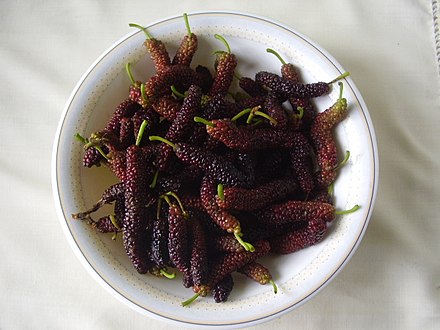
Black Himalayan Mulberry is a remarkable fruiting tree known for its unusually long, sweet, dark purple-black berries. Native to parts of the Himalayan region and Southeast Asia, this rare mulberry is prized by collectors for its elongated fruits, attractive foliage, fast growth, and outstanding fresh-eating quality.
The fruits can be much longer than ordinary mulberries, often developing a rich berry flavor with honey-like sweetness when fully ripe. Black Himalayan Mulberry makes an excellent choice for edible landscapes, wildlife plantings, home orchards, and collectors of unusual fruit trees.
Plant Characteristics- Botanical Name: Morus macroura
- Common Names: Black Himalayan Mulberry, Himalayan Mulberry, Long Mulberry, Shahtoot Mulberry
- Plant Type: Deciduous fruit tree
- USDA Zones: 7-10
- Height: 25-50 feet in favorable climates
- Spread: 20-35 feet
- Sun Requirements: Full sun
- Flower Color: Greenish, inconspicuous catkins
- Bloom Time: Spring
- Fruit Color: Dark purple to nearly black when ripe
The fruit of Black Himalayan Mulberry is long, tender, juicy, and very sweet when fully mature. The berries are excellent eaten fresh from the tree and are especially valued because of their impressive size and rich flavor.
- Fresh eating
- Jams and preserves
- Syrups
- Smoothies
- Fruit sauces
- Wine making
- Desserts
- Wildlife plantings
Because ripe mulberries are soft and delicate, they are rarely seen in grocery stores. Growing them at home is often the best way to enjoy the fruit at peak ripeness.
Germination Instructions- Soak seeds in room-temperature water for 24 hours.
- For best germination, cold stratify seeds for 2-3 months in moist peat, sand, or vermiculite.
- After stratification, sow seeds on the surface of a well-drained seed-starting mix.
- Cover very lightly with soil, no more than 1/8 inch deep.
- Maintain temperatures of 70-80°F.
- Keep soil evenly moist but not waterlogged.
- Germination may occur within several weeks, though some seeds may take several months.
- Transplant seedlings once they are large enough to handle.
Black Himalayan Mulberry grows best in full sun and fertile, well-drained soil. Like many mulberries, it is vigorous, adaptable, and relatively easy to grow once established. Trees appreciate regular moisture during the first few years but develop good resilience as they mature.
Mulberries generally require at least 6-8 hours of direct sun for best fruit production and flavor development. Pruning can be used to control height, improve structure, and make harvesting easier.
Seed-grown trees may take several years to begin fruiting, while grafted or cutting-grown trees often bear sooner.
Container GrowingYoung Black Himalayan Mulberry trees can be grown in large containers for several years.
- Use a large container with excellent drainage.
- Provide full sun exposure.
- Use a fertile, well-drained potting mix.
- Water regularly during active growth.
- Prune annually to maintain manageable size.
- Repot as needed as the root system develops.
Long-term container growing is possible with regular pruning, but best fruit production is usually achieved when the tree is planted in the ground.
Pollinator ValueMulberry flowers are small and not showy, but they are part of the seasonal food web and may be visited by small insects. Depending on the plant, mulberries may produce male, female, or mixed flowers, and some selections are capable of setting fruit with little assistance.
Wildlife ValueBlack Himalayan Mulberry is an outstanding wildlife tree. Birds relish the ripe fruits, and the dense canopy provides shade, cover, and nesting opportunities. In fruiting season, mulberry trees often become lively feeding stations for songbirds and other wildlife.
Historical and Cultural SignificanceMulberries have a long association with human culture, especially in Asia where several species have been grown for fruit, shade, livestock fodder, and silkworm production. Himalayan mulberries are especially valued for their long fruits and exceptional sweetness.
The name Shahtoot is often used for long-fruited mulberries and is sometimes translated as "king mulberry," a fitting name for a fruit known for its impressive size and rich flavor.
Interesting Botanical Facts- Morus macroura is known for unusually long fruits compared with many common mulberries.
- The fruit is very delicate and best enjoyed fresh from the tree.
- Mulberry fruits are actually multiple fruits formed from many tiny flowers.
- The leaves are often glossy, broad, and attractive in the landscape.
- Mulberries are fast-growing trees that can provide shade as well as fruit.
Black Himalayan Mulberry is one of those fruits that reminds gardeners why home growing is so rewarding. The berries are too delicate for ordinary supermarket shipping, so most people never experience them fully ripe. Straight from the tree, the long dark fruits can be intensely sweet, juicy, and memorable. For customers interested in rare fruits, edible landscaping, or wildlife-friendly trees, Black Himalayan Mulberry offers beauty, shade, abundant fruit, and a taste experience that is difficult to find anywhere else.
For additional growing details, see our Black Himalayan Mulberry Seeds AI fact sheet.
For over a thousand more unique seed varieties, all in stock and ready to ship, visit our Seed Catalog Index Page .

Contact Us | Privacy Policy | About Us
Serving gardeners since 1992
State of Mississippi Seedmen's Permit #C-391, Ohio 90152, Minnesota 20086777