
Pineapple Guava Seeds
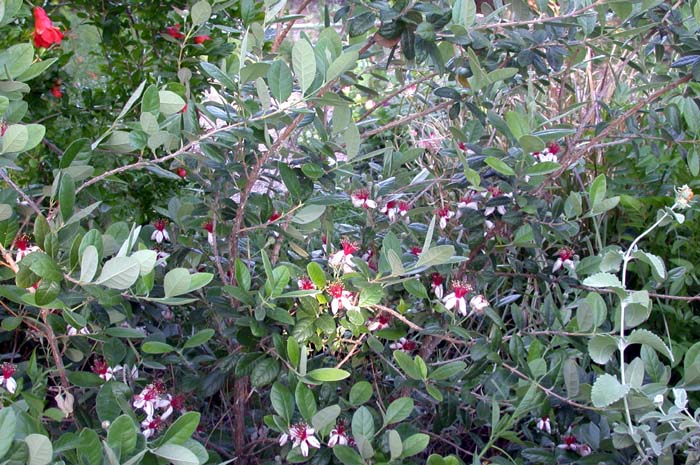
Pineapple Guava, also known as Feijoa, is a beautiful evergreen fruiting shrub or small tree prized for its delicious tropical-flavored fruits, striking flowers, ornamental foliage, and remarkable adaptability. Native to the highlands of southern Brazil, Uruguay, Paraguay, and northern Argentina, Feijoa sellowiana has become one of the world's most popular edible landscape plants.
Its thick silver-green foliage provides year-round beauty, while the unusual flowers create one of the most spectacular displays among fruiting plants. Each bloom features white petals surrounding a dramatic explosion of crimson-red stamens. Even more remarkable, the flower petals themselves are edible and have a sweet flavor often compared to marshmallows or cotton candy.
By autumn, plants produce oval green fruits with a distinctive tropical flavor that combines notes of pineapple, guava, strawberry, mint, and citrus. The aromatic fruits are enjoyed fresh, in desserts, smoothies, preserves, juices, and countless other culinary creations.
Uses- Fresh fruit consumption.
- Jams and preserves.
- Smoothies and beverages.
- Edible flower petals.
- Evergreen hedges.
- Edible landscaping.
- Container growing.
- Pollinator gardens.
- Remove seeds from ripe fruits.
- Rinse thoroughly to remove pulp.
- Allow seeds to dry for 24 hours.
- Sow seeds on the surface of a moist seed-starting mix and lightly cover.
- Maintain temperatures of 70-80°F (21-27°C).
- Keep soil consistently moist.
- Provide bright light.
- Germination usually occurs within 2-6 weeks.
- Botanical Name: Feijoa sellowiana
- Plant Type: Evergreen fruiting shrub or small tree
- USDA Zones: 8-10
- Sun Exposure: Full sun to partial shade
- Soil: Well-drained soil
- Water: Moderate moisture
- Height: 8-15 feet
- Spread: 8-15 feet
- Growth Rate: Moderate
- Fruit Ripens: Fall
Pineapple Guava is highly adaptable and performs well in coastal environments, drought-prone regions, and areas with occasional frost. Once established, it demonstrates excellent drought tolerance while maintaining attractive evergreen foliage year-round.
Fruit CharacteristicsThe fruits develop a wonderfully aromatic flavor that is difficult to compare to any single fruit. Most people describe the taste as a blend of pineapple, guava, strawberry, and citrus. Fully ripe fruits often drop naturally from the plant when ready to eat.
Pollinator BenefitsThe spectacular flowers attract bees, butterflies, hummingbirds, and numerous beneficial pollinators. The edible flower petals are often enjoyed by both gardeners and wildlife.
Special Features- Produces delicious tropical fruits.
- Edible flower petals.
- Evergreen silver-green foliage.
- Excellent hedge plant.
- Drought tolerant once established.
- Suitable for container growing.
- Beautiful ornamental flowers.
- Pollinator friendly.
Pineapple Guava is one of the best fruiting plants for large containers. Its naturally compact growth habit, evergreen foliage, and manageable size make it ideal for patios, decks, courtyards, and small-space gardens. Container-grown plants can provide both ornamental beauty and fruit production.
History and Interesting FactsThe species was named in honor of Portuguese naturalist João da Silva Feijó, while the species name sellowiana honors German botanist Friedrich Sellow, who explored South America during the nineteenth century.
Although commonly called Pineapple Guava, Feijoa is not a true guava. It belongs to the Myrtle family and is only distantly related to tropical guavas.
In New Zealand, Pineapple Guava became so popular that it is now considered one of the country's favorite backyard fruits, with countless gardeners eagerly awaiting the annual harvest season.
Seedman Growing NoteMany gardeners first plant Pineapple Guava for its ornamental beauty and later discover that the fruits are exceptional. The edible flowers are often an unexpected bonus, providing a sweet treat long before the fruit harvest arrives.
This species is also one of the finest choices for edible landscaping. Few plants combine evergreen foliage, attractive flowers, edible petals, tropical fruit, drought tolerance, and container suitability in such an easy-to-grow package.
Pineapple Guava (Feijoa sellowiana) is a truly remarkable plant that combines ornamental beauty with delicious harvests. Whether grown as a fruiting shrub, evergreen hedge, patio specimen, or edible landscape feature, it remains one of the most rewarding fruits for home gardeners.
For additional growing details, see our Pineapple Guava Seeds AI fact sheet.
For over a thousand more unique seed varieties, all in stock and ready to ship, visit our Seed Catalog Index Page .

Contact Us | Privacy Policy | About Us
Serving gardeners since 1992
State of Mississippi Seedmen's Permit #C-391, Ohio 90152, Minnesota 20086777