
Boxwood Seeds
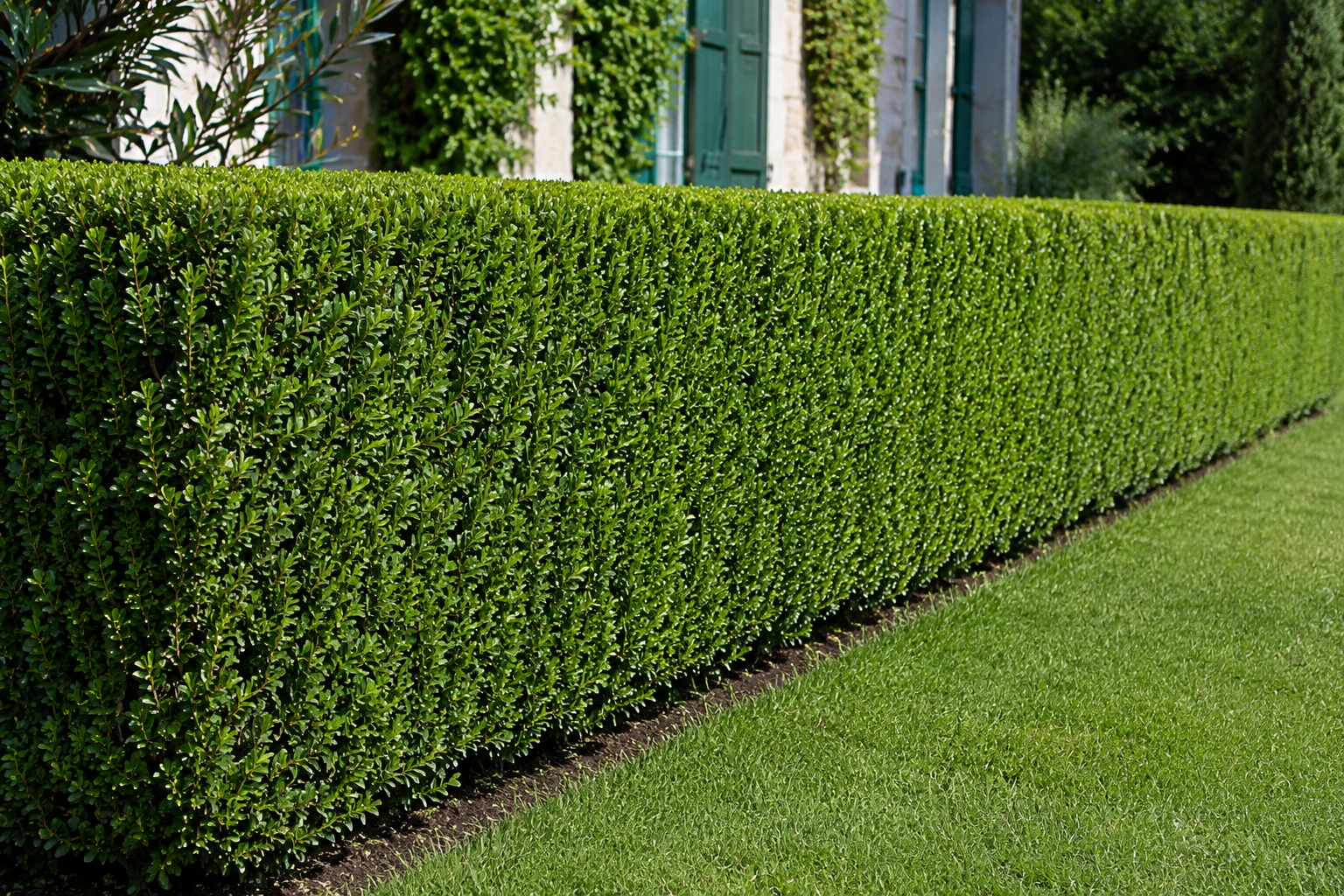
Boxwood (Buxus sempervirens) is one of the world's most famous hedge plants, prized for its dense evergreen foliage, exceptional pruning tolerance, and elegant appearance. For centuries, Boxwood has been used to create formal hedges, garden borders, knot gardens, and estate landscapes. Its fine-textured foliage and ability to be shaped into almost any form make it one of the premier hedge plants available.
Plant CharacteristicsBoxwood is a slow to moderate growing evergreen shrub with small, glossy, dark green leaves that remain attractive throughout the year. Mature plants typically reach 8 to 20 feet in height if left unpruned, but are commonly maintained much smaller as hedges. Its naturally dense branching habit creates one of the most uniform and refined hedge appearances available.
- Botanical Name: Buxus sempervirens
- Common Name: Common Boxwood, English Boxwood
- Plant Type: Evergreen shrub
- Mature Height: 8-20 feet
- Hedge Height: 2-8 feet typically maintained
- Spread: 6-15 feet
- Growth Rate: Slow to moderate
- USDA Zones: 5-9
- Sun Exposure: Full sun to partial shade
Boxwood is the classic choice for formal landscape design and is commonly used for:
- Formal hedges
- Property borders
- Foundation plantings
- Parterre gardens
- Knot gardens
- Walkway edging
- Topiary creations
- Estate landscaping
- Evergreen screening
Few shrubs offer the same level of refinement and architectural structure as a well-maintained Boxwood hedge.
Important Hedge NoteBoxwood is widely regarded as the gold standard for formal hedges. Its dense branching, small leaves, and ability to withstand repeated trimming allow it to maintain crisp, clean lines for decades. Some historic Boxwood hedges planted centuries ago are still thriving today.
For dense hedge formation, plants are typically spaced 2 to 4 feet apart depending on the desired final size.
Germination InstructionsBoxwood seeds require cold stratification for best germination.
- Soak seeds in water for 24 hours.
- Place seeds in moist peat or sand.
- Refrigerate for 60 to 90 days at approximately 40°F.
- Sow in a well-drained seed-starting mix.
- Maintain temperatures of 65-75°F.
- Keep evenly moist during germination.
Germination can be slow and may occur over several weeks or months.
Growing InformationBoxwood grows best in fertile, well-drained soil and performs well in both full sun and partial shade. Plants appreciate consistent moisture while becoming established but are relatively drought tolerant once mature.
Annual pruning encourages dense growth and helps maintain hedge shape. Mulching around the base helps conserve moisture and protect shallow roots.
Container GrowingBoxwood performs exceptionally well in containers and is frequently used in decorative pots near entrances, patios, and formal garden settings.
- Start with 3 to 5 gallon containers.
- Move mature plants into 15 to 25 gallon containers.
- Use high-quality well-drained potting soil.
- Provide regular watering during hot weather.
Container-grown Boxwoods can remain attractive for decades with proper care.
Pollinator ValueAlthough the flowers are small and often overlooked, Boxwood blooms attract a variety of pollinating insects including bees and beneficial native species.
Pollinator Rating: ★★★☆☆
Wildlife ValueThe dense evergreen foliage provides year-round shelter for songbirds and small wildlife. Birds frequently nest within mature Boxwood hedges due to the excellent protection they provide.
Wildlife Rating: ★★★★☆
Historical and Cultural SignificanceBoxwood has been cultivated for more than 2,000 years and was widely used by the ancient Romans in formal gardens. During the Renaissance, Boxwood became a defining feature of European palace gardens and estate landscapes.
Many famous gardens throughout England, France, and Italy feature historic Boxwood hedges that have survived for centuries. The plant remains a symbol of elegance, permanence, and classical garden design.
Interesting Botanical Facts- Boxwood is one of the oldest cultivated ornamental shrubs in history.
- Its wood is extremely dense and was historically used for carving, musical instruments, and fine woodworking.
- Some Boxwood specimens are known to live for hundreds of years.
- The small leaves allow precise shaping not possible with many hedge plants.
- Boxwood remains attractive throughout all four seasons.
If you envision the classic hedge seen around historic estates, formal gardens, and elegant homes, Boxwood is likely the plant you are imagining. Few shrubs offer the same combination of beauty, durability, and versatility.
Additional Seedman NoteFor gardeners seeking a refined, evergreen hedge that can be shaped into nearly any form, Boxwood remains one of the finest choices available. While slower growing than many screening plants, its unmatched density and timeless appearance make it a long-term investment that rewards generations of gardeners.
Hedge Plant Rating- Privacy Screening: ★★★★☆
- Evergreen Foliage: ★★★★★
- Pruning Tolerance: ★★★★★
- Drought Tolerance: ★★★★☆
- Pollinator Value: ★★★☆☆
- Wildlife Value: ★★★★☆
- Formal Hedge Use: ★★★★★
- Overall Hedge Performance: ★★★★★
Overall Hedge Rating: ★★★★★
Boxwood is the benchmark by which all formal hedge plants are measured. Its evergreen beauty, incredible longevity, and unrivaled response to pruning have made it a garden favorite for centuries and one of the finest hedge plants ever cultivated.
For over a thousand more unique seed varieties, all in stock and ready to ship, visit our Seed Catalog Index Page.

Contact Us | Privacy Policy | About Us
Serving gardeners since 1992
State of Mississippi Seedmen's Permit #C-391, Ohio 90152, Minnesota 20086777