
English Yew Seeds
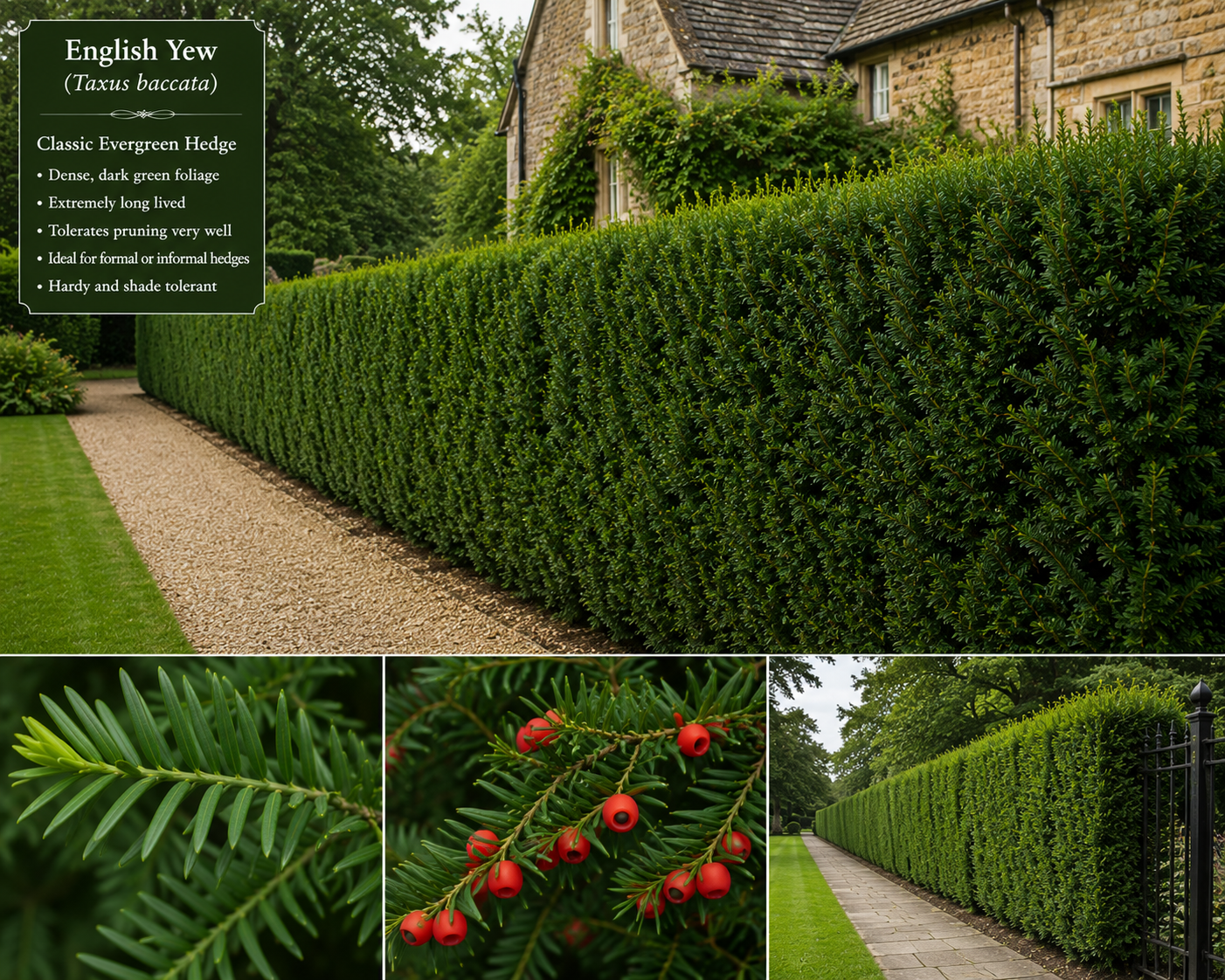
English Yew is one of the most celebrated evergreen hedge plants in horticultural history. Native to Europe, North Africa, and parts of western Asia, this elegant conifer has been cultivated for centuries in formal gardens, estate landscapes, churchyards, and palace grounds.
Its dense dark-green foliage, exceptional longevity, remarkable tolerance of pruning, and ability to thrive in shade have made it one of the world's most desirable hedge plants. Few evergreens can be clipped into such precise shapes while maintaining beauty and vigor for generations.
Whether grown as a stately hedge, privacy screen, topiary, or specimen plant, English Yew remains one of the most prestigious landscape evergreens available.
Plant Characteristics- Botanical Name: Taxus baccata
- Common Names: English Yew, European Yew, Common Yew
- Plant Type: Evergreen conifer
- USDA Zones: 5-8
- Height: 20-60 feet
- Spread: 15-30 feet
- Sun Requirements: Full sun to full shade
- Growth Rate: Slow to moderate
- Foliage Color: Deep rich green
- Winter Interest: Outstanding evergreen color
English Yew has long been considered one of the premier hedge and landscape plants in the world.
- Formal hedges
- Privacy screens
- Topiary
- Estate landscapes
- Foundation plantings
- Garden walls
- Historic gardens
- Shade-tolerant screens
Few evergreen plants can match its combination of elegance, durability, and pruning tolerance.
Important Hedge NoteEnglish Yew may be the most pruning-tolerant evergreen hedge plant ever cultivated. It can be clipped into highly formal shapes and will often regenerate from old wood where many conifers cannot.
Germination Instructions- Remove the fleshy red aril from seeds.
- Wash thoroughly.
- Cold stratify for 90-120 days.
- Sow approximately 1/2 inch deep.
- Maintain consistent moisture.
- Provide temperatures of 60-70°F.
- Be patient, as germination can be slow and irregular.
- Transplant seedlings once established.
English Yew performs best in well-drained soils and adapts to both sun and shade. It tolerates pruning better than nearly any other evergreen and responds with dense new growth.
Once established, plants are highly durable and relatively drought tolerant.
The species is particularly valued for locations where dense evergreen screening is needed in partial shade.
Container GrowingYoung plants adapt well to container culture.
- Use large containers with excellent drainage.
- Provide regular moisture.
- Avoid prolonged waterlogging.
- Prune to maintain shape.
- Repot periodically as plants mature.
Container-grown specimens are frequently used in formal garden designs.
Pollinator ValueAlthough primarily wind pollinated, mature Yews contribute to local biodiversity by providing shelter and habitat for beneficial insects.
The dense foliage often serves as a refuge during harsh weather.
Wildlife ValueThe dense evergreen structure provides year-round nesting sites and winter protection for birds. Mature hedges frequently become important wildlife corridors and shelter belts.
Many bird species feed on the fleshy red arils that surround the seeds.
Historical and Cultural SignificanceEnglish Yew has been intertwined with European history for more than a thousand years. Ancient Yews were often planted near churches, monasteries, castles, and estates, where many still survive today.
Its wood was once prized for the construction of the famous English longbows that played a major role in medieval warfare.
The species remains one of the most iconic plants in European garden design.
Interesting Botanical Facts- English Yew can live for well over 1,000 years.
- Some specimens are believed to be over 2,000 years old.
- It tolerates heavier shade than most conifers.
- The fleshy red aril is the only non-toxic portion of the fruit structure.
- Yew can regenerate from old wood after pruning.
If there is a king among hedge plants, English Yew may wear the crown. For centuries, gardeners have relied upon its ability to form dense, elegant, long-lived hedges that remain beautiful throughout the year. Its combination of shade tolerance, evergreen foliage, longevity, and pruning response remains unmatched by most other landscape plants.
Many of the world's most famous formal gardens feature Yew hedges that have been maintained for generations.
Additional Seedman NoteOne of the most remarkable aspects of English Yew is its lifespan. Some ancient Yews growing in churchyards throughout Britain were already mature trees before Columbus reached the Americas. These living monuments have witnessed centuries of history while continuing to produce fresh green growth each year.
Hedge Plant Rating- Privacy Screen: ★★★★★
- Evergreen Value: ★★★★★
- Pruning Tolerance: ★★★★★
- Shade Tolerance: ★★★★★
- Longevity: ★★★★★
- Ornamental Appeal: ★★★★★
Overall Hedge Rating: One of the finest formal hedge plants ever cultivated.
For over a thousand more unique seed varieties, all in stock and ready to ship, visit our Seed Catalog Index Page .

Contact Us | Privacy Policy | About Us
Serving gardeners since 1992
State of Mississippi Seedmen's Permit #C-391, Ohio 90152, Minnesota 20086777