
Northern White Cedar Seeds
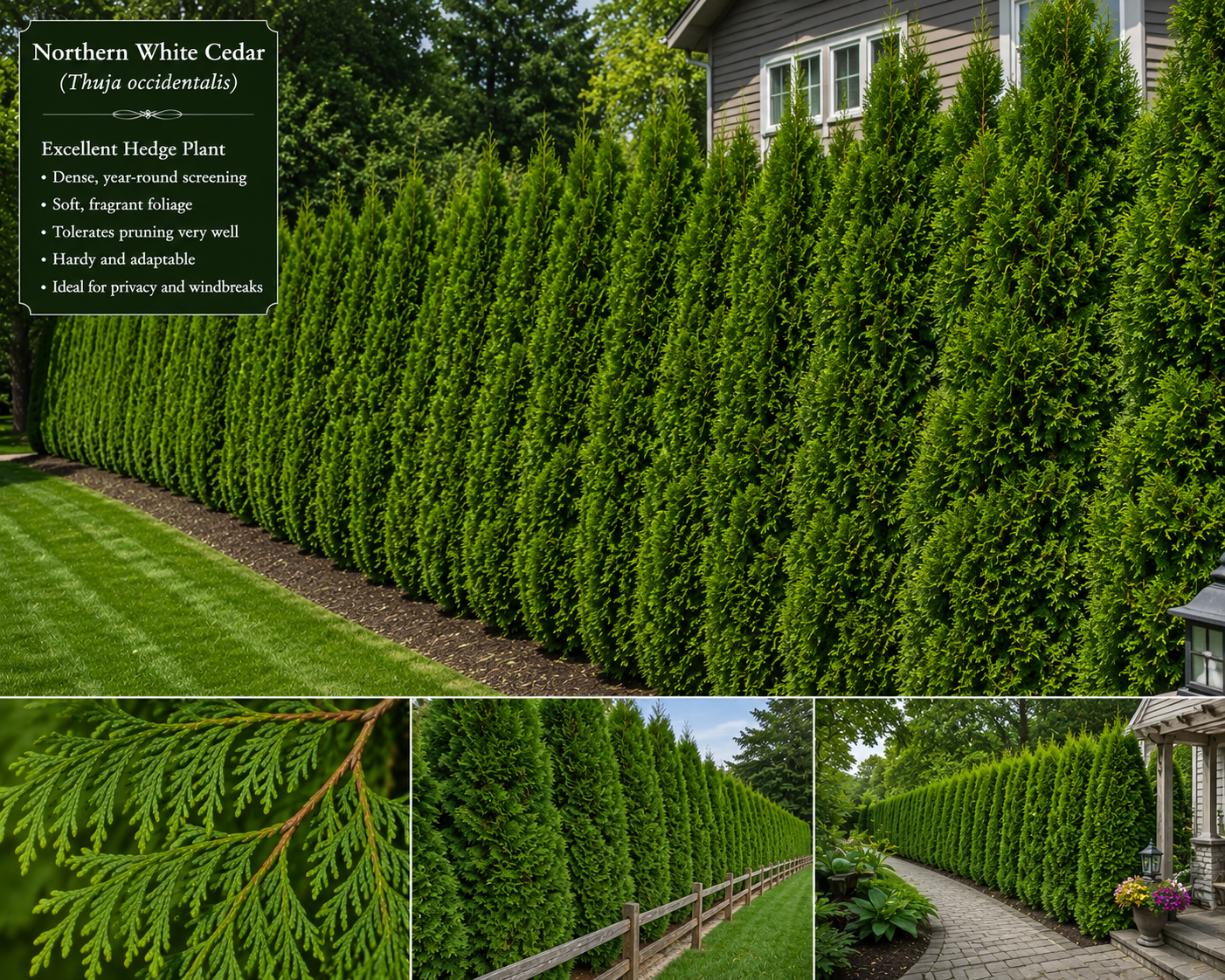
Northern White Cedar is one of North America's most popular evergreen hedge plants. Native to the northeastern United States and much of Canada, this handsome conifer has been used for centuries as a privacy screen, living fence, windbreak, and ornamental landscape plant.
Its dense, feathery evergreen foliage creates an attractive year-round screen that responds exceptionally well to pruning. Hardy, adaptable, long-lived, and attractive, Northern White Cedar has earned a reputation as one of the finest hedge plants available for cold and temperate climates.
Whether planted as a formal hedge, property boundary, wildlife screen, or windbreak, this dependable evergreen provides beauty and function throughout every season.
Plant Characteristics- Botanical Name: Thuja occidentalis
- Common Names: Northern White Cedar, Eastern Arborvitae, American Arborvitae
- Plant Type: Evergreen conifer
- USDA Zones: 3-7
- Height: 30-50 feet
- Spread: 10-15 feet
- Sun Requirements: Full sun to partial shade
- Growth Rate: Moderate
- Foliage Color: Bright green to deep emerald green
- Winter Interest: Excellent evergreen color
Northern White Cedar is one of the most versatile evergreen landscape plants available.
- Privacy hedges
- Living fences
- Windbreaks
- Property borders
- Foundation plantings
- Noise barriers
- Wildlife screens
- Evergreen backdrops
Rows of Northern White Cedar can form a dense green wall that remains attractive and functional throughout the year.
Important Hedge NoteNorthern White Cedar responds exceptionally well to trimming and shaping. Regular pruning encourages dense branching from top to bottom, creating the thick privacy screens for which the species is famous.
Germination Instructions- Cold stratify seeds for 30-60 days at 34-40°F.
- Sow seeds on the surface of a well-drained seed starting mix.
- Lightly cover with fine soil or vermiculite.
- Keep soil consistently moist.
- Provide bright indirect light.
- Maintain temperatures between 65-75°F.
- Germination usually occurs within 2-8 weeks.
- Transplant seedlings once large enough to handle.
Northern White Cedar grows best in full sun but tolerates partial shade. It adapts to a wide range of soils and is more tolerant of wet conditions than many evergreen hedge plants.
Once established, it requires relatively little maintenance and remains attractive for decades.
The species performs particularly well in northern climates where winter hardiness is essential.
Container GrowingYoung plants adapt well to container culture.
- Use containers with excellent drainage.
- Water regularly during active growth.
- Provide full sun whenever possible.
- Fertilize lightly during spring.
- Prune as needed to maintain shape.
Container-grown specimens are often used as patio accents or temporary screening plants.
Pollinator ValueWhile Northern White Cedar is wind pollinated, mature plantings contribute significantly to local biodiversity by providing shelter for beneficial insects and pollinators.
Dense evergreen hedges often serve as protected habitat throughout the year.
Wildlife ValueNorthern White Cedar is one of the finest wildlife shelter plants available. Birds use mature hedges for nesting, roosting, and winter protection, while small mammals benefit from the dense evergreen cover.
In harsh northern winters, cedar thickets can become critical wildlife refuges.
Historical and Cultural SignificanceNative American tribes highly valued Northern White Cedar for its durable wood, medicinal uses, and practical applications. Early European settlers quickly recognized its usefulness and employed it for fencing, cabins, posts, and landscaping.
French explorers famously referred to it as the "Tree of Life" after learning of its importance from Indigenous peoples.
Today it remains one of the most widely planted evergreen screening trees in North America.
Interesting Botanical Facts- Northern White Cedar can live several hundred years.
- Ancient specimens over 1,000 years old have been discovered growing on cliffs in Canada.
- The wood is naturally resistant to decay and insects.
- The foliage contains aromatic oils.
- It is one of the most cold-hardy hedge plants available.
If there is a classic North American hedge plant, Northern White Cedar is a leading contender. Its dense evergreen foliage, excellent winter hardiness, ease of maintenance, and dependable growth have made it a favorite for generations. Whether used for privacy, wind protection, wildlife habitat, or simple beauty, few evergreens deliver such consistent performance.
Its ability to remain attractive through severe winters is one of the reasons it continues to be planted across the northern United States and Canada.
Additional Seedman NoteOne of the most remarkable characteristics of Northern White Cedar is its longevity. Researchers studying cliff-dwelling populations along the Great Lakes have discovered ancient trees growing from cracks in limestone cliffs that are over a thousand years old. These living survivors endure wind, snow, drought, and time itself, demonstrating the extraordinary toughness hidden behind the species' soft, graceful appearance.
Hedge Plant Rating- Privacy Screen: ★★★★★
- Evergreen Value: ★★★★★
- Cold Hardiness: ★★★★★
- Windbreak Potential: ★★★★★
- Wildlife Shelter: ★★★★★
- Ease of Maintenance: ★★★★☆
- Shade Tolerance: ★★★☆☆
- Deer Resistance: ★★☆☆☆
Overall Hedge Rating: One of North America's premier evergreen hedge plants.
For over a thousand more unique seed varieties, all in stock and ready to ship, visit our Seed Catalog Index Page.

Contact Us | Privacy Policy | About Us
Serving gardeners since 1992
State of Mississippi Seedmen's Permit #C-391, Ohio 90152, Minnesota 20086777