
Osage Orange Seeds
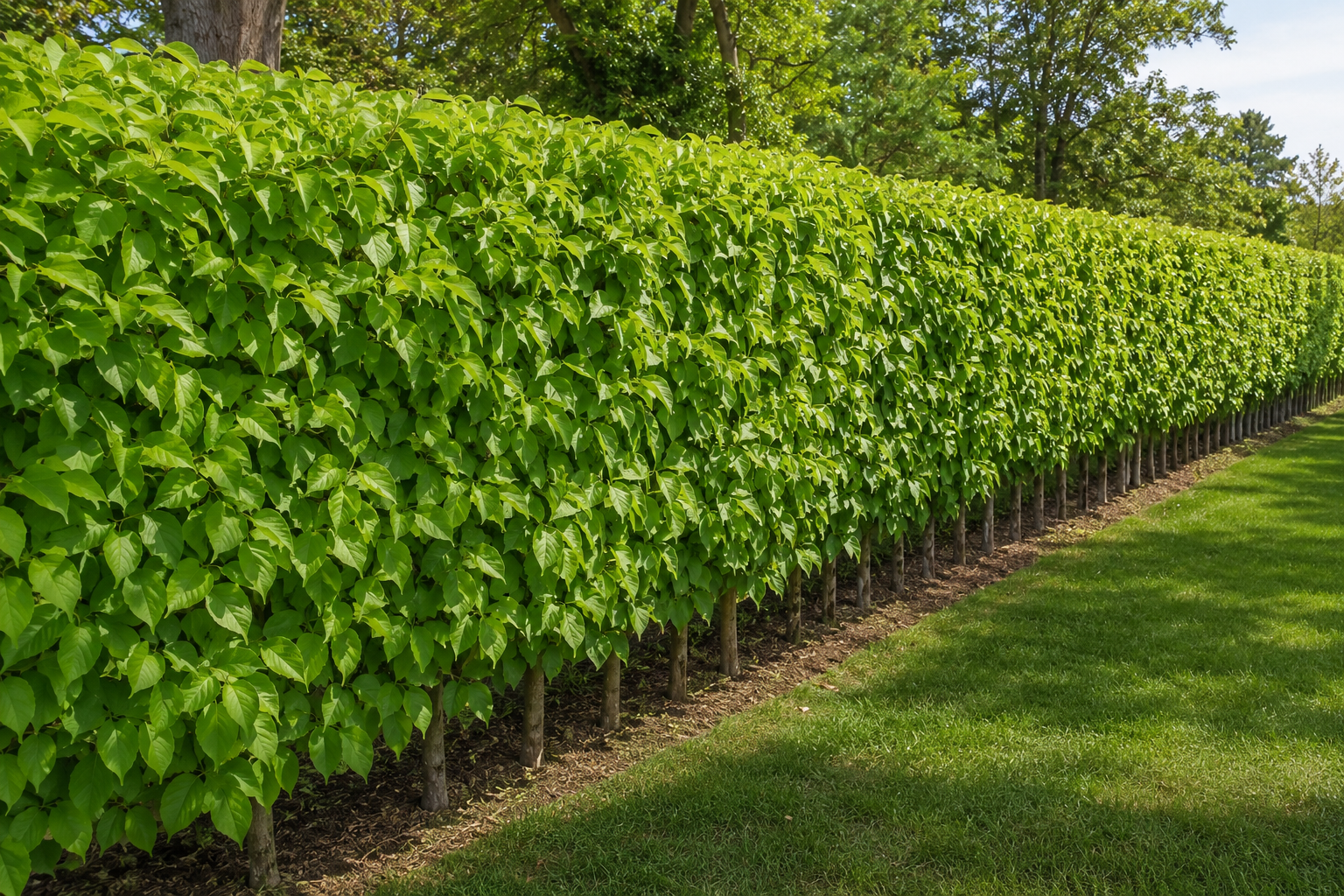
Osage Orange (Maclura pomifera) is one of North America's most historic and effective hedge plants. Long before the invention of barbed wire, farmers across the Midwest planted Osage Orange hedgerows as living fences capable of containing livestock and deterring intruders. With its dense branching habit, formidable thorns, rapid growth, and exceptional durability, few plants can rival its effectiveness as a protective hedge.
Plant CharacteristicsOsage Orange is a deciduous tree native to the south-central United States. When planted closely and regularly pruned, it forms an exceptionally dense hedge that can become nearly impenetrable. The bright green foliage creates an attractive summer screen before turning golden yellow in autumn.
- Botanical Name: Maclura pomifera
- Common Names: Osage Orange, Hedge Apple, Horse Apple, Bodark
- Plant Type: Deciduous tree
- Mature Height: 30-50 feet
- Hedge Height: Commonly maintained at 6-15 feet
- Spread: 20-40 feet
- Growth Rate: Fast
- USDA Zones: 4-9
- Sun Exposure: Full sun
Osage Orange is ideal for:
- Security hedges
- Living fences
- Farm boundaries
- Windbreaks
- Wildlife cover plantings
- Rural property screening
- Erosion control
- Naturalized landscapes
Its thorny branches and dense growth make it one of the most effective barrier hedges available.
Important Hedge NoteHistorically, Osage Orange was known as the "horse-high, bull-strong, pig-tight hedge." Properly planted and maintained, it forms a living fence so dense that livestock and large animals cannot easily penetrate it.
Unlike ornamental hedges, Osage Orange excels where security, durability, and wildlife value are primary goals.
Germination Instructions- Remove seeds from mature fruit and clean thoroughly.
- Cold stratify seeds for 60-90 days in moist peat or sand.
- Sow seeds approximately 1/4 inch deep.
- Maintain temperatures between 70-80°F.
- Keep soil consistently moist.
- Germination typically occurs within several weeks after stratification.
Osage Orange is remarkably adaptable and thrives in a wide variety of soil conditions including clay, sand, rocky soils, and drought-prone sites. Once established, it requires very little maintenance and is highly resistant to heat, drought, wind, and poor soils.
Pruning can be used to encourage dense branching and maintain hedge shape. Young plants respond especially well to formative pruning.
Container GrowingDue to its vigorous growth and eventual size, Osage Orange is generally not recommended as a long-term container plant. Young seedlings may be grown temporarily in containers before transplanting to a permanent landscape location.
Pollinator ValueThe small spring flowers attract bees and a variety of beneficial insects. While not a major nectar plant, it contributes to overall pollinator diversity.
Pollinator Rating: ★★★☆☆
Wildlife ValueOsage Orange provides excellent habitat for wildlife. Dense hedges offer nesting sites, escape cover, and winter protection for birds and small mammals. The thorny structure discourages predators and creates safe refuge areas.
Wildlife Rating: ★★★★★
Historical and Cultural SignificanceThe Osage Nation highly valued this tree for its exceptionally strong wood, which was considered among the finest bow-making materials in North America. Early settlers often traded valuable goods for Osage Orange bows.
During the 1800s, millions of Osage Orange trees were planted across the Great Plains as living fences before barbed wire became widely available. Many historic hedgerows remain standing today.
Interesting Botanical Facts- Osage Orange wood is one of the strongest and most rot-resistant woods native to North America.
- The wood glows bright yellow when freshly cut.
- Fence posts made from Osage Orange can last 75 to 100 years in the ground.
- The large green fruits are among the largest fruits produced by any North American tree.
- The species is considered a living remnant of prehistoric ecosystems that once included giant Ice Age mammals.
If your goal is a hedge that provides true security, durability, and wildlife value, Osage Orange is difficult to surpass. Few hedge plants possess such a remarkable combination of toughness and historical significance.
Additional Seedman NoteModern landscapes often favor ornamental hedges, but Osage Orange remains one of the most practical living fences ever developed. Its ability to thrive under harsh conditions while creating an almost impenetrable barrier has earned it a permanent place in American agricultural history.
Hedge Plant Rating- Privacy Screening: ★★★★★
- Security Barrier: ★★★★★
- Windbreak Value: ★★★★★
- Drought Tolerance: ★★★★★
- Wildlife Value: ★★★★★
- Pollinator Value: ★★★☆☆
- Pruning Tolerance: ★★★★★
- Overall Hedge Performance: ★★★★★
Overall Hedge Rating: ★★★★★
Osage Orange is one of the greatest hedge plants ever used in North America. Fast growing, extraordinarily durable, highly protective, and rich in history, it remains an outstanding choice for rural properties, wildlife plantings, and security hedges.
For over a thousand more unique seed varieties, all in stock and ready to ship, visit our Seed Catalog Index Page .

Contact Us | Privacy Policy | About Us
Serving gardeners since 1992
State of Mississippi Seedmen's Permit #C-391, Ohio 90152, Minnesota 20086777